
MCViewPoint

Opinion from a Libertarian ViewPoint

Posts Tagged ‘banks’

Sorry, You Can’t Have Your Gold 

Posted by M. C. on February 13, 2024

by Jeff Thomas

As the economic crisis gets ever closer, they understand that the day will soon come when a banking emergency is declared and the banks will shut their doors for an as-yet-unknown period of time (presumably until a solution is found). What will the new rules be? No one knows. Will the banks and storage facilities be obligated to deliver in full if the doors open once again? No one knows.

Therefore, in the final stretch of this race to the bottom, they want to be holding as much of your money and metals as they can.

Whether you own gold or not it is wise to know who and what you are up against.
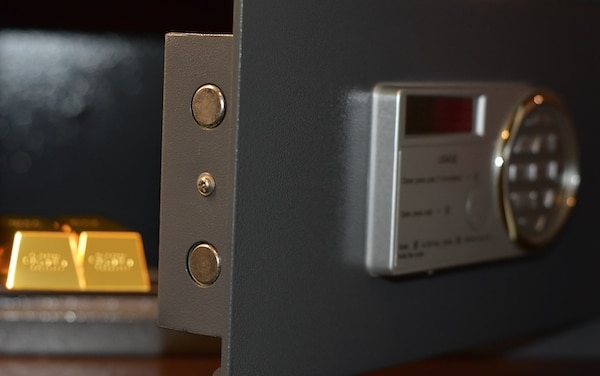
In this publication, we warn regularly of the risk involved in storing wealth in banks. They’ve made the removal of your deposits increasingly difficult in addition to colluding with governments to allow them to legally freeze or confiscate your money. To add insult to injury, they’re creating reporting requirements with regard to the contents of  safe deposit boxes and restricting what can be stored in them – again, at risk of confiscation.

More and more, banks are becoming one of the more risky places to store wealth in any form. Not surprising, then, that many people are returning to those facilities that treat wealth storage the way the first banks did millennia ago – vault facilities that store your wealth for a fee but engage in no other banking activities.

But, in suggesting to our readers that such facilities are a better bet, I’ve also repeatedly warned readers that many such facilities don’t store actual, physical gold. They instead provide a contract to you that states that they will deliver an agreed-upon amount of gold upon demand. The trouble with this idea is that it becomes tempting for such facilities to sign such a contract with you and collect the purchase price but never actually purchase and store any gold. It’s been estimated that the total worldwide value of such contracts equals 150 times the amount of gold in existence in the world.

Uh-oh.

This is why it’s imperative that you purchase only physical, allocated gold.

And another caution: I’ve repeatedly stated that, although many of the most secure facilities in the world are located in North America and Europe, these jurisdictions are on the cusp of economic crisis, a fact that suggests that, if and when the crisis arrives, the rule book will be thrown out the window. Governments and facilities alike may prove untrustworthy and, at some point, you may drop by the facility to withdraw your gold and be told, “Sorry, we’re unable to provide delivery.” There could be a multitude of reasons given, hoops to jump through, and endless red tape to deal with. And still, in the end, you may never be able to take delivery.

It’s for these reasons that we advise that, although nothing in life is guaranteed, you should always protect your wealth by choosing the least risky option.

This means that you should follow two simple rules – Rule #1: Select the jurisdiction with the best laws and reputation. Rule #2: Make sure there’s a reputable storage facility in that jurisdiction that has a Class III vault and a contract that meets your needs.

But am I being overly cautious when I so frequently offer this advice? Unfortunately, no. I’ve predicted that, in the future, as we get closer to a monetary crisis, banks and storage facilities that are located in countries that are likely to be heavily affected will work ever harder to avoid releasing either money on deposit (in the case of banks) and precious metals (in the case of storage facilities).

See the rest here

Be seeing you

Posted in Uncategorized | Tagged: , | Leave a Comment »

Will the Internet as We Know It Disappear in the Next Year?

Posted by M. C. on November 6, 2023

A banking 9/11 false flag. Is Mercola another Alex Jones?

I think Whitney Webb is credible.

Back to using cash yet?

https://www.lewrockwell.com/2023/11/joseph-mercola/will-the-internet-as-we-know-it-disappear-in-the-next-year/

By Dr. Joseph Mercola

Mercola.com

In my mind Whitney Webb is one of the best investigative journalists on the web and does meticulous research on the topics she focuses on. In the video above, Marty Bent of the TFTC Bitcoin podcast interviews her about how the central bankers plan to use artificial intelligence (AI) to control the lives of everyone on earth.

This is one of the most shocking and concerning interviews I have heard in a long time as it has a dismal prediction as to how it is likely we may have only a year at best and maybe half a year to enjoy the internet as we know it now. Even though it is heavily censored it is still usable. This basic functionality may disappear if her predictions are accurate.

If that is the case, you will not have access to this site or the daily newsletters we provide and all the updates we will issue if this scenario happens. So, to guard against this scenario, I would suggest making sure you sign up to receive messages by texts on your cell phone.

You Need to Connect With Us on Mobile in Case Internet Is Gone

As Whitney explains in her interview above, it is likely that in the next year there will be a false flag cyberattack on the banks similar to 9/11. They will then use this attack to shut down the internet and implement a draconian Cyber Patriot Act.

We have no idea of how long the internet will be down, but it could be weeks or longer. We will be unable to provide you with important updates if this happens and we only have your email. That is why I am urging you to please sign up in the form below so we can connect with you by messaging your phone. (U.S. phone numbers only.)

Divide and Conquer

As noted by Webb, the string-pullers always seek to divide people using emotional appeals, and this situation is a classic case of that. Are you with Hamas, or with the Israeli Defense Forces (IDF)? It’s a false choice. The side we should be on is the side of innocent civilians, regardless of where they live. “We should just step off the chessboard and stop playing their game,” she says.

Indeed, only by being against war will we stand against the correct enemy because, ultimately, most if not all wars are fought for the benefit of central bankers and their globalist allies, not for the benefit of nations, humanitarian or democratic causes. As noted by Webb:

“Half the population of Gaza are children under the age of 18 [i.e., below voting age and did not vote Hamas into power], so promoting the carpet bombing of that [area] and the refusal to let humanitarian aid in … there’s no celebrating that.”

Webb also points out there’s virtually no chance the Israeli forces did not see the October 7, 2023, attack coming. “It’s just absurd that they wouldn’t have been able to know that was going to happen in advance,” Webb says, “and there are IDF veterans and Israelis that definitely are no friends of Palestine or Hamas that are saying that’s the case.”

‘Israel’s 9/11’

Israel referring to that attack as “Israel’s 9/11” could be another tipoff.

“If you’re familiar with the realities of 9/11, there’s only a few possibilities there. Either it was intentionally done by intelligence agencies, or it was allowed to happen by intelligence agencies,” Webb says.

“So, I think we can assume that similar possibilities may have happened here with Israel, because before all of this happened, Netanyahu was facing major issues domestically, a huge amount of protests against him, major efforts to remove him from power.”

As noted by Bent, 9/11 ushered in the Patriot Act (which had clearly been written and was waiting in the wings for just the right moment) that “led to the dystopian hellscape that we’re currently living in, and it’s just mindboggling that people can’t [recognize] the pattern … It’s the same playbook all over again.”

Indeed, the similarities are striking. The main difference is that we now have hindsight we didn’t have in 2001. Today, the ramifications of the Patriot Act have become clear, and as The Great Reset agenda moves forward, we can see how important the implementation of the Patriot Act was to that agenda.

During the COVID pandemic, the globalist cabal began to reveal its true intentions like never before. Many of the players ceased to even pretend that it’s about anything other than the subjugation of the masses.

Since we now know the aim of the globalists is to enslave humanity within a technocratic, transhumanist dystopia where everything we say and do is known by the government and can be used against us, we ought to be very wary about encouraging a war that can then be used to justify a global kind of Patriot Act.

Coming Soon: Cyberattack on the Banks?

See the rest here

Be seeing you

Posted in Uncategorized | Tagged: , , , , , , , | Leave a Comment »

Lebanese focus fury on banks-Erie Times E-Edition Article

Posted by M. C. on January 23, 2020

People say they are being subjected to humiliation by the banks and their managers who ultimately have the power to decide who gets how much.

Forget keeping your cash in banks. Buy a good safe.

Defeat the war on cash and be prepared for when the next crunch hits.
http://erietimes.pa.newsmemory.com/?publink=2f4c39949

BEIRUT — Before picking up cash from a downtown bank in Lebanon’s capital, Mey Al Sayegh mentally braces herself for what would have been a routine trip before the country’s crippling cash crunch. For starters, it will be at least an hour’s wait in line before her turn comes. And if she’s lucky, she’ll be able to withdraw $300 — the weekly limit on dollar withdrawals imposed by banks to preserve liquidity — without having to bargain with the teller.

“I tell my family ‘I’m going to the bank, but I don’t know when I’ll return,’” said the communications manager. “It’s very unpleasant. You see people’s expression — worried, confused, they’re scared that they’re going to lose their deposits.”

For years, many Lebanese have lived beyond their means, supporting their outsized spending with loans and generous remittances from diaspora relatives scattered across the globe, including family members working in oil-rich Arab Gulf countries.

A severe financial crisis and unprecedented capital controls have put an end to this, uniting both rich and poor in anger against corrupt politicians who have brought the country to the brink of economic collapse, and a banking system they accuse of holding their deposits hostage.

In recent days, some protesters have taken out their ire on the banks, destroying ATMs, smashing bank windows and clashing with tellers behind the counter.

Dozens of protesters have held sit-ins at banks against the fiscal policies, forcing tellers on more than one occasion to give them more than the weekly limit. Demonstrators routinely gather in front of the country’s Central Bank, jeering and hurling expletives at its governor, Riad Salameh, who was once ranked among the world’s top central bank governors.

“You go to a bank, get a ticket, and there are at least 50-60 people in front of you,” said Mahmoud Sayida, a tour guide whose money is trapped with one of the country’s largest lenders. “It’s as though you are lining up for bread in the war days.”

The crisis in Lebanon, one of the most heavily indebted nations in the world, is rooted in decades of state corruption and bad management, and the tiny Mediterranean country’s economy had been in steady decline for years. The local currency, pegged to the dollar for more than two decades, has lost more than 50% of its value in recent weeks on the black market.

Fearing a crisis, depositors in the past year had been quietly withdrawing their money, changing it from the local currency to dollars, or funneling it to bank accounts abroad.

At the onset of nationwide protests that broke out in mid-October, banks closed their doors for 12 working days. When they reopened, they faced an unprecedented rush to withdraw dollars, resulting in the limits on withdrawals and foreign transfers.

But there was no legal basis for such actions, leaving it up to the banks to implement their own controls on a caseby- case basis. Meanwhile, ATM machines have mostly stopped dispensing dollars and daily limits on credit card use have been implemented. Many restaurants and shops, strapped for cash, are refusing card payments.

People say they are being subjected to humiliation by the banks and their managers who ultimately have the power to decide who gets how much.

People with children studying abroad need to offer proof before they are allowed to transfer their tuition money. Patients are required to produce paperwork proving they need money for surgery before they can withdraw cash from their accounts. To get credit card limits temporarily increased, customers are asked by some banks to produce a plane ticket and documentation proving a stay abroad longer than two weeks.

The measures are forcing families to limit expenditures and prioritize daily necessities. Simple activities, such as going to a cafe or a restaurant, are now considered luxuries, even for those with money or jobs. Sullen moods have overcome depositors and lenders alike, whose employees say they are afraid to show up at work because of fights breaking out inside banks and people cursing them every day.

In this Jan. 14 photo, anti-government protesters smash a bank widows, during ongoing protests against the Lebanese central bank’s governor and against the deepening financial crisis, at Hamra trade street, in Beirut, Lebanon. [HUSSEIN MALLA/ASSOCIATED PRESS FILE PHOTO]

Be seeing you

Posted in Uncategorized | Tagged: , , , | Leave a Comment »

Facebook’s Fake Money | Mises Wire

Posted by M. C. on July 19, 2019

The Libra is just the upshot of an entrepreneurial attempt to profit from the global market for payment services (and later perhaps also from the credit markets), and, of course, to collect as much precious transaction data as possible.

https://mises.org/wire/facebooks-fake-money

Starting in 2020, Facebook wants to offer its customers a global high-tech currency and infrastructure. The US IT giant says that this will provide many people around the world with easy and cost-effective access to the monetary and financial system. The new blockchain-based money is called “Libra.” Technically, it is something akin to a crypto-money-banknote covered by a basket of official fiat currencies (such as US dollars, euros, and the like). The heart of the Libra project is the “Libra Association” (LA). The non-governmental association, based in Geneva, Switzerland, is supported by founding members such as eBay, Facebook, Mastercard, PayPal, Spotify, Uber, Visa, as well as other renowned firms, and will be responsible for the operation and further development of Libra.

Libra will be created by participants depositing fiat currencies such as US dollars or euros with the LA, and the LA will then grant the depositors a corresponding Libra amount in a digital wallet, which can be used for payments via the Internet, smartphone, credit card or WhatsApp and messengers, i.e., Facebook’s chat services. The chances of success seem to be pretty good for the Libra: Electronic payment is a world-wide mega-trend. People seem to have become increasingly open to new technological ways of making payments. And if money can be sent to and fro via social media, many potential customers will presumably like it very much.

Traditional banks have good reasons to worry. The Libra is about to siphon transactions out of bank accounts and put them into the LA’s hands. Not banks, but the LA will collect the fees and will receive precious data on who pays what, when, and where. The banks will be left even more in the cold should customers begin to use the Libra for savings purposes as well. Because then they would also lose the time and savings deposits with which they refinance their balance sheets at low costs. Or think of the credit business: The LA may at some point also provide its customers with short-term consumer loans.

In any case, from a customers’ perspective it is a good thing if and when the competitive pressure in the banking business gains momentum; as is well known, competition stimulates the search for better products and lower prices, which benefits the customers. The now heightened competition from the fin-tech industry is undoubtedly quite a challenge for many banks. Not least because for decades state regulation has kept unwelcome outside competition from their backs, thereby, however, weakening their innovative strength. But our sympathies have to be first and foremost with the people demanding banking and financial services, not with the banks delivering them.

The critical question, however, is this: Is the Libra really good — or sound — money? Unfortunately, this question cannot be answered in the affirmative. Read the rest of this entry »

Posted in Uncategorized | Tagged: , , , , | Leave a Comment »

Banks, credit card companies explore ways to monitor gun purchases

Posted by M. C. on May 6, 2018

I can’t believe they aren’t already doing this. It would be hard for them not to.The government is already doing this but like anything else the government does, it does a lousy job.

The time has come where banksters have no reservation about making it public.

What else do they track, can they track? Everything purchased with plastic.

http://www.guns.com/2018/05/02/banks-credit-card-companies-explore-ways-to-monitor-gun-purchases/

Banks and credit card companies held informal discussions about identifying transactions involving firearms, The Wall Street Journal reported.

Although the discussions resulted in nothing tangible — and ideas may never come to fruition — ideas tossed would help companies monitor gun purchases, which includes information on buyers, from retailers, the newspaper reported…


Posted in Uncategorized | Tagged: , , | Leave a Comment »

Banks Are Evil | Peak Prosperity

Posted by M. C. on March 20, 2017

https://www.peakprosperity.com/blog/107415/banks-evil

How much ‘thin air’ money are we talking about? The Fed and the rest of the world’s central banking cartel has printed over $12 Trillion since the Great Recession. Between the ECB and the DOJ, nearly $200 Billion of additional liquidity has been — and continues to be — injected into world markets each month(!) since the beginning of 2016:

As further proof, let’s look at this data recently obtained by Zero Hedge. In the past 4 years, JP Morgan’s in-house trading group has had exactly 2 days of losses:

Because for every trade there is a buyer and a seller. If JP Morgan is the winner every day, who is losing? Turns out, it’s the big pools of “dumb money” that don’t have the cheat codes for the system the way the banks do. These are the pension funds, the index funds, the retirement accounts — the aggregated money of all the ‘little people’ out there. Little people who don’t have visibility into how they’re being constantly fleeced; nor do they have agency to do anything about it even if they did.
Be seeing you

Posted in Uncategorized | Tagged: , , , | Leave a Comment »