MCViewPoint

Opinion from a Libertarian ViewPoint

Posts Tagged ‘cold war’

The Washington Post and Its Cold War Drums – CounterPunch.org

Posted by M. C. on July 20, 2020

It is customary for the political rhetoric to get heated during a presidential campaign, which will find Donald Trump and Joe Biden vying for honors in the field of national security and militancy, but there should be some balance and context from the mainstream media.  The increasingly hard line of the Washington Post on the competition with China, Russia, and Iran suggests that the political contenders will be goaded—and not ameliorated—by the nation’s key newspapers.

https://www.counterpunch.org/2020/07/10/the-washington-post-and-its-cold-war-drums/#gsc.tab=0

The Washington Post has taken its Cold War campaign against China, Russia, and Iran to a new level.  In the Sunday edition of its Outlook section, the Post gave front-page coverage to long articles by former ambassador Michael McFaul and former New York Times’ writer Tim Weiner to trumpet Russia’s “constant aggression” and its “brutal Cold War rules.”  There was no hint whatsoever of Russian President Vladimir Putin’s efforts to improve Russian-American relations over the past two decades, and no suggestion that the actions of the United States over the past 25 years have significantly contributed to the poor state of relations between Moscow and Washington.

The companion pieces have supportive titles, which suggests an editorial decision to express an authoritative point of view.  McFaul’s article is titled “Trump always finds a way to let Putin win….”, and Weiner’s screed follows with “….even when Russia plays by brutal Cold War rules.”  Their joint thesis is a simple one: Donald Trump’s complacency has enabled President Putin’s “litany of belligerent acts.”  Neither writer notes U.S. actions over the past quarter-century that have worsened the international environment and helped to create a  revival of the Cold War.  Indeed, they absolve the last four American presidents of any responsibility for the current state of affairs, ignoring their actions that have been consistent with Cold War policymaking.  Is anyone going to address the importance of restoring a Russian-American dialogue revolving around arms control and disarmament as well as Third World conflict resolution?

McFaul’s article is particularly interesting in view of his role as the architect of President Barack Obama’s “reset” policy toward Russia, his standing as one of the leading scholars on post-communist Russia, and his appointment as the first non-career diplomat to be U.S. ambassador to the Kremlin.  His two-year tour was hardly a success as McFaul, only several days after his arrival in Moscow, chose to invite a number of organizers and prominent participants in the anti-Putin protest movement to the U.S. embassy.  McFaul immediately became an Internet celebrity in the tight-knit world of Russian opposition, which demonstrated a lack of awareness of Russian political sensitivities, particularly if the Obama administration was genuinely trying to “reset” relations.

McFaul’s article is totally one-sided.  He argues that “Trump has received nothing” from Moscow despite his concessions to the Russian president, citing “no new arms-control treaty, no help in deal with worsening relations with Iran.”  But it was Trump who backed away from arms control and disarmament with Russia, abrogating the Intermediate-range Nuclear Forces Treaty and walking away from the Outer Space Treaty.  Conversely, it is Putin who is trying to get back to arms control negotiations, particularly to extend the New START Treaty, which expires in January 2021.  Moreover, it is Putin who supports the Iran nuclear accord, and nowhere does McFaul explain what Russian leaders could possibly do to reverse the damage that the Trump administration has done to relations with Iran as well as to political stability in the Persian Gulf.

Weiner is welcome to his opinion that the CIA’s covert action in Afghanistan was the “last great battle of the Cold War,” but the Russians have dealt with genuine facts for the past 25 years that point to U.S. responsibility for the current disarray in Russian-American relations.  In the 1990s, it was the United States and President Bill Clinton who decided to expand the North Atlantic Treaty Organization, bringing former Soviet republics into NATO, a betrayal of commitments that President George H.W. Bush and Secretary of State James Baker gave to Soviet President Mikhail Gorbachev and Foreign Minister Eduard Shevardnadze not to “leap frog” over Germany in order to go into East Europe.

President George W. Bush went one terrible step further by bringing former Soviet republics into NATO; it took German Chancellor Angela Merkel to get him to stop flirting with membership for Ukraine and Georgia. Merkel convinced Bush that introducing Ukraine and Georgia to NATO would violate Putin’s red line regarding NATO membership.  Assistant Secretary of State for Europe Victoria Nuland used her cell phone to discuss specific individuals who would be in the government or out.  When the U.S. ambassador to Ukraine told Nuland that the European Union would have problems with her intervention, she replied “Fuck the EU.”  The Kremlin intercepted the call and had a field day spreading the news.  The Russian actions toward Ukraine and Georgia that McFaul and Weiner cite were, in fact, a response to U.S. manipulation of the politics and policies of both nations, which followed Putin’s red-line warnings to the United States.

One of the most severe moves reminiscent of the Cold War was President George W. Bush’s abrogation of the Anti-Ballistic Missile Treaty in 2002.  It was noteworthy that John Bolton served in influential administration positions in 2002 and 2019, when the ABM Treaty and the INF Treaty, respectively, were abrogated.  Bush followed up the abrogation with another offensive maneuver, the deployment of a regional missile defense in Poland and Romania, claiming the defense was designed to counter a possible attack from Iran.  This made no sense at the time, and even less sense during the Obama administration when the Iran nuclear accord was completed.  Not only has Donald Trump demonstrated no interest in the importuning from Putin regarding the need to return to disarmament negotiations, he has created a Cold War-like Space Force and suggested that U.S. troops to be withdrawn from Germany might end up in Poland.  McFaul needs to reconcile the fact that additional U.S. forces will be sent to Poland with his notion that “Trump always finds a way to let Putin win.”

It is customary for the political rhetoric to get heated during a presidential campaign, which will find Donald Trump and Joe Biden vying for honors in the field of national security and militancy, but there should be some balance and context from the mainstream media.  The increasingly hard line of the Washington Post on the competition with China, Russia, and Iran suggests that the political contenders will be goaded—and not ameliorated—by the nation’s key newspapers.

Melvin A. Goodman is a senior fellow at the Center for International Policy and a professor of government at Johns Hopkins University.  A former CIA analyst, Goodman is the author of Failure of Intelligence: The Decline and Fall of the CIA and National Insecurity: The Cost of American Militarism. and A Whistleblower at the CIA. His most recent book is “American Carnage: The Wars of Donald Trump” (Opus Publishing), and he is the author of the forthcoming “The Dangerous National Security State” (2020).” Goodman is the national security columnist for counterpunch.org.

Be seeing you


Posted in Uncategorized | Tagged: , , , , , , , , , | Leave a Comment »

End of empire | Spectator USA

Posted by M. C. on July 1, 2020

A massive reordering of national priorities is required. It goes without saying that Trump is incapable of presiding over any such reordering. Yet whether anyone else in mainstream politics is capable of doing so remains very much an open question.

https://spectator.us/end-american-empire-dominion/

This article is in The Spectator’s July 2020 US edition. Subscribe here to get yours.

The end of World War Two inaugurated the era of American dominion, with the United States politically, economically and militarily the most powerful nation on the planet. Yet throughout the subsequent period of American global ascendency, the American people endured a seemingly endless sequence of domestic crises, upheavals and disasters. Primacy abroad did not insulate them, convinced of their unique place in human history, from the trials and tribulations routinely befalling other, more ‘ordinary’ nations.

Yet neither did trials at home undermine the deep-seated belief that history had summoned the United States — and no one else — to lead the world. So even as presidents from Harry Truman to Barack Obama wrestled with pressing challenges at home (for Truman there was race and McCarthyism, for Obama race and the Great Recession), they all, without exception, testified to the nation’s indispensability. They deemed it their duty to do so. All, therefore, found ways to prevent domestic problems from encroaching upon America’s assertion of singularity among nations. Leading the world took precedence over addressing the contradictions and shortcomings affecting the American way of life. So from 1945 until the end of the 20th century, creating ‘a more perfect Union’ took a back seat to venturing ‘abroad, in search of monsters to destroy’.

Whatever the turmoil on the home front, this conviction that the United States was called upon to exercise global leadership remained unwavering. Even in 1968, when assassinations, racial unrest and widespread opposition to a deeply unpopular war brought the nation precariously close to unraveling, the conviction held. Two decades later, the fall of the Berlin Wall seemingly validated that conviction for all time. We were indeed, as presumably serious US officials proclaimed, the ‘indispensable nation’ and destined to remain so until the end of time. So we were led to believe.

Now, a mere three decades since the end of the Cold War delivered its seemingly decisive verdict, the barrier between what happens ‘out there’ and what happens ‘back here’ has been breached. Foreign policy and domestic matters are becoming intermingled. As a direct consequence, American global leadership appears noticeably rickety.

At a moment when media coverage suggests that Trump is everything and everything is Trump, it’s important to note that this intermingling dates from long before his presidency. It commenced on 9/11 when an event that was never supposed to happen — a devastating attack on the United States itself — did happen. Americans suddenly awakened to the fact that global leadership as practiced by the United States can produce painful blowback.

Reinforcing this shock to the system were other unpleasant surprises. First came wars in Afghanistan and Iraq that the world’s mightiest military was supposed to win but did not, despite sustaining terrible casualties and expending trillions of dollars. Second came episodes of stunning ineptitude by political authorities. Hurricane Katrina provided one example among many, showing that the people in charge were clueless about how to protect the population for which they were responsible. Hard on the heels of Katrina came the worst economic crisis since the Depression, suggesting that the people charged with managing the economy were incompetent, on the take, or both.

In 2016, the electorate responded by repudiating the establishment, voting into office a thoroughly unqualified presidential wannabe who promised to ‘drain the swamp’ and put ‘America First’. Donald Trump has kept neither of those promises. As the end of his first term approaches, the actual legacy of his presidency has now become clear: yet more ineptitude, cluelessness and incompetence, all reinforced by Trump’s trademark narcissism, vulgarity, blustering tough-guy posturing and casual dissembling.

History will doubtless judge Trump harshly. As US president, he has proven to be an abysmal flop. Trump has failed to end the wars he vowed to end. For all his self- touted skills as a dealmaker, his record consists chiefly of unfulfilled promises. He also failed to address effectively — or even acknowledge — the threat posed by COVID-19. As a direct consequence of his administration’s belated and bungling response to the pandemic, the death toll in the United States now exceeds a staggering 125,000. Trump, of course, accepts no responsibility for that outcome. Coming hard on the heels of the pandemic is the worst economic calamity since Herbert Hoover occupied the White House almost a century ago. Hoover ‘owned’ the Great Depression. So too Trump ‘owns’ the economic consequences of the Great Lockdown. Yet again he refuses accountability.

And finally, there is Trump’s typically callous and ham-handed response to the wave of civil unrest triggered by the police killing of George Floyd in Minneapolis.

Looking back on the nation’s recent past, baffled Americans are left to ponder two questions: how could this have happened? And what can we do to escape from the terrible straits in which we find ourselves?


A partial answer to the first question is this: for too long, ruling elites allowed the purported obligations of global leadership to take precedence over tending to the collective wellbeing of the American people. This was a conscious choice made by leaders of both political parties. We are now living with the consequences of that choice, with the persistence of racism offering just one example of what neglect has produced. Yet it deserves to be emphasized: the neglect was not Trump’s doing; he was merely its ironic beneficiary. We are its victims.

A preliminary answer to the second question must begin with this admission: the era of US dominion has now passed. So Americans can no longer afford to indulge in the fiction of their indispensability, cherished in elite circles. In fact, the sun has set on the American empire. Subordinating the wellbeing of the American people to ostensible imperatives of global leadership — thereby allowing racism, inequality, and other problems to fester at home — has become intolerable.

A massive reordering of national priorities is required. It goes without saying that Trump is incapable of presiding over any such reordering. Yet whether anyone else in mainstream politics is capable of doing so remains very much an open question.

Be seeing you

Posted in Uncategorized | Tagged: , , , , | Leave a Comment »

China Derangement Syndrome: Notes From The Edge Of The Narrative Matrix – Caitlin Johnstone

Posted by M. C. on May 29, 2020

https://caitlinjohnstone.com/2020/05/25/china-derangement-syndrome-notes-from-the-edge-of-the-narrative-matrix/

Friendly reminder that we’ve invented weapons which can end all life on earth and we’re in steadily increasing danger of setting them all off because some guys in a think tank wrote some words.

~

Believing cold war is no big deal because nuclear war hasn’t happened yet is the same as believing your game of Russian roulette is safe because the gun hasn’t gone off yet.

~

There’s no legitimate reason why nations can’t just mind their own affairs and care for their own people. Having to read news every day about our government and its allies scheming to destroy nations which disobey them is severely disordered, and we should oppose it ferociously.

~

1. We are in the middle of a slow-motion third world war between the US power alliance and the remaining nations which have resisted its aggressive attempts to absorb them.
2. Propaganda is used to move this world war along.
3. Points 1 and 2 explain current anti-China sentiment.

~

China Derangement Syndrome (CDS) is a terrible affliction where someone who has overdosed on mainstream narratives suddenly starts believing a nation on the other side of the planet is a very big problem that “we” need to “do something about”.

~

CDS victims often try to justify their hysteria by saying it’s about ending their country’s economic relationship with China and bringing the jobs and the wealth back home. Which is absolutely adorable. You think that’s where the money will go? To you? That’s precious.

~

Trump supporters are exactly as moronic, brainwashed and hysterical about China as Democrats are about Russia. They’ve forever forfeited all legitimacy in criticizing Russiagate.

~

Every single time the narrative managers shift to a new imperialism target I start writing about it using the same exact logic and understanding that I use to write about all their other propaganda campaigns, and every single time I get a deluge of people saying “Oh my God I can’t believe Caitlin loves that horrible government now! Usually I agree with her but now she’s gone right off the rails!”

Every single time, without exception. “Caitlin, this Official Bad Guy is completely different from all the others!” Syria, Russia, North Korea, Iran, Venezuela, China, over and over again. It gets really tedious. Yes, you’ve lived in an echo chamber that opposes some imperialist agendas but supports others. That’s how propaganda works.

~

“China is just as imperialist as America, Caitlin.”

Yes, yes exerting regional power and making deals is exactly the same as dominating the whole planet with hundreds of military bases and endless acts of mass murder, because all things are exactly the same as all other things.

~

“Caitlin you need to understand that the CCP are not the good guys.”

It will never stop being weird to me how many grown adults respond to mature geopolitical analysis by babbling about “good guys” and “bad guys” like children watching a cartoon show. Hollywood is brain poison.

~

“What are you saying Caitlin? We can’t criticize China?”

You can criticize whoever you want. I just think it’s an amazing coincidence how you all became very very interested in “criticizing” that nation at the exact same time the mass media started shrieking about it constantly.

~

Before accusing someone of being an apologist for a foreign government, first contemplate whether it’s possible that they’re just being neutral and you’ve been propagandized into believing everyone needs to hate that foreign government.

~

Beginning sincere research into what’s really going on with our world behind the veils of propaganda and government secrecy reveals many experts with a profound understanding of our actual circumstances. Further research reveals that no, actually they’re all mostly faking it.

~

The neoconservative ideology of maintaining unipolar US world domination at all cost has become so mainstream over the last two decades that “neoconservative” is a mostly meaningless term now.

~

Murder a thousand people and make a fortune selling their organs: You’re a monster.

Murder the same number of people for the same amount of money by selling the weapons used to murder them after lobbying for needless military interventionism: You’re a businessman.

~

Trump could have run as a Democrat in 2016 with a liberal-sounding platform, enacted the exact same policies he’s enacted as president, and, as long as he kept saying nice-sounding things, Democrats would think he’s awesome right now.

~

Ecocide will be a problem as long as ecocide remains profitable. War will be a problem as long as war remains profitable. Politicians will cater to profit-seeking sociopaths as long as profit determines what drives human behavior.

~

You’ve probably heard it said that you’ll never find love if you don’t love yourself, but have you ever thought about why it’s true? It’s true because if you don’t love yourself, someone loving you instantly puts you at odds with them.Like that old Groucho Marx quote, “I refuse to join any club that would have me for a member.” You can’t build on that kind of foundation.

For love to work, you have to love yourself, and you also have to commit to loving yourself more and more. Your lover will always be finding new parts of you to love, many of them parts you dislike, so you’ve got to learn to love those parts too to avoid shutting them out.

This is the main reason why women go for ‘bad boys’ and fall prey to negging. If you don’t love yourself and someone falls for you, then they appear pathetic because they fell in love with you, so wow. Yuck. You know you’re disgusting so they must be disgusting to fall for you.

If you truly love yourself, you’ll welcome someone who truly loves you. When they show up they’ll slide right in, with no rejection and no bouncer at the door, just a smooth “Oh it’s you! I’ve got a place here all ready for you.”

You can learn to love yourself by making a practice of continually bringing an intimate, enthusiastic “yes” to whatever feels like the core of your being in each moment. I wrote an article on how to do this a while back if you’re interested.

________________________

Thanks for reading! The best way to get around the internet censors and make sure you see the stuff I publish is to subscribe to the mailing list for my website, which will get you an email notification for everything I publish. My work is entirely reader-supported, so if you enjoyed this piece please consider sharing it around, liking me on Facebook, following my antics onTwitter, checking out my podcast on either YoutubesoundcloudApple podcasts or Spotify, following me on Steemit, throwing some money into my tip jar on Patreon or Paypalpurchasing some of my sweet merchandise, buying my books Rogue Nation: Psychonautical Adventures With Caitlin Johnstone and Woke: A Field Guide for Utopia Preppers. For more info on who I am, where I stand, and what I’m trying to do with this platform, click here. Everyone, racist platforms excluded, has my permission to republish, use or translate any part of this work (or anything else I’ve written) in any way they like free of charge.

Posted in Uncategorized | Tagged: , , | Leave a Comment »

The Real Reason for the New Cold War with Russia

Posted by M. C. on April 4, 2020

The view at the top was that Russia had better behave now and do what we tell them to do. They lost the Cold War. They are no longer a superpower, and so they just better do what we tell them and shut up.

That attitude, which wasn’t evident immediately, gradually became more evident. It really broke out with the bombing of Yugoslavia in the late ’90s when Boris Yeltsin—who was supposedly a great friend of America—said, “No, this we will not stand for.”

As I’ve said before, I’m not a big fan of President Putin, but given the possibility, Putin would have worked to have a close relationship with the West.

He was told in no uncertain terms that there was no interest in that, and his reaction was as follows.

https://internationalman.com/articles/the-real-reason-for-the-new-cold-war-with-russia/

International Man

Editor’s Note: Vladimir Pozner is Russia’s most influential TV political-talk-show host, journalist and broadcaster.

Pozner has hosted several shows on Russian television, where he has interviewed famous figures such as Hillary Clinton, Alain Delon, President Dimitri Medvedev and Sting.

Pozner has appeared on a wide range of networks, including NBC, CBS, CNN and the BBC. In his long career, he has been a journalist, editor (Soviet Life Magazine and Sputnik Magazine) and TV and radio commentator, covering all major events in Russia.

Pozner has appeared on The Phil Donahue Show and Ted Koppel’s Nightline.

He co-hosted a show with Phil Donahue called Pozner/Donahue. It was the first televised bi-lateral discussion (or “spacebridge”) between audiences in the Soviet Union and the US, carried via satellite.

In 1997, he returned to Moscow as an independent journalist.

Doug Casey’s friend Mark Gould sat down with Pozner in Moscow to help us better understand the relationship between the US and Russia.

 —

International Man: Naturally, Americans have a lot of misconceptions about Russia. The US government and media offer an overly simplistic and unfavorable view of the country.

What does the US government and media get wrong?

Vladimir Pozner: That’s a very difficult question to answer. It’s not only what they get wrong, but what they deliberately say that is not true.

It’s a combination of things.

It’s one thing not to understand another country.

For instance, I was in Japan, and it took me a very long time to begin to understand things because the Japanese do things very differently—not good or bad, just different.

It’s another thing to have a prejudice about another people or another country and to present things in a negative light.

Broadly, the relationship between Russia and the United States has been a difficult one for most of the 20th century, starting with the Bolshevik revolution in Russia. It was very threatening to the United States and to capitalism.

The goal of having a world revolution and having socialism everywhere initiated things like the Red Scare in the United States back in the 1920s.

These things evolved over the years all the way up to the postwar period when you had Joe McCarthy and all of those things.

There was a deep ideological difference between the USSR and the United States, that pretty much, in my opinion, formatted the way people looked at “Russia,” because for most Americans, the USSR and Russia, was exactly the same thing.

Although, the USSR consisted of a lot of other countries that were not Russian at all, like Georgia, Armenia, Azerbaijan, what have you.

So that’s one side of it. The negative attitude over a 70-plus-year period became part of the American outlook.

Then things changed. Suddenly the USSR became a different country. Gorbachev, Glasnost, and Perestroika… we were going to be friends.

Everyone was overjoyed on both sides of the fence. The American side was saying, “Now they’re going to be like us, finally.”

That was the average view.

The view at the top was that Russia had better behave now and do what we tell them to do. They lost the Cold War. They are no longer a superpower, and so they just better do what we tell them and shut up.

That attitude, which wasn’t evident immediately, gradually became more evident. It really broke out with the bombing of Yugoslavia in the late ’90s when Boris Yeltsin—who was supposedly a great friend of America—said, “No, this we will not stand for.”

The problem from that point on was that Russia was no longer willing to follow the American lead. This led to tremendous anger on the part of the American establishment, which was reflected in statements and in the media.

When Vladimir Putin came around, he initially wanted to be a member of the West. He officially proposed that Russia join NATO and that Russia become part of the European Union.

He was officially told, in politer terms, to go do “whatever.“ In fact, he was told that Ukraine and Georgia would become part of NATO well before Russia.

This is official. This isn‘t something that I‘m dreaming up.

Ultimately, in 2007, in Munich, Putin made a famous speech, saying that we no longer agree to be treated like a second-rate nation. We have our global aspirations and interests, and we are going to protect them.

From that point on, Putin became monster number one, and Russia became negative.

Read the rest of this entry »

Posted in Uncategorized | Tagged: , , , | Leave a Comment »

Lift the U.S. Embargo on Cuba – The Future of Freedom Foundation

Posted by M. C. on March 7, 2020

Only 60 years! You have to give these things a chance…and of course a much bigger budget.

https://www.fff.org/2020/03/03/lift-the-u-s-embargo-on-cuba/

by

The U.S. embargo on Cuba has been in effect for 60 years. It’s time to end it.

The embargo makes it a criminal offense for any American to spend money in Cuba or to do business in Cuba. If an American travels to Cuba and spends money there or does business there, he is subject to criminal prosecution, conviction, fine, and imprisonment by his own government upon his return to the United States.

The purpose of the embargo is regime change. The idea is to squeeze the Cuban people economically with the aim of causing discontent against Cuba’s communist regime. If the discontent gets significant enough, U.S. officials believe, the population will revolt and re-install a pro-U.S. regime into power.

Where is the morality in targeting the civilian population with death and impoverishment with the aim of achieving a political goal? Isn’t that why we condemn terrorism?

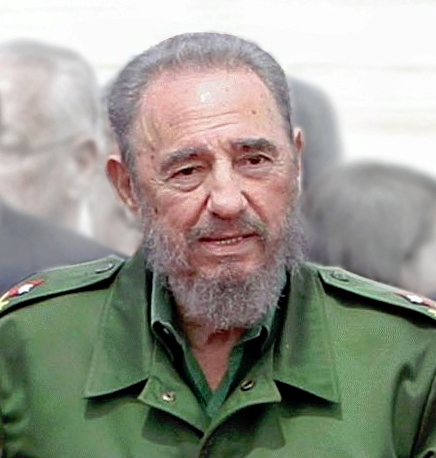
I say “re-install” because Cuba had a pro-U.S. dictator in power before the Cuban revolution installed Fidel Castro into power. The country was ruled by a man named Fulgencio Batista, one of the most brutal and corrupt dictators in the world. U.S. officials didn’t care about his tyranny because he was a pro-U.S. dictator — that is, one who could be counted on to do the bidding of the U.S. government.

But the Cuban people, who were suffering under Batista’s regime, revolted against it. Successfully ousting Batista from power, new Cuban dictator Fidel Castro made it clear that he would be no such puppet. In the eyes of U.S. officials, that made him a threat to “national security.”

What many Americans fail to realize is that the embargo is actually an infringement on their liberty. Under principles of freedom, people have the natural, God-given right to travel anywhere they want and spend their money any way they want. Freedom of travel and economic liberty are encompassed by the rights of life, liberty, and pursuit of happiness that the Declaration of Independence enumerates as rights that preexist government.

When the American people agreed to this fundamental infringement on their rights and liberty, it was at the height of the Cold War. U.S. officials told them that there was a worldwide communist conspiracy based in Russia to take over the world, especially the United States. Cuba, U.S. officials said, was a spearhead in that effort. If a communist regime was permitted to remain in Cuba, which is only 90 miles away from U.S. shores, they said, there was no way to keep America from going Red.

The irony is that America was already going socialist and without an invasion by Cuba. That was reflected by the U.S. embrace of such socialist programs as Social Security, Medicare, public schooling, immigration controls, and a central bank, all of which are core elements of Cuba’s socialist economic system.

Terribly fearful of this supposed communist threat to conquer the United States, the American people traded away their rights and liberties for the sake of purported safety and security from communism.

The irony is that Cuba never attacked the United States and never even threatened to do so. Throughout the Cold War, it remained an impoverished Third World nation that never posed any military threat to the United States.

Instead, throughout the Cold War it was always the U.S. government that was the aggressor against Cuba. Not only did the U.S. government target the Cuban people with its embargo, it also secretly partnered with the Mafia to assassinate Castro.

In fact, the reason that Castro invited the Soviet Union to install nuclear missiles in Cuba was not to attack the United States but rather to deter the U.S. government from invading Cuba a second time or to defend Cuba in the event of another U.S. invasion of the island.

The Cold War ended some 30 years ago, but not for the Cuban people. When it comes to freedom and prosperity, they have been left behind, squeezed in a vise that consists of socialism on the one side and the U.S. embargo on the other.

Fidel Castro outlasted the embargo and the U.S.-Mafia murder attempts on his life and ended up dying four years ago. Nonetheless, the embargo goes on.

It’s time to bring an end to this sordid, immoral behavior on the part of U.S. officials. Leave the Cuban people alone, and restore freedom to the American people. If Cubans want to end their socialist system, that’s up to them to do so. The U.S. government has no legitimate business contributing to their suffering with its brutal economic embargo.

Moreover, the American people have the right to the restoration of their rights of freedom of travel and economic liberty, which should never have been traded away in the first place. The U.S. government has no legitimate authority to be prosecuting and punishing Americans for exercising what are natural, God-given rights.

Lift the embargo, now. It’s the morally and economically sound thing to do.

Be seeing you

Opportunity To Repatriate American Cars From Cuba?


Posted in Uncategorized | Tagged: , , , , , | Leave a Comment »

The CIA’s Role in Operation Condor – The Future of Freedom Foundation

Posted by M. C. on February 29, 2020

After World War II, the federal government was converted from a limited-government republic to a national-security state, a type of totalitarian governmental structure with omnipotent, dark-side powers, such as the powers to assassinate, kidnap, and torture suspected communists.

For example, unbeknownst to the American people at the time, the CIA entered into a secret conspiracy with the Mafia to assassinate Cuban leader Fidel Castro, even though Cuba had never attacked the United States or even threatened to do so. Former President Lyndon Johnson would later refer to the CIA’s assassination program as a “damned Murder Inc.”

The MIC has a strange habit of attacking countries that have never attacked US and aiding countries that have attack US.

https://www.fff.org/2020/02/17/the-cias-role-in-operation-condor/

by

The Washington Post is reporting today that top secret documents confirm the role that the CIA played in Operation Condor, the international state-sponsored assassination, kidnapping, torture, and murder ring run by U.S.-supported military dictatorships in South America in the late 1970s. The documents confirm that the CIA’s role in the operation was to provide communications equipment to the ring, which enabled them to coordinate cross-border efforts to kidnap, torture, and kill suspected communists, which, of course, were nothing more than people who believed in socialism or communism.

Over the years, I have written about Operation Condor, and FFF has linked to many article detailing this sordid, dark-side conspiracy. See:

https://www.fff.org/?s=condor

The Post article make it clear that the CIA was fully aware of the horrific human-rights abuses that the Latin America military regimes were engaged in and said and did nothing to prevent them.

One of the most laughable parts of the secret documents are ones that imply that the CIA struggled on whether it should do anything about the abuses.

Why is that laughable?

Because it is clearly nothing more than a “cover ourselves” protection in the event that Operation Condor ever was uncovered.

How do we know that?

Because the Operation Condor goons were doing precisely what the U.S. national-security apparatus wanted them to do — eradicate the threat of communism in the Americas!

The Cold War

Remember: This was the Cold War, when the U.S. national security establishment was 100 percent convinced that there was a worldwide communist conspiracy to take over the United States and the rest of the world, a conspiracy that was supposedly based in Moscow, Russia. (Yes, that Russia!)

The American people were exhorted to be on the constant lookout for communists. “Security” was the byword. People were looking for communists in the State Department, the military, Congress, Hollywood, and lots of other places. Suspected communists were hauled before Congress and asked whether they had ever been a member of the Communist Party. Even Republican President Dwight Eisenhower was suspected in some circles of being a communist agent.

If you want to get a sense of what life was like in the United States during the Cold War, take all the national-security hoopla surrounding the “war on terrorism” and multiply it by about a thousand.

After World War II, the federal government was converted from a limited-government republic to a national-security state, a type of totalitarian governmental structure with omnipotent, dark-side powers, such as the powers to assassinate, kidnap, and torture suspected communists.

For example, unbeknownst to the American people at the time, the CIA entered into a secret conspiracy with the Mafia to assassinate Cuban leader Fidel Castro, even though Cuba had never attacked the United States or even threatened to do so. Former President Lyndon Johnson would later refer to the CIA’s assassination program as a “damned Murder Inc.”

In principle, Operation Condor’s assassination program was no different from the CIA’s assassination program.

The Chilean coup

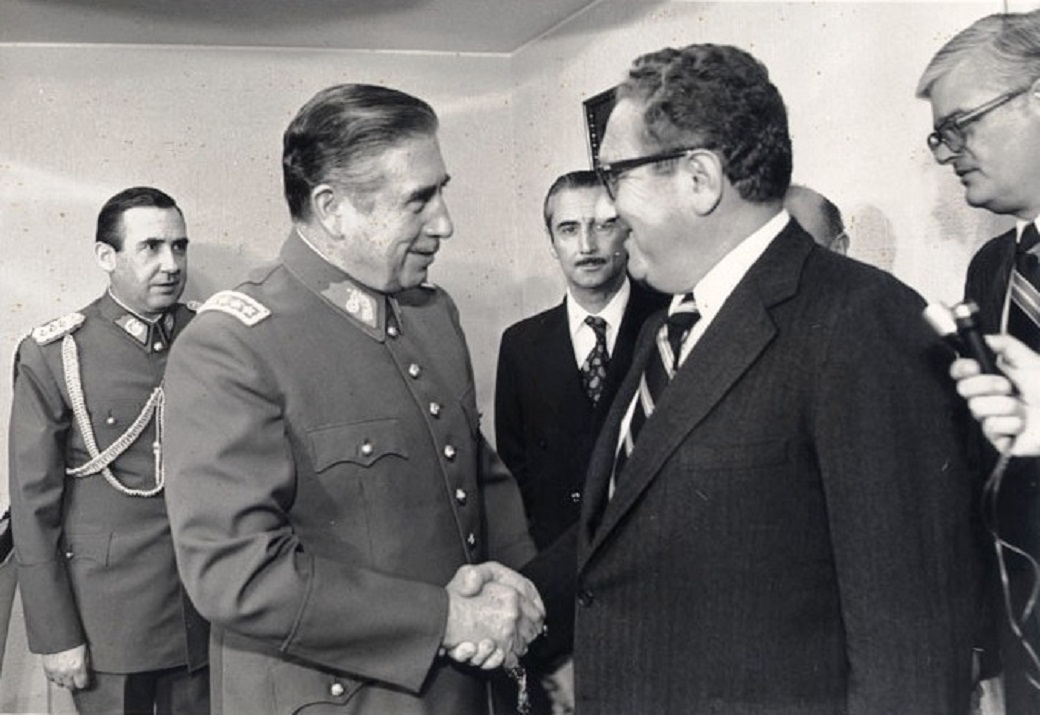
It was the national-security state’s obsessive fear of communism that led to the CIA’s orchestration of the coup in Chile in 1973 that ousted the democratically elected socialist president of the country, Salvador Allende, and replaced him with the brutal right-wing unelected military dictator Augusto Pinochet. Although it appears that Allende ended up committing suicide, no doubt to avoid being tortured, there is no doubt that at the inception of the coup, the Chilean national-security establishment was trying to assassinate him with missiles fired from Chilean fighter planes into Allende’s position in the national palace, with the full approval of its counterparts in the U.S. national-security establishment.

Moreover, we mustn’t forget the CIA’s kidnapping and murder of Gen. Rene Schneider, the head of Chile’s armed forces. They targeted him because he was opposed to the U.S.-orchestrated coup. He took the position that his oath to support and defend the constitution of Chile superseded US. demands for a coup to protect Chile from Allende’s socialism. Thus, U.S. officials targeted him for removal.

After Pinochet took power, he instituted a reign of terror in which his national-security henchmen kidnapped, tortured, raped, disappeared, or murdered tens of thousands of suspected communists, with the full support of U.S. officials.

Operation Condor

Operation Condor followed from that reign of terror. To ensure that suspected communists could not escape to neighboring countries, several other South American right-wing military dictatorships conspired with the Pinochet military dictatorship to coordinate efforts to ensure that no suspected communists could get away. As the secret documents revealed in the Washington Post article confirm, the CIA’s role in this Cold War operation was to provide the communications equipment that enabled its Latin American counterparts to efficiently coordinate their efforts.

Moreover, don’t forget also that the Pentagon and the CIA had just been defeated by the communists in Vietnam. Given their mindsets that the communists were winning and that America was now in greater danger than ever before of being taken over by the Reds, the Operation Condor brutes were viewed as great heroes for protecting America and the world from a  communist takeover.

The people who paid the price for this sordid, dark-side paranoia, of course were the tens of thousands of innocent people who were rounded up, tortured, raped, abused, disappeared, assassinated, and murdered.

The worst mistake the American people have ever made was permitting the federal government to be converted from a limited government republic to a national-security state. That conversion perverted America’s sense of moral values, conscience, and right conduct. Operation Condor is further proof of that fact.

JFK-CIA


Posted in Uncategorized | Tagged: , , , , | Leave a Comment »

Putin in Israel | The Nation

Posted by M. C. on February 4, 2020

Looking ahead, Putin has invited Trump to join him on Red Square on May 9, Russia’s “Victory Day,” a sacred commemoration of immense importance to the Kremlin and for most of Russia’s people. Certainly, President Trump should accept, if only to honor the estimated 27 million Soviet citizens who died in World War II. But here, too, will Washington politics and media discourage him from doing so?

https://www.thenation.com/article/world/putin-in-israel/

By Stephen F. Cohen

As with its 40-year predecessor, the new US-Russian Cold War has characteristic features, including sharply conflicting historical memories. Some of them are absurdly inaccurate and politically dangerous. Consider a recent ramifying example.

On January 23, Russian President Vladimir Putin was in Israel to commemorate Holocaust Remembrance Day and the 75th anniversary of the liberation of Auschwitz by the Soviet (mostly Russian) army. Representatives of many other countries also attended the solemn events, including US Vice President Mike Pence, but according to the Times of Israel, Putin was “the most formidable and dominant presence.” The reason, widely acknowledged in Israel though scarcely in the United States today, is that the Soviet army, more than any other, saved the surviving Jews of Europe as it defeated Nazi Germany in route from Stalingrad to Berlin.

Ukrainians, most of them then Soviet citizens, played a large role in those historical events, both as Holocaust victims and as soldiers in the Soviet army. Nonetheless, at about the same time as the ceremonies in Israel were underway, the inveterate bipartisan anti-Russian lobby in Washington—notably at this moment Democratic Representative Adam Schiff and a predictable slew of other lawmakers and impeachment witnesses—were declaring Ukraine today’s front line against Russia’s “new aggression.” Among other things, this was not the peace with Russia promised, and indeed sought since his election, by Ukraine’s new president Volodymyr Zelensky.

At the very moment when peace between Ukraine and Russia is within reach, and with it the possibility of saving many lives, warmongering—an ugly but appropriate word—intensifies in Washington. On December 4, for example, in a formulation rarely heard since the early 1950s, a pro-impeachment witness, not known for any Russia, Ukraine, or related expertise, told Congress that the United States must make “sure that the Ukraine remains strong and on the front lines so they fight the Russians there and we don’t have to fight them here.” By January 22, this had become a warfare mantra in Congress, with Democratic Representative Jason Crow, an impeachment manager, also assuring members that America must “fight Russia over there so we don’t have to fight Russia here.” Whatever the merits of the impeachment process, its legacy, as I have warned from the outset, is likely to be an ever-worsening new Cold War and thus conceivably something even more dire.

Yet these fateful issues cannot be candidly discussed in Washington because they are widely regarded, as NBC’s Chuck Todd mindlessly characterized them, as “Russian talking points” and “disinformation.” By implication, and sometimes in direct accusations, anyone who does raise them is a “Kremlin apologist.”

Such continues to be the state of American discourse about this new and more perilous Cold War. Will any of the current Democratic presidential candidates change the discourse­­—or be permitted to do so by “moderators” of their debates? Or must we rely almost entirely on President Trump’s continuing, and substantially thwarted, effort to implement his campaign promise to “cooperate with Russia”?

Looking ahead, Putin has invited Trump to join him on Red Square on May 9, Russia’s “Victory Day,” a sacred commemoration of immense importance to the Kremlin and for most of Russia’s people. Certainly, President Trump should accept, if only to honor the estimated 27 million Soviet citizens who died in World War II. But here, too, will Washington politics and media discourage him from doing so?

Be seeing you


Posted in Uncategorized | Tagged: , , , , | Leave a Comment »

Covert Regime Change: America’s Secret Cold War | Mises Institute

Posted by M. C. on October 10, 2019

https://mises.org/library/covert-regime-change-americas-secret-cold-war?utm_source=Mises+Institute+Subscriptions&utm_campaign=4f751f273c-EMAIL_CAMPAIGN_9_21_2018_9_59_COPY_01&utm_medium=email&utm_term=0_8b52b2e1c0-4f751f273c-228343965

David Gordon

Covert Regime Change: America’s Secret Cold War
Lindsey A. O’Rourke
Cornell University Press, 2018
330 pages

Lindsey O’Rourke has given us a devastating indictment of the foreign policy of the United States during the Cold War and after. O’Rourke, who teaches political science at Boston College, is not a principled non-interventionist in the style of Ron Paul. To the contrary, she sympathizes with the “Offensive Realism” of John Mearsheimer, under whom she studied at the University of Chicago. Accordingly, she does not oppose the efforts of states to increase their power over other states but rather regards this as inevitable.

Her argument is that a key element of American foreign policy has failed to achieve its purpose. The United States has often aimed at “regime change,” both overt and covert. The latter type of regime change has been especially unsuccessful, and, to show that this is so, the bulk of the book analyzes in detail a number of instances of covert regime change during the Cold War.

She states her conclusion in this way: “The vast majority of America’s overt and covert regime changes during the Cold War did not work out as their planners intended. Washington launched these regime changes to resolve security-oriented interstate disputes by installing foreign leaders with similar policy preferences. American experiences during the Cold War, however, illustrate that this was often quite difficult in practice. Thirty-nine out of sixty-four covert regime changes failed to replace their targets, and because America’s role in most of these failed attempts generally did not remain a secret, they further soured Washington’s already negative relationship with the target state. Even nominally successful covert operations — where the US backed forces assumed power — failed to deliver on their promise to improve America’s relationship with the target state.”

Readers of Ludwig von Mises will at once recall this pattern of argument. Just as Mises argues that economic interventions such as minimum wage laws fail to achieve the stated goals of their proponents, so does O’Rourke maintain that regime change, especially of the covert variety, suffers from the same flaw. Again, just as Mises does not challenge the stated goal of higher wages without unemployment, so does O’Rourke accept the goal of an increase in the power of the United States.

In order to grasp the way O’Rourke reaches her conclusion, we must first understand her use of terms. By “regime,” she means “either a state’s leadership or its political processes and institutional arrangements.” A covert regime change “denotes an operation to replace the political leadership of another state where the intervening state does not acknowledge its role publicly. These actions include successful and failed attempts to covertly assassinate foreign leaders, sponsor coups d’état, influence foreign democratic elections, incite popular revolutions, and support armed dissident groups in their bids to topple a foreign government.”…

O’Rourke, one gathers, hopes that the United States will learn from the failure of covert regime change and instead pursue the inevitable grasp for power in a more rational manner. In this she resembles her mentor John Mearsheimer, who hopes that America will abandon ideological crusades in favor of “offshore balancing.” Those of us who, like Murray Rothbard and Ron Paul, favor a noninterventionist foreign policy will not be satisfied with this. Instead, we need to ask deeper questions. Is the pursuit of power in the international system indeed inevitable? Does it not depend rather on human free choice? If so, the time has come to abandon completely a failed policy. “Why quit our own to stand upon foreign ground?”

Be seeing you

world tour


Posted in Uncategorized | Tagged: , | Leave a Comment »

The Citadels of America’s Elites: Fractured and At Odds with Each Other — Strategic Culture

Posted by M. C. on August 5, 2019

One such orientation insists on a renewal of the Cold War to sustain and renew that supersized military-security complex, which accounts for more than half of America’s GDP.

https://www.strategic-culture.org/news/2019/08/03/citadels-america-elites-fractured-and-at-odds-with-each-other/

Alastair Crooke


Something is ‘up’. When two Financial Times columnists – pillars of the western Establishment – raise a warning flag, we must take note: Martin Wolf was first off, with a piece dramatically headlined: The looming 100-year, US-China Conflict. No ‘mere’ trade war, he implied, but a full-spectrum struggle. Then his FT colleague Edward Luce, pointed out that Wolf’s “argument is more nuanced than the headline. Having spent part of this week among leading policymakers and thinkers at the annual Aspen Security Forum in Colorado,” Lucetr writes, “I am inclined to think Martin was not exaggerating. The speed with which US political leaders of all stripes have united behind the idea of a ‘new cold war’ is something that takes my breath away. Eighteen months ago the phrase was dismissed as fringe scaremongering. Today it is consensus.”

A significant shift is underway in US policy circles, it seems. Luce’s final ‘take’ is that “it is very hard to see what, or who, is going to prevent this great power rivalry from dominating the 21st century”. It is clear that there is indeed now a clear bi-partisan consensus in the US on China. Luce is surely right. But that is far from being the end of it. A collective psychology of belligerence seems to be taking shape, and, as one commentator noted, it has become not just a great-power rivalry, but a rivalry amongst ‘Beltway’ policy wonks to show “who has the bigger dick”.

And quick to demonstrate his, at Aspen (after others had unveiled their masculinity on China and Iran), was the US envoy for Syria (and deputy US National Security Adviser), James Jeffrey: A US policy boiled down to one overriding component: ‘hammering Russia’. “Hammering Russia” (he insisted repeatedly), will continue until President Putin understands there is no military solution in Syria (he said with heightened verbal emphasis). Russia falsely assumes that Assad has ‘won’ war: “He hasn’t”, Jeffrey said. And the US is committed to demonstrating this fundamental ‘truth’.

Therefore, the US plans to ‘up the pressure’; will escalate the cost to Russia, until a political transition is in place, with a new Syria emerging as a “normal nation”. The US will ‘leverage’ the costs on Russia across the board: Through military pressure – ensuring a lack of military progress in Idlib; through Israelis operating freely across Syria’s airspace; through ‘US partners’ (i.e. the Kurds) consolidating in NE Syria; through economic costs (“our success” in stopping reconstruction aid to Syria); through extensive US sanctions on Syria (integrated with those on Iran) – “these sanctions are succeeding”; and thirdly, by diplomatic pressure: i.e. “hammering Russia” in the UN.

Well, the US shift on Syria also takes one’s breath away. Recall how little time ago, the talk was of partnership, of the US working with Russia to find a solution in Syria. Now the talk of the US Envoy is the talk of Cold War with Russia as much as were his Aspen colleagues – albeit in respect to China. Such ‘machismo’ is evidenced too coming from the US President: “I could – if I wanted – end the US war in Afghanistan in a week”, (but it would entail the deaths of 10 million Afghans), Trump excalimed. And, in the same mode, Trump now suggests that for Iran, he is easy: war or not – either path is fine, for him…

The point here is that the tacit coupling of Russia – now termed a major ‘foe’ of America by US Defence officials – and China, inevitably is being refracted back at the US, in terms of a growing strategic Russo-Chinese partnership, ready to challenge the US and its allies…

So, as we look around, the picture seems to be one in which US bellicosity is somehow consolidating as an élite consensus (with but a few individuals courageously pushing-back on the trend). So what is going on?

The two FT correspondents effectively were signalling – in their separate articles – that the US is entering on a momentous and hazardous transformation. Further, it would seem that America’s élite is being fractured into balkanised enclaves that are not communicating with one another – nor wanting to communicate with each other. Rather, it is another conflict between deadly rivals.

One such orientation insists on a renewal of the Cold War to sustain and renew that supersized military-security complex, which accounts for more than half of America’s GDP…

The leader of any nation is never sovereign. He or she sits atop a pyramid of quarrelling princelings (Deep State princelings, in this instance), who have their own interests and agenda. Trump is not immune to their machinations. One obvious example being Mr Bolton’s successful gambit in persuading the Brits to seize the Grace I tanker off Gibraltar. At a stroke, Bolton escalated the conflict with Iran (‘increased the pressure’ on Iran, as Bolton would probably term it); put the UK at the forefront of America’s ‘war’ with Iran; divided the JCPOA signatories, and embarrassed the EU. He is a canny ‘operator’ – no doubt about it.

And this is the point: these princelings can initiate actions (including false flags) that drive events to their agenda; that can corner a President. And that is presuming that the President is somehow immune to a great ‘switch in mood’ among his own lieutenants (even if that consensus is nothing more than a fable that belligerency succeeds). But is it safe to assume Trump is immune to the general ‘mood’ amongst the varied élites? Do not his recent glib comments about Afghanistan and Iran suggest that he might leaning towards the new belligerency? Martin Wolf concluded his FT piece by suggesting the shift in the US suggests we may be witnessing a stumbling towards a century of conflict. But in the case of Iran, any mis-move could result in something more immediate – and uncontained.

Be seeing you

Bankster

Bankster


Posted in Uncategorized | Tagged: , , , , , | Leave a Comment »

The Pentagon’s new nuclear doctrine is scary as hell — RT Op-ed

Posted by M. C. on July 23, 2019

…maintaining a stranglehold over its empire…

https://www.rt.com/op-ed/464467-nuclear-weapons-doctrine-american/

Darius Shahtahmasebi

The Pentagon is actively contemplating the use of nuclear weapons to win wars that need not be fought in the first place. As expected, opposition to the US nuclear doctrine is almost non-existent in the mainstream media.

It used to be the case that the idea of using nuclear weapons in a real-world conflict was such a taboo idea that no one was ever openly to contemplate it. We need only look back to the end of World War II to realize how catastrophic and harmful nuclear weapons can be on civilian populations; yet we shouldn’t have had the blueprint of Nagasaki and Hiroshima to know that the use of nuclear weapons would be a frightening and criminal act. They are deadly and unnecessary, end of story. You can all save me the cliched response “But they ended a war.”

Firstly, the use of nuclear weapons didn’t end a war – it started one (the Cold War). Secondly, anyone who knows even a little bit of history knows that Japan was on the verge of defeat. But don’t take my word for it – I wasn’t there. But those who were typically made statements to the effect that “[t]he use of [the atomic bombs] at Hiroshima and Nagasaki was of no material assistance in our war against Japan. The Japanese were already defeated and ready to surrender.” But I digress.

The United States military has decided that the only chance it has of maintaining a stranglehold over its empire is to actively contemplate the scenarios and situations in which it should deploy the use of nuclear weapons.


According to the Pentagon’s June Nuclear Operations or Joint Publication 3-72 (which was unsurprisingly made private not long after its release), the US believes that “developing nuclear contingency plans sends an important signal to adversaries and enemies that the US has the capability and willingness to employ nuclear weapons to defend itself and its allies and partners”.

Nuclear weapon capabilities constitute a vital element of national defense,” the document states. “Nuclear operations are those activities within the range of military operations, to include deterrence, crisis response, strike assessment and return to stability.”

The Pentagon apparently believes that it is “necessary” and “prudent” to “preplan nuclear employment options for contingencies prior to a crisis,” which includes “a means to assess the anticipated effectiveness of options prior to execution,” as well as a “means to assess the nature and extent of unintended consequences.”…

Somehow, the use of nuclear weapons is only scary or worthy of discussion if that discussion involves countries such as Russia and China. Just take the bombshell admission that the US stores nuclear weapons in Turkey as an example. The US is saying it will remove Ankara from its F-35 fighter jet program – but only because Turkey has purchased the advanced S-400 missile defense system from Moscow. The US barely blinked as a failed coup in 2016 could have put advanced nuclear weapons in some very unsavory hands…

Be seeing you

e4dd4-iu


Posted in Uncategorized | Tagged: , , , , , , | Leave a Comment »