MCViewPoint

Opinion from a Libertarian ViewPoint

Posts Tagged ‘Colonialism’

‘Humanitarianism’ As an Excuse for Colonialism and Imperialism

Posted by M. C. on January 23, 2024

by Ryan McMaken

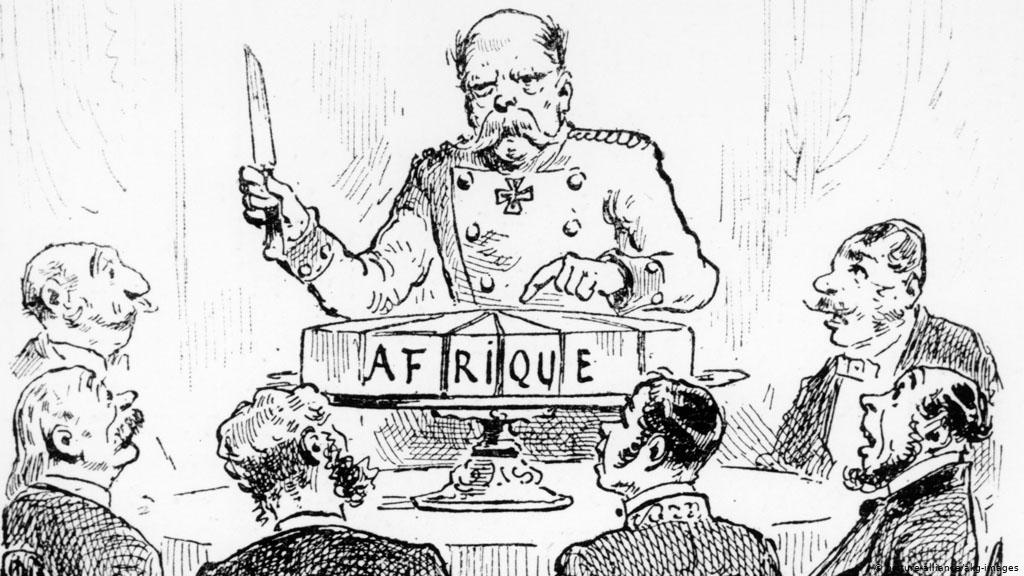
By the early twentieth century, the idea of the civilizing mission became a dominant mode of thinking for imperialists. The British imagined they were civilizing the backward Catholic Irish. The Russian colonizers in Siberia saw themselves as the “benevolent civilizer[s] of Asia.” British colonies in Africa and Asia were cast as outposts of civilized European culture in a sea of primitives. The Americans, not content with their own civilizing mission in North America, did the same in Puerto Rico where American reformers sought to replace Puerto Rico’s “backward” and “patriarchal” culture with a “‘rational’ North American one.”3
https://libertarianinstitute.org/articles/humanitarianism-as-an-excuse-for-colonialism-and-imperialism/

imperialism on a usa flag background, 3d rendering. united state

Spreading civilization and human rights has long been used as an excuse for state-building through colonialism and imperialism. This idea dates back at least to early Spanish and colonial efforts in the New World, and the rationale was initially employed as just one of many. The importance of the conquest-spreads-civilization claim increased, however, as liberalism gained ground in Europe in the nineteenth century. Liberals were more skeptical of the benefits of imperialism, so, as political scientist Lea Ypi notes: “During the late nineteenth century and early twentieth century, the purpose of colonial rule was declared to be the ‘civilizing mission’ of the West to educate barbarian peoples .” The residents of these colonies were deemed to be “unsuited to setting up or administering a commonwealth both legitimate and ordered in human and civil terms.” The implied conclusion was that it was necessary that the European rules “take over [the natives’] administration, and set up new officers and governors on their behalf, or even give them new masters, so long as this could be proved to be in their interest.”1

That last caveat would become important to late colonial rationales: colonial rule was said to be in the interests of the natives themselves, who were incapable of proper and legitimate self-government. The British adopted these Spanish notions as their own in later centuries, and by the nineteenth century, we find John Stuart Mill claiming that “barbarians” were incapable of administering a respectable legal regime, and thus “nations which are still barbarous have not got beyond the period during which it is likely to be for their benefit that they should be conquered and held in subjection by foreigners.”2

The old empires have largely disappeared but this thinking has certainly not disappeared. Today, the same thinking takes the form of support for humanitarian intervention both internationally and domestically. Just as the traditional imperialists assumed the residents of the colonies were too “backward” to be capable of enlightened self-government, modern internationalists and progressives assume that the old colonial metropoles still must serve as enforcers of human rights across the globe. Moreover, at the domestic level, the same rationale is employed to oppose decentralization or secession for separatist groups. The old imperialist mentality still prevails: self-determination and political independence must be opposed in the name of protecting human rights.

The “Civilizing Mission” of Empire

By the early twentieth century, the idea of the civilizing mission became a dominant mode of thinking for imperialists. The British imagined they were civilizing the backward Catholic Irish. The Russian colonizers in Siberia saw themselves as the “benevolent civilizer[s] of Asia.” British colonies in Africa and Asia were cast as outposts of civilized European culture in a sea of primitives. The Americans, not content with their own civilizing mission in North America, did the same in Puerto Rico where American reformers sought to replace Puerto Rico’s “backward” and “patriarchal” culture with a “‘rational’ North American one.”3 In Algeria, the ultimate goal was to bring the blessings of French culture and government to all Algerians via government schools. The locals who embraced French culture were labeled the évolués—literally, the “evolved ones.”

Among the imperial powers, rule by the metropole’s central state became intimately intertwined with what the elites saw as humanitarianism. Imperialists warned that without the metropole’s oversight, residents of the colonies would slaughter each other, or be constantly at war. Imperialists thus cast themselves as instruments of peace and safety for vulnerable minority populations. Ann Laura Stoler describes how, “appeals regarding moral uplift, compassionate charity, appreciation of cultural diversity, and protection” of women and children from aggressive men “were woven into the very weft of empire. —[they were] how control over…markets, land, and labor were justified…”4 Alleged humanitarian efforts thus often consisted of the imperial powers protecting the colonized populations from themselves. Alan Lester and Fae Dussart note: “Appeals for the protection of indigenous peoples against white and even British men…were also intrinsic to the legitimation of Britain’s governance of newly colonized spaces.”5

Imperialists developed informal litmus tests designed to “prove” that various groups of barbarians were ripe for colonization.

See the rest here

Be seeing you

Posted in Uncategorized | Tagged: , , | Leave a Comment »

Canadian Human Rights Commission Labels Christmas Celebration “Discrimination Grounded In Colonialism”

Posted by M. C. on December 12, 2023

Tyler Durden's Photo

by Tyler Durden

Trudeau’s “Happy Holiday” present to Canada.

https://www.zerohedge.com/political/canadian-human-rights-commission-labels-christmas-celebration-discrimination-grounded

The cancerous spread of woke ideology into every facet of society and government is more obvious in some places compared to others, but every so often the movement crosses a line and sparks considerable opposition.  In the US, the social justice movement seems to have hit a few snags; numerous companies adopting and promoting ESG related propaganda have been pummeled with successful boycotts, losing billions in profits and in stock value.  Overall public sentiment is quickly turning against major universities as a root source of woke beliefs.  And, government officials pandering to the extreme left are confronted with increasing vitriol from the populace.

It would seem that Canadians are also hitting their limit these days when it comes to the far-left, and it took a thinly veiled attack on Christmas to do it.

Part of the ongoing invasion of the woke movement involves regular attempts to undermine Christian holidays as “problematic” and archaic.  Leftists argue that increasing diversity (mostly through open border policies or illegal immigration) requires increasing inclusion at the national level.  Meaning, it is not for immigrants to adapt to the west, the west must adapt to them.  National celebrations like Christmas are therefore a representation of “discrimination” because they are being given preference over minority holidays.

This was the message given by the Canadian Human Rights Commission (CHRC) in a paper published under the radar in October.  The treatise on “Religious Intolerance” was then condemned in a motion unanimously adopted on Nov. 30 by the House of Commons, the lower chamber of the Canadian Parliament.  The paper cited Christianity’s two biggest holy days (Christmas and Easter) as examples of “present-day systemic religious discrimination” linked to colonialism because they are statutory holidays in Canada.

The CHRC was established by the Canadian government in 1977 and claims to be an “independent” watchdog.  It is empowered under the Canadian Human Rights Act to investigate and to settle complaints of discrimination in employment and in the provision of services within federal jurisdiction.  The group is similar to the ACLU in that its momentum is ever to the deepest reaches of the political left.  Their ideological positions carry weight in the higher echelons of government; for example, their paper attacking Christmas has since been avidly defended by Prime Minister Justin Trudeau.

The woke all-or-nothing argument against state recognized religious holidays is built on a host of illogical demands.  First and foremost, Canada is a majority Christian nation, with 53.3% of the population identifying as Christian, 34.6% identifying as non-affiliated, and around 12% identifying with several other faiths.  The next largest religious group in Canada is Muslim, representing only 5% of the religious population.  

But what about that 34% of people who are non-affiliated?  Do they feel discriminated against by national Christmas celebrations?  No, not really.

See the rest here

Be seeing you

Posted in Uncategorized | Tagged: , , , | Leave a Comment »

The woke war on the Enlightenment

Posted by M. C. on July 31, 2023

Thinkers like Kant, Diderot and Rousseau have been unjustly smeared as apologists for empire.

This is an extract from Susan Neiman’s new book, Left Is Not Woke, published by Polity.

Too many who lean left today claim that the Enlightenment was the ideology of colonialism. Some academics, for instance, have claimed that it was a racist, colonial endeavour from the outset. That the Enlightenment needs to be ‘decolonised’. One piece in Harvard Magazine is even entitled ‘How the Enlightenment led to colonialism’.

Do those who make this claim imagine there was no colonialism before the Enlightenment? Presumably not, but it’s important to understand how something so false could come to seem true. (Raise a glass to the virtue of trying to understand those you disagree with.)

Let’s start with the fact that empires were not invented by the modern European nations whose advanced ships and guns were more effective in maintaining them than forced marches and pikes. Stronger nations have colonised weaker ones since the beginning of recorded history; indeed, before there were nations in our modern sense at all. Greeks and Romans built empires, as did the Chinese, the Assyrians, the Aztecs, the Malians, the Khmer and the Mughals. Those empires operated with varying degrees of brutality and repression, but all of them were based on an equation of might and right, which amounts to no concept of right at all. All of them used their power to compel weaker groups to surrender resources, submit tribute, press soldiers into service for further imperial wars, and accept commands that overrode local custom and law. As far as we know, there was one thing they lacked: a guilty conscience.

Emperors who were particularly cruel might be criticised, though brutal practices in colonised lands were rarely attacked by those in the home states. Objections to Nero or Caesar usually focussed on their crimes against Romans. The 16th-century Dominican friar, Bartolomeo de las Casas, was an early exception. His Short Account of the Destruction of the Indies denounced the atrocities that the Spanish conquest visited on indigenous peoples. But Las Casas argued for a kinder, gentler form of colonisation, which included substituting African for South American slave labour. He never questioned the imperial project as a whole.

The Enlightenment did, however. Here is Kant’s stinging attack on colonialism:

‘Compare the inhospitable actions of the civilised and especially of the commercial states of our part of the world. The injustice they show to lands and peoples they visit (which is equivalent to conquering them) is carried by them to terrifying lengths. America, the lands inhabited by the Negro, the Spice Islands, the Cape, etc, were at the time of their discovery considered by these civilised intruders as lands without owners, for they counted the inhabitants as nothing… [they] oppress the natives, excite widespread wars among the various states, spread famine, rebellion, perfidy, and the whole litany of evils which afflict mankind. China and Japan, who have had experience with such guests, have wisely refused them entry.’ (1)

Though he was hardly a graceful writer, Kant was usually careful with words. He rarely used the word ‘evil’. Yet here, he is crystal clear: colonialism creates every kind of evil that affects humankind. And while he praises the wisdom of China and Japan in closing their doors to European invaders, his critique of colonialism is not confined to the conquest of ancient, sophisticated cultures. At a time when nascent colonial powers justified their seizure of indigenous territories in Africa and the Americas by claiming those lands were unoccupied, or their peoples uncivilised, Kant decried the injustice that ‘counted the inhabitants as nothing’.

Diderot went even further, arguing that indigenous peoples threatened by European colonisers would have reason, justice and humanity on their side if they simply killed the invaders like the wild beasts those intruders resembled. The Hottentots, he urged, should not be fooled by the false promises of the Dutch East Indian Company which had recently founded Cape Town.

‘Fly, Hottentots, fly!… Take up your axes, bend your bows, and send a shower of poisoned darts against these strangers. May there not be one of them remaining to convey to his country the news of their disaster.’ (2)

Update the weaponry and you would be forgiven for thinking you’d come upon a quote from Frantz Fanon. Nor is this passage unusual: Diderot, the 18th-century philosopher, called for anti-colonialist violence at least as often, and often more dramatically, than Fanon, the 20th-century psychiatrist.

Enlightenment critics of empire didn’t simply point out its cruelty. They also deconstructed the theories that sought to justify the theft of indigenous lands and resources. The most important of those theories was John Locke’s labour theory of property, which was used to argue that nomadic peoples had no claim to the lands on which they hunted and gathered. According to Locke, people only acquire property through agriculture, mixing their labour with the land they work and thereby obtaining ownership. Kant disagreed:

‘If those people are shepherds or hunters (like the Hottentots, the Tungusi, or most of the American Indian nations) who depend for their sustenance on vast open stretches of land, (foreign) settlement may not take place by force but only by contract, and indeed by contract that does not take advantage of the ignorance of those inhabitants with respect to ceding their lands.’ (3)

Here Kant not only undercut Locke’s theory of property, but also called out the shameless exploitation of peoples who, having no concept of private property in land, might cede the island of Manhattan for a handful of beads. Later critics dismissed this argument against settler colonialism as proof that Kant was unable to judge cultural or historical matters, since ‘primitive peoples’ lacked concepts of rights and were thus incapable of entering into treaties.

If the best of Enlightenment thinkers denounced the vast theft of lands that made up European empires, what did they make of the vast theft of peoples? Most were unequivocal in condemning slavery. Kant’s categorical imperative, which expresses the basic moral law, states that people should never be treated as means. This rules out slavery and other forms of oppression. These thinkers also lambasted European complicity in maintaining slavery, even by those who were not themselves slaveholders.

Read the Whole Article

Be seeing you

Posted in Uncategorized | Tagged: , , , , , | Leave a Comment »

The Case of Colonialism: Secession for Thee, But Not for Me | The Libertarian Institute

Posted by M. C. on June 12, 2021

Although Western regimes like the United States like to talk a lot about self-determination for others outside the U.S. itself, the regime and its supporters steadfastly deny that the nation contains any minority groups—ideological, religious, or otherwise—that ought to be granted autonomy in the fashion of colonized populations in Africa or Asia. Even when the Left emphasizes the existence of “oppressed minorities” the answer always lies in a larger, more active regime, and in promises of more “democracy.”

https://libertarianinstitute.org/articles/the-case-of-colonialism-secession-for-thee-but-not-for-me/

by Ryan McMaken

18277179 101

The twentieth century was a century of secession. Since the end of the Second World War, the number of independent states in the world has nearly tripled as new states, through acts of secession, came into existence. This was driven largely by the wave of decolonization that occurred following the Second World War.1

From the late 1940s through the 1970s, across Africa and Asia—and even in Europe, as in the case of Malta—dozens of colonial territories declared independence through referenda and other strategies.

Throughout these processes of decolonization, much of the international community—including the United States—was supportive. Following the Second World War, the United States explicitly supported decolonization efforts, and was often quick to recognize the new countries’ sovereignty and establish diplomatic relations.

The U.S. frequently supported these acts of secession because, it was said, it was morally imperative so as to respect the rights of “self-determination” denied to the world’s colonized territories. Moreover, many of the world’s sovereign states supported this global spree of secessionist movements, from the US, to the Soviet Union and China, and within many international organizations like the United Nations.

Yet, when secession is suggested in other contexts, today’s regimes are far less enthusiastic and generally condemn the very idea of secession.

For example, the Spanish regime today opposes independence for Catalonia and for the Basque Country. The Russians fought a long and bloody war to prevent independence for Chechnya. The U.S. regime would clearly take a very dim view of any member state or region that attempted to declare independence.

Doesn’t this illustrate a glaring inconsistency in thinking? If self-determination is desirable for African or Asian colonies, why is secession verboten in other situations?

The answer is it’s easy to support secession in far-off territories of little strategic value. When secession hits “close to home,” on the other hand, regimes that have long pretended to be in favor of self-determination will quickly turn on a dime and begin to manufacture a multitude of reasons as to why secession and self-determination are not, in fact, tolerable after all.

Defining down the Meaning of “Colony”

The idea of national self-determination as an explicit political movement originates with the American Revolution. As Jefferson and his colleagues stated in the Declaration of Independence, “it is the right of the people to alter or abolish” a government deemed to be abusive by the governed. Obviously—given that the Declaration of Independence was a declaration of secession—these strategies rightfully employed by “the people” included secession.

It is easy to apply the Jefferson’s notion of self-determination to any colony, whether in North America in the eighteenth century, or in Africa in the twentieth. Thus, governments looking to show off their humanitarian chops—what we might today call “virtue signaling”—will embrace secession. But only for purposes of decolonization—and regimes are very careful to limit what they mean by “colonies” and “decolonization.”

In this way of thinking, there’s a bright shiny line between a population oppressed by colonizers, and one that isn’t. Cases like Nigeria or India, for example, offer easy cases. Nigeria and India were both controlled by Britain and subject to British political domination. But, both these places are far away from Britain itself, and their populations—at least in the mid twentieth century—were easy to distinguish visually from the British population. In other words, the people in these colonies “looked like” what one expects to see in foreigners exploited by colonizers. Moreover, these populations did not have direct representation in Parliament.

Yet none of these factors are really the key issues in determining if a population is denied self-determination. Yes, the Indians and the Nigerians did not have votes in Parliament. Yes, the Indians and the Nigerians often had interests very different from those of their rulers who governed from thousands of miles away.

But colonization and the denial of self-determination is not just something that occurs in faraway lands where people look different and speak different languages.

In his 1927 book Liberalism, Mises contends that the denial of self-determination is most certainly not just for people who live in colonial territories. Indeed, self-determination is routinely denied even within polities that are democratic. Mises writes:

The situation of having to belong to a state to which one does not wish to belong is no less onerous if it is the result of an election than if one must endure it as the consequence of a military conquest…. To be a member of a national minority always means that one is a second-class citizen.

In other words, if a person, for whatever reason, is forced to be part of a nation-state or empire in which he does not wish to be a part—even if he can vote in elections—his situation is not fundamentally different from one who has been “colonized” via military conquest.

After all, any group or any “people”—to use Jefferson’s term—which is in a permanent voting minority will indeed find itself at an immense disadvantage. Mises illustrates this in the case of a person who is part of a linguistic minority:

See the rest here

This article was originally featured at the Ludwig von Mises Institute

Be seeing you

Posted in Uncategorized | Tagged: , , | Leave a Comment »

Mises on Nationalism, Colonialism, and the Right of Self-Determination | Mises Wire

Posted by M. C. on May 27, 2021

As a classical liberal, Mises is careful to specify that the right of self-determination is not a collective right but an individual right: “It is not the right of self determination of a delimited national unit, but rather the right of the inhabitants of every territory to decide on the state to which they wish to belong.” Mises makes it crystal clear that self-determination is an individual right that would have to be granted to “every individual person . . . if it were in any way possible.” It should also be noted in this respect that Mises rarely speaks of the “right of secession,” perhaps because of its historical connotation of the right of a government of a subordinate political unit to withdraw from a superior one. 

https://mises.org/wire/mises-nationalism-colonialism-and-right-self-determination

Joseph T. Salerno

For Mises, liberalism first emerged and expressed itself in the nineteenth century as a political movement in the form of “peaceful nationalism.” Its two fundamental principles were freedom or, more concretely, “the right of self-determination of peoples” and national unity or the “nationality principle.” The two principles were indissolubly linked. The primary goal of the liberal nationalist movements (Italian, Polish, Greek, German, Serbian, etc.) was the liberation of their peoples from the despotic rule of kings and princes. Liberal revolution against despotism necessarily took on a nationalist character for two reasons. First, many of the royal despots were foreign, for example, the Austrian Hapsburgs and French Bourbons who ruled the Italians, and the Prussian king and Russian Czar who subjugated the Poles. Second, and more important, political realism dictated “the necessity of setting the alliance of the oppressed against the alliance of the oppressors in order to achieve freedom at all, but also the necessity of holding together in order to find in unity the strength to preserve freedom”. This alliance of the oppressed was founded on national unity based on a common language, culture, and modes of thinking and acting. 

Even though forged in wars of liberation, liberal nationalism was for Mises both peaceful and cosmopolitan. Not only did the separate national liberation movements view each other as brothers in their common struggle against royal despotism, but they embraced the principles of economic liberalism, “which proclaims the solidarity of interests among all peoples.” Mises stresses the compatibility of nationalism, cosmopolitanism, and peace:

[T]he nationality principle includes only the rejection of every overlordship; it demands self-determination, autonomy. Then, however, its content expands; not only freedom but also unity is the watchword. But the desire for national unity, too, is above all thoroughly peaceful. . . . [N]ationalism does not clash with cosmopolitanism, for the unified nation does not want discord with neighboring peoples, but peace and friendship.1

As a classical liberal, Mises is careful to specify that the right of self-determination is not a collective right but an individual right: “It is not the right of self determination of a delimited national unit, but rather the right of the inhabitants of every territory to decide on the state to which they wish to belong.” Mises makes it crystal clear that self-determination is an individual right that would have to be granted to “every individual person . . . if it were in any way possible.” It should also be noted in this respect that Mises rarely speaks of the “right of secession,” perhaps because of its historical connotation of the right of a government of a subordinate political unit to withdraw from a superior one. 

While championing of self-determination as an individual right, Mises argues that the nation has a fundamental and relatively permanent being independent of the transient state (or states) which may govern it at any given time. Thus he refers to the nation as “an organic entity [which] can be neither increased nor reduced by changes in states.” Accordingly, Mises characterizes a man’s “compatriots” as “those of his fellow men with whom he shares a common land and language and with whom he often forms an ethnic and spiritual community as well.” In the same vein, Mises cites the German author J. Grimm, who refers to the “natural law . . . that not rivers and not mountains form the boundary lines of peoples and that for a people that has moved over mountains and rivers, its own language alone can set the boundary.” The nationality principle therefore implies that liberal nation-states may comprise a monoglot people inhabiting geographically non-contiguous regions, provinces and even villages. Mises contends that nationalism is thus a natural outcome of and in complete harmony with individual rights: “The formation of [liberal democratic] states comprising all the members of a national group was the result of the exercise of the right of self determination, not its purpose.”2

It should be noted here that, in contrast to many modern libertarians who view individuals as atomistic beings who lack emotional affinities and spiritual bonds with selected fellow humans, Mises affirms the reality of the nation as “an organic entity.” For Mises the nation comprises humans who perceive and act toward one another in a way that separates them from other groups of people based on the meaning and significance the compatriots attach to objective factors such as shared language, traditions, ancestry and so on. Membership in a nation, no less than in a family, involves concrete acts of volition based on subjective perceptions and preferences with respect to a complex of objective historical circumstances. According to Murray Rothbard, who shares Mises’s view of the reality of the nation separate from the state apparatus:

Contemporary libertarians often assume, mistakenly, that individuals are bound to each other only by the nexus of market exchange. They forget that everyone is necessarily born into a family, a language, and a culture. Every person is born into one of several overlapping communities, usually including an ethnic group, with specific values, cultures, religious beliefs, and traditions. . . . The ‘nation’ cannot be precisely defined; it is a complex and varying constellation of different forms of communities, languages, ethnic groups or religions. . . . The question of nationality is made more complex by the interplay of objectively existing reality and subjective perceptions.

Colonialism as the Denial of the Right of Self-Determination

Unlike many late 19th- and early 20th-century liberals, Mises was a passionate anti-colonialist. As a radical liberal, he recognized the universality of the right of self determination and the nationality principle for all peoples and races. He wrote powerful and scathing indictments against the European subjugation and mistreatment of African and Asian peoples and demanded a quick and complete dismantling of colonial regimes. It is worthwhile quoting Mises on this at length:

The basic idea of colonial policy was to take advantage of the military superiority of the white race over the members of other races. The Europeans set out, equipped with all the weapons and contrivances that their civilization placed at their disposal, to subjugate weaker peoples, to rob them of their property, and to enslave them. Attempts have been made to extenuate and gloss over the true motive of colonial policy with the excuse that its sole object was to make it possible for primitive peoples to share in the blessings of European civilization. . . . Could there be a more doleful proof of the sterility of European civilization than that it can be spread by no other means than fire and sword?

No chapter of history is steeped further in blood than the history of colonialism. Blood was shed uselessly and senselessly. Flourishing lands were laid waste; whole peoples destroyed and exterminated. All this can in no way be extenuated or justified. The dominion of Europeans in Africa and in important parts of Asia is absolute. It stands in the sharpest contrast to all the principles of liberalism and democracy, and there can be no doubt that we must strive for its abolition. . . . European conquerors . . . have brought arms and engines of destruction of all kinds to the colonies; they have sent out their worst and most brutal individuals as officials and officers; at the point of the sword they have set up a colonial rule that in its sanguinary cruelty rivals the despotic system of the Bolsheviks. Europeans must not be surprised if the bad example that they themselves have set in their colonies now bears evil fruit. In any case, they have no right to complain pharisaically about the low state of public morals among the natives. Nor would they be justified in maintaining that the natives are not yet mature enough for freedom and that they still need at least several years of further education under the lash of foreign rulers before they are capable of being, left on their own.

In those areas where native peoples were strong enough to mount armed resistance to colonial despotism, Mises enthusiastically supported and cheered on these national liberation movements: “In Abyssinia, in Mexico, in the Caucasus, in Persia, in China—everywhere we see the imperialist aggressors in retreat, or at least already in great difficulties.” 

To completely phase out colonialism, Mises proposed the establishment of a temporary protectorate under the aegis of the League of Nations. But he made it clear that such an arrangement was “to be viewed only as a transitional stage” and that the ultimate goal must be “the complete liberation of the colonies from the despotic rule under which they live.” Mises based his demand for the recognition of the right of self-determination and respect for the nationality principle among colonized peoples on the bedrock of individual rights:

No one has a right to thrust himself into the affairs of others in order to further their interest, and no one ought, when he has his own interests in view, to pretend that he is acting selflessly only in the interest of others.

The Breakdown of Liberal Nationalism: Majority Rule and Nationality Conflicts

See the rest here

Author:

Contact Joseph T. Salerno

Joseph Salerno is academic vice president of the Mises Institute, professor emeritus of economics at Pace University, and editor of the Quarterly Journal of Austrian Economics.

Posted in Uncategorized | Tagged: , , , | Leave a Comment »

The Brookings Hand Behind Russiagate Points Back to Rhodes Trust Coup on America — Strategic Culture

Posted by M. C. on August 15, 2020

To this day over 8000 students have been processed by the Rhodes Trust, with 32 being taken in from America every year permeating every branch of society.

The historian Carrol Quigley, of Georgetown University wrote of this cabal in his posthumously published “Anglo-American Establishment”:

“This organization has been able to conceal its existence quite successfully, and many of its most influential members, satisfied to possess the reality rather than the appearance of power, are unknown even to close students of British history. This is the more surprising when we learn that one of the chief methods by which this Group works has been through propaganda.

https://www.strategic-culture.org/news/2020/08/10/the-brookings-hand-behind-russiagate-points-back-to-rhodes-trust-coup-on-america/

 Matthew Ehret

An incredible report on Real Clear Politics by Paul Sperry on July 24 has revealed a new dimension to the Russiagate frenzy that contaminated American politics for the last four years. While all claims of Russian collusion between the Trump campaign and the Kremlin have been thoroughly debunked over recent months, it was believed that the culprits of this coup effort were merely swaths of deep state operatives in the DNC alongside British Intelligence assets like Christopher Steele, and Sir Richard Dearlove.

All of these things are still very true, but the story has just become significantly more interesting.

As investigative journalist Paul Sperry rigorously lays out in his report, a major piece of the Russiagate puzzle was revealed when it became known that the primary source used by Christopher Steele in shaping his dodgy dossier was not the high level Kremlin insider which the world was told, but rather a former Brookings Institute employee named Igor Danchenko.

This young Russian-born analyst who hadn’t been to Russia in decades admitted to the FBI in January 2017 that he had no contacts with any notable Russian operatives anywhere near the Kremlin (or even Russia itself it seems), and was totally confused when he was asked why he believed Steele hired him to put together an intelligence dossier on Trump in the first place!

Such admissions didn’t seem to bother the FBI at this time, who ignored the evidence of the dossier’s fraudulent foundations and proceeded to use the Steele/Danchenko material to acquire FISA warrants on Carter Page. This dossier also fueled the fires of the Russiagate inquisition and first gave voice to the narrative that Russia “hacked” the DNC emails (which have been completely refuted by former NSA insider Bill Binney).

The firestorm of revelations surrounding the Brookings Institute, have induced Rep. Devin Nunes to announce a long-awaited probe on the powerful liberal think tank which has acted as a controlling force in America’s deep state for decades and the powerful figure of the Institute’s former president Strobe Talbott.

Nunes stated:

“You may remember that the State Department was involved and there were additional dossiers that weren’t the Steele dossier- except that they mirrored the Steele dossier. And we think there is a connection between the [former] president of Brookings and those dossiers that were given to the State Department.”

Strobe Talbott not only led Brookings for years, but served as former Deputy Secretary of State of the Clinton White House, former director of the Council on Foreign Relations, was a member of the Trilateral Commissions executive committee and also acted as Chairman of the Foreign Affairs Policy Board of the Obama White House. It was Talbott who deployed Danchenko’s Brookings Institute mentor Fiona Hill to acquire a job at the National Security Council in 2017 where she not only advanced an anti-Russian war plan but testified in Trump’s impeachment trial in 2019.

Hill, who had known Christopher Steele since 2006 and were in frequent discussion since 2016, co-authored two Brookings Institute intelligence reports with Danchenko and endorsed him as a “creative and accomplished analyst and researcher” which was posted on his Linkedin account.

The “additional dossiers that weren’t the Steele dossier” addressed by Nunes is a reference to a lesser known dodgy dossier produced by Brookings-affiliated journalist Cody Shearer (brother-in-law of Strobe Talbott) which was crafted explicitly to validate the wildly unsupported claims found in Steele’s dossier.

Apparently having two dossiers full of the same lies is more believable than only one.

Other information which has surfaced- especially since Steele’s recent UK trial testimony was made public, is that Talbott reached out to the MI6 asset in August 2016 to discuss the dossier, while comparing notes on the Shearer file. With Trump’s surprise election in November 2016, both Steele and Talbott met to strategize how they should handle the Steele dossier going forward.

Another Brookings Institute player who interfaced directly with Steele and ensured that the dossier made it into the hands of prominent pro-impeachment figures and news media outlets in America was none other than regime-change queen Victoria Nuland herself who hired Steele as an advisor during the Ukraine Maidan debacle and met with him on several occasions to discuss the dossier before Trump’s election. Both Nuland and her neo-con husband Robert Kagan serve as Senior Fellows at Brookings Institute.

The Real issue of Talbott’s British Pedigree

Read the rest of this entry »

Posted in Uncategorized | Tagged: , , , , | Leave a Comment »

Must the West Beg the World for Forgiveness? – LewRockwell

Posted by M. C. on March 30, 2019

Slavery and Invasion

Is the white race, as Susan Sontag wrote, “the cancer of human history”?

NO.

Buchanan’s post has me baffled. Is this the same Buchanan that advocates the wall at the US Southern border?

Now no one denies that great sins and crimes were committed in that conquest. But are not the Mexican people, 130 million of them, far better off because the Spanish came and overthrew the Aztec Empire?

Maybe, maybe not. We will not know. A lot that would be different could have happened in 500 years.

Did not 300 years of Spanish rule and replacement of Mexico’s pagan cults with the Catholic faith lead to enormous advances for its civilization and human rights?

Probably, after the killing stopped. But we claim to be doing the same in Iraq, Afghanistan and Syria. How is that working for you, Pat? I am thinking you would admit – Not well.

Did the Aztecs have a right to be left alone by the European world?

If so, whence came that right?

The right to be left alone belonged to the Aztecs just as it belongs to every individual on today’s planet. Mr. B you are suppressing your inner Libertarian.

Behind this demand for an apology from Spain and the Church is a view of history familiar to Americans, and rooted in clashing concepts about who we are, and were.

Query: Can peoples who are ashamed of their nation’s past do great things in its future? Or is a deep-seated national guilt, such as that which afflicts many Germans today, a permanent incapacitating feature of a nation’s existence?

There is no reason for anyone to be ashamed of what ancestors from hundreds of years ago did. People have been doing bad stuff to other people ever since there have been people. No one’s ancestry is pristine. Not even the Jesus’.

The thing to do is help prevent it from happening again. If you are Libertarian think NAP, Non Agression Principle.

Apologies and reparations: Take slavery in the US.

The make up of the US is so different from 1840 it would take 10,000 pages of regulations to figure who had to apologize and, of course, pay whom. Native Americans, the Irish immigrants escaping the potato famine, Western and European immigrants of 1880 on, Koreans, various Asians. Do they pay for something that happened 200 years ago?

The democratic party is all about “fairness”, right? Unfortunately, Nancy, Bernie and Occasional-Cortex could have 10,000 pages knocked out in no time.

I think what underlies this to a great extent is the thought of receiving ‘free government money’ and, of course, votes in return.

The 900 pound invisible gorilla.

I am more concerned about what is happening today. Particularly the rampant child sex slavery in the Middle East.

https://www.lewrockwell.com/2019/03/patrick-j-buchanan/must-the-west-beg-the-world-for-forgiveness/

By

Have the Western peoples who conquered and changed much of the world been, on balance, a blessing to mankind or a curse? Is the history of the West, though replete with the failings of all civilizations, not unique in the greatness of what it produced?

Or are the West’s crimes of imperialism, colonialism, genocide, racism, slavery and maltreatment of minorities of color so sweeping, hateful and shameful they cancel out the good done?…

Be seeing you

Posted in Uncategorized | Tagged: , , , , , , | Leave a Comment »

How Britain stole $45 trillion from India | Colonialism | Al Jazeera

Posted by M. C. on December 29, 2018

https://www.aljazeera.com/indepth/opinion/britain-stole-45-trillion-india-181206124830851.html

And lied about it.

by

There is a story that is commonly told in Britain that the colonisation of India – as horrible as it may have been – was not of any major economic benefit to Britain itself. If anything, the administration of India was a cost to Britain. So the fact that the empire was sustained for so long – the story goes – was a gesture of Britain’s benevolence.

New research by the renowned economist Utsa Patnaik – just published by Columbia University Press – deals a crushing blow to this narrative. Drawing on nearly two centuries of detailed data on tax and trade, Patnaik calculated that Britain drained a total of nearly $45 trillion from India during the period 1765 to 1938.

It happened through the trade system. Prior to the colonial period, Britain bought goods like textiles and rice from Indian producers and paid for them in the normal way – mostly with silver – as they did with any other country. But something changed in 1765, shortly after the East India Company took control of the subcontinent and established a monopoly over Indian trade.

Here’s how it worked.

Read the rest of this entry »

Posted in Uncategorized | Tagged: , , | Leave a Comment »