MCViewPoint

Opinion from a Libertarian ViewPoint

Posts Tagged ‘Cuban Missile Crisis’

Do You Hear What I Hear? A Christmas Prayer for Peace

Posted by M. C. on December 23, 2023

by Michael Granger

If you look into it, you’ll discover that this song, far from being a centuries old church hymn or folk song, was written in 1962 at the height of the Cuban Missile crisis. The authors describe it as a plea for peace. With this information, one can easily interpret the star in a different manner, and it becomes clear why a star would have a tail. The song is worth an extra listen with consideration after this revelation regarding the situation.

https://libertarianinstitute.org/articles/do-you-hear-what-i-hear-a-christmas-prayer-for-peace/

depositphotos 57491911 s

If you were to listen to the popular Bing Crosby version of the Christmas classic, “Do You Hear what I Hear?”, you’d be forgiven for thinking the song is a simple diddy about the nativity of Christ, a very appropriate topic considering that this is what the holiday is about. You might also, however, notice a few anomalies with regard to the lyrics that could clue you in to the less obvious intent of Noël Regney and Gloria Shayne, the authors. For instance, why does a star have a “tail as big as a kite”? What is this “voice as big as the sea”? That doesn’t sound like the silent night that is normally ascribed to the birth of Jesus; quite the opposite.

See the rest here

Be seeing you

Posted in Uncategorized | Tagged: , , | Leave a Comment »

Why They Hated Kennedy, and Why They Killed Him

Posted by M. C. on December 21, 2023

by Jacob G. Hornberger

Equally important, the Cold War brought ever-increasing taxpayer-funded largess flowing into the coffers of the “defense” industry, along with the ever-increasing power and influence of the Pentagon, the CIA, and the NSA within the overall federal structure.

After the Cuban Missile Crisis, Kennedy achieved a breakthrough, one that threatened not only the ever-increasing power, money, and influence of the national-security branch, but also its very existence. Kennedy came to realize that the Cold War was just one great big racket — and a highly dangerous one at that.

While the decision to eliminate President Kennedy undoubtedly took place after his resolution of the Cuban Missile Crisis, it was without a doubt solidified when Kennedy ambushed his enemies within the U.S. national-security establishment with his Peace Speech at American University on June 10, 1963. With his Peace Speech, JFK was upsetting the Cold War apple cart that the Pentagon and the CIA were convinced would last forever. 

What was so significant about that speech?

After the end of World War II, the U.S. government was converted from its founding system of a limited-government republic to a governmental structure called a national-security state. The justification for this radical change, which was accomplished without even the semblance of a constitutional amendment, was that the United States now faced an enemy that was said to be even more threatening than Nazi Germany. That new enemy was “godless communism” as well as a supposed international communist conspiracy to take over the United States and the rest of the world — a conspiracy that was supposedly based in Moscow, Russia — yes, that Russia!

With the conversion to a national-security state, the U.S. government acquired many of the same totalitarian powers that were being wielded by the totalitarian communist states, such as the Soviet Union and Red China — powers that had been prohibited when the government was a limited-government republic. Such powers included state-sponsored assassinations, torture, kidnapping, indefinite detention, and coups.

Equally important, the Cold War brought ever-increasing taxpayer-funded largess flowing into the coffers of the “defense” industry, along with the ever-increasing power and influence of the Pentagon, the CIA, and the NSA within the overall federal structure. Over time, the national-security branch of the federal government would become the most powerful branch, the one to which the other three would inevitably defer. 

After the Cuban Missile Crisis, Kennedy achieved a breakthrough, one that threatened not only the ever-increasing power, money, and influence of the national-security branch, but also its very existence. Kennedy came to realize that the Cold War was just one great big racket — and a highly dangerous one at that.

That danger was manifested during the Cuban Missile Crisis. U.S. officials and their loyalists in the mainstream press have always maintained that the crisis was brought on by the Soviet Union and Cuba. Not so! It was brought on by the Pentagon and the CIA. It was those two entities that brought the world to within an inch of all-out nuclear war. 

The Soviets and the Cubans knew that the Pentagon and the CIA wanted to invade Cuba and effect a regime-change operation there, one that would oust Cuban leader Fidel Castro from power and replace him with another pro-U.S. dictator, similar to Fulgencio Batista, the corrupt pro-U.S. brute that ruled Cuba before the revolutionaries ousted him in 1959.

That was why the Soviets installed those nuclear missiles in Cuba — to deter U.S. officials from attacking or, if deterrence failed, to enable Soviet and Cuban forces to defend themselves from a U.S. attack.

See the rest here

Be seeing you

Posted in Uncategorized | Tagged: , , , , , | Leave a Comment »

The Last Time A Foreign Military Threat Was Placed Near The US Border, The World Almost Ended

Posted by M. C. on August 28, 2023

It normally gets obfuscated and manipulated to keep people from looking at it too closely, but that is in fact the argument being presented here. The US empire believes it is the rightful ruler of this planet, and those who are currently shaking their fists at Russia and China for refusing to accept this are fully behind it in that perspective.

https://www.caitlinjohnst.one/p/the-last-time-a-foreign-military?utm_source=substack&utm_medium=email

Caitlin Johnstone

It’s ridiculously hypocritical for westerners to condemn Russia and China for responding aggressively to the US empire building up military threats on their borders, because the last time a credible military threat was placed near the border of the United States, the US responded so aggressively that it almost ended the world.

I point out this hypocrisy not because hypocrisy in and of itself is an especially terrible sin — there are much worse things you can be in life than a hypocrite — but to flag the fact that people who think Russia and China should tolerate US actions on their borders that the US would never tolerate on its own borders actually believe the United States should rule the world.

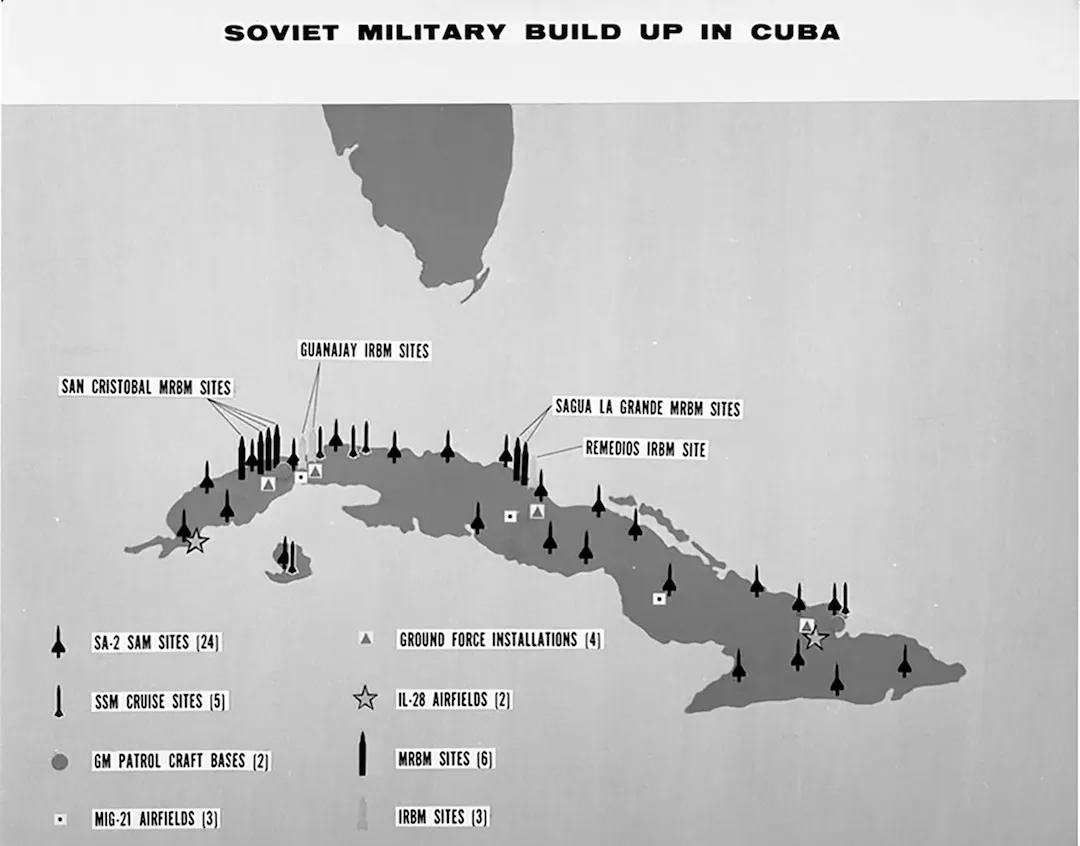
It’s worth spending some time learning about the Cuban Missile Crisis for a number of reasons in the 2020s. First, in a time of soaring hostilities between nuclear-armed governments it’s probably good to have a lucid understanding of how close humanity came to wiping itself out in 1962, and the fact that total nuclear war was averted by a single dissenting decision by a single Soviet officer on a nuclear-armed submarine that was being bombarded by the US navy. Second, in an environment where talk of peace negotiations and compromise are regarded as treasonous Kremlin loyalism it’s good to have an understanding of the fact that the only reason we survived that perilous standoff was because Washington made compromises and pulled its Jupiter missiles out of Turkey and Italy. Third, the Cuban Missile Crisis shows how aggressively the US will respond to a foreign rival placing a military threat near its border.

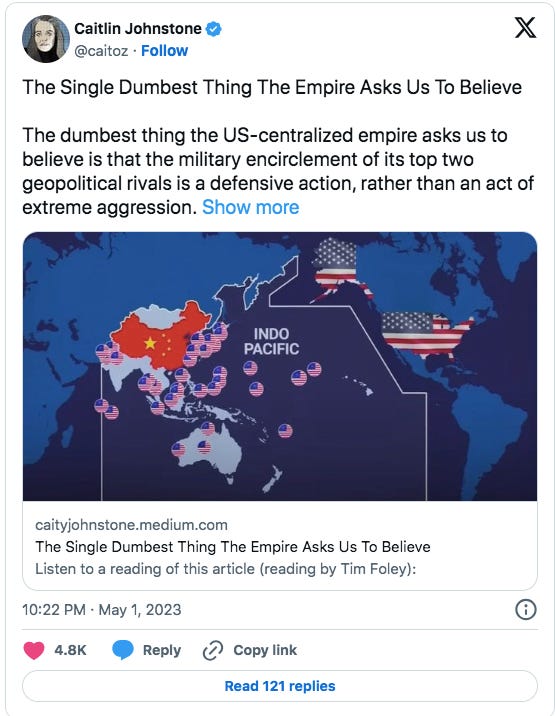
As we’ve discussed previously, the single dumbest thing the US empire asks us to believe is that its amassing of war machinery near the borders of its top two geopolitical rivals should be seen as a defensive measure, rather than the act of extreme aggression that it obviously is. The US empire was the aggressor when it expanded NATO and began turning Ukraine into a de facto NATO member, and it is the aggressor as it accelerates its encirclement of China and opens the floodgates of US-financed weapons into Taiwan.

See the rest here

Be seeing you

Posted in Uncategorized | Tagged: , , , | Leave a Comment »

We Need a Peace President

Posted by M. C. on June 20, 2023

Historians now tell us that President Kennedy agreed to remove US missiles from Turkey in exchange for the Soviets removing missiles from Cuba. It was a classic case of how diplomacy can work if properly employed.

Congress is silent – or compliant – as we lurch forward toward disaster for no discernable US strategic goal. Biden – or whoever is actually running the show – is forging straight ahead

http://ronpaulinstitute.org/archives/featured-articles/2023/june/19/we-need-a-peace-president/

written by ron paul

undefined

Most people agree that we are closer to nuclear war than at any time since the 1962 Cuban Missile Crisis. Some would even argue that we are closer now than we were in those fateful days, when Soviet missiles in Cuba almost triggered a nuclear war between the US and the USSR.

In those days we were told that we were in a life-or-death struggle with Communism and thus could not cede a square foot of territory or the dominoes would fall one-by-one until the “Reds” ruled over us.

That crisis was very real to me, as I was drafted into the military in the middle of the US/USSR standoff over Cuba and we could all feel how close we were to annihilation.

Fortunately, we had a president in the White House at the time who understood the dangers of nuclear brinkmanship. Even though he was surrounded by hawks who could never forgive him for aborting the idiotic Bay of Pigs Cuba invasion, President John F. Kennedy picked up the telephone for a discussion with his Soviet counterpart, Nikita Khrushchev, which eventually saved the world.

Historians now tell us that President Kennedy agreed to remove US missiles from Turkey in exchange for the Soviets removing missiles from Cuba. It was a classic case of how diplomacy can work if properly employed.

It is all too clear that we do not have a John F. Kennedy in the White House today. Although we no longer face a Soviet empire and communist ideology as justification for taking a confrontational tone toward Russia, the Biden Administration is still dragging the US toward a nuclear conflict. Why are they putting us all at risk? The same old “domino theory” that was discredited in the Cold War: If we don’t fight Russia down to the last Ukrainian, Putin will soon be marching through Berlin.

This all started with Biden promising to only send uniforms and medical supplies to Ukraine for fear of sparking a Russian retaliation. From there we went to anti-tank missiles, multiple-rocket launchers, Patriot missiles, Bradley fighting vehicles, and millions of rounds of ammunition. The Biden Administration announced last week that it would send depleted uranium ammunition to Ukraine, which poisons the earth for millennia to come. Rumors are that long-range ATACMs missiles are to be delivered soon, which could strike deep into Russia.

Apparently, F-16 fighter jets are also on the way.

The escalation rationale from Washington, we are told, is that since the Russians have not directly retaliated against NATO for NATO’s direct support of Ukraine’s war machine, we can be sure they never will respond.

Is that really a wise bet? It is clear to many that US-built F-16 fighters taking off from NATO bases with NATO pilots attacking Russians in Ukraine – or even Russia itself – would be a declaration of war on Russia.

That means World War III – something we managed to avoid for the whole Cold War.

Congress is silent – or compliant – as we lurch forward toward disaster for no discernable US strategic goal. Biden – or whoever is actually running the show – is forging straight ahead.

As we move into the US presidential election cycle one thing is clear: we desperately need a peace president to do for us what JFK did for the US during the Cuba crisis. Hopefully it won’t be too late!


Copyright © 2023 by RonPaul Institute. Permission to reprint in whole or in part is gladly granted, provided full credit and a live link are given.
Please donate to the Ron Paul Institute

Be seeing you

Posted in Uncategorized | Tagged: , , , | Leave a Comment »

The most important lesson of the Cuban Missile Crisis

Posted by M. C. on October 14, 2022

The carefully concealed truth did not emerge for more than a decade. Kennedy, it turns out, had made a secret deal with Khrushchev. He promised to remove US nuclear missiles from Turkey in exchange for the Soviet removal of missiles from Cuba. So the crisis was ended not by threats of force, as Rusk suggested, but by the precise opposite: diplomatic compromise.

https://archive.ph/G8aO6#selection-1755.0-1755.363

By Stephen Kinzer Contributor,

It’s been 60 years since our last brush with nuclear suicide. Humanity barely survived that encounter in 1962, known to history as the Cuban Missile Crisis. Never since then has nuclear apocalypse been as close as it is today. Take it from President Biden.

“We have not faced the prospect of Armageddon since Kennedy and the Cuban Missile Crisis,” Biden told a California audience a few days ago. His aides, The New York Times reported, have been studying the secret deal that averted catastrophe 60 years ago and “debating whether there might be an analogous understanding” to end the Ukraine war. The central lesson of the Cuban Missile Crisis provides our only extant guide to defusing a nuclear crisis.

A generation of American politicians and strategic thinkers misunderstood this lesson. They may be forgiven, because our government covered up the real story for years. Americans were told that the missile crisis taught one lesson. Later we discovered that it taught the exact opposite.

The missile crisis seized the world’s attention in October 1962. President John F. Kennedy announced that the United States had discovered Soviet nuclear missiles in Cuba “capable of striking Washington.” He demanded that the Soviet leader, Nikita Khrushchev, remove them. That led to the most crucial long-distance negotiation in human history.

All of Kennedy’s military advisers urged him to order massive bombing of Cuba. “The operation is fairly simple, it could be accomplished in a few minutes,” General Curtis LeMay assured him. “We see no problem with this.”

Kennedy did. He worried that subduing Cuba would require not just bombing but a full-fledged invasion, to which Moscow might respond with devastating force. His speech to the nation on Oct. 22, 1962, was delicately balanced. He repeated his demand that the Soviets remove their missiles from Cuba but said the United States would act with “patience and restraint” and not “prematurely or unnecessarily risk the costs of nuclear war in which even the fruits of victory would be ashes in our mouth.”

See the rest here

Be seeing you

Posted in Uncategorized | Tagged: , , | Leave a Comment »

Remembering the Men Who Avoided Nuclear Apocolypse

Posted by M. C. on March 2, 2022

The nature of government is control; the control of people, industry, abstracts, and even nature itself. It is the many complexities of control and the many layers of government that leads to crisis, smothers individual action and deters those of wisdom to shine through.

https://libertarianinstitute.org/articles/remembering-the-men-who-avoided-nuclear-apocolypse/

img 9232

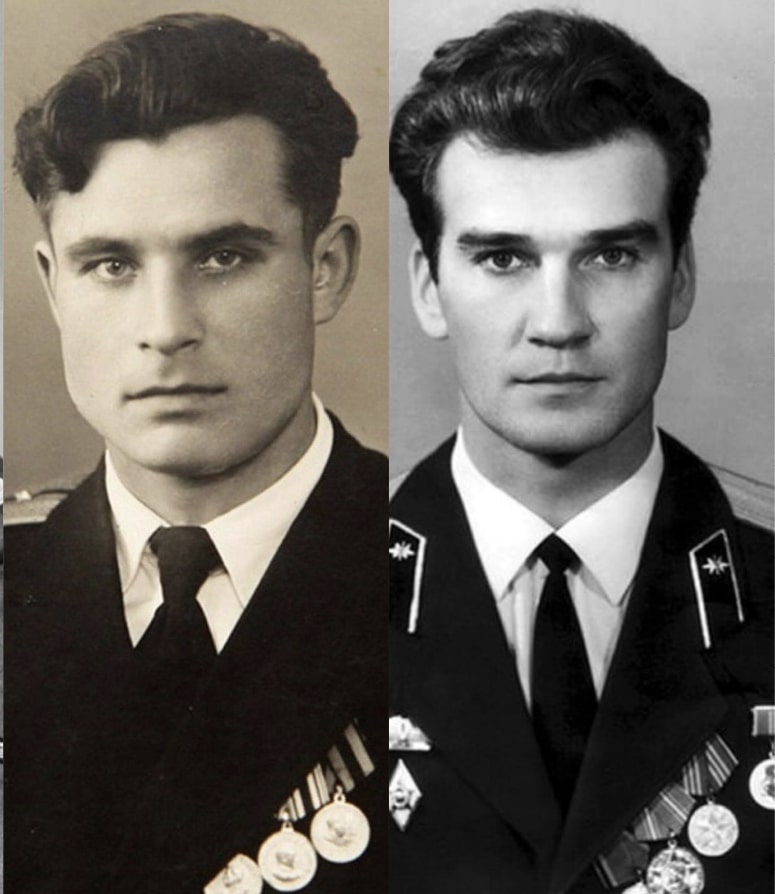
The 1962 Cuban Missile Crisis is remembered for its frightful brinkmanship, when the United States and Soviet Union danced close to the furnace of global destruction. Fortunately cooler heads prevailed and a war of the worst kind was averted. One such cool head was Soviet naval officer Vasili Aleksandrovich Arkhipov, who was aboard a submarine at the height of the crisis. The nuclear torpedo armed submarine he was a crew member of came under depth charge attack from the U.S. Navy. Soviet doctrine at the time determined that if such a submarine came under attack, three officers needed to agree to launch a nuclear weapon, when no other orders had been received. Isolated and under stress, Arkhipov disagreed with his comrades and averted any escalation.

While operating under radio silence and at the peak of the Cold War, with a Captain deadset on launching the nuclear torpedo on the Americans, Arkhipov remained resilient and reasoned for caution, aware of what such a response could lead to. He insisted on no launch. He was adamant that more information was needed before such an attack should be unleashed. The submarine eventually received radio signals and with the new information and orders from the Soviet government, the submarine was removed from a situation where attacking U.S. ships with nuclear weapons was not to be considered for the time being.

Upon returning back to the Soviet Union, Arkhipov and his crewmen were criticized by his superiors. They had failed; their submarine had been tracked and then come under attack by the Americans. This was an embarrassment to the pride of the navy and Soviet Union. Instead of seeing a cool headed officer as a hero, he was clumped in with the rest of the crew and criticized for incompetence by men who were participants in such hubris and folly that could have contributed to the world losing millions of lives in a matter of minutes. Well aware of the catastrophe that Arkhipov had prevented, the Soviet government officials were more concerned with doctrine and procedure.

It would take decades before Arkhipov was recognized for his cool reason under great peer pressure and stress.  The cold war mood soon shifted and the paranoia of the Russian state would change somewhat, allowing for the acknowledgement of such individuals who defied the collective will or sacred doctrine to have their stories told. It is hard to imagine how many lives that the inaction of Arkhipov saved, how the course of history would have been reshaped if he had obeyed and performed according to how policy makers wanted him to. The irrationality of the Cuba Missile Crisis was created by the biggest governments on the Earth. Human beings of apparent wisdom and immense education all conspired in their own way to bring the planet close to destruction, and for what end? Other than the pursuit of their own ideologies, the perpetuation of their government, pride or just because it was their job? Should they have accomplished mass destruction, none of that would have mattered at all.

Just over twenty years later it would be for another member of the Soviet military who would use clear judgement to prevent nuclear war. In another phase for high tension between the Cold War adversaries. In 1983 Duty Officer Stanislav Petrov was assigned as part of the Soviet early warning system dedicated to detect incoming missile strikes from the United States. In the early hours of the morning sudden computer read outs indicated that several missiles had been launched in the direction of the Soviet Union. The protocol was to attack immediately in response.

However Duty Officer Petrov did not report the computer read outs to his superiors. He instead dismissed them as a false alarm. He was in breach of duty. He disobeyed procedure and the doctrinal rules. A retaliatory strike would have been almost certain, given the limited response time and the nature of destruction that a U.S. first strike would have caused. Petrov had no advice and only the information coming from his archaic Soviet computer.

What had made Petrov suspicious was how strong and clear the alert was. Though apprehensive, he was certain that it was a glitch. Petrov called his superior at the Soviet Army headquarters and reported an error in the system. If Petrov was wrong in a matter of minutes nuclear blasts would be erupting over the Soviet Union, but by then others would have been well aware of such an attack. If he was right, for the rest of the world it was an otherwise normal morning.

It would be after the fall of the Soviet Union when Petrov would receive recognition for his inaction. He had speculated that if some of his colleagues had been on the shift when it occurred, they may have acted according to the procedures, since most of them were well trained and good military men. Such procedures when written are laid down as absolute, but when wise reasoning human beings exercise judgement and remain patient, lives are saved. (Despite doing what they were trained not to do).

“But they were lucky it was me on shift that night,” Petrov said years later. The world certainly was lucky.

Giant collectivist states like those of Nazi Germany and the Soviet Union celebrate men of action, decision-makers and administrators that cause carnage and misery. They do not celebrate those who are careful and exercise a wisdom in the spirit of laissez-faire, perhaps because government is always about its own growth and the need to control, regulate, and force. It attracts in its most extreme cases people people like Nazi Reinhard Heydrich and it deters those like Arkhipov or Petrov or at the very least punishes them for not acting according to the rule book. When it was their lack of action that saved lives and even the state itself, such people are marginalized.

Crisis seems to attract the need to act, even when it is the same course of action over and over again that can increase the crisis. Patience and non-interference is seldom valued; it is the antithesis of government and those attracted to the institutions of power. To the state a man like Heydrich is always a hero, so long as he is in their employ, and such a man would never tolerate Arkhipov or Petrov. And for that we all end up suffering.

The nature of government is control; the control of people, industry, abstracts, and even nature itself. It is the many complexities of control and the many layers of government that leads to crisis, smothers individual action and deters those of wisdom to shine through. Instead it promotes the bully culture of the mob and the arrogance of a perceived “greater good” is often sought. How this good is determined tends to be directed from the perspective of the elites and ruling class. By the nature of their position they have determined that they know what is best for all others. To make decisions and to act upon them is their superhuman ability based upon the positions that they fill inside of government. Lives are in their hands and they command them with absolute arrogance, and unlike any deity they are ignorant of more than they will ever be aware.

When you have those like Arkhipov and Petrov and the many modern whistleblowers, they exist to challenge the perfection of the system or the institution itself. Apostates who should know better, even if they end up saving lives. To the government they did not do the right thing, but according to humanity they did.

Be seeing you

Posted in Uncategorized | Tagged: , , , | Leave a Comment »

Biden’s Cuban Missile Crisis

Posted by M. C. on February 27, 2022

Biden is no JFK. It is clear Biden does not possess an iota of Jack Kennedy’s intelligence, courage, nerve, vigor, or idealism. He is a lifetime political grifter and partisan hack who parasitically attached himself to the DC establishment. That such a nonentity could even sniff the US Senate, much less become president, is an indictment of our system. But at the moment he is, or appears to be, the voice of reason against the John Boltons of the world.

https://mises.org/power-market/bidens-cuban-missile-crisis

Jeff Deist

Joe Biden’s perverse legacy, if that term even applies anymore, may well be determined in the coming weeks by his handling of events in Ukraine. He can improve it by showing restraint against the relentless neoconservative chorus. One wonders what the results of a pure popular vote on the question of going to war with Russia over Ukraine would be, versus a vote solely within the DC beltway. 

Note: Biden was silent on the recent imposition of emergency martial law by the Trudeau government in Ottawa (a few hundred miles from Washington, DC), but has plenty to say about Kiev (4,881 distant miles). This is not coincidental. As journalist Glenn Greenwald puts it, we are required by Western propaganda to denounce actions by Vladimir Putin (such as freezing the bank assets of political opponent Alexei Navalny) while cheering the same actions taken by the Canadian government against money donated to truckers. Crackdowns in “democracies” are subject to a more enlightened standard:

[W]hen these weapons are wielded by Western governments, the precise opposite framework is imposed: describing them as despotic is no longer obligatory but virtually prohibited. That tyranny exists only in Western adversaries but never in the West itself is treated as a permanent axiom of international affairs, as if Western democracies are divinely shielded from the temptations of genuine repression. Indeed, to suggest that a Western democracy has descended to the same level of authoritarian repression as the West’s official enemies is to assert a proposition deemed intrinsically absurd or even vaguely treasonous.1

Much of today’s Western rhetoric about the former USSR employs this language of treason, accusing war skeptics of siding with Putin. American politicians and media often veer into outright Russophobia, sometimes with a not-subtle racial animus. This flows in large part from the 2016 election of Donald Trump, which somehow had to be the result of Russian interference and not Hillary Clinton’s shortcomings. It was remarkable to see so many politicians and pundits risk resurrecting a Cold War with a nuclear power simply to hurt Trump politically. But it worked: they got rid of Trump, and now the Cold War is back.

At this writing, Putin has declared the eastern regions of Donetsk and Luhansk as independent and autonomous from Ukraine. Russian forces have entered Ukraine and launched missiles; deaths and injuries are reported. Those troops reportedly have control over the Chernobyl power plant. Ludwig von Mises’s birthplace, today called Lviv, is threatened. 

In response, Biden today announced retaliatory sanctions against Russia and promised severe economic consequences for Putin’s actions. Military and aerospace technology will be blocked, while Russian banks will be shut off from international markets. US and EU officials also have considered the more severe option of removing the country from the SWIFT system of international payments, which would cut off foreign-currency purchases of oil, gas, and other Russian exports. 

Still, Biden has shown restraint. Let’s hope he keeps to this commitment made earlier today:

“Our forces are not and will not be engaged in the conflict,” he said. “Our forces are not going to Europe to fight in Ukraine but defend [sic] our NATO allies and reassure those allies in the east.”

There will be plenty of voices in Biden’s ear demanding more, much more. The subcurrent to Biden’s election in 2020 was the return of neoconservatism with a vengeance. Many of the worst foreign policy hawks, from David Frum to Max Boot to Bill Kristol, have found their home in the Democratic Party. The GOP, for its part, is scrambling to outdo the Democrats in their bellicosity for Putin in a nauseatingly transparent effort to make Biden look weak for the upcoming midterm elections. Hence the sorry spectacle of former Trump national security advisor John Bolton—among the worst war promoters in modern history—solemnly lecturing us on MSNBC about Biden’s failure to have placed US troops in Ukraine weeks ago. Unless Putin’s foray is short lived, rest assured that Congress, the Pentagon, the spy agencies, Biden’s cabinet, and his own party leaders (mindful of polls) will call for US military strikes. Some will call for American troops to defend Ukraine on the ground.

President John F. Kennedy faced similar pressures in his brief years as president. Regardless of one’s views on Camelot, Kennedy was a New England liberal and idealist—not a neoconservative. He sincerely abhorred the possible use of nuclear weapons in a conflict with the Soviets. He communicated clandestinely with Nikita Khrushchev to avoid just such a conflict and managed to bring the US back from the brink of an ugly tank standoff in Berlin during 1961—stating, to the chagrin of the Cold Warriors, that the Berlin Wall was “a hell of a lot better than a war.”

Kennedy similarly resisted calls by the Pentagon, CIA, and Joint Chiefs for the US to back a puppet government in Laos. He was reasonably firm in his opposition to escalations in Vietnam, denying repeated Pentagon requests for thousands of ground troops. Time and again he imagined his reelection in 1964 would free him politically to remove America completely from Southeast Asia.

During the Cuban Missile Crisis of 1962, the pressure on Kennedy to use nuclear missiles against that tiny, impoverished country was intense. Secretary of State Dean Rusk, Secretary of Defense Robert McNamara, CIA deputy Richard Helms, the Joint Chiefs, and one particularly bloodthirsty general named Curtis “Bombs Away” LeMay all pressed hard for action. They considered JFK’s Cuban blockade disastrously weak. One CIA operative called his failure to launch a nuclear strike “treasonous.” LeMay compared it to appeasement in Munich. And of course his own vice president, Lyndon Johnson, was never an ally when it counted. Kennedy’s only firm and trusted confidant throughout all of it was his own brother, Attorney General Robert Kennedy.

Like Trump, JFK faced almost mutinous attacks and subterfuge from within: by his own cabinet, administrative agencies, military commanders, and especially the CIA. 

Biden is no JFK. It is clear Biden does not possess an iota of Jack Kennedy’s intelligence, courage, nerve, vigor, or idealism. He is a lifetime political grifter and partisan hack who parasitically attached himself to the DC establishment. That such a nonentity could even sniff the US Senate, much less become president, is an indictment of our system. But at the moment he is, or appears to be, the voice of reason against the John Boltons of the world.

Posted in Uncategorized | Tagged: , , , , | Leave a Comment »

Where is JFK When You Need Him? – The Future of Freedom Foundation

Posted by M. C. on January 30, 2022

What are the chances that President Biden will stand up to the Pentagon and the CIA and come up with a satisfactory resolution of the Ukraine crisis? Slim and none. No president since Kennedy has been willing to stand up to the national-security establishment. It’s not difficult to understand why.

https://www.fff.org/2022/01/26/where-is-jfk-when-you-need-him/

by Jacob G. Hornberger

President Kennedy had a unique way of viewing his communist adversaries during the Cold War. He would put himself in their shoes and try to figure out what was motivating them to take the actions they were taking. He would then attempt to fashion a solution to a particular crisis that satisfied the other side’s concerns. 

America’s Cold War generals lacked the mental capacity to think at that level. Their mindsets were always in terms of black and white: Communists are bad and cannot be trusted. There can never be negotiation with communists. Kill all communists. 

A good example of this dichotomy occurred during the Cuban Missile Crisis, which brought the United States and the Soviet Union to within an inch of all-out nuclear war. 

When Pentagon and CIA officials discovered that the Soviets were installing nuclear missiles in Cuba, their position was that Kennedy needed to immediately start bombing Cuba and then follow up with a full-scale ground invasion. Their position was much the same as the Russian position today with respect to Ukraine: They didn’t want Russian nuclear missiles pointed at the U.S. from only 90 miles away, just as today Russia doesn’t want U.S. nuclear missiles pointed at Russia from along Russian borders. 

Thus, for the generals, the situation was black and white. In their minds, the only way to deal with this problem was to show toughness by bombing and invading Cuba. For them, failure to do that would display “weakness,” which would only encourage the worldwide communist movement. 

Much to the anger and even rage of the generals, Kennedy took a different position. He tried to figure out what was motivating the Russians to engage in this dangerous nuclear brinkmanship. 

Rather than immediately start bombing and invading Cuba, Kennedy imposed a blockade on the island, which he called a “quarantine.” It prohibited any Soviet ships with missiles from proceeding to Cuba. 

At the same time, Kennedy figured out that the Soviets had placed their missiles in Cuba for two reasons: 

One, the Soviets and the Cubans knew that the Pentagon and the CIA were hell-bent on effecting regime-change in Cuba through violence. Even though the CIA’s invasion of Cuba at the Bay of Pigs had failed miserably, the Soviets and the Cubans knew that the Pentagon and the CIA were more determined than ever to oust the Cuban communist regime from power and install another pro-U.S. dictatorship, either through assassination, terrorism, or outright military invasion.

That, of course, is what the CIA’s assassination plots against Castro, in partnership with the Mafia, were all about. The Soviets and the Cubans were also right about the Pentagon’s and the CIA’s insistence on invading Cuba. Consider, for example, Operation Northwoods. That was a top-secret plan that was unanimously approved by the Joint Chiefs of Staff that provided fraudulent pretexts for war with Cuba. To Kennedy’s everlasting credit, he rejected any and all plans that entailed fraudulent pretexts for war with Cuba.

Two, the U.S. government had nuclear missiles based in Turkey that were pointed at the Soviet Union. Given such, the Soviet position was that it had as much right to install its nuclear missiles in Cuba that were pointed at the United States.

Kennedy figured all this out and decided to fashion a solution based on his insights into why the Soviets were behaving in that way. The solution entailed a promise that the United States would not invade Cuba, along with a separate secret side promise to remove U.S. nuclear missiles from Turkey. The Soviets, for their part, agreed to remove their missiles from Cuba and take them home. The crisis was over.

But not the war between Kennedy and the Pentagon and the CIA, which had gotten increasingly worse after the Bay of Pigs fiasco. The generals were livid with Kennedy. During the crisis, Gen. Curtis LeMay, who loathed Kennedy, compared his actions to those of Neville Chamberlain at Munich. After the crisis was over, LeMay called Kennedy’s resolution of the crisis the biggest defeat in U.S. history. 

There is no reasonable doubt that this was when the national-security establishment decided that Kennedy needed to be removed from office and replaced by Vice-President Lyndon Johnson, who was on the same Cold War page as the Pentagon and the CIA. By his failure to provide needed air support for the Cuban exiles at the Bay of Pigs, followed by his failure to approve Operation Northwoods, through his decision to leave Cuba permanently in communist hands, and by his decision to withdraw America’s nuclear missiles from Turkey, as far as the Pentagon and the CIA were concerned, Kennedy had proven that he was not capable of confronting and defeating the supposed communist threat to America.

For his part, after the Cuban Missile Crisis, Kennedy realized the role that the Pentagon and the CIA had played in causing the crisis. If the Pentagon and the CIA had not been hell-bent on bringing about regime change in Cuba and had not installed U.S. nuclear missiles in Turkey aimed at the Soviet Union, the Soviets would not have placed their nuclear missiles in Cuba.

More important, Kennedy came to the realization that the entire Cold War was nothing but a highly dangerous and destructive racket. Therefore, in June 1963, he delivered his famous Peace Speech at American University, where he effectively declared an end to the Cold War and called for peaceful and friendly relations with the Soviet Union and the rest communist world. If there was anyone in the military and CIA hierarchy who still had doubts that Kennedy needed yo be removed from office in order to save America from a communist takeover, those doubts would have been eliminated after JFK’s Peace Speech. 

Don’t forget, after all, that establishing peaceful and friendly relations with the communist world is why the CIA violently ousted the democratically elected Guatemalan president, Jacob Arbenz, in 1954 and why the CIA would orchestrate the violent ouster of Chile’s democratically elected president, Salvador Allende, from 1970 through 1973.

Kennedy was not a dumb man. He knew the dangers he was facing from his national-security establishment. That was why he helped to make the novel Seven Days in May, which posited the danger of a military takeover, into a movie. He wanted to warn the American people of the dangers posed by the national-security state governmental system, which America had adopted after World War II. Before you call Kennedy a “conspiracy theorist” though, keep in mind that President Eisenhower, in his farewell address, had also warned the American people of the dangers that the military-industrial complex posed to America’s democratic processes. Keep in mind also President Truman’s op-ed that was published in the Washington Post only a month after the Kennedy assassination stating that the CIA had become a sinister force in American life.

What are the chances that President Biden will stand up to the Pentagon and the CIA and come up with a satisfactory resolution of the Ukraine crisis? Slim and none. No president since Kennedy has been willing to stand up to the national-security establishment. It’s not difficult to understand why. EMAIL

Be seeing you

Posted in Uncategorized | Tagged: , , , , , | Leave a Comment »

JFK — Accept Our Diverse World as It Is – LewRockwell

Posted by M. C. on July 23, 2021

“We must recognize that we cannot remake the world simply by our own command. … Every nation has its own traditions, its own values, its own aspirations. … We cannot remake them in our own image.”

https://www.lewrockwell.com/2021/07/patrick-j-buchanan/jfk-accept-our-diverse-world-as-it-is/

By Patrick J. Buchanan

Seven months after the Cuban missile crisis, President John F. Kennedy, at American University, laid out his view on how the East-West struggle should be conducted to avoid a catastrophic war that could destroy us both.

Kennedy’s message to Moscow and his fellow Americans:

“If (the United States and the Soviet Union) cannot end now our differences, at least we can make the world safe for diversity.”

As George Beebe writes in his essay, “It’s a Big World: The Importance of Diversity in American Foreign Policy,” in the July National Interest, Kennedy later elaborated:

“We must recognize that we cannot remake the world simply by our own command. … Every nation has its own traditions, its own values, its own aspirations. … We cannot remake them in our own image.”

To Kennedy, a student of history, acceptance of the reality of a world of diverse political systems, many of them unfree, was a precondition of peace on earth and avoidance of a new world war.

Kennedy was asking us to recognize that the world consists not only of democrats but also of autocrats, dictatorships, military regimes, monarchs and politburos, and the goal of U.S. foreign policy was not to convert them into political replicas of the USA.

Kennedy was willing to put our political model on offer to the world, but not to impose it on anyone: “We are unwilling to impose our system on any unwilling people — but we are willing and able to engage in peaceful competition with any people on earth.”

The higher goal: “Preserving and protecting a world of diversity in which no one power or no one combination of powers can threaten the security of the United States.”

For JFK, national interests transcended democratist ideology.

He knew that throughout our history, we Americans had partnered with dictators, monarchs and autocrats when our interests required it.

The1778 alliance we forged with the French King Louis XVI was indispensable to the victory at Yorktown that ensured our independence.

Woodrow Wilson took us into World War I as an “associate power” of four great empires — the British, French, Russian and Japanese.

In World War II, we allied with Stalin’s Russia against Hitler’s Reich.

The South Korea we saved at a cost of 37,000 dead from 1950 to 1953 was ruled by the autocratic and dictatorial Syngman Rhee.

The thrust of Beebe’s article is that President Joe Biden, in defining the new post-Cold War era as featuring a new-world ideological struggle, between authoritarian and democracy, is misreading the conflict.

Said Biden, in his major foreign policy address during the campaign: “The triumph of democracy and liberalism over fascism and autocracy created the free world. But this contest does not just define our past. It will define our future.”

Biden’s Interim National Strategic Security Guidance fully embraces the same thesis of a new world ideological struggle:

“Authoritarianism is on the global march. … We must join with likeminded allies and partners to revitalize democracy the world over.”

Yet, neither of our great adversaries is preaching a global crusade to remake the world in its image.

Communist China does business with Japanese and American capitalists, with South and North Korea, with Arab monarchs and Israelis, with Europeans and Iranians, Africans, Latin Americans and Central Asians, without attempting to impose its system beyond its borders.

Consider Russia. President Vladimir Putin, it is said, is an autocrat.

But Putin’s interest in bringing home ethnic Russian kinfolk left behind when the USSR broke apart is a normal and natural expression of his people’s and his country’s national interest.

So, too, is Moscow’s effort at re-knitting relations with Ukraine and Belarus, the two nations with whom Russia’s ties are the oldest, closest and deepest, culturally and ethnically.

What Russia, a Black Sea power since the 18th century, is doing in Yalta and the Donbas is understandable from the standpoint of history, ethnicity and national interests.

The question is: What are we doing there?

When did Ukraine, Belarus and Georgia become our concerns?

Russia’s alarm at having the world’s largest military alliance, NATO, led by its former Cold War adversary, squatting on its front porch from the Arctic Ocean to the Baltic and Black Sea, is as understandable as is Putin’s impulse to push that alliance some distance away.

That is what any Russian nationalist ruler would do.

But when did relations between Belarus, Ukraine and Russia become the concern of the USA, 5,000 miles away?

Is Putin an autocrat? But so what?

When has Russia not been ruled by an autocrat?

From Peter the Great to Catherine the Great to Alexander I, Nicholas I, Alexander II, Alexander III and Nicholas II in 1917, Romanov czars ruled Russia. After 1917 came Vladimir Lenin, Joseph Stalin, Nikita Khrushchev, Leonid Brezhnev, Mikhail Gorbachev, Boris Yeltsin and Vladimir Putin.

During his speech at American University, Kennedy mentioned a crucial fact about the long history between Russia and America:

“Almost unique among the major world powers, we have never been at war with each other.”

Maintaining that 230-year tradition should be at the apex of our concerns, not how Vladimir Putin rules what is, after all, his country.

Patrick J. Buchanan is co-founder and editor of The American Conservative. He is also the author of Where the Right Went Wrong, and Churchill, Hitler, and the Unnecessary War. His latest book is Nixon’s White House Wars: The Battles That Made and Broke a President and Divided America Forever See his website.

Be seeing you

Posted in Uncategorized | Tagged: , , , | Leave a Comment »

The CIA Versus the Kennedys – The Future of Freedom Foundation

Posted by M. C. on August 22, 2020

I wasn’t aware of that fact. I assumed that the war between President Kennedy and the CIA had begun with the CIA’s invasion at the Bay of Pigs in Cuba. The additional information added by Kennedy Jr. places things in a much more fascinating and revealing context.

And then Kennedy did the unforgivable, at least insofar as the CIA was concerned. In his famous Peace Speech at American University in June 1963, he declared an end to the entire Cold War and announced that the United States was going to establish friendly and peaceful relations with the communist world.

Kennedy had thrown the gauntlet down in front of the CIA. It was either going to be his way or the CIA’s way. There was no room for compromise, and both sides knew it.

https://www.fff.org/2020/08/18/the-cia-versus-the-kennedys/

by

Former Congressman Ron Paul and his colleague Dan McAdams recently conducted a fascinating interview with Robert F. Kennedy Jr., which focused in part on the assassination of President John F. Kennedy, who was Kennedy Jr.’s uncle. The interview took place on their program the Ron Paul Liberty Report.

Owing to the many federal records that have been released over the years relating to the Kennedy assassination, especially through the efforts of the Assassination Records Review Board in the 1990s, many Americans are now aware of the war that was being waged between President Kennedy and the CIA throughout his presidency. The details of this war are set forth in FFF’s book  JFK’s War with the National Security Establishment: Why Kennedy Was Assassinated by Douglas Horne.

In the interview, Robert Kennedy Jr. revealed a fascinating aspect of this war with which I was unfamiliar. He stated that the deep animosity that the CIA had for the Kennedy family actually stretched back to something the family patriarch, Joseph P. Kennedy, did in the 1950s that incurred the wrath of Allen Dulles, the head of the CIA.

Kennedy Jr. stated that his grandfather, Joseph P. Kennedy, had served on a commission that was charged with examining and analyzing CIA covert activities, or “dirty tricks” as Kennedy Jr. put them. As part of that commission, Kennedy Jr stated, Joseph Kennedy (John Kennedy and Bobby Kennedy’s father) had determined that the CIA had done bad things with its regime-change operations that were destroying democracies, such as in Iran and Guatemala.

Consequently, Joseph Kennedy recommended that the CIA’s power to engage in covert activities be terminated and that the CIA be strictly limited to collecting intelligence and empowered to do nothing else.

According to Kennedy Jr., “Allen Dulles never forgave him — never forgave my family — for that.”

I wasn’t aware of that fact. I assumed that the war between President Kennedy and the CIA had begun with the CIA’s invasion at the Bay of Pigs in Cuba. The additional information added by Kennedy Jr. places things in a much more fascinating and revealing context.

Upon doing a bit of research on the Internet, I found that the commission that Kennedy Jr. must have been referring to was the President’s Board of Consultants on Foreign Intelligence Activities, which President Eisenhower had established in 1956 through Executive Order 10656. Eisenhower appointed Joseph Kennedy to serve on that commission.

That year was three years after the CIA’s 1953 regime change operation in Iran which destroyed that country’s democratic system. It was two years after the CIA’s regime-change operation in Guatemala that destroyed that country’s democratic system.

Keep in mind that the ostensible reason that the CIA engaged in these regime-change operations was to protect “national security,” which over time has become the most important term in the American political lexicon. Although no one has ever come up with an objective definition for the term, the CIA’s power to address threats to “national security,” including through coups and assassinations, became omnipotent.

Yet, here was Joseph P. Kennedy declaring that the CIA’s power to exercise such powers should be terminated and recommending that the CIA’s power be strictly limited to intelligence gathering.

It is not difficult to imagine how livid CIA Director Dulles and his cohorts must have been at Kennedy. No bureaucrat likes to have his power limited. More important, for Dulles and his cohorts, it would have been clear that if Kennedy got his way, “national security” would be gravely threatened given the Cold War that the United States was engaged in with the Soviet Union, China, Cuba, North Korea, and other communist nations.

Now consider what happened with the Bay of Pigs. The CIA’s plan for a regime-change invasion of Cuba, was conceived under President Eisenhower. Believing that Vice President Nixon would be elected president in 1960, the CIA was quite surprised that Kennedy was elected instead. To ensure that the invasion would go forth anyway, the CIA assured Kennedy that the invasion would succeed without U.S. air support. It was a lie. The CIA assumed that once the invasion was going to go down in defeat at the hands of the communists, Kennedy would have to provide the air support in order to “save face.”

But Kennedy refused to be played by the CIA. When the CIA’s army of Cuban exiles was going down in defeat, the CIA requested the air support, convinced that their plan to manipulate the new president would work. It didn’t. Kennedy refused to provide the air support and the CIA’s invasion went down in defeat.

Now consider what happened after the Bay of Pigs: Knowing that the CIA had played him and double-crossed him, John Kennedy fired Allen Dulles as CIA director, along with his chief deputy, Charles Cabell. He then put his younger brother Bobby Kennedy in charge of monitoring the CIA, which infuriated the CIA.

Now jump ahead to the Cuban Missile Crisis, which Kennedy resolved by promising that the United States would not invade Cuba for a regime-change operation. That necessarily would leave a permanent communist regime in Cuba, something that the CIA steadfastly maintained was a grave threat to “national security”— a much bigger threat, in fact, than the threats supposedly posed by the regimes in Iran in 1953 and Guatemala in 1954.

And then Kennedy did the unforgivable, at least insofar as the CIA was concerned. In his famous Peace Speech at American University in June 1963, he declared an end to the entire Cold War and announced that the United States was going to establish friendly and peaceful relations with the communist world.

Kennedy had thrown the gauntlet down in front of the CIA. It was either going to be his way or the CIA’s way. There was no room for compromise, and both sides knew it.

In the minds of former CIA Director Allen Dulles and the people still at the CIA, what Kennedy was doing was anathema and, even worse, the gravest threat to “national security” the United States had ever faced, a much bigger threat than even that posed by the democratic regimes in Iran and Guatemala. At that point, the CIA’s animosity toward President Kennedy far exceeded the animosity it had borne toward his father, Joseph P. Kennedy, several years before.


This post was written by:

Jacob G. Hornberger is founder and president of The Future of Freedom Foundation. He was born and raised in Laredo, Texas, and received his B.A. in economics from Virginia Military Institute and his law degree from the University of Texas. He was a trial attorney for twelve years in Texas. He also was an adjunct professor at the University of Dallas, where he taught law and economics. In 1987, Mr. Hornberger left the practice of law to become director of programs at the Foundation for Economic Education. He has advanced freedom and free markets on talk-radio stations all across the country as well as on Fox News’ Neil Cavuto and Greta van Susteren shows and he appeared as a regular commentator on Judge Andrew Napolitano’s show Freedom Watch. View these interviews at LewRockwell.com and from Full Context. Send him email.

Be seeing you

Posted in Uncategorized | Tagged: , , , , , , , | Leave a Comment »