MCViewPoint

Opinion from a Libertarian ViewPoint

Posts Tagged ‘F. A. Hayek’

TGIF: The Knowledge that Only Free Markets Disclose

Posted by M. C. on May 27, 2023

https://libertarianinstitute.org/articles/tgif-free-market-knowledge/

by Sheldon Richman

market

As a follow-up to my recent article about F. A. Hayek’s classic article “The Use of Knowledge in Society” (1945), I thought it worth extending Hayek’s exploration of this area of social theory. In 1968 the Nobel laureate-economist delivered a lecture in German known in English as “Competition as a Discovery Procedure.” It’s an alluring title, and anyone concerned with what makes for a good and prosperous society should be familiar with Hayek’s basic point.

Hayek gets right to it. He notes that standard macroeconomists are guilty of having “investigated competition primarily under assumptions which, if they were actually true, would make competition completely useless and uninteresting.” By that, he meant, “If anyone actually knew everything that economic theory designated as ‘data,’ competition would indeed be a highly wasteful method of securing adjustment to these facts.”

In other words, if all the “data” were actually accessible data, solving society’s scarcity problem would be a piece of cake, at least if the government’s computer was powerful enough. (I’m led to understand that, fortunately, many economists have advanced since he gave this lecture, probably in part because of his challenge.)

“Hence,” Hayek went on,

it is also not surprising that some authors have concluded that we can either completely renounce the market, or that its outcomes are to be considered at most a first step toward creating a social product that we can then manipulate, correct, or redistribute in any way we please.

Unfortunately, lots of such people are still around today.

See the rest here

Be seeing you

Posted in Uncategorized | Tagged: , | Leave a Comment »

TGIF: Ducking Hayek

Posted by M. C. on May 15, 2023

Mises’s fundamental point, which logically precedes Hayek’s later addition, was that without real, honest market prices for all inputs, the economic calculation required for rational and efficient mass production would be impossible. And, he went on, you can’t have honest market prices without private ownership and markets in resources and producer goods. (The Marxists sought the abolition of private property.) Flourishing and even life itself thus depend on prices and their prerequisites — prices that cannot be ascertained or even generated except in the market

https://libertarianinstitute.org/articles/tgif-ducking-hayek/

by Sheldon Richman

r

May 8 marked the 124th anniversary of the birth of F. A. Hayek, the 1974 Nobel-winning economist of the Austrian school. (He died in 1992.) That makes it a good time to acknowledge one of his many contributions, his epistemic case for the free and competitive market order. It’s well-suited to the information age.

One of Hayek’s best-known articles was published in 1945 in the American Economic Review“The Use of Knowledge in Society” (reprinted in Individualism and Economic Order). He got right to the point:

What is the problem we wish to solve when we try to construct a rational economic order? On certain familiar assumptions the answer is simple enough. If we possess all the relevant information, if we can start out from a given system of preferences, and if we command complete knowledge of available means, the problem which remains is purely one of logic. That is, the answer to the question of what is the best use of the available means is implicit in our assumptions….

This, however, is emphatically not the economic problem which society faces…. The reason for this is that the “data” from which the economic calculus starts are never for the whole society “given” to a single mind … and can never be so given.

See the rest here

Be seeing you

Posted in Uncategorized | Tagged: , , | Leave a Comment »

TGIF: Where Socialists Go Wrong | The Libertarian Institute

Posted by M. C. on January 17, 2023

Here Hayek extended Ludwig von Mises’s fatal critique of socialism; namely, that

  1. without tradeable private property in the means of production, markets for resources and producers’ goods don’t exist;
  2. without such markets, true prices can’t exist; and
  3. without prices, rational economic calculation is impossible;
  4. therefore, socialism is impossible; it’s “planned chaos.”

https://libertarianinstitute.org/articles/tgif-where-socialists-go-wrong/

by Sheldon Richman 

r

R

Since socialism is “in” today — even though many people who say they favor it have no idea what it is — F. A. Hayek’s last book, The Fatal Conceit: The Errors of Socialism (1988), is worth checking out. Hayek, the late great Nobel-laureate economist of the Austrian school, begins this way:

This book argues that our civilisation depends, not only for its origin but also for its preservation, on what can be precisely described only as the extended order of human cooperation, an order more commonly, if somewhat misleadingly, known as capitalism. To understand our civilisation, one must appreciate that the extended order resulted not from human design or intention but spontaneously: it arose from unintentionally conforming to certain traditional and largely moral practices, many of which men tend to dislike, whose significance they usually fail to understand, whose validity they cannot prove, and which have nonetheless fairly rapidly spread by means of an evolutionary selection — the comparative increase of population and wealth — of those groups that happened to follow them. The unwitting, reluctant, even painful adoption of these practices kept these groups together, increased their access to valuable information of all sorts, and enabled them to be ‘fruitful, and multiply…’ This process is perhaps the least appreciated facet of human evolution.

Socialists take a different view of these matters.

Well, that last sentence is quite an understatement. By socialism Hayek didn’t mean the welfare state or continuing government efforts to manipulate market outcomes according to some notion of equity. That would be interventionism or the mixed economy. No, socialism is the abolition of the market order and its necessary condition, private property: the replacement of free private enterprise with centralized bureaucracy. Let’s cut to the chase:

The main point of my argument is, then, that the conflict between, on one hand, advocates of the spontaneous extended human order created by a competitive market, and on the other hand those who demand a deliberate arrangement of human interaction by central authority based on collective command over available resources is due to a factual error by the latter about how knowledge of these resources is and can be generated and utilised. As a question of fact, this conflict must be settled by scientific study. Such study shows that, by following the spontaneously generated moral traditions underlying the competitive market order (traditions which do not satisfy the canons or norms of rationality embraced by most socialists), we generate and garner greater knowledge and wealth than could ever be obtained or utilised in a centrally-directed economy whose adherents claim to proceed strictly in accordance with ‘reason’. Thus socialist aims and programmes are factually impossible to achieve or execute; and they also happen, into the bargain as it were, to be logically impossible.

Hayek is saying that once we understand how information about resources is produced and transmitted, we realize that central planners can’t deliver the goods. Socialism can’t keep its (earlier) promises of plenty. (Nor of justice, but that’s for another time.)

Here Hayek extended Ludwig von Mises’s fatal critique of socialism; namely, that

See the rest here

Be seeing you

Posted in Uncategorized | Tagged: , , | Leave a Comment »

TGIF: True Liberals Are Not Conservatives

Posted by M. C. on May 23, 2022

by Sheldon Richman

As he closed his essay Hayek confessed that since the word liberal had been corrupted, thanks to the French Revolution and other forces, by “overrationalis[m], nationalis[m]” and socialis[m],” it had ceased to a good label for his political outlook, which he shared with Tocqueville and Acton: “What I should want is a word which describes the party of life, the party that favors free growth and spontaneous evolution. But I have racked my brain unsuccessfully to find a descriptive term which commends itself.” 

https://libertarianinstitute.org/articles/tgif-true-liberals-not-conservatives/

The relevance of F. A. Hayek’s essay “Why I Am Not a Conservative,” the postscript to his important 1960 book, The Constitution of Liberty, is demonstrated at once by the opening quote from Lord Acton:

At all times sincere friends of freedom have been rare, and its triumphs have been due to minorities, that have prevailed by associating themselves with auxiliaries whose objects often differed from their own; and this association, which is always dangerous, has sometimes been disastrous, by giving to opponents just grounds of opposition. [Emphasis added.]

Who among true liberal advocates of individual liberty and free social evolution — aka libertarians — would deny the truth of that observation?

Hayek had European conservatism in mind when he wrote his essay, and for years, American conservatives, who still had affection for true liberalism, hastened to point this out. As Hayek wrote:

Conservatism proper is a legitimate, probably necessary, and certainly widespread attitude of opposition to drastic change. It has, since the French Revolution, for a century and a half played an important role in European politics. Until the rise of socialism its opposite was liberalism. There is nothing corresponding to this conflict in the history of the United States, because what in Europe was called “liberalism” was here the common tradition on which the American polity had been built: thus the defender of the American tradition was a liberal in the European sense.

Later in his essay, he elaborated that “in the United States it is still possible to defend individual liberty by defending long-established institutions. To the liberal they are valuable not mainly because they are long established or because they are American but because they correspond to the ideals which he cherishes.”

But he noted that “This already existing confusion [over labels] was made worse by the recent attempt to transplant to America the European type of conservatism, which, being alien to the American tradition, has acquired a somewhat odd character.” The confusion was compounded, Hayek wrote, when socialists began to call themselves liberals.

Many still suffer from this confusion today. But change has been afoot because the illiberals of the left and right increasingly want no part of true liberalism or the label — and in a way, that’s good. Those on the left who call themselves progressives or socialists don’t like the label liberal (or neo-liberal) because they associate it with the current permanent bipartisan prowar regime beholden to special corporate interests (so we liberals still have work to do), and virtually all conservatives eschew the label because they don’t want to be mistaken for libertarians. That’s also good.

So Hayek’s essay has new relevance for America. Would Hayek have been surprised? He would have distinguished national conservatism from neoconservatism because of the latter’s cosmopolitanism. But how could he embrace as bonafide allies people who view imperialist war as a way to create “national greatness” and social solidarity, as the neocons do? Hayek would have agreed with Abraham Bishop who said in 1800 that “a nation which makes greatness its polestar can never be free; beneath national greatness sink individual greatness, honor, wealth and freedom.”

Let’s look at Hayek’s problem with conservatism. For him, the “decisive objection” is that “by its nature,” conservatism can do no more than slow down the change that progressives have initiated. That’s not good enough: “What the liberal must ask, first of all, is not how fast or how far we should move, but where we should move.” He acknowledged that although the liberal’s differences with the “collectivist radical” are greater than his differences with the conservative, the latter “generally holds merely a mild and moderate version of the prejudices of his time.” Thus “the liberal today must more positively oppose some of the basic conceptions which most conservatives share with the socialists.”

See the rest here

Be seeing you

Posted in Uncategorized | Tagged: , , , , , | Leave a Comment »

Letter to Governor Ron DeSantis

Posted by M. C. on February 25, 2022

When doctors have to take hospitals to court to let them administer a Nobel Prize–winning medication with a forty-year safety record, something is fiendishly flawed.

Veto HB 7021 to Protect Floridians from Incentivized Medical Malpractice & Hospicide

Margaret Anna Alice

Margaret Anna examines media narratives, propaganda, mass control, politics, psychology, history, philosophy, language, film, art, music, literature, and culture ​in her aim to unmask totalitarianism and awaken the sleeping before tyranny triumphs.

Margaret Anna Alice
Letter to Governor Ron DeSantis; Drowning Person Holding Umbrella over Head in Sea

“‘Emergencies’ have always been the pretext on which the safeguards of individual liberty have been eroded—and once they are suspended it is not difficult for anyone who has assumed such emergency powers to see to it that the emergency will persist.”

—F. A. Hayek, Law, Legislation, and Liberty

Dear Governor DeSantis,

I’m not a big fan of politicians. I probably only need one hand to count the ones who appear to possess a whit of integrity, rationality, and moral courage—off the top of my head, Tulsi Gabbard, Ron Johnson, Ron1 Paul, Brian Peckford, and you.

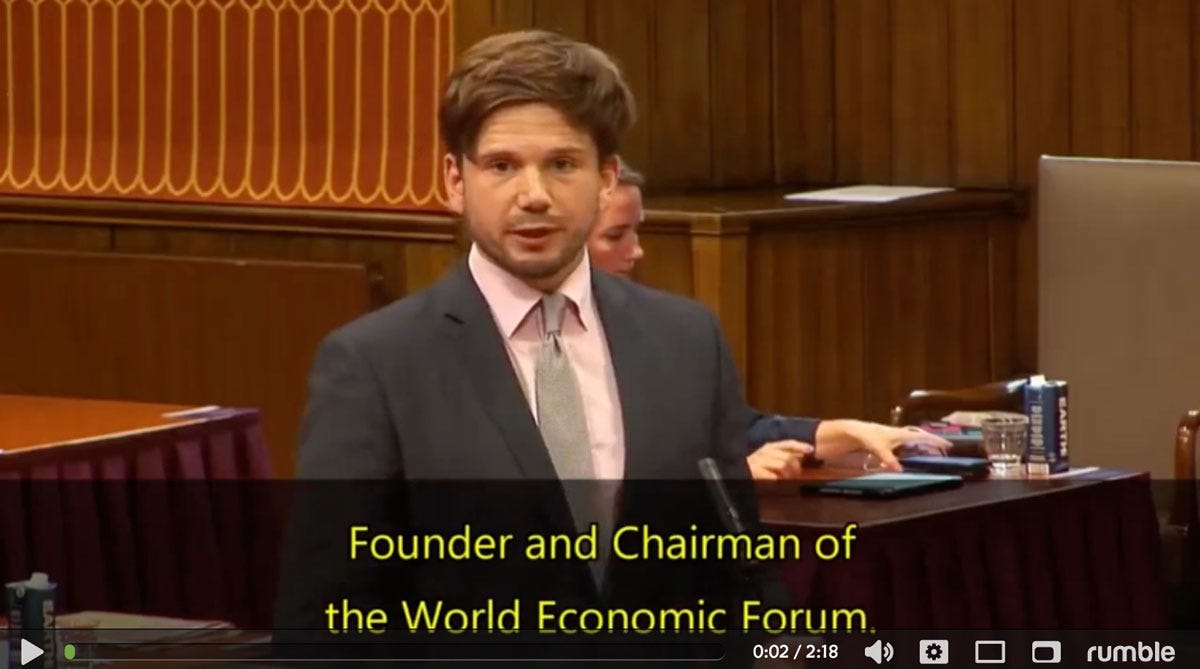
Gideon van Meijeren’s pretty kickass, too:

Gideon van Meijeren Confronts Globalist Dutch PM Rutte for His World Economic Forum Connections

But back to you, Governor. Throughout the manufactured COVID crisis, you have displayed sanity, respected individual liberties, followed the actual science, and resisted the worldwide mudslide into tyranny.

You did lock down (a disappointing concession to authoritarianism, but, to your credit, one you later expressed regret over and vowed not to repeat), but only for a month. Unlike most of your peers, you kept your word and lifted the stay-at-home order after thirty days.

You stated at a November 2020 press conference that there would be “no lockdowns, no fines, no school closures. No one’s losing their job because of a government dictate. Nobody’s losing their livelihood or their business.”

You signed legislation to protect Floridians from coercive mandates. You support the rights of workers to decide whether to wear masks.

You set up monoclonal antibody treatment sites around the state—until the FDA suddenly revised the emergency use authorizations to prohibit providers from administering these highly effective treatments in the United States.

You support proposed legislation to protect the rights of loved ones to visit patients in hospitals and long-term care facilities, noting, “COVID cannot be used as an excuse to deny patients basic rights.”

You advocated for the rights of physicians to prescribe drugs they believe will work without fear of penalties such as loss of license, preserving the sacred doctor-patient relationship from interference by politics.

You even honored Firecracker Fiona Lashells, a second-grader I proudly featured as an example of brave noncompliance with unhealthy mask mandates.

See the rest here

Be seeing you

Posted in Uncategorized | Tagged: , , , , , , | Leave a Comment »

TGIF: Utopianism May Be Hazardous to Your Health | The Libertarian Institute

Posted by M. C. on January 15, 2022

So, people, believe what you want and recognize everyone else’s right to the same freedom. Replace your divots! Don’t be fragile — be antifragile; in order for someone to give offense it is necessary that someone else take it. Don’t be that someone. Don’t look for your identity or life’s meaning in what you take offense at.

Finally, let’s each of us agree not to turn to the state to support “my tribe.”

https://libertarianinstitute.org/articles/tgif-utopianism-hazardous/

by Sheldon Richman

Beware those who claim to have a detailed blueprint for the ideal society. If such a person thinks you stand in the way, you may get run over. That’s how it is with utopians. They want everything just so, and woe betide those who disagree.

The repeated attempts at creating ideal societies haven’t gone so well. To name just a few, see France 1789, Russia 1917, Italy 1922, Germany 1933, Eastern Europe 1945, China 1949, Cambodia 1976, Venezuela 1999.

The problem is that the architects of utopia have little tolerance for those who aren’t wholeheartedly with the program. Any departure from the plan is a move away from the ideal. Dissenters must be dealt with.

In The Road to Serfdom, which still belongs on everyone’s reading list, F. A. Hayek pointed out that a big problem with socialist or fascist central planning — which is another way of saying utopianism — is that regular people will assuredly upset the plan just by attending to their own lives — so they cannot be left free to do so.

Hayek also noted that even if everyone agreed in principle that some kind of top-down social plan was desirable, they certainly would not agree on its details. In a world of scarcity, that would be a problem because everyone’s preferences couldn’t be accommodated. Moreover, Hayek went on, the endless debates over the plan could well give rise to a dictator who promised to stop the idle chatter and act decisively. So much for the promise of democratic planning.

See the rest here

Be seeing you

Posted in Uncategorized | Tagged: , , , , , | Leave a Comment »

EconomicPolicyJournal.com: Washington Post: “The economists are right: Rent control is bad”

Posted by M. C. on December 29, 2019

“In many cases, rent control appears to be the most efficient technique presently known to destroy a city—except for bombing.”–Swedish economist Assar Lindbeck.

https://www.economicpolicyjournal.com/2019/12/washington-post-economists-are-right.html

Wow, as the year ends, some serious progress in the form of sound basic economics out of the Washington Post:


From the Editorial Board:

RENT CONTROL is back. Economists have long criticized government price controls on apartments, a concept that had its first moment in the 1920s and that some cities reintroduced in a modified form in the 1970s. Now, decades later, California and Oregon are moving forward with statewide rent-control laws. Meanwhile, presidential candidate Sen. Bernie Sanders (I-Vt.) has made a national rent-control standard the centerpiece of his sprawling new housing plan.

The economists are right, and the populists are wrong. Rent-control laws can be good for some privileged beneficiaries, who are often not the people who really need help. But they are bad for many others…

Research also indicates that landlords have less incentive to maintain their properties in a rent-controlled environment. Governments can impose maintenance requirements on landlords — but they are tough to enforce. Depending on how the policy is designed, stiff rent-control policies with few exceptions could also discourage investors from building new homes, which would also constrain rental unit supply. And since rent-stabilization policies often tend to discourage people from moving, they harm worker mobility and the economic dynamism associated with it.

I mean they sound like F.A. Hayek and Walter Block  (See: Rent Control: Myths and Realities–International Evidence of the Effects of Rent Control in Six Countries).

“In many cases, rent control appears to be the most efficient technique presently known to destroy a city—except for bombing.”–Swedish economist Assar Lindbeck.

RW

Be seeing you


Posted in Uncategorized | Tagged: , , , | Leave a Comment »

“Libertarian” Is Just Another Word for (Classical) Liberal | Mises Wire

Posted by M. C. on September 16, 2019

https://mises.org/wire/libertarian-just-another-word-classical-liberal

Long post…

But rest assured, Lew Rockwell reminds us, things could be far worse “were it not for the efforts of a relative handful of intellectuals who have fought against socialist theory for more than a century. It might have been 99% in support of socialist tyranny. So there is no sense in saying that these intellectual efforts are wasted.”

Moreover, the success of liberalism is demonstrated in the fact that non-liberals have long attempted to steal the mantle of liberalism for themselves. In the English speaking world, it is no mere accident of history that social democrats and other non-liberal groups often insist on calling themselves liberal. The effort to expropriate the term “liberal” in the twentieth century was a matter of political expediency. Liberalism was a popular and influential ideology throughout the nineteenth and early twentieth century. So it only made sense to attempt to apply the term to non-liberal ideologies and coast on liberalism’s past success.3

Today, we continue to see the legacy of liberalism worldwide in discussions over human rights, in efforts to increase freedom in trade, and greater autonomy from state intervention.  The fact that socialists and other types of interventionists win victories proves nothing about the irrelevance of liberalism. They only remind us how much worse things would be were it not for liberalism’s occasional successes. Moreover, efforts by governments to co-opt liberal vocabulary for purposes of building state power are to be expected. We see this often in the call for government managed “human rights” efforts and in calls for globally managed “free trade.” These measures aren’t liberal, but governments know saying liberal things and professing to pursue liberal goals makes for great PR.

Meanwhile, the answer to gains made by social democrats and socialists lies in strengthening the intellectual movement that is liberalism, which over time translates into political action. If liberalism is eclipsed today by other ideologies, the fault lies with us who have done too little, and with the defeatists who declare intellectual fights to be irrelevant to real life, or not worth the trouble.

Liberalism — that is libertarianism — has a long and impressive history that is all too often neglected. But it is, as Raico contended, an indispensable part of “our own civilization.” We’d do well to know more about its history.

Be seeing you

Difference Between Classic Liberalism & Progressivism Defined


Posted in Uncategorized | Tagged: , , , , | Leave a Comment »

It’s No Bitcoin: Facebook’s Libra Currency Is Tied to Government Currencies | Mises Wire

Posted by M. C. on July 2, 2019

Ah, but … and here is the rub, the Libra is not a naturally limited good, as Bitcoin is, but can be multiplied to infinity. It is not stabilized by reference to a basket of commodities as Hayek recommended. Rather, it will be defined by a changeable basket of fiat currencies!

In other words the Zuckerberg’s Libra can be inflated to worthlessness, as has the Continental through the dollar since 1776.

https://mises.org/wire/its-no-bitcoin-facebooks-libra-currency-tied-government-currencies

In 1975 Hayek eventually gave a lecture entitled “Choice of Currency,” in which he articulated for the first time the provocative demand that the state monopoly on money should be repealed. The publication of the monographs Free Choice in Currency and The Denationalization of Money followed a year later, in which he expanded in greater detail on his ideas on competition between private money issuers. …

What shape would an order reflecting these power-sharing principles take, and how could it emerge? Hayek argues that such an order would take shape if the following liberties were granted:

Fast forward nearly a half century and Hayek’s call for the denationalization of money seems to be a real possibility, not just a crank libertarian position safely ignored by the monetary authorities.

The coming of the block chain technology and cryptocurrencies certainly suggest that the original post-World War II Bretton Woods “settlement” of the status of money, that gold and US dollars, redeemable in gold, were the basis for international settlements, failed. As have later revisions of the idea. Thus, an era of monetary uncertainty may give rise to possibilities for market-oriented reforms.

Bitcoin, as an example of “virtual gold,” gains its value from the limited number of units of that cryptocurrency and the expense in “mining” more of those units, not unlike real gold. While Bitcoin is the best known of the cryptocurrencies, CoinMarketCap.com lists over a thousand crypto currencies that are traded (though a significant percentage of these are actually ICOs — Initial Crypto Offerings — a way to raise funds for a particular project). Much of the power of the cryptos is that they can be easily, and privately, bought, sold, and exchanged.

Hayek predicted that normal market forces would apply to the goods we use to facilitate exchange (“currencies”) if only governments would get out of the way. In a free market for money he suggested that major financial institutions would sponsor competing currencies, probably defined by “baskets” of commodities. He speculates on how the market would maintain the value and stability of such currencies, far better than any political system of legal tender.

To some degree, this seems to be happening with cryptocurrencies.

And then along comes the 900 pound gorilla. Facebook, with two billion users, has decided to enter the cryptocurrency market with its Libra coin. Since the Libra would be usable as a currency on Facebook itself, the company probably has calculated that it will have a strong competitive advantage over any of the competing currencies.

Ah, but … and here is the rub, the Libra is not a naturally limited good, as Bitcoin is, but can be multiplied to infinity. It is not stabilized by reference to a basket of commodities as Hayek recommended. Rather, it will be defined by a changeable basket of fiat currencies!

That’s right. Facebook and Libra’s cooperating founding organizations (including PayPal, Visa, Uber …) hope to provide a stable cryptocurrency by tying it to a group of government currencies! According to Techcrunch:

A Libra is a unit of the Libra cryptocurrency that’s represented by a three wavy horizontal line unicode character like the dollar is represented by $. The value of a Libra is meant to stay largely stable, so it’s a good medium of exchange, as merchants can be confident they won’t be paid a Libra today that’s then worth less tomorrow. The Libra’s value is tied to a basket of bank deposits and short-term government securities for a slew of historically stable international currencies, including the dollar, pound, euro, Swiss franc and yen. The Libra Association maintains this basket of assets and can change the balance of its composition if necessary to offset major price fluctuations in any one foreign currency so that the value of a Libra stays consistent.

Well, that’s it. Zuckerberg is no Hayek. And the Libra is no Bitcoin.


Posted in Uncategorized | Tagged: , , , , , , | Leave a Comment »