MCViewPoint

Opinion from a Libertarian ViewPoint

Posts Tagged ‘facial recognition’

Don’t Smile for the Cameras – LewRockwell

Posted by M. C. on September 19, 2019

https://www.lewrockwell.com/2019/09/andrew-p-napolitano/dont-smile-for-the-camera/

By

A trial in Great Britain has just concluded with potentially dangerous implications for personal freedom here.

Great Britain is currently the most watched country in the Western world — watched, that is, by its own police forces. In London alone, the police have erected more than 420,000 surveillance cameras in public places. That amounts to 48 cameras per 1,000 residents. What do the cameras capture? Everything done and seen in public.

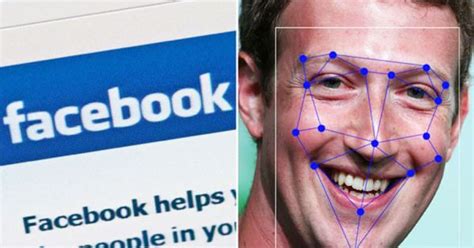
The cameras use facial recognition technology that can capture a grimace, a pimple, a freckle, even an eye blink as you walk the streets. Software then compares whatever the camera captures to government databases. By touching the screen showing your image, the police can have at their fingertips instantly a full dossier on you — your medical, financial, law enforcement, educational, personal and employment records. Stated differently, by looking at your face on a computer screen, and without a search warrant or even any suspicion about you, British police can amass in a few seconds all the data that the government has accumulated about you.

These procedures were recently challenged by a privacy advocate named Ed Bridges in a trial in Britain’s High Court. He learned that the police had twice scanned his face into their databases and accessed personal data about him — once while he walked to a restaurant and once while at a political rally. His lawyers argued that the police need a basis in fact — some articulable suspicion — to scan anyone’s face into their database, and that without that suspicion, the police are effectively engaged in a virtual fishing expedition among innocent folks…

One would think that this Orwellian in-your-face invasion of personal freedom would have shocked the conscience of the court. It didn’t. The court sided with the police.

Could the British model happen here?

Today, a half-dozen American police departments, including New York City, Chicago, Detroit and Orlando, Florida, have begun to use facial recognition surveillance, and in none of these places has the elected governing body authorized it. Politicians have looked the other way. Only in San Francisco — where readers of this column will recall the city government infringes upon the freedom of speech — has the governing body voted to prohibit the police from using facial recognition.

Great Britain — where many American-style civil liberties are protected — lacks a written constitution. Instead it has a 600-year-old constitutional tradition, acknowledged in court rulings and reflected in legislation. Yet, as we have seen, court rulings can bend with the political winds. Those winds are often fanned by the intelligence community and by law enforcement, which have succeeded in establishing sufficient fear among the public and sufficient acclimation to surveillance so that folks like Ed Bridges are made to appear as outliers wasting their time rather than patriots defending personal liberty.

Could the British model happen here?

Our federal government’s 60,000-person strong domestic spying apparatus already captures every keystroke — even those which we think we have deleted — on every device used to transmit digital data on fiber optic cable in the United States. That covers every mobile, desktop and mainframe device. The government, of course, will not acknowledge this publicly. Yet some of its officials have told as much to me privately. They have also told me that they believe that they can get away with this so long as the data captured is not used in criminal prosecutions.

Why is that? The last thing the feds and rogue police want is for government agents to be compelled to answer under oath how they acquired the evidence they are attempting to introduce. Yet the admission of spying assumes that the right to privacy, which is guaranteed in Fourth Amendment to the Constitution, is protected from governmental invasion only for criminal prosecution purposes. And dozens of American police departments have accepted this assumption as they have begun to use devices that attract cellphone signals as one walks or drives near them, thus enabling them to follow movements of the innocent without suspicion…

The Fourth Amendment is an intentional obstacle to government, an obstacle shown necessary by history to curtail tyrants.

Could the British model happen here? Digitally, it has. Could the ubiquitous cameras be far behind?

Be seeing you

Des costumes de policier et policière pour petits et grands


Posted in Uncategorized | Tagged: , , , , , | Leave a Comment »

Google’s got a new face-tracking camera for your home. We’ve got questions

Posted by M. C. on September 9, 2019

Beyond ridiculous. They will likely sell millions.

https://www.cnet.com/news/google-nest-hub-max-a-new-face-tracking-camera-for-your-home-weve-got-questions/

By

Google Home and Nest Hub gadgets already feature microphones that are always listening for the words that wake up the Assistant (“OK, Google” or “Hey, Google”). Now, the search giant’s newest gadget for your home, the Nest Hub Max smart display, adds in a camera that’s always watching for a familiar face.

Google calls the feature Face Match, and it uses facial recognition technology to remember what you look like. After that, you can tap on the screen to see personalized bits of data like calendar appointments and Google Duo messages whenever it recognizes you.

The Nest Hub Max isn’t the first product to bring facial recognition technology — and the legal and ethical considerations that come with it — into people’s homes. Smart phones have been using the technology to let us unlock our devices and authorize purchases for years, and a growing number of smart home gadgets that use cameras are putting it to use, too, including Google’s own Nest Hello video doorbell.

Still, it’s a product that seeks to give Google a wider window into our lives at a time when the company is already facing questions about the way it handles our personal data. I wanted to take a closer look at how those privacy standards apply when you add always-watching cameras into the mix.

You’ll start with Face Match by using your phone to scan your face, which creates a “face model” that the device attaches to your user profile. After that, when you’re in front of the device and it recognizes you, you’ll see personalized details like calendar appointments and Google Duo video messages from your contacts.

I had a lot of questions for Google about this feature, and about the camera’s ability to spot a raised hand gesture in order to pause or resume playback, too. For instance: Is the camera always recording in order to process what it sees and spot familiar faces or gestures? Is it sharing everything it sees with Google’s cloud?

“If camera sensing is enabled and the camera is on (i.e., not turned off via the hardware or software switch), then the camera is continuously processing pixels to look for faces and/or gestures,” a Google spokesperson explained. “This processing is done locally on the device, and no pixels leave the Nest Hub Max.”…

Many users prefer the sense of privacy offered by a shutter that they can leave closed when the device isn’t in use, especially if they plan to keep it somewhere like a bedroom. Amazon seemed to figure that out in between last year’s second-gen Amazon Echo Show smart display, which lacked a shutter, and this year’s Amazon Echo Show 5, which added one.

When asked about the lack of a shutter, Google defended its design by downplaying the distinction between kill switch and shutter altogether.

“We’ve included a mic plus camera switch that electrically disables both the camera and mics, making it functionally equivalent to a physical camera shutter,” said a Google spokesperson….

Be seeing you

Google Chrome Silently Listening to Your Private Conversations


Posted in Uncategorized | Tagged: , , , , , | 2 Comments »

Facial recognition: ten reasons you should be worried about the technology

Posted by M. C. on August 30, 2019

With so many concerns about facial recognition technology, we desperately need a more prominent conversation on its impact on our rights and civil liberties. Without proper regulation of these systems, we risk creating dystopian police states in what were once free, democratic countries.

dystopian police states”  We are already beyond the “risk” stage.

http://theconversation.com/facial-recognition-ten-reasons-you-should-be-worried-about-the-technology-122137

The Conversation

1) It puts us on a path towards automated blanket surveillance

2) It operates without a clear legal or regulatory framework

3) It violates the principles of necessity and proportionality…

4) It violates our right to privacy…

5) It has a chilling effect on our democratic political culture…


6) It denies citizens the opportunity for consent…

7) It is often inaccurate…

8) It can lead to automation bias…

9) It implies there are secret government watchlistsNothing “implicit” there-MCViewPoint)

10) It can be used to target already vulnerable groups

Be seeing you

Face-Recognition Using OpenCV: A step-by-step guide to ...

You are than just a number. You are lots of numbers.


Posted in Uncategorized | Tagged: , , , , | Leave a Comment »

Watchdog says FBI has access to about 640M photographs

Posted by M. C. on June 4, 2019

Kimberly Del Greco, a deputy assistant director at the FBI, said the bureau has strict policies for using facial recognition. She said it is used only when there is an active FBI investigation or an assessment, which can precede a formal investigation.

This is the same FIB that worked to get Hillary elected.

The same FIB that is trying to unseat a sitting US president.

Trust them?  Believe them? NO. Believe the worst? YES.

Kennedy wanted to smash the CIA, the FIB might have been next. He got dead. Robert Kennedy hated Hoover but Robert got dead. Ron Paul got much of what little vote count he received stolen. Remember the Maine.

Who will risk getting dead?

https://apnews.com/6f45d569c3084c5ca823ced145de8f82

WASHINGTON (AP) — A government watchdog says the FBI has access to about 640 million photographs — including from driver’s licenses, passports and mugshots — that can be searched using facial recognition technology.

The figure reflects how the technology is becoming an increasingly powerful law enforcement tool, but is also stirring fears about the potential for authorities to intrude on the lives of Americans. It was reported by the Government Accountability Office at a congressional hearing in which both Democrats and Republicans raised questions about the use of the technology.

The FBI maintains a database known as the Interstate Photo System of mugshots that can help federal, state and local law enforcement officials. It contains about 36 million photographs, according to Gretta Goodwin of the GAO.

But taking into account the bureau contracts providing access to driver’s licenses in 21 states, and its use of photos and other databases, the FBI has access to about 640 million photographs, Goodwin told lawmakers at the House oversight committee hearing…

Be seeing you

ruby ridge


Posted in Uncategorized | Tagged: , , , , | Leave a Comment »

CBP’s Airport Facial Recognition ‘Is Not a Surveillance Program’

Posted by M. C. on June 3, 2019

The system is intended to help agents keep better tabs who is entering and leaving the country.

Sounds exactly like surveillance to me.

Sounds exactly like the government is lying.

https://www.nextgov.com/emerging-tech/2019/05/cbps-airport-facial-recognition-not-surveillance-program/157373/

By Jack Corrigan,

Lawmakers and civil liberties advocates might be pressing law enforcement agencies to scale back their use of facial recognition software, but international travelers should only expect to see more of the tech in the years ahead.

It’s been almost two years since Customs and Border Protection began deploying facial recognition systems at U.S. airports, and despite the recent backlash against the software, the agency’s efforts show no signs of slowing down. But if you ask Deputy Executive Assistant Commissioner John Wagner, the agency’s use of facial recognition falls far short of the dystopian panopticon feared by many of the tech’s critics.

“This is not a surveillance program,” Wagner, who heads CBP’s biometric entry and exit initiative, said in a conversation with Nextgov. “We are not just hanging a camera in an airport and randomly identifying people … as they’re walking through.”

Under Wagner’s program, CBP agents use facial recognition to compare real-time images of international travelers to the photos on their passports or visas. For arrivals, people have their faces scanned while officers review their travel documents, and for departures, the tech captures images right at the boarding gate…

The system is intended to help agents keep better tabs who is entering and leaving the country.

Be seeing you

be seeing you


Posted in Uncategorized | Tagged: , , , | Leave a Comment »

DHS plan for face scanning at airports sparks alarm

Posted by M. C. on April 24, 2019

Like telecommunication, the plan is to have a dossier on everyone.

Of course it will be always accurate, always private, never any mistakes. You can bet your life on that.

DHS plan for face scanning at airports sparks alarm

Lawmakers and civil liberties advocates are calling on the Department of Homeland Security (DHS) to halt plans to begin using facial recognition technology on nearly all departing air passengers within the next four years.

The agency’s plan has reignited the fight over the sensitive technology. Critics say facial recognition technology is not ready for large-scale deployment and that DHS has failed to establish specific rules to prevent abuses and policies for handling the collected data.

“The Department of Homeland Security is plowing ahead with its program to scan travelers’ faces, and it’s doing so in absence of adequate safeguards against privacy invasions, data breaches, and racial bias,” Sen. Ed Markey (D-Mass.) said in a statement to The Hill. “Homeland Security should change course and stop its deployment of facial recognition technology until it meets that standard.”

Markey and Sen. Mike Lee (R-Utah) have raised these concerns with DHS over the past year, releasing statements and sending letters to the agency urging it to halt the program until it puts specific safeguards in place. So far, according to Markey’s office, the department has ignored their warnings.

DHS has been implementing its “biometric exit” program, which photographs some visitors when they are departing the U.S., for years, expanding to 15 major airports with plans to reach five more. President Trump in 2017 signed an executive order speeding up the rollout of the face-scanning technology, and Congress in 2016 authorized up to $1 billion over the next 10 years to implement the program.

The stated purpose of the program is to identify non-U.S. citizens who have overstayed their visas, but it captures the faces of U.S. citizens as well. The agency says it has successfully identified 7,000 people at major U.S. airports who have overstayed their visas.

The DHS report published last week, which was provided to the House and Senate judiciary committees, is the latest sign that Customs and Border Protection (CBP) — DHS’s largest federal law enforcement agency — is fast-tracking the implementation of the program at the country’s largest airports.

That has privacy advocates in an uproar…

Be seeing you

facial


Posted in Uncategorized | Tagged: , , , , , | Leave a Comment »

DHS wants to ramp up use of facial recognition at airports from just 15 to almost all in 4 years | Daily Mail Online

Posted by M. C. on April 20, 2019

According to the DHS, the technology is not only scalable, but also extremely accurate.

That makes me feel better. From ACLU about Amazon’s scanning technology misidentifying members of congress.From ACLU about Amazon’s scanning technology misidentifying members of congress.

https://www.dailymail.co.uk/sciencetech/article-6937737/DHS-wants-ramp-use-facial-recognition-airports-just-15-4-years.html

By James Pero For Dailymail.com


  • Facial recognition software could soon be standard in airports across the U.S.
  • The tool would be used to track people coming in and out of the country
  • Photos of passengers would be run against a database of visas and passports 
  • DHS’ interest in facial recognition comes amidst rising human rights concern

Despite concerns over facial recognition’s impact on civil liberties, public agencies have continued to apply the tool liberally across the U.S. with one of the biggest deployments coming to an airport near you.

The U.S. Department of Homeland Security (DHS) said that it plans to expand its application of facial recognition to 97 percent of all passengers departing the U.S. by 2023, according to the Verge.

By comparison, facial recognition technology is deployed in just 15 airports, according to figures recorded at the end of 2018.

In what is being referred to as ‘biometric exit,’ the agency plans to use facial recognition to more thoroughly track passengers entering and leaving the country.

The system functions by taking a picture of passengers before they depart and then cross-referencing the image with a database containing photos of passports and visas.

According to the DHS, the technology is not only scalable, but also extremely accurate.

In its current iteration, a summary states that the technology has scanned more than 2 million passengers with a near-perfect match rate of 98 percent.

In its limited deployment, the DHS says that it has helped to identify 7,000 passenger overstays since being introduced in 2017 as well as six passengers attempting to use identification not belonging to them…

Among the most unlikely voices of caution against the widespread deployment of facial recognition has been Microsoft — one of the biggest and most sophisticated purveyors of facial recognition software.

This month the company announced that it denied lending its software to an unnamed California law enforcement agency who planned to use the tool to scan the faces of people the agency pulled over, so that it could be checked against a database.

The reason behind the decision, according to Microsoft President, Brad Smith, is that the company felt the software — artificial intelligence systems that use machine learning to improve its capabilities — would disproportionately affect people of color and women…

One of the most vocal critics, the ACLU, has argued that scanning someone’s face skirts laws involving probable cause and could be used for mass government surveillance…

Be seeing you

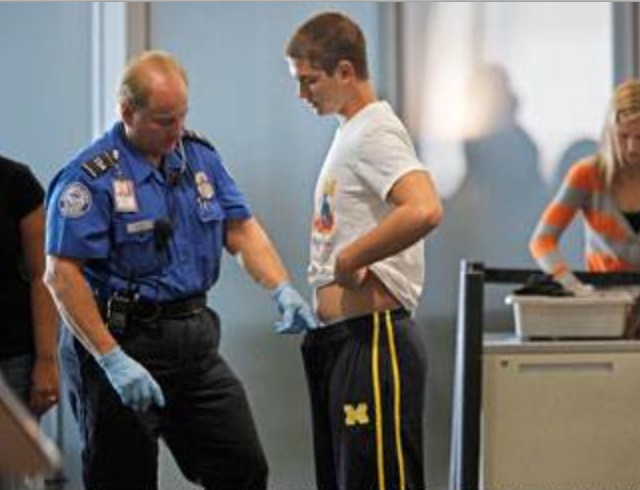
TSA

Your Alternative to Facial Recognition


Posted in Uncategorized | Tagged: , , , , | Leave a Comment »

The US Government Will Be Scanning Your Face At 20 Top Airports, Documents Show

Posted by M. C. on March 11, 2019

In the US, there are no laws governing the use of facial recognition. Courts have not ruled on whether it constitutes a search under the Fourth Amendment. There are no checks, no balances. Yet government agencies are working quickly to roll it out in every major airport in the country.

https://www.buzzfeednews.com/article/daveyalba/these-documents-reveal-the-governments-detailed-plan-for

In March 2017, President Trump issued an executive order expediting the deployment of biometric verification of the identities of all travelers crossing US borders. That mandate stipulates facial recognition identification for “100 percent of all international passengers,” including American citizens, in the top 20 US airports by 2021. Now, the United States Department of Homeland Security is rushing to get those systems up and running at airports across the country. But it’s doing so in the absence of proper vetting, regulatory safeguards, and what some privacy advocates argue is in defiance of the law.

According to 346 pages of documents obtained by the nonprofit research organization Electronic Privacy Information Center — shared exclusively with BuzzFeed News and made public on Monday as part of Sunshine Week — US Customs and Border Protection is scrambling to implement this “biometric entry-exit system,” with the goal of using facial recognition technology on travelers aboard 16,300 flights per week — or more than 100 million passengers traveling on international flights out of the United States — in as little as two years, to meet Trump’s accelerated timeline for a biometric system that had initially been signed into law by the Obama administration. This, despite questionable biometric confirmation rates and few, if any, legal guardrails.

These same documents state — explicitly — that there were no limits on how partnering airlines can use this facial recognition data. CBP did not answer specific questions about whether there are any guidelines for how other technology companies involved in processing the data can potentially also use it… Read the rest of this entry »

Posted in Uncategorized | Tagged: , , , | Leave a Comment »

This Technology Can Beam a Voice Into Your Head – The Organic Prepper

Posted by M. C. on January 29, 2019

Don’t worry, though. According to MIT, this technology will only be used to help humanity. Yep.

I wonder which branch of government helped fund this project.

https://www.theorganicprepper.com/technology-beam-a-voice-into-your-head/

by Daisy Luther

We’ve had all sorts of articles on this website about technology run amok, like videos that are undiscernable from reality and doorbells that monitor the entire neighborhood and China mining data from the brains of workers. But this one takes the creepy sci-fact cake.

According to MIT, (Edited to add: the website where this paper is hosted is now offline) there now exists technology that can beam a voice right into your head from a distance.

What? That’s crazy!

While it sounds like the wild claim of a person suffering from a mental illness – “The government is telling me to do stuff and only I can hear them!” – it’s all too real.

In a paper published on Friday in the journal Optics Letters, the MIT team describes how it developed two different methods to transmit tones, music, and recorded speech via a laser.

Both techniques take advantage of something called the photoacoustic effect, which is the formation of sound waves as the result of a material absorbing light. (source)

But…is this technology really new? Or are we just now finding out about it? Watch the video. Read the rest of this entry »

Posted in Uncategorized | Tagged: , , , | Leave a Comment »

Survey: Americans Warming to Use of Facial Recognition

Posted by M. C. on January 8, 2019

Trade offs! – Sheeple!

If you use Eazy-Pass or live in a city with the right kind of intersection cameras they probably have your mug data banked already.

The same government that is analyzing your face can’t tell dog hair from human hair and lies about it in court.

https://www.nextgov.com/emerging-tech/2019/01/survey-americans-warming-use-facial-recognition-tech/153987/

By Frank Konkel,

Americans do not favor strict limits on facial recognition technology, according to a new national survey.

A growing number of Americans are OK with the facial recognition technology, especially if it increases public safety, according to a national survey released Monday.

Conducted on a national poll of 3,151 U.S. adults in December, the survey found only one in four Americans believe the federal government should strictly limit the use of facial biometrics technology.

The survey also indicates Americans are more likely to support any apparent tradeoff to their own privacy caused by facial recognition technology if it benefits law enforcement, reduces shoplifting or speeds up airport security lines.

Only 18 percent of those polled said they agreed with strict limitations on facial recognition tech if it comes at the expense of public safety, compared to 55 percent who disagreed with such limitations…

Be seeing you

facial

Posted in Uncategorized | Tagged: , , , | 1 Comment »