MCViewPoint

Opinion from a Libertarian ViewPoint

Posts Tagged ‘fiat currency’

What the Central Bank Cartel has Planned for You | Mises Institute

Posted by M. C. on September 1, 2023

Whatever comes from states pursuing their own monetary interests, we should not get our hopes up that the states will provide sound money to the people. If states monopolize money production, they will use it predominantly to serve their own needs.

https://mises.org/library/what-central-bank-cartel-has-planned-you

The Austrian(TA): What is the global currency plot, and who benefits most from the success of this effort?

Thorsten Polleit (TP): The global currency plot denotes a rather inconvenient truth: the existence of states (as we know them today) sets into motion a dynamic process toward creating a single world fiat money controlled by a world central bank, and most likely a central world government. The beneficiaries will be the very few—the “elite”—in charge of running the state and those few privileged by the state, such as big business, big banking, Big Pharma, and Big Tech. However, the great majority of the people will suffer a very great disadvantage. In fact, a single world fiat currency would most likely entail tyranny.

TA: The first half of the book is largely focused on economic theory and method. Why is economics so important to understanding the global fiat currency threat?

TP: I would argue that thinking about the method of economic science is actually the most important part of all of this. You know, economics is not an empirical science but must be conceptualized as a science of the logic of human action—or “praxeology,” as Ludwig von Mises called it. The logic of human action allows us to understand that there are regularities in human reality to which we must adapt our actions to succeed. It also makes us understand what will happen if— under certain conditions—actions that are contrary to the logic of human action are taken. For instance, we can know in advance (without having to resort to any kind of testing) that a state—defined as a coercive territorial monopoly—will (other things being equal) continue to expand no matter what; that it will seek control of money, replacing commodity money with its own fiat currency; and that states will form a cartel and strive to eventually establish a world government with its own world fiat currency. The logic of human action reveals these dynamics that many people are most likely unaware of.

TA: What role do central banks such as the Federal Reserve play?

TP: It may be hard to swallow, but central banks were not created for the greater good but to support the state and special interest groups. After World War II, the US became the dominant economic and military power in the world, and the Federal Reserve (the Fed), founded in 1913, became the world’s most powerful central bank, issuing the US dollar, the world’s leading reserve currency. It is fair to say that the Fed does indeed call the shots in the international financial and economic system. The Fed acts as the unofficial world central bank. Central banks play a crucial role in making a fiat currency system possible, and if they form a cartel, they can basically create a single world fiat currency.

TA: The dollar has played a central role in the global economy for decades. Does the dollar’s global hegemony help or hinder efforts to create a single global currency?

TP: The dominance of the US dollar is certainly helping to push the world toward a single fiat currency. Just imagine a major crisis that will eventually hit us. When the worldwide fiat currency regime starts to unravel, the US dollar will likely be the last man standing. In such a situation, it is also very likely that many countries will try to peg their currency to the US dollar (i.e., effectively adopt the US dollar as base money). It may not sound realistic right now, but imagine a scenario in which the United States and China join forces and endorse exchange rate fixing through the International Monetary Fund’s special drawing rights, later declaring the exchange rates irrevocably fixed. The world would be closer to a single world fiat currency than ever.

TA: What would it look like if the dollar were replaced by some sort of new international currency?

See the rest here

Be seeing you

Posted in Uncategorized | Tagged: , , , , | Leave a Comment »

9 Reasons Why Gold Will Soon Replace Treasuries As The Ultimate Store-Of-Value Asset

Posted by M. C. on August 4, 2023

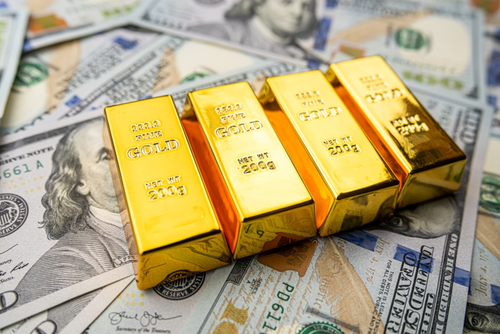
In short, we are on the verge of a paradigm shift in international finance as gold replaces Treasuries as the world’s premier store-of-value asset.

Then, gold skyrocketed from $35 per ounce to $850 in 1980—a gain of over 2,300% or more than 24x.

I expect the percentage rise in the price of gold to be at least as significant as it was during the last paradigm shift.

https://www.zerohedge.com/personal-finance/9-reasons-why-gold-will-soon-replace-treasuries-ultimate-store-value-asset

Tyler Durden's Photo

by Tyler Durden

Authored by Nick Giambruno via InternationalMan.com,

In the age of fiat currency, the distinct concepts of saving and investing have become conflated and confused.

Saving is producing more than you consume and then setting it the difference aside.

Investing is allocating capital to a productive business to create more wealth. Investing has more risk—and potential reward—than saving.

Today, however, what most people think of as saving is actually investing.

That’s because most people take the excess of their production over consumption and put it into the stock or bond market.

Most people understand that it’s not optimal to simply hold fiat currency, which the central banks continuously debase. So they put their money into other assets, primarily bonds and stocks.

In other words, fiat currency and inflation have ruined saving for most people. It has forced them further down the risk curve into stocks, bonds, and other investments in a struggle to maintain their purchasing power.

However, there is no guarantee those investments will even keep up with inflation. But suppose they do. They will then be subject to a capital gains tax, even if it’s only a nominal gain, not a real one.

That means savers face the daunting task of not only keeping up with inflation but also outpacing the capital gains tax on the nominal gain just to maintain their purchasing power.

That’s made saving an impossible task for most.

Before the era of easy-to-produce fiat currency, people could simply save in money, which was either gold or a derivation of it.

There was no need for a dentist, construction worker, or taxi driver also to become a hedge fund manager to try to keep their head above water.

That’s how the fiat era monetized stocks, bonds, real estate, and other assets that wouldn’t have otherwise been.

For example, 50 years ago, the market cap of all the gold in the world was roughly equal to the market cap of all the stocks in the world. Today, the market cap of gold is about 10% of the world’s equities.

It’s an indication of how capital that used to be allocated to saving in gold became allocated to the stock market instead.

That doesn’t mean there isn’t a legitimate place for stocks, bonds, and real estate—there certainly is. It’s just that people would use them for investing—or, in the case of real estate, its utility value—and not as savings vehicles.

Bonds in general and Treasuries in particular, became the “go-to” savings vehicles to store wealth in the fiat era.

However, I think that will change soon as bonds will be incapable of storing value in the face of financial repression.

With 2022 being the worst year for Treasuries in American history, the shift away from bonds has probably already begun.

That means a lot of the capital parked in bonds will be looking for a new home that functions as a better store of value.

Gold: Make Saving Great Again

See the rest here

Be seeing you

Posted in Uncategorized | Tagged: , , , , | Leave a Comment »

The Secret Ronald Reagan Told Me about Gold and Great Nations | Mises Wire

Posted by M. C. on August 21, 2021

Ronald Reagan once told me that no nation has abandoned gold and remained great. As president, he supported the creation of the Gold Commission. However, he did not stop the establishment from stacking the commission with defenders of the monetary status quo.

https://mises.org/wire/secret-ronald-reagan-told-me-about-gold-and-great-nations

Ron Paul

Today [August 15] marks 50 years since President Richard Nixon closed the “gold window,” ending the ability of foreign governments to exchange United States dollars for gold. Nixon’s action severed the last link between the dollar and gold, giving the U.S. a fiat currency.

America’s experiment with fiat has led to an explosion of consumer, business, and—especially—government debt. It has also caused increasing economic inequality, a boom-bubble-bust business cycle, and a continued erosion of the dollar’s value.

Nixon’s closure of the gold window motivated me to run for office. Having read the works of the leading Austrian economists, such as Ludwig von Mises and Murray Rothbard, I understood the dangers of abandoning gold for a fiat currency and wanted a platform to spread these ideas.

When I first entered public life, support for restoring a gold standard, much less abolishing the Fed, was limited to so-called “gold bugs” and the then tiny libertarian movement. Even many economists who normally supported free markets believed the fiat system could be made to work if the Federal Reserve were forced to follow rules.

These rules were supposed to provide the Fed with clear guidance as to when to increase or decrease the money supply. This may sound good in theory, but a “rules-based monetary system” still allows the Federal Reserve to manipulate interest rates, which are the price of money, causing artificial booms and very real busts.

The stagflation of the Carter era did increase interest in monetary policy. The rise of the “supply-siders,” who supported a limited role for gold, helped increase interest in the issue.

Ronald Reagan once told me that no nation has abandoned gold and remained great. As president, he supported the creation of the Gold Commission. However, he did not stop the establishment from stacking the commission with defenders of the monetary status quo.

The commission’s two pro-gold members, Lewis Lehrman and myself, produced a minority report, written with the aid of Murray Rothbard, making the case for a gold standard. The report was published as The Case for GoldIt can be downloaded at Mises.org.

By the mid-1980s, any interest among the political and financial elites in questioning the Fed’s power had disappeared. This was due to acceptance of the myth that Paul Volcker tamed inflation. In the 1990s, a virtual cult of personality arose around the “Maestro” Alan Greenspan, who once told me that the Fed had learned how to “replicate” the results of a gold-backed currency.

While my warnings that the Fed was leading the American economy over the cliff were dismissed in Washington, they found a receptive audience outside the Beltway. The response to my 2008 presidential campaign led to a birth of a new liberty movement that put monetary policy front and center.

The 2008 meltdown, big bank bailouts, and the Fed’s subsequent failure to reignite the economy despite unprecedented money creation fueled the growth of the new movement. My Campaign for Liberty organization mobilized the new liberty movement to make Audit the Fed a major issue in Congress.

Fifty years after Nixon closed the gold window, prices are heading toward 1970s-era increases. Yet the Fed cannot increase interest rates as long as the politicians keep creating billions of new debts.

It is clear that America is heading toward another Federal Reserve–created economic crisis. The good news is the impending crisis gives us an opportunity to spread our message, grow our movement, and finally force Congress to audit and end the Fed.

Originally published by the New York Sun. Author:

Ron PaulDr. Ron Paul is a former member of Congress and Distinguished Counselor to the Mises Institute.

Be seeing you

Posted in Uncategorized | Tagged: , , , , , | Leave a Comment »

Four Myths about Money That Ought to Die Forever | Mises Institute

Posted by M. C. on May 21, 2021

https://mises.org/library/four-myths-about-money-ought-die-forever

Robert P. Murphy

With the possible exception of international trade, no topic in economics contains more myths than monetary theory. In the present article I address four popular opinions concerning money that suffer from either ambiguity or outright falsehood.

One: “Money represents a claim on goods and services.”

Although there is a grain of truth in this view, it is quite simplistic and misconceives what money really is.1 Money is not a claim on goods and services, the way a bond is a legal claim to (future) cash payments or the way a stock share is a claim on the net assets of a company. On the contrary, money is a good unto itself. If you own a $20 bill, no one is under any contractual obligation to give you anything for it.2

Now of course, in all likelihood people will be willing to exchange all sorts of things for your $20 bill; that’s why you yourself performed labor (or sold something else) to obtain it in the first place. Nonetheless, if we wish to truly understand money, we must distinguish between credit liabilities on the one hand, and a universally accepted medium of exchange (i.e., money) on the other.

Two: “The purchasing power of money equals the supply of real output divided by the supply of money.”

As with the first view, this one too has a grain of truth. Specifically, if everything else is held equal, then the “price level” (if we ignore the problems with measurement and arbitrariness) will go up if the money supply grows by more than real output, and will go down if real output grows by more than the stock of money.

However, other things need not be equal, in particular the demand to hold money. As with every other good, the “price” of money (i.e., its purchasing power—or how many units of radios, televisions, etc. people offer in order to receive units of money) is determined by the supply of dollars and the community’s demand to hold dollars. A given stock of money can be consistent with any price level you want, so long as you are allowed to change the demand for money.

For example, even if output and the stock of money stayed constant, all prices could double if everyone in the community wanted to cut in half the purchasing power of his or her cash balance. How is this possible? Initially everyone thinks he or she is holding “too much” cash and so tries to spend it. But since the merchants too think they are holding too much, they agree to sell only at higher prices. (If this seems odd to you, consider: Even if you are uncomfortable with $1000 in your wallet—maybe you just won big at the casino—if someone walked up and offers you another $1000 for your shoes, you’d probably accept.)

If we ignore all of the real world complications caused by timing issues, it’s easy to see that in the new equilibrium, where everyone is content with his or her cash holdings, nothing “real” will have changed. Instead, the unit price of everything (in terms of dollars) will have doubled, so that even though the per capita quantity of dollar bills is still the same, now the average person can only buy half as much real stuff with the money in his wallet. Of course this type of example (which I picked up from Milton Friedman) is very unrealistic, but it does serve to illustrate the point that prices are not a mechanical function of physical stocks of goods and dollar bills. On the contrary, people’s subjective valuations are also critical.

Three: “Under a gold standard the money is backed by something real, whereas under our present system dollar bills are backed up by faith in the government.”

Again, I sympathize with this type of view, but when my upper-level students write such things on their exams, I have to take off points for imprecision. Strictly speaking, under a gold standard the money isn’t backed by anything; the money is the gold. Now if we have a government that issues pieces of paper that are 100% redeemable claims on gold, I wouldn’t classify those derivative assets (i.e. the pieces of paper) as money, but perhaps as money certificates. Yet this is a minor quibble.

My real objection to the view quoted above is that it denies that our current fiat currency is really money. Although (as a libertarian, Austrian economist) I fully condemn the monetary history of the United States, and deplore the means by which the public was forcibly weaned from the gold standard, nonetheless it is simply misleading and inaccurate to deny that the green pieces of paper in our wallets and purses are genuine money. They satisfy the textbook definition: They are a medium of exchange accepted almost universally in a given region. No one is forcing you to accept green pieces of paper when you sell things. (If you don’t want anyone foisting pictures of US presidents on you, then just charge a billion US dollars for everything you sell.) The fact that government coercion (past and present) is necessary to maintain this condition is irrelevant; cigarettes really circulated as money in World War II P.O.W. camps, even though this wouldn’t have occurred without the artificial and coercive environment in which those traders found themselves.

Four: “Deflation is undesirable because it cripples investment. If prices in general are falling, no one will invest in real goods because he can earn a higher return holding cash.”

Although this last myth is understandable when espoused by the layperson, it is inexplicable that some trained economists believe it. (For three examples: An NYU professor used it to “shoot down” my Misesian friend in class, Wikipedia’s entry on deflation mentions this argument, and even Gottfried Haberler advances a version of it in this essay.) For one thing, the argument overlooks the fact that there were many years of actual deflation in industrial economies on gold or silver standards; I don’t think investment fell to zero in every single such year. So clearly something must be wrong with the argument.

Specifically the argument fails because it carelessly assumes that the relevant data for an investor are the spot prices of a particular good from one year to the next. But this is wrong. For example, suppose someone is considering investing in bottles of fermenting grapes that will be ready for sale as wine in exactly one year.3 The rate of return on this investment concerns the 2005 price of the grapes and the 2006 price of wine. So let us further refine the example and suppose that all prices fall 50% every year; i.e., there is massive deflation and presumably no one should be willing to invest in wine or anything else.

Yet there is no reason to jump to this conclusion. For example, the 2005 price of the bottle of fermenting grapes might be $100 and the 2005 price of a wine bottle might be $400, while the 2006 price of the bottle of grapes will be $50 and the 2006 price of a wine bottle will be $200. (Notice that, as stipulated, all prices have fallen by 50% per year.) Would our investor prefer to hold his cash, which in a sense appreciates at a real rate of 100% per year? Not at all! With our numbers, the investor would earn a 100% nominal (not just real) return on his money if he invests in the wine industry: He pays $100 for a bottle of fermenting grapes in 2005, then waits one year and sells the resulting bottle of wine for $200.

Had our investor sat on his $100 in cash in 2005, its purchasing power would have risen from 1/4 of a bottle of wine (in 2005) to 1/2 of a bottle of wine (in 2006). But by investing the cash, his purchasing power goes from 1/4 of a bottle in 2005 to 1 bottle in 2006. Once we allow for the prices of capital goods and raw materials to adjust to expectations of deflation, there is no reason for falling prices to hamper investment whatsoever. 4

Conclusion

Most of the myths concerning money are easily exposed when we consider what money is. Some of the more subtle myths, especially those concerning price deflation, are exposed once we consider the intertemporal price structure. On both counts, the Austrian School of economics serves us well.

[Originally published February 28, 2006, as “What Money Isn’t”]

  • 1. For a more systematic introduction to the Austrian theory of money, see this article.
  • 2. Even legal tender laws don’t affect this statement. If you owe someone, say, $1,000 and the government says a particular $20 bill counts as partial payment, that’s not the same as saying that someone owes you an item in exchange for the $20 bill. Rather, it’s just the government declaring that your debt can be partially satisfied with the $20 bill in question. (Naturally I oppose legal tender laws.)
  • 3. I suspect that this story is far from an accurate description of wine making, but it was the easiest way for me to illustrate my point.
  • 4. A sophisticated critic could answer that the true problem with deflation is not that it would completely eliminate all investment, but rather that investment would stop at the point at which the marginal real return equaled the real return from holding cash.  I’m not sure that even this version of the argument is valid, but in any event it’s not what many of the economists (such as the Wikipedia author) seem to be saying.”

Author:

Contact Robert P. Murphy

Robert P. Murphy is a Senior Fellow with the Mises Institute. He is the author of many books. His latest is Contra Krugman: Smashing the Errors of America’s Most Famous KeynesianHis other works include Chaos Theory, Lessons for the Young Economist, and Choice: Cooperation, Enterprise, and Human Action (Independent Institute, 2015) which is a modern distillation of the essentials of Mises’s thought for the layperson. Murphy is cohost, with Tom Woods, of the popular podcast Contra Krugman, which is a weekly refutation of Paul Krugman’s New York Times column. He is also host of The Bob Murphy Show.

Be seeing you

Posted in Uncategorized | Tagged: , , , | Leave a Comment »

We’re All Currency Manipulators Now – LewRockwell

Posted by M. C. on August 9, 2019

https://www.lewrockwell.com/2019/08/david-stockman/the-donald-means-maba-the-great-fiscal-miscreant-will-make-america-broke-again/

By

David Stockman’s Contra Corner

Call it the monetary theater of the absurd. After all, here is what a determined currency manipulator did between September 2002 and July 2008.

To wit, it pumped about $200 billion of new dollar liabilities into the world financial system, thereby expanding the Fed’s balance sheet by 26%. Clearly, global traders and US trading partners didn’t welcome that flood of freshly minted fiat currency because during the same period, the traded-weighted dollar exchange rate plunged by 25%.

Moreover, there can be little doubt that the severe slump in the US dollar shown below was deliberate. During much of that period, the Fed conducted an aggressive campaign to slash interest rates, goose domestic growth and perk-up the inflation rate. The last objective in particular was the brain child of newly appointed Fedhead Ben Bernanke, who falsely warned Greenspan & Co. about the dangers of an imminent “deflation” that never remotely happened.

Needless to say, the impolite word for a policy of suppressing domestic interest rates and goosing inflation is trashing your own currency. All things being equal, foreigners will lighten their dollar holdings and trade the dollar down when authorities promise to reduce its purchasing power and to push yields lower relative to alternatives abroad.

The truth is, the U.S. Federal Reserve is the all-time champion of currency manipulation, and has been ever since Nixon severed the dollar’s tie to gold in August 1971.

That’s because in a fiat currency world, domestic monetary policy is inherently an exercise in currency manipulation: The effects of Fed policy changes (or those of any other significant central bank) are transmitted instantly into external FX and related global financial markets – once the protective moat of a fixed exchange rate is removed

If we deem China a currency manipulator, what about the other 729 rate cuts in the past 10 years? What about our central bank taking rates down to 0% for 8 years and printing $4-5 trillion?

Be seeing you

Thread by @VMRConstancio: "FT: “ US Treasury added Ireland ...


Posted in Uncategorized | Tagged: , , , , | Leave a Comment »