MCViewPoint

Opinion from a Libertarian ViewPoint

Posts Tagged ‘Free Market’

“NAFTA Fever” and the Myth of Government-Created Free Markets

Posted by M. C. on November 16, 2024

Those defending markets should not fall into NAFTA fever, into a dogmatic orthodoxy whereby they defend NAFTA and the illusion of a free market victory. These were never free market victories, but intervention dressed in the garb of market rhetoric. We should not be jumping to the defense of the results of interventionism. Interventionism causes a death spiral of failure and continually worse social conditions.

How can you call documents that are thousands of pages, with requirements for environment, inclusion, wages and whom you are NOT ALLOWED TO TRADE WITH free market?

https://mises.org/mises-wire/nafta-fever-and-myth-government-created-free-markets

Mises WireDavid Brady, Jr.

Left or right, the enemy is the free market. Every problem is the fault of the free market. On the left, the supposed radical deregulation of the 1980s paved the way for the financial crisis and the destruction of the environment. On the right, free trade is responsible for the gutting of manufacturing. The free market is made out in this mythos to have had its heyday in the 1980s and ‘90s and destroyed everything. Even free market advocates fall into this trap, saying that this time in the near past was a free market victory. The results—they try to argue with the market critics, but they agree with the causal analysis: Markets won! Hooray!

The fact is that all three of these groups are wrong. There was no American market revolution in the ‘80s.

It is important to make note of the rhetoric of American life up until the 1980s. American life at the beginning of the 1930s was introduced to the message of “market failures” that justified the New Deal. By the end of the 1940s, Americans were thrown into the Cold War, where all of American life was defined by a battle between “American Capitalism” and “Soviet Communism.”

Paying lip service to the free market was easy. Fusionism became the default conservative ideology, the mixture of so-called “fiscal conservatism,” the “moral majority,” and hawkish foreign policy. The hawkish foreign policy—the boogeyman of National Review—was bearing the brunt of the load. As Buckley put it

We have got to accept Big Government for the duration [of the Cold War]— for neither an offensive nor a defensive war can be waged…except through the instrumentality of a totalitarian bureaucracy within our shores.

“Fiscal conservatism” was cast aside in the name of fighting the Soviet menace, but it was in the name of capitalism because everything was done in the name of fighting communism. Every American who bought into the existential crisis of Cold War rhetoric could be coaxed into supporting any policy in the name of capitalism and free trade. So when politicians wheeled forward thousand-page treaties with import/export quotas, environmental regulations, and currency price controls under the name of “Free Trade Agreements.” No wonder the American people got behind it.

No wonder free trade got stuck with the blame. It is an age-old tactic to give bills positive names while they have the opposite effect (e.g., the Inflation Reduction Act). Who would oppose the “Giving Puppies Good Homes Bill of 2024”? At the end of the Cold War, who would oppose a supposed free trade agreement with our fellow capitalist allies?

With the backing of the tail-end of the Cold War market-rhetoric and every Cold War “free enterprise” think tank, we were given NAFTA. Rothbard himself lamented the rise of NAFTA fervor in every so-called “free market think tank.” He wrote in his essay “The NAFTA Myth”:
 

For some people, it seems, all you have to do to convince them of the free enterprise nature of something is to label it “market,” and so we have the spawning of such grotesque creatures as “market socialists” or “market liberals.” The word “freedom,” of course, is also a grabber, and so another way to gain adherents in an age that exalts rhetoric over substance is simply to call yourself or your proposal “free market” or “free trade.” Labels are often enough to nab the suckers.

See the rest here

Be seeing you

Posted in Uncategorized | Tagged: , , | Leave a Comment »

Support Your Local Lemonade Stand!

Posted by M. C. on September 10, 2024

True Economic Reform lies in a Change of Focus

In America (and the West in general) which is in deep economic decay, this is the kind of economic activity which needs support from the people now more than ever.

Professor Wall and Jason

https://keepgovlocal.substack.com/p/support-your-local-lemonade-stand

A short time ago, one of your respective authors was driving back to his home in the sticks after a busy day tending to business matters in the city. In a small town on the way, a familiar sight was on the curb in front of a neighborhood house. A small folding table complete with a frosty pitcher, a stack of cups, and a white poster board sign reading “Lemonade For Sale. $1 per Cup.” Four children tended the table from their folding chairs around it, and a parent sat on the porch a couple yards away keeping an eye on them. It seemed like a good opportunity to support the local economy and there was little chance of the big guy/girl getting his/her cut of the profits. Soon, an undiluted free market transaction benefited both parties; yours truly from a cold, refreshing drink, and the lemonade stand representatives from a cold, hard-earned, invest-able, save-able dollar bill…and a 100% tip.

Summer and Autumn are times when local economic opportunities are expressed more openly; from lemonade stands to farmers markets where locals trade with one another in town squares, pavilions, and parks. These are people committed to providing quality produce – an essential commitment because it has never been more convenient to pass up a farmer’s market and lemonade stand. Consider that groceries purchased online can be delivered in one day. Granted, the buyer has to open the front door and put them away, but the convenience is a no-brainer. Quality is the only selling point that these small businesspeople can use to compete, and many excel. Though they do seek monetary return for their labors, it is merely a part of the wholesome satisfaction that comes from a free, reciprocal, and unforced transaction. These are hard-working, honest individuals, who have no corporate overlord wielding a metaphorical whip over them. This means they have the freedom to more freely adapt to consumers’ changing needs and to make deals with those who have a special need or limited resources. They also more readily recognize and reward faithful patrons who continue to give them business. In short, this economic activity is the closest thing to the pure free market as described by Mises, Hazlitt, & Rothbard.

See the rest here

Be seeing you

Posted in Uncategorized | Tagged: , , | Leave a Comment »

Why the Free Market Is Hard to Defend

Posted by M. C. on August 29, 2024

The free market exists because of something no one likes to be reminded of: scarcity.

As Hayek showed, government control over the means to human flourishing leads inevitably to government control over the ends of human flourishing.

Nathan W. Schlueter

Under steady pressure from post-liberal and populist voices, Republican party leadership seems to have taken a surprising turn against the free market and towards interventionist policies—protectionism, industrial policy, regulations, welfare, and labor unions—more traditionally associated with the Left than the Right.

The truth is that the free market is not easy to defend. That is not to say it is indefensible. To the contrary, there are many strong arguments in favor of it, including the scope it gives to human freedom and creativity; the innovation and wealth it generates; and the incompetence, injustice, and dangers of undue government interference and control.

But most people find it difficult to understand and appreciate these arguments when faced with the immediate advantages of government intervention. The problem is not logical, it is psychological. Instead of an explicit rejection of the free market, we have witnessed the steady growth of well-intentioned anti-market attitudes and policies, which cause real but hidden harm while nudging us along what F. A. Hayek famously called The Road to Serfdom.

We can see why the defense of the free market is so difficult and yet so important by juxtaposing it with other domains of human action. The common good of a healthy political association is not simple. It includes at least three spheres that exist in a dynamic and uneasy tension with one another: civil society, the free market, and government.

This seemingly clear division can be very misleading, since all of these spheres, and their corresponding activities and habits, overlap and intersect in ways that are difficult to distinguish. Each sphere has its own distinctive purpose, activity, and “logic” or mode of practical reasoning. And one consequence of this complex reality is that human beings must learn, and learn to apply, different standards of evaluation and behavior to different domains in their lives.

Put most simply, civil society is the sphere where persons pursue the “intrinsic” goods—goods we have reason to want for their own sake—that constitute happiness and flourishing. Civil society is the space of genuine leisure; not merely entertainment, but worship, marriage, family, friendship, and culture. It operates by a “logic” of generosity, commitment, caregiving, and charity.

The free market is the sphere of “instrumental goods”—goods such as money that we only have reason to pursue for the sake of other goods—where persons acquire the means for their flourishing by exchanging their time, labor, resources, and other instrumental goods. It operates by a “logic” of negotiation, calculation, and thrift.

Finally, government is the sphere that provides the overall framework within which the other two spheres can operate well. Government also helps prevent encroachments by the other spheres and provides goods that are difficult or impossible for the other spheres to provide. Government operates by a “logic” of common deliberation and collective action on behalf of the common good, backed by coercive power. 

Each of these spheres provides something distinctive that cannot be provided by the others. Left alone and in isolation from the others, each is prone to expand beyond its due limits, harming people and the common good. The challenge is to make all three work together and correct one another in the way that best promotes human flourishing. The constant ideological temptation is to reduce them to one. Totalitarian ideologies such as communism and fascism attempt to absorb civil society and the market into government. Libertarianism tends to reduce government and civil society to the logic of the market. More subtly, theocracy seeks to subordinate both government and the market to a unified vision of civil society determined by religious authority and doctrine. 

Of these three spheres, the free market is the most difficult to defend. And that difficulty is not simply the result of market excesses or externalities, like manipulative advertising, a surplus of cheap, ugly products, or pollution. The difficulty is intrinsic to even a healthy market. The reasons have to do with scarcity, utility, impersonality, self-interest, and complexity. These words typically cause a negative emotional reaction. Yet each word expresses a reality we rely upon every day, and which we must humbly acknowledge and accept in order to flourish.

First, the free market exists because of something no one likes to be reminded of: Scarcity. Human beings are very needy. Nature does not spontaneously provide food, clothing, and shelter, much less the time or instruments of leisure like books and musical instruments.

Second, the primary advantage of the free market is its usefulness in helping overcome scarcity. We all like and need useful things, but as Aristotle repeatedly observes in his Nicomachean Ethics, the useful is not beautiful. Beauty consists in a gratuitous overflow of being that attracts our wonder and admiration, whereas the useful is merely necessary.

True, the market unleashes astonishing creativity and energy. Ayn Rand is a mediocre novelist, but her romantic entrepreneurs remind us of the kinds of human greatness that can find a place in the free market, and of the gratitude we should have for their efforts. Still, in the end, for most people, the market is about “getting and spending,” in which all too often “we lay waste our powers.” 

Third, the logic of the free market is impersonal. If the first two elements did not elicit immediate negative reactions, this one is sure to do so.

See the rest here

Be seeing you

Posted in Uncategorized | Tagged: , , , , , , | Leave a Comment »

Antitrust Policy in a Free Society

Posted by M. C. on April 6, 2024

D. T. Armentano

Professor of Economics, University of Hartford

Both the normative and economic case for free markets and against any antitrust law is impressive. Since the law inevitably interferes with both rivalry and cooperation, it must tend to make the economy less efficient. And since the law inevitably interferes with individual rights and with peaceful exchange, it must tend to make the social system less fair and just. In short, the law appears to have lost any claim to legitimacy.

https://imprimis.hillsdale.edu/antitrust-policy-in-a-free-society

The primary concern of political economy is the appropriate role of government in social affairs. The debate, in brief, is whether the economy should be left free to establish a “spontaneous order,” or whether government regulation is necessary to maintain efficiency and economic welfare. Some liberals, most conservatives, and all libertarians would argue that government regulation of industry generally tends to reduce efficiency and economic growth and should be avoided. Since the late 1950s, and at an accelerated pace since the 1970s, free market economists and others have repeatedly argued that many governmental policies are unworkable, and that these policies often tend to achieve results that are the opposite of those intended. Indeed, theoretical and empirical criticisms of government regulation in industries such as transportation, telecommunications, and banking have been the primary rationale to deregulate these markets, and to allow free competition to determine the allocation of scarce resources.

Antitrust Deregulation

Antitrust policy has now joined the growing list of government “regulations” subject to theoretical and empirical revisionism. It wasn’t always so. Indeed, for most of the 20th century, antitrust policy was relatively immune from serious criticism. Its intentions and (apparent) results enjoyed wide academic and political support. It was generally assumed that the antitrust laws were based on solid theoretical foundations, and that vigorous enforcement was necessary to preserve business competition. What muted criticism there was of antitrust policy concerned the blatantly anti-consumer Robinson-Patman Act (1936). But aside from Robinson-Patman, the rest of the antitrust laws were seen by most as necessary to “preserve competition.”

The antitrust world has changed rather dramatically over the last 10 years. The enforcement of traditional antitrust policy has generally been curtailed sharply, and a “new direction” in antitrust enforcement has clearly emerged.

We might take a moment to contrast traditional enforcement policies with the current practices of the Federal Trade Commission and the Department of Justice. Traditional antitrust concern over the growth of “big” companies has been sharply reduced. Business arrangements whose sole probable effect is to expand market output and reduce market price can safely be excluded from antitrust prohibition. Conglomerate and vertical mergers (rarely a threat to any restriction of market output), and even many horizontal mergers (within certain reworked merger guidelines) can be permitted. Price discrimination and many vertical business agreements are now generally seen as part of the competitive market process and not as elements of monopoly power. Finally, and most importantly, antitrust enforcement efforts have been initiated recently against certain state and local regulations and ordinances that legally restrict entry and competition.

Why has antitrust policy changed? Is the new direction correct? Do we still require antitrust prohibition of certain “horizontal” agreements? Are antitrust supervision of trade association activity and rate bureaus necessary? Is there a rationale for any antitrust policy in a free society?

Monopoly Theory and Antitrust Policy

The most important reason for the collapse of traditional antitrust policy is the absence of any intelligent theory that would explain how private monopoly power could exist and be harmful to consumer welfare. Assume, for instance, that we have some industrial market with no legal barriers to entry. Business organizations will enter that market and prosper if they can allocate resources in generally efficient ways to consumers. The firms that grow and accumulate market share will have earned their market positions through exceptional performance, and holding or advancing their position will depend upon a continuously exceptional performance.

On the other hand, firms that misallocate resources (from a consumer perspective) would likely lose market position relative to more efficient business organizations. Organizations, for example, with relatively higher costs, restricted outputs, higher prices, poor quality products, repressed innovation and generally restrictive practices would likely lose profit and market share to rivals.

What useful role could antitrust policy play in this open market process? To employ antitrust against the successful firms would be anti-consumer and destructive to industrial efficiency. Yet to employ antitrust against firms that perform poorly would be unnecessary since strong economic incentives exist for such firms to change their behavior or, given failure, for the market process to reallocate resources away from such organizations. Any government action would be either premature or redundant. Thus in the absence of any intelligent theory of how resources could continue to be misallocated in open markets, the theoretical justification for traditional anti-monopoly enforcement tends to evaporate.

In a last-ditch effort to save traditional enforcement, it was argued that certain non-legal “barriers to entry” protected large firms from competition. On analysis, however, the “barriers to entry” doctrine self-destructed. Most of the so-called “barriers” turned out to be economies and efficiencies that leading business organizations had earned in the marketplace. For example, certain large firms enjoyed economies of scale that often permitted low-cost production and sale. Certain firms enjoyed an excellent reputation for high quality products and service. Certain firms successfully differentiated their product, successfully advertised their product, and successfully engaged in uncertain research and development to keep a flow of products available to accommodate the everchanging tastes of consumers.

From a competitor’s perspective, all of these achievements represented economic “barriers” that served to “limit” competition. It should be obvious, however, that from the relevant consumer perspective, these so-called barriers represented economic values that consumers willingly supported and sustained. Attack these values with antitrust policy and you attack the very economic virtues that the competitive process serves to discover and perpetuate. The non-legal barriers-to-entry discussion represented the final bankruptcy of conventional anti-monopoly theory.

Antitrust History and Policy

See the rest here

Be seeing you

Posted in Uncategorized | Tagged: , , | Leave a Comment »

TGIF: Extend Tolerance to Commerce

Posted by M. C. on October 20, 2023

Let’s look at some common examples, so common they are taken for granted. We have minimum product standards (outlawing less-expensive options), the minimum wage (creating unemployment), price controls such as rent control and so-called gouging bans (creating shortages), housing regulations and zoning (ditto), restrictions and taxes on trade with foreigners (creating higher prices), immigration control (preventing the free exchange of labor, etc.), occupational licensing (barring the choice of one’s work), industrial policy (picking winners), and drug and other “vice” prohibition (including the drinking of raw milk!).

https://libertarianinstitute.org/articles/tgif-extend-tolerance-to-commerce/

by Sheldon Richman

conscience

Perhaps you’ve noticed that we live in intolerant times. Many people claim to be endangered by the mere spoken or written expression of views on a range of issues. This has led to direct action to disrupt speakers on college campuses and elsewhere and to indirect government efforts to censor users of social media, which so far the courts have frowned on.

Believe it or not, this has had a silver lining. It’s elicited articulate renewed defenses of free speech and tolerance — long taken for granted.

But the tolerance movement should go further to include what the late philosopher Harvard Robert Nozick called “capitalist acts between consenting adults.” Those are also known in sum as the free market, an unfortunately unnoticed option these days. When it comes to human action, we find wide and increasing support for a host of government measures that interfere with the freedom of individuals to trade with one another on their own terms. Those who have become disillusioned with the intolerant so-called left seem to think the free-market alternative is unworthy of consideration. This may also be true of those who are disillusioned with the intolerant so-called right. They may embrace freedom of conscience, but they draw a line at freedom of exchange, as if conscience had no part in that.

This line seems arbitrary. A product innovator or builder of an enterprise is a creator who may well be as passionate about this chosen life purpose as a writer or an artist. (Ayn Rand stressed this.) The creator offers the product to consumers (or downstream producers), who are free to decide if what’s offered on given terms will serve their purposes. They are of course also free to decide that they do not want the offering and to go their own ways. Freedom of conscience permeates life in the marketplace, make no mistake about that.

Why should the work of people who dedicate their lives to such creations rank lower in our estimation than the work of artists? Is it because their products improve “only” material well-being and not spiritual well-being? That’s not a good reason. We are not ghosts.

More pertinent, why should the government interfere in consensual transactions deemed merely “economic”? You can see the discrimination in the matter of free speech. Generally, freedom of speech, at least until recently, has been sacrosanct. The First Amendment says it must be. But commercial speech can be and has been regulated and even banned in various ways. It gets no respect.

The courts have long distinguished between so-called fundamental liberties and non-fundamental liberties, a distinction for which no support exists anywhere. What we think of as economic liberties are in the second category and so are deemed less worthy of protection from the government. That means politicians and bureaucrats can put themselves between consenting parties and either forbid or regulate transactions without even the semblance of a compelling reason. They just need to tell the judge that a decree is aimed at some articulated objective. Those who are interfered with may not tell the meddlers, “Mind your own business. If you think you have a better way of doing things, start your own business.” That would get them heavily fined at the least. The consequences could be more severe.

See the rest here

Be seeing you

Posted in Uncategorized | Tagged: , , , , | Leave a Comment »

Rich Country, Poor Country. Why the Differences? | Mises Wire

Posted by M. C. on June 27, 2023

Surveying history it becomes clear that pursuing economic extraction does not lead to long-term prosperity. Typically, countries with a history of exploiting others are poorer than their peers. In Africa, Benin is an economic dwarf despite its rapacious history, but less aggressive peers like Mauritius and Botswana are economic stars. Similarly, the Ivory Coast experienced some of its best years when the country invested in promarket policies.

https://mises.org/wire/rich-country-poor-country-why-differences

Lipton Matthews

The scourge of poverty wounding citizens in the developing world has provoked much discussion in affluent countries. Quite unreasonably, rich countries have been indicted for inciting poverty in poor countries. Unfortunately, the assumption that prosperity stems from exploitation is still widely popular in academia and politics. However, the historical record casts serious doubt on this argument.

Imperialism was the standard in the ancient world, but no imperialist power achieved Schumpeterian growth. For example, bouts of economic progress in ancient Rome and Greece fizzled out despite imperial pursuits. Indeed, the national treasury is expanded when empires extract tributes from conquered states, but this does not redound to superior living standards for ordinary people. The wealth of the state is not a proxy for individual prosperity.

Surveying history it becomes clear that pursuing economic extraction does not lead to long-term prosperity. Typically, countries with a history of exploiting others are poorer than their peers. In Africa, Benin is an economic dwarf despite its rapacious history, but less aggressive peers like Mauritius and Botswana are economic stars. Similarly, the Ivory Coast experienced some of its best years when the country invested in promarket policies.

On the European side, empire proved to be quite costly for Sweden. Sweden became the envy of the world after the collapse of its empire. Further, the economic success that coincided with Swedish imperialism was the result of governance and economic reforms rather than empire-building. Japan experienced the glory of empire late in its history and like other examples, the evidence shows that it was a burden.

Using political clout to exploit other countries is not a strategy for success. Indeed, history reveals that many poor countries transitioned into affluence by facilitating commerce rather than chasing colonies. Finland was a poor European country in the early twentieth century and had no colonies like Switzerland. Yet both are two of the most successful countries in the world.

See the rest here

Be seeing you

Posted in Uncategorized | Tagged: , , , | Leave a Comment »

Unleashing the Power of Greed: How the Free Market Propels Progress | Mises Wire

Posted by M. C. on June 26, 2023

I don’t see even the most Left-Wing scholar in this country scornfully burning his salary check. In other words, “greed” simply means that you are trying to relieve the nature-given scarcity that man was born with. Greed will continue until the Garden of Eden arrives, when everything is superabundant, and we don’t have to worry about economics at all. 

https://mises.org/wire/unleashing-power-greed-how-free-market-propels-progress

Michael Matulef

The free market system has faced its fair share of criticism, often being labeled as a breeding ground for greed and self-interest. However, let’s take a closer look and see how greed, when properly channeled and regulated within a free market framework, can actually bring about positive outcomes for society.

One fascinating thought experiment that showcases the positive role of greed in the free market is Adam Smith’s concept of the “invisible hand.” Smith proposed that when individuals pursue their own self-interest, unintended benefits are generated for society as a whole. By seeking personal gain, individuals are motivated to produce goods and services that others value, leading to voluntary exchanges that benefit both parties. This intricate network of self-interest forms the foundation of a prosperous and efficient free market system.

At the heart of the free market lies the entrepreneurial spirit, which is driven by the desire for profit. Entrepreneurs spot unmet needs and desires within the market and strive to fill those gaps with innovative products, services, and solutions. Through their endeavors, they not only create wealth for themselves but also stimulate economic growth, generate employment opportunities, and contribute to the overall expansion of the economy. Greed, when harnessed by entrepreneurs, becomes a catalyst for innovation and progress.

Competition, an inherent aspect of the free market, acts as a powerful force that channels and refines the actions driven by greed. In a competitive marketplace, self-interested individuals are compelled to provide superior goods and services at lower prices in order to attract customers and maximize profits. This compulsion leads to a broader range of choices, improved quality of goods and services, and lower prices for consumers. The drive for personal gain is transformed into a pursuit of excellence, resulting in a more efficient and consumer-oriented market.

The pursuit of self-interest in the free market fosters cooperation and specialization. Individuals, motivated by their desire for personal gain, recognize the benefits of collaboration and form mutually beneficial relationships. This division of labor allows individuals to focus on their strengths, increasing overall productivity and efficiency. By leveraging their respective areas of expertise, individuals fueled by the inherent drive for greed contribute to the collective advancement of society.

While it’s essential to recognize the positive aspects of greed within the free market, we must also shed light on how the state, through coercion and intervention, can turn greed into a destructive force. When greed operates outside the bounds of ethical principles and voluntary exchange, it poses a significant threat to the fundamental principles that underpin a free market system.

See the rest here

Be seeing you

Posted in Uncategorized | Tagged: , , , | Leave a Comment »

Myth versus Ideology: Why Free Market Thinking Is Nonideological

Posted by M. C. on October 22, 2022

Another point of difference distinguishes free market aspirations from ideology. The myth of the free market is not utopian. It does not suggest the possibility of a perfect world but rather acknowledges scarcity as a starting point and always existing condition. Socialism, on the other hand, imagines endless bounty and suggests that the only barrier to achieving it is the capitalist order. Marxism is likewise religious and utopian in character.

https://mises.org/wire/myth-versus-ideology-why-free-market-thinking-nonideological

Michael Rectenwald

I’ll begin with a provocative thesis: socialism is ideological and free market thinking, while involving myth, is nonideological. I will show why socialism is ideological and why free market thinking involves myth but is nonideological by defining the terms myth and ideology and distinguishing them from each other.

The term “myth” has several connotations. The most common connotation today is that myth represents false belief. Thus, we see many uses of the term myth in which some myth or other is figured as something to be debunked. We can point to hundreds of titles in which the word myth signifies a belief that is mistaken and which the article or book aims to overthrow with evidence and reasoning. When entering “the myth of” into the search field on Amazon.com, for example, titles beginning with phrase are suggested, including The Myth of Normal, by Gabor Mate; The Myth of American Inequality, by Phil Gramm, Robert Ekelund et al.; The Myth of Closure, by Pauline Boss, and so on. Running the same search in an internet search engine yields similar results but includes articles on the myth of this or that, including a recent article by American Pravda (the New York Times), entitled “They Legitimized the Myth of a Stolen Election—and Reaped the Rewards,” referring to the Congresspersons who sought to block the supposedly legitimate results of the 2020 election.

But one will also find, in both searches, titles like The Myth of Sisyphus, by Albert Camus; The Myth of Eternal Return, by Mircea Eliade; The Myth of Return in Early Greek Epic, by Douglas Frame; and others. Or in a search engine one finds discussions of various Greek myths in encyclopedias and on YouTube. Clearly, these latter uses of the term myth are different from the usage in the debunking books and articles. Myth in this other sense draws on a different meaning. The Myth of Sisyphus by Camus is not an argument against the myth itself. Rather, myth in this sense connotes a kind of tale that conveys a truth, an aspiration, or a means of making sense of experience. It is a structuring device for seeing order, patterns, possibilities, probable outcomes, and so on. Myth in this sense also includes lessons to be learned and kept in mind when crafting a life or life mission. The myth of Icarus is a tale about human hubris, for example. The story of the Garden of Eden is generally understood in such terms—as a myth about seeking to be like God. The sinking of the Titanic has been seen in terms of such Greek myths as Icarus and other tales of human hubris.

It is this latter sense of myth that I use here—of myth as a means by which we structure experience, find meaning, and craft the trajectories of our lives.

See the rest here

Be seeing you

Posted in Uncategorized | Tagged: , , | Leave a Comment »

TGIF: The Libertarian Solution

Posted by M. C. on June 10, 2022

But strictly speaking, the libertarian philosophy offers no solutions to specific problems. That’s not what it does. It is not itself a solution. Rather, it describes an institutional environment in which imaginative people are free and motivated to discover innovative solutions to individual and collective problems.

https://libertarianinstitute.org/articles/tgif-the-libertarian-solution/

by Sheldon Richman 

“What’s the libertarian solution to social or economic problem X? How about problem Y or Z?”

No libertarian needs to wait long before hearing such questions. But strictly speaking, the libertarian philosophy offers no solutions to specific problems. That’s not what it does. It is not itself a solution. Rather, it describes an institutional environment in which imaginative people are free and motivated to discover innovative solutions to individual and collective problems.

That environment has moral, cultural, economic, and legal dimensions, all grounded in self-ownership, respect for others, property, competition, persuasion, and consent, as opposed to government authority, monopoly, decree, and coercion. The cultural dimension is especially important, though often unappreciated. Widespread resentment toward other people’s success, for example, is literally deadly, not only for those targeted but for society at large, especially those at the bottom.

Thus when a libertarian says freedom or the free market will solve a particular problem (if politicians stand aside), what sounds like an impossibly oversimplified response is actually highly complex. In contrast to the politicians’ boasts, note the humility here. Confidence in market problem-solving is confidence in free human imagination dispersed among countless individuals throughout society. Who can say who will come up with the solution? No one. That in part is why we need everyone to be free.

The unique grounding of the libertarian environment has far different built-in incentives for problem-solvers than any state-based alternative. State problem-solving is characterized by centralized bureaucracy, artificial knowledge constraints, nonconsensual financing (taxation) that precludes feedback, profligacy (producing the disruptive knowledge distortions of debt and inflation), and significant unaccountability. In contrast, social- or market-based problem-solving is characterized by multiple knowledge centers, competition, consensual financing, and the profit motive. In that environment proposed solutions are subjected to intellectual and product competition, which yields better knowledge than other arrangements. F. A. Hayek called competition a “discovery” process. I think of it as the universal solvent.

In the market, problems are potential profit opportunities for entrepreneurs, and as we know, the profit motive is potent. The entrepreneur’s job is to figure out where and how resources are used suboptimally relative to what people (not politicians) want most. Solving a problem often requires shifting scarce resources and labor from one purpose to another.

How can anyone know what’s the best way to go? Entrepreneurs find clues to that question in market prices, which is why the price system is so important and must not be tampered with by politicians and bureaucrats. If an entrepreneur is correct when thinks he can buy a quantity of resources and hire labor at one price per finished-product unit and make something people will want to buy at a sufficiently higher price, he will earn a profit. That’s a sign the enterprise solved a problem for its customers. Profit in the free market (absent government intervention) is a reward for success. It’s not a dirty word.

Indispensable to the entrepreneurial function is the consumers’ freedom to accept or reject offers as they see fit. Both responses communicate vital information to the problem-solvers. Coercion, the government’s way of doing things, sabotages the function.

The freedom-based process is vital in our world of scarcity, trade-offs, and imperfect knowledge. Improvement is always possible, and imperfect knowledge is not the only reason. Another is that people’s preferences change. What they wanted yesterday they may not want tomorrow, especially if something new comes along. A third reason is that the array of resources changes, with new materials, technologies, and organization methods proving superior to the old. Government restraints on this process do a disservice to people trying to improve their lives, especially those who have yet to “make it.”

See the rest here

Be seeing you

Posted in Uncategorized | Tagged: , , | Leave a Comment »

Why Price Deflation Is Always Good News | Mises Wire

Posted by M. C. on January 30, 2022

A general decline in the prices of goods and services in response to an increase in the pool of wealth is always good news for individuals. Furthermore, a general decline in prices, which is associated with the bursting of various bubbles, is also good news. The less nonproductive bubble activities, the better things will be for wealth generators and hence for the overall pool of wealth.

https://mises.org/wire/why-price-deflation-always-good-news

Frank Shostak

Most commentators are currently preoccupied with large increases in the Consumer Price Index (CPI), which is labeled as inflation. The yearly growth rate of the CPI stood at 7.0 percent in December against 6.8 percent in November and 1.4 percent in December 2020.

shos1

Pundits have been blaming the strong increase in the momentum of the CPI on the supply disruptions because of covid-19, but the key behind this strong increase in the momentum of the CPI is reckless monetary pumping by the Fed. Observe that in January 2000 the Fed’s balance sheet stood at $0.6 trillion. By the end of 2021, it had climbed to $8.8 trillion.

shos

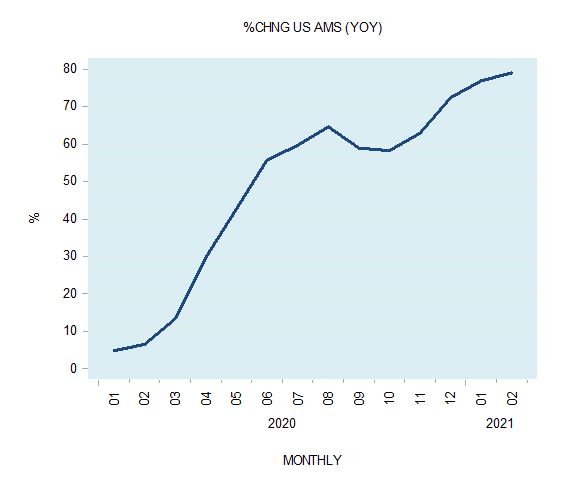
As a result of this pumping, the yearly growth rate of the Austrian money supply metric increased by a massive 79 percent in February 2021 from 4.8 percent in January 2020. (Note that some of the increases in money supply are the result of the monetization of large government outlays).

shos

On account of the sharp decline in the yearly growth rate of the Austrian money supply measure, from 79 percent in February 2021 to 15.4 percent in November 2021, the momentum of the CPI is likely to peak toward the end of 2022. Afterwards a strong decline in the momentum is likely to emerge.

shos

A possible decline in the yearly growth rate of prices coupled with a likely decline in economic activity could ignite expectations of a general decline in the prices of goods and services, i.e., deflation.

Most Commentators Fear Deflation

For most economic commentators, a general decline in prices is considered as bad news. According to these observers, a general decline in prices generates expectations for further declines in prices and slows down individuals’ propensity to spend. This in turn undermines the aggregate demand. A decline in the aggregate demand because of the decline in consumer expenditure leads to a decline in the aggregate supply and thus to a decline in economic growth.

All this sets in motion an economic slump. As the slump further depresses the prices of goods, the pace of economic decline intensifies.

The view that consumers postpone their buying of goods because prices are expected to decline is, however, questionable.

This would mean that people have abandoned any desire to live in the present. Without the maintenance of life in the present, no future life is conceivable.

According to Menger, the founder of the Austrian school of economics, “An imperfect satisfaction of needs leads to the stunting of our nature. Failure to satisfy them brings about our destruction. But to satisfy our needs is to live and prosper. Thus the attempt to provide for the satisfaction of our needs is synonymous with the attempt to provide for our lives and wellbeing. It is the most important of all human endeavors, since it is the prerequisite and foundation of all others.”

Is the Fall in Prices Bad News for the Economy?

What characterizes industrial market economy under a commodity money such as gold is that the prices of goods follow a declining trend.

According to Joseph Salerno

In fact, historically, the natural tendency in the industrial market economy under a commodity money such as gold has been for general prices to persistently decline as ongoing capital accumulation and advances in industrial techniques led to a continual expansion in the supplies of goods. Thus throughout the nineteenth century and up until the First World War, a mild deflationary trend prevailed in the industrialized nations as rapid growth in the supplies of goods outpaced the gradual growth in the money supply that occurred under the classical gold standard. For example, in the US from 1880 to 1896, the wholesale price level fell by about 30 percent, or by 1.75 percent per year, while real income rose by about 85 percent, or around 5 percent per year.

In a free market, the rising purchasing power of money, i.e., declining prices, is the mechanism that makes the great variety of goods produced accessible to many people.

See the rest here

Be seeing you

Posted in Uncategorized | Tagged: , , , , , | Leave a Comment »