MCViewPoint

Opinion from a Libertarian ViewPoint

Posts Tagged ‘Governments’

Private Corporations Don’t Cause Price Inflation. Governments Do. | Mises Wire

Posted by M. C. on July 29, 2023

So why do these “experts” blame large corporations for something—price inflation—they do not cause? Because the objective is to increase government control of the economy and destroy private business that are large enough to be economically independent. They do not care about small businesses because those are already asphyxiated by taxes and small and medium enterprises are easily forced to depend on the government.

https://mises.org/wire/private-corporations-dont-cause-price-inflation-governments-do

Daniel Lacalle

Be seeing you

Posted in Uncategorized | Tagged: , , | Leave a Comment »

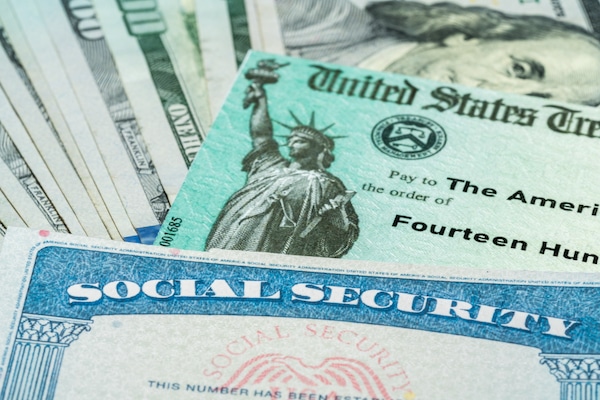
Doug Casey on Governments Targeting Retirement Funds… and What You Can Do About It

Posted by M. C. on July 27, 2023

And that is that the prime directive of any living entity—an amoeba, an individual, a corporation, a government, anything—is to survive. And it will attempt to do so at any cost.

International Man: Young adults saving into IRAs, 401(k)s, and other retirement accounts won’t be able to cash out for several decades.

What are the chances the government will change the rules before they retire?

Doug Casey: The chances are 100%.

by Doug Casey

Retirement Funds

International Man: Most Western governments, especially the US, have debt loads and spending commitments that guarantee they will eventually—likely someday soon—try to grab as much wealth as possible.

Retirement savings are a juicy target. But, unfortunately, they’re among the lowest-hanging fruit for any desperate government.

What’s your take on the situation?

Doug Casey: Let me remind you of something that I’ve said a number of times in the past. But it bears repeating because it’s so critical but overlooked, even while it’s so obvious.

And that is that the prime directive of any living entity—an amoeba, an individual, a corporation, a government, anything—is to survive. The government is an entity as distinct as General Motors or Apple Corporation, with its own peculiar interests. It isn’t “We the People”; that’s just a promotional catchphrase—propaganda. Its prime directive is to survive. And it will attempt to do so at any cost.

However, the US Government is already manifestly bankrupt. It has vastly more recognized liabilities than assets—forget about its huge contingent and hidden liabilities. But that’s just its balance sheet. Its income statement is equally out of control, running trillion-dollar deficits as far as the eye can see. To finance itself, it can only tax, borrow, and inflate the currency. Of course, it will do more of all three, but that will no longer be enough. It’s finally at the end game.

It’s inevitable that the government will now move towards confiscating, directly or indirectly, the huge pool of retirement savings some Americans—the prudent, productive ones—have put together. They’ll justify it with patriotic lies.

It’ll probably happen when the stock market melts down in earnest, we’re in the midst of a financial crisis, and the public is panicking. They’ll say, “people have lost so much money in the stock, bond, and real estate markets that we must safeguard what’s left. It’s best that we put all pension funds, IRAs, HR-10s, and what-not into a well-guarded communal pot, funded with sound government securities. We’ll put it in a lockbox and watch over it”.

Safety will be one way they’ll sell it to the scared and ignorant public. They’ll say we’re all in this together. They’ll say it’s time for solidarity. They’ll say that we have to keep “our” government solvent for reasons of patriotism. So let’s all hitch our wagons together and pull as one. They’ll conflate the interests of the government with the interests of society—which can sometimes overlap, of course, but are essentially different or even antithetical.

See the rest here

Be seeing you

Posted in Uncategorized | Tagged: , , , | Leave a Comment »

Why Do We Elect Politicians and Governments that Wage War on Sovereign States?

Posted by M. C. on June 8, 2023

This deprives the people of their elementary right to peace and freedom. Are governments a clique separate from the population?

Many adults react to these politicians like children in the form of a magical belief in authority, uncritical and clouded by moods, feelings and promises of happiness. And this has consequences: Belief in authority inevitably leads to allegiance to authority, which usually triggers the reflex of absolute spiritual obedience and paralysis of the mind.

https://www.globalresearch.ca/why-do-we-elect-politicians-governments-wage-war-sovereign-states/5821440

All Global Research articles can be read in 51 languages by activating the Translate Website button below the author’s name.

To receive Global Research’s Daily Newsletter (selected articles), click here.

Click the share button above to email/forward this article to your friends and colleagues. Follow us on Instagram and Twitter and subscribe to our Telegram Channel. Feel free to repost and share widely Global Research articles.

*** 

Introduction

After reading two articles in “RTD”, I asked myself again why we citizens elect politicians and governments year after year that go to war against sovereign states – for example against the nuclear power Russia? The article by “RIA Novosti” is “NATO plans direct war against Russia” (1) and the second article is a documentary by Anna Chapman “Red Alert: Why is Germany so bent on war?” (2), which was probably first published on 24 January.

The people and their citizens are deprived of the management of their own affairs, the determination of their own actions and the care of their own welfare by such an election. Why should the people not be able to realise their own ideas and put their self-developed concepts of life into practice?

My demand therefore remains: “Hand over power to no one!” (3) and on the question of war and peace the people should have the last word. We humans are capable of living together without weapons and wars (4).

NATO’s secret plans for military action against Russia

According to Viktoriya Nikiforova, a columnist for “RIA Novosti”, the US magazine “Newsweek” reports on secret plans of the NATO alliance to go to war against Russia. These plans are to be adopted at the next NATO summit, which will take place in Vilnius on 11 and 12 July (5).

Literally, she writes:

“Officially, the summit programme lists only six tasks for the bloc in connection with the confrontation with Russia. These are the harmonisation and coordination of the Alliance’s forces in all theatres of war, long-term cooperation with private companies in the field of defence, increasing the production of weapons and ammunition, and building up reserves in the event of a long-term war. These are not tasks just for today – it is openly admitted that the realisation of these goals will take several years.” (6)

Why is the German mainstream so obsessed with war?

The opening credits of Anna Chapman’s documentary state:

“Ken Jebsen, Liane Kilinc, Dagmar Henn… The number of people persecuted for their opinions in Germany is growing inexorably: anyone who does not obediently follow the anti-Russian, pro-Ukrainian war course is in trouble. Why is the German mainstream so bent on war?” (7)

Towards the end she writes:

“Those who oppose the self-destructive course, advocate peace with Russia and call for an end to the European imperialist expansionist course in Ukraine are muzzled in various ways, up to and including prosecution.

What has become of Germany? Why and where are we heading? Why is Berlin so bent on imposing sanctions and supporting Kiev at the expense of its own economy and population? Who is really steering the country? And who is manipulating the German mainstream?” (8)

Surely the truth is that Germany has a great responsibility both to the previous generation and to its youth?

The post-war generation did a great deal to make Germany a respected and economically strong state again after the Hitler blow and the horrors of the Russian campaign. A war against Russia must not be repeated and should be taught to the partly history-less German youth both at the family table and in school.

In her book “Eichmann in Jerusalem. An Account of the Banality of Evil”, Hannah Arendt reproduces a quote by Bertolt Brecht from 1933 in the preface:

“O Germany, pale mother!

How besmirched thou sittest

Among the nations.

Among the stained

You stand out.

Hearing the speeches that come from your house, people laugh.

But he who sees you reaches for the knife.”  (9) 

Are governments a clique separate from the population?

Every four to five years in our Western democracies, corrupt politicians are elected to high government offices and are regarded as respectable authorities. Politicians immediately associate this attribution with claims to power, create a relationship of superiority and subordination and impose their will on the citizens; more precisely, the will or instructions of their clients, the global power elite.

In doing so, they pursue a policy at the expense of the working population that enables the billionaire elite in the background to steal so many billions of dollars that they can buy almost anything or anyone, from venal politicians to the corrupt World Health Organisation (WHO). These rulers cannot be trusted now or in the future.

The government or the state is the totality of all political, legislative, judicial and military institutions that deprive the people of the management of their own affairs, the determination of their own actions, the care of their own welfare.

Do government politicians then possess certain moral qualities such as wisdom, justice or impartiality? Are they so exceptionally gifted that they can put themselves in the place of the whole people and take better care of the interests of the people? Are they infallible and morally uncorruptible, so that the lot of anyone can reasonably be entrusted to their goodness?

In any case, the rulers are those who have the power to make laws to regulate the relations of men with each other and who have, among other things, the power to make war or peace with the governments of other countries.

Who puts them in their high places? Do they impose themselves by the right of war, conquest or revolution? Or are the governments “elected” by universal suffrage? But this in no way proves the justice, the wisdom, the abilities of those elected. Often those who can best lie (Tolstoy) and deceive the people are elected and the minority, which may be half of the electorate, is sacrificed.

As a rule, governments are made up of the haves and those who serve them; therefore, they are completely at the service of the haves. The very richest among them do not even have to bother to be part of the governments, MPs or ministers themselves. It is enough for them that the deputies and ministers are at their disposal.

See the rest here

Be seeing you

Posted in Uncategorized | Tagged: , , , | Leave a Comment »

The Sky Is Falling

Posted by M. C. on October 12, 2022

By Jeff Thomas
International Man

Well, the simple, but almost universally little-understood, reason is that governments do not actually produce anything. They are, in fact, a parasitical construct that consumes money but creates nothing of worth.

The con-game becomes, “Vote for me and I’ll provide you with something at the expense of someone else.”

Governments are in the flimflam business.

Pared down to the bare essentials, governments can be very useful in passing and enforcing a small number of very basic laws. These laws should be limited to policing those who would seek to aggress against others, or their property. Governments may also have a value in providing protection from invasion – organizing an army of able-bodied people to address this collective problem, if and when it occurs.

And that’s about it. Beyond that, the private sector can, and almost always does, do a better job at virtually everything else. Therefore, a government should be small, cost very little to run and do as little as possible.

But since a government already exists, why not have it do more? Why not assign to it some of those tasks that tend not to attract businessmen?

Well, the simple, but almost universally little-understood, reason is that governments do not actually produce anything. They are, in fact, a parasitical construct that consumes money but creates nothing of worth.

Unlike businesses, they don’t operate on a profit basis. In fact, few politicians or civil servants have any grasp of the concept that prosperity is only created when someone invests his money in a venture, creates a profit and saves or re-invests the difference.

Although this may seem like a harsh criticism, it’s borne out by the fact that all governments consume money and are more wasteful than any business would be. Worse, politicians and civil servants typically fail entirely to understand that this is a fundamental problem.

And, yet, like all people, people in governments wish to personally advance, both in position and financial worth.

And here is where the perennial bugbear of governments appears.

Since governments, by rights, should never expand unless absolutely necessary, and since this is never enough for those who people any government, they must somehow con the public into believing that government expansion is “for the good of the people.”

Ergo, even the smallest of governments, in the smallest of jurisdictions, will learn to cajole the public. As the government grows, the con-game grows and duplicity, trickery and skullduggery become the lifeblood of the government – any government.

The con-game becomes, “Vote for me and I’ll provide you with something at the expense of someone else.”

See the rest here

Be seeing you

Posted in Uncategorized | Tagged: , | Leave a Comment »

The Problem With Authority

Posted by M. C. on September 10, 2022

By L. Reichard White

So, a small percentage of humans are genetic throwbacks to our hierarchical relatives (baboons, gorillas, chimps, etc.) — and their genes often cause some of them to lie, cheat, steal, intimidate, and sometimes murder their way into hierarchical power positions. This applies particularly in the case of “governments.” 

“There’s a constant battle between people who refuse to accept domination and injustice and those who are trying to force people to accept them.” –Noam Chomsky

“It is the first responsibility of every citizen to question authority.” –Benjamin Franklin

“If I order them to do things they don’t want to do, I won’t be chief anymore.” –The Emerald Forest

“The German people have no idea of the extent to which they have to be gulled in order to be led.” –Adolph Hitler, Mein Kampf Epigraph, 1926 [1]

Professor Noam Chomsky suggests that while French leftist anarchist Mikhail Bakunin, Bertrand Russell and others believe we have an “instinct for freedom,” Prof. Chomsky asserts that hasn’t been proven.

Drapetomania” should save a lot of time in convincing you that we humans do indeed have an “instinct for freedom” — maybe several.

Drapetomania was a supposed mental illness that, in 1851, American physician Samuel A. Cartwright hypothesized as the cause of enslaved Africans fleeing captivity.[1]:?41? The official view was, slave life was so pleasant, that only the mentally ill would want to run away. … –Drapetomania

So, why WOULD slaves want to run away? Why WOULD they exhibit “drapetomania?” If you were enslaved, would you? Seriously, would you?

If your answer is, “Yes,” you likely have an instinctive understanding of one of our “instincts for freedom.

But why would Mother Nature — or as some like to call HerThe Theory of Biological Evolution by Natural Selection — go to the trouble to evolve instincts for freedom for us?

Drapetomania is part of a set of instincts and/or drives that are extremely important to human survival. They’re the key to human liberty — and knowledge use — and so powerful that the hierarchical U.S. Establishment spends at least 13 years on each of us — using government school’s “hidden curriculum” — trying to suppress them.

In a previous article, we developed the notion that many of our inherited complement of genetic reflexive and instinctive behaviors and drives evolved because we depend on our data base which is distributed amongst those around us.

Because of different life experience, the information and knowledge — knowledge being “information organized to facilitate pre-diction” — varies from person to person. This difference of information and knowledge make differences of opinion inevitable.

Here’s a practical example – – –

We’ll find more game to the west, in the forest.

No, we’ll find more and easier game to the east in the meadows.

Keeping in mind that our data base and operating system are spread out over those around us and that different experience often leads to different viewpoints — and thus that different pre-dictions are normal, expected, and inevitable — the problem arises, which pre-diction will we follow?

In tribes and small groups, the answer was straight forward and simple: “We’ll follow the pre-diction we agree with.” That means we’ll often split up — some of us will go west to the forest, some east to the meadows.

See the rest here

Be seeing you

Posted in Uncategorized | Tagged: , , | Leave a Comment »

How Governments Expropriate Wealth with Inflation and Taxes

Posted by M. C. on June 28, 2022

Government does not give excess reserves as social programs. Government takes away from existing and future wealth of the economy via currency printing, taxation, spending and debt, but math never works for those who believe extractive and confiscatory policies will work. 

RE: The Janet Yellen reference below. The WSJ used to treat her every utterance as wisdom from God. A trip to the comments section revealed the readers weren’t fooled.

https://mises.org/wire/how-governments-expropriate-wealth-inflation-and-taxes

Daniel Lacalle

In an interview with the Wall Street Journal, Treasury secretary Janet Yellen admitted that the chain of stimulus plans implemented by the US administration helped create the problem of inflation. “Inflation is a matter of demand and supply, and the spending that was undertaken in the American Rescue Plan did feed demand,” Yellen admitted. Of course, Yellen went on to say that the spending was appropriate due to the collapse of the economy as governments were trying to prevent a recession.

This reminds us of a few of the problems of disproportionate government intervention and the negative impact on the middle class. The misguided massive lockdowns were imposed by the government. Countries that had strict testing, like South Korea and other Asian and European countries, kept the economy working and the pandemic under control. However, the problem is larger and deeper. Central banks and governments have exhausted all demand-side policies at the expense of the middle class by eroding real wages and deposit savings.

Even worse, governments created a larger inflationary spiral by maintaining all “pandemic relief” packages even after the reopening, well beyond the recovery. They expected a spectacular aggregate demand increase and they got it. Now the result is higher inflation and lower economic growth. But government size and deficit spending remain.

Everything that government spends is paid by you. There is no free money. Even for the recipients of benefits in constantly depreciated currency. Inflation, the tax on the poor.

Governments do not avoid recessions through spending, they simply make the accumulated problems larger by constantly adding debt that central banks monetize via quantitative easing. This uncontrolled increase in M3 money supply (a broad money proxy) leads to asset inflation first and everyday goods price inflation afterwards. Both consequences lead to inequality and a constant deterioration of the purchasing power of the currency, making salaries in real terms lower.

Central-planned money creation is never neutral. It disproportionately benefits the first recipients of money, government and those with assets and debt, and negatively impacts those with a monetary salary and some savings in cash deposits, which dissolve over time. No socialist excel spreadsheet can erase the fact that massive deficit spending financed with newly created money destroys the poor and the middle class. They may say that government spending goes to social programs that benefit the poor, but that does not happen. Social programs in a constantly devalued currency become irrelevant, inefficient, and worthless while at the same time the wrongly named welfare state condemns a substantial proportion of the population to being hostage clients of government plans.

See the rest here

Be seeing you

Posted in Uncategorized | Tagged: , , , , | Leave a Comment »

Governments Never Give Up Power Voluntarily | Mises Wire

Posted by M. C. on January 30, 2021

 Ludwig von Mises recognized the tendency by government wanting to control everything when he wrote:

All those in positions of political power, all governments, all kings, and all republican authorities have always looked askance at private property. There is an inherent tendency in all governmental power to recognize no restraints on its operation and to extend the sphere of its dominion as much as possible. To control everything, to leave no room for anything to happen of its own accord without the interference of the authorities—this is the goal for which every ruler secretly strives. If only private property did not stand in the way!

https://mises.org/wire/governments-never-give-power-voluntarily

Ludwig von Mises

[A selection from Liberalism.]

All those in positions of political power, all governments, all kings, and all republican authorities have always looked askance at private property. There is an inherent tendency in all governmental power to recognize no restraints on its operation and to extend the sphere of its dominion as much as possible. To control everything, to leave no room for anything to happen of its own accord without the interference of the authorities—this is the goal for which every ruler secretly strives. If only private property did not stand in the way! Private property creates for the individual a sphere in which he is free of the state. It sets limits to the operation of the authoritarian will. It allows other forces to arise side by side with and in opposition to political power. It thus becomes the basis of all those activities that are free from violent interference on the part of the state. It is the soil in which the seeds of freedom are nurtured and in which the autonomy of the individual and ultimately all intellectual and material progress are rooted. In this sense, it has even been called the fundamental prerequisite for the development of the individual. But it is only with many reservations that the latter formulation can be considered acceptable, because the customary opposition between individual and collectivity, between individualistic and collective ideas and aims, or even between individualistic and universalistic science, is an empty shibboleth.

Thus, there has never been a political power that voluntarily desisted from impeding the free development and operation of the institution of private ownership of the means of production. Governments tolerate private property when they are compelled to do so, but they do not acknowledge it voluntarily in recognition of its necessity. Even liberal politicians, on gaining power, have usually relegated their liberal principles more or less to the background. The tendency to impose oppressive restraints on private property, to abuse political power, and to refuse to respect or recognize any free sphere outside or beyond the dominion of the state is too deeply ingrained in the mentality of those who control the governmental apparatus of compulsion and coercion for them ever to be able to resist it voluntarily. A liberal government is a contradictio in adjecto. Governments must be forced into adopting liberalism by the power of the unanimous opinion of the people; that they could voluntarily become liberal is not to be expected.

It is easy to understand what would constrain rulers to recognize the property rights of their subjects in a society composed exclusively of farmers all of whom were equally rich. In such a social order, every attempt to abridge the right to property would immediately meet with the resistance of a united front of all subjects against the government and thus bring about the latter’s fall. The situation is essentially different, however, in a society in which there is not only agricultural but also industrial production, and especially where there are big business enterprises involving large-scale investments in industry, mining, and trade. In such a society, it is quite possible for those in control of the government to take action against private property. In fact, politically there is nothing more advantageous for a government than an attack on property rights, for it is always an easy matter to incite the masses against the owners of land and capital. From time immemorial, therefore, it has been the idea of all absolute monarchs, of all despots and tyrants, to ally themselves with the “people” against the propertied classes. The Second Empire of Louis Napoleon was not the only regime to be founded on the principle of Caesarism. The Prussian authoritarian state of the Hohenzollerns also took up the idea, introduced by Lassalle into German politics during the Prussian constitutional struggle, of winning the masses of workers to the battle against the liberal bourgeoisie by means of a policy of etatism and interventionism. This was the basic principle of the “social monarchy” so highly extolled by Schmoller and his school.

In spite of all persecutions, however, the institution of private property has survived. Neither the animosity of all governments, nor the hostile campaign waged against it by writers and moralists and by churches and religions, nor the resentment of the masses—itself deeply rooted in instinctive envy—has availed to abolish it. Every attempt to replace it with some other method of organizing production and distribution has always of itself promptly proved unfeasible to the point of absurdity. People have had to recognize that the institution of private property is indispensable and to revert to it whether they liked it or not.

But for all that, they have still refused to admit that the reason for this return to the institution of free private ownership of the means of production is to be found in the fact that an economic system serving the needs and purposes of man’s life in society is, in principle, impracticable except on this foundation. People have been unable to make up their minds to rid themselves of an ideology to which they have become attached, namely, the belief that private property is an evil that cannot, at least for the time being, be dispensed with as long as men have not yet sufficiently evolved ethically. While governments—contrary to their intentions, of course, and to the inherent tendency of every organized center of power—have reconciled themselves to the existence of private property, they have still continued to adhere firmly—not only outwardly, but also in their own thinking—to an ideology hostile to property rights. Indeed, they consider opposition to private property to be correct in principle and any deviation from it on their part to be due solely to their own weakness or to consideration for the interests of powerful groups. Author:

Ludwig von Mises

Ludwig von Mises was the acknowledged leader of the Austrian school of economic thought, a prodigious originator in economic theory, and a prolific author. Mises’s writings and lectures encompassed economic theory, history, epistemology, government, and political philosophy. His contributions to economic theory include important clarifications on the quantity theory of money, the theory of the trade cycle, the integration of monetary theory with economic theory in general, and a demonstration that socialism must fail because it cannot solve the problem of economic calculation. Mises was the first scholar to recognize that economics is part of a larger science in human action, a science that he called praxeology.

Be seeing you

Posted in Uncategorized | Tagged: , , , | Leave a Comment »

How Governments Rigged the Game against Workers | Mises Wire

Posted by M. C. on December 9, 2020

Voluntary: done or undertaken of one’s own free will.

Coerce: to pressure, intimidate, or force (someone) into doing something.

https://mises.org/wire/how-governments-rigged-game-against-workers

Kyle Ward

Usually, actions can be easily categorized as voluntary or coerced. You choose where you work. You are coerced into paying taxes. However, long-standing concepts such as “wage slavery” challenge this simple classification. While socialists use this term to justify greater force and coercion (akin to southern US slaveholders), there is nonetheless a kernel of truth here. The truth is this: the rules are rigged. Social media encourages catchy slogans over detailed exposition, and arguments like “taxes are voluntary” and “wages are slavery” are quickly rewarded with internet points. Both comments are mirror images of the same proposition: that wages and taxes are either both voluntary or both coerced. You can choose, the argument goes, to avoid paying taxes by not working and not buying consumer goods. Pointing out that one must work to live appears to prove that you do not work voluntarily but only under duress: to avoid starvation.

Shallow arguments like these can be quickly brushed aside by simply referring to the definition of the terms:

Voluntary: done or undertaken of one’s own free will.

Coerce: to pressure, intimidate, or force (someone) into doing something.

The corner drug store offers a reward for work: money. The government threatens imprisonment to collect taxes. While this is enough to address newly minted socialist undergrads on Twitter, it fails to address underlying issues raised by more thoughtful scholars.

A Free Economy vs. an Interventionist Economy

In a free market, employment is clearly not slavery, but states everywhere reduce and limit the freedoms of employers, employees, and consumers. While this may not reduce wage earners to a state of slavery, market arrangements in an interventionist market such as this are not quite voluntary either.

The Marxist tradition has expended a lot of effort to classify societies into various modes of production, e.g., slavery, feudalism, and capitalism. These modes, while currently out of favor, generally sought to highlight key features and relationships that differentiated one mode from another. As socialist David Graeber put it:

in the case of [the] slave mode of production, the exploiters directly own the primary producers; in feudalism, both have complex relations to the land, but the lords use direct jural-political means to extract a surplus; in capitalism, the exploiters own the means of production and the primary producers are thus reduced to selling their labor power.

The presence—or lack thereof—of “outside options” (the ability to earn a living outside of formal wage labor) is critical for socialists when describing coercion within capitalism.

How Government Intervention Changes the Rules of the Game

Imagine a small merchant who runs a corner drug store. Now imagine that a massive corporation seeking to limit competition uses the state to make self-employment prohibitively expensive; more people will be forced to turn to wage labor. This serves to increase the size of the labor pool, reduce wages, and reduce competition from small firms.

Another example is the AB 5 legislation in California, which temporarily disrupted the gig economy before voters overturned it with Proposition 22. Ignoring the stated motivations, the actual impact was to drastically restrict the ability of people to work for themselves as independent contractors.

Consider other ways the governments can restrict the choices of wage earners:

  • Central banks: an inflationist Federal Reserve, for example, that steadily drains the purchasing power of small savers by printing new money used to buy corporate assets.
  • Covid restrictions that close the corner store while allowing big-box retailers to remain open.
  • Regulations that favor employee-based health insurance, and thus insurance is cheaper as an employee than as an independent worker.
  • Regulatory capture is well understood in free market circles. It’s only a small stretch to see how in some cases this could coerce more workers into going into wage labor than would naturally exist. 

This is not simply theoretical. A fascinating study out of UCLA measured the effect in the British West Indies of plantation owners using the state and legal coercion to restrict the outside options of former slaves and thus secure a steady supply of cheap labor. Return to plantation owners was highest where they could successfully lobby to restrict homesteading (or “squatting”) of abandoned land. They also used the tax code to benefit themselves at the expense of small plot holders. The same spirit of coercion, if not the exact same tactics, were used in the American South after emancipation to keep former slaves on plantations.

Underneath the vapid squawking of woke Twitter parrots, there exists a real issue: the incentive structure is being manipulated to hide coercion beneath the guise of free will. The rules are rigged. Let us not be tricked into defending a current system we do not support. Author:

Kyle Ward

Kyle Ward (@dkyleward) is a data scientist with degrees in engineering and statistics. He uses machine learning and econometrics to inform transportation and redistricting decisions. He avidly consumes all things Mises institute on his (almost) daily runs.

Be seeing you

Posted in Uncategorized | Tagged: , , , | Leave a Comment »

Living in the Roach Motel – Doug Casey’s International Man

Posted by M. C. on July 14, 2020

Never in the history of any nation has this been truer than when that nation is in a state of decline. The more politicians extract from their electorate, the less healthy the economy becomes. The less healthy the economy becomes, the less revenue the government receives in tax. The less revenue they receive in tax, the more taxes they create.

https://internationalman.com/articles/living-in-the-roach-motel/

by Jeff Thomas

Roach motels are a marvellous invention, as far as humans are concerned. The roaches can check in, but they can never check out.

In our formative years, we were led to believe that governments exist to serve the people, but as we matured, we (hopefully) came to realise that this is not at all the case.

Governments by their very nature, are parasitic. They produce nothing and live off wealth created by the electorate. In order to advance themselves, they learn to squeeze the people as much as they can get away with, with the claim that they will then redistribute the wealth. But, as we know, their real goal is to use as much of that wealth as possible to increase their own wealth and power.

They do their best to create rhetoric that implies that one political party or another is quite guilty of this, whilst they (and their political party) are entirely innocent.

But the sad fact is that all political parties, in the end, are equally guilty of the desire to grab all they can, while they can, and why not? After all, the subjugation and sheering of the sheep is their life’s blood.

But there is that one caveat mentioned above: “as much as they can get away with.”

A strong electorate will resist the attempts of politicians to tax them. And this is a never-ending task. The electorate must never become complacent, because politicians never will. They will be unrelenting, in every administration. Their primary purpose will be to introduce new measures that will diminish the retention of wealth amongst the electorate. After all, it’s their full-time job.

Never in the history of any nation has this been truer than when that nation is in a state of decline. The more politicians extract from their electorate, the less healthy the economy becomes. The less healthy the economy becomes, the less revenue the government receives in tax. The less revenue they receive in tax, the more taxes they create.

In a major decline, such as we’re witnessing in most of the former Free World, people have begun to do what they always do when their government has overreached. They begin to leave.

At first, a government is likely to wash its hands of those who choose to seek greener pastures in other countries, but it soon becomes apparent that people tend to leave from the top down – those who contribute the most in tax are the ones most likely to seek a better country in which to live.

When that occurs, politicians – especially the more rapacious ones – seek to trap the people (and their wealth) within the country. They create capital controls and, later, migration controls to ensure that the sheep will remain in place to be sheared as often as need be.

We are now witnessing this throughout the former Free World, but most notably in the US.

  • Senator Chuck Schumer has proposed a bill to dictate that those who choose to relinquish their US citizenship must pay an exit tax equal to thirty percent of whatever property they had liquidated in the US.
  • Hillary Clinton has sought to tax corporations who relocate to other countries – a thirty-five percent exit tax.

But as the decline in the US becomes exacerbated, the ante is being raised further. In the runup to the 2020 presidential election, candidates have been competing to be seen as the leader in punishing those who seek freedom from their government.

  • Senators Elizabeth Warren and Bernie Sanders have both proposed an exit tax of 40%. This is to be applied to all assets that an American has accumulated in his lifetime.

It should be borne in mind that each individual who is exiting has already been paying a property tax and/or income tax on his assets prior to the exit tax. Therefore, this is a double tax on the same earned wealth.

And the above individuals are not alone in their desire to bleed those citizens who are simply seeking the ability to move on to a location that offers more opportunity than the US. Other legislators are weighing in on the subject, as well.

However, the discussion has become muddied by the fact that so many legislators are proposing so many new taxes, in order to keep the sinking ship of state afloat.

Little wonder, then, that so many people are throwing up their hands. As one expatriated American recently said to me, “I’ve always thought of myself as a patriot. But the US isn’t American anymore. It’s been taken over by political robber barons.”

So, what does this say to the reader, if he happens to be a US citizen? Well, he may rightly feel that time is running out. After the 2020 election, the fur will begin to fly in the legislative houses as regards taxation. He therefore has very little time in which to decide whether he’s living in the right place.

At present, US citizens are able to seek greener pastures with a minimum of pillaging by their government. However, those days may be numbered.

Certainly, the US is heavily in debt, and except for dramatically increased taxation, there’s no way for the next government to pay for its voracious fiscal appetite. Increased taxation will therefore be the first focus after the election. Regardless of which party wins the presidency, both houses will be active in passing legislation to allow for aggressively increased taxation.

There can be little doubt that, within this package, there will be a crippling exit tax.

Therefore, for many US citizens, the time remaining prior to the election may be the last opportunity to escape with the majority of the wealth they have spent their lives building up.

To be sure, the US was once the envy of the world, as it was the foremost example of a free society, where its people had the liberty to prosper as a result of their labours.

Sadly, that greatness is no more. The proof of that is in the fact that its political class intends soon to convert it into a roach motel – one from which it is impossible to leave.

Editor’s Note: Misguided political and economic ideas have taken hold in the US and around the world. In all likelihood, the public will vote itself more and more “free stuff” until it causes an economic crisis.

It’s all coming to climax soon. That’s precisely why legendary investor Doug Casey a just released an urgent new video that explains what could come next and what you can do about it. Click here to watch it now.

Be seeing you



Posted in Uncategorized | Tagged: , , , , , , | Leave a Comment »

Trust No One | Liberty Blitzkrieg

Posted by M. C. on June 17, 2020

Become more beautiful and resilient as others become ugly and unhinged. Focus on what’s within your capacity to control and always remember to resist the crazy.

https://libertyblitzkrieg.com/2020/06/15/trust-no-one/

Michael Krieger

The title of today’s post is not meant to be taken literally. I trust plenty of people. I trust friends who’ve demonstrated their trustworthiness over the years. I trust my family. Having people in my life I love and trust makes everything far more meaningful and pleasant. I hope people reading this likewise have a circle of trust they’ve built over the years.

On the other hand, you should never trust anyone or anything that hasn’t given you good reason to do so, and if someone or something gives you good reason not to trust them, you should never forget that. The more power a person or institution has in society, the less trustworthy they tend to be. I don’t say this because it’s fun to be cynical, I say this because my life experience has demonstrated its accuracy.

In the 21st century alone, I’ve been given good reason to distrust all sorts of things around me, including the U.S. government (all governments really), intelligence agencies, politicians, mass media, Wall Street and Silicon Valley, to name a few. These power centers make up “society” as we know it in 2020, which is really just massive concentrations of lawless financial and political power obfuscating rampant criminality behind the cover of various ostensibly venerable institutions. What’s most remarkable is how many people still maintain trust in so many of these provably untrustworthy organizations and industries, which speaks to the power of propaganda as well as the comfort of denial.

That said, the ground is clearly beginning to shift on this front. As more and more people recognize that the system’s designed to work against them, increased numbers will reject conventional wisdom and search for an alternative framework. Unfortunately, this next step can be equally treacherous and it’s important not to jump from the frying pan into the fire.

This is where social media comes into play. It offers an endless array of opinions and analysis that you don’t get from mass media, but it’s also filled with bad actors, professional propagandists and con artists. At this point, everyone knows that social media is the new information battleground, so every character or institution with malicious intent is aggressively playing in this arena and often with boatloads of money. The charlatans at MSNBC will have you believe it’s just the Russians or Chinese, but every government and every single special interest on the planet is now involved. They’re all on social media in one form or another, trying to push you in a specific direction that’s usually not in your best interests.

It took me a while, but I’ve finally recognized how unthoughtful and treacherous social media is whenever some big news event hits. Important arguments quickly lose all nuance and devolve into binary talking points and agendas. People split into teams in a way that feels very much akin to the traditional, and now largely discredited, red/blue political theater. For covid-19, it felt like half of Twitter thought it was an extinction-level event, while the other half was convinced the whole thing was a hoax. In the aftermath of George Floyd, you were either cheering on the civil unrest, or wanted to send in the military. Increasingly, if you aren’t in one of two manufactured camps on any issue you’ll be shouted down and ostracized.  That’s not the kind of discussion I’m here for.

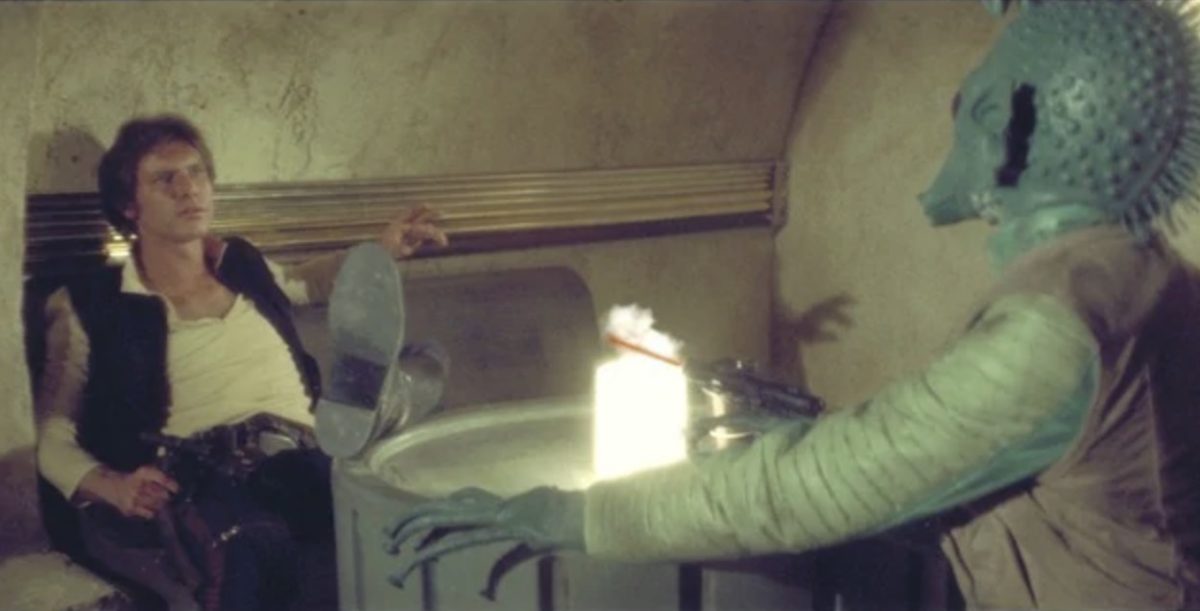
As someone who’s found great value in Twitter over the years, I’ve become far more careful in how I use it and where to direct my attention and energy. It reminds me of Mos Eisley in Star Wars, a wretched hive of scum and villainy, but simultaneously a place you can connect with Han Solo and get a spaceship.

As we move forward, it’s going to feel like the world’s ending, and in some ways it will be. No the world isn’t literally ending, but a specific kind of world is ending, and it’ll be extremely difficult for many people to tell the difference as it’s happening. This will likely lead to many more episodes of mass insanity as professional manipulators take advantage of millions upon millions of disoriented people. Priority number one should be to stand guard at the gate of your mind during this time so as not to become a victim.

The best thing you can do from here on out is use your time and energy as productively as possible. We’re going to need builders, creators and inventors more than ever before, because we’re past the point of putting this thing back together. We’ll need to recreate, reimagine and rebuild, and all of this must spring from a point of consciousness in order to bring forth something that is both better and sustainable. Become more beautiful and resilient as others become ugly and unhinged. Focus on what’s within your capacity to control and always remember to resist the crazy.

Be seeing you


Posted in Uncategorized | Tagged: , , , , , , | Leave a Comment »