I mean, did you know that it takes an illegal immigrant as much as an hour and a half to get a driver’s license and registration to vote in American elections at the DMV? It’s absolutely disgraceful —
NEW YORK, NY — Sources within several major media and news networks recently confirmed that most legacy mainstream media head editors are now “pretty worried” that the news of the latest Trump assassination attempt might distract from the plight of illegal immigrants around the country.
According to sources at the Washington Post, New York Times, CNN, MSNBC, Huffington Post, and the Economist, newspaper higher-ups are absolutely terrified that giving space to covering something as routine and commonplace as the Trump assassination might distract from how terrible life for illegal immigrants in the US is.
“Quite frankly, this is really concerning,” said CNN host Jake Tapper. “Just think — if people start reading about how there was yet another ordinary assassination attempt on Donald Trump, they’ll forget about all of the hoopla and racist bigotry that illegal immigrants have to endure day after day! I mean, did you know that it takes an illegal immigrant as much as an hour and a half to get a driver’s license and registration to vote in American elections at the DMV? It’s absolutely disgraceful — it’s only a third as long as legal US citizens’ wait times!”
News chiefs in writers’ bullpens across the country have committed to rectifying the possible wrong by posting as much as they possibly can on illegal immigrants’ struggles due to white cisgender powerstructures and also by ignoring assassination attempts, as long as they’re just on Trump.
At publishing time, all major mainstream news sources had finally agreed to cover Trump’s assassination, as long as they could be assured that it would happen.
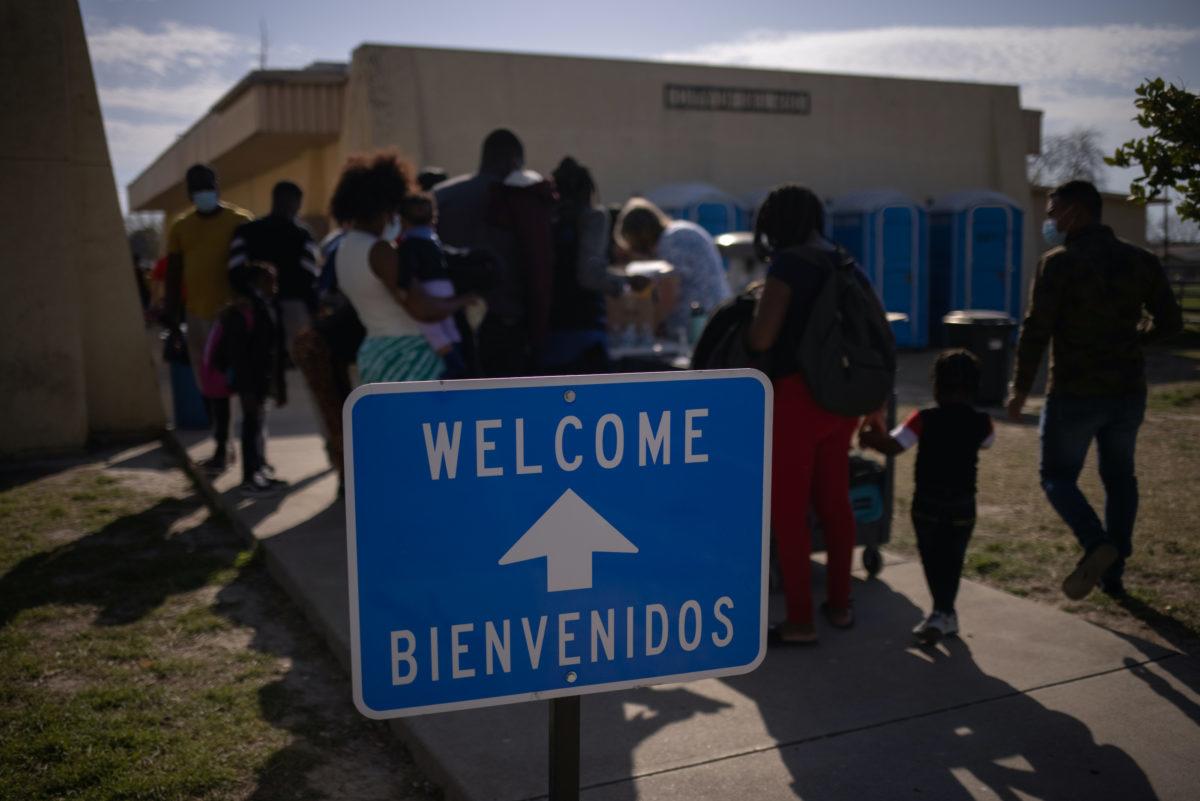
The Biden administration is mulling a plan to offer immigrant families separated during the Trump administration $450,000per person in compensation, according to the Wall Street Journal, citing people familiar with the matter.The payments – part of an inter-agency solution to several lawsuits filed on behalf of separated parents and children claiming lasting psychological trauma could amount to nearly $1 million per family, though ‘the final numbers could shift,’ according to the report.
According to sources, most of the families crossing into the US from Mexico included one parent and one child. Depending on circumstances, many families could get smaller payouts.
The American Civil Liberties Union, which represents families in one of the lawsuits, has identified about 5,500 children separated at the border over the course of the Trump administration, citing figures provided to it by the government. The number of families eligible under the potential settlement is expected to be smaller, the people said, as government officials aren’t sure how many will come forward. Around 940 claims have so far been filed by the families, the people said. -WSJ
In total, the potential payout could reach $1 billion or more.Throughout the Trump administration, thousands of children were separated from their parents (and coyotes paid to bring them into the country) after they had crossed illegally into the country from Mexico. The lawsuits allege some of the children suffered various ailments – including malnutrition, heat exhaustion, and were kept in freezing cold rooms with little medical attention. Some claim lasting mental health problems due to the trauma of being without their parents for several months.The average amount sought through the courts is roughly $3.4 million per family, according to the report.”President Biden has agreed that the family separation policy is a historic moral stain on our nation that must be fully remedied,” said ACLU deputy director, Lee Gelernt. “That remedy must include not only meaningful monetary compensation, but a pathway to remain in the country.”Senate Republicans slammed the plan on Thursday afternoon following the WSJ‘s report.”The Biden administration’s promises of citizenship and entitlement programs have already caused the worst border crisis in history—a huge cash reward will make it even worse,” said Sen. Tom Cotton (R-AR).
The discussions about the payouts have taken place over the past few months among a group of dozens of private lawyers representing the families and government lawyers. Some government lawyers have viewed the payouts as excessive for people who had violated the law by crossing the border, the people said. One government lawyer threatened to remove his name from the case out of disagreement with the potential settlement offer, the people said. -WSJ
“It is a complicated, complex piece of litigation” – trying to resolve hundreds of separate lawsuits at the same time, and “sometimes even more complex to try the cases” said Margo Schlanger, who ran the civil-rights office during the Obama administration at the Department of Homeland Security and now teaches at the University of Michigan law school.What will the reparations crowd think of this?
“Hungary will only be a Hungarian country as long as its borders remain intact. Therefore, not only our thousand-year-old statehood but also the future of our children obliges us to protect our borders.”
The Court of Justice of the European Union, the EU’s top court, has ruled that Hungary violated EU law when it prevented illegal immigrants from seeking asylum. The ruling paves the way for the European Commission, the EU’s powerful administrative arm, to impose financial penalties over Hungary’s restrictive immigration policies. The Hungarian government has vowed that it will not bow to pressure to jump aboard the EU’s multicultural bandwagon.
In its December 17 ruling, the court, informally known as European Court of Justice (ECJ) accused the Hungarian government of corralling migrants into so-called transit zones and of limiting their ability to apply for asylum. The court also found that Hungary did not allow asylum seekers to leave detention while their cases were being considered and offered no special protection to children and the vulnerable.
The case stems from a lawsuit filed by the European Commission over a 2015 decision by Hungary to establish two transit zones on its southern border with Serbia to stop a mass influx of migrants from Africa, Asia and the Middle East. The action prevented migrants from entering Hungary or transiting the country to reach other parts of the EU.
In May 2020, the ECJ ruled that the transit zones were illegal under EU law. In order to comply with the ruling, Hungary has since closed the transit zones. Asylum seekers wanting to enter Hungary now have to apply for asylum at Hungarian embassies or consulates in neighboring non-EU countries. “External border protection is an issue that Hungary cannot, does not want to, and will not concede,”said Gergely Gulyás, from the Prime Minister’s Office.
The ECJ, in its latest ruling, acknowledged that Hungary had closed the transit zones but that it was still guilty of breaking EU law. The ruling states:
“In the first place, the Court holds that Hungary has failed to fulfil its obligation to ensure effective access to the procedure for granting international protection, in so far as third-country nationals wishing to access, from the Serbian-Hungarian border, that procedure were in practice confronted with the virtual impossibility of making their application.”
“The Court recalls that the making of an application for international protection, prior to its registration, lodging and examination, is an essential step in the procedure for granting that protection and that Member States cannot delay it unjustifiably. On the contrary, Member States must ensure that the persons concerned are able to make an application, including at the borders, as soon as they declare their wish of doing so.”
“The Court confirms…that the obligation on applicants for international protection to remain in one of the transit zones for the duration of the procedure for examination of their application constitutes detention.”
“The Court emphasizes that the Procedures and Reception Directives require, inter alia, that detention be ordered in writing with reasons, that the specific needs of applicants identified as vulnerable and in need of special procedural guarantees be taken into account, in order that they receive ‘adequate support’, and that minors be placed in detention only as a last resort. Owing, in particular, to its systematic and automatic nature, however, the detention regime provided for under the Hungarian legislation in the transit zones, which concerns all applicants other than unaccompanied minors under 14 years of age, does not allow applicants to enjoy those guarantees.”
“Moreover, the Court rejects Hungary’s argument that the migration crisis justified derogating from certain rules in the Procedures and Reception Directives, with a view to maintaining public order and preserving internal security.”
“The Court holds that Hungary has failed to fulfil its obligations under the Return Directive, in so far as the Hungarian legislation allows for the removal of third-country nationals who are staying illegally in the territory without prior compliance with the procedures and safeguards provided for in that directive.”
“The Court recalls that an illegally staying third-country national falling within the scope of the Return Directive must be the subject of a return procedure, in compliance with the substantive and procedural safeguards established by that directive, before his or her removal, where appropriate, is carried out, it being understood that forced removal is to take place only as a last resort.”
“The Court considers that Hungary has not respected the right, conferred, in principle, by the Procedures Directive on any applicant for international protection, to remain in the territory of the Member State concerned after the rejection of his or her application, until the time limit within which to bring an appeal against that rejection or, if an appeal has been brought, until a decision has been taken on it.”
“The Court notes that, when a ‘crisis situation caused by mass immigration’ has been declared, the Hungarian legislation makes the exercise of that right subject to detailed rules not in conformity with EU law, in particular the obligation to remain in the transit zones, which resembles detention contrary to the Procedures and Reception Directives. On the other hand, when such a situation has not been declared, the exercise of that right is made subject to conditions which, while not necessarily contrary to EU law, are not defined in a sufficiently clear and precise manner to enable the persons concerned to ascertain the exact extent of their right.”
In a “note” at the end of the ruling, the ECJ revealed the apparent purpose of its ruling against Hungary:
“An action for failure to fulfil obligations directed against a Member State which has failed to comply with its obligations under European Union law may be brought by the Commission or by another Member State. If the Court of Justice finds that there has been a failure to fulfil obligations, the Member State concerned must comply with the Court’s judgment without delay.”
“Where the Commission considers that the Member State has not complied with the judgment, it may bring a further action seeking financial penalties. However, if measures transposing a directive have not been notified to the Commission, the Court of Justice can, on a proposal from the Commission, impose penalties at the stage of the initial judgment.”
Hungarian Justice Minister Judit Varga vowed to continue to protect Hungarian sovereignty. In a December 17 Facebook post, she wrote:
“Today’s decision of the Court of Justice of the European Union has become devoid of purpose, as the circumstances at issue in the present proceedings no longer exist. Transit zones have been closed but strict border control is maintained.
“We will continue to protect the borders of Hungary and Europe and will do everything we can to prevent the formation of international migrant corridors.
“Hungary will only be a Hungarian country as long as its borders remain intact. Therefore, not only our thousand-year-old statehood but also the future of our children obliges us to protect our borders.”
The ECJ’s ruling comes less than a month after the European Commission unveiled a controversial “Action Plan on Integration and Inclusion” which aims to streamline the migration and asylum process with faster screening and to have EU member states contribute their “fair share” based on their GDP and population.
The EU’s bid to reform its migration policy has been met with mixed reactions from a number of EU countries. Hungary, Poland and the Czech Republic have been vocal in their opposition to it.
Zoltán Kovács, the spokesman for Hungarian Prime Minister Viktor Orbán, wrote on Twitter that Hungary’s stance on migration remains unchanged:
“1/5 Since 2015, the stance of the HU Gov’t on migration has been clear and unchanged. We have presented this stance and our proposals on several occasions. We believe that the EU and its member states must cooperate in keeping the looming migration pressure outside our borders.
“2/5 To this end, we should form alliances with countries of origin, so that they are able to provide proper living standards and ensure that their people do not have to leave their homelands. Instead of importing the trouble to Europe, we must bring help to where it is needed.
“3/5 We believe that Europe’s borders must be protected: External hotspots will have to be established to process asylum claims; we must ensure that the external borders of the EU and the Schengen Area remain perfectly sealed along all sections.
“4/5 Our goal is to see EU member states support each other in achieving the tasks above. While HU does not support obligatory distribution, it does defend joint borders, and we expect to receive the same amount of support as other Schengen states protecting those external borders.
“5/5 We would like to remind everyone that since the 2015 migration crisis, the Hungarian Government has spent more than 1 billion euros on protecting the borders of Hungary and the European Union, without a single cent of contribution from Brussels.”
After the ECJ delivered its ruling, Kovács repeated Hungary’s opposition to the EU’s migration action plan. In a December 17 statement posted to Orbán’s official blog, he wrote:
“On November 24, 2020, the European Commission presented its migration Action Plan on the social integration and inclusion of migrants. The Commission believes that barriers to the participation and inclusion of immigrants in European societies need to be removed. At the press conference presenting the document, it was clear from the words of the EU Commissioners responsible that the Commission would continue to encourage the reception of migrants, as they believe that this will be necessary in the future for economic reasons.
“While the Action Plan would give immigrants more rights and entitlements, it does not seem to take into consideration the security risks associated with mass migration.
“According to the main points of the action plan, Brussels would provide migrants housing and give them a greater say in public affairs at all levels of government. With this, more migrants and EU citizens with a migrant background would be involved in consultations and decision-making processes at the local, regional, national and European level.
“The Union, according to the plan, would give more support to immigrants than to its own citizens by supporting businesses established and run by the former. Moreover, the plan, by supporting the employment of migrants, would put unemployed EU citizens in an even more difficult position.
“As if this is not enough, Brussels would also force us to adopt the mindset of the eurocrats on the issue, clearly setting forth in the Action Plan that it seeks to change the way Europeans think about migration and migrants: ‘Inclusion is also about addressing unconscious bias and achieving a change in mentality and the way people perceive one another and approach the unknown.’ Good to know.
“If you are thinking that all of this sounds familiar, you’re not alone. The Action Plan looks similar to George Soros’ plan to have Europe admit ‘at least a million asylum-seekers annually for the foreseeable future.’ The financial speculator has been for years promoting his ideas of an ‘open society’ to change Europe and European society. Those migrants that Europe should be admitting, according to the Soros plan, their distribution should be permanent and mandatory. He also made it clear that his plan aims to protect immigrants and that national borders are an obstacle to this.
“But the Commission’s Action Plan goes even further, seeking to bring in some 34 million migrants to become EU citizens (nearly 8 percent of the current EU population). That is, 34 million migrants would be granted citizenship and the right to vote.
“Who says this is what Europe wants or needs? When have the citizens of Europe voted for this? As Prime Minister Viktor Orbán said in Parliament earlier this week, Hungary will oppose this plan with all its might and will not compromise.”
We should not fall prey to people who criticize our efforts to combat illegal immigration and who pompously say, “We’re a nation of immigrants!” The debate is not over immigration. The debate is over illegal immigration.
In the debate about illegal immigration, there are questions that are not explicitly asked but can be answered with a straight “yes” or “no”: Does everyone in the world have a right to live in the U.S.? Do Americans have a right to decide who and under what conditions a person may enter our country? Should we permit foreigners landing at our airports to ignore U.S. border control laws just as some ignore our laws at our southern border? The reason those questions are not asked is that one would be deemed an idiot for saying that everyone in the world has a right to live in our country, that Americans don’t have a right to decide who lives in our country and that foreigners landing at our airports have a right to just ignore U.S. Customs and Border Protection agents… Read the rest of this entry »



 by Tyler DurdenSaturday, Dec 19, 2020 – 7:00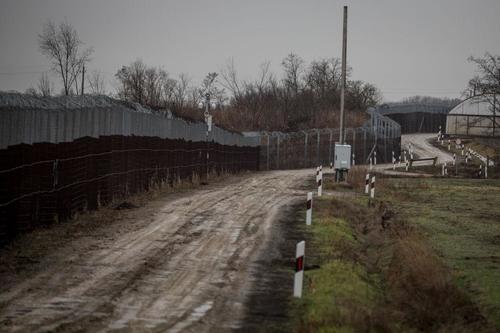
 MCViewPoint