MCViewPoint

Opinion from a Libertarian ViewPoint

Posts Tagged ‘inflation’

The US Housing Bubble Visualized – LewRockwell

Posted by M. C. on July 31, 2021

Sell now, buy later.

https://www.lewrockwell.com/2021/07/no_author/the-us-housing-bubble-visualized/

By Bern in Williamsburg, VA

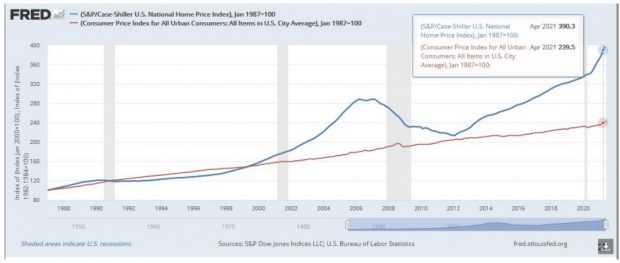
Take a look at what the FED’s manipulation of interest rates has done to housing prices.  The chart below is from the data on their own website.  It’s in real dollars and the indices synch perfectly.  The USA is currently in the biggest housing bubble of all time.  A “correction” in the stock market will bring down housing also.  It’s going to be a mess.  And it could have been avoided if only there was “honest” money management at the FED.

I also downloaded the data and added a regression line for the Case Shiller Index.  It’s just another way to visualize the bubble we’re in.  I’ve given up on buying a house now because I don’t want to own a property that will be significantly underwater when housing corrects.  There’s no way that “normal” inflation can explain these prices.  It’s all been done by the dishonest policies of the FED serving their own interests and their banking clients.

Keep plugging away……..

Be seeing you

Posted in Uncategorized | Tagged: , , , | Leave a Comment »

Shrinkflation, Inflation’s Sneaky Cousin, Is on the Rise | Mises Wire

Posted by M. C. on July 29, 2021

What is causing this increase in shrinkflation? Well, since shrinkflation is in fact a form of inflation, the short answer is that the same factors have caused inflation. As you may already be aware, many are blaming shortages and disruptions in the supply chain for the recent increases in inflation, but that hardly explains the whole story.

https://mises.org/wire/shrinkflation-inflations-sneaky-cousin-rise

Inflation has been on the rise for the past year and in the last few months it has accelerated. In June 2021, inflation, measured by the Consumer Price Index (CPI), hit the highest level since 2008. By inflation, economists refer to the increase in the general level of prices, which means that prices on average are increasing. The Bureau of Labor and Statistics (BLS) has a basket of goods and services that it tracks and uses to create a measure of the CPI. While inflation is the topic of the day in the news media and everyday conversations, many have not heard about its sneaky cousin, shrinkflation.

The term shrinkflation, is credited to British economist Pippa Malmgren, and refers to the shrinking weight of the products while the price for the package remains the same. This is in effect another form of inflation, since the per unit price of goods increases when products shrink. However, shrinkflation is trickier, since most consumers do not notice it (see here for a few examples of shrinkflation). Shrinkflation is an ongoing process, but we are seeing more of it in the past year, and especially the first half of 2021, as businesses scramble to catch up with increasing costs of production. Shrinkflation is so widespread today that there is a dedicated Reddit page for it.

Many complain about businesses resorting to shrinkflation and regard it as a sneaky way to increase prices. Yet many of the critics do not realize that businesses have no choice but to increase prices. Anyone who is paying attention to prices in the first half of 2021 will know that it is not only the price of consumer goods that it is increasing but also the prices of producer goods. In other words, the inputs used in the production of the goods we consume, including labor, have been getting more expensive. Consequently, businesses in a fight to maintain their profit margins have resorted to increasing prices or shrinking the size or weight of their products.

Normally, the BLS accounts for the weight of the products it tracks, which would allow them to account for shrinkflation, but as the Washington Post reports, the BLS has not been able to do this very well during the pandemic. This means that the current inflation measure, as measured by CPI, is most likely underreporting the extent of current inflation.

What is causing this increase in shrinkflation? Well, since shrinkflation is in fact a form of inflation, the short answer is that the same factors have caused inflation. As you may already be aware, many are blaming shortages and disruptions in the supply chain for the recent increases in inflation, but that hardly explains the whole story.

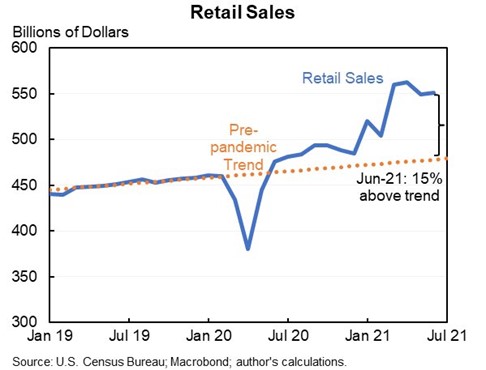
The two main candidates to blame are the Fed and the government. The Fed has printed tremendous amounts of money, which has led to the doubling of its balance sheet since March 2020. This is in fact what inflation is, and this is the cause of what we normally refer to as inflation, which, to be more accurate, is price inflation. In general, we know that the more money we print, holding all else equal, the more inflation we will get, and that is part of what we are seeing now. On the other hand, we have had the federal government spend money at record levels for a peacetime period. This also has led to an increase of demand beyond what one would expect in the circumstances we have been in since spring of 2020. For example, retail sales have increased rapidly and have been above trend since late 2020. While some of this can be seen as catching up after the decrease we saw in the second quarter of 2020, it is definitely gone beyond catching up, as is clear from the graph below. Government spending has become a topic of concern even for mainstream economists like Larry Summers, who is now worried about the economy overheating because of it.

Retail Sales

Lastly, while the supply chain disruptions are blamed on covid-19, it is the lockdowns instituted by governments, in the US and other countries, that are the main culprit behind these supply chain disruptions. The problem with the lockdowns was that they completely ignored the cost-benefit analysis by arbitrarily determining what constituted an essential business and what did not. As you may well know, one can ignore the laws of economics, but not their consequences, and we are now suffering the consequences of these arbitrary lockdowns. The million-dollar question today is, How long will this rising inflation and shrinkflation last? The Fed insists that this inflation is transitory, but many, including BlackRock’s CEO, are concerned that this may not be the case. With the inflation data from June, we have some evidence that inflation may be more than transitory. As can be seen from the graph below, the transitory portion of inflation (base effects) was expected to retreat for June (the bar after the dashed line), but CPI advanced beyond the increase in May (reflected in the green portion of the bar added to the predicted June CPI by Oxford Economics).

US Headline CPI Inflation
  (The graph is modified to show the actual CPI change for June, by adding the green portion of the bar.)

Hence, with all the money that the Fed has printed and is continuing to print, and the increased spending by the federal government, we may well end up seeing higher inflation over the next few years. Whether this will happen or not remains to be seen, but one thing is for sure: the shrinking size and weight of the products is here to stay and it will only get worse as inflation pressures continue to worsen. Author:

Klajdi Bregu

Dr. Klajdi Bregu is an assistant professor of economics at IU South Bend’s Judd Leighton School of Business and Economics and a fellow at the Center for Market Education. Prior to his appointment to the Leighton School faculty, Dr. Bregu taught at the University of Arkansas. He has published research in the Journal of Economic Dynamics and Control and the Southern Economic Journal.

Be seeing you

Posted in Uncategorized | Tagged: , , | Leave a Comment »

Watch “Why Do Governments Lie About Inflation?” on YouTube

Posted by M. C. on July 23, 2021

Inflation & shortages are created by Federal Reserve counterfeiting and government interventions in the economy. Every other excuse is just that, an excuse that is meant to distract you from the sources of these ills.

Great summary at 17:00.

https://youtu.be/EGSrVV2lbXo

Be seeing you

Posted in Uncategorized | Tagged: , , , , | Leave a Comment »

Will the Feds Try Price Controls to “Fix” Price Inflation? | Mises Wire

Posted by M. C. on July 15, 2021

Capping the amount of money a producer can charge for a product will not stimulate increased production or investment—why would it? This is why shortages inevitably follow: Who would enter into production or increase their production of a good at a time when doing so is a money-losing venture?

That being the case, price controls and the determined politicians who support them, are likely to push us even further down the road to serfdom than we already are.

https://mises.org/wire/will-feds-try-price-controls-fix-price-inflation

Joseph Solis-Mullen

As it began rapidly expanding the money supply early in 2020, the Fed confidently assured the public there would be no unanticipated or serious rise in inflation. Now that their projections have failed to materialize (in fact, their forecasts were off by almost 40 percent), they assure us that this will be but a temporary spike.

But for the sake of argument, let us imagine they are wrong—something that considering their track record is not difficult to do: What then?

As policymakers continue to mine the twentieth century for mistakes to repeat—from protectionism to higher taxes, to trying to start a second Cold War technology and arms race—it seems only logical to ask how long it will be before popular discontent over the rising consumer prices generated by their mismanagement of the money supply leads them to resurrect one of the most serious and notable policy failures of the last hundred years: price controls. After all, prices are rising rapidly, right?

Meant to arrest the rise in prices brought on by the increased amount of money pursuing the same basic amount of goods—since February 2020 M2 has expanded more than 25 percent—price controls have only ever brought shortages and poverty despite their typical initial popularity.

Should inflation persist or accelerate, price controls may be presented as a temporary necessity, as in 1971 under Nixon. Far more certain, however, is that price controls, whatever their guise, will do nothing to resolve the issue underlying the inflation: the amount of goods and services being produced are being outstripped by the growth in the money supply.

Capping the amount of money a producer can charge for a product will not stimulate increased production or investment—why would it? This is why shortages inevitably follow: Who would enter into production or increase their production of a good at a time when doing so is a money-losing venture?

That being the case, price controls and the determined politicians who support them, are likely to push us even further down the road to serfdom than we already are.

As Ludwig von Mises explained in a 1958 address at the University of Buenos Aires, attempting to control the price of a good or goods will ultimately require control over the prices of the inputs that go into creating them—and then further control over the inputs that go into the inputs that go into the creation of the good, and so on.

The reason is simple: the government’s desire to see continued production of a good maintained or expanded at prices less than the cost of the inputs necessitates, by their thinking, the capping of the prices of those inputs as well.

These are frankly dangerous times, and we should be earnestly unsettled by the fawning masses at the feet of an increasingly interventionist government comfortably ensconced in power despite manifold ineptitudes on virtually all sides—including in the handling of the present crisis. Indeed, under the auspices of preserving public health, in the last year the government, at various levels, has undertaken violations of property rights previously almost unimaginable in a liberal republic whose constitution explicitly provides for their protection.

Should the Fed’s forecast prove incorrect yet again—and by a similarly enormous margin—the pressure on the Biden administration from the Left will intensify. It supported rent freezes, direct payments, massive fiscal stimulus, and an almost doubling of the federal minimum wage—what next if not price controls?

And if, in an attempt to control prices, your business or labor are “needed” to produce something you don’t want to produce at a price you won’t agree to, attempted requisitions and appropriations may be only an executive order away. Author:

Joseph Solis-Mullen

A graduate of Spring Arbor University, J.S. Mullen is a current graduate student in the political science department at the University of Illinois. An author and blogger, his work can be found at http://www.jsmwritings.com.

Be seeing you

Posted in Uncategorized | Tagged: , , | Leave a Comment »

Yellen: Inflation & Your Lower Standard of Living Is Good For Society

Posted by M. C. on June 13, 2021

Feeding fairy tales to American citizens is the modus operandi of Washington D.C. The latest on the economic front is a real doozy. When the (unconstitutional) Fed counterfeits dollars, it ultimately results in a rise in prices for goods and services. Americans suffer a lower standard of living by being forced to buy less with the dollars that they worked for. Does this immoral process sound like it’s ‘good for society’ to you?

Is Yellen the Simpleton David Stockman describes or does she think we are the Simpletons?

Prices go down in an efficient economy, not up. A good discussion on how government spending and Fed money printing affects the economy.

Do you accept the fake world?

Be seeing you

Posted in Uncategorized | Tagged: , , | Leave a Comment »

The Hangover Arrives: Explosive Inflation Leads To Record Collapse In Home, Car Purchase Plans | ZeroHedge

Posted by M. C. on June 12, 2021

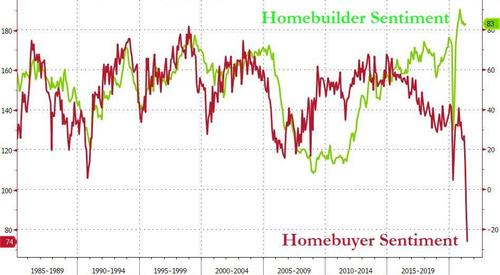
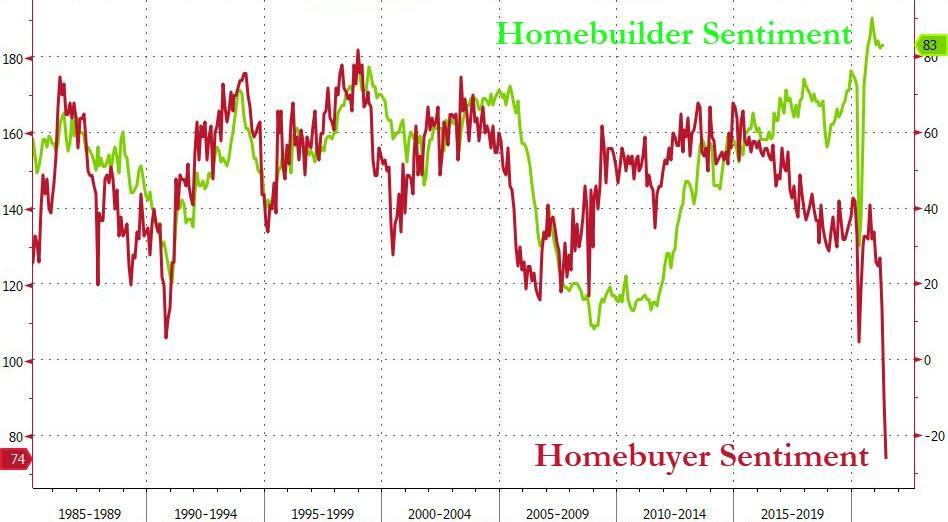
This confirms what we noted earlier, namely a record divergence between crashing homebuyer confidence (due to record home prices) and soaring homebuilder confidence (also due to record home prices). Guess which one will matter in the end.

What the Fed printing press, “free government money” and paying people to stay home results in.

https://www.zerohedge.com/markets/hangover-arrives-explosive-inflation-leads-record-collapse-home-car-purchase-plans

Tyler Durden's Photoby Tyler Durden

For the past several months we have warned about the pernicious effects soaring prices are having on both corporations (“Buckle Up! Inflation Is Here!“) and consumers (“”This Is Not Transitory”: Hyperinflation Fears Are Soaring Across America“), prompting even otherwise boring sellside research to get  (hyper) exciting, with Deutsche Bank (which warned this week that “Inflation Is About To Explode “Leaving Global Economies Sitting On A Time Bomb“”) and Bank of America (which “Just Threw Up All Over The Fed’s “Transitory” Argument“) now openly claiming that the Fed is wrong, and the US is facing an unprecedented period of far higher, non-transitory inflation, with DB going so far as to warn “policymakers will face the most challenging years since the Volcker/Reagan period in the 1980s.”

But none of this has spooked the Fed into conceding – or believing – that inflation is anything more than transitory. And maybe just this once, the Fed has a point because all else equal, by which we mean lack of rising wages, the best cure to higher prices is, well… higher prices.

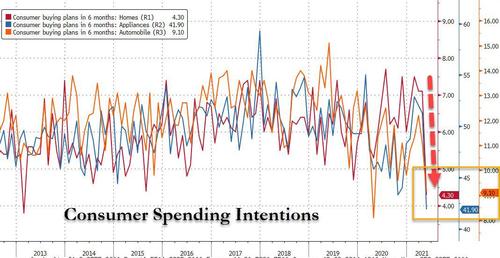
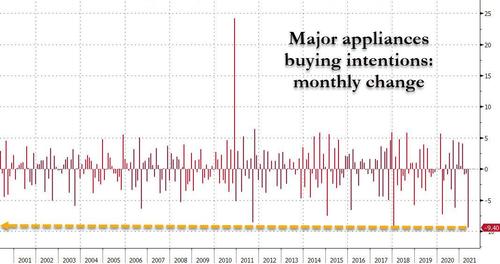
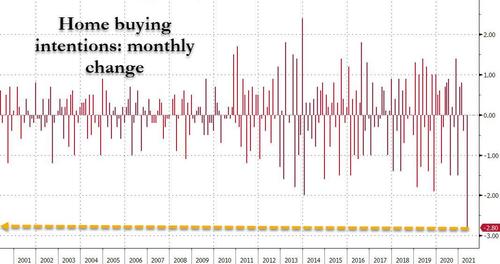
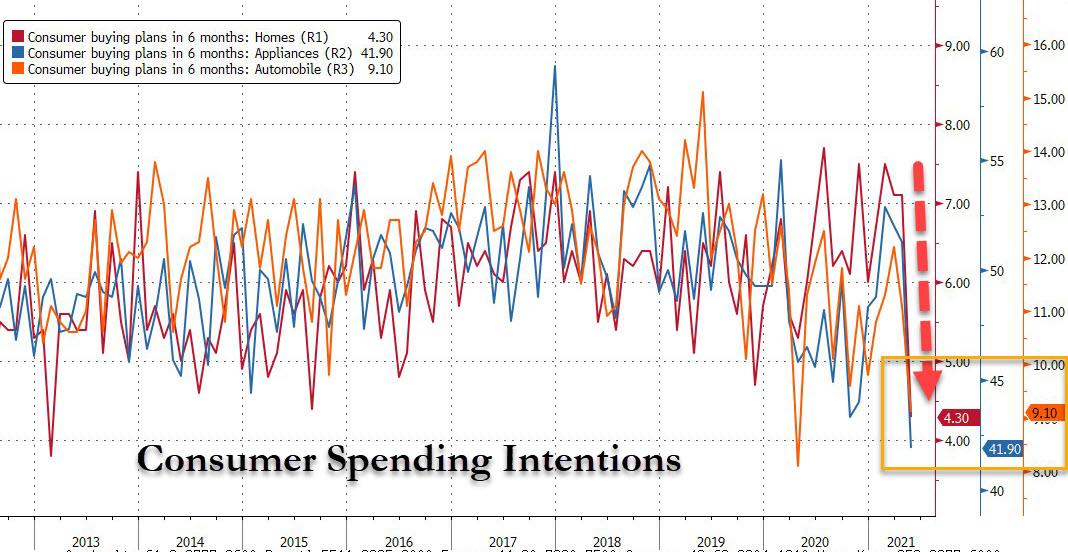
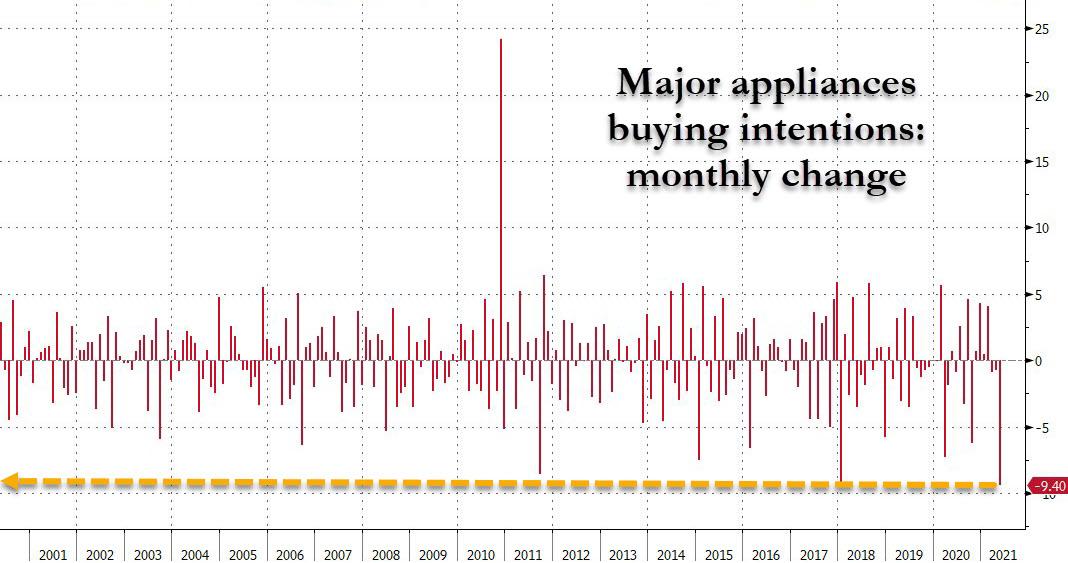
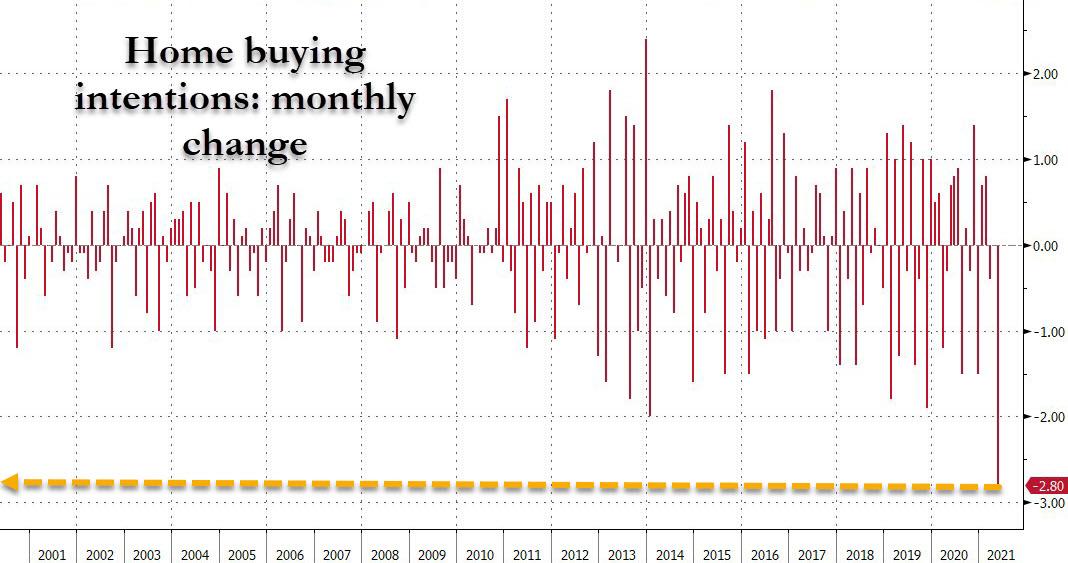
Presenting Exhibit A: two weeks ago, we observed that anticipating an end to Biden’s stimmy bonanza end and that soon they will have to live again within their means, Americans’ buying intentions (6 months from today) as measured by the Conference Board, had cratered across the 3 major spending categories: homes, automobiles and major household appliances.

The drop was so massive, it amounted to the biggest one-month drop in intentions to purchase appliances…

… and homes…

This confirms what we noted earlier, namely a record divergence between crashing homebuyer confidence (due to record home prices) and soaring homebuilder confidence (also due to record home prices). Guess which one will matter in the end.

Fast forward to today when we just got Exhibit B: the June UMichigan Sentiment Survey.

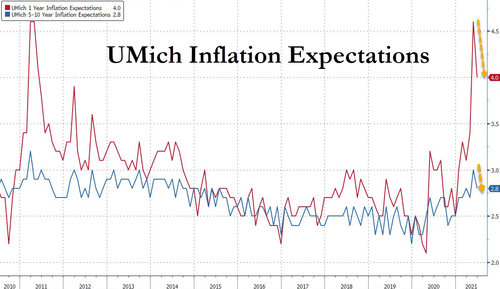
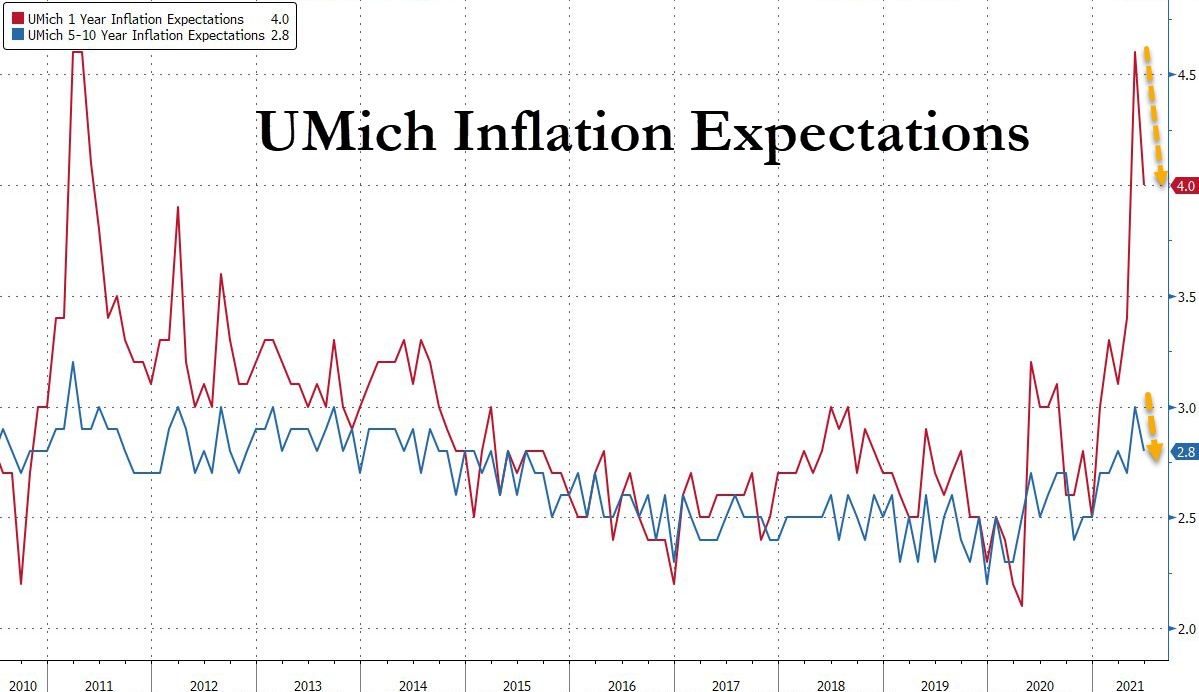
While there was some good news here, in that inflation expectations for both the 1-year and 5-10 look ahead periods dropped slightly…

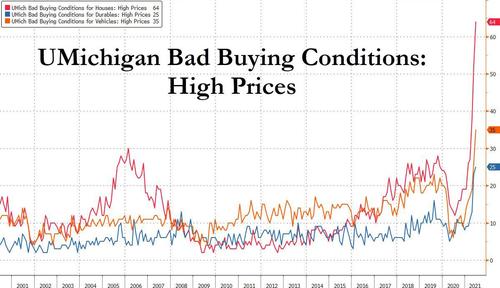
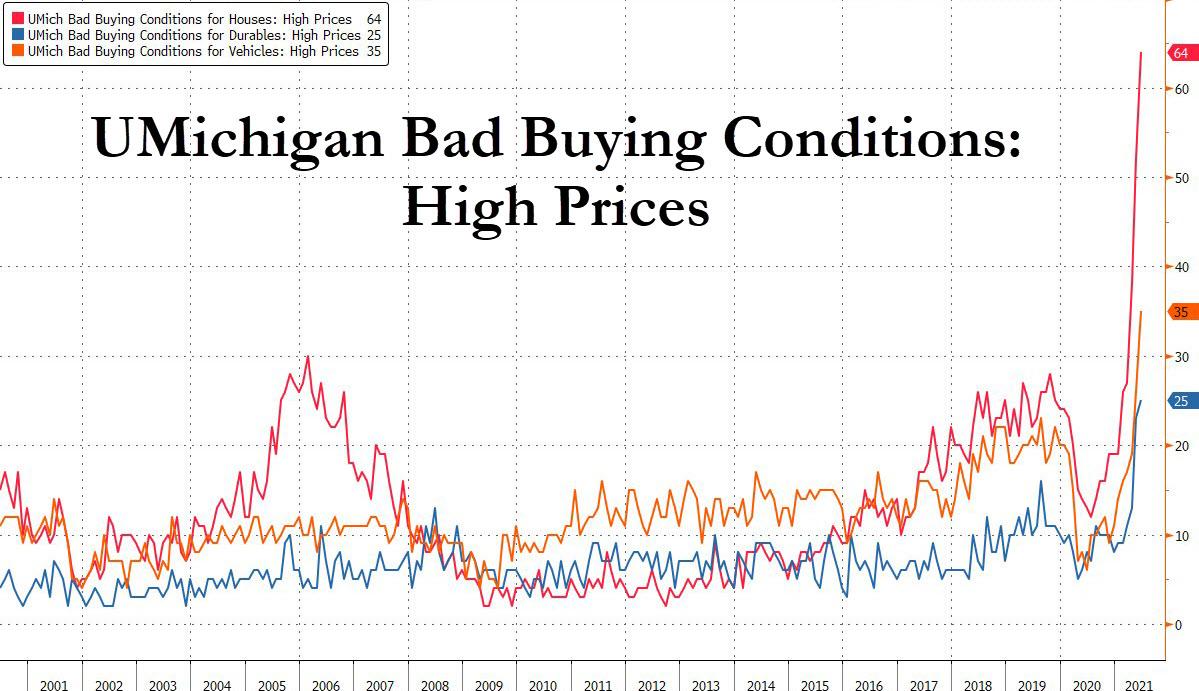
… what we found more concerning is what chief economist, Richard Curtin said namely that since “Rising inflation remained a top concern of consumers”, the spontaneous references to market prices for homes, vehicles, and household durables fell to their worst level since the all-time record in November 1974.

And as Curtin adds, “these unfavorable perceptions of market prices reduced overall buying attitudes for vehicles and homes to their lowest point since 1982. These declines were especially sharp among those with incomes in the top third, who account for more than half of the dollar volume of retail sales.”

This can be seen in the following chart showing records across the board for “bad buying conditions” due to high prices for houses, durable goods and autos. In other words, due to soarking prices is America is going on a buyers’ strike.

This, for better or worse, screams not only stagflation but also permanently higher prices, as Curting elaborates:

… in the emergence from the pandemic, consumers are temporarily less sensitive to prices due to pent-up demand and record savings as well as improved job and income prospects. The acceptance of price increases as due to the pandemic, makes inflationary psychology more likely to gain a foothold if the exit is lengthy.

The problem: sooner or laters the stimmies will end, but prices by then will already be fixed higher, and good luck trying to pull them down.

While expansive monetary and fiscal policies are still warranted, the accompanying rise in inflation will cause uneven distributional impacts. Those impacts have already been noticed in June among the elderly and lower income households. A shift in the Fed’s policy language could douse any incipient inflationary psychology, it would be no surprise to consumers, as two-thirds already expect higher interest rates in the year ahead.

Oh, and for those saying wage hikes may be permanent we have some bad news: employers know very well that the extended unemployment benefits bonanza ends in September at which point millions of currently unemployed workers will flood back into the labor force sending wages sharply lower, and is why instead of raising base pay, most potential employers offer one-time bonuses, which – as the name implies – are one-time. As for higher wage pressures, well… just wait until October when everything reverses, Uncle Sam is no longer a better paying competitor to the US private sector, and wages slump.

What does that mean for the economy? Well, all those producers and retailers who got used to bumper demand and pushed their prices sharply and not so sharply higher, will face a stark choice: either drag prices right back down, or sell far fewer goods and services. That, or just await the next bailout.

One thing is certain: six months from today, the US economy will be far, far uglier.

Be seeing you

Posted in Uncategorized | Tagged: , , , , | Leave a Comment »

Inflation: Your Role as a Milk Cow – Doug Casey’s International Man

Posted by M. C. on May 26, 2021

One reason why Ron Paul wants to End The Fed.

However, what’s rarely understood is that the theoretical “prosperity” is the result of governmentally induced inflation. What appears to be prosperity is merely a rise in costs and, along with it, a rise in your wages.

You appear to be “getting ahead,” but here’s what really happens…

The inflation that resulted in your pay rise also raises the prices on most or all other goods and services.

https://internationalman.com/articles/inflation-your-role-as-a-milk-cow/

by Jeff Thomas

Traditionally, inflation has been defined as “an increase in the amount of currency in circulation.” Such an increase almost always causes an increase in the cost of goods and services, since, more plentiful currency units lowers their rarity, as compared to the supply of goods and services, which remains roughly the same. Therefore, it shouldn’t be surprising if a 20% increase in the amount of currency units translates into a 20% increase in the price of goods and services.

Unfortunately, in recent decades, even dictionaries have been offering a revised definition of inflation, as “an increase in the price of goods and services.” This is a pity, as it makes an already confusing subject even more difficult to understand.

This is especially true for the average guy who has a minimal understanding of economics, but does realise that, even if his wages increase (which he regards as a good thing), he never seems to get ahead. In the end, he always seems to be worse off.

Let’s say that you’re paid $4000 per month. You budget for housing, food, clothing, transportation, etc. Let’s say that that adds up to $3800 per month, and you’re hoping to put $200 per month into savings. Often that doesn’t happen, as unplanned expenses “pop up,” and must be paid for. So, in the end, you save little or nothing.

In the meantime, you’re daydreaming about buying a new car, but it can’t be bought, because you don’t have any money to allocate to it.

Then, your boss says that the recent prosperity has resulted in a big new contract for the company that allows him to give you a raise of $200 a month.

This is your big chance. You go to the car dealership, buy the car, and arrange for time payments of $200 per month to pay for it.

However, what’s rarely understood is that the theoretical “prosperity” is the result of governmentally induced inflation. What appears to be prosperity is merely a rise in costs and, along with it, a rise in your wages.

You appear to be “getting ahead,” but here’s what really happens…

The inflation that resulted in your pay rise also raises the prices on most or all other goods and services. So, instead of spending $3800 on expenses every month, your costs have risen to, say, $4200.

So, only months after your pay rise, you become aware that, not only are all your expenses higher (which you didn’t figure on when you bought the car), you now have the extra monthly obligation of the $200 car payment.

A year later, you look back and say to yourself, “Just when I was finally getting ahead, just when I was realizing my dream to have a new car, all those greedy businesspeople raised their prices because they just want to be rich, and I ended up a loser.”

Not so. The businesspeople raised their prices for the same reason everyone does during inflation—because their costs are also higher and they must either raise prices or go out of business.

So, in effect… no one got ahead.

But, worse, you got behind. Because, now, in addition to your monthly expenses, you have debt obligations, and buying on time is always more costly than paying as you go.

As time goes on, you run into emergencies of one type or another that dip into your meagre savings. You must renegotiate your debt with the bank in order to keep your car and, of course, the bank demands a greater percentage than before, assuring that your economic situation will only get worse.

Ergo, inflation has not been a boon, but a curse.

And that, in fact, is exactly the idea. Banks figured out ages ago that, although people will only tolerate so much taxation, they’ll not only tolerate, but welcome the hidden tax of inflation. The illusion that they’re “getting ahead” gives them the false confidence to take on debt, which will, over time, cripple them.

The purpose of bank-created inflation is to extract wealth from the populace.

By regularly increasing the amount of currency in circulation, banks create an environment in which the concept of debt appears to be beneficial. As a result, virtually everyone in today’s society not only has debt; he actually believes that he couldn’t improve his life except through debt.

So, that’s essentially how inflation works. However, there’s a further knock-on effect from inflation that comes with retirement.

When retirement arrives, almost no one who is caught up in the system described above has found a way to get out of debt. Inflation always gobbles up whatever advances he feels he’s made, because inflation itself created those imagined advances.

Just before retirement, most people have their most expensive houses, cars, etc., and appear to have prospered, but they also have the greatest level of debt that they’ve ever carried.

See the rest here

Be seeing you

Posted in Uncategorized | Tagged: , | Leave a Comment »

Big Government and Big Inflation

Posted by M. C. on May 19, 2021

Why the Fed will not raise interest rates. Staggering government interest payments.

The real unfunded government debt. A lot more than 20-some trillion.

Be seeing you

Posted in Uncategorized | Tagged: , | Leave a Comment »

Inflation: Cost-push or Demand-pull?

Posted by M. C. on May 15, 2021

The effects of unprecedented government spending (of money it does not have) and unprecedented Federal Reserve counterfeiting of U.S. dollars are showing up in the economy with rapidly rising prices. You’re expected to focus only on the symptoms, and then blame everything except The Fed. The Ron Paul Liberty Report focuses on the root of the problem, along with the solution.

Be seeing you

Posted in Uncategorized | Tagged: , | Leave a Comment »

Psaki Reassures: ‘Inflation Completely Under Control Outside Of Food, Gas, And Housing’

Posted by M. C. on May 13, 2021

https://babylonbee.com/news/psaki-reassures-inflation-completely-under-control-outside-of-food-gas-and-housing

WASHINGTON, D.C.—Press Secretary Jen Psaki took time during today’s briefing to address worries about inflation, comforting Americans with the news that prices are totally under control – outside of the things necessary to live.

“The media, you people I gave cookies to, have really blown this whole ‘inflation’ thing way out of proportion,” said Psaki. “Prices have not risen in most markets, with the tiny exception of essential necessities. But prices are rock steady when you look at, for example, battleships. The same goes for cannabis, tickets to Mars, and hula hoops. There’s all this talk about food and shelter when today you can still go out and buy a Rolex for the same price you could yesterday!”

Fox News correspondent Peter Doocy asked Psaki how regular people struggling to buy food would be helped by stable battleship prices. Psaki sighed deeply, then slowly growled, “No…more…cookies!”

Americans still worried about basic necessities were cheered up later when they learned from New York’s mayoral candidates that a house in New York only costs $50, and you can still buy a gallon of milk for one wooden nickel.

Bee seeing you

Posted in Uncategorized | Tagged: , , | Leave a Comment »