MCViewPoint

Opinion from a Libertarian ViewPoint

Posts Tagged ‘Manhattan Project’

That Time the U.S. Army Sprayed Millions of Americans With Zinc Cadmium Sulfide

Posted by M. C. on April 5, 2022

https://libertarianinstitute.org/articles/that-time-the-u-s-army-sprayed-millions-of-americans-with-zinc-cadmium-sulfide/

by Patrick Macfarlane

img 0023

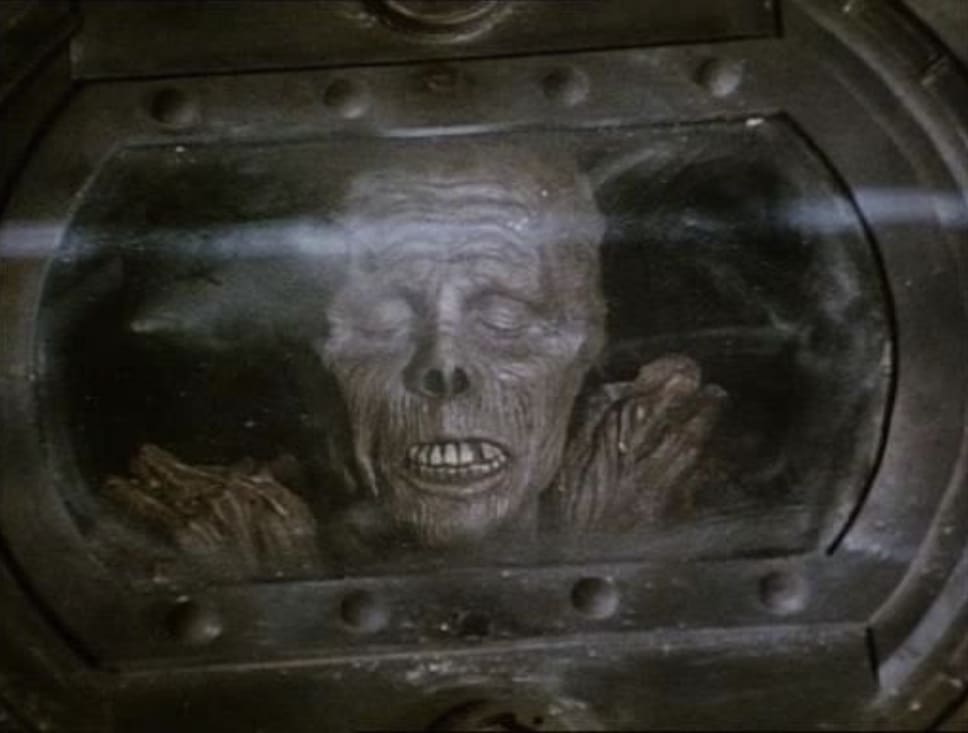
In 1985, the classic horror-comedy film Return of the Living Dead was unleashed upon the world. In it, a worker at a medical supply warehouse accidentally releases a chemical weapon while hazing a teenage employee. The weapon, now affectionately known as “Tar-man,” was a zombie sealed away in a rusty iron barrel that had been forgotten in the basement of the warehouse.

The Tar Man’s origins are explained in the film:

Frank: Lemme ask a question. You ever seen that movie, “Night of the Living Dead?”

Freddy: The one about the corpses eating people? Sure. That was one of the finest movies ever made. What about it?

Frank: Did you know it was based on a true case?

Freddy: Naw. Go on. You’re shitting me.

Frank: I’m dead serious.

Freddy: That’s not possible. They showed the zombies taking over the whole world. I would have heard about that.

Frank: Well, they changed the details for the movie. What really happened was that back about 1966, there was a chemical spill near Pittsburgh. It leaked down into the veteran’s cemetery and made some dead bodies act like they was alive.

Freddy: (Skeptical) What chemical?

Frank: It’s called 2, 4, 5, Trioxin and they were going to use it on marijuana or something. It was something Darrow Chemical was developing for the Army. They shut it down after the business with the corpses. And they told the guy that made the movie, that if he told the true facts, they’d sue his ass off. So he changed it all around.

Freddy: So what really happened?

Frank: Well, they shut it all down, and the Army took away the contaminated dirt and bodies, and they managed to keep it all a secret.

Freddy: So how come you know about it?

Frank: The Army transport department got their orders crossed, and they brought the bodies here instead to Darrow Chemical. Typical Army fuck-up, they put them here and forgot about them…

Despite its campy critique of the U.S. military, Return of the Living Dead’s plot is not entirely removed from reality. In truth, the U.S. military has purposely exposed American and Canadian civilians to dangerous chemical agents.

In the early 1950s, the U.S. Army Chemical Corps prepared a series of biological weapons tests in multiple cities across the United States and Canada. These experiments were executed in the mid-1950s through the late 1960s—not before a law was passed to shield private military contractors from all liability for public injury.

As Professor Lisa Martino-Taylor writes, this, in effect: “created a sanction-free military human test zone across North America and blocked legal recourse for victims.”

In short, the Army was ostensibly concerned that the Russians would expose American and Canadian civilians to dangerous agents, so the Army did it themselves in the name of mitigation.

As a part of the tests, the U.S. Army Chemical Corps released zinc cadmium sulfide “from airplanes, rooftops, and moving vehicles in 33 locations, mostly cities and towns, in the United States and Canada.” These cities included St. Louis, MO, Minneapolis, MN, Corpus Christi, TX, Fort Wayne, IN, Biltmore Beach, FL, and Winnepig, MB. The cities were chosen because of their similarity to cities in the USSR.

In St. Louis, the Army’s dispersion methods were insidious. “The Army used motorized blowers atop a low-income housing high-rise, at schools and from the backs of station wagons” to disperse the chemical agent. Local officials were told that the “government was testing a smoke screen that could shield St. Louis from aerial observation in case the Russians attacked.”

Zinc cadmium sulfide itself is a fine powder “that is formed by heating zinc sulfide and cadmium sulfide together under very high temperature so that they fuse…Zinc cadmium sulfide is not a biologic weapon; it was a tracer used by the Army to imitate or simulate the dispersion of biologic weapons.” At the time, the compound was not believed to be dangerous to humans.

In the 1990s, as the Manhattan Project’s dark history of human radiation experimentation came to light (a story in of itself), then-President Bill Clinton established a congressional inquest to investigate it. As a result, many other instances of government-sponsored human experimentation came to light, including the zinc cadmium sulfide dispersal experiments. Victims soon came forward demanding answers.

At the behest of Congress, the National Research Council Committee on Toxicology began an official investigation of the dispersal experiments. In 1997, it published its findings as to the likelihood of public injury.

The Committee concluded:

“[G]iven the very small amounts of zinc cadmium sulfide to which people were exposed and the short duration of exposure, it is extremely unlikely that anyone in the test areas developed adverse health effects, such as lung cancer or infertility problems, from the Army’s releases of zinc cadmium sulfide.”

The Committee did not assess the ethical issues surrounding the Army’s decision to expose hundreds of thousands, perhaps millions, of Americans and Canadians to toxic compounds without their knowledge or consent. Neither did the Committee address the true concerns of survivors, that the zinc cadmium sulfide was irradiated by the Army Chemical Corps before dispersion.

Some may find the investigation to be a classic example of: “we investigated ourselves and found no harm.”

Over a decade later, in 2015, a Federal District Court in Missouri dismissed a class-action lawsuit made by Missourians who alleged harm from the zinc cadmium sulfide experiments.

Although the suit was dismissed because of U.S. sovereign immunity (the Federal Government can only be sued if it consents to be sued), the court relied on the National Research Council Committee’s report to support the fact that the plaintiffs’ injuries were unrelated to the dispersal experiment.

At the end of Return of the Living Dead, the zombie outbreak spreads from the medical supply warehouse to the neighboring cemetery. Eventually the outbreak hemorrhages to the surrounding town of Louisville, Kentucky. The U.S. Army is quickly notified and summarily nukes the entire town.

The film itself is purposefully campy and outlandish. For instance, it was the first zombie film to popularize the notion that zombies are motivated by a desire to eat brains. The film is now a cult-classic.

Given the real-life absurdities of a government willing to experiment on its own citizens without knowledge or consent, perhaps Return of the Living Dead ironically approximates something close to the truth.

That is what makes the film truly terrifying.

Amplify our Message!

Now, more than ever, antiwar voices are needed. We pride ourselves in our principled opposition to imperialism, regardless of which hemisphere it originates from. A donation of $5 per month will ensure our continued growth during an unsure time.
Donate Today!

About Patrick Macfarlane

Patrick MacFarlane is a Wisconsin attorney in private practice. He is the host of the Liberty Weekly Podcast at www.libertyweekly.net, where he covers libertarian legal theory, Austrian economics, history, and other libertarian topics. He may be reached at patrick.macfarlane@libertyweekly.net

Be seeing you

Posted in Uncategorized | Tagged: , , , , | Leave a Comment »

Erie Times E-Edition Article-US government works to ‘cocoon’ old nuclear reactors

Posted by M. C. on November 6, 2021

Yah but, a cover over top won’t stop what is leaking out the bottom.

From Hanford Washington to burn pits in Iraq – the world’s worst polluter is government.

https://erietimes-pa-app.newsmemory.com/?publink=270032e95_1345fc6

Nicholas K. Geranios ASSOCIATED PRESS SPOKANE, Wash. – Costs to clean up a massive nuclear weapons complex in Washington state are usually expressed in the hundreds of billions of dollars and involve decades of work.

But one project on the Hanford Nuclear Reservation is progressing at a much lower price.

The federal government is moving forward with the ‘cocooning’ of eight plutonium production reactors at Hanford that will place them in a state of long-term storage to allow radiation inside to dissipate over a period of decades, until they can be dismantled and buried.

‘It’s relatively non-expensive,’ Mark French, a manager for the U.S. Department of Energy, said of cocooning. ‘The cost of trying to dismantle the reactor and demolish the reactor core would be extremely expensive and put workers at risk.’

The federal government built nine nuclear reactors at Hanford to make plutonium for atomic bombs during World War II and the Cold War. The site along the Columbia River contains America’s largest quantity of radioactive waste.

The reactors are now shut down and sit like cement fortresses near the southeastern Washington city of Richland. Six have already been cocooned for long-term storage, and two more are headed in that direction. The ninth reactor was turned into a museum as part of the Manhattan Project National Historical Park.

While World War II ended in 1945 and the Cold War ended in 1989, the United States is still paying billions of dollars per year for the disposal of the nuclear waste produced by the atomic weapons that played a big role in ending those conflicts. The biggest expense is dealing with a massive volume of liquid wastes left over from the production of plutonium, a key ingredient in nuclear weapons.

While the liquid wastes stored in 177 underground tanks will take decades of work and hundreds of billions of dollars to clean, efforts to secure the nine plutonium reactors are much closer to completion.

The last two reactors, shut down in 1970 and 1971, are about to enter the cocooning stage, when they are covered with steel and cement to prevent radioactivity from escaping into the environment, French said.

The cocoons are expected to last about 75 years, by which time the radioactivity inside will have dramatically decreased and there presumably will be a plan for final disposition of the remaining parts, French said.

Every five years, workers enter the reactor building to make sure there are no leaks or rodent or bird infestations, he said.

Cleanup of Hanford, which has about 11,000 employees and is half the size of Rhode Island, started in the late 1980s, and now costs about $2.5billion per year. The work has been slowed by technical issues, lack of funding, lawsuits from state regulators, worker exposure to radiation and turnover of contractors on the complex job.

But the handling of the old reactors is a bright spot.

The nine reactors – called B Reactor, C Reactor, D Reactor, DR Reactor, F Reactor, H Reactor, K-East Reactor, K-West Reactor, and N Reactor – were built from 1943 through 1965.

They were constructed next to the Columbia River because of the abundance of hydropower and cooling water needed by the reactors during operation.

All have been cocooned except K-East and K-West. Work on cocooning the K-East reactor has already started and should be finished by 2023, French said. Work on the K-West reactor is scheduled for completion in 2026.

The cocoon plan for K-East and K-West is to basically construct steel buildings around them. Each building is 158 feet long, 151 feet wide and 123 feet tall, French said. The two steel buildings will cost less than $10million each.

Future generations will decide the final disposition of the eight reactors, French said. They will likely be dismantled and buried in the central area of the Hanford site, away from the river.

‘Robots may be deployed in the future’ for that work, French said.

Hanford watchdogs generally agree with this process, said Tom Carpenter, director of the Seattle-based watchdog group Hanford Challenge.

‘Nobody is raising any concerns about cocooning,’ Carpenter said. ‘We’re all worried about the tank waste that needs immediate and urgent attention.’

The bigger question is whether future generations will be willing to pay the massive costs of Hanford cleanup, he said. Carpenter said the estimated cost to completely clean up just the tank wastes at the Hanford site is around $660billion.

‘It’s rather grim. It’s multigenerational,’ he said.

Guests on a bus tour of the Hanford Nuclear Reservation view the decommissioned plutonium-producing B Reactor near Richland, Wash., in 2008. Ted S. Warren/AP file

https://gawand.org/wp-content/uploads/2013/10/Uranio-flyer.jpg

Be seeing you

Posted in Uncategorized | Tagged: , , , , | Leave a Comment »

Dread the Future? Here’s What Helped Me – LewRockwell

Posted by M. C. on June 16, 2020

The campus had changed very much physically and psychologically. In my
early years at Duke a beer keg was available friday afternoons at the
engineering building for faculty, grad and undergrad students to help
them mingle. That would be impossible to even imagine today.

In Texas I was the loser in a tenure battle that was more ridiculous
than dramatic. This failure was largely due to my refusal to play the
game, in part the manipulation of students.

Yes, this is all nostalgia, how much dark reality have I omitted? But nothing can be more real than the happiness these people and places have given me then and even now as I contemplate the darkness that is rising.

https://www.lewrockwell.com/2020/06/ira-katz/nostalgia/

By

I must admit that the mounting number of ominous events have given me a sense of dread for the future. But recently I had a pleasant moment when I drank a biere blanche at a cafe for the first time in several months.  G. K. Chesterton remarked in his comments about his trip to America that “there are people whom I met for a few hours or a few moments, whom I none the less sincerely admire and honour because I cannot but smile as I think of them.”   In these terrible times I thought of the many bars and pubs where I spent so much of my life and enjoyed being with so many different kinds of people; it makes me smile.  One of the most memorable (pun intended) passages in all of literature is the moment in Proust’s À la recherche du temps perdu when Marcel tastes the tea and crumbs of his madeleine cake that sparks a shudder of pleasure throughout his body and memories of his past life. One tool to combat my dread is nostalgia. I realize modern progressive types (e.g., Pinker) always pooh pooh nostalgia. But of course they are wrong about most things. As I grow older I certainly think many things were better before and are getting worse now. What sane person would contradict that sentiment today? In the spirit nostalgia and Proust I recount below highlights from my pub life.

Park Place, Knoxville, TN

Just after graduating from the University of Florida engineering school I found a job at the Y-12 Plant in Oak Ridge, TN. This is a very interesting site with a special history beginning with the Manhattan Project.. I must say that I had 5 job offers, but took this one, the lowest in salary because of some intuition that I cannot explain. I rented an apartment in a complex in West Knoxville near the Pellissippi Parkway that is the direct route to Oak Ridge. I knew nothing about Knoxville or East Tennessee, I knew nobody. Yet, within a few months time I learned the locations of backroom gambling joints (though I never went to the back rooms themselves). This happened because East Tennessee is a special place, but even more it is because there was a clubhouse bar in the Brendon Park Apartment called Park Place. It was a simple bar with about 5 stools and canned beer owned by a couple of the residents. I recall a typical moment sitting at the bar between a Jewish physicist who did his PhD at Cornell and an unemployed hillbilly from West Virginia who’s prized possession was a magnum pistol that he often carried with him. “What shall we do tonight guys?” … miniature golf! I learned so much about life, especially about generosity, friendship, and how to enjoy life. Park Place was the wellspring of so much fun: group meals, all night poker games, road trips, fishing trips, and on and on. My friends were from Waterbury, CT; Buffalo, NY, Redondo Beach, CA, Atlantic City, NJ, etc., and of course from East Tennessee. Park Place ceased to exist long ago. My friends moved away decades ago. And I can only remember a tiny fraction of the stories and experiences that so enriched my life with so many smiles.

The Hideaway Bar, Duke University, Durham, NC

After three fun and transformative years in Knoxville I realized that if I stayed at Y-12 I would be doing the same kind of projects for years with very little vacation. So I decided to go to graduate school at Duke University (another intuitive decision). I needed to work very hard to get back in the education groove so I did not find a replacement for Park Place for at least a couple of years. Eventually I found The Hideaway Bar. Tucked in the basement of administration buildings on Duke’s gothic West Campus, this simple beer bar was organized by a business school professor with a committee of graduate student co-owners.I was usually there just after my graduate student workday with other grad students and university staff. I became friends with the manager of the computer store, the head of the bus service, and parking, and food service managers. Many were graduates of Duke, others were locals. We all loved sports, playing golf, tailgate parties and road trips. The bar sponsored a softball team (the special version called modified) that was the center of activity during the hot slow days of summer along with Durham Bulls minor league baseball. It was also the best place outside of Cameron Indoor Stadium to watch the basketball games as the crowd would also pass by before and after the game. At the end of my PhD my funding ran out so I worked there for a few months. The undergrads would show up after 10 as they finished studying. I strictly required at least a fake ID when I checked people at the door. But I was quick to note that I was not a bouncer. I would not think of “bouncing” anybody as half the bar was under age including the basketball stars. During the warm days near the end of the spring term we would sell every single beer we could store in the small bar. In particular I loved walking up from the engineering building as the weather was warming through the copse of trees (long gone) behind Duke Chapel with a quick stop to smell the breath of spring, (a fragrant bush like honeysuckle). The tiny green outside the bar had a picnic table where I would read in the sun just as the carillon of the chapel played at five o’clock. I even wrote a very bad sonnet about this experience,

A warm winters day at Duke I remember clear,
Not for the gardens, grounds or Gothic towers,
It is that something special in the air,
T’is when strolling past the Chapel’s flowers,
At four or five when I care not about a thing,
Just pausing for a moment’s thought,
On the beautiful fragrance of the breath of spring,
Yea I say, this can’t be bought,
Could I enjoy this sweet scented memory from now until eternity?
Employing this sonnet is my chosen course,
Hoping to recall the things I Love especially,
I complete this Devilish reminiscence with no remorse,
Leaving you now with one last thought to share
Life was sweeter still, continuing up to the Hideaway for an ice cold beer.

I forget much more than I list here about the old Hideaway. It closed in 2001 but it had lost its charm many years previously. The campus had changed very much physically and psychologically. In my early years at Duke a beer keg was available friday afternoons at the engineering building for faculty, grad and undergrad students to help them mingle. That would be impossible to even imagine today.

The Bombay Bicycle Club, San Antonio, TX

After some years as a postdoc I took a tenure track teaching position in San Antonio, TX. Same story, I knew nothing and nobody about San Antonio or Texas. Will Rogers once characterized San Antonio as one of the four unique cities in the United States.

In those days life in the city of San Antonio still was reflected in the mix of cultures that had enriched its history.  Life in the city was also enriched by the Bombay Bicycle Club.  Located in Brackenridge Park, just down the street from the zoo, the BBC reflected all that was good and unique about San Antonio and exhibited all the ingredients of a great saloon. In our modern, alienated society there are very few places where one can meet a stranger and strike up a conversation.  Even less where one can meet a stranger who will become a friend.  A great bar is one of those places and the BBC is a great bar.  In my day there a typical happy hour crowd included blue collar workers fresh from the delivery truck, white collar workers (many of them were lawyers), 09’ers (wealthy people who live within zip code 78209 which is made up of the fashionable enclaves of Olmos Park and Alamo Heights), a family of tourists who are visiting the park, and in August, members of the old Houston Oilers who trained at the nearby university.  The happy customers were Anglo, Hispanic, African-American, German, Croatian, . . .  You could meet a person from every race, religion, and ethnicity at Bombays.  One Sunday afternoon, in the almost empty bar, I watched a Celtics playoff game with the great Dave Cowens who was a coach for the Spurs. Not only was it possible to meet all of these people, but it was possible to get to know them, and to come to like them. A special place in my heart is for the Phone Man, who should be the character out of a novel he was so original and funny, the girls highschool basketball coach who was old and wise, the ex-CIA University of Chicago PhD who was too intelligent for his real estate business, but most of all for the owners. They were a true Texas couple (sadly apart now) with histories going back into the mists of Texas history. They were so generous and so much fun.  On my last visit to the BBC the owner handed me a reference letter  In part he wrote, “Ira is the absolute ideal customer.  He always shows up, speaks when spoken to, always pays, expects and asks for nothing for free and never causes fights.  Aside from being a fountain of information on an amazing number of topics, Ira appreciates the beauty of life, which includes having membership in a great local pub (I’d probably use the word joint)….  Please take care of my friend Dr. Katz, you’ll find him the most remarkable companion.” This letter is a prized possession that I had framed and put on the wall (my wife only allows me to decorate the toilet so it is there). I should say I never felt totally comfortable in Texas; that is, I never felt like a Texan. But I felt totally at home at the BBC. It still exists and it certainly must still be great as it is run by the same wonderful owner. To find a great bar, and to make it your bar, is one of the great pleasures in life.  One of the great pleasures I have had in life was finding the Bombay Bicycle Club.

Sydney, Australia Read the rest of this entry »

Posted in Uncategorized | Tagged: , , , , , , , , | Leave a Comment »

Just To Be Clear — The Covid-19 Vaccine Will Be Rigorously Tested – LewRockwell

Posted by M. C. on June 2, 2020

Just like CDC contaminated COVID test kits.

Don’t be intimidated by the philosophically impoverished. Their bluster is their only tool against you.

https://www.lewrockwell.com/2020/06/allan-stevo/just-to-be-clear-the-covid-19-vaccine-will-be-rigorously-tested/

By

Some people claim that the Covid-19 vaccine will not be rigorously tested. That’s a lie.

I worked for a software company once that didn’t test its code in a testing environment. They tested their code “in production.” That worked until it didn’t. Everything fell apart. Customers lost millions. It was the most awful product release I’ve ever witnessed.

Similarly, the Covid-19 vaccine will be tested in production. Notable examples come to mind when people talk about testing vaccines in production.

1955 — Cutter Labs Polio Vaccine Catastrophe 

As reported in the Journal of The Royal Society of Medicine “In April 1955 more than 200,000 children in five Western and mid-Western USA states received a polio vaccine in which the process of inactivating the live virus proved to be defective. Within days there were reports of paralysis and within a month the first mass vaccination programme against polio had to be abandoned. Subsequent investigations revealed that the vaccine, manufactured by the California-based family firm of Cutter Laboratories, had caused 40,000 cases of polio, leaving 200 children with varying degrees of paralysis and killing 10.”

1955-1970 — Japanese SMON “Epidemic”

Smithsonian Magazine recalls  the 1955-1970 epidemic of subacute myelo-optic neuropathy (SMON), which mystified and terrorized many, though ultimately proving to be medically induced. While not due to a vaccine, the concern is similar. Examples of “cure as cause,” are legion. Johns Hopkins, in a 2016 published study, pointed to medical intervention as the third leading cause of death over an eight year period. At 250,000 deaths per year, medical error surpasses the CDC reported third leading cause of death — respiratory diseases, which claim 150,000 Americans a year. The Johns Hopkins team claimed the CDC does not effectively collect data on medical error.

1976 — Untested Swine Flu Vaccine  

The 1976 and 2009 stories of untested vaccines offer detailed lessons for our era in their foolhardy similarity.

“This is a story about one time over 40 years ago when poor decision-making on the part of the government led to the unnecessary vaccination of about 45 million citizens,” reports Smithsonian Magazine.

There was a novel form of the flu that killed a US solder in February 1976. The flu that was expected that fall was widely reported to be an outbreak unlike anything seen since the 1918 Spanish Flu.

Smithsonian Magazine goes further “To avoid an epidemic, the CDC believed, at least 80 percent of the United States population would need to be vaccinated. When they asked Congress for the money to do it, politicians jumped on the potential good press of saving their constituents from the plague.”

“The World Health Organization adopted more of a wait-and-see attitude to the virus… They eventually found that the strain of flu that year was not a repeat or escalation of the 1918 flu, but ‘the U.S. government was unstoppable.’”

President Ford was up for re-election that fall and something had to be done. A Salon report from 2009, cautioning President Obama against mass vaccination continues with the story:

“1976 was the year of the U.S. Bicentennial. 1976 was a presidential election year. 1976 was two years after Watergate caused Nixon’s resignation, and one year after the fall of Saigon. The U.S. government, both Republicans and Democrats, had never been held in such low esteem. Practically every elected official felt an overwhelming itch that patriotic year to do something to get the public thinking of them as good guys again. A swine flu pandemic was an opportunity on a plate. What better way to get into the good graces of the voters than to save them from a plague?

“Knowing the Republican president would not, could not veto a bill he requested, the Democratically controlled House attached $1.8 billion dollars in welfare and environmental spending to the flu bill.

“The 1976 to 1977 flu season was the most flu-free since records had been kept; a condition that was apparently unrelated to the vaccination program. The Great Swine Flu Epidemic of 1976 never took place.”

Once informative on the topic of caution around inherently risky medical intervention such as needless vaccines, Salon, The New York Times, and NPR have all fallen silent, as mass vaccination campaigns have mystifyingly become yet another liberal shibboleth.

2009 — Untested Swine Flu Vaccine 

As reported by Buzzfeed, and not too many other outlets, “Dozens of NHS workers are fighting for compensation after developing narcolepsy from a swine flu vaccine that was rushed into service without the usual testing when the disease spread across the globe in 2009. They say it has destroyed their careers and their health.”

It’s a story of government employees naively trusting that everything would be okay if they received a vaccine that had been rushed through testing.

Tested in Production — Taking A Lesson From Other Industries 

Since the Covid-19 vaccine will be tested in production, with very little preliminary testing, it’s worth taking lessons from other industries that have entities that regularly test in production in order to determine how best to effect this end goal.

Best Practices for Testing In Production — E-mail Communication 

When testing in production, a good feedback loop is needed. A direct email address to the manufacturer, ideally read daily by all members of the team that developed the product is helpful.

These emails can’t be filtered by customer service, marketing, or the product team. That risks only a few emails being sent along. The data from these emails can’t be compiled into a document and passed along. They can’t be filtered through a doctor that determines if the data is useful. They can’t be filtered through some obscure government compensation program.

All raw data needs to get to all the right people as quickly as possible, if critical infrastructure is going to be tested in production.

In such a situation, where a vaccine is tested in production, the recipient needs to be handed a piece of paper that says the equivalent of “If ANYTHING seems different, e-mail this address immediately.” Oversampling must be preferenced over undersampling.

If there is going to be success in an effort to test in production, then as much as possible, the research and product teams who developed the vaccine and their executive leadership team need to receive the email of the mother crying at 2 a.m. over her suddenly unhealthy baby, or the son trying to figure out why his mother suddenly took a turn for the worse 11 hours after getting a vaccine.

Best Practices For Testing In Production — Telephone Communication  

Better than an email, because sometimes written words can’t convey what a voice can, is a cell phone number answered by someone on that team 24-7.

We can’t have the kind of feedback loop we have now around vaccines and expect a test in production to work. There has to be a little more skin in the game before a vaccine is tested in production.

Best Practices For Testing In Production — Full Disclosure, Clearly Presented   

There has to be full disclosure and informed consent along the lines of “We don’t know how well, if at all, this vaccine works, and we don’t know how safe, if at all, this vaccine is. You may be dead tomorrow because of this vaccine. This vaccine may disable you for life. We really don’t know.”

It must be plain language. Not legalese. It would be best if it were written by a pipe fitter or a stevedore during his lunch break. It should seek to be about as honest and direct as the European tobacco carton warnings showing photos of tumor-filled lungs and gum cancer lesions.

The Key To Achieving The Manhattan Project Of Vaccines 

It can be taken a step further if those involved in the vaccine manufacture process want to get feedback from the vaccine as quickly as possible and to have as safe and effective of a vaccine as possible, a “Manhattan Project” of vaccines, as some have suggested.

It’s not in the development that the Manhattan Project of vaccines becomes helpful, it’s in the rollout, in the introduction, in the feedback loop, in the follow through. Responsibility, however, is anathema in our era. Drug manufactures have sizable teams dedicated to the mitigation of risk, and the socialization of harm. These are modern-sounding, alternate terms for the age-old concept of “avoiding responsibility.” The responsibility avoidance teams at vaccine manufacturers often rival the size of those teams that help develop the product and those who help in the follow through with the product.

Development work may include patient sampling, virus isolation, virus characterization, standardizing, manufacturing, releasing, manufacture scale up, validation, safety, efficacy, monitoring of adverse events, and regulatory review and approval. Responsibility avoidance might include legal, marketing, lobbying, post-vaccination trials, medical liability insurance, product liability, post-marketing, and scheduling.

Since avoiding responsibility is so written into the DNA of large corporations, and large institutions, fresh ideas like those mentioned in this paper are needed if a Manhattan Project of vaccines is to make any headway.

To expand that thinking, at the time of vaccination with the untested vaccines, if a patient has a problem, in addition to an email address, the following can be provided to a patient in order to facilitate the feedback loop: the personal cell phone, spouse’s personal cell phone, home address, and vacation home address of all executives, government officials, spokespersons, and media sources who endorse the vaccine should be provided to a patient both on a handout and in electronic form.

The Manhattan Project Of Vaccine Safety  Read the rest of this entry »

Posted in Uncategorized | Tagged: , , , , , , , | Leave a Comment »