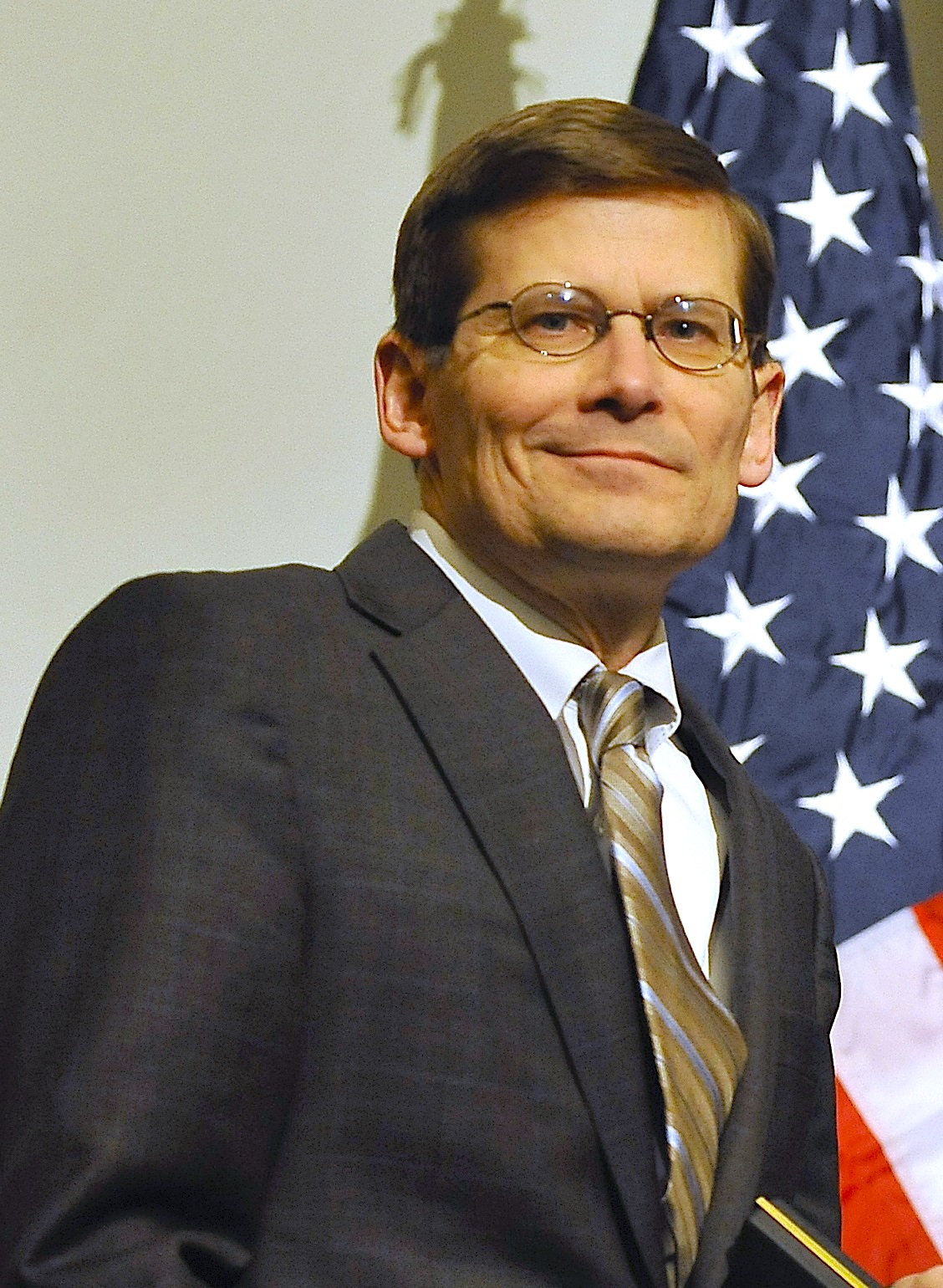
The Michael Morell story demonstrates that the intelligence community needs sweeping reform, beginning with getting spies all the way out of domestic political life
Iraq has stepped up its quest for nuclear weapons and has embarked on a worldwide hunt for materials to make an atomic bomb, Bush administration officials said today.
In the last 14 months, Iraq has sought to buy thousands of specially designed aluminum tubes, which American officials believe were intended as components of centrifuges to enrich uranium.
That same day, Vice President Dick Cheney went on “Meet The Press”and told Tim Russert Iraq had “reconstituted” its nuke program, citing “a story in the New York Times this morning.”
The Cheney-MTP episode set a standard for laundering disinformation through media. The Times got its “A-Bomb Parts” story by citing “Bush administration officials,” and Cheney sold the same story to the world by citing the New York Times. This merry-go-round is a perfect way for politicians and spooks to introduce bogus news into the world without leaving fingerprints.
The new story about former acting CIA director Michael Morell looks like a similar game of disinformation telephone. Again, the House Weaponization of Government Committee led by Jim Jordan recently questioned Morell. His answers suggest he may have been “triggered” by a call from then-Biden campaign official Anthony Blinken to organize a group letter signed by 50 former intel officials, opining the Hunter Biden laptop story looked like a “Russian information operation.”
The most accomplished engineers and technical intelligence analysts in the intelligence community knew that the aluminum tubes story was BS. In the finest tradition of intelligence analysis, they remained impervious to the political winds. They insisted that associating those aluminum tubes with nuclear weapons development was wrong and they could not be persuaded to go along. And yet that bogus information got into Powell’s February 2003 speech at the UN.
Gross manipulation of CIA analysis under George W. Bush pushed a new generation of “yes men” into the agency’s top ranks and now one of them is being considered by Joe Biden for the top job, writes ex-CIA analyst Ray McGovern.
As President-elect Joe Biden names his cabinet and other chief advisers, what has escaped wide attention is the fact that none of his hawkish national security advisers — except for his nominee for defense secretary, Gen. Lloyd Austin — has served in the military.
Former CIA Deputy Director Michael Morell, who is reportedly on Biden’s short list for CIA director, shares that non-veteran status, one of the reasons along with other skeletons from Morell’s past that make him singularly unfit to lead the CIA.
During my 27 years at the CIA, I worked under nine CIA directors — three of them (Stan Turner, Bill Colby, and George H.W. Bush) at close remove — and served in all four of the agency’s main directorates.
Having closely followed the past-two-decade corruption of my profession — in particular, what the chair of the Senate Intelligence Committee called the “uncorroborated, contradicted, or even non-existent” intelligence manufactured to “justify” the attack on Iraq, I have on occasion offered an suggestions for remediation, particularly during transition periods like this one. (Links to five such efforts in the past appear below.)
Whiz Kids
Decades of unfortunate experience show that over-dependence on bright, but inexperienced “best and brightest” can spell disaster. War gaming and theorizing at Princeton and Johns Hopkins have yielded knights with benightedly naive, politics-drenched decisions that get U.S. troops killed for no good reason.
Even if Gen. Lloyd Austin is confirmed as secretary of defense, the whippersnappers already appointed by Joe Biden will probably be able to outmaneuver the general and promote half-baked policies and operations bereft of needed military input — not to mention common sense from the likes of Gen. Austin who knows something of war.
The current generation of “whiz kids” — the well-heeled, politically astute chickenhawks Biden has appointed — will always “know better” and — if past is precedent — are likely to pooh pooh what Gen. Austin may advise, assuming he is able to get a word in edgeways.
Moreover, ambitious former generals like David Petraeus — many of them now on the outside of the proverbial revolving door making big bucks in the MICIMATT (Military-Industrial-Congressional-Intelligence-Media-Academia-Think-Tank) complex — will not hesitate to weigh in with their own self-interested support to the chickenhawks, fostering the notion that military threats from notional enemies warrant still more funding for the defense contractors on whose boards so many alumni generals sit.
Who does not remember the braggadocio accompanying the criminal attack on Iraq, the full-throated support of journalists like David Sanger of The New York Times, and the chest-thumping of Bush/Cheney neocons saying “Real men go to Tehran?” (Sanger is still at it, sitting on the “Judith Miller Chair for Journalism”.)
Clearly, one does not have to go as far back as Vietnam for noxious examples of the harm that can be done by these “best and brightest,” albeit inexperienced advisers — whether out of the myth of American exceptionalism, ignorance of post-WWII military history, or pure arrogance.
It may be helpful to recall that Vice President Dick Cheney, the archdeacon of the chickenhawks, acquired five draft deferments during Vietnam. (So did his successor as vice president, the president-elect.)
Cheney, of course, was the driving force behind the attack on Iraq. He had appointed himself Bush’s principal intelligence officer (usurping the role of CIA Director George Tenet who made not a murmur of protest) and went first and biggest with the Big Lie on (ephemeral) weapons of mass destruction in Iraq. Here’s Cheney in his kick-off speech to the Veterans of Foreign Wars on Aug. 26, 2002: “Simply stated, there is no doubt that Saddam Hussein now has weapons of mass destruction.”
Simply stated, Tenet dutifully followed White House orders to “fix” the intelligence to support Cheney’s accusations against Iraq. Tenet did so formally in the deceitful National Intelligence Estimate of Oct. 1, 2002 — which earned the sobriquet “The Whore of Babylon.”
It was successfully used to get Congress to enable Bush/Cheney to make war on Iraq, and eventually create havoc in the whole region. In his memoir Tenet gave the laurels to Morell for “coordinating the CIA review” of Secretary of State Colin Powell’s UN speech that let slip the dogs of war. (Details on that below)
Cakewalks and Cubbyholes
Cheney, the quintessential chickenhawk, surrounded himself with advisers of the same bent. One pitiable example was armchair warrior Kenneth Adelman, who had been director of the U.S. Arms Control and Disarmament Agency under President Reagan. In a Washington Post op-ed of Feb. 13, 2002, Adelman wrote: “I believe demolishing Hussein’s military power and liberating Iraq would be a cakewalk.”
Two years later, Adelman wrote an equally pathetic op-ed, insisting that he and his neoconservative friends had been right on everything except Iraq possessing WMD, Iraqi factions cooperating after Saddam Hussein was deposed, and “probably” on close ties between Saddam and al-Qaeda.
Please Contribute to Consortium News During its 2020 Winter Fund Drive
As for Cheney himself, he did memorize some weapons nomenclature vocabulary, but could not avoid an occasional faux pas betraying his lack of familiarity with things on the ground. Nine months after the attack on Iraq, when WMD were still nowhere to be found, NPR asked Cheney whether he had given up on finding them.
“No, we haven’t,” he said. “It’s going to take some additional, considerable period of time in order to look in all the cubbyholes and ammo dumps and all the places in Iraq where you’d expect to find something like that.” (The continued, quixotic search cost not only a billion dollars but the lives of U.S. troops.).
The amateur but opinionated Cheney was the largest fly in the intelligence ointment. Four months into the war it got so blatantly bad that we Veteran Intelligence Professionals for Sanity (VIPS) sent a Memorandum to President Bush entitled “Intelligence Unglued”, recommending that he “ask for Cheney’s immediate resignation.”
Naiveté on War
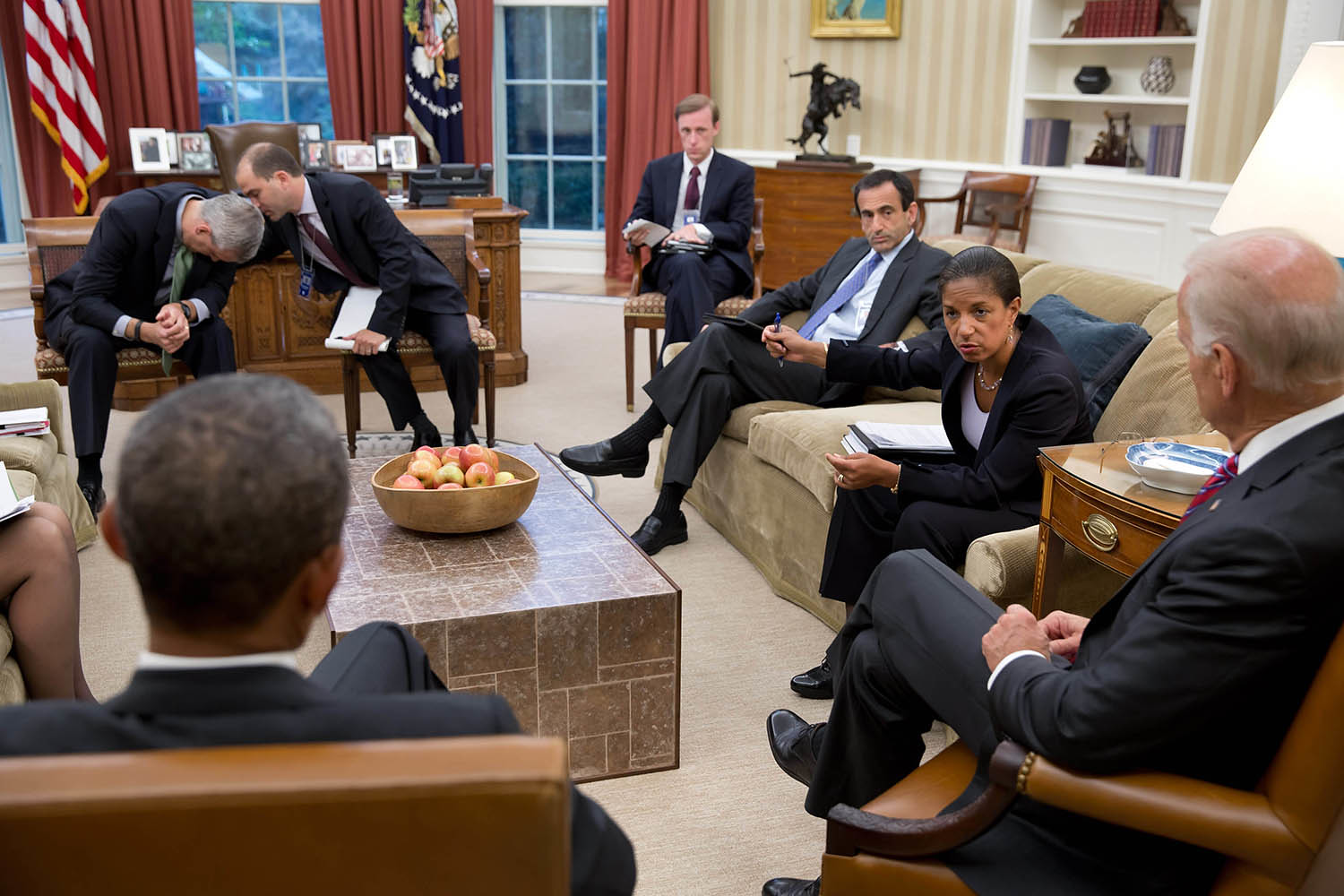
Jake Sullivan, seated farthest back, as national security advisor to vice president, in a meeting with President Barack Obama and advisers, Aug. 29, 2013. (White House, Pete Souza)
In a recent, disturbingly graphic article entitled “Biden’s young Hawk: The Case Against Jake Sullivan,” retired Army Maj. Danny Sjursen broadly hinted that President Biden’s national security adviser should at least look at the photos. (An editor’s note in the piece explained that such photos are almost totally absent from Establishment media: “Graphic images of war and suffering are included with this text. We believe it is important for the world to witness what their taxes, votes and apathy may be supporting.” )
In his article Sjursen finds himself wondering “whether Sullivan’s ever seen a dead child, gazed upon the detritus of American empire, waded through the sights and smells of our indecency. And, worse still, I wondered whether it’d matter much if he had. …”
The national security adviser is gatekeeper to the president, with the gate strong or weak depending — at least in concept — on what the president wants. In the normal course of business, the CIA director and the director of national intelligence would go through the security adviser to get to the president. Cabinet secretaries in the national security arena and, when appropriate, FBI directors often use the same channel.
What seems important here, though widely overlooked, is that no Biden national security appointee/nominee except Gen. Austin has apparently served a day in the military. Not Sullivan, not DNI nominee Avril Haines, not secretary of state nominee Antony Blinken, and not FBI Director Christopher Wray.
This is just one factor that should disqualify Morell for director of Central Intelligence (DCI). There are already far too many fledgling warhawks-without war experience. In Morell’s case, though, there are many other factors — some even more important — that disqualify him. His playing fast and loose regarding the legality and effectiveness of torture has been in the headlines recently, thanks to Senate Intelligence Committee member Ron Wyden (D-OR), who called Morell a “torture apologist.”
It has been a challenge to record Morell’s many artful dodges, but Consortium News did publish “On Iraq/Torture, Still in Denial”,as Morell began to peddle his memoir in May 2015.
Two of Morell’s tours de force with Charlie Rose in 2016, in which Morell advocates killing Russians and Iranians in Syria, were covered by CN.
More revealing still — and damning of his chances for another try at CIA — is an article, “Rise of Another CIA Yes Man.” That piece was written when Morell was picked to be Gen. David Petraeus’s deputy at CIA; it ends with personal comments by intelligence professionals who knew Morell well.
The article also includes citations from Tenet’s own memoir, including encomia he threw in Morell’s direction, one of which should actually be enough to bar Morell from any future role in intelligence.
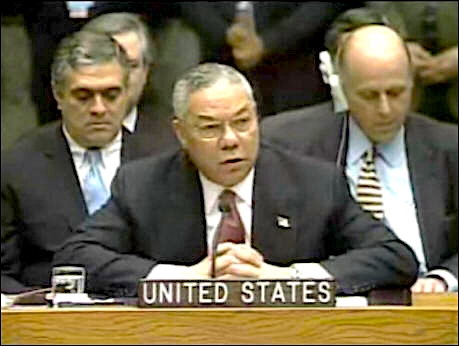
Tenet to the left of Powell at the United Nations on Feb. 5. 2003. (Wikimedia Commons)
In Tenet’s book, At the Center of the Storm, he writes that Morell “coordinated the CIA review” of the intelligence used by Secretary of State Colin Powell in his infamous Feb. 5, 2003 speech to the UN Security Council on the threat from (non-existent) WMD in Iraq.
Tenet, who sat directly behind Powell on that day, pointed out that Morell had served as regular briefer to President George W. Bush. It has been reported that, of the CIA’s finished intelligence product on Iraq, it was The President’s Daily Brief delivered by Morell that most exaggerated the danger from Iraq.
Morell fluttered quickly up CIA ranks as the yes-sir protege of two CIA directors who were, arguably, the worst of them all — “Slam-Dunk” Tenet and the-Russians-hacked-so-Trump-won John Brennan. During the presidential campaign of 2016, as Brennan and his accomplices in the National Security State worked behind the scenes to sabotage candidate Donald Trump, Morell dropped any pretense of nonpartisanship — which used to be the hallmark of an intelligence professional.
From retirement (but with eyes on the big prize he coveted in a new Democratic administration), Morell openly backed the Democratic candidate in a highly unusual op-ed in The New York Times on August 5, 2016: “I Ran the C.I.A. Now I’m Endorsing Hillary Clinton.”
Iraq: the Crucible
In my view, the key gauge in weighing qualifications for a national security position like CIA director is whether a candidate showed good judgment before the misbegotten, calamitous attack on Iraq.
Morell flunks that test outright. Accordingly, he can hardly be expected to be one of the calmer voices in a room of still less experienced fledgling hawks who, to quote Maj. Sjursen, have never “waded through the sights and smells of our indecency” in killing and maiming abroad. With Morell in the room, there would be greater risk of the U.S. getting sucked into still more misadventures overseas.
What did Morell tell Bush about Iraq? In Tenet’s memoir, he describes Morell as “the perfect guy” to brief President Bush, noting that Morell and Bush hit it off “almost immediately”. Morell added later: “I was President Bush’s first intelligence briefer, so I briefed him kind of the entire year of 2001.”
‘The Entire Year 2001’
So, was Iraqi President Saddam Hussein trying to acquire “weapons of mass destruction” during 2001? The first (and honest) answer was ”No” — if Powell and National Security Adviser Condoleezza Rice are to be believed. Here’s what they said at the time — Powell publicly during a speech in Cairo and Rice to CNN five months later.
Powell on Feb. 24, 2001:
“He [Saddam Hussein] has not developed any significant capability with respect to weapons of mass destruction. He is unable to project conventional power against his neighbors.”
Rice told CNN’s John King on July 29, 2001:
“We are able to keep arms from him [Saddam Hussein]. His military forces have not been rebuilt.”
Is this what Morell told Bush just six weeks before 9/11? Did Morell ever explain how Iraq could have developed, purchased, or stolen copious WMD in one year’s time?
Rice. (Wikipedia)
And when Morell briefed Bush right after 9/11, was the president fixated on Saddam Hussein, as counterterrorism chief Richard Clarke describes him in his book Against All Enemies? According to Clarke, on 9/12 Bush told him “to go back over everything, everything. See if Saddam did this. See if he’s linked in any way.”
Clarke says he was incredulous, replying, “But, Mr. President, al-Qaeda did this.” In later interviews Clarke added that he felt he was being intimidated to find a link between the attacks and Iraq.
Did Morell play it straight and tell Bush (as Clarke did) that Iraq had nothing to do with al-Qaeda or the attacks of 9/11? Did Clarke share that vignette at the time with Tenet and Morell?
And what about those notional Weapons of Mass Destruction in Iraq? After 9/11, did Morell take his cue from Cheney, Defense Secretary Donald Rumsfeld, and Tenet and give President Bush the impression that Iraq already had all manner of WMD and was on the threshold of acquiring a nuclear weapon?
Sham Dunk
Later, in December 2002 when Morell’s boss Tenet assured Bush and Cheney that CIA could prove, slam-dunkedly, the existence of WMD in Iraq, did Morell ever ask himself how both Powell and Rice could have been so far off base the year before?
Far more likely, Morell knew what the game was, as he watched Rice do a fancy pirouette, telling CNN’s Wolf Blitzer on Sept. 8, 2002 that “Saddam Hussein is actively pursuing a nuclear weapon. We do know that there have been shipments into Iraq of aluminum tubes that really are only suited to nuclear weapons programs.”
The most accomplished engineers and technical intelligence analysts in the intelligence community knew that the aluminum tubes story was BS. In the finest tradition of intelligence analysis, they remained impervious to the political winds. They insisted that associating those aluminum tubes with nuclear weapons development was wrong and they could not be persuaded to go along. And yet that bogus information got into Powell’s February 2003 speech at the UN.
In Morell’s memoir he wrote that he wanted to apologize to Powell. Morell says, “We said he [Saddam Hussein] has chemical weapons, he has a biological weapons production capability, and he’s restarting his nuclear weapons program. We were wrong on all three of those.”
But not my fault, wrote Morell, who tried to shift the blame by claiming he was not a senior official at the time.
How does that square with Tenet writing that Morell “coordinated the CIA review” of Powell’s speech? Whom to believe? However begrudging must be any trust given “slam-dunk” and “we-do-not-torture”Tenet, he presumably would have less reason to dissimulate than Morell in this particular case.
Assuming Morell did “coordinate the CIA review” of Powell’s speech, did Morell know about the strong dissent on the infamous aluminum tubes?
More important, did he know that CIA operators had recruited and “turned” Naji Sabri, the Iraqi foreign minister (who Saddam Hussein continued to believe was still working for him) and, with the help of British intelligence, had “turned” the chief of Iraqi intelligence, Habbush, as well.
After the reporting from these two sources on other issues and after their access to secret information was evaluated and judged to be genuine, President Bush was told that Sabri and Habbush both said there were no weapons of mass destruction in Iraq. Sabri’s information was given to the president by Tenet on Sept. 18, 2002; Habbush’s in late Jan. 2003.
Did Tenet not share that with Morell before he coordinated CIA input into Powell’s speech?
Clearly, this first-hand intelligence from proven sources with excellent access did not suit the Cheney/Bush narrative for war on Iraq. The president’s staff told CIA operatives not to forward additional reporting on this issue from these sources, explaining that Bush did not want more information about weapons of mass destruction; rather, it was now about “regime change.”
McGovern questions Clapper at Carnegie Endowment in Washington. (Alli McCracken)
Did Morell know about this when he was “coordinating” input into Powell’s disastrous speech? It is a safe bet that Morell was fully aware of the con job he was “coordinating” — as did other senior intelligence officials.
In his own memoir, former Director of National Intelligence (and, during Iraq, director of imagery analysis), James Clapper takes a share of the blame for the Iraq WMD fiasco. Clapper puts the blame for “the failure” to find the (non-existent) WMD “squarely on the shoulders of the administration members who were pushing a narrative of a rogue WMD program in Iraq and on the intelligence officers, including me, who were so eager to help that we found what wasn’t really there.”(emphasis added) .
Regarding Morell’s “I-confess-they-did-it” apology to Powell, the still-youngish Morell has not stopped lusting for an eventual seat at the table, so he apparently thought it a smart move politically. Typically, Powell did not react — as far as is known. Nor has the conflict-averse Powell summoned the cohones to say clearly what he thinks of how Tenet, Morell, et al. sold him a bill of goods on Iraq.
In the “where-are-they-now?” department, Tenet quit in July 2004 and fled to Wall Street to be joined the following year by Jami Miscik, who was deputy director for intelligence during the Iraq fiasco. She “lucked into” a nice job at Lehman Brothers before it went bust.
Note to readers: If you know someone advising the Biden team on selecting a director for CIA, please pass this along.
Finally, those interested in suggestions from the experience of previous transition teams, please click on one or two of the links below. The key issues tend to remain the same. Above all, integrity counts.
Additional Readings
1 — A Compromised Central Intelligence Agency: What Can Be Done?
By Ray McGovern, 2004
Chapter 4 in “Patriotism, Democracy, and Common Sense: Restoring America’s Promise at Home and Abroad”, Rowman & Littlefield, 2004
Ray’s chapter follows chapters by Alan Curtis (editor), Gary Hart, and Jessica Mathews.
Ray McGovern was an Army Infantry/Intelligence officer before serving as a CIA analyst. A specialist on Russia, he also prepared and delivered The President’s Daily Brief for Nixon, Ford, and Reagan. In retirement, he co-founded Veteran Intelligence Professionals for Sanity (VIPS). Ray works with Tell the Word, a publishing ministry of the ecumenical Church of the Saviour in inner-city Washington.
You asked if I knew Morell and what he is like. I do; you nailed it.
The only moment of discomfort is when you use Tenet as a compass point for the actual truth. Because, of course, Tenet often has his own version of the facts.
Exclusive: The gross manipulation of CIA analysis under George W. Bush pushed a new generation of “yes men” into the agency’s top ranks. Now one of those aspiring bureaucrats will be Gen. David Petraeus’s right-hand man, writes ex-CIA analyst Ray McGovern. (Also, at end of article, see special comments from several CIA insiders.)
By Ray McGovern
As Gen. David Petraeus prepares to take the helm at CIA in September, he can expect unswerving loyalty from his likely deputy, Michael Morell, who has been acting director since July when Leon Panetta left to become Secretary of Defense.
Like many senior CIA officials in recent years, Morell’s record is checkered, at best. He held key jobs in intelligence analysis over the past decade as the CIA often served as a handmaiden to the war propagandists.
As for Michael Morell, as with many other successful CIA careerists, his strongest suit seemed to be pleasing his boss and not antagonizing the White House. If past is precedent, his loyalty will be to Petraeus, not necessarily to the truth.
Forgive me if my thinking about loyalty to the facts seems “obsolete” or “quaint” or if it seems unfair to expect CIA analysts to put their careers on the line when politicians and ideologues are misleading the nation to war but those were the principles that analysts of my generation tried to uphold.
The recent tendency at CIA to give politicians what they want to hear rather than the hard truth is not healthy for the Republic that we were all sworn to serve.
And, if Petraeus’s own past is precedent, loyalty to the four-star general will not always be synonymous with loyalty to the truth.
Burnishing an Image
However, you will get no indication of this troubling reality from the flattering, but thin, feature about Michael Morell, “Mr. Insider Will Guide Petraeus at the CIA,” by Siobhan Gorman in the Wall Street Journal on Aug. 26.
Gorman is normally a solid reporter; but either she did not perform due diligence and let herself be snookered, or her editors stepped in to ensure her story was consonant with the image Petraeus and the Establishment wish to create for Morell.
Before her “rare” interview with Morell, Gorman should have taken a close look at former CIA Director George Tenet’s memoir, At the Center of the Storm, to learn what Tenet says about Morell’s record during the last decade’s dark days of misleading and dishonest intelligence.
In Tenet’s personal account of the CIA’s failures around 9/11 and the Iraq War, Morell Tenet’s former executive assistant is generally treated kindly, but Tenet puts Morell at the center of two key fiascoes: he “coordinated the CIA review” of Secretary of State Colin Powell’s infamous Feb. 5, 2003 address to the United Nations and he served as the regular CIA briefer to President George W. Bush.
Putting Access Before Honesty
So, Morell was there as Bush blew off early CIA warnings about the possibility of al-Qaeda leader Osama bin Laden being “determined to strike in the US” and while Bush and his neoconservative inner circle were concocting intelligence to justify invading Iraq.
Tenet credits Morell with suggesting to analysts that they prepare a report on the terrorist threat, which became the President’s Daily Brief that was handed to Bush on Aug. 6, 2001, at his ranch in Crawford, Texas. Bush brushed aside the warning with a reported comment to the CIA briefer, “all right, you’ve covered your ass,” and went off fishing.
Though Tenet said Morell got along well with Bush, it appears the President didn’t pay much heed to any CIA information coming from Morell, at least not anything that went against what Bush wanted to hear nor did Morell seem to risk offending the President by pushing these contrary points.
After the Aug. 6 PDB was delivered, Tenet wrote that he needed to follow it up, and did so with a trip to Crawford 11 days later, when Tenet remembers Bush driving him around in a pickup truck as Tenet made “small talk about the flora and fauna.”
Morell also was the CIA briefer with Bush in Florida on the morning of 9/11 when news arrived about the attacks on New York City’s Twin Towers. Later, Bush told Morell “that if we [the CIA] learned anything definitive about the attack, he wanted to be the first to know,” Tenet wrote, adding:
“Wiry, youthful looking, and extremely bright, Mike speaks in staccato-like bursts that get to the bottom line very quickly. He and George Bush had hit it off almost immediately. In a crisis like this, Mike was the perfect guy for us to have by the commander-in-chief’s side.”
However, it appears Morell was not willing to risk his rapport with Bush by challenging the President’s desire to pivot from retaliatory strikes against Afghanistan to a full-scale invasion of Iraq based on false and misleading intelligence.
Tenet also described Morell’s role in organizing the review of the “intelligence” that went into Powell’s speech, which let slip the dogs of war by presenting a thoroughly deceptive account of the Iraqi threat, what Powell later called a “blot” on his record.
Though the CIA embraced many of Powell’s misleading assertions, Tenet recounted one exchange in which Morell stood up to John Hannah, an aide to Vice President Dick Cheney, regarding Iraq’s alleged efforts to obtain yellowcake uranium from Niger.
“Hannah asked Mike Morell, who was coordinating the review of the speech for CIA, why the Niger uranium story wasn’t in the latest draft,” Tenet wrote. “‘Because we don’t believe it,’ Mike told him. ‘I thought you did,’ Hannah said. After much wrangling and precious time lost in explaining our doubts, Hannah understood why we believed it was inappropriate for Colin to use the Niger material in his speech.”
Despite that one pushback, the CIA analysts mostly bent to pressures coming from the White House for an alarmist treatment of allegations about the “weapons of mass destruction,” which turned out not to be in Iraq.
Of the CIA’s finished intelligence product, it was reportedly the PDB delivered by Morell that most exaggerated the danger.
If you want to see John Brennan the Erie County (PA) Bar Association is welcoming him sometime in May. If I were a lawyer I would like to hear how he lied before congress, admitted his lies and managed to remain free.
Thinking this is a great man tells you something about the Erie County Bar.
It is an indication of how low we have sunk as a nation that a possible war criminal like Brennan can feel free to use his former official status as a bully pulpit to claim that someone is a foreign spy without any real pushback or objection from the talking heads and billionaire manipulators that unfortunately run our country. If Trump is actually being blackmailed, as Brennan implies, what evidence is there for that? One might reasonably conclude that Brennan and his associates are actually angry because Trump has had the temerity to try to improve relations with Russia… Read the rest of this entry »
They insist that Snowden, contrary to what he has always maintained, did not check into the Mira Hotel on May 21, 2013, the day after he arrived in Hong Kong. Instead, they assert, he checked-in only on June 1, which means Snowden has 11 “unaccounted-for” days from the time he arrived in Hong Kong until he met with journalists at the Mira in the beginning of June. They have repeatedly leveraged this Missing Eleven Days into the insinuation that Snowden used this time to work with his Russian and/or Chinese handlers in preparation for meeting the U.S. journalists in Hong Kong.Read the rest of this entry »



 MCViewPoint