MCViewPoint

Opinion from a Libertarian ViewPoint

Posts Tagged ‘money supply’

Before Progressives Condemn Capitalism, They Should Be Able to Define It

Posted by M. C. on August 10, 2022

If there is no growth in the money supply, prices and interest rates will best reflect the preferences of a society. An Austrian economics definition of capitalism is the interplay of supply and demand, without any growth in the money supply. In this form of capitalism individualism will never pay off. Profits can only be realized if people in society stand to benefit as well.

https://mises.org/wire/progressives-condemn-capitalism-they-should-be-able-define-it

Heiko de Boer

Many people blame capitalism for ever-increasing consumption, individualism, and the greedy pursuit of profits. Not very often do we see capitalism defined in any other way. In this article, I suggest an Austrian economics definition of capitalism that explains capitalism economically and without moralistic tones.

Human Actions Determine Prices and Interest Rates

The basis of Austrian economics price theory is human action. People must make choices on how to spend their scarce time and resources. They aim to improve their situation by ranking their subjective preferences and realizing as many of these preference, one by one.

This explains why the price of water is much lower than the price of diamonds. The supply of water is more than sufficient to meet almost all our needs. It is the last added unit of water that determines its price, which is many times lower than if the supply of water would satisfy the most important use only.

Interest rates are also a category of human action and are an indication of our time preference. This time preference applies to money and goods and services. A young society will be more inclined to save and invest than an older society. Their lower time preference translates into a lower interest rate as more money is offered for investing. Additional investments make it possible to expand the production structure.

By expanding a production structure, a society can consume more in the future. Consuming more can mean many things. If the purchasing power of people stays the same, but people only need to work three days a week instead of five days, people may still feel better off. Or, by investing we can produce similar goods, but with less pollution.

The interplay between interest rates and prices as they come about in a free marketplace, is shaping the production structure such that it meets the needs of society. The interplay of supply and demand could be termed capitalism. However, for a proper definition, more is needed.

What Money System Works Best?

The signaling function of prices and interest rates is distorted by central banks policies. Monetary policies prescribe that consumer goods prices must rise, according to the European Central Bank by “on average” 2 percent per year. Central banks find it unacceptable if a free market creates prices that are going down or do not rise sufficiently.

Central banks are creating money out of nothing, aiming to stimulate demand. More money means more competition for the same amount of goods, with upward price pressures as a result. Banks and central banks jointly issue more credit than what would be possible by savings alone. The additional offer of money pushes the interest rates down. The balance that prevailed in the time market is artificially disturbed.

Initially, money growth will ‘be good for the economy.’ More money is available for investing at a lower interest rate. It is as if the market has given a signal that people in society want to consume more in the future. However, consumers did not signal any change in consumption preferences.

There will come a time when the artificially low interest rate tends to rise, and prices adjust reflecting people’s actual preferences. Producers will be faced with rising production and refinancing costs. After the boom a bust will naturally follow.

The best money system is one that best reflects the preferences of people in society. This will be the case if there is no growth in the money supply. The Austrian school describes this as a sound money system. A proper definition of capitalism would then be the interplay of supply and demand, without any growth in the money supply.

Individualism, Profits, and Externalities

See the rest here

Be seeing you

Posted in Uncategorized | Tagged: , , , , , | Leave a Comment »

Why Price Deflation Is Always Good News | Mises Wire

Posted by M. C. on January 30, 2022

A general decline in the prices of goods and services in response to an increase in the pool of wealth is always good news for individuals. Furthermore, a general decline in prices, which is associated with the bursting of various bubbles, is also good news. The less nonproductive bubble activities, the better things will be for wealth generators and hence for the overall pool of wealth.

https://mises.org/wire/why-price-deflation-always-good-news

Frank Shostak

Most commentators are currently preoccupied with large increases in the Consumer Price Index (CPI), which is labeled as inflation. The yearly growth rate of the CPI stood at 7.0 percent in December against 6.8 percent in November and 1.4 percent in December 2020.

shos1

Pundits have been blaming the strong increase in the momentum of the CPI on the supply disruptions because of covid-19, but the key behind this strong increase in the momentum of the CPI is reckless monetary pumping by the Fed. Observe that in January 2000 the Fed’s balance sheet stood at $0.6 trillion. By the end of 2021, it had climbed to $8.8 trillion.

shos

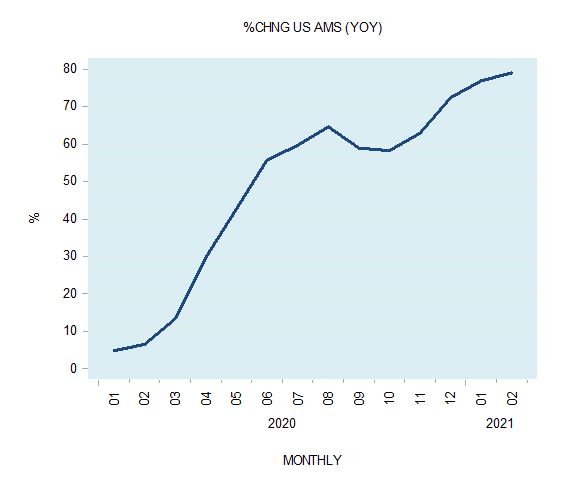
As a result of this pumping, the yearly growth rate of the Austrian money supply metric increased by a massive 79 percent in February 2021 from 4.8 percent in January 2020. (Note that some of the increases in money supply are the result of the monetization of large government outlays).

shos

On account of the sharp decline in the yearly growth rate of the Austrian money supply measure, from 79 percent in February 2021 to 15.4 percent in November 2021, the momentum of the CPI is likely to peak toward the end of 2022. Afterwards a strong decline in the momentum is likely to emerge.

shos

A possible decline in the yearly growth rate of prices coupled with a likely decline in economic activity could ignite expectations of a general decline in the prices of goods and services, i.e., deflation.

Most Commentators Fear Deflation

For most economic commentators, a general decline in prices is considered as bad news. According to these observers, a general decline in prices generates expectations for further declines in prices and slows down individuals’ propensity to spend. This in turn undermines the aggregate demand. A decline in the aggregate demand because of the decline in consumer expenditure leads to a decline in the aggregate supply and thus to a decline in economic growth.

All this sets in motion an economic slump. As the slump further depresses the prices of goods, the pace of economic decline intensifies.

The view that consumers postpone their buying of goods because prices are expected to decline is, however, questionable.

This would mean that people have abandoned any desire to live in the present. Without the maintenance of life in the present, no future life is conceivable.

According to Menger, the founder of the Austrian school of economics, “An imperfect satisfaction of needs leads to the stunting of our nature. Failure to satisfy them brings about our destruction. But to satisfy our needs is to live and prosper. Thus the attempt to provide for the satisfaction of our needs is synonymous with the attempt to provide for our lives and wellbeing. It is the most important of all human endeavors, since it is the prerequisite and foundation of all others.”

Is the Fall in Prices Bad News for the Economy?

What characterizes industrial market economy under a commodity money such as gold is that the prices of goods follow a declining trend.

According to Joseph Salerno

In fact, historically, the natural tendency in the industrial market economy under a commodity money such as gold has been for general prices to persistently decline as ongoing capital accumulation and advances in industrial techniques led to a continual expansion in the supplies of goods. Thus throughout the nineteenth century and up until the First World War, a mild deflationary trend prevailed in the industrialized nations as rapid growth in the supplies of goods outpaced the gradual growth in the money supply that occurred under the classical gold standard. For example, in the US from 1880 to 1896, the wholesale price level fell by about 30 percent, or by 1.75 percent per year, while real income rose by about 85 percent, or around 5 percent per year.

In a free market, the rising purchasing power of money, i.e., declining prices, is the mechanism that makes the great variety of goods produced accessible to many people.

See the rest here

Be seeing you

Posted in Uncategorized | Tagged: , , , , , | Leave a Comment »

Why Government Should not Fight Deflation | Mises Wire

Posted by M. C. on November 9, 2019

Thus attempts to reverse price deflation by means of a loose monetary policy (i.e., by creating inflation) is bad news for the process of wealth generation, and hence for the economy. On the other hand, in order to maintain their lives and well-being, individuals must buy goods and services in the present. So from this perspective a fall in prices cannot be bad for the economy.

https://mises.org/wire/why-government-should-not-fight-deflation

For most experts, deflation is considered bad news since it generates expectations of a decline in prices. As a result, they believe, consumers are likely to postpone their buying of goods at present since they expect to buy these goods at lower prices in the future.

This weakens the overall flow of spending and in turn weakens the economy. Hence, such commentators hold that policies that counter deflation will also counter the slump.

Will Reversing Deflation Prevent a Slump?

If deflation leads to an economic slump, then policies that reverse deflation should be good for the economy. Or so it is held.

Reversing deflation will simply involve introducing policies that support general increases in the prices of goods, i.e., price inflation. With this way of thinking inflation could actually be an agent of economic growth.

According to most experts, a little bit of inflation can actually be a good thing. Mainstream economists believe that inflation of 2 percent is not harmful to economic growth, but that inflation of 10 percent could be bad for the economy.

There’s good reason to believe, however, that at a rate of inflation of 10 percent, it is likely that consumers are going to form rising inflation expectations.

According to popular thinking, in response to a high rate of inflation, consumers will speed up their expenditures on goods at present, which should boost economic growth. So why then is a rate of inflation of 10 percent or higher regarded by experts as a bad thing? Clearly there is a problem with the popular way of thinking.

Price Inflation vs. Money-Supply Inflation

Inflation is not about general increases in prices as such, but about the increase in money supply. As a rule the increase in money supply sets in motion general increases in prices. This, however, need not always be the case.

The price of a good is the amount of money asked per unit of it. For a constant amount of money and an expanding quantity of goods, prices will actually fall. Prices will also fall when the rate of increase in the supply of goods exceeds the rate of increase in the money supply. For instance, if the money supply increases by 5 percent and the quantity of goods increases by 10 percent, prices will fall by 5 percent.

A fall in prices however cannot conceal the fact that we have inflation of 5 percent here on account of the increase in the money supply.

The reason why inflation is bad news is not because of increases in prices as such, but because of the damage inflation inflicts to the wealth-formation process. Here is why.

The chief role of money is the medium of exchange. Money enables us to exchange something we have for something we want. Before an exchange can take place, an individual must have something useful that he can exchange for money. Once he secures the money, he can then exchange it for the goods he wants.

But now consider a situation in which the money is created “out of thin air,” increasing the money supply. This new money is no different from counterfeit money. The counterfeiter exchanges the printed money for goods without producing anything useful. He in fact exchanges nothing for something. He takes from the pool of real goods without making any contribution to the pool.

Note that as a result of the increase in the money supply what we have here is more money per unit of goods, and thus, higher prices.

What matters however is not that prices rise, but the increase in the money supply that sets in motion the exchange of nothing for something, or “the counterfeit effect.” The exchange of nothing for something, as we have seen, weakens the process of real wealth formation. Therefore, anything that promotes increases in the money supply can only make things much worse.

Why Falling Prices Are Good

Changes in prices are just a symptom, as it were — and not the primary causative factor — of a falling growth momentum.  Thus attempts to reverse price deflation by means of a loose monetary policy (i.e., by creating inflation) is bad news for the process of wealth generation, and hence for the economy. On the other hand, in order to maintain their lives and well-being, individuals must buy goods and services in the present. So from this perspective a fall in prices cannot be bad for the economy.

Furthermore, if a fall in the growth momentum of prices emerges on the back of the collapse of bubble activities in response to a softer monetary growth, then this should be seen as good news. The fewer non-productive bubble activities we have, the better it is for the wealth generators, and hence for the overall pool of real wealth.

Likewise, if a fall in the growth momentum of the CPI emerges on account of the expansion in real wealth for a given stock of money, this is obviously great news since many more people could now benefit from the expanding pool of real wealth.

We can thus conclude that contrary to the popular view, a fall in the growth momentum of prices is always good news for the wealth generating process and hence for the economy.


Posted in Uncategorized | Tagged: , , , | Leave a Comment »