MCViewPoint

Opinion from a Libertarian ViewPoint

Posts Tagged ‘Price Deflation’

Inflation Is a Giant “Skim” on the American People | Mises Wire

Posted by M. C. on August 19, 2023

Inflation created by central banks allows government to ALWAYS have the money it wants—and be first in line to get it.

https://mises.org/wire/inflation-giant-skim-american-people

Charles A. Smith

The price of a McDonald’s hamburger in the United States has inflated 3.75 percent annually over the last seventy years. McDonald’s has grown from a tiny hamburger stand in Des Plaines, Illinois, to the second largest fast-food chain on earth. Scale economies alone (never mind process and productivity improvements) should’ve allowed the price of a burger to decline materially over this period.

Why didn’t it? What forces and institutions have conspired to inflate the cost of a simple meal by more than thirteen times over two generations? Many Mises Wire readers know the answer, but few Americans are economically astute enough to understand or describe what Vladimir Lenin called the “surest means of overturning the existing basis of society.”

Simply put, inflation is a giant “skim”—perpetrated in a symbiosis of money creation by bankers and government-affiliated central bank bureaucrats, the two institutions with the power to create money from nothing. Inflation creates a nice, cushy existence for each group. And the bankers and bureaucrats always get their money.

If steady price deflation were operative—as is the case in a properly functioning consumer economy, where productivity improvements flow into lower consumer prices—the world would be quite different today and far more difficult for bankers and bureaucrats.

With steadily falling prices, bankers must do proper credit analysis. They must set aside ample reserves and generally run their institutions more conservatively. Credit analysis is far more difficult in deflation as borrowers must continuously sell more goods to service their loans rather than relying on boosting prices. Secured loans become problematic as pledged assets devalue. Banking generally becomes a lot more work—and more risky. The period of 1865 to 1910 in the United States was a perfect example of this sort of environment. Record bank failures and enormous financial volatility accompanied steady deflation and one of the greatest periods of economic prosperity and innovation in our nation’s history.

In short, deflation creates risks for banks, so banks conspire with the government to create enough money so they don’t have to deal with it. The “balls to the wall” and “heads I win, tails you lose” practices we’ve become familiar with in banking today are both allowed and inspired by the permanent inflationary regime.

The other major inflation conspirator (and greatest beneficiary) is government. Think of inflation as oxygen for politicians and carbon monoxide as a public vote cast to raise taxes. Steady (2 percent, say?) inflation creates a reliable ratcheting effect on every taxpayer in the land, and a nice, smooth, foamed runway for bureaucrats. And should our benevolent leaders decide the inflation/tax runway isn’t wide enough or smooth enough? They simply borrow the difference (i.e., the deficit) and inflate that away too!

See the rest here

Be seeing you

Posted in Uncategorized | Tagged: , , , | Leave a Comment »

Why Price Deflation Is Always Good News | Mises Wire

Posted by M. C. on January 30, 2022

A general decline in the prices of goods and services in response to an increase in the pool of wealth is always good news for individuals. Furthermore, a general decline in prices, which is associated with the bursting of various bubbles, is also good news. The less nonproductive bubble activities, the better things will be for wealth generators and hence for the overall pool of wealth.

https://mises.org/wire/why-price-deflation-always-good-news

Frank Shostak

Most commentators are currently preoccupied with large increases in the Consumer Price Index (CPI), which is labeled as inflation. The yearly growth rate of the CPI stood at 7.0 percent in December against 6.8 percent in November and 1.4 percent in December 2020.

shos1

Pundits have been blaming the strong increase in the momentum of the CPI on the supply disruptions because of covid-19, but the key behind this strong increase in the momentum of the CPI is reckless monetary pumping by the Fed. Observe that in January 2000 the Fed’s balance sheet stood at $0.6 trillion. By the end of 2021, it had climbed to $8.8 trillion.

shos

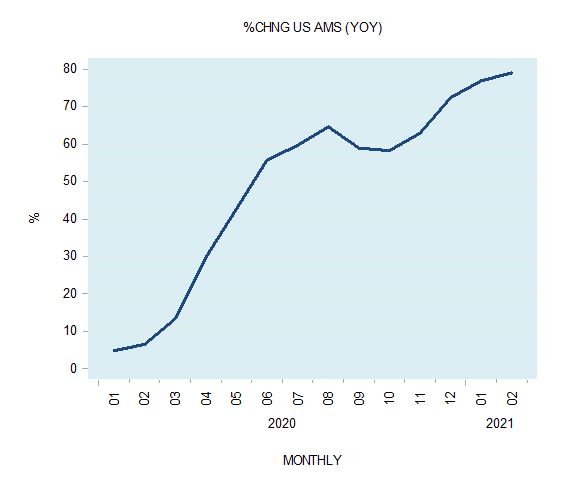
As a result of this pumping, the yearly growth rate of the Austrian money supply metric increased by a massive 79 percent in February 2021 from 4.8 percent in January 2020. (Note that some of the increases in money supply are the result of the monetization of large government outlays).

shos

On account of the sharp decline in the yearly growth rate of the Austrian money supply measure, from 79 percent in February 2021 to 15.4 percent in November 2021, the momentum of the CPI is likely to peak toward the end of 2022. Afterwards a strong decline in the momentum is likely to emerge.

shos

A possible decline in the yearly growth rate of prices coupled with a likely decline in economic activity could ignite expectations of a general decline in the prices of goods and services, i.e., deflation.

Most Commentators Fear Deflation

For most economic commentators, a general decline in prices is considered as bad news. According to these observers, a general decline in prices generates expectations for further declines in prices and slows down individuals’ propensity to spend. This in turn undermines the aggregate demand. A decline in the aggregate demand because of the decline in consumer expenditure leads to a decline in the aggregate supply and thus to a decline in economic growth.

All this sets in motion an economic slump. As the slump further depresses the prices of goods, the pace of economic decline intensifies.

The view that consumers postpone their buying of goods because prices are expected to decline is, however, questionable.

This would mean that people have abandoned any desire to live in the present. Without the maintenance of life in the present, no future life is conceivable.

According to Menger, the founder of the Austrian school of economics, “An imperfect satisfaction of needs leads to the stunting of our nature. Failure to satisfy them brings about our destruction. But to satisfy our needs is to live and prosper. Thus the attempt to provide for the satisfaction of our needs is synonymous with the attempt to provide for our lives and wellbeing. It is the most important of all human endeavors, since it is the prerequisite and foundation of all others.”

Is the Fall in Prices Bad News for the Economy?

What characterizes industrial market economy under a commodity money such as gold is that the prices of goods follow a declining trend.

According to Joseph Salerno

In fact, historically, the natural tendency in the industrial market economy under a commodity money such as gold has been for general prices to persistently decline as ongoing capital accumulation and advances in industrial techniques led to a continual expansion in the supplies of goods. Thus throughout the nineteenth century and up until the First World War, a mild deflationary trend prevailed in the industrialized nations as rapid growth in the supplies of goods outpaced the gradual growth in the money supply that occurred under the classical gold standard. For example, in the US from 1880 to 1896, the wholesale price level fell by about 30 percent, or by 1.75 percent per year, while real income rose by about 85 percent, or around 5 percent per year.

In a free market, the rising purchasing power of money, i.e., declining prices, is the mechanism that makes the great variety of goods produced accessible to many people.

See the rest here

Be seeing you

Posted in Uncategorized | Tagged: , , , , , | Leave a Comment »