They want people to accept oppression and hopelessness as their lot in life, as Medieval lords of old rode roughshod over the peasants and ground them to dust
America’s cities are petri dishes of “progressive” governance. Anyone who cares to see the consequences of radical left-wing policies need look no further than our country’s urban centers. From the monstrous modernist architecture to decaying infrastructure, they look more like Soviet hell than the once-thriving metropolises that were the envy of the modern world.A genuine Renaissance in our cities is possible, if only today’s “progressives” would get out of the way. [Click to Tweet]
The English historian James Bryce called Medieval cities “centers of … intellect and freedom.” Peasants flocked to urban environments. Now the stream flows the other way. City denizens today labor under oppressive, insouciant regimes more akin in spirit to those suffered by the struggling, land-bound serfs of the past.
Students aren’t receiving anything remotely close to an adequate education in crumbling government-run schools dominated by unions more interested in feathering their nest than teaching. Any talk of change sends these tax-funded minions into the street, screaming about more tax funding and, of course, “the children”—despite the already astronomical costs associated with “public” education and its long-running record of failure. Kids don’t learn the basics, but they do learn to be treated like prisoners.
City governments penalize hardworking adults with large bureaucracies that micro-manage private businesses and require a license to engage in virtually every trade. Zoning laws prevent cottage industries. Rent control gives landlords an incentive to let their buildings fall apart. Income, sales, and property taxes take from the productive to fund a welfare system providing substandard housing in impoverished neighborhoods. Generations live in indigence.
The drug war keeps police officers chasing dealers and consumers instead of murderers, rapists, and robbers. City streets have been turned into war zones, where drug gangs kill each other over “their” territory and law-abiding citizens—the overwhelming majority—are caught in the crossfire. Continuous run-ins with police, especially in poor neighborhoods, leave residents feeling like they are under the heel of an occupying army. Even worse, gun control laws keep them disarmed and powerless.
Politicians are utterly clueless. Their campaign promises to fix roads, “fix our schools,” deal with rising crime, and “restore trust” in elected officials are quietly forgotten the day after every election, lost in the midst of all the cocktail parties. Wealthy elites, working hand-in-glove with local governments, boast of “proudly” paying their exorbitant taxes, congratulating themselves for caring so much despite the continued and growing hardships suffered by those (much) further down the socio-economic ladder. Few question the role played by government in keeping out competition and innovation.
These failures are not accidental. What you see is a natural consequence of intentional government meddling in virtually every part of people’s lives. Officious bureaucrats, prison-like schools, onerous taxes and regulations, and a heavy police presence are baked into the leftist mindset. They want people to accept oppression and hopelessness as their lot in life, as Medieval lords of old rode roughshod over the peasants and ground them to dust.
Predictions abound that the United States is on the decline, that we are entering a period of rising crime and continued social and economic deterioration. Many have completely given up on cities, abandoning them to criminal gangs and Democratic Party machines (often one and the same); in despair, they retreat to the suburbs or rural settings. One thing is certain: If we continue on the present course, our once-thriving, beautiful, safe, and exciting cities will collapse in ruins. However, this is not a foregone conclusion—if we instead embrace the principles of freedom and the free market.
Our broken education system can be fixed, if we separate school and state; parents, extended families, and even whole neighborhoods can unite to provide instruction in private homes or rented spaces. Free from the yoke of unions and politicians, kids can learn and thrive. The elimination of zoning laws would free people to open businesses close to home, or even to utilize areas of the city abandoned by the political class. Abolishing barriers to entry, like occupational licensing laws, would open up every industry to competition; consumers, not city employees (who often act to protect entrenched interests), would decide for themselves if a tradesman was honest, competent, and dependable. Police resources can be used to catch actual criminals; a private citizen engaged in peaceful commerce should never fear the gendarmes at his door. Finally, the dignity of all people should be acknowledged by repealing laws that infringe on the right to keep and bear arms. The armed, free citizen is the surest way to take back city streets from the criminal class.
A genuine Renaissance in our cities is possible, if only today’s “progressives” would get out of the way.
n his first year in office, President Joe Biden has made it absolutely clear that he wants to make the oil and natural gas industries disappear. While even a progressive like Biden knows that it would be economically (and, one would hope, politically) disastrous to destroy those industries during his brief term, nonetheless Biden is setting things into motion in which the regulatory and law enforcement apparatus of the central government are quietly but effectively declaring war on what has been one of the most productive industries in US history.
The Biden administration and its allies are looking at a multipronged approach, with the first being efforts at trying to starve the industry of capital. As Biden appointees take over the Securities and Exchange Commission (SEC), they are turning what once was an agency that regulated capital markets into an environmental regulator:
Under the Biden administration, the Securities and Exchange Commission (SEC) will require public companies to disclose how operations contribute to climate change and what is being done to comply with greenhouse gas emission guidelines.
Former Acting SEC Chair Allison Herren Lee released a statement in July that laid out the update to disclosure requirements. The SEC will evaluate how companies follow climate change guidelines from 2010, discuss the climate-related disclosures with companies, then examine the impact of climate risks on the stock market. The commission will then update the guidelines, most likely resulting in an expansion of disclosure from companies on how their business affects the environment. (emphasis mine)
While some have called this “regulatory overreach,” there is nothing surprising or shocking about this. The Biden administration response to anything it can tie to “climate change” is going to be heavy-handed and expansive, especially since regulators now believe they have been near-divinely appointed to bring better weather to planet Earth.
(For numerous reasons, I am not going into the actual scientific claims regarding climate change, except to say that given the history of governmental initiative failures, I am not optimistic that the Biden administration through heavy-handed edicts can reduce hurricanes, floods, and other natural disasters that the ancients once called “acts of God.” Furthermore, no logical person can make a direct connection between Biden’s “Build Back Better” program and better weather.)
One only can imagine how far the SEC will take these so-called disclosure requirements. The idea is to mandate actions that appear to make firms look as though they are “fighting climate change.” For example, Amazon has been advertising that it will engage in corporate “responsibility” by making its delivery fleet all electric in the coming year. Likewise, Ford Motor Company has announced plans to spend billions of dollars on new plants that will make batteries and electric vehicles.
Whether these are “wise” business decisions is another matter. Certainly, they are politically wise in that Ford and Amazon will receive praise from the usual progressive suspects for their investment decisions, although I doubt that the progressive ruling class will let up on either company. Amazon’s so-called commitment to “fighting climate change” still is not going to keep the company from being accused of monopolistic behavior and union busting, along with the usual hysterical attacks that emanate from both the New York Times and the New Republic on the left and the American Conservative on the right, and one can be sure that sooner or later, the US Department of Justice and/or the Federal Trade Commission will be filing lawsuits against Amazon.
But investments must have a certain return in order to be worth undertaking, and given the current state of the US electric grids and the reach of present (and near-future) technology, it is doubtful that this multibillion-dollar turn toward going electric is going to have a return on investment that would come close to buying and building conventional gas- and diesel-powered vehicles. One doubts seriously that if the political climate were not so hostile to oil and gas, Ford and Amazon would be running on batteries.
But there is an even bigger threat to the oil industry than just Ford and Amazon wanting to go electric: there is a movement from the left to charge oil and gas executives with “crimes against humanity” that almost surely will engulf the Democratic Party as it continues to become radicalized. For now, those calling for imprisonment of energy industry leaders are publications like Jacobin, Common Dreams, Gizmodo, and The Guardian, but as the Left continues to march through all of the major institutions in Europe and North America, such a scenario easily could become mainstream in a short time.
Of course, the notion that oil executives “knew” something about “climate change” that was hidden from everyone else is sheer nonsense. There is no other way to describe that belief, but we already know from modern experience that nonsense has become the ruling ideology of progressives in this country. For those that believe that justice or the “rule of law” would prevail in an ideological climate, one is reminded of a quote from Aleksandr Solzhenitsyn in The Gulag Archipelago: If the intellectuals in the plays of Chekhov, who spent all their time guessing what would happen in twenty, thirty, or forty years, had been told that in forty years interrogation by torture would be practiced in Russia; that prisoners would have their skulls squeezed with iron rings; that a human being would be lowered into an acid bath; that they would be trussed up naked to be bitten by ants and bedbugs; that a ramrod heated over a primus stove would be thrust up their anal canal (the ‘secret brand’); that a man’s genitals would be slowly crushed beneath the toe of a jackboot; and that, in the luckiest possible circumstances, prisoners would be tortured by being kept from sleeping for a week, by thirst, and by being beaten to a bloody pulp, not one of Chekhov’s plays would have gotten to its end because all the heroes would have gone off to insane asylums.
While progressives have not (at least yet) reached the depths of the commissars Bernie Sanders used to admire (and probably still does), nonetheless they understand something about the destruction of a society and its economy and seem eager to do what they can. From the Green New Deal, in which progressives believe they can centrally plan an entire economy, to the current “divestment” movement to keep new capital from the oil and gas industries, progressives believe they can somehow improve American lives by making them substantially poorer.
And it is not just the Far Left that is looking to find ways to throw oil and gas executives in prison. The New York State attorney general’s office is currently “investigating” oil companies and Massachusetts also has launched a “probe” into the question of whether oil executives “misled the public” about the horrors of climate change. One can expect other blue state attorney generals to do the same as the divide continues to grow between progressives and the people that are harmed by progressive governance.
The rush to destroy the oil and gas industries is coming from the political, academic, religious, corporate, and entertainment elites in this country, and they don’t care about the ramifications of their actions, and why should they? As elites, they are in the upper-income echelons of society, live in gated communities, and can afford the inconveniences of electric vehicles, which are a symbol to others of their “commitment” to “fighting climate change.”
Nonelites, however, do not have the same privileges, and they are the ones that would face the empty shelves in stores, the shortages, freezing in their homes in the winter, and dealing with summer heat without air conditioning. People in rural areas would find themselves back in the throes of poverty that they left decades ago, thanks to those fossil fuels that the progressives regularly demonize.
Not that the elites would care. Despite their claims that destroying the oil and gas industries would “improve the lives of working-class Americans,” there is no way to keep up even a semblance of our present standard of living without adequate electricity and fuels. Windmills, solar panels, and other renewables cannot replace what already exists no matter how much rhetoric comes from Joe Biden’s office.
Without getting into arguments about fossil fuels and climate change, one of the so-called smoking guns has been the series of massive wildfires on the West Coast. While progressives blame climate change, perhaps they should look in the mirror. Having been successful for the past few decades in setting off vast tracts of forests in the name of “protecting” the lands and forbidding logging, they forget that when there is no land management, trees grow closer together, they die, and they are easier victims of blight and insect damage. The result is that the forests become extremely combustible, and when they inevitably burn, the fires become conflagrations. But it always is easier to blame Exxon. Author:
“In other words, voters were twice as likely to believe certain progressive myths than conservative ones,” according to the report. No doubt that’s a residual effect from our left-leaning media, which now spews socialist “narratives” instead of facts.
With the extreme left culturally ascendant, many of our most treasured and valuable national institutions have become houses of progressive Groupthink. Meanwhile, our nation’s founding principles, basic morality, values and even science have come under sustained hostile ideological assault by both the media and academia. Bias and ignorance have been institutionalized. Sadly, according to a new report, voters bear much of the blame for this.
No question, America is a mess. But how did it get that way? The simple answer, the poll of voters suggests, is ignorance, along with pervasive media and political bias.
The study is based on a survey of voters taken shortly after the 2020 presidential election by Just Facts, which describes itself as “a non-profit institute dedicated to publishing comprehensive, straightforward, and rigorously documented facts about public policy issues.”
The group’s most recent study is eye-opening.
It shows, Just Facts says, “that the vast bulk of voters have embraced false and harmful dogmas that accord with their political views.” This, it adds, is largely due to what’s called confirmation bias, “the human tendency to reflexively accept anything that accords with one’s preexisting beliefs and ignore or twist everything that defies them.”
It’s true that both sides of the political debates have their biases.
For instance, among Trump voters, some 76% believe that incomes for the middle class fell during the Obama years. In fact, on average they rose by $5,300.
No group is perfect. But those on the left show themselves to be, well, delusional about what they know and don’t know.
For instance, among Biden voters, 88% believe police are more likely to use deadly force when arresting black Americans than white ones. Wrong. In fact, they’re 42% less likely to use deadly force against blacks.
This, as much as anything, might illustrate why cities around the nation now are wracked by race riots and political violence by far-left extremists like BLM and Antifa. Ignorant voters decry the violence and property destruction, but then excuse it and vote for those who propagate it.
As for the impacts of climate change, only about 38% of Trump voters but 86% of Biden voters believe that the number of powerful, destructive tornadoes has increased since the 1950s. This, by the way, is part of the left’s narrative that global warming has created far-reaching climatic changes, among them violent tornadoes.
Not true. In fact, the average number of violent hurricanes has fallen somewhat.
We could go on. Just Facts asked 21 such questions of 1,000 randomly selected people in their survey, enough for a 3% margin of error.
The average voter correctly answered just 38% of the questions, were wrong 51% of the time, and unsure 10% of the time. A majority could only answer four of the 21 questions correctly.
Think of that when an HR1 supporter says we need more uninformed people voting to “perfect our democracy.”
Perhaps showing the effects of a pervasively left-biased mainstream media, wrong answers strongly correlated to partisan agendas. The data clearly showed this: An average of 57% of the incorrect answers were liberally misinformed, while just 28% were conservatively misinformed.
“In other words, voters were twice as likely to believe certain progressive myths than conservative ones,” according to the report. No doubt that’s a residual effect from our left-leaning media, which now spews socialist “narratives” instead of facts.
And therein lies the rub.
Because, as it turns out, the left are far more likely to believe things and propagate ideas that are factually false than are people on the right. That’s of course completely contrary to the media’s repeated claims that leftists and progressives are more attuned to “science” and “fact-based” reality than conservatives are.
“For all 10 of the questions in which the electorate was most deluded, the wrong answers they gave concurred with progressive narratives propagated by the media,” the voter study showed. “Moreover, the false answers they gave were often far removed from reality, not just slightly mistaken.”
As an example, Just Facts noted, some 66% of voters thought that by doubling the federal minimum wage to $15 an hour, poor families would see their average incomes rise by 25% or more. The real number, as estimated by the Congressional Budget Office from actual labor market and income data, is about 1%.
One final point. Here’s the breakdown for the rate of wrong answers given to the survey’s questions, by demographic and voting group. The numbers speak for themselves.
61% for Biden voters
56% for 18- to 34-year olds
53% for females
51% for 35- to 64-year olds
51% for 65+ year olds
49% for males
42% for Trump voters
Please remember this the next time some leftist in the media tries to convince you how bright, humane and enlightened the sinistral side of the political spectrum is. And you can expect this delusion to get even worse as the Democratic Party continues its very own political gender “transition” to becoming a straight-up, no-apologies Socialist Party.
As President Reagan said, oh-so politely, years ago, “The trouble with our Liberal friends is not that they’re ignorant; it’s just that they know so much that isn’t so.”
MONTEREY, CA—Local progressive Christian Charlie Jenks was pondering the promise of Scripture that in the new heaven and the new earth there will be people from every tongue, tribe, and nation worshiping Jesus. Jenks prides himself on accepting all cultures and races that aren’t white, but the verse troubled him nonetheless.
“I’m cool with all the tribes, tongues, and nations — but I hope they each have their own segregated spaces,” he remarked Friday while taking a stroll along the beach. “Can you imagine all the races melted together as one big multitude worshiping Christ? Ugh. Gives me the willies.”
In fact, Jenks says, having all the races together without their own safe spaces to be separated from the colonizing oppressor races, would be more like hell than heaven.
“Frankly, if it’s going to be all the races together and we can’t have separate and segregated Wedding Feasts of the Lamb for each and every culture on earth, then I don’t want any part of it.”
Heaven has responded and confirmed Jenks’s worst fears but also said Jenks won’t be there anyway, so it shouldn’t be an issue.
PORTLAND, OR—It’s been a busy day for progressive Stuart Garner. After spending most of the day fighting to have certain books banned and trying to stop unfettered free speech, he wound down by accusing those opposed to him of being Nazis.
“There’s just so much to do,” Garner said. “There are all these books no one should be allowed to read, and yet bookstores keep selling them. And then people say lots of dangerous, unregulated things, and it all needs to be taken offline. But of course, we have these Nazis against such things saying, ‘People should be able to buy whatever books they like and say what they think.’ Typical Nazi rhetoric.”
The situation has gotten so dire that Garner has sometimes turned to destruction of property and attacking people to get his way. “We have to stop all this problematic stuff by whatever means necessary. But you know what Nazis think of political violence. They hate it.”
Garner worries that there are too many Nazis out there — probably because they didn’t ban books and regulate speech quickly enough. He’s starting to wonder if the only way to fight them will be to round them up and reeducate them. “Of course I can hear those Nazis now,” he added. “‘You can’t round people up into camps.’ Those Nazis are the worst.”
Progressives across the state, however, began to grow worried that they would now have to start to make their own decisions about their health. What’s worse, they would have to take responsibility for their actions when it comes to where they go, whether or not they mask, and whether or not they social distance.
AUSTIN, TX—As Texas removed its mask mandate this week, many progressives were shocked to learn that they could still wear masks. Having been led to believe that the end of the mask mandate would mean all masks everywhere would disappear like all those people in Infinity War, he was surprised to find that his mask hadn’t yet been dusted from existence.
“It’s so weird — I can still wear 2, 3, or even 4 masks at once. Bizarre!” said Austin progressive activist Frank Miles as the sun rose and his mask was still firmly in place on his face, exactly as it had been all night. “I don’t know what to think about this! Sometimes I just sit around and wait for a notification to pop up on my phone with the l latest government advisory on how many masks I should wear, if I should get the vaccine, and whether I should wear pants.”
Progressives across the state, however, began to grow worried that they would now have to start to make their own decisions about their health. What’s worse, they would have to take responsibility for their actions when it comes to where they go, whether or not they mask, and whether or not they social distance.
“If the government doesn’t force me to wear a mask, how will I ever make my own decisions about what’s best for me and my health? Oh no!” said one woman as she looked outside and saw children playing. “Children! Having fun! I’m staying inside today!”
Well, the Progressive period begins around 1900 with Teddy Roosevelt and so forth. Woodrow Wilson cements it with his so-called reforms, which totally subject the banking system to federal power, and with the Federal Trade Commission, which did for business what the Interstate Commerce Commission did for the railroads. In other words, he imposed a system of monopoly capitalism, or corporate state monopoly, which we now call the partnership of the government and of big business and industry, which means essentially a corporate state, or we can call it economic fascism. It culminated in World War I economic planning, for the war consisted of a totally collectivized economy headed by the sainted and revered Bernard Mannes Baruch, head of the War Industries Board.
[These edited extracts, from an interview in the February 1973 issue of Reason magazine, first ran in the June 1999 issue ofthe Rothbard-Rockwell Report.]
Q: Why, in your view, is isolationism an essential tenet of libertarian foreign policy?
A: The libertarian position, generally, is to minimize state power as much as possible, down to zero, and isolationism is the full expression in foreign affairs of the domestic objective of whittling down state power. In other words, interventionism is the opposite of isolationism, and of course it goes on up to war, as the aggrandizement of state power crosses national boundaries into other states, pushing other people around etc. So this is the foreign counterpart of the domestic aggression against the internal population. I see the two as united.
The responsibility of trying to limit or abolish foreign intervention is avoided by many conservative libertarians in that they are very, very concerned with things like price control—of course I agree with them. They are very, very concerned about eliminating taxes, licensing, and so forth—with which I agree—but somehow when it comes to foreign policy there’s a black out. The libertarian position against the state, the hostility toward expanding government intervention and so forth, goes by the board—all of a sudden you hear those same people who are worried about government intervention in the steel industry cheering every American act of mass murder in Vietnam or bombing or pushing around people all over the world.
This shows, for one thing, that the powers of the state apparatus to bamboozle the public work better in foreign affairs than in domestic. In foreign affairs you still have this mystique that the nation-state is protecting you from a bogeyman on the other side of the mountain. There are “bad” guys out there trying to conquer the world and “our” guys are in there trying to protect us. So not only is isolationism the logical corollary of libertarianism, which many libertarians don’t put into practice; in addition, as Randolph Bourne says, “war is the health of the state.”
The state thrives on war—unless, of course, it is defeated and crushed—expands on it, glories in it. For one thing, when one state attacks another state, it is able through this intellectual bamboozlement of the public to convince them that they must rush to the defense of the state because they think the state is defending them.
In other words, if, let’s say, Paraguay and Brazil are going to get into a war, each state—the Paraguayan government and the Brazilian government—is able to convince their own subjects that the other government is out to get them and loot them and murder them in their beds and so forth, so they are able to induce their own hapless subjects to fight against the other state, whereas in actual practice, of course, it is the states that have the quarrel, not the people. The people are outside the quarrels of the state and yet the state is able to generate this patriotic mass war hysteria and to call everybody up to the colors physically and spiritually and economically and therefore, of course, aggrandize state power permanently.
Most conservatives and libertarians are very familiar with—and deplore—the increase in state power in the American government in the last 50 or 70 years, but what they don’t seem to realize is that most of these increases took place in giant leaps during wartime. It was wartime that provided the crisis situation—the spark—which enabled the states to put on so-called emergency measures, which of course never got lifted, or rarely got lifted.
Even the War of 1812—seemingly a harmless little escapade—was evil, and also in the domestic sense, in that it ruined the Jeffersonian Party for a long time to come, it established federalism, which means monopoly state-capitalism in essence, it imposed a central bank, it imposed high tariffs, it imposed domestic federal taxation, which never existed before, internal taxation, and it took a long time to get rid of it, and we never really did get back to the pre–War of 1812 level of minimal state power.
Then, of course, the Mexican War [Mexican-American War, 1846–48] had consequences of slave expansion and so forth. But the Civil War was, of course, much worse—the Civil War was really the great turning point, one of the great turning points in the increase of state power, because with the Civil War you now have the total introduction of things like railroad land grants, subsidies of big business, permanent high tariffs, which the Jacksonians had been able to whittle away before the Civil War, and a total revolution in the monetary system so that the old pure gold standard was replaced first by greenback paper, and then by the National Banking Act—a controlled banking system. And for the first time we had the imposition in the United states of an income tax and federal conscription. The income tax was reluctantly eliminated after the Civil War as was conscription: all the other things—such as high excise taxes—continued on as a permanent accretion of state power over the American public.
The third huge increase of power came out of World War I. World War I set both the foreign and the domestic policies for the twentieth century. Woodrow Wilson set the entire pattern for foreign policy from 1917 to the present. There is a total continuity between Wilson, Hoover, Roosevelt, Truman, Johnson, and Nixon—the same thing all the way down the line.
Murray N. Rothbard made major contributions to economics, history, political philosophy, and legal theory. He combined Austrian economics with a fervent commitment to individual liberty.
DeSantis told Dr. Fauci he trusted his own state health authorities over financially incentivized federal officials. The conclusion of the conference call went like this:
How much do you stand to earn from these vaccines, Dr. Fauci? And, Joe, if you continue with this course of action, I will authorize the state National Guard to protect the movement of Floridians,” DeSantis said.
“Address me as Mr. President or President Biden,” Biden said.
“I will not, and you can go fuck yourself,” DeSantis said before hanging up.
Hmmm. Now, that got right to the point, didn’t it? And consider this was not just Citizen Joe Blow mouthing off to alleged President Joe B, but the governor of a populous state. And what if it suggests a trend?
In their latest act of degeneracy disguised as virtue, the Progressive Wokesters of Washington failed again to nail that old orange coonskin to the wall. Rather, they only embarrassed themselves in the effort, even as far as submitting faked evidence. You’d think there would be some penalty for dishonoring Congress like that, but Rep. Eric Swalwell (D-CA) has for now just skated for submitting doctored Twitter posts to the court of senators.
Watch now as some Wokeness-inflamed DC prosecutor is enlisted by the Lawfare beagles to charge former President Trump with a catalog of crimes under the city’s ordinary statutes. They’ll get a conviction pronto in a local DC court for sure — considering the town’s demographics — and then the appeals will drag on well into the next ice age. In the meantime, as long as he remains healthy, and evades assassin’s bullets, Mr. Trump will go after his antagonists in Congress like a mad dog toward the 2022 midterm. Mr. Swalwell had better learn to code. Or maybe his talents are more attuned to hackery.
The impeachment loss, which was predetermined by simple math, seems to have only driven Nancy Pelosi crazier, perhaps because there are no more traps she can lay for the ex-president, or maybe because her managers’ strategy was revealed to be so shamelessly dishonest. Now she must turn her attention to the Woke agenda, which, she may sense, will only accelerate a cratering US economy — things like the inane Green New Deal and open borders and disabling what’s left of the American oil industry. Good luck with your to-do list, Nance!
Mr. Biden, rumored to be president — or at least regarding himself as such — has been proclaiming the wish to “unite” the warring tribes of America. He may say so, but he doesn’t really mean it, not one little bit, and everybody knows it. Every executive order he’s issued his first month on-the-job is designed as much as a slap in the face to more than half the country as it is an actual policy goal. He’s only succeeded in demonstrating that Progressive Wokery is a badly manufactured pseudo-reality based on vengeance fantasies and the wish to coerce the people who didn’t vote for him — who probably outnumbered the ones that did, a galling authentic reality.
This played out dramatically last week in a telephone parley between Mr. Biden and Florida Governor Ron DeSantis over the governor’s refusal to lockdown his state. The world-famous Dr. Fauci was also on the call, in which Mr. Biden threatened to curtail American citizens travel to Florida by road and air — since an offshoot of Covid-19 policy has been to drive a huge demographic exodus from the economically failing states of New York, Illinois, and California down there. He also threatened to withhold federal funding to Florida and deny the state access to Covid-19 vaccines. Dr. Fauci chimed in, “Governor, do you want to be responsible for reinfecting the nation? Truth is, we don’t even know how effective current vaccines are against the UK strain.”
DeSantis told Dr. Fauci he trusted his own state health authorities over financially incentivized federal officials. The conclusion of the conference call went like this:
How much do you stand to earn from these vaccines, Dr. Fauci? And, Joe, if you continue with this course of action, I will authorize the state National Guard to protect the movement of Floridians,” DeSantis said.
“Address me as Mr. President or President Biden,” Biden said.
“I will not, and you can go fuck yourself,” DeSantis said before hanging up.
Hmmm. Now, that got right to the point, didn’t it? And consider this was not just Citizen Joe Blow mouthing off to alleged President Joe B, but the governor of a populous state. And what if it suggests a trend?
Another obvious and disconcerting irony in that affair was, of course, that Mr. Biden seeks to restrict the movement of people across Florida’s borders for fear of spreading new strains of Covid-19, while he insolently authorizes thousands of illegal aliens to cross our border with Mexico daily, with no testing for the virus. Could Mr. Biden’s intentions look any worse?
The calls for “unity” are a dodge. Unity requires broad consensual reality, not cynically-constructed pseudo-realities designed to cancel any notion of the common good, a common culture, or the public interest. Without Mr. Trump capering in the spotlight, all you see and hear is the clunky stage machinery of a dangerous mass entertainment aimed at crude mind-fuckery. Going forward, the frail and illegitimate Joe Biden is center-stage in that spotlight. He’s already screwed the pooch on so-called “policy” in less than a month, but the brutal facts of America’s crippled economy are crashing down on him and his Woke managers like the wrath of history. How long will it be before he just gets the hook?
For example, the California legislature in its progressive wisdom effectively decriminalized theft as long as thieves take less than $950 worth of merchandise, officially reducing such theft to a misdemeanor but in effect making it legal, since progressive California prosecutors don’t like to be bothered by petty criminals.
Democrats also have the immigrant vote in their back pockets, and California has seen a wave of immigrants help turn it into a one-party state. For now, the numbers are just overwhelming, and we can expect California to move even further to the left as its housing and poverty problems become worse and Democrats successfully convince voters that free markets are cause.
My colleague from the philosophy department was becoming increasingly angry. He was trying to be polite, but it was clear that he was raging inside. After a few minutes, he smiled a very strained smile and excused himself.
Our conversation was about California, or to be more specific, California governance. As readers can imagine, he was bullish on how the Democratic Party governs the state, California being perhaps the most one-party state in the USA. Every statewide election has gone to a Democrat in the last decade, and Democrats have a supermajority in the state legislature, which means that there is no meaningful Republican opposition and whatever the Democrats want, they get.
Not surprisingly, California governance is squarely progressive. The unions representing government employees effectively run the legislature, and as a result, pay, benefits, and pensions for those workers increasingly are straining the state budgets. (Steven Greenhut, a libertarian journalist based in California has documented the unsustainable growth of government in that state for nearly two decades.) Yet, the state continues to march politically and economically in the progressive direction as though the laws of economics didn’t matter.
For the most part, I have observed progressive California from far away, but my life took a different turn a few years ago, and the state is becoming my new home. I married a retired nurse from Sacramento in 2018, and because of health issues with her adult daughter, she has had to remain in that city, something not in our original plans. Because our campus either has been closed or severely restricted during the covid-19 lockdowns, I have spent most of the past year working from my wife’s home.
Living and working in California has offered me the opportunity to observe California progressivism up close, and it has been an interesting experience. Yes, the state where I officially reside, Maryland, is famously one-party and progressive, but the progressivism of California makes Maryland’s legislature look almost red state by comparison and surreally so in some ways.
For example, the California legislature in its progressive wisdom effectively decriminalized theft as long as thieves take less than $950 worth of merchandise, officially reducing such theft to a misdemeanor but in effect making it legal, since progressive California prosecutors don’t like to be bothered by petty criminals. In practice, that means consumer goods are much harder to find in California stores than one might experience elsewhere. For me, the difference was quite revealing, as I recently returned to Maryland after spending close to nine months in Sacramento.
When I go to the Walmart near my wife’s home, I find that many things that openly are on display in Maryland are behind locked cases in California. Furthermore, California’s draconian labor laws mean Walmart has fewer employees, so if I wish to purchase something I easily could buy in Maryland, I have to wait for a long time and often I just walk away because no one is available to open the glass case. Yet, even with these provisions, shoplifting losses for California retailers are enormous, and the state’s protheft laws have encouraged organized grab-and-run rings.
My progressive colleagues, like my philosophy professor friend, see no problem with such developments. To them, the real thieves are the capitalists, the retailers like Walmart that refuse to pay “living wages” to their employees, and, according to Senator Bernie Sanders, the capitalists have “been looting” Americans for years. Thus, the wave of theft in that state is a positive development, according to progressives.
I can go on, but it isn’t difficult to expose the vast array of sins (economic and otherwise) committed by the California political classes, and I liken this kind of punditry to swinging a bat in a room full of pinatas—one simply cannot miss. Steven Greenhut has been exposing California’s follies for years. However, perhaps the best recent commentary I have read on the progressive mentality that governs the state comes from blogger Mike Solana, who deftly skewers progressive politicians from the Golden State who now are accusing the tech industry of having “extracted wealth” from California and then left for the greener pastures of lower-tax havens such as Texas and Florida.
Solana’s rip is worth the read if for no other reason than that he exposes the cluelessness of progressive politicians and pundits, and one can be assured that progressive politicians will fit Tallyrand’s description of the Bourbons: “They had learned nothing, and had forgotten nothing.” Yet, Solana also is puzzled as to why Bay Area politicians who fail spectacularly also win landslide elections:
Nothing in San Francisco can be set on a path to slow correction until at least six of the eleven district board seats along with the mayorship belong to sane, goal-oriented leaders cognizant of our city’s many problems, and single-mindedly focused on solving them. These politicians will likewise need to be extremely well-funded. This is to say we need a political class, funded by a political machine, neither of which currently exist. Even were both the class and the funding apparatus to rapidly emerge, and even were the new political coalition to win an undefeated string of miracle elections, it would take four years to seize meaningful political power from the resident psychotics in charge, who, as per the last election, appear to be very popular among close to ninety percent of voters (a curiosity for another wire). This is to say nothing of the broader Bay Area political toxicity, nor the state political dynamics, which are poised to exacerbate every one of our problems. It is a multi-front political catastrophe.
During the covid-19 pandemic, which California politicians—and especially Governor Gavin Newsom—mismanaged spectacularly, California voters overwhelmingly chose the progressive status quo. While writers go on and on about the mind-boggling politics of California, the voters continue to send the left-wing progressives into office at all levels of government. While some might believe that “education” is the key to the so-called self-governance of democracy, voters in California clearly are choosing their candidates for reasons other than demonstrating wisdom in office. Indeed, why voters insist on putting the worst on top is perhaps the most intriguing question one asks about California politics.
Typical wisdom says that voters “vote for their pocketbooks,” but the progressives whom the lower-income voters overwhelmingly choose to elect are responsible for California having the nation’s highest poverty rates. Furthermore, for all the antiwealth rhetoric that California’s progressive candidates spew out, the very poor and the very rich voters in California tend to choose and support the same candidates, and the Democratic Party is the party of choice of the state’s large number of billionaires.
There is little or nothing that the current progressive state government has done that promotes the promotion of real wealth in California, yet even as state authorities actively destroy economic opportunities, the voters respond by demanding more of the same. That would seem to be a mystery, but maybe not. Let me explain.
In the past few years, wildfires have ravaged huge tracts of mostly public land in California (and in much of the West, although California has been hit the hardest). There are many reasons for the fires, the most obvious being that most of California receives little rainfall and many fires occur in mountainous terrain, where it is difficult to fight them. But there is much more, and most of it has to do with progressive policies. Even the George Soros–funded Pro Publica recognizes the role of fire suppression-based land management practices in making the fires worse:
The pattern is a form of insanity: We keep doing overzealous fire suppression across California landscapes where the fire poses little risk to people and structures. As a result, wildland fuels keep building up. At the same time, the climate grows hotter and drier. Then, boom: the inevitable. The wind blows down a power line, or lightning strikes dry grass, and an inferno ensues. This week we’ve seen both the second- and third-largest fires in California history. “The fire community, the progressives, are almost in a state of panic,” (Tim) Ingalsbee said. There’s only one solution, the one we know yet still avoid. “We need to get good fire on the ground and whittle down some of that fuel load.”
Yet, the progressivist religion that defines the Democratic Party in California cannot acknowledge that the leave-nature-alone policies could have anything to do with the scope and intensity of the wildfires. Instead, the powers that be have decided that climate change—and only climate change—is responsible, and the way to deal with the problem is to impose draconian rules that make life difficult for most people living there, from outlawing new natural gas residential hookups to its infamous “road diets” imposed to discourage people from driving cars. Despite the fact that California politicians, such as Gov. Gavin Newsom, claim that these policies will significantly reduce global temperatures and make wildfires less intense, the reality is quite different, as California accounts for less than 1 percent of so-called greenhouse gases in the world.
Perhaps the most symbolic action by California’s government of progressive arrogance is the continued development of the “bullet train,” an ambitious (to be charitable) project to build high-speed rail from San Francisco to Los Angeles. Under urging from then governor Jerry Brown, voters in the Golden State in 2008 agreed to permit a bond issue to begin funding what Brown claimed would require a maximum of $33 billion. California’s mountainous terrain forced design and route changes, turning the LA-SF “dream” into a train that would run between Bakersfield and Merced, two cities in the flat Central Valley. To make matters even worse, passenger rail service via Amtrak already exists in the valley, and even if everything were to go to plan (a heroic assumption, one might add), the bullet train would save only forty-five minutes in travel from the existing route.
As the proposed length of the bullet train becomes shorter, the costs continue to skyrocket. The original $33 billion estimate now has ballooned to more than $100 billion—if the project even is completed. Yet the project continues to live. Last year I spoke to a former coworker of my wife who enthusiastically supports the rail project. When I asked her about the cost and the fact that there really is no demand for this service, her response was instructive: “But we NEED trains!” Never mind that this is a boondoggle that dwarfs almost anything else we know as government waste; never mind that California taxpayers are being forced to fund a massive wealth transfer to politically connected contractors in which there are all costs and no benefits. The state “needs” trains.
My faculty colleague also became angry at my panning the California bullet train, and I have wondered why progressives are so defensive about this project. There is no doubt that it is a huge waste of money and that the passenger-mile costs are well above anything else that exists in public transportation, but that doesn’t seem to matter. One would think that “good government” progressives would see the disconnect here.
One possible explanation comes from Murray Rothbard, who recognized that progressives ultimately are at “war with nature.” While Rothbard was writing about egalitarianism, nonetheless one can argue that progressive policies are aimed at producing very different outcomes than what would happen if people were free to make their own choices, and especially choices with their own money.
Because of the rise of the tech industry, California has seen an increase in wealth that probably is unprecedented in the history of this country—and maybe the world. Not surprisingly, the state’s tax take has massively increased in the past two decades, with the percentage of income tax revenues rising dramatically as tech entrepreneurship has created a new billionaire class. While one can think of these new billionaires as a new class of wealthy, in many ways their outlooks (at least after they become wealthy) often reflect the outlooks of the wave of entrepreneurs such as Andrew Carnegie who developed new technologies, put them to economic use, created vast amounts of wealth, and then created the foundations that ultimately would be governed by a wealth-destroying philosophy of progressivism.
In part, the wealth created permits foundation-financed “visionaries” to demand that resources be directed in a different way than would be done in a market economy, with “serve the people” and “make a difference” as mantras. We see that time and again in California, where tax-engorged “visionary” progressive politicians seize wealth created by private enterprise in order to pursue their own causes such as environmentalism.
Of course, as we already have pointed out, progressive policies tend to make the original problems worse. Not only have progressives made mass wildfires more likely, but they also have been behind the rise in homelessness in California. In the late 1970s, the San Francisco city government instituted rent controls. Not surprisingly, housing shortages followed, and the real price of housing skyrocketed. As shortages became worse, progressive politicians doubled down on the controls. Today, more than five thousand people live on the streets in San Francisco, and the government—bound by its own progressive ideals—is helpless to do anything but hand out money and defend its policies. And this in the city with the most billionaires per capita in the world.
There are three reasons why California governance will not change even as it heads toward a fiscal cliff. First, and most important, progressive ideology is intractable and does not yield to the laws of economics. Progressive politicians are feted in the mainstream media and in California’s left-wing education institutions, and voters don’t seem to want any alternatives. (After all, California “needs” trains.) Politicians who raise questions as to this model of governance can expect to be demonized in the media and will face violent protests if they show up in public venues—and especially on college campuses.
The second reason is that California voters are drawn to progressive Democrats no matter what disasters these politicians might inflict. The highly educated voters do not support progressive Democrats just on economic issues, but also on the highly contentious social issues, and with the 2020 “revolt of the rich” dominating Democratic Party politics at the present, it is doubtful that this current wave of progressive-favoring voters will change direction.
Democrats also have the immigrant vote in their back pockets, and California has seen a wave of immigrants help turn it into a one-party state. For now, the numbers are just overwhelming, and we can expect California to move even further to the left as its housing and poverty problems become worse and Democrats successfully convince voters that free markets are cause.
The third reason things won’t change in California is that progressive government creates its own sets of monopoly rents that are distributed to politically connected interest groups. In the case of the Golden State, state-employee and municipal labor unions are by far the most powerful political entity, and they control vast blocs of voters. Their power was recently demonstrated by their support of the covid-19 lockdowns in the state—during which public employees continued to draw full pay even as the lockdown policies ravaged the state’s tax base.
Should one doubt the power of California’s government-employee unions, witness the “success” of what was called AB 5, the law that almost killed the “gig” industries in the state, putting thousands of freelance writers and musicians out of work. Written by the AFL-CIO (American Federation of Labor and Congress of Industrial Organizations) as a means of ending the Uber and Lyft rideshare services (and protect unionized taxi and public transportation workers), the fallout was so bad that even the legislature had to back off some of the restrictions. Voters did the rest last November when they beat back most of the most onerous provisions of the law. (One doubts that the musicians and writers that lost their jobs changed their progressive voting patterns in the most recent election. Such is the staying power of progressive ideology.)
If one believes that perhaps the wave of progressive voters will become “converted” to a “free minds and free markets” approach (the “left libertarian” position), the experience of New York City should be instructive. In 1975, the economy was in recession, businesses were fleeing the city’s onerous tax rates and antibusiness climate, and city officials were fraudulently selling capital bonds to pay for previously issued capital bonds. (William E. Simon, the US secretary of the Treasury in 1975, laid out the entire scenario in his blockbuster A Time for Truth.)
New York’s problem was obvious—except in the minds of progressives. Where most of us would understand that having unions running away with the budgets while suppressing productive private enterprises is a losing proposition, progressives see a nefarious capitalist plot. That New York City had a relatively brief renaissance in large part because of the deregulation of banking and finance (which was begun by President Jimmy Carter) plays no role in progressive thinking at all.
Unlike New York City, California does not have an economic ace in its pocket. Even though much of the tech industry has prospered during the state’s draconian pandemic shutdowns, the state government (not to mention cities and counties) is facing the worst financial crisis perhaps in its history. Not surprisingly, the progressive response is to increase incendiary rhetoric toward wealth creators and demand even higher taxes and more business regulations.
Progressivism is a utopian philosophy of governance that will never find nor create its utopia. If California voters and politicians do not understand the current crisis and how it came about, they probably never will understand. Instead, we will see the continuous march to perdition as California politicians refuse to acknowledge that they are killing the geese laying the golden eggs.
William L. Anderson is a professor of economics at Frostburg State University in Frostburg, Maryland.
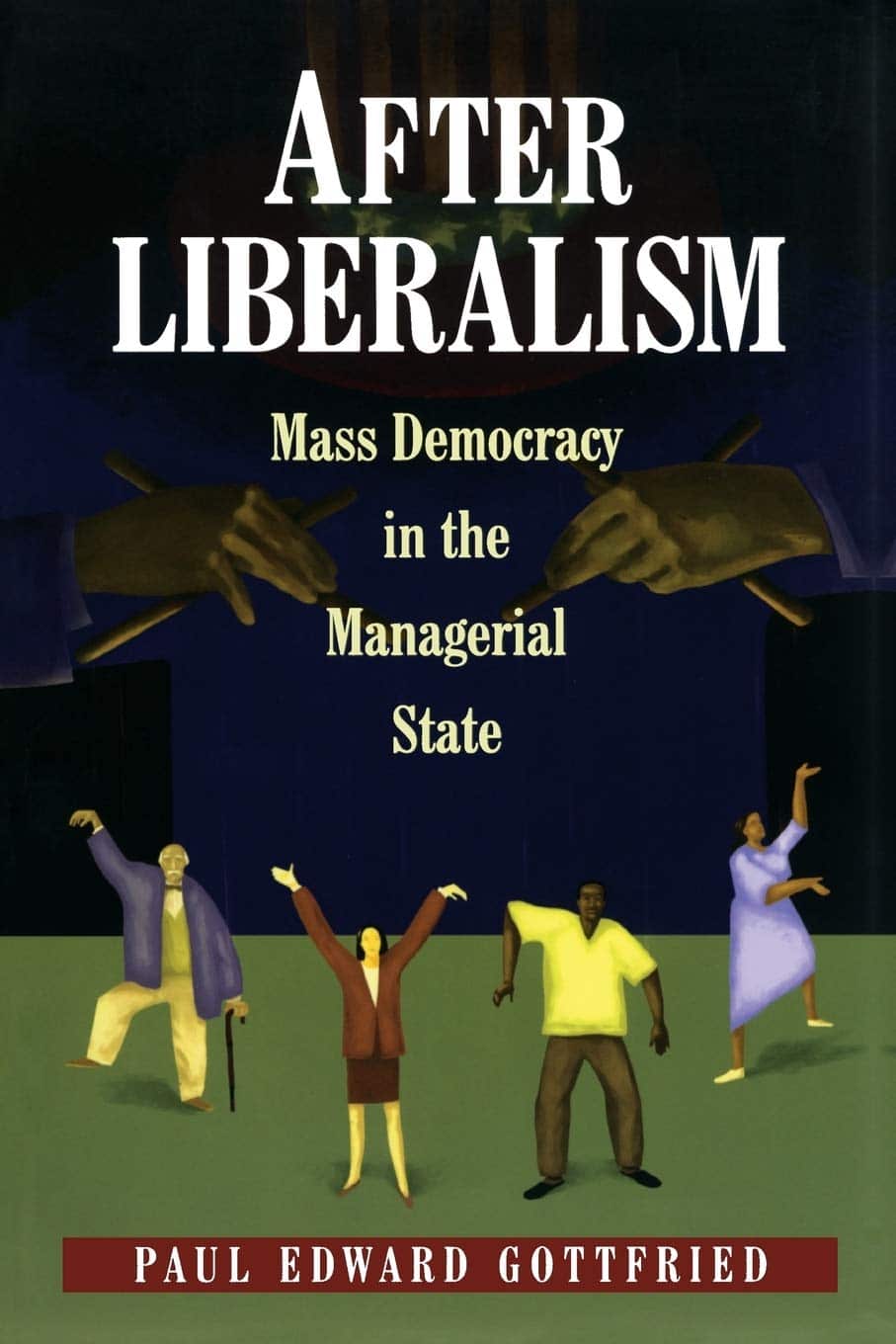
Some historians such as the paleoconservative scholar Paul Gottfried make the case that old school liberalism transitioned into a more progressive statism centered on social engineering and behavioral control starting in the 1900s. In his book, After Liberalism, Gottfried documents how the restrained liberalism of the 19th century gradually vanished, to be later replaced by its modern-day successor.
Has the definition of “liberal” changed over time?
One of the more compelling debates in American intellectual circles concerns classical liberalism vs modern liberalism.
In American parlance, the word liberal is used reflexively, often without much deep thought about its origin. It usually refers to individuals associated with the contemporary left and loosely connected to the Democratic Party. However, liberal did not always have that connotation in American politics.
To understand these changes, let’s take a stroll down memory lane to learn how its meaning has evolved over time.
Classical Liberalism vs. Modern Liberalism
Originally, liberalism was associated with a political philosophy of governance that protected individual rights, called for checks on government, encouraged economic freedom, and was centered around individualism.
In the present, we see liberalism generally associated with the modern-day political Left which is more focused on using the state to proactively promote egalitarianism and purge society of perceived blights such as racism, oppression, and patriarchal institutions.
The proactive role for the state to modify behavior would seem foreign to the liberals of yore, who generally believed in a restrained state. Crucial historical developments such as the Progressive Era, World War I, the Great Depression, and World War II forever changed American politics, and by extension, politics in the West.
One of the more profound changes was the way the word “liberal” would be used in political speech.
What Changed
Some historians such as the paleoconservative scholar Paul Gottfried make the case that old school liberalism transitioned into a more progressive statism centered on social engineering and behavioral control starting in the 1900s. In his book, After Liberalism, Gottfried documents how the restrained liberalism of the 19th century gradually vanished, to be later replaced by its modern-day successor.
Gottfried argued that “Liberalism is increasingly adrift. Having gone over to social planning earlier in the century, it had to jettison its nineteenth-century heritage in return for humanitarian and ‘scientific’ goals.” The rise of the Progressive Movement at the end of the 19th century, which came about in response to the perceived injustices of the Gilded Age, started to plant the seeds of 19th century liberalism’s destruction.
From Laissez-Faire Capitalism to Welfare Capitalism
Welfare capitalism was a reasonable compromise for those skeptical of both the market and totalitarian economic systems such as Communism. This contemporary political economy generally features a system of progressive taxation, national wage standards, state-run pension systems, and welfare programs for the poor.
On the behavioral front, liberal states in the past century frequently turned to anti-discrimination laws and administrative edicts to purge society of undesirable behavior such as racism, sexism, and homophobia. Top-down state activism was justified under the banner of promoting social justice.
How Progressivism Grew
Many progressive reformers started out locally, but this was only one step in their quest for power. Their vision was to make their way to the top and use the levers of state power to mold American society along scientific lines. Although Progressives had an elitist outlook, they saw mass democracy as one tool to overthrow the previous political order.
The Impact of War on Liberalism
World War I was a major catalyst for governments across the West to assume greater powers than previously imagined. It is often forgotten that a battery of commissions set up during this period inspired a number of New Deal era agencies. Progressives did not see war-time measures as temporary, but rather stepping stones for even larger interventions that would become permanent in times of peace.
Education as a Tool to Socialize the Masses
Progressives were busy on the education front as well. They recognized the power of public education as a tool to socialize the masses. So they did not waste any time to impose their beliefs on the malleable minds of America’s youth.
Educators such as Thomas Dewey were energetic about using public education to spread progressive liberal ideas and socialize the American public. Dewey originally championed progressivism, but grew tired of the term over time.
Gottfried observed that other ideological currents taking root in the early 1900s, compelled reformers like Dewey to describe their approach as “liberal” by default:
“When Dewey decided to characterize his proposed social reforms as ‘liberal,’ he had already tried out ‘progressive,’ ‘corporate,’ and ‘organic.’ The rise of fascism may have rendered rhetorically problematic the last two alternatives to “liberal.” And since there were competitors for ‘progressive’ associated with the reform wings of the two major national parties, Dewey and his confreres may have become ‘liberals’ faute de mieux.”
The Transformational Era of the New Deal
Once the New Deal rolled around, the word “liberal” took on a whole different meaning in American parlance. In Gottfried’s view, the rise of the managerial state — a technocratic state that occupies itself with modifying people’s behavior — during the Progressive Era and its subsequent consolidation during the interventionist period of the New Deal is what put an end to the liberal current of the 19th century.
The economist John Maynard Keynes played an integral role throughout the New Deal in normalizing government intervention in the economy. His public policy prescriptions of massive government spending and bureaucratic administration were a radical departure from the previous laissez-faire paradigm of divided powers, bourgeois morality, and a robust civil society to keep the state in check.
The Civil Rights Revolution’s Knockout Punch
The Great Society reforms of the 1960s further accelerated the ascent of modern-day liberalism after anti-discrimination laws and welfare became the norm. Once the 1960s ended, American liberalism became a force for social reconstruction that made the liberalism of the previous century look even quainter.
Gottfried contended that “Liberalism now survives as a series of social programs informed by a vague egalitarian spirit, and it maintains its power by pointing its finger accusingly at antiliberals.” The constant desire to reshape society is part and parcel of the modern-day liberal experiment.
What is Modern Liberalism
Modern-day liberalism mostly refers to the mass democratic philosophy that center-Left political parties across the West — from liberal internationalists to social democrats — have thoroughly embraced. The way one can define modern liberalism is by characterizing it as a system which features a mixed economy with an activist state that is involved in molding people’s behaviors.
Classical liberals believed in the protection of private property, free speech, and a robust civil society. Modern liberals were more in favor of using the state as a vehicle of promoting social change. They are by no means communists. Modern liberals still believe in private property and civil society outside of the state.
But for the modern-day liberal, these institutions could be exploited and co-opted to serve managerial elites’ ends. Modern liberals ultimately conceded that a functioning market was necessary for funding a welfare state.
What is Classical Liberalism
Figuring out the difference between classical liberalism and modern liberalism requires us to go back to the origins of liberalism itself. English philosopher John Locke is largely credited as the founder of classical liberalism and his example serves as a good starting point for any classical liberal vs modern liberal analysis.
His famous Two Treatises of Civil Government functioned as the definitive text for liberal governance in a time when Europe was largely marked by absolutist monarchies. Locke did not believe in the divine right of kings but was rather of the view that governments needed the consent of the governed in order to have legitimacy.
Locke’s emphasis on “pre-political” rights was revolutionary in that it placed the individual at the forefront of any political order. In addition, individuals could set up their own governments and disband them if they felt that they no longer protected their rights.
For Locke, the government’s only legitimate function was to protect life and property. His ideas would play integral roles during the Glorious Revolution and the American Revolution.
The American Revolution’s Liberal Origins
In the case of the American Revolution, a number of the signatories of the Declaration of Independence drew heavily from Locke. They used his ideology as a basis of rebelling against the British government, which they perceived as a government that usurped its legitimate functions and violated traditional English liberties.
America’s Liberal Experiment in Action
Subsequently, the founding generation drew from Lockean principles to codify a number of civil liberties and limited government functions in the U.S. constitution. These included a separation of powers between the Executive, Legislative, and Judicial branches and the protection of liberties such as the freedom of religion, free speech, freedom to peacefully assemble, freedom of religion, the right to bear arms, and due process.
The French’s Role in Influencing American Governance
The separation of powers was largely inspired by liberal thinkers such as the French political philosopher Baron de Montesquieu and his Enlightenment counterparts who championed a social contract of sorts between individuals and the state. Under this political order, the rule of law, equal rights among rulers and the ruled, and the ability for citizens to petition their government would be safeguarded.
How Classical Liberalism Provided the Intellectual Backbone for Capitalism
Classical liberalism wasn’t just confined to the political sphere. Economists such as Adam Smith took the logic of liberalism and applied it to economic policy. Smith became a firm believer in a capitalist economy that promoted free commerce between nations, as opposed to the prevailing mercantilist model that European preferred at the time.
Similar to Locke’s political works, Smith’s Wealth of Nations became one of the most influential pieces of economic literature in human history and put the field of economics on the map.
Classical Liberalism’s Peak in the 19th Century
By the mid-19th century, liberalism reached a turning point after the British Empire embraced global free trade through its repeal of the Corn Laws. From that point until World War I, Britain and most of the West enjoyed unprecedented economic prosperity, relative peace, and a gradual transition to constitutional democratic rule.
For many historians of liberalism, the Gilded Age or Belle Epoque (Beautiful Era) was the height of personal freedom in the West combined with a level of economic growth that was never seen before thanks to the Industrial Revolution.
Given these historical contrasts, it’s no surprise why many historians like to participate in the classical liberal vs modern liberal discussion. Upon deep inspection, there are clear differences in these ideological strands, which merit considerable analysis.
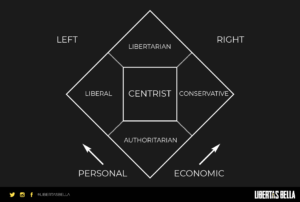
Classical Liberalism vs Modern Liberalism on the Nolan Chart
The Nolan chart was named after David Nolan, a respected activist who was heavily involved in the liberty movement. This chart has helped determine how Americans identify themselves on the political spectrum. It went beyond the typical liberalism vs. conservatism debates of the 1900s and added a twist by including criteria that was generally associated with libertarianism.
The chart is divided into four quadrants that list political viewpoints along two axes, which highlight economic and personal freedom.
The classical liberal respect for individual liberties and a restrained state has lived on in modern-day libertarianism. Most classical liberals would likely score in the lower part of the libertarian quadrant closer towards the centrist bloc.
Liberals in the present, on the other hand, would probably land more on the left hand progressive quadrant, with some sliding downwards towards statism. Their economic views put them well to the left of all free-market liberals.
That said, there are some progressives and contemporary liberals who share similar views with free-market liberals regarding civil liberties.
Liberalism’s Comeback
19th century liberal ideas have witnessed somewhat of a comeback but with a slightly more radical twist after World War II. Economists such as Friedrich A. Hayek and Milton Friedman helped supply the intellectual ammo that sparked a resurgence in liberal thought and the subsequent entrance of libertarianism in American politics.
The Differences Between Classical Liberals and Libertarians
Although there are considerable degrees of overlap between classical liberals and libertarians, the latter tend to be more radical in their views of the role the state plays in society and how much government intervention should be tolerated.
For many sects of libertarianism, the state should only be limited to the provision of defense, the court system, and law enforcement. The more anarchist wings of this movement tend to believe that the private sector and civil society can assume all competencies of the state.
Where Liberalism Stands Now
As much as some would like to deny it, the definition of words matter. They can have different meanings depending on the country, time, or place. In the rest of the Anglosphere, liberal is generally associated with the free-market Right.
The same is the case in Spanish-speaking countries. However, this has not been the case in the American context. Political movements tend to come and go throughout history.
The Percieved Triumph of Liberalism Against Communism
The 20th century largely saw the demise of 19th century liberalism and ushered in a completely different paradigm. The waning years of the Cold War witnessed the demise of Soviet-style totalitarianism and the perceived triumph of liberal democracy.
Political leaders such as Margaret Thatcher and Ronald Reagan provided the public policies and political leadership that allowed for market-based liberalism to thrive and set itself apart from central planning.
The New Liberal Consensus
By the 1990s, market-based economies were generally accepted by elites and became the order of the day. This became embodied in “neoliberalism”, a resurgence of economic liberalism in the form of lower tariffs, multilateral trade, less stringent migration, moves towards privatization of state enterprises, and slightly sleeker welfare states.
Neoliberal Dominance
In contrast to its distant 19th century ancestor, neoliberalism was not as pro-liberty and still maintained the managerial state and the concomitant social engineering measures that were established in the 1960s. Regardless, the ideological dominance of neoliberalism cannot be denied as most of the globe has embraced some form of market economy and has largely rejected Soviet-style central planning.
Although the New Deal saw a leftist shift on economics issues, “neoliberals” of the post-Cold War era started taking more market-based positions on multilateral free trade and immigration.
The Fragile Nature of the Post-Cold War Order
At a glance, post-Cold War liberals have appeared to engage in a form of “fusionism”, wherein they blend free-market positions on immigration and trade, with more left collectivist positions on education, healthcare, free speech, gender relations, and freedom of association.
The emergence of “wokism” has further perverted liberalism, as its collectivism has now become more racialized and has taken on an iconoclastic form now that basic gender relations, appreciation for a nation’s history, and free speech are all being called into question.
Many liberals have grudgingly moved along with this new trend of leftism. Indeed, a 90s neoliberal would likely shudder at the prospect of any member of the woke generation coming into power.
The Challenge of Resurrecting Liberal Ideas
Several public intellectuals such as American political commentator Dave Rubin and psychology professor Jordan Peterson have made attempts to resurrect old liberalism in a time when political discourse is threatened by cancel culture and anti-free speech forces on the Left.
Based on the new political challenges of the 21st century, classically liberal ideas have a tall task in front of them in trying to become relevant again in political movements on the Right. Nationalism and conservatism are the most influential movements on the Right at the moment and they have generally become less liberal over time.
Regardless of the changing political ecosystem, it would still benefit people to understand the classical liberalism vs. modern liberalism debate in order to make sense of our ever-changing political environment.



 MCViewPoint