MCViewPoint

Opinion from a Libertarian ViewPoint

Posts Tagged ‘Property Rights’

A Double Whammy – LewRockwell

Posted by M. C. on July 6, 2020

https://www.lewrockwell.com/2020/07/laurence-m-vance/a-double-whammy/

By

“Now while Paul waited for them at Athens, his spirit was stirred in him, when he saw the city wholly given to idolatry” ~ Acts 17:16

Many Christians recently received a double whammy of blasphemy and idolatry because the Fourth of July fell on a Saturday this year.

Most churches—and especially conservative, evangelical churches—usually have some kind of a patriotic service on the Sunday before the Fourth of July. If you have the misfortune of attending, there you will see the church building and the grounds around the church decorated with American flags, hear special prayers for the troops and government officials, see military personnel wearing their uniforms to church, recite the Pledge of Allegiance, see veterans recognized, read the church bulletin with an American flag on the cover, see men wearing cross and flag lapel pins, and sing hymns of worship to the state.

What happened this year is that some churches moved their patriotic services to Sunday July fifth since that is only one day removed from the fourth. But not being content with just one Sunday of blasphemy and idolatry, some churches also had in addition a mini patriotic service on the Sunday before the Fourth of July, hence the double whammy.

This may have consisted of just one hymn of worship to the state to open the service or the choir singing just a medley of patriotic songs rather than the whole service being devoted to singing hymns of worship to the state. The extra American flags may have been put up already.

What ended up happening in some cases is that the church didn’t announce that its patriotic service was being moved. Therefore, Christians who didn’t want to engage in corporate worship of the state who stayed home on the Sunday before the Fourth of July like they normally do were shocked to see idolatry and blasphemy on full display on July fifth when they weren’t expecting it. Their double whammy was different. They missed what probably would have been a normal church service and then had to unexpectedly sit through a patriotic service. Unless, of course, they got up and went back home or did something more spiritual like go to a park or the beach.

If the Apostle Paul were here today, he would see most of the churches wholly given to idolatry; that is, if they were open.

  Some churches are still closed because they have the fear of the coronavirus instead of the fear of the Lord. Many churches that are open are what I call CDC churches because they consider all of the CDC guidelines to be the gospel truth: mask wearing, social distancing, etc.

But even in churches that no longer do these things and perhaps even never did any of these things, blasphemy and idolatry was still on full display during their patriotic services.

What makes patriotic services worse this year is that even though we are living through the greatest power grab, the greatest violation of civil liberties, and the greatest destruction of property rights by government at all levels (federal, state, county, city) in all of American history, most churches are still singing hymns of worship to the state and talking about how free America is while our freedoms are disappearing right before our eyes.

See this, this and this.

Be seeing you


Posted in Uncategorized | Tagged: , , , , | Leave a Comment »

Eminent Domain: Are Holdouts Really a Problem? | Mises Wire

Posted by M. C. on March 30, 2020

Before I respond to this, one point of clarification is essential. From a Rothbardian perspective, the whole issue dissolves at once. If you have a right to certain property, then it can’t be taken away from you and that is that. Rights cannot be taken away from you because total wealth would go up if they were. Readers won’t be surprised that this is my own view, but here I’m considering the argument just on its own terms.

https://mises.org/wire/eminent-domain-are-holdouts-really-problem?utm_source=Mises+Institute+Subscriptions&utm_campaign=57a3e07dc6-EMAIL_CAMPAIGN_9_21_2018_9_59_COPY_01&utm_medium=email&utm_term=0_8b52b2e1c0-57a3e07dc6-228343965

Eminent domain gives the government the power to take over private property for public use. A popular argument that this interference with private property is needed goes like this: We can’t measure subjective utility, but we can take increases in wealth as a rough proxy for increases in utility. (This assumption is mistaken, but I won’t get into that here.) Suppose, on this assumption, that some public project will add a great deal of wealth to the economy. Unfortunately, someone owns a small parcel of land necessary to get the project underway. Often, a little old lady who refuses to sell her house, preventing a road from being built, is given as an example of the problem.

You might be inclined to dismiss this argument immediately. Wouldn’t it be unfair to the old lady to take away her house, just so total wealth goes up? But supporters of the argument have an answer. They say, “Can’t we give the old lady enough money so that she is as well off as she was before? Then, the economy is better off and she is no worse off.”

I have never found this argument persuasive. I think it suffers from a crucial flaw. Before explaining what that flaw is, let’s look at a statement of the argument by the distinguished classical liberal legal scholar Richard Epstein. In his book Simple Rules for a Complex World (Harvard, 1995), he says: “Often the government needs to obtain material resources from individuals in order to supply services to the public at large. . . . Holdout and coordination problems preclude that consensual solution for certain key assets, such as specific parcels of land needed for the construction of a fort or a public road. This problem is best met by government taking with payment of just compensation. Ideally, the individual citizen is left indifferent to the loss.”

What is the crucial flaw in the argument? You might at first think that it is the failure to take account of the non-monetary value of her house to the old lady. What if has great sentimental value to her; maybe it is the house she has lived in all her life. Or what if the property taken is a religious shrine? To offer compensation based only on the real estate value seems unfair.

This is an excellent point, but it isn’t the one I want to concentrate on here. The argument is still flawed, even if you disregard this type of value. Even if the owner attaches no sentimental or religious value to her house, but views the takeover in a strictly dollars-and-cents way, there is a problem that involves the compensation that is offered.

The problem is this: When it is said that the owner has to be made as well off as she was before, something important is being disregarded. The property is now much more valuable than it was before the project to build a bridge entered the scene. By hypothesis, the bridge adds immensely to the wealth of the economy. If the government had to buy the land from the owner in order to build the road, it would have to offer much more than the value of the property, leaving the bridge out of account. In brief, the owner could “holdout” in order to capture a substantial part of the economic gain from the project.

Supporters of eminent domain have an obvious answer to this point. Isn’t the owner taking unfair advantage by holding out? Isn’t some sort of action needed to prevent the owner from exploiting the situation?

Before I respond to this, one point of clarification is essential. From a Rothbardian perspective, the whole issue dissolves at once. If you have a right to certain property, then it can’t be taken away from you and that is that. Rights cannot be taken away from you because total wealth would go up if they were. Readers won’t be surprised that this is my own view, but here I’m considering the argument just on its own terms.

Those who don’t accept absolute property rights may say the case is that that of the person who demands from a victim of thirst in the desert a million dollar fee for a drink of water. Isn’t someone who does this taking advantage of the victim’s misfortune in a morally unacceptable way? (Again, I am not questioning whether he has a right to act like this.)

But the holdout case isn’t like this example. The owner is engaging in strategic bargaining. She is not taking advantage of anyone’s misfortune, other than the “misfortune” that those who would economically benefit from the bridge will have to pay more money and will end up with less of a net gain.

But suppose that you disagree with me about this. What if you think that it would be unfair for the owner to capture nearly all the economic gain from the bridge? It does not follow that she may be deprived of any gain at all. Why should all the profit from the bridge go to those who initiate the project and none to the owner? Isn’t she entitled to something more than being put back to her previous level of well-being?

Practically no one finds my view persuasive, but, rightly or wrongly, that is usually not enough to get me to shut up. Whether it should in this instance I’ll leave to my readers to judge.

Be seeing you


Posted in Uncategorized | Tagged: , , , | Leave a Comment »

Free Expression and Property Rights – LewRockwell

Posted by M. C. on February 18, 2020

But it’s not just the wearing of a “Hail Satan” shirt that I can regulate in my home. I find almost as offensive the wearing of a “Bernie 2020” shirt. If one of my invited guests shows up wearing such a shirt, I have the same options. Why, because it is my property. And because it is my property, if I demand that all of my guests wear or not wear red shirts, Trump hats, or LeBron jerseys, then that is my right.

The case of the woman on the airplane with the “Hail Satan” shirt has nothing to do with free expression and everything to do with property rights.

https://www.lewrockwell.com/2020/02/laurence-m-vance/free-expression-and-property-rights/

By

“Freedom of expression is the matrix, the indispensable condition, of nearly every other form of freedom.” ~ U.S. Supreme Court Justice Benjamin N. Cardozo in Palko v. Connecticut (1937)

Is freedom of expression absolute?

In the case of Minnesota Voters Alliance v. Mansky (2018), the U.S. Supreme Court held that a Minnesota statute prohibiting individuals from wearing political apparel at a polling place violated the First Amendment.

An airplane is not a polling place.

Near the end of last year, American Airlines issued an apology to a woman after flight attendants objected to her “Hail Satan” shirt that she wore on the plane.

Back in October, Swati Runi Goyal of Key West was on board an American Airlines flight from Florida to Nevada when a crew member told her to change her shirt or leave the plane because the flight crew found her shirt to be “offensive.” According to a page on the American Airlines website titled “conditions of carriage,” under “passenger responsibilities,” passengers are required to, among other things:

  • Behave appropriately and respectfully with other passengers on board
  • Dress appropriately; bare feet or offensive clothing aren’t allowed

Passengers who fail to comply by being “uncooperative or show the potential to be uncooperative on board” may not be allowed to fly.

Goyal maintains that “she’s worn the T-shirt many times in the past without incident, including on airplanes.”

Although Goyal claims to be an atheist, she is a member of the Satanic Temple—an organization that’s “become well-known for its activism on issues such as separation of church and state, free speech, and religious freedom.” “It’s an ironic shirt,” she said. “People usually laugh at it, or they give me a thumbs-up because they understand the meaning behind it.”

The flight went on to Nevada as scheduled after the woman put on one of her husband’s shirts over her “Hail Satan” shirt. Goyal said that she was “humiliated” by the situation and contacted American Airlines after her flight to file a complaint. Only after she voiced her displeasure on Twitter did American Airlines apologize.

As a Christian, I find the “Hail Satan” shirt offensive. But since I recognize that I have no right to not be offended, what are my options?

If I see someone wearing a “Hail Satan” shirt out in public and don’t want to confront him, I can ignore him and just keep walking or I can go home and pray for him. If I see someone wearing a “Hail Satan” shirt out in public and want to confront him, I can stop and tell him that his shirt offends me and ask him not to wear it or I can tell him why I think we should hail Jesus instead of Satan. Those are my options. Forcing him to remove the shirt or seeking the government to force him to remove the shirt are not options.

If I see someone wearing a “Hail Satan” shirt that I have invited into my home, then I have other options. Why? Because it is my property. Now I can tell him to change his shirt or leave. Now I can preach to him, yell at him, insult him, or seek to embarrass him in front of my other guests for as long as he is willing to listen. He is, after all, free to leave on his own.

But it’s not just the wearing of a “Hail Satan” shirt that I can regulate in my home. I find almost as offensive the wearing of a “Bernie 2020” shirt. If one of my invited guests shows up wearing such a shirt, I have the same options. Why, because it is my property. And because it is my property, if I demand that all of my guests wear or not wear red shirts, Trump hats, or LeBron jerseys, then that is my right.

It is no different when it comes to American Airlines. Although it may be a dumb thing to do from a business perspective, if American Airlines wants to require all passengers to wear formal attire or prohibit all passengers from wearing Delta shirts, then the company should have the right to do so.

The case of the woman on the airplane with the “Hail Satan” shirt has nothing to do with free expression and everything to do with property rights.

Be seeing you

St. Murphy: We're going to make a difference.


Posted in Uncategorized | Tagged: , , , | 1 Comment »

The Biggest Danger of Uncontrolled Immigration – LewRockwell

Posted by M. C. on July 16, 2019

https://www.lewrockwell.com/2019/07/michael-s-rozeff/the-biggest-danger-of-uncontrolled-immigration/

By

The extent of our economic freedom and the defense of our property rights are the key factors in our accumulation of wealth (goods and services) and a rise in our standard of living via the division of labor. But economic freedom and property rights depend critically on our laws and institutions, that is, the kind of government we have.

There is no question that we’ve moved away from the good laws and institutions that promote capitalism and embarked instead on a course of bad laws and institutions that promote socialism. This is why over a period of decades our living standards have not grown as much as they could have, and why some large portions of Americans can’t seem to get ahead, drop out of the labor force, live on welfare or even live on the streets.

Immigration is good for a country under two conditions. First, the country has the good laws and institutions that protect economic freedom and property rights. Second, the immigrants assimilate to the good laws and do not change them for the worse.

The socialist aspects of our current system are its bad laws. Immigrants don’t do Americans any good if they burden those parts of our system that offer “free” or subsidized goods and services. We cannot have a welfare state and allow unlimited immigration. Too many immigrants will opt for the free benefits. The wealth transfer is a tax upon working taxpayers. This amounts to greater socialism and economic retardation.

In order to benefit from immigration, as we have in our pre-1930s past when the welfare state and socialist regulatory laws were minimal, we need to get rid of these bad laws and institutions. This being unlikely at present, immigration becomes a worse and worse problem. It must be stopped, but stopping it requires a wall and police state measures. As George Reisman notes, the welfare state becomes a police state with unlimited immigration.

Then there is the second condition, which is that immigrants assimilate to our laws and institutions if they are the good laws supportive of and consistent with capitalism, private property rights and economic freedom. If they assimilate to what we have in our country today, this means adopting and supporting a system that has large socialist elements. This is definitely undesirable in terms of promoting the growth of wealth. We do not want to teach immigrants that American prosperity owes to our panoply of socialist interventions.

Worse yet, there are conflicting sentiments among immigrants to contend with. Some or many come because they want to work, educate themselves and get ahead in ways they couldn’t where they came from. But some or many also bring with them sentiments and political attitudes of their mother countries that they’ve imbibed and do not realize are contradictory to economic freedom and private property rights. Once within the bosom of our system with its socialist elements, they are likely to fall right in line with them, thinking they are being true Americans in supporting laws like Obamacare, Medicare for All, or other socialist laws and administrations…

Although the Republican party has been no stranger to socialist legislation, such as extending Medicare to prescription benefits, the Democrats are worse. They typically propose the socialist extensions and campaign for them for years on end until they become law.

The biggest danger of uncontrolled or unlimited immigration is that it shifts American politics even more greatly toward socialism.

Be seeing you

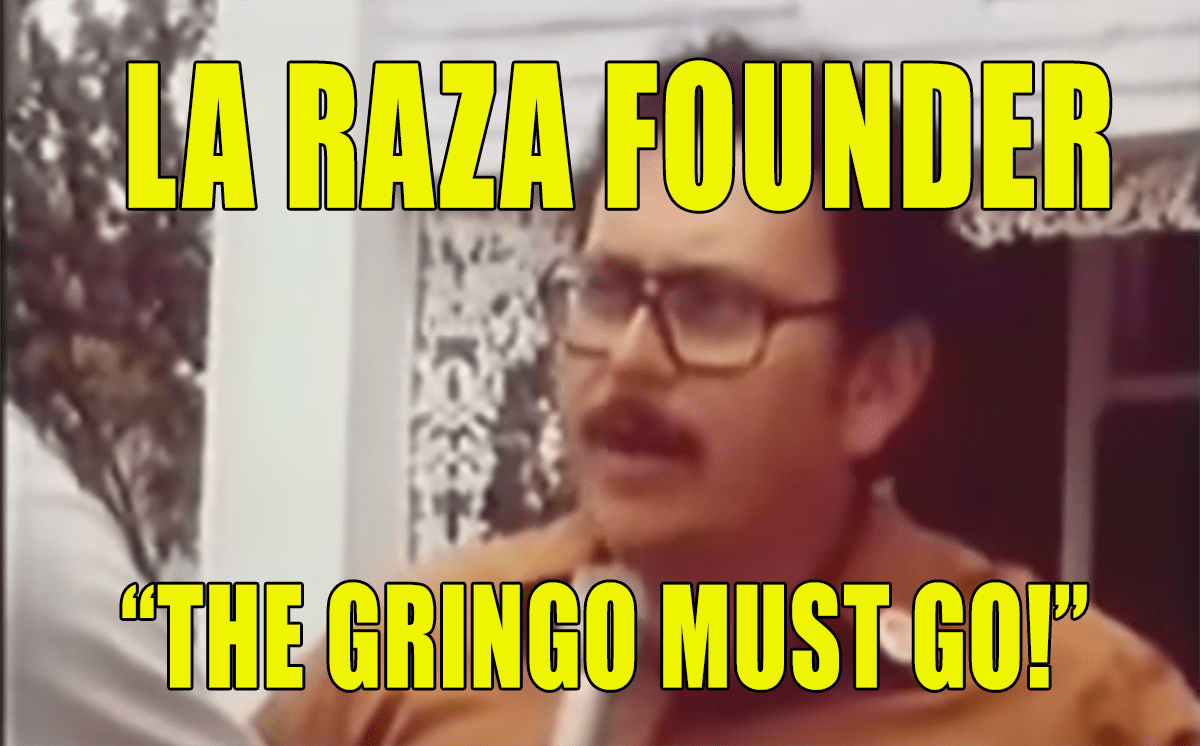
La-Raza-Founder (1)

…from the USA


Posted in Uncategorized | Tagged: , , , , | Leave a Comment »

What Robert Reich Failed to Say about Marijuana Legalization – The Future of Freedom Foundation

Posted by M. C. on June 22, 2019

https://www.fff.org/explore-freedom/article/what-robert-reich-failed-to-say-about-marijuana-legalization/

by

…But even though Reich is a liberal in every sense of the word, conservatives should be paying attention to what he says about marijuana legalization. And so should liberals, since, after all, drug freedom is not a tenet of liberalism.

A recent post on Reich’s blog titled “Why We Must Legalize Marijuana” also appeared at Salon. He begins,

The federal prohibition on marijuana has been a disaster. For decades, millions of Americans have been locked up and billions of dollars have been wasted. It’s also deepened racial and economic inequality.

We must end this nonsensical prohibition.

The facts are staggering. In 2017, more Americans were arrested for marijuana possession than for murder, rape, aggravated assault, and robbery combined. That’s one marijuana arrest every minute.

The costs associated with enforcing this ban — including arrests, court costs, and incarceration — reach nearly $14 billion a year.

Prohibition also hurts the economy in terms of lost wages. And Americans with criminal records have a harder time finding a job and getting the education they need.

That marijuana prohibition is a colossal waste of money with costs that greatly exceed any of its supposed benefits is reason enough to legalize marijuana. But Reich doesn’t stop there. He also maintains that “legalizing, taxing, and regulating” marijuana “is good for the economy and creates jobs.” He believes that marijuana should be taxed by state and local governments the way cigarettes and alcohol are. Reich points to states such as Colorado and Washington that tax and regulate marijuana and generate “millions of dollars for health care, education, and other public investments.” As a libertarian, I certainly oppose taxes and regulations on marijuana, just as I oppose taxes and regulations on cigarettes and alcohol. But, like it or not, the fact remains that every state that has legalized marijuana has also taxed and regulated it — and reaped a windfall.

But Reich isn’t finished yet. Marijuana legalization is “more than an economic issue” because “it’s also a matter of racial justice and equality.” Reich recounts the racist origins of the federal prohibition on marijuana and asserts that “black and brown Americans are still much more likely to be arrested for marijuana than white Americans, despite using marijuana at similar rates.” He also points out that “more states are taking action to reform their laws and move toward legalization” and “support for marijuana legalization has surged in recent years, with two-thirds of Americans now in favor of it,” although I take issue with his statement that “even a majority of Republicans are in support.” “It’s time to legalize marijuana,” concludes Reich…

So Reich is certainly correct: It’s time to legalize marijuana.

Yet, there are some extremely important things that Robert Reich failed to say about marijuana legalization. And they are, in fact, much more important than anything he says in his article.

Reich has a law degree. He should know that the Constitution says absolutely nothing about marijuana or any other drug. He should know that the Constitution gives no authority to the federal government to have a Controlled Substances Act, a Drug Enforcement Administration (DEA), a drug czar, an Office of National Drug Control Policy (ONDCP), or a Domestic Cannabis Eradication/Suppression Program. He should know that the federal government has not only no authority under the Constitution to prohibit marijuana possession, but also that it has no authority whatsoever to have anything to do with marijuana.

So why didn’t Reich say so? They are things that any liberal, progressive, socialist, or Democrat could say. And they are also things that any conservative or Republican could say, and especially those who claim to revere the Constitution and say that the Constitution should be followed.

But that’s not all that Reich failed to say about marijuana legalization.

He failed to say that it is not the proper role of government to be concerned with the medical or recreational habits of Americans.

He failed to say that it is not the business of government bureaucrats to interfere with what Americans want to put in their mouths, noses, veins, or lungs.

He failed to say that it is an illegitimate purpose of government to regulate what Americans desire to eat, drink, smoke, inhale, or inject.

He failed to say that people should be able to do anything that’s peaceful as long as they don’t infringe the personal or property rights of others and are responsible for the consequences of their actions.

He failed to say that every crime should have a tangible and identifiable victim who has suffered measurable harm to his person or measurable damages to his property.

He failed to say that no American should ever be arrested, fined, or imprisoned for possessing a plant his government doesn’t approve of.

He failed to say that the government’s war on marijuana is a war on personal freedom, private property, personal responsibility, individual liberty, personal and financial privacy, and the free market.

But at least he said what he did about marijuana legalization. That is more than most conservatives would ever say.

Be seeing you

Despite Liberalizing Marijuana Laws, the War on Drugs ...


Posted in Uncategorized | Tagged: , , , , | Leave a Comment »

Background Checks Violate Property Rights – The Future of Freedom Foundation

Posted by M. C. on June 19, 2019

If passed, this would set a dangerous precedent, for if government has the authority to impose a background check for guns, it can impose a background check to purchase, sell, transfer, or loan privately owned cars, cell phones, homes, or anything else.

Things you don’t think about until it is too late.

https://www.fff.org/explore-freedom/article/background-checks-violate-property-rights/

by

…The Democratic Party-controlled U.S. House of Representatives has introduced a bill to force everyone to undergo a background check to sell, purchase, transfer, loan, or otherwise exchange firearms, which would require anyone wishing to do so to find a dealer and pay him to do the paperwork involved. This is an added and unnecessary expense especially for people living in rural areas where guns are borrowed, sold, or traded routinely, and where there may not be a licensed dealer within a reasonable drive. Such people would find it difficult, if not impossible, to comply.

More important, Congress has no jurisdiction over the private property of individuals. Therefore, the requirements of that license cannot apply to them. Since the acquisition and disposal of property is a fundamental right, no one needs government permission to acquire or dispose of his legally acquired property. As Armen A. Alchian (1914–2013), professor of economics at the UCLA and who is often called “the Armenian Adam Smith,” pointed out in his article “Property Rights”: “A property right is the exclusive authority to determine how a resource is used…. A private property right includes the right to delegate, rent, or sell any portion of the rights by exchange or gift at whatever price the owner determines…. Private property rights are the rights of humans to use specified goods and to exchange them.”

If passed, this would set a dangerous precedent, for if government has the authority to impose a background check for guns, it can impose a background check to purchase, sell, transfer, or loan privately owned cars, cell phones, homes, or anything else. Our system of justice operates on precedent. This is why the question posed to all federal judicial appointees during their confirmation hearings is whether they will respect and uphold precedent. Once a precedent is set, it is easy to expand the coverage of a law or pass similar legislation based on that precedent. An example is Medicare. It started as medical coverage for the elderly. Now try arguing against Medicare for all. The precedent was set by the first Medicare law. If the federal government has the authority to pass Medicare for some, it has authority to pass Medicare for all. The same is true of gun laws. If government can dictate under what conditions you may acquire and dispose of firearms, it can later use the same precedent to tell you how to acquire and dispose of any other piece of personal property…

Be seeing you

Posted in Uncategorized | Tagged: , | Leave a Comment »

Want More Investment and Entrepreneurship? Protect Private Property | Mises Wire

Posted by M. C. on June 4, 2019

https://mises.org/wire/want-more-investment-and-entrepreneurship-protect-private-property

The principles of economic thought tells us that investments would flow to places with less capital accumulation, the reason being is that there would be less competition, thus a higher rate of return on investments. Indeed, as Adam Smith noted in the Wealth of Nations, capital accumulation would be the inevitable hindrance to economic growth.

However, this not as we have it in the real world. Many countries, especially those in the Global South, have very little capital, but yet aren’t flooded with investments. The reason for this is simple: there is no assurance that their property and investment would be protected by the law.

Picture this, why would someone invest in a piece of property, plot of land, or share in a business when there is a high probability that a random bandit, even worse, the government, could steal it at any time without assurance of compensation? This is certainly the norm in many authoritarian countries. For example, a report from the Business Anti-corruption Portal described the police in Nigeria “as the most corrupt institution in the country”, as they often impede on businesses and act above the law. If a country wants to attract foreign direct and portfolio investments, there ought to be a framework that holds people accountable to the arbitrary use of force: this is the rule of law.

This also goes hand-in-hand with property rights since the rule of law is the necessary condition under which property rights can be successfully employed. Indeed, as James Robinson points out in his essay, “Property Rights and African Poverty,” the lack of property rights has been the number one obstacle to economic prosperity in Sub-Saharan Africa. This is contrary to most prevalent views which blame the legacies of colonization and also the geographical location of sub-Saharan Africa to its economic shortcomings.

In addition, most of these countries are filled with an abundance of natural resources — for or example the diamonds in Congo, gold in Ghana, and oil in Nigeria — but yet are not flooded with investments. Some commentators have called this phenomenon the “resource curse.” This occurs when governments focus solely on natural resources as a means to get revenue while ignoring other parts of the economy, consequently making the country worse off as a whole.

Although there is some truth in this statement, the fact that these countries don’t possess or uphold a framework of laws which protect persons and property from arbitrary government interference is still the key explanation to this problem. As Thomas Sowell puts it brilliantly in his book, Basic Economics, “ Countries whose governments are ineffectual, arbitrary, or thoroughly corrupt can remain poor despite the abundance of natural resources, because neither foreign nor domestic entrepreneurs want to risk the kinds of large investments which are required to develop natural resources into finished products that raise the general standard of living.”

On the other hand, we could take a country, Hong Kong, which does not have an abundance of natural resources, but has been flooded with capital in recent times. Furthermore, Hong Kong has been continuously ranked as one of the freest places in terms economic freedom by think-tanks such the Fraser Institute and the Heritage Foundation

It is fair to say that concepts like the rule of law and property rights are not innate to any civilization; indeed, countries like the United States and Britain, which we could say have civil institutions, underwent violent revolutions in order to put these principles in place. This is not to say that current less-economically developed countries need to follow a similar path. Needless to say, there is a need to change the intellectual climate in these nations. This could be done by being less dependent on foreign aid, imposing checks and balances on politicians, and implementing free-market economic policies such as free trade and lower taxes.

Be seeing you

Private Property Movie Review (1960) | Roger Ebert


Posted in Uncategorized | Tagged: , , , | Leave a Comment »

We’ll Need Property Rights in a World of Gene-Edited Humans | Mises Wire

Posted by M. C. on December 20, 2018

One of the pillars of Libertarianism is you own yourself.

https://mises.org/wire/well-need-property-rights-world-gene-edited-humans

…Of course, these are important issues, and luckily for us, we already have the framework of private property rights and individual sovereignty that would work just fine. If we are unable to start from a premise that each individual owns his or her own body, that seems like a major problem to me. If each individual does not own his own body, who does? The issue of children also raises questions that have been dealt with for thousands of years — babies need constant care, children need guidance as they are growing up, and at some point, they become adults, with their own natural rights and bodily ownership. All of this has been covered before by many, including Murray Rothbard (in chapter 7) and Josiah Warren. And, it should be stated that, in this particular case, parental consent was apparently obtained before any of this happened… Read the rest of this entry »

Posted in Uncategorized | Tagged: , , | Leave a Comment »