MCViewPoint

Opinion from a Libertarian ViewPoint

Posts Tagged ‘religion’

TGIF: Democracy as Religion

Posted by M. C. on August 7, 2024

First, classical liberalism, or what we moderns call libertarianism, is not mainly about believing; it’s about respecting each individual’s person, property, and liberty, and particularly about the government’s respecting those things. It’s also about understanding that freedom leads to social cooperation (the division of labor and trade), peace, and prosperity. Economic theory and history show it.

Second, it’s democracy, not freedom, that requires faith in the absence of evidence. It’s a religion that holds that If we believe hard enough, tens of millions of us going to the temple polls to vote will make the right decisions. No one explains why it should work out that way. And it doesn’t. It’s a faith in magic, and magic is not real.

https://libertarianinstitute.org/articles/tgif-democracy-as-religion/

by Sheldon Richman

ballot

During a conversation with someone who loves representative democracy but hates America’s current political situation, I pointed out a problem with his view. The current situation, I said, is a product of representative democracy. So you can’t have the system without the lamented consequences.

Why is that? People like free benefits for themselves and society, and politicians prosper by promising and delivering apparently free benefits to enough voters. Individuals and interest groups see the government as a bazaar open for business 24/7.

The problem, of course, is that there are no free benefits. The government, which does not produce anything, can’t give away anything it hasn’t first taken from someone else. The system’s inherent perverse incentives deliver big spending, high taxes, and growing budget deficits (when raising taxes is unfeasible) financed through massive borrowing. This process eventually leads to central-bank monetary inflation, rising prices, and shrinking purchasing power. The transfer of purchasing power from regular people to politicians is a form of taxation.

I proposed to my interlocutor that a better way to go would be to move the government’s few legitimate functions to the free, competitive market, which aligns incentives more consistently with individual rights and general prosperity. The government’s illegitimate functions should be abolished.

He mocked my position by holding his hand in the praying position and looking toward heaven as he said, “If only we all believe.” I responded that it’s no article of faith that freedom and free markets—classical liberalism—have eradicated most extreme poverty and created unmatched living standards worldwide. You can easily look up the graphs that show this astounding progress. The still-lagging areas lack freedom.

For roughly 200,000 years human beings lived short lives with virtually no material progress. Then a few hundred years ago things changed dramatically thanks to liberalism, the Enlightenment, and the Industrial Revolution. That was no coincidence, and understanding what economic historian Deirdre McCloskey calls the “Great Enrichment” requires no faith.

I could have said much more to my interlocutor, and I’ll say it here.

See the rest here

Be seeing you

Posted in Uncategorized | Tagged: , , , | Leave a Comment »

Family Flourishing and State Denigration | Mises Wire

Posted by M. C. on August 16, 2023

Given the effects of the state on the family, it is highly unlikely that state intervention can fix a dying family. Churches and religion, civic organizations, mutual aid, and charity all must be turned to, not the state, if family flourishing is the goal. An active, managing state does not mean a thriving family. To help families grow and live happier lives, the role of the state must be drastically cut back, allowing families to take back the vital role that they serve.

https://mises.org/wire/family-flourishing-and-state-denigration

Samuel Peterson

There is little doubt that the institution of the family in the West is in crisis. Birth rates have been declining in the USA, and most Western countries have fertility rates below replacement level. Abortions number over five hundred thousand per year, most of which are concentrated among low-income individuals. Famously, around half of all marriages in the USA end in divorce. Rather than ignoring these problems, it is important for all on the Right (conservatives, traditionalists, libertarians, etc.) to address these issues. But what means should be employed to combat a declining family institution?

Some individuals, especially national conservatives, have called for state intervention to solve these issues. Their proposals range from redistribution and welfare to banning bachelor’s degree requirements as hiring criteria. Rather than seeing the state as an obstacle to family flourishing, national conservatives tend to look to the state as a means of addressing family issues. However, the state is often the very creator of family denigration.

Social Security and Medicare

One policy that harms the family is state social insurance. Medicare and Social Security make up approximately one-third of the federal budget, costing around $2 trillion per year. This money is directly taken out of working people’s hands, making it harder to feed, clothe, and house families. State-sponsored social insurance policies create disincentives for individuals to form families. Because of the increased costs, individuals are pushed out of having an additional child, lowering birth rates.

Social insurance also replaces the family with the state in regard to the care of the elderly. Due to Medicare and Social Security, children do not have to aid their elderly parents. This yet again affects fertility. To put it bluntly, why would I have a child who is going to make me sacrifice decades of my own time and cost me hundreds of thousands of dollars only for them to not take care of me in my old age?

A similar case of the state subverting the role of families came with the advent of the welfare state. Historian David Beito writes, “A conservative estimate is that one-third of adult American males belonged to [mutual aid] lodges in 1910.” However, by the 1930s these societies started to fall out of favor due to the rise of the welfare state and American tax code. When it comes to the family, it is unlikely that state welfare programs will fix the problem of a falling birth rate and looser familial bonds. Rather, it is likely that social insurance proposals will subvert the family in the same way that mutual aid societies were subverted.

Trade and Protectionism

See the rest here

Be seeing you

Posted in Uncategorized | Tagged: , , , , , | Leave a Comment »

Separation Is The Largest Religion In The World

Posted by M. C. on November 11, 2022

An interesting side trip.

And we’ll either make that jump or we won’t. We’ll either renounce the religion of separation or we’ll remain its indoctrinated faithful. We’ll either wake up from the dream of separation or we’ll eventually sleepwalk off the cliff of climate collapse or nuclear armageddon. Every species eventually hits a juncture where it either adapts to changing circumstances or goes extinct, and this is ours. 

Been a heck of a ride either way.

https://caitlinjohnstone.substack.com/p/separation-is-the-largest-religion?r=iw8dv&utm_medium=android

The largest religion on earth is not Christianity or Islam: it’s the widespread, faith-based belief system which holds that humans are separate from each other and from the world. 

Humanity is becoming less religious as awareness expands that religions are nothing but a collection of unhelpful and unevidenced belief systems. In the same way, and for the same reason, humanity may one day do the same with the belief systems about self and separateness to which nearly everyone on earth is presently a devout adherent.

Upon close inspection there is nothing which tells us that self and separateness are real in any meaningful way. The human organism is inextricably interwoven with its environment, from which it must continually draw sustenance or perish. Science tells us that when you zoom in on the smallest and most fundamental components of matter it becomes clear that life isn’t happening at all in the way our mental stories describe it, and that what we normally think of as “objects” and separate “things” are more like loose relationships of particles and energy which have no clearly definable boundaries between where they end and the rest of the world begins. Neurology can’t point to any part of the human brain where a separate self could be said to reside.

Even in our own actual experience, self and separation are nowhere to be found. We talk about “me” and “mine”, “them” and “theirs”, and all of our thoughts revolve around this little character called “I”, but if we set aside all underlying assumptions and really investigate for ourselves it turns out that those beliefs rest upon a lot of unexamined premises. 

When anyone says “I” and “me” they are referring to the perceiving subject, in your case the one who is reading these words, hearing the sounds that are currently being heard, thinking the thoughts that are currently being thought, and feeling the feelings that are currently being felt. But if we really drill down and look for ourselves for any solid, tangible thing that could be called a self, we come up empty handed.

My body isn’t me because I am the subject who is perceiving it. My thoughts aren’t me because I am the subject who is perceiving them. The same is true of my sense impressions, my emotions, the subtle constellation of clenched bodily energies and personality essences that really feels like “me”, and even the sense of being itself. Everything that arises in awareness is being perceived by me, but they are not me. I am something else entirely. I — the real I — am something mysterious. Something which cannot be perceived or experienced, and as such can’t rightly be called a thing at all.

What I am — what you are — has no discernible boundaries to be found. It can’t be said to be separate or separable from anything in experience, but is at the same time far beyond and prior to them. It is boundless, timeless, inconceivable, imperceptible, and inseparable. 

Once this is clearly recognized, so much of the anguish and discomfort of human life falls away, because the organism isn’t trying to be a “me” anymore. Isn’t role-playing as this separate character moving through spacetime who is responsible for what happens in that character’s life story. And from there a kind of graceful harmoniousness comes in over the way that organism moves in the world. The kind of graceful harmoniousness which, if it occurred in more humans, would end humanity’s self-destructive behaviors on this planet.

See the rest here

Be seeing you

Posted in Uncategorized | Tagged: , | Leave a Comment »

Why Wokeism Is A Religion | ZeroHedge

Posted by M. C. on November 16, 2021

While reading McWhorter’s new book, I was surprised to discover many similarities between woke racism and apocalyptic environmentalism, which in Apocalypse Never I describe as a religion. Each offers an original sin as the cause of present-day evils (e.g., slavery, the industrial revolution). Each has guilty devils (e.g., white people, “climate deniers,” etc.) sacred victims (e.g., black people, poor islanders, etc.) and what McWhorter calls “The Elect,” or people self-appointed to crusade against evil (e.g., BLM activists, Greta Thunberg, etc.). And each have a set of taboos (e.g., saying “All lives matter,” criticizing renewables, etc.) and purifying rituals (e.g., kneeling/apologizing, buying carbon offsets, etc).

https://www.zerohedge.com/political/why-wokeism-religion

Authored by Michael Shellenberger via Substack,

Introducing the Taxonomy of Woke Religion

Over the last year, a growing number of progressives and liberals have pointed to police killings of unarmed black men, rising carbon emissions and extreme weather events, and the killing of trans people as proof that the United States has failed to take action on racism, climate change, and transphobia. Others have pointed to the war on drugs, the criminalization of homelessness, and mass incarceration as evidence that little has changed in the U.S. over the last 30 years. 

And yet, on each of those issues, the U.S. has made significant progress.

Police killings of African Americans in our 58 largest cities declined from 217 per year in the 1970s to 157 per year in the 2010s. Between 2011 and 2020, carbon emissions declined 14 percent in the U.S., more than in any other nation, while just 300 people died from natural disasters, a more than 90 percent decline over the past century. Public acceptance of trans people is higher than ever. The total US prison and jail population peaked in 2008 and has declined significantly ever since. Just 4 percent of state prisoners, who are 87 percent of the total prison population, are in for nonviolent drug possession; just 14 percent are in for any nonviolent drug offense. And many large cities including Los Angeles, San Francisco, and Seattle have effectively decriminalized public camping by homeless people. 

Progressives respond that these gains obscure broad inequalities, and are under threat. Black Americans are killed at between two to three times the rate of white Americans, according to a Washington Post analysis of police killings between 2015 and 2020. Carbon emissions are once again rising as the U.S. emerges from the covid pandemic, and scientists believe global warming is contributing to extreme weather events. In 2020, Human Rights Campaign found that at least 44 transgender and non-gender conforming people were killed, which is the most since it started tracking fatalities in 2013, and already that number has reached 45 this year. Drug prohibition remains in effect, homeless people are still being arrested, and the U.S. continues to have one of the highest rates of incarceration in the world.

But those numbers, too, obscure important realities. There are no racial differences in police killings when accounting for whether or not the suspect was armed or a threat (“justified” vs “unjustified” shooting). While carbon emissions will rise in 2021 there is every reason to believe they will continue to decline in the future, so long as natural gas continues to replace coal, and nuclear plants continue operating. While climate change may be contributing to extreme weather events, neither the Intergovernmental Panel on Climate Change nor another other scientific body predicts it will outpace rising resilience to cause an increase in deaths from natural disasters. Researchers do not know if trans people are being killed disproportionately in comparison to cis-gender people, if trans homicides are rising, or if trans people are being killed for being trans, rather than for some other reason. Twenty-six states have decriminalized marijuana, and California and Oregon have decriminalized and legalized, respectively, the possession of all drugs. Progressive District Attorneys in San FranciscoLos Angeles and other major cities have scaled back prosecutions against people for breaking many laws related to homelessness including public camping, public drug use, and theft.

And yet many Americans would be surprised to learn any of the above information; some would reject it outright as false. Consider that, despite the decline in police killings of African Americans, the share of the public which said police violence is a serious or extremely serious problem rose from 32 to 45 percent between 2015 and 2020. Despite the decline in carbon emissions, 47 percent of the public agreed with the statement, “Carbon emissions have risen in the United States over the last 10 years,” and just 16 percent disagreed. Meanwhile, 46 percent of Americans agree with the statement, “Deaths from natural disasters will increase in the future due to climate change” and just 16 percent disagreed, despite the absence of any scientific scenario supporting such fears. And despite the lack of good evidence, mainstream news media widely reported that the killing of trans people is on the rise.

The gulf between reality and perception is alarming for reasons that go beyond the importance of having an informed electorate for a healthy liberal democracy. Distrust of the police appears to have contributed to the nearly 30% rise in homicides after the 2020 Black Lives Matter protests last year, both by embolding criminals and causing a pull-back of police. A growing body of research finds that news media coverage of climate change is contributing to rising levels of anxiety and depression among children. And there is good reason to fear that misinformation about the killing of trans and non-gender conforming individuals contributes to anxiety and depression among trans and gender dysphoric youth.

Social Media, NGOs, and the Death of God

Why is that? Why does there exist such a massive divide between perception and reality on so many important issues?

Part of the reason appears to stem from the rise of social media and corresponding changes to news media over the last decade. Social media fuels rising and unwarranted certainty, dogmatism, and intolerance of viewpoint diversity and disconfirmatory information. Social media platforms including Facebook, Twitter, and Instagram reward users for sharing information popular with peers, particularly extreme views, and punish users for expressing unpopular, more moderate, and less emotional opinions. This cycle is self-reinforcing. Audiences seek out views that reinforce their own. Experts seek conclusions, and journalists write stories, which affirm the predispositions of their audiences. It may be for these reasons that much of the news media have failed to inform their audiences that there are no racial differences in police killings, that emissions are declining, and that claims of rising trans killings are unscientific.

Another reason may be due to the influence of well-funded advocacy organizations to shape public perceptions, particularly in combination with social media. Organizations including the American Civil Liberties Union, Human Rights Campaign, and Drug Policy Alliance have misled journalists, policymakers, and the public, about police killings, drug policy, and trans killings, often by simply leaving out crucial contextual information. The same has been true for climate activists, including those operating as experts and journalists, who withhold information about declining deaths from natural disasters, the cost of disasters relative to GDP growth, and declining U.S. emissions. 

But neither of these explanations fully captures the religious quality of so much of the progressive discourse on issues relating to race, climate, trans, crime, drugs, homelessness, and the related issue of mental illness. A growing number of liberal, heterodoxical, and conservative thinkers alike use the word “woke” to describe the religiosity of so many progressive causes today. In his new book, Woke Racism, Columbia University linguist John McWhorter argues that Wokeism should, literally, be considered a religion.

As evidence for his argument McWhorter points to commonly held myths, like the debunked claim that the American War of Independence was fought to maintain slavery, or that racial disparities in educational performance are due to racist teachers. He points to Woke religious fervor in seeking to censor, fire, and otherwise punish heretics for holding taboo views. And McWhorter suggests that, because Wokeism meets specific psychological and spiritual needs for meaning, belonging, and status, pointing out its supernatural elements is likely to have little impact among the Woke.

But just because an ideology is dogmatic and self-righteous does not necessarily make it a religion, and so it is fair to ask whether Wokeism is anything more than a new belief system. There is no obviously mythological or supernatural element to Woke ideology, and its adherents rarely, if ever, justify their statements with reference to a god, or higher power. But a deeper look at Wokeism does, indeed, reveal a whole series of mythological and supernatural beliefs, including the idea that white people today are responsible for the racist actions of white people in the past; that climate change risks making humans extinct; and that a person can change their sex by simply identifying as the opposite sex.

See the rest here

Be seeing you

Posted in Uncategorized | Tagged: , , , , | Leave a Comment »

The Equality Act’s Attack on Religion Is Really about Private Property Rights | Mises Wire

Posted by M. C. on April 9, 2021

It has become clear that these laws are a fruitful and convenient vehicle—from the policymaker’s perspective—to advancing federal control over all of private life. As time goes on, expect lawmakers to turn again and again to these laws as a means of expanding government control of private organizations of every size, shape, purpose, mission, and religion. 

https://mises.org/wire/equality-acts-attack-religion-really-about-private-property-rights

Ryan McMaken

With the introduction of the Equality Act of 2021—and its passage in the House—the Democratic Party and its allies continue the now well-established tradition of using “antidiscrimination” and “public accommodation” laws to continue the attack on the private sector and private institutions once somewhat insulated from regime control. 

Historically these laws, acts, and court rulings—found initially in the Civil Rights Act of 1964—focused largely on regulating hiring and the provision of services at private institutions. These legislative and judicial acts regulate how private owners of restaurants and hotels—and a wide variety of other private establishments—enter into verbal or written contracts with potential employees, clients, and customers.

Initially, these mandates focused on regulating how business provide services to religious minorities and what the Canadians call “visible minorities”—i.e., non-whites. The laws began with just regulating private for-profit “public carriers” and organizations known to provide “public accommodation” of basic necessities.  The Equality Act, however, greatly expands these federal powers. First, the Act continues to expand the groups that are considered “protected” groups, most notably LGBT groups. Second, while older provisions tended to target run-of-the-mill businesses, the Act now expands federal power in order to regulate religious institutions, as well. The Act moves to ensure that fewer and fewer Americans will be able to exercise the free exercise of religion as a means of avoiding federal mandates. The Act also expands federal control over medical institutions and employees. 

It has become clear that these laws are a fruitful and convenient vehicle—from the policymaker’s perspective—to advancing federal control over all of private life. As time goes on, expect lawmakers to turn again and again to these laws as a means of expanding government control of private organizations of every size, shape, purpose, mission, and religion. 

What Is the Equality Act?

How exactly does the Equality Act expand regime control over the private sector? It redefines which organizations are subject to “public accommodation” laws, and it adds new interest groups that private sector institutions will be forced to service in a manner to the regime’s liking.  For instance, the act would make it discriminatory to deny certain medical procedures to transgender persons:

[t]he Equality Act would force hospitals and insurers to provide and pay for [sexual transition] therapies against any moral or medical objections [raised by medical personnel]. It would politicize medicine by forcing professionals to act against their best medical judgment and provide transition-affirming therapies.

The Act goes well beyond only medical institutions: 

The text of the bill explicitly includes … “any establishment that provides a good, service, or program, including a store, shopping center, online retailer or service provider, salon, bank, gas station, food bank, service or care center, shelter, travel agency, or funeral parlor, or establishment that provides health care, accounting, or legal services.”

Notable among these is the expansion to “shelters” which include domestic violence shelters. Under the Equality Act, these organizations would be required to house males self-identifying as women in shelters alongside abused women.

The inclusion of salons is also notable, since—as was exhibited by the notorious Jessica Yaniv case in Canada—public accommodation mandates would likely erase the ability of salons to limit waxing services to women only. Naturally, as in the Yaniv case, the employees at these institutions could potentially be forced into waxing men’s genitals provided those men identify as women.

The Act also could easily be interpreted as a blanket ban on refusals to perform abortions:

The Equality Act bans discrimination on the basis of “pregnancy, childbirth, or a related medical condition,” and courts and the federal government have interpreted “related medical condition” to mean “abortion.” It is, therefore, quite conceivable that courts could soon interpret the Equality Act as requiring private insurance and government health-care programs to fund abortion.

The Abolition of Religious Exemptions

But perhaps most central to the Act are its provisions to reduce exemptions for religious persons and institutions. Historically, federal law and federal court decisions have in many cases noted that religious institutions—if the First Amendment of the Bill of Rights is to mean anything—must be able to behave in ways that are compatible with religious belief. Thus, in some cases, a church or other religious organization can refuse to hire persons who espouse ideology or behavior that stands contrary to a religious group’s beliefs. Similarly, in some cases, a religious doctor or nurse could have found some protections under these provisions for refusing to perform religiously objectionable medical procedures such as sex reassignment surgery or abortions.

This has always been rather weak tea in terms of limiting federal powers, since it restricts private discretion to only those acts that are religiously motivated. Moreover, government agents themselves—i.e., government judges—have also often arrogated to themselves the power to determine if a discriminatory decision fits under any known religious category. In other words, the government will tell you if your legal defense can be defined as a religious defense. Moreover, as the Masterpiece Cake Shop case and similar cases have shown, even religious objections fail to provide much in the way of protection from these legal mandates.

Nevertheless, even these few and weak loopholes are too much for backers of the Equality Act which is designed to further restrict religious freedom:

University of Virginia law professor Douglas Laycock has warned that the Equality Act would “crush” religious dissenters. “It goes very far to stamp out religious exemptions…. It regulates religious non-profits. And then it says that [the Religious Freedom Restoration Act] does not apply to any claim under the Equality Act. This would be the first time Congress has limited the reach of RFRA. This is not a good-faith attempt to reconcile competing interests. It is an attempt by one side to grab all the disputed territory and to crush the other side.”

If the Act passes, we should expect an avalanche of lawsuits against religious schools and similar institutions that attempt to hire only employees who reflect the organizations’ missions. 

A Doorway to Widespread Regulation of Private Life

This was to be expected. The public accommodation provisions have long served as a doorway for federal regulators to enter and manage the daily minutiae of private life and the private sector. The expansion of these powers under the Equality Act is only the next logical step. After all, this body of law has always constituted a direct assault on the private sector and the institution of private property, bringing more and more of private life under the watchful eye of government bureaucrats. It has provided an excuse for government regulators to investigate, fine, sue, and otherwise harass and destroy business owners in a wide variety of ways. For those business owners who cannot afford a legal defense, there is no recourse.

Naturally, this is all to the benefit of the regime itself. As Ludwig von Mises has noted, private property is an institution that is absolutely central and essential in limiting government power and in providing some small realm of freedom beyond the reach of the regime’s coercion. Like market institutions and the family, religious institutions are themselves within the private sector and a key part of what the early laissez-faire liberals called “society.” Society represents those noncoercive institutions that are to be contrasted with the state and its mandates, imposed under threat of fines and imprisonment. All else being equal, it’s a good thing that religious organizations have been able to exercise discretion in “discrimination” even if these same freedoms were denied to others. Some freedom—what some might call loopholes—is preferable to no freedom. 

But that was never enough for the advocates of the Equality Act, and they’re now moving faster in the wrong direction. The small bit of freedom carved out for religious institutions is being reduced further and religious institutions are likely to soon be considered more or less indistinguishable from long-beleaguered commercial organizations. 

The Answer Lies in Private Property

But what we can we do about the problem of private sector discrimination that’s truly designed to disadvantage some specific minority group? Ironically, the answer lies in protecting private property.

For those of us who are concerned about increasing access to goods and services for minority groups—ethnic and otherwise—it is most effective to combat the regime’s restrictions on private sector activities and lower barriers to entry in the marketplace. The legal public accommodation edifice is largely built on the idea that firms headed by bigots will be able to establish partial or total monopolies that can dictate to consumers who can buy what. In a reasonably free economy, however, this is extremely unlikely. As I have shown in the past, we can find many examples of much-discriminated-against Japanese Americans and Latinos—and in other groups that have built up ethnic economic enclaves—rushing to provide a responsive economic foundation of goods and services built around the needs of their group. If our goal is to broaden and expand services—and those who can count on them—the last thing we need is an ever more repressive legal regime built on the constant threat of lawsuits and fines for organizations that run afoul of the regime’s ideological preferences. 

On the other hand, it is unlikely that the backers of the Equality Act are actually motivated by securing economic prosperity for constituents. Rather, this is about settling political scores—carving out privileges for certain interest groups at the expense of other interest groups. In other words, it’s a culture war. And that means maximizing the regime’s ability to dole out favors and punishments.  Author:

Contact Ryan McMaken

Ryan McMaken (@ryanmcmaken) is a senior editor at the Mises Institute. Send him your article submissions for the Mises Wire and Power&Market, but read article guidelines first. Ryan has degrees in economics and political science from the University of Colorado and was a housing economist for the State of Colorado. He is the author of Commie Cowboys: The Bourgeoisie and the Nation-State in the Western Genre.

Be seeing you

Posted in Uncategorized | Tagged: , , | Leave a Comment »

Understanding international relations (2/2), by Thierry Meyssan

Posted by M. C. on August 26, 2020

Know what you are doing before you do it. A concept usually lacking in government.

https://www.voltairenet.org/article210727.html

by Thierry Meyssan

After dealing with the equality of men and the difference of cultures, and then reminding us that we distrust people we do not know, the author discusses four aspects of the Middle East: the colonial creation of states; the need for people to hide their leaders; the sense of time; and the political use of religion.

This article is a follow-up to :
Understanding International Relations (1/2)“, by Thierry Meyssan, Voltaire Network, August 18, 2020.

JPEG - 48.1 kb
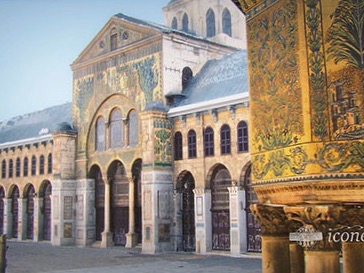
The Great Mosque of Damascus is the only place of worship in the world where every day for centuries Jews, Christians and Muslims have prayed to the same one God.

A historical region, artificially divided

Contrary to popular belief, no one really knows what the Levant, the Near East or the Middle East is. These terms have different meanings depending on the times and political situations.

However, today’s Egypt, Israel, the State of Palestine, Jordan, Lebanon, Syria, Iraq, Turkey, Iran, Saudi Arabia, Yemen and the Gulf principalities have several millennia of common history. Yet their political division dates back to the First World War. It is due to the secret agreements negotiated in 1916 between Sir Mark Sykes (British Empire), François Georges-Picot (French Empire) and Sergei Sazonov (Russian Empire). This draft treaty had fixed the division of the world between the three great powers of the time for the post-war period. However, as the Tsar had been overthrown and the war did not go as hoped, the draft treaty was only applied in the Middle East by the British and French alone under the name of the “Sykes-Picot agreements”. They were revealed by the Bolsheviks, who opposed the Tsarists, notably by challenging the Treaty of Sèvres (1920) and helping their Turkish ally (Mustafa Kemal Atatürk).

From all this, it emerges that the inhabitants of this region form a single population, composed of a multitude of different peoples, present everywhere and closely intermingled. Each current conflict is a continuation of past battles. It is impossible to understand current events without knowing the previous episodes.

For example, the Lebanese and the Syrians of the coast are Phoenicians. They commercially dominated the ancient Mediterranean and were overtaken by the people of Tyre (Lebanon) who created the greatest power of the time, Carthage (Tunisia). This was completely razed to the ground by Rome (Italy), then General Hannibal Barca took refuge in Tyre (Lebanon), and in Bithynia (Turkey). Even if one is not aware of it, the conflict between the gigantic self-proclaimed coalition of the “Friends of Syria” and Syria continues the destruction of Carthage by Rome and the conflict of the same so-called “Friends of Syria” against Sayyed Hassan Nasrallah, the leader of the Lebanese Resistance, continues the hunt for Hannibal during the fall of Carthage. In fact, it is absurd to limit oneself to a state reading of the events and to ignore the trans-state cleavages of the past.

Or again, by creating the Daesh jihadist army, the United States magnified the revolt against the Franco-British colonial order (The Sykes-Picot agreements). The “Islamic State in Iraq and the Levant” claims no more and no less than to decolonize the region. Before trying to disentangle the truth from the propaganda, one must accept to understand how the events are felt emotionally by those who live them.

Perpetual War

Since the beginning of history, this region has been the scene of wars and invasions, sublime civilizations, massacres and more massacres of which almost all the peoples of the region have been victims each in turn. In this context, the first concern of each human group is to survive. That is why the only peace agreements that can last must take into account their consequences for other human groups.

For example, for seventy-two years it has been impossible to reach an agreement between the European settlers in Israel and the Palestinians because the price that other actors in the region would have to pay has been neglected. The only peace attempt that brought all the protagonists together was the Madrid conference convened by the USA (Bush senior) and the USSR (Gorbachev) in 1991. It could have been successful, but the Israeli delegation was still clinging to the British colonial project.

The peoples of the region have learned to protect themselves from this conflicting history by hiding their true leaders.

For example, when the French exfiltrated the Syrian “Prime Minister”, Riad Hijab, in 2012, they thought they could rely on a big fish to overthrow the Republic. However, he was not constitutionally the “Prime Minister”, but only the Syrian “President of the Council of Ministers”. Like the White House chief of staff in the United States, he was just a senior government secretary, not a politician. His defection was of no consequence. Even today, Westerners still wonder who the men around President Bashar al-Assad are.

This system, indispensable for the country’s survival, is incompatible with a democratic regime. Major political options should not be discussed in public. The states of the region are therefore asserting themselves either as republics or as absolute monarchies. The President or Emir embodies the Nation. In the Republic, he is personally accountable to universal suffrage. The large posters of President Assad have nothing to do with the cult of personality that is observed in some authoritarian regimes, they illustrate his office.

All that lasts is slow

Read the rest of this entry »

Posted in Uncategorized | Tagged: , , , , , | Leave a Comment »

The Greatest Political Strategist in History – LewRockwell

Posted by M. C. on July 20, 2020

With this laborious introduction out of the way, let’s begin.  The political strategist of whom I am speaking is Antonio Gramsci.  Malachi Martin summarizes the importance of Gramsci, in his book The Keys of this Blood:

…the political formula Gramsci devised has done much more than classical Leninism – and certainly more than Stalinism – to spread Marxism throughout the capitalist West.

What is that formula?  Gary North explains: Noting that Western society was deeply religious, Gramsci believed that…

…the only way to achieve a proletarian revolution would be to break the faith of the masses of Western voters in Christianity and the moral system derived from Christianity.

Religion and culture were at the base of the pyramid, the foundation.

https://www.lewrockwell.com/2020/07/daniel-ajamian/the-greatest-political-strategist-in-history/

By

The year 2020 is not passing quietly.  We are witnessing events unthinkable even a few months ago: keep your anti-social distance, wear a mask when entering a bank, follow the arrows on the floor of the supermarket, all sporting events cancelled, homeschooling – even for university students – is approved by all corners of government and society.  Most relevant to this discussion: pot shops, liquor stores, and abortion clinics are essential, churches during Holy Week are not.

Add to this the protests – more specifically the riots.  Police told by government officials to stand down.  Those who intend to defend their lives and their property are the ones judged – by the media, and potentially by government prosecutors and courts.  Oh yes: protesting and rioting wards off viruses – no need for masks.

What, of all of this, is directly relevant to you?  Why did I feel it appropriate to change the topic of this lecture in the last days?  We are living through massive cultural changes.  While culture always evolves, in the last several decades the changes have been revolutionary – and I use that term purposefully.  These changes are aimed right at you and those who sat in your place over the last decades.  The purpose is to create soldiers for the revolution.

What I hear of college, and it also is true in business and government, are stories of various cultural indoctrinations – made ever-more intense given the pretext for these recent riots.  Politically correct speech to include even compelled speech, cancel culture, self-flagellation, a fight for the gold medal in the oppression olympics.  If you disagree with any of this, you are a fascist.  To further cement this indoctrination, a requirement to take classes that tear down Western Civilization – even saying those two words in anything other than a scornful tone could be costly.

There is a purpose behind this, a strategy.  Events that we have been living through recently are not spontaneous or random.  This is not accidental.  These events are the result of a political strategy designed to strip us of our liberty.  It is an insidious strategy.  It is also very effective.

Whether knowingly or not, those carrying out this strategy are using the playbook of the most successful Marxist thinker in history.  Given the damage this strategy has done to the freedoms of the West, I consider him to be the greatest political strategist in history.

And this is what I would like to discuss.  Before beginning, I must give you fair warning on two points: First, much of this Marxist playbook sounds an awful lot like the wishes of simplistic libertarians – libertarianism for children, as a good friend once labeled this.  I will come back to this point more than once.

Second, there will be a lot of discussion of western tradition and culture in this lecture.  Inherently this will include Christianity.  But if you want to understand the enemy’s playbook, then this cannot be avoided.

Now, I know many libertarians push back hard on this topic: Christianity is unnecessary for liberty, in fact it is an enemy to liberty.  I will only ask that you keep in mind: the most successful Marxist thinker in history believed that Christianity is the enemy of communism; it’s what stood in the way of communism’s advance in the West.  For now, I ask that you stay open to the possibility that he was right – because, when I look around me today, he sure appears to have been right.

With this laborious introduction out of the way, let’s begin.  The political strategist of whom I am speaking is Antonio Gramsci.  Malachi Martin summarizes the importance of Gramsci, in his book The Keys of this Blood:

…the political formula Gramsci devised has done much more than classical Leninism – and certainly more than Stalinism – to spread Marxism throughout the capitalist West.

What is that formula?  Gary North explains: Noting that Western society was deeply religious, Gramsci believed that…

…the only way to achieve a proletarian revolution would be to break the faith of the masses of Western voters in Christianity and the moral system derived from Christianity.

Religion and culture were at the base of the pyramid, the foundation.  It was the culture, and not the economic condition of the working class, that was the key to bringing communism to the West.  To be fair to Gramsci, he didn’t start this ball rolling; the West was doing a fine job of damaging its cultural tradition.

One can point to elements of medieval Catholicism, the Reformation and Renaissance, the Enlightenment (as I have previously discussed), and postmillennial pietist Protestants (as Murray Rothbard so clearly demonstrated), as all contributing to this destruction long before Gramsci hit the scene.  But without these cracks in the armor, Gramsci would never have been successful.

What is our current condition relative to Gramsci’s objectives?  I could speak to the destruction of the family, the loss of all meaningful intermediating governance institutions, the absurdity of a good portion of what passes for university studies today, especially in liberal arts and humanities – all of which are symptoms of the crumbling of the ultimate target at which Gramsci aimed.  We have, this year, been given indisputable evidence as to the success of his political strategy, in the response by Christian leaders to the coronavirus.  Just as one example, from Kentucky:

When I asked [Bishop John Stowe of the Catholic Diocese of Lexington] what he would say to a pastor planning Easter worship, he was blunt: “I would say it’s irresponsible,” he said. “It’s jeopardizing people’s lives.”

I know we live in a fact-free world, but was it ever wise to believe that we were facing the Black Death?  In pre-modern plagues, did Christian leaders act this way?  The simple answer to both questions is no, yet we have churches closed during Holy Week.  I cannot think of a better symbolic representation of the destruction of Christianity in the West.  Such is the success of Antonio Gramsci.

Who is Antonio Gramsci?  He was an Italian Marxist (more accurately, an Italian communist), writing on political theory, sociology and linguistics.  His work focused on the role that culture and tradition plays in preventing communism from spreading through the West.

Gramsci was born in 1891 and died in 1937, the middle of seven children.  Hunchbacked, either due to a malformed spine from birth or a childhood accident, it is not clear.  One of the stories has him falling from the arms of a servant down a steep flight of stairs.  Though his family gave him up for dead, his aunt anointed his feet with oil from a lamp dedicated to the Madonna.  Ironic.

Continuously sickly, until the age of fourteen a coffin for him was kept at the ready in his bedroom.  His father was thrown in prison for political cause and his mother, somehow, kept the family alive.

Prior to leaving Sardinia for Turin and university, he was a nationalist – Sardinia for the Sardinians.  Upon arriving in Turin, he came upon the automotive factories of Fiat.  It was here that he found the class struggle: workers and bosses.

World War One made this clear: half a million Italian peasants died, while the profits of industrialists rose.  He left university and began writing.  He founded a newspaper: L’Ordine Nuovo, The New Order, with its first issue delivered on May Day 1919.  He was a founder and leader of the Communist Party of Italy, and a member of Parliament.

With Parliamentary immunity suspended by Mussolini, he was sent to prison.  Several years later, a prisoner exchange was proposed by the Vatican: send Gramsci to Moscow in exchange for a group of priests imprisoned in the Soviet Union.  Mussolini put a stop to these negotiations in early 1933.

It was during his time in prison when he wrote his famous Prison Notebooks, describing the contents as “Everything that Concerns People.”  It comprised over 2,800 handwritten pages.  Twenty-one of the notebooks bear the stamp of prison authorities.  Given the risk of censorship, he used bland terms in place of traditional Marxist terminology.

Though completed by 1935, these were only published in the years 1948 – 1951, and not in English until the 1970s.  By 1957, nearly 400,000 copies had been sold.

Suffering from various heart, respiratory and digestive diseases, he was eventually transferred to a prison hospital facility.  On April 25, 1937 – the same day that he received news that he would be released – he suffered a cerebral hemorrhage and died two days later.

Through his notebooks, he introduced several ideas in Marxist theory, critical theory, and educational theory.  Most important was the idea of Cultural Hegemony, which was the unifying idea of Gramsci’s work from 1917 until he died.

Cultural Hegemony: Why hadn’t the Marxist Revolution swept the West by the early twentieth century?  Gramsci suggested that capitalists did not maintain control simply coercively – as Marx would describe it – but also ideologically.  The values of the bourgeoisie were the common values of all.  These values helped to maintain the status quo, and limited any possibility of revolution. Read the rest of this entry »

Posted in Uncategorized | Tagged: , , , , , , , | Leave a Comment »

The First Freedom – LewRockwell

Posted by M. C. on June 18, 2020

“Our troubled world continues along its current revolutionary path with no clear idea as of yet just how far the diabolical disorientation that has been unleashed may go. One thing and one thing alone seems definite to me in the midst of the general uncertainty. With a few very notable exceptions, the leadership of our beloved Church, legitimate though that leadership is, has proven itself to be utterly subservient” to the state.

It was not the governors who shut the churches; it was — with some courageous exceptions — the gutless American Catholic bishops who did so.

https://www.lewrockwell.com/2020/06/andrew-p-napolitano/the-first-freedom/

By

Here is a pop quiz on the Constitution. What is the first freedom protected by the Bill of Rights? If you guessed speech or press, then you are close. The first protected freedom is religion. The two religion clauses in the First Amendment keep the government out of our pockets for religious purposes and out of our churches for all purposes. That was, at least, the intent of the framers.

The tyrannical behavior of many state governors, who have issued executive orders purporting to regulate private behavior on private property — even religious behavior in houses of worship — and in the process have enforced these orders as if they were laws, has ignored this. In America, governors do not write laws; only legislatures do. There are no pandemic or public health or emergency exceptions in the Constitution.

Here in New Jersey, Catholics were permitted — permitted — to attend public Masses last Sunday for the first time in 88 days.

This has deeply troubled many of the faithful, and many non-adherents, who understand the concepts that only legislatures write laws and that no legislature can write a law telling a religious institution when and how to permit worship.

So, who closed all the houses of worship? Why did Catholic bishops dispense with a nearly 1,600-year-old rule — which survived all sorts of wars and pestilence — requiring attendance at Sunday Mass? What became of the wall of separation?

Here is the backstory.

When first-year law students are asked the meaning of the Establishment Clause and the Free Exercise Clause in the First Amendment, they often argue that these clauses mandate a wall of separation between church and state. Some students even offer to find the “wall of separation” language in the Constitution. They are still looking for it.

While it is accurate to use the wall of separation phrase, it is nowhere in the Constitution or in any federal statute. It was first publicly used in an 1802 letter from President Thomas Jefferson to a congregation of Baptists in Danbury, Connecticut. The congregation had written to Jefferson complaining that Connecticut was taxing all landowners to pay for the state-supported Congregationalist Church.

They told him that the state regarded their religious freedom as a privilege to be doled out, rather than as an inalienable right as the congregation believed it to be and as he had characterized it and other rights in the Declaration of Independence.

Jefferson understood the values underlying the religion clauses of the First Amendment to mean that while only Congress was prohibited from establishing a church or interfering with worship, the states should not do so either. In his famous letter, he opined that the First Amendment erected “a wall of separation between church and state.” To Jefferson, the word “state” in that context meant all governments.

Though the imposition of state taxes to support churches ended during the 19th century, it wasn’t until 1947 that the Supreme Court ruled with clarity that the First Amendment — the language in which only restrains Congress — applies to the states as well.

We know that it does because the 14th Amendment prohibits all states from abridging the privileges or immunities of citizens of the United States. The phrase “privileges or immunities” connotes attributes of national citizenship — first among which are a prohibition on government establishing a religion or interfering with its free exercise.

Stated differently, the right to worship or not, and the right not to be charged for someone else’s worship, are personal human rights — as Jefferson called them, inalienable rights.

Now, back to the governors and the bishops.

The governors permitted crowds at Walmart and arrested folks for attending funerals. They permitted thousands of demonstrators in public streets and arrested not one of them for marching without masks or not socially distancing.

My friend Professor John Rao of St. John’s University wrote: “Our troubled world continues along its current revolutionary path with no clear idea as of yet just how far the diabolical disorientation that has been unleashed may go. One thing and one thing alone seems definite to me in the midst of the general uncertainty. With a few very notable exceptions, the leadership of our beloved Church, legitimate though that leadership is, has proven itself to be utterly subservient” to the state.

It was not the governors who shut the churches; it was — with some courageous exceptions — the gutless American Catholic bishops who did so. Never before in the history of America has the Church become an arm of the state. The governors told the bishops to close their churches, and they complied. Their predecessors were martyrs. They are cowards.

That is not rendering to Caesar what is Caesar’s. That is rendering to Caesar what is God’s.

Faithful Catholics believe that we consume the Bread of Life at Mass. The bishops have no more moral right to deny us that salvific sacrament than do the governors. Faithful Catholics also believe that Holy Mother Church is the route to eternal salvation and the Bread of Life is the food for that route. What mother would deny her children food? One in the hands of state-subservient bishops.

When the Supreme Court explained the two religion clauses, it ruled that they prohibit both conspicuous governmental aid to religion and all government interference with it, and all excessive entanglement between church and state.

In another time and place, how different this might have been. One hundred years ago, the Church was outlawed in Mexico and militias hunted down priests. Saying a public Mass then was the functional equivalent of a capital offense. Yet, there were more Masses celebrated for the faithful per day in Mexico in those years than in America in the last 88 days.

The wall of separation insulates our religious beliefs and practices from governmental tyranny. But without episcopal fidelity and courage, the wall crumbles.

Be seeing you


Posted in Uncategorized | Tagged: , , , , | Leave a Comment »