The Dept. of Homeland Security, once viewed as an Orwellian power grab, is now championed by Democrats to police “dangerous” political speech.

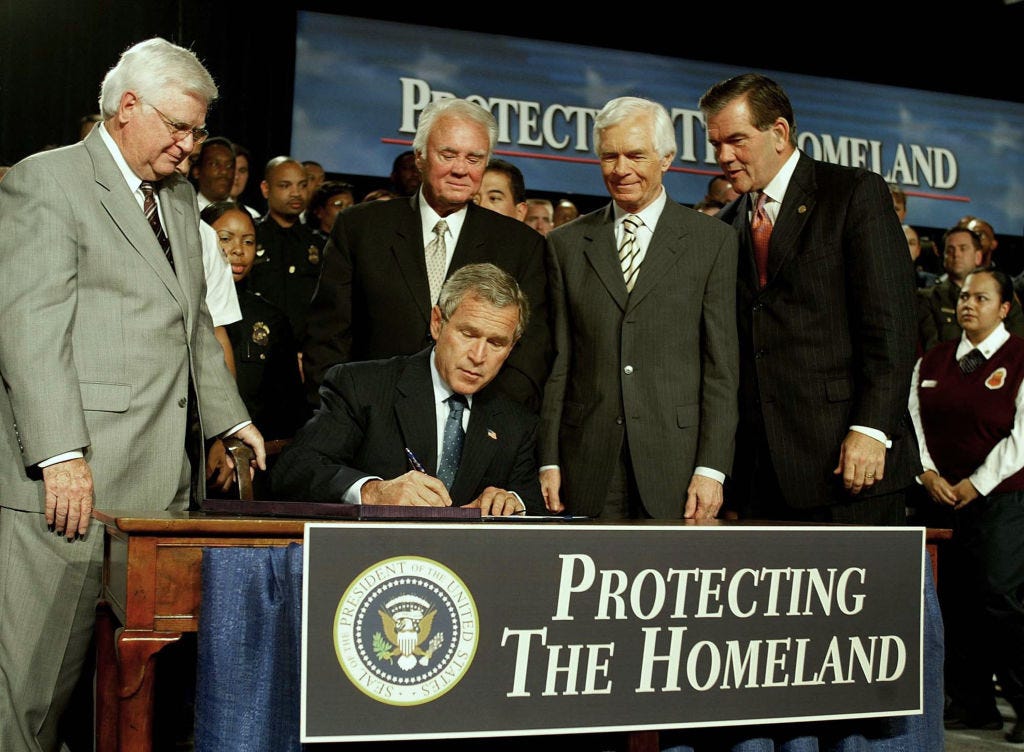
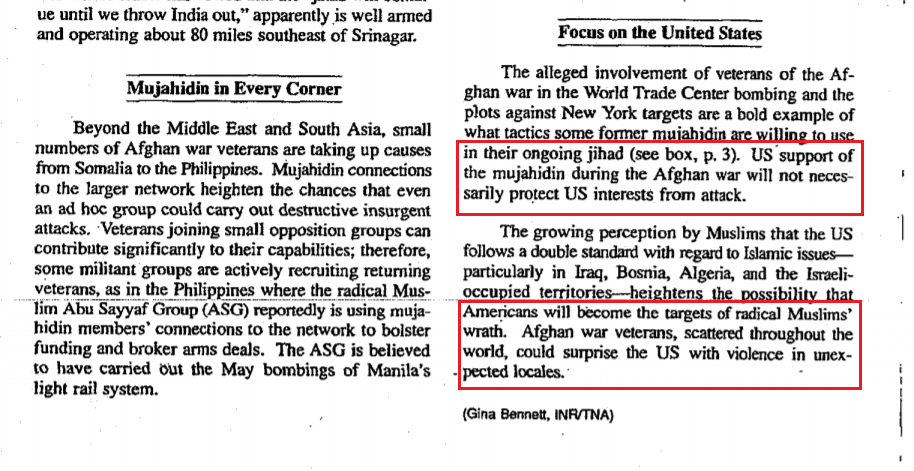
In the wake of the September 11th terror attacks, President George W. Bush created the Department of Homeland Security, a new sprawling federal agency with over 170,000 employees and new intelligence powers dedicated to domestic national security.
At the inception of this agency, Democratic lawmakers challenged its authority and raised concerns that this consolidation of government power would jeopardize civil liberties.
Senator Russ Feingold, D-Wisc., led the opposition. Feingold criticized the formation of DHS, stating it came “at the expense of unnecessarily undermining our privacy rights” and “weakening protections against unwarranted government intrusion into the lives of ordinary Americans.”
Representative Chris Bell, D-Tex., fumed at the agency and warned against the creation of an “Orwellian surveillance state” that would be used to settle “partisan political” disputes.
Civil libertarian opposition once held sway within the party. Democrats worked closely with the ACLU and other privacy groups to question DHS powers, particularly around data mining, surveillance, and interference into domestic politics.
The fear that the newly created agency would weaponize homeland security concerns to advance partisan politics quickly materialized in the 2004 elections. Tom Ridge, after serving as the head of the agency, wrote that the Bush administration officials pressured him to raise the DHS terror threat level just before voting got underway in a bid to influence the electoral outcome.
Even as recently as 2012, House Democrats raised concerns in Congress about DHS violating American civil rights and privacy rights by inappropriately monitoring First Amendment-protected speech on social media. “I am looking forward to learning from the witnesses exactly how DHS uses social media and what DHS is doing to make sure that in its use of social media, it is not being perceived as being a Big Brother,” said Representative Jackie Speier, D-Calif., during an oversight hearing over the Department of Homeland Security’s social media surveillance efforts.
But as the threat of Islamic terror attacks has diminished, the Department of Homeland Security has pivoted and recalibrated its reach, finding new political support for its growth.
Be seeing you





 MCViewPoint