
The poorer, more backward the country, the more endless the war.
Where is Congress?
Be seeing you

Enemy of the State-Read the Book-Know the Man
This is not a Safe Space but Baby, I don't care.

"I am not a number, I am a Free Man" - No. 6
 Information Liberation Alex Jones’ Prison Planet Gary North Specific Answers Antiwar The Daily Bell Tenth Amendment Center Economics Policy Journal The American Thinker The New American Lew Rockwell
Posted by M. C. on February 1, 2024
The poorer, more backward the country, the more endless the war.
Where is Congress?
Be seeing you
Posted in Uncategorized | Tagged: Israel/Hamas, On Standby, U.S. troops | Leave a Comment »
Posted by M. C. on March 30, 2023
https://libertarianinstitute.org/articles/heres-how-we-protect-u-s-troops-in-syria/
by Ron Paul
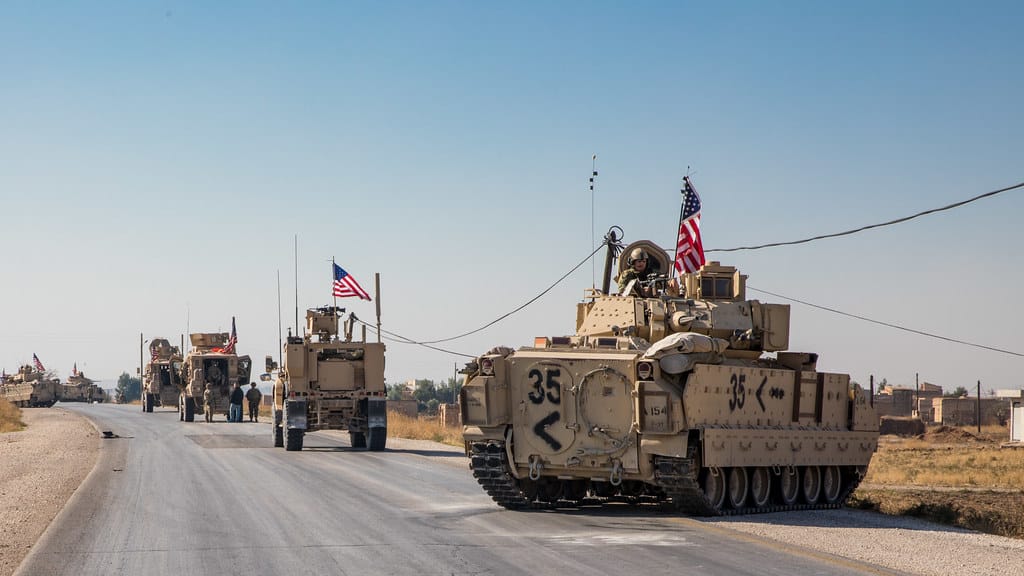
Last week saw a sharp increase in attacks on U.S. troops occupying northeastern Syria, with a drone strike against a U.S. base blamed on “pro-Iran” forces and a U.S. counter-strike said to have killed at least 19 people. After the U.S. retaliation, another strike by “pro-Iran” forces hit a number of U.S. sites in Syria. It may be just a matter of time before there are more strikes against the 900 U.S. troops based in Syria against Syria’s wishes. One U.S. contractor was killed last time. Next time it could be many more Americans.
What’s behind the sudden escalation? Fundamental changes in the Middle East over the past month have highlighted how indefensible is the continued U.S. occupation of Syria and Iraq.
Take, for example, the recent historic mending of relations between former arch-enemies Saudi Arabia and Iran which was brokered by Washington’s own arch-enemy, China. U.S. policy in the Middle East has long been “divide and conquer,” dating back at least to the Iran/Iraq war in the 1980s. U.S. switching sides in that war guaranteed that the maximum amount of blood was spilled and that the simmering hatreds would continue to prevent any kind of lasting peace.
Then the U.S. invaded Iraq twenty years ago and turned Iraq into an Iranian ally. That’s neocon foreign policy for you: a 100 percent failure rate.
So this month China, which is interested in creating a regional transportation corridor that would include Iran, came in and instead of bombing, invading, and occupying—Washington’s modus operandi—actually brokered the restoration of diplomatic relations between Saudi Arabia and Iran.
Republicans and Democrats in the U.S. both love to attack China, but China has achieved what the U.S. has resisted for years: peace in the region. Should we be surprised that the continued U.S. occupation is not welcome in the Middle East?
The United States occupies that huge chunk of Syria where the oil and agriculture is located and the goal appears to be producing profits for U.S. multinational corporations from stolen natural resources and preventing the natural wealth of Syria to be used to rebuild that country. Is it any wonder why the U.S. is so unpopular in the Middle East?
How hypocritical is it that the Biden Administration has spent $100 billion of our dollars to expel Russia from occupying proportionally less territory in Ukraine that Washington occupies in Syria? And Washington claims to stand for the “international rules-based order,” while they decimated an Iraq and Afghanistan that did not attack us, and before that a Serbia that could not have threatened us if it wanted to.
The end of the U.S. occupation of the Middle East is upon us and the sooner we realize that the better. We have no business meddling in their politics, occupying their territory, and stealing their resources. Americans joined the U.S. military to defend the United States against all enemies, foreign and domestic, yet they have been manipulated by corrupt DC officials into occupying foreign lands and stealing their oil. Maybe this is why the U.S. military cannot meet its recruitment goals?
Here’s an easy way to protect U.S. forces in Syria from further “Iran-allied” attacks: Bring them home. Tomorrow. Do not wait another day!
This article was originally featured at the Ron Paul Institute for Peace and Prosperity
Be seeing you
Posted in Uncategorized | Tagged: drone strikes, Syria, U.S. troops | Leave a Comment »
Posted by M. C. on March 28, 2023
The title of the operation explains it all.
https://rumble.com/v2f1wvs-end-the-forever-wars-bring-home-u.s.-troops-from-syria.html
Be seeing you
Posted in Uncategorized | Tagged: Forever Wars, Syria, U.S. troops | Leave a Comment »
Posted by M. C. on January 6, 2023
Be seeing you
Posted in Uncategorized | Tagged: Empire, Syria, U.S. troops | Leave a Comment »
Posted by M. C. on September 25, 2020
One of the greatest contradictions in Washington’s Syria policy is not the reason(s) that we’re there but the fact that we haven’t left. At least twice now, there has been an order to withdraw that has never been carried out.
U.S. policy toward Syria is defined by an absurdity that can’t be neatly untangled—a low-intensity regime change mission defined as anything other than its central mission. Every now and then, we’re offered a new explanation for why our troops are in Syria. At this point, the best response is to say, “enough is enough.”
https://nationalinterest.org/blog/skeptics/what-us-troops-are-really-doing-syria-169410
James Mattis famously resigned from his secretary of defense post citing opposition to President Donald Trump’s order to remove U.S. troops from Syria. So it came as a mild surprise when it was recently confirmed that Mattis opposed a plan to assassinate Bashar al-Assad, the president of Syria. This opposition was a prudent move as deposing Assad would not end Syria’s civil war but throw the country into deeper chaos. But this seeming incongruity of Mattis the hawk contra Mattis the dove is representative of the larger contradictions in Washington’s Syria policy.
These contradictions arise from the fact that U.S. policy in Syria has always been centered around opposition to Assad, rather than the defeat of ISIS, whose caliphate was destroyed long before Trump’s withdrawal order.
Perhaps this contradiction is most glaringly seen in the justifications Washington offers for the U.S. military presence in Syria. We are frequently told we’re there for one reason only to be given a new reason a few months later. It’s hard not to notice.
We were told the ISIS caliphate had to be defeated. But they lost their last scrap of territory in March 2019. Denied a physical base of operations, those going under the name of ISIS today are—as far as legitimate U.S. interests are concerned—indistinguishable from any other ragtag Sunni militias. But a defeated ISIS still wasn’t enough to convince Washington to withdraw.
ISIS’s caliphate was destroyed, completing the military mission that brought U.S. troops to the country. Why then are our soldiers still there? We’ve also been told they’re over there to counter Iran (which, by the way, had the same goal of destroying the ISIS caliphate).
Years ago, we were told that it’s important to be in Syria to counter Russia too. But today this mission—if it can be called that—amounts to the occasional road rage incident involving convoys representing the world’s only two nuclear superpowers pathetically struggling for space on a road or wheat field. It’s notable that this reason was recently revived to justify the decision to send more troops to Syria.
We’re also told that it’s important to support the Kurds and, though Washington has been quieter on this front lately, we were once told training and equipping anti-Assad militants was also vital. This latter notion resulted in an embarrassing situation where the CIA’s favored militants were fighting the Pentagon’s favored militants. These local groups have their own interests, but they shouldn’t be confused for America’s interests.
More recently, President Trump has touted a plan to “secure the oil” and his administration has paved the way for a U.S. company to manage some oil fields in the war-torn country. Trump has cited this as a reason for keeping the last few hundred U.S. troops in Syria. The thing is, ensuring American access to Syrian oil demands a certain level of security. More bluntly, it necessitates an endless occupation of Syria.
But, like any of the above reasons, it would be a mistake to accept that oil serves as the principal justification for the U.S. presence in Syria.
Trump has also defended the decision to keep a small contingent of troops in Syria by stating that Israel and Jordan asked him to keep our forces there. This justification was reaffirmed in a recent Trump rally where the president characteristically stated off-the-cuff, “The fact is, we don’t have to be in the Middle East, other than we want to protect Israel. We’ve been very good to Israel.”
What are we to make of this flurry of reasons for staying in Syria? It may be a little bit of each, but the overarching reason has always been to engage in a campaign of “regime change-lite,” tragically keeping Syria territorially divided in a simmering civil war and making Syrians bear the brunt of any—and there are many—negative consequences. This is why the United States originally armed anti-Assad rebels and why troops that were ostensibly sent to defeat ISIS have remained after the fall of the caliphate.
But viewing all these reasons together, it is dizzying to keep track of them. It is perhaps tempting to just take Trump at his word and assume that we’re actually there for the oil. While the amount of oil in Syria is a significant amount for Syrians, it’s nowhere near enough to be a vital concern for the United States. According to the U.S. Energy Information Association, the amount of oil in Syria is not even two percent of what Iran or Iraq boast, never mind America’s own status as the number one oil producer in the world.
In fact, this is what’s striking about all of the above reasons in this list—not one of the justifications is about something vital to the security of the United States. Instead of carefully deconstructing each reason, this bird’s eye view is all we need to make sense of this confusing list of inconsistent and constantly evolving justifications for staying in Syria.
One of the greatest contradictions in Washington’s Syria policy is not the reason(s) that we’re there but the fact that we haven’t left. At least twice now, there has been an order to withdraw that has never been carried out.
U.S. policy toward Syria is defined by an absurdity that can’t be neatly untangled—a low-intensity regime change mission defined as anything other than its central mission. Every now and then, we’re offered a new explanation for why our troops are in Syria. At this point, the best response is to say, “enough is enough.”
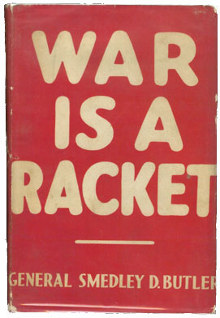
We don’t need to keep playing this game of roulette where Washington spins the wheel and tells us why our troops are there—it’s a racket and should be recognized as such. Syria’s problems aren’t our problems and the only sensible option that comports with U.S. interests is a full withdrawal of American forces.
Michael R. Hall is the communications manager of Defense Priorities and a geopolitical analyst. Follow him on Twitter: @michaelryhall.
Posted in Uncategorized | Tagged: James Mattis, Regime Change, Syria, U.S. troops | 1 Comment »
Posted by M. C. on March 18, 2020
I believe the Iraq War was a mistake with catastrophic implications for the country we swore to defend. Now, 17 years after the war began, it’s time to finally correct this mistake and bring our troops home.
On the night of January 7, my phone buzzed with news alerts that Americans in Iraq were under attack by Iranian missiles at Ain al-Asad air base—where I served as a Marine over 11 years ago. My stomach turned as I thought about what those on the receiving end of the barrage were experiencing. At first, I prayed the troops at the air base were able to take cover prior to the missiles hitting. But then I became angry—angry we still had Americans in harm’s way as a result of an unnecessary war that began 17 years ago.
Those Americans at al-Asad were needlessly in danger because of our leaders’ refusal to reckon with the fact the Iraq War was lost long ago and it is past time for the United States to withdraw from the country.
One of the many terrible results of U.S. troops being in Iraq is the over 100 service members at al-Asad who suffered traumatic brain injury during the missile attack. Thankfully, no one was killed, but some will likely suffer side effects from their serious injuries for many years. They join the more than 32,000 Americans wounded and 4,500 killed—including four U.S. service members who died last week—in a conflict that has cost the U.S. nearly $2 trillion.
The Iraq War was lost when the Marines pulled down Saddam Hussein’s statue in Baghdad in April 2003. The overthrow of Saddam’s regime, as ghoulish as it was, removed a check against Islamic radicalism and was a clear victory for Iran, Iraq’s chief rival at the time.
The political realities of the region were ignored in favor of a misguided idealism imbued with the certainty the removal of Saddam would inspire democracy to flourish in the Middle East. As a result, everything we have done since 2003 has been an attempt to mitigate the consequences of the invasion.
While most foreign policy leaders and elected officials at least grudgingly acknowledge the invasion of Iraq in March 2003 was a mistake, some still try to defend the war by making dubious historical claims. For example, there is the prevalent myth that we “won” in Iraq during the surge of American forces from 2007 to 2009 but squandered that victory when President Barack Obama withdrew American military forces in 2011.
This narrative ignores that while the surge yielded some tactical victories, it did not end the sectarian conflict unleashed by the invasion that empowered Sunni jihadis and Iran-backed Shiite militias. The deeply rooted tensions among different groups in Iraq, along with the civil war in neighboring Syria—not the withdrawal of American forces—enabled the rise of ISIS.
The “Obama lost” narrative also glosses over the fact that our withdrawal in 2011 was mandated by the Status of Forces Agreement signed by the Bush administration and Iraqi government in 2008. Keeping military forces in Iraq after December 2011 could have put us into conflict with the Iraqi government, which the United States created and supported. The Iraqi government agreed to let large numbers of American troops return to Iraq only after the rise of ISIS in 2014.
Today, American troops remain in Iraq with no clear purpose. ISIS’ territorial caliphate is destroyed, and the remaining ISIS fighters pose a greater threat to Iranian interests than American ones. The Iraqi parliament recently called for our withdrawal. Our continued support of Iraqi security forces could lead to Iranian-aligned groups receiving American arms and equipment, including ones likely responsible for recent attacks against Americans.
Leaving our troops in Iraq only makes them easy targets for Sunni jihadis or Iranian proxies seeking to harm American forces. President Donald Trump should withdraw all our forces from the country, a move supported by nearly 70 percent of Americans.
I am proud of my service in Iraq, and regardless of the necessity of the war, we should honor the sacrifice of those who served admirably under difficult circumstances. But like most veterans of the conflict, I believe the Iraq War was a mistake with catastrophic implications for the country we swore to defend. Now, 17 years after the war began, it’s time to finally correct this mistake and bring our troops home.
Be seeing you
Posted in Uncategorized | Tagged: 17 Years, Iraq, U.S. troops | Leave a Comment »
Posted by M. C. on August 5, 2019
https://www.truthdig.com/articles/u-s-troops-are-back-in-saudia-arabia-this-will-end-badly/
It was big news. U.S. military forces streamed into Saudi Arabia in response to a supposedly serious threat to the kingdom’s eastern region. The American troops were invited by nervous Saudi royals; it wasn’t an American invasion per se. Everything unfolded smoothly at first; still, the consequences would be severe for the United States. Pick up the latest Military Times, or any other news source, and the story will seem recent, if not worthy of any special attention or alarm. Indeed, U.S. troops are headed into Saudi Arabia right now, but that’s not the situation described above.
No, that happened in August 1990, in response to the invasion of Kuwait by Saddam Hussein’s Iraq—a nation, few remembered, that the U.S. had previously backed in its aggressive war with Iran (1980-88). The kingdom then served as a launch point for the U.S.-led Persian Gulf War (1991) which drove the Iraqis from tiny Kuwait. American soldiers pulled out of Saudi Arabia just over a decade later, in 2003. Now they’re rolling back in. History, as it’s said to do, seems to be repeating itself.
This time, however, the ostensible threat to Saudi Arabia comes from naughty Iran, the American national security state’s current favorite exaggerated villain. And, of course, Iran—unlike our onetime “partners” in Iraq—hasn’t invaded anybody. Thus, the U.S. troop infusion is more preemptive than reactive. It’s no matter; few Americans (or even most media/political elites) seem to notice.
Besides, what could go wrong?…
Maybe the U.S. will get lucky and suffer only a few terror attacks on its troops in the kingdom. Then again, Washington might just blunder into an unnecessary, unwinnable, unethical war with the Islamic Republic of Iran, a nation of 80 million, and further destabilize an already precarious region. The nightmare, but totally possible, scenario would be the radicalization of new Saudi and transnational jihadis who then take the fight to New York or Los Angeles.
It’s happened before, back when America was far less unpopular in the Mideast and the Muslim world than it is today. Don’t count it out.
Be seeing you

Posted in Uncategorized | Tagged: Iran, Iraq, Saudia Arabia, U.S. troops | Leave a Comment »
Posted by M. C. on December 29, 2018
The entire episode thus represents a new variant of a familiar pattern dating back to Vietnam in which national security advisors put pressure on reluctant presidents to go along with existing or proposed military deployments in a war zone.
By
The mainstream media has attacked President Donald Trump’s decision to withdraw U.S. troops from Syria as impulsive, blindsiding his own national security team. But detailed, published accounts of the policy process over the course of the year tell a very different story. They show that senior national security officials and self-interested institutions have been playing a complicated political game for months aimed at keeping Trump from wavering on our indefinite presence on the ground in Syria.
The entire episode thus represents a new variant of a familiar pattern dating back to Vietnam in which national security advisors put pressure on reluctant presidents to go along with existing or proposed military deployments in a war zone. The difference here is that Trump, by publicly choosing a different policy, has blown up their transparent schemes and offered the country a new course, one that does not involve a permanent war state…
But when Mattis and Dunford sang the praises of the “rules-based, international democratic order” that has “kept the peace for 70 years,” Trump simply shook his head in disbelief…
Then in early April 2018, Trump’s impatience with his advisors on Syria boiled over into a major confrontation at a National Security Council meeting, where he ordered them unequivocally to accept a fundamentally different Syria deployment policy.
Trump opened the meeting with his public stance that the United States must end its intervention in Syria and the Middle East more broadly. He argued repeatedly that the U.S. had gotten “nothing” for its efforts, according to an account published by the Associated Press based on interviews with administration officials who had been briefed on the meeting. When Dunford asked him to state exactly what he wanted, Trump answered that he favored an immediate withdrawal of U.S. forces and an end to the “stabilization” program in Syria.
Mattis responded that an immediate withdrawal from Syria was impossible to carry out responsibly, would risk the return of Islamic State, and would play into the hands of Russia, Iran, and Turkey, whose interests ran counter to those of the United States.
Trump reportedly then relented and said they have could five or six months to destroy the Islamic State. But he also made it clear that he did not want them to come back to him in October and say that they had been unable to defeat ISIS and had to remain in Syria. When his advisors reiterated that they didn’t think America could withdraw responsibly, Trump told them to “just get it done.”
Trump’s national security team had prepared carefully for the meeting in order to steer him away from an explicit timetable for withdrawal. They had brought papers that omitted any specific options for withdrawal timetables. Instead, as the detailed AP account shows, they framed the options as a binary choice—either an immediate pullout or an indefinite presence in order to ensure the complete and permanent defeat of Islamic State. The leave option was described as risking a return of ISIS and leaving a power vacuum for Russia and Iran to fill…
Trump is now well aware that it is virtually impossible to carry out the foreign policy that he wants without advisors who are committed to the same objective. That means that he must find people who have remained outside the system during the permanent war years while being highly critical of its whole ideology and culture. If he can fill key positions with truly dissident figures, the last two years of this term in office could decisively clip the wings of the bureaucrats and generals who have created the permanent war state we find ourselves in today.
Be seeing you
Posted in Uncategorized | Tagged: Dunford, Mattis, Syria, Trump Scores, U.S. troops | Leave a Comment »
 MCViewPoint