MCViewPoint

Opinion from a Libertarian ViewPoint

Posts Tagged ‘unconditional surrender’

It’s Time to Abandon America’s Fetish for “Unconditional Surrender”

Posted by M. C. on October 27, 2022

Yet, from the point of view of the moralizing hawks, no “sacrifice” is too great for ordinary Americans or Europeans to bear…

The foreign policy elites, however, only benefit politically and financially from more war, ongoing ad nauseum. There is as of yet no downside for these elites in more war. The fact that they’ve quashed even some small-scale calls for negotiations on the part of some progressives shows that the war party is a long way from abandoning its fetish for “unconditional surrender.” 

https://mises.org/wire/its-time-abandon-americas-fetish-unconditional-surrender

Ryan McMaken

On Monday, thirty members of the Congressional Progressive Caucus called on the Biden administration to pursue a negotiated peace settlement or cease-fire with Ukraine. The letter from the Progressive Caucus is careful to praise the administration for its ongoing efforts to fund Kyiv’s war effort, but also concludes that not enough is being done to encourage a negotiated settlement.

This position is heretical in Washington where the narrative is well dominated by the center-left militarist coalition that currently dominates the Democratic Party and the fading neoconservative wing of the Republican Party. In fact, so complete is the hawks’ domination of Democratic Party leadership, the Progressive Caucus was forced to withdraw its letter in less than twenty-four hours. The progressives ended up embarrassingly apologizing for suggesting diplomacy is a good thing.

Indeed, there is certainly no end in sight for US intervention in Ukraine, and little support for a negotiated end to the war among foreign policy elites. The US has sent more than sixty-five billion taxpayer dollars to Ukraine, and given Ukraine’s famously high levels of corruption, there’s no telling where that money ends up. Meanwhile, the US has now deployed the 101st Airborne Division to Europe for the first time in almost eighty years. The division is now conducting training exercises mere miles from the Ukraine border.

The administration is now being pressured by the Democratic leadership in Congress to designate Russia a state sponsor of terrorism. This would further hobble efforts to open negotiations with Moscow and would also trigger even more sanctions against the Russian people. Even worse, Washington insiders and pundits continue to push regime change in Russia. Although he later backpedaled on his comments, President Biden declared in March that “for God’s sake, [Vladimir Putin] cannot remain in power.” Earlier this month, Republican foreign policy advisory John Bolton called for regime change. Even the dismemberment of Russia has long been a stated goal of many American Russophobes.

These calls for regime change tend to steer clear of explicitly pushing military intervention, but a brief look at Iraq, Syria, and Libya makes it clear that when American and agents call for regime change, military interventions tend to follow.

Moreover, American foreign policy hawks have been remarkably casual about the prospects for an accidental escalation into war between nuclear powers. Biden himself has admitted that the risk of “Armageddon” is the highest it’s been since the Cuban Missile Crisis of 1962, but the administration has done nothing to change course. A disturbing number of pundits have declared that nuclear war is worth the risks, and a Pew poll shows a full one-third of Americans polled want US intervention in Ukraine even if it risks nuclear war. It seems we’re a far cry from the days of the height of the nuclear disarmament movement in the 1980s when marches against nuclear war could boast hundreds of thousands of people.

See the rest here

Be seeing you

Posted in Uncategorized | Tagged: , , | Leave a Comment »

Truman’s War Crimes at Hiroshima and Nagasaki – The Future of Freedom Foundation

Posted by M. C. on August 8, 2020

Keep in mind that there is nothing in the principles of warfare that required Truman and Roosevelt to demand the unconditional surrender of Japan (or Germany). Wars can be — and often are — ended with terms of surrender. Both presidents were willing to sacrifice countless people on both sides of the conflict to attain their demand for unconditional surrender.

https://www.fff.org/2020/08/05/trumans-war-crimes-at-hiroshima-and-nagasaki/

by

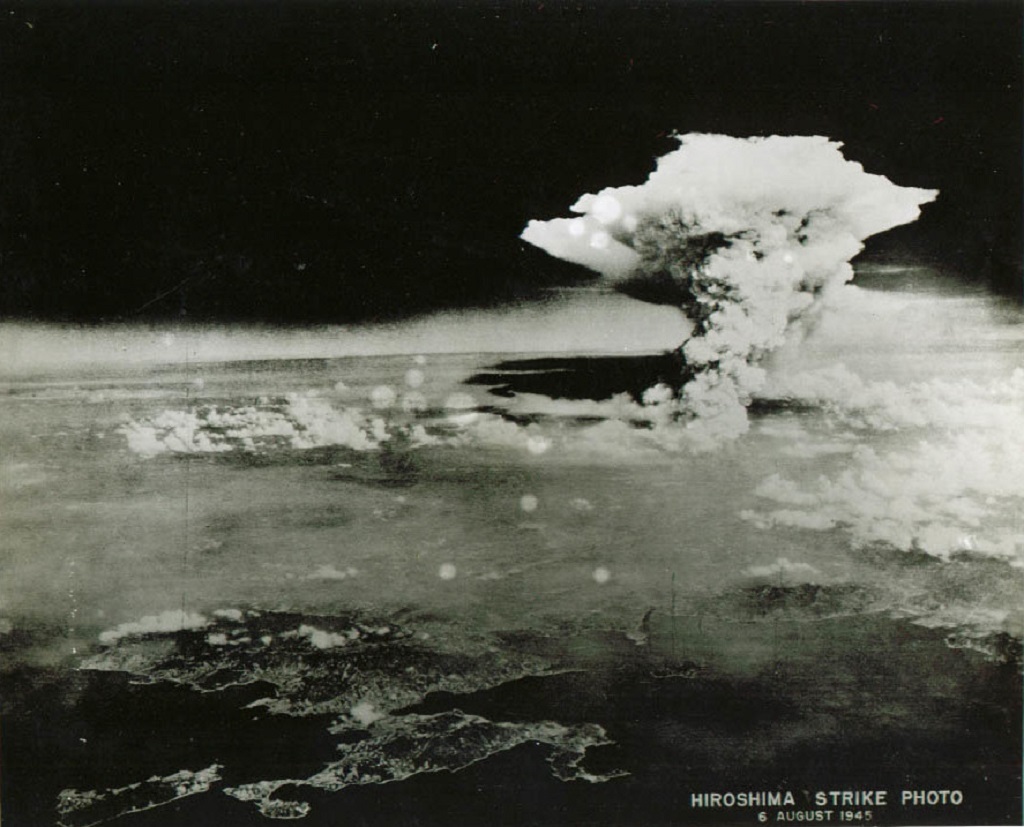
This month marks the 75h anniversary of the U.S. atomic bombings of Hiroshima and Nagasaki. While proponents of the bombings have long justified them on the basis that they shortened World War II, the fact is that they were war crimes. The only reason why President Truman and the pilots who dropped the bombs were not prosecuted as war criminals is because the United States ended up winning the war.

It has long been pointed out that Japan had expressed a willingness to surrender. The only condition was that the Japanese emperor not be abused or executed.

President Truman refused to agree to that condition. Like his predecessor Franklin Roosevelt, Truman demanded “unconditional surrender.”

That was why Japan continued fighting. Japanese officials naturally assumed that U.S. officials were going to do some very bad things to their emperor, including torture and execution. In the minds of Japanese officials, why else would the United States not be willing to agree to that one condition, especially given that it would have meant the end of the war?

The dark irony is that Truman ended up accepting the condition anyway, only after he pulverized the people in Hiroshima and Nagasaki with nuclear bombs.

In an excellent op-ed in the Los Angeles Times today entitled “U.S. Leaders Knew We Didn’t Have to Drop Atomic Bombs on Japan to Win the War. We Did It Anyway” the authors point out:

Seven of the United States’ eight five-star Army and Navy officers in 1945 agreed with the Navy’s vitriolic assessment. Generals Dwight Eisenhower, Douglas MacArthur and Henry “Hap” Arnold and Admirals William Leahy, Chester Nimitz, Ernest King, and William Halsey are on record stating that the atomic bombs were either militarily unnecessary, morally reprehensible, or both.

Keep in mind that there is nothing in the principles of warfare that required Truman and Roosevelt to demand the unconditional surrender of Japan (or Germany). Wars can be — and often are — ended with terms of surrender. Both presidents were willing to sacrifice countless people on both sides of the conflict to attain their demand for unconditional surrender.

But Truman’s unconditional surrender demand is not why his action constituted a war crime. This bombings constituted war crimes because they targeted non-combatants, including children, women, and seniors with death as a way to bring about an unconditional surrender of the Japanese government.

It has long been considered a rule of warfare that armies fight armies in war. They don’t target non-combatants. The intentional killing of non-combatants is considered a war crime.

A good example of this principle involved the case of Lt. William Calley in the Vietnam War. Calley and his men shot and killed numerous non-combatants in a South Vietnamese village. The victims included women and children.

The U.S military prosecuted Calley as a war criminal — and rightly so. While the deaths of non-combatants oftentimes occurs incidentally to wartime operations, it is a war crime to specifically target them for death.

Truman justified his action by arguing that the bombings shortened the war and, therefore, saved the lives of thousands of American soldiers and Japanese people if an invasion had become necessary. It is a justification that has been repeated ever since by proponents of the bombings.

There are two big problems with that justification, however.

First, an invasion would not have been necessary. All that Truman had to do was to accept Japan’s only condition for surrender, and that would have meant the end of the war, without the deaths that would have come with an invasion and that did come with the bombings of Hiroshima and Nagasaki.

More important, the fact that lives of American soldiers would have been saved is not a moral or legal justification for targeting non-combatants. If Calley had maintained at his trial that his actions were intended to shorten the Vietnam War, his defense would have been rejected. He would have still be convicted for war crimes.

Soldiers die in war. That is the nature of war. To kill women, children, and seniors in the hopes of saving the lives of soldiers by shortening the war is not only a war crime, it is also an act of extreme cowardice. If an invasion of Japan would have become necessary to win the war, thereby resulting in the deaths of thousands of U.S. soldiers, then that’s just the way that war works.

It’s also worth pointing out that Japan never had any intention of invading and conquering the United States. The only reason that Japan bombed Pearl Harbor was in the hope of knocking out the U.S. Pacific fleet, not as a prelude to invading Hawaii or the continental United States but simply to prevent the U.S. from interfering with Japan’s efforts to secure oil in the Dutch East Indies.

And why was Japan so desperate for oil as to initiate war against the United States? Because President Franklin Roosevelt had imposed a highly effective oil embargo on Japan as a way to maneuver the Japanese into attacking the United States.

FDR’s plan, of course, succeeded, which ended up costing the lives of hundreds of thousands of American soldiers and millions of Japanese citizens, including those at Hiroshima and Nagasaki.


This post was written by:


Jacob G. Hornberger is founder and president of The Future of Freedom Foundation. He was born and raised in Laredo, Texas, and received his B.A. in economics from Virginia Military Institute and his law degree from the University of Texas. He was a trial attorney for twelve years in Texas. He also was an adjunct professor at the University of Dallas, where he taught law and economics. In 1987, Mr. Hornberger left the practice of law to become director of programs at the Foundation for Economic Education. He has advanced freedom and free markets on talk-radio stations all across the country as well as on Fox News’ Neil Cavuto and Greta van Susteren shows and he appeared as a regular commentator on Judge Andrew Napolitano’s show Freedom Watch. View these interviews at LewRockwell.com and from Full Context. Send him email.

Be seeing you


Posted in Uncategorized | Tagged: , , , , , | Leave a Comment »

John Pilger: Another Hiroshima is Coming, Unless We Stop It Now

Posted by M. C. on August 6, 2020

“No radioactivity in Hiroshima ruin” said The New York Times front page on 13 September, 1945, a classic of planted disinformation. “General Farrell,” reported William H. Lawrence, “denied categorically that [the atomic bomb] produced a dangerous, lingering radioactivity.”

https://www.mintpressnews.com/john-pilger-another-hiroshima-is-coming-unless-we-stop-it-now/270039/

By John Pilger

When I first went to Hiroshima in 1967, the shadow on the steps was still there. It was an almost perfect impression of a human being at ease: legs splayed, back bent, one hand by her side as she sat waiting for a bank to open.

At a quarter past eight on the morning of August 6, 1945, she and her silhouette were burned into the granite.

I stared at the shadow for an hour or more, then I walked down to the river where the survivors still lived in shanties.

I met a man called Yukio, whose chest was etched with the pattern of the shirt he was wearing when the atomic bomb was dropped.

He described a huge flash over the city, “a bluish light, something like an electrical short”, after which wind blew like a tornado and black rain fell. “I was thrown on the ground and noticed only the stalks of my flowers were left. Everything was still and quiet, and when I got up, there were people naked, not saying anything. Some of them had no skin or hair. I was certain I was dead.”

Nine years later, I returned to look for him and he was dead from leukaemia.

“No radioactivity in Hiroshima ruin” said The New York Times front page on 13 September, 1945, a classic of planted disinformation. “General Farrell,” reported William H. Lawrence, “denied categorically that [the atomic bomb] produced a dangerous, lingering radioactivity.”

Only one reporter, Wilfred Burchett, an Australian, had braved the perilous journey to Hiroshima in the immediate aftermath of the atomic bombing, in defiance of the Allied occupation authorities, which controlled the “press pack”.

“I write this as a warning to the world,” reported Burchett in the London Daily Express of September 5,1945. Sitting in the rubble with his Baby Hermes typewriter, he described hospital wards filled with people with no visible injuries who were dying from what he called “an atomic plague”.

For this, his press accreditation was withdrawn, he was pilloried and smeared. His witness to the truth was never forgiven.

The atomic bombing of Hiroshima and Nagasaki was an act of premeditated mass murder that unleashed a weapon of intrinsic criminality. It was justified by lies that form the bedrock of America’s war propaganda in the 21st century, casting a new enemy, and target – China.

During the 75 years since Hiroshima, the most enduring lie is that the atomic bomb was dropped to end the war in the Pacific and to save lives.

“Even without the atomic bombing attacks,” concluded the United States Strategic Bombing Survey of 1946, “air supremacy over Japan could have exerted sufficient pressure to bring about unconditional surrender and obviate the need for invasion. “Based on a detailed investigation of all the facts, and supported by the testimony of the surviving Japanese leaders involved, it is the Survey’s opinion that … Japan would have surrendered even if the atomic bombs had not been dropped, even if Russia had not entered the war [against Japan] and even if no invasion had been planned or contemplated.”

The National Archives in Washington contains documented Japanese peace overtures as early as 1943. None was pursued. A cable sent on May 5, 1945 by the German ambassador in Tokyo and intercepted by the US made clear the Japanese were desperate to sue for peace, including “capitulation even if the terms were hard”. Nothing was done.

The US Secretary of War, Henry Stimson, told President Truman he was “fearful” that the US Air Force would have Japan so “bombed out” that the new weapon would not be able “to show its strength”. Stimson later admitted that “no effort was made, and none was seriously considered, to achieve surrender merely in order not to have to use the [atomic] bomb”.

Stimson’s foreign policy colleagues — looking ahead to the post-war era they were then shaping “in our image”, as Cold War planner George Kennan famously put it — made clear they were eager “to browbeat the Russians with the [atomic] bomb held rather ostentatiously on our hip”. General Leslie Groves, director of the Manhattan Project that made the atomic bomb, testified: “There was never any illusion on my part that Russia was our enemy, and that the project was conducted on that basis.”

The day after Hiroshima was obliterated, President Harry Truman voiced his satisfaction with the “overwhelming success” of “the experiment”.

The “experiment” continued long after the war was over. Between 1946 and 1958, the United States exploded 67 nuclear bombs in the Marshall Islands in the Pacific: the equivalent of more than one Hiroshima every day for 12 years.

The human and environmental consequences were catastrophic. During the filming of my documentary, The Coming War on China, I chartered a small aircraft and flew to Bikini Atoll in the Marshalls. It was here that the United States exploded the world’s first Hydrogen Bomb. It remains poisoned earth. My shoes registered “unsafe” on my Geiger counter. Palm trees stood in unworldly formations. There were no birds.

I trekked through the jungle to the concrete bunker where, at 6.45 on the morning of March 1, 1954, the button was pushed. The sun, which had risen, rose again and vaporised an entire island in the lagoon, leaving a vast black hole, which from the air is a menacing spectacle: a deathly void in a place of beauty.

The radioactive fall-out spread quickly and “unexpectedly”. The official history claims “the wind changed suddenly”. It was the first of many lies, as declassified documents and the victims’ testimony reveal.

Gene Curbow, a meteorologist assigned to monitor the test site, said, “They knew where the radioactive fall-out was going to go. Even on the day of the shot, they still had an opportunity to evacuate people, but [people] were not evacuated; I was not evacuated… The United States needed some guinea pigs to study what the effects of radiation would do.”

Like Hiroshima, the secret of the Marshall Islands was a calculated experiment on the lives of large numbers of people. This was Project 4.1, which began as a scientific study of mice and became an experiment on “human beings exposed to the radiation of a nuclear weapon”.

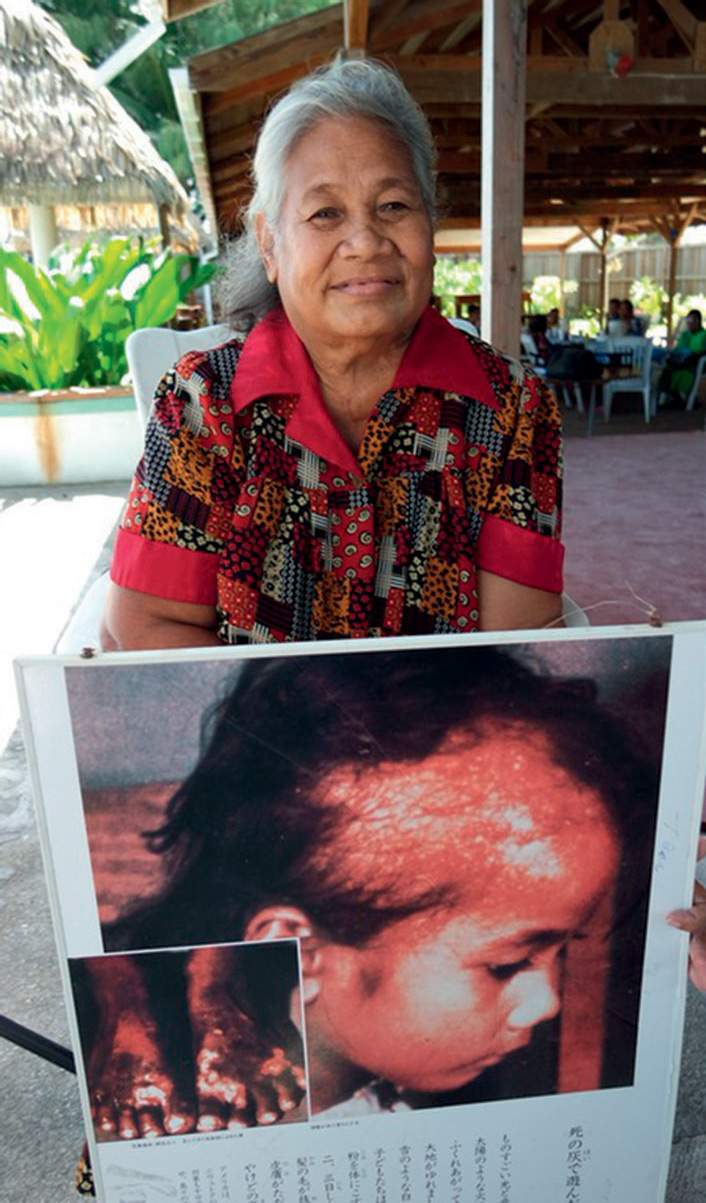
The Marshall Islanders I met in 2015 — like the survivors of Hiroshima I interviewed in the 1960s and 70s — suffered from a range of cancers, commonly thyroid cancer; thousands had already died. Miscarriages and stillbirths were common; those babies who lived were often deformed horribly.

Unlike Bikini, nearby Rongelap atoll had not been evacuated during the H-Bomb test. Directly downwind of Bikini, Rongelap’s skies darkened and it rained what first appeared to be snowflakes.  Food and water were contaminated; and the population fell victim to cancers. That is still true today.

H Bomb Marshall Island

I met Nerje Joseph, who showed me a photograph of herself as a child on Rongelap.

Read the rest of this entry »

Posted in Uncategorized | Tagged: , , , , , , , | Leave a Comment »

Harry Truman and the Atomic Bomb | Mises Wire

Posted by M. C. on August 12, 2017

https://mises.org/blog/harry-truman-and-atomic-bomb

More that you didn’t learn in government school. Frank Capra’s fake news.

This, however, is absurd. Pearl Harbor was a military base. Hiroshima was a city, inhabited by some three hundred thousand people, which contained military elements. In any case, since the harbor was mined and the US Navy and Air Force were in control of the waters around Japan, whatever troops were stationed in Hiroshima had been effectively neutralized.

On other occasions, Truman claimed that Hiroshima was bombed because it was an industrial center. But, as noted in the US Strategic Bombing Survey, “all major factories in Hiroshima were on the periphery of the city — and escaped serious damage.”4 The target was the center of the city. That Truman realized the kind of victims the bombs consumed is evident from his comment to his cabinet on August 10, explaining his reluctance to drop a third bomb: “The thought of wiping out another 100,000 people was too horrible,” he said; he didn’t like the idea of killing “all those kids.”5 Wiping out another one hundred thousand people … all those kids. Read the rest of this entry »

Posted in Uncategorized | Tagged: , , , , , , | Leave a Comment »