MCViewPoint

Opinion from a Libertarian ViewPoint

Archive for the ‘Uncategorized’ Category

The Blob Strikes Back | The National Interest

Posted by M. C. on October 26, 2019

Reflexively taking the side of Ukraine does not serve American interests any more than trying to pummel it for political favors.

https://nationalinterest.org/feature/blob-strikes-back-90471

by Hunter DeRensis

President Donald Trump campaigned and was elected on a platform of improved relations with Russia. Yet, three years after his election, no real improvement has materialized and, if anything, they have deteriorated. Why?

One reason is that those who seek to repair the damage caused by a thirty-year deterioration in trust and cooperation face an uphill battle against what recently has been given the colloquial name, “the Blob.” The term, coined by Obama White House staffer Ben Rhodes, refers to the foreign-policy establishment, mostly located in Washington, DC and constantly focused on the putative decline of American influence abroad. It has been distinguished by its unwillingness, or inability, to reconsider or reprioritize national interests that were first defined after World War II, and then continued, by and large, on auto-pilot after the end of the Cold War. Now Trump is taking a wrecking ball to this world order. But a self-anointed mandarin class or, if you prefer, deep state, that has largely operated unmolested until the advent of Trump now appears to believe that it can foil, or even subvert, the policies of a president it deems unfit for office, a development that should worry Democrats and Republicans alike.

Another reason is that Trump himself has been largely indifferent to who assumes positions in his administration, calculating that by sheer force of will he, and he alone, can be the decider. In September, Trump referred to his search for a fresh national security adviser in the following terms: “It’s great because it’s a lot of fun to work with Donald Trump, and it’s very easy, actually, to work with me. You know why it’s easy? Because I make all the decisions. They don’t have to work.” This insouciant approach has now boomeranged on Trump.

Enter William B. Taylor, Jr. Taylor has been the U.S. Chargé d ‘Affaires Ukraine since June of this year (having previously held the position of ambassador 2006–2009), and yesterday he testified behind-closed-doors as part of the House impeachment inquiry into Trump. Taylor, as his testimony made clear, was able to observe first-hand many of the Trump administration’s ham-fisted moves to extract, in one form another, concessions from Ukraine. But however clumsy and counterproductive Trump’s moves may have been, Taylor offered an overly simplistic survey of events in the region. Indeed, his Manichean introductory and concluding remarks suggested that he views Russia as an inveterate enemy of America and Ukraine as a white knight.

In his opening statement, Taylor emphasized that Ukraine is a strategic partner of the United States that is “important for the security of our country as well as Europe,” as well as a country that is “under armed attack from Russia.” Well, yes. But this sweeping description occludes more than it reveals. Foreign policy is rarely a morality play and the fairy-tale that Taylor presented was more redolent of a post–Cold War cold warrior who, like too many of his colleagues at the foreign desk, are committed to retrograde thinking, than of an official offering an incisive look at a complex and troubled region. It is not as though Ukraine, where Taylor served as ambassador during the George W. Bush administration, has ever been free from the plague of corruption or murky machinations by local competing factions. Reflexively taking the side of Ukraine does not serve American interests any more than trying to pummel it for political favors. The testimony of Taylor and other State Department witnesses before the House Intelligence Committee is a case in point.

“The four U.S. diplomats [Taylor, former ambassador Marie Yovanovitch, former special representative Kurt Volker, and Deputy Assistant Secretary of State George P. Kent] are all wedded to a policy maximally supportive of Ukraine’s ‘Revolution of Dignity’ and all that implies. That is the policy we arrived at in the previous administration, for better or worse, and it continues to be the ‘official’ policy given strong bipartisan support in Congress,” explains John Marshall Evans, a retired U.S. Foreign Service Officer who previously served as ambassador to Armenia. Evans adds that Taylor “did a great job running the assistance programs for the former USSR. Everyone respected him highly, and liked him.”

The narrative in the lengthy opening statement by Taylor, however, tends to obfuscate the reality of the turmoil in Ukraine, where street protests in 2014, at least partially cheered on by the Obama administration, most notably Assistant Secretary of State for European and Eurasian Affairs Victoria Nuland, toppled the democratically elected government of President Viktor Yanukovych. Russia responded swiftly by annexing the Crimean Peninsula, where a military base has been located for decades.

Taylor emphasized that in the aftermath of these dramatic events, he favored the sale of lethal weapons to Ukraine, which the Obama administration demurred on. President Barack Obama was cautious about committing to Ukraine—and the visible presence of neo-Nazi, white supremacist militias did not help.

During his testimony, Taylor recounted that on a visit to eastern Ukraine, “Ambassador Volker and I could see the armed and hostile Russian-led forces on the other side of the damaged bridge across the line of contact. Over 13,000 Ukrainians had been killed in the war, one or two a week. More Ukrainians would undoubtedly die without the U.S. assistance.” What goes unmentioned is that many of the dead are Eastern Ukrainians with deep language and cultural connections to Russia, who acted upon secessionist impulses only after the emergence of the new regime in Kiev.

A New York Times article yesterday described Taylor as a “model diplomat,” and used favorable quotes only from those associated from the same doctrinaire foreign-policy establishment. Even the phrase “model diplomat” was provided by Strobe Talbott, President Bill Clinton’s deputy secretary of state (and former roommate at Oxford) who was the architect of the post–Cold War NATO expansion which kickstarted the trend of souring relations with Russia.

The New York Times also published, in the fall of 2018, an anonymous op-ed from a “senior official in the Trump administration” who wrote that he and others were “working diligently from within to frustrate parts of his agenda and his worst inclinations,” with the premier example given as Russian-American relations. Now this figure, who apparently remains ensconced in the Trump administration that he or she so reviles, is about to publish a “tell all” book about the administration next month, still anonymously.

“President Trump obviously wants better relations with Moscow, but Ukraine is an obstacle to that, and he has the entire Blob against him. It is not a crime to advocate for a change of policy, or, if one is president, to change the policy, but Trump probably hasn’t a clue how to do that correctly, so he sought to work around the existing structures, which must frustrate him,” Evans observes.

Others take an outright critical view of Taylor and Co. “Taylor’s testimony shows he believes that the constitutionally elected head of the executive branch is supposed to serve unelected officials like himself. He personifies what Obama administration officials characterized as ‘the blob,’” says Daniel McCarthy, a columnist for SpectatorUSA.

Will anything change now that the fight between Trump and the permanent bureaucracy is now in the open? On Tuesday night, Vice President Mike Pence told Laura Ingraham, host of Fox’s The Ingraham Angle, “There is no question when President Trump said we were going to drain the swamp, but an awful lot of the swamp has been caught up in the State Department bureaucracy and we’re just going to keep fighting it. And we are going to fight it with the truth.” For his part, Evans thinks that there is a modicum of hope for improved relations with Moscow. “Taylor will have to resign now,” he says. “We might even see a moderation of the uncritical support for Ukraine, as some of the ugly underside starts to emerge, although anti-Russian sentiment is the mother’s milk of Congress.”

Hunter DeRensis is a reporter at the National Interest.


Posted in Uncategorized | Tagged: , , , | Leave a Comment »

Interventionism and Isolationism – The Future of Freedom Foundation

Posted by M. C. on October 26, 2019

No more sanctions, embargoes, trade wars, travel restrictions, immigration controls, or other government measures that prevent Americans from interacting with foreigners or that punish them for doing so.

That’s not “isolationism.” That’s the opposite of isolationism because although the U.S. government is prevented from interacting with the world through death and destruction, the American people are free to interact with the rest of the world with tourism and trade.

https://www.fff.org/2019/10/25/interventionism-and-isolationism/

by

When President Trump decided to relocate a few troops on Syria’s northern border and announced that he would withdraw all the other U.S. troops from Syria, interventionists went ballistic. They said that Trump was leading America to “isolationism.”

That’s pretty funny, given (1) there is still no assurance that the Pentagon and the CIA are going to permit Trump to withdraw all U.S. forces from Syria; (2) Trump is sending troops that he withdraws from Syria into Iraq and Saudi Arabia; (3) Trump continues to maintain troops in Afghanistan despite having had three years to have taken them out; (4) Trump continues to partner with the Saudis in their brutal war in Yemen; (5) Trump imposes sanctions and embargoes against any regime that bucks his will, including Turkey, Iran, North Korea, Cuba, Venezuela, Russia, China, and others; (6) the Pentagon and the CIA continue to maintain foreign imperial bases and secret prison camps all over the world; (7) Trump has kept the United State in NATO and other entangling alliances; and (8) foreign aid continues flowing into foreign regimes, dictatorial ones.

If that’s “isolationism,” I’d hate to see what interventionism looks like!

When we talk about foreign policy, there are two different systems from which to choose — the system of the statists, both Republican and Democrat, and the system that we libertarians favor.

The statist system

The statists have brought us a system in which the president, the Pentagon, and the CIA wield the unlimited power to intervene anywhere in the world they choose. Such interventions can take the form of coups, assassinations, invasions, wars of aggression, occupations, sanctions, embargoes, and partnerships with dictatorial regimes.

Under this system, there are no external limitations on the power to intervene and meddle in the affairs of other countries. No one even enforces the requirement in the Constitution that the president secure a congressional declaration of war before he, the Pentagon, and the CIA wage war.

That is the system under which we Americans live today, thanks to the statists, both Republicans and Democrats.

But it is more than that. The statist system is also one in which the American people in the private sector are prohibited from freely interacting with the people of the world. That’s what the sanctions, embargoes, trade wars, trade restrictions, travel controls, border restrictions, and Berlin fences and walls are all about.

Thus, the system under which we live today unleashes the power of the federal government to intervene in foreign affairs while, at the same time, isolates the American private sector from the rest of the world.

Ironically, one justification for isolating the private sector is to protect it from the threats that the  Pentagon’s and CIA’s interventionism produces abroad. Thus, if the Pentagon and the CIA invade a country and kill thousands of people in the process, U.S. officials say that it’s necessary to keep Americans safe from the threat of retaliation. That’s how the secret surveillance schemes and travel restrictions come into play, for both foreigners and Americans.

The libertarian system

There is another system, however — a better one — one that we libertarians favor. It is the opposite of the system under which we live, with respect to both the government sector and the private sector.

Our system calls for no more governmental interventionism in the affairs of other nations. No more coups, foreign military bases, CIA prison camps, invasions, occupations, assassinations, alliances with dictatorial regimes, wars of aggression, sanctions, embargoes, entangling alliances, foreign aid, and the like.

At the same time, our system calls for a dismantling of the national-security establishment — i.e., the Pentagon, the military-industrial-congressional complex, the CIA, and the NSA. Our system calls for the restoration of a limited-government republic, which was America’s founding governmental system.

Ironically, that’s what interventionists call “isolationism.” They say that such a system “isolates” America from the rest of the world because it prevents the military and the CIA from “interacting” with the rest of the world with invasions, coups, warships, troops, bombs, missiles, and the like.

The interventionists forget the other half of the libertarian paradigm — the American private sector, the sector that they strive to isolate under their system. With our system, we do the opposite. We unleash the private sector to freely interact with the people of the world.

No more sanctions, embargoes, trade wars, travel restrictions, immigration controls, or other government measures that prevent Americans from interacting with foreigners or that punish them for doing so.

That’s not “isolationism.” That’s the opposite of isolationism because although the U.S. government is prevented from interacting with the world through death and destruction, the American people are free to interact with the rest of the world with tourism and trade.

The best American diplomats are American tourists and businesspeople. Foreigners love them because they bring friendship and commerce. The worst American diplomats are federal bureaucrats, especially those in the Pentagon and the CIA. Foreigners hate them because they bring arrogance, death, and destruction to foreign lands.

The American people have a choice. If you want more death, destruction, and isolationism of the private sector, just keep supporting the system that Republicans and Democrats have foisted upon our nation. If you want peace, prosperity, normality, and harmony with the people of the world, join up with us libertarians.


Posted in Uncategorized | Tagged: , , , | Leave a Comment »

The Ron Paul Institute for Peace and Prosperity : Lindsey Graham: ‘Steal Syria’s Oil to Pay for US Occupation!’

Posted by M. C. on October 26, 2019

In case you the last 18 years were about freedom and humanitarianism…it is all about the oil.

http://www.ronpaulinstitute.org/archives/neocon-watch/2019/october/25/lindsey-graham-steal-syrias-oil-to-pay-for-us-occupation/

Written by Daniel McAdams

Senator Lindsey Graham (R-SC) has been chewing down his fingernails ever since President Trump’s first suggestion that US troops should come home from the Middle East. Last December, when Trump made it clear that he wanted to end the US troop presence in Syria and let the people of the region take care of their own problems, Graham took to an accommodating media (across the supposed ideological spectrum) to slam, damn, and threaten the president for even entertaining such a thought.

“Withdrawal of this small American force in Syria would be a huge Obama-like mistake,” Tweeted Graham on December 19, 2018. It was a typical neocon act of duplicity: how could Obama be blamed for “withdrawal” when he’s the one who got us into Syria in the first place? Getting out would be the anti-Obama – but Graham never lets facts get in the way of his neocon hysteria.

Graham followed up with this threat in his typical theatrical style:

President Trump — I will help you any way I can … but because you’re a Republican, I’m not going to ignore what I believe…I’m going to give you an honest evaluation. I was willing to support a Democrat if he followed sound military advice. I’m willing to fight a Republican if you don’t.

Translation: if you even think about keeping your campaign promises to pull back from US troops in the Middle East I will do my best to take you down.

Lindsey Graham ran for president on exactly these themes against Trump in 2016: more war, more regime change, more US troops across the globe. He never broke one percent in the polls and by December 2015 he scurried off with his tail between his legs.

Americans resoundingly rejected Lindsey Graham’s foreign policy of war and conflict and embraced Trump’s foreign policy of “bring the troops home” and “get along with Russia.”

After the shrill reaction to last year’s withdrawal announcement (including a hissy fit by his then-Defense Secretary James Mattis), Trump moved to accommodate Graham and others in the neocon camp, putting his troop withdrawal order on hold while his subordinates “explained” that Trump didn’t really mean what he said.

Supporters saw yet another “flip-flop” and shook their heads at the weakness at the top.

At the beginning of this month, however, as US troops found themselves caught in a crossfire between the military forces of Turkey, Syria, Russia, and the Kurds, Trump sprung into action and ordered the relocation and ultimate removal of US forces from Syria. He likely saved the lives of more than a few US troops.

Once again though, Graham took to attacking Trump, confident that the President doesn’t really mean what he says – or that he can be convinced by a few threats to change his mind.

Graham inexplicably warned that removing US troops who are illegally occupying Syrian desert territory thousands of miles from home would put the US at risk! He again took to the fawning, pro-war mainstream media to elaborate:

I think he’s putting the nation at risk, and I think he’s putting his presidency at risk…And I hope he will adjust his policies like he did before. That would be actually be a sign of real leadership.

Shorter Graham: Trump’s a wimp. He’ll back down as he did before and we’ll pat him on the head and assure him that being weak is actually being strong.

Unfortunately Trump seems to have forgotten just how unpopular Lindsey Graham and the other neocons really are among not only his base of support, but across the board among Americans.

As Senator Rand Paul (R-KY) puts it, Lindsey Graham has been “wrong on every foreign policy issue this century.”

So why listen to Graham?

While literally every single American not inside the Beltway or the MSM propaganda machine views Sen. Lindsey Graham as a complete idiot on foreign policy, he still seems for some reason to hold sway over President Trump. Not a week after this latest Trump attempt to make it clear that the US was not just moving some troops from Syria to Syria but getting out of Syria, President Trump just yesterday did another flip-flop and decided to actually ADD more military equipment  (and likely personnel) to Syria.

“We’ll take their oil,” was Trump’s message. And, sadly, in that he again let Graham take the lead in the neocon’s murderous danse macabre.

As Lindsey Graham said yesterday, we’ll send in more troops and then steal their oil to make them pay for us sending in more troops:

…By increasing the production of the oil fields, we will be helping our Syrian Democratic Forces (SDF) allies who fought bravely to destroy ISIS Caliphate. We can use some of the revenues from future Syrian oil sales to pay our military commitment in Syria.

That’s just what the neocons were arguing in 2002 as they pushed the war on Iraq. And we all know how that worked out. Trump is a chump for listening to Graham.

Be seeing you


Posted in Uncategorized | Tagged: , , , | Leave a Comment »

My Corner by Boyd Cathey Military Coup against Trump

Posted by M. C. on October 26, 2019

https://boydcatheyreviewofbooks.blogspot.com/

Boyd Cathey

The Deep State Out in the Open

Calls for a Military Coup against Trump

Friends,

This past Christmas at a social gathering of some former high school classmates I had a brief conversation with an old friend, a liberal—I still have one liberal friend, but he’s about the only one left.  Aware of my positions on issues, and, yes, having actually read a few of the columns and essays I’ve written over the years, my friend—let’s call him Dave—enjoys needling me as a “conspiracy theorist.” And at that event he was at it again.

I don’t mind his banter, and, in a jocular fashion, I hand it right back at him.

This past Christmas Dave was all exercised about some of my pieces on “the Deep State,” and insisted that such discussion was nothing more than “right-wing talking points,” “conspiratorial exaggerations about legitimate government,” and, basically, much ado about nothing. The Deep State he explained, did not really exist—rather, I was “making it all up,” and that my criticism was actually misdirected at noble professionals who had dedicated their lives and careers to what he termed “the betterment of all Americans.”

How dare I attack those hard-working men and women who actually “made this country work!” [I am quoting his words, as I distinctly remember them.]

I don’t think my conversation that isolated in today’s America. But I also believe that the more zealous and frenzied the opposition to President Trump becomes, the more the reality of the Deep State has also become. As I have written previously, the election of the “great disruptor” has forced the administrative and managerial elites, fearful of losing their power and influence, increasingly out of the closet into the open. Indeed, Donald Trump, with all his bluster and unorthodox (according to Washington DC) manner of doing and saying things, has torn the mask off, at least partially, of the permanent, largely faceless bureaucratic class that has for so long dominated this country…and our lives.

But until recently, a full admission of this from the agents of the Deep State was unthinkable. The narrative was exactly that of my friend Dave: those upright and dedicated bureaucrats and experts, in government and in think tanks, were simply doing their job as professionals…but now that uncouth and ignorant “bull-in-a-china-shop” Donald Trump had attacked them, and he was thus “endangering our democracy” because of it.

Speaking, as it were, for most of the major media, Glenn Carle, a former CIA “clandestine services officer and an expert on national security,” called the very idea of a Deep State a “dark conspiracy.” Joined by other members of our intelligence agencies, he declared in May 2017:

The president has cast doubt on proven truths, undermined the laws, undermined the judiciary, the free press, the intelligence community…He’s undermined the very values upon which this society was built. So, what do you do if you’re an intelligence official? …This dilemma…has been widely discussed among those in the intelligence community, who have been forced to assess which is the greater threat: Trump’s “authoritarian tendencies” which threaten “the fabric of the nation,” or the clear national-security risks posed by a sustained stream of classified information being made public….”When leaks come from the intelligence community, it’s not to undermine the president or to protect the deep state. It’s to protect democracy — it stems from a sense of profound patriotism,” Carle said. “The deep state does not exist in fact but it exists in the minds of Trump supporters…”

Talk about “projection”!  Protecting democracy—by undermining it?…when for decades this country (as most of the nations in Europe) has been virtually ruled and governed by an unelected, untouchable caste of managers whose vision increasingly centers on a universalist globalism in which the citizens of the American republic will have become mere cogs: do your work, pay taxes, but shut up and don’t ask questions about “things that don’t concern you,” like running this country.

But now that symbol and beacon of the American Establishment, The New York Times, has come full circle: yes, the Deep State DOES indeed exist, it asserts, but that is actually a “good thing,” good for you and good for the country. Perhaps the insistent talk by the president and increasingly by some conservatives forced the Times out from the shadows?

Here was the headline of the Times editorial on October 20, 2019: “They Are Not the Resistance. They Are Not a Cabal. They Are Public Servants.”

Ironically, this admission/defense by “the Grey Lady” comes just a few days after a major Leftist columnist and contributing editor to Rolling Stone, Matt Taibbi, blew the whistle on his fellow bedfellows. In a major essay—curiously not heralded on Fox and ignored by such media as CNN and MSNBC—Taibbi, no friend at all to President Trump or his policies, suggested that his friends on the frenetic Left “might soon wish they just waited to vote their way out of the Trump era,” and that, indeed, we ARE living through an attempted “coup” against the president and his agenda, that we are watching an hysterical effort to negate and undo the results of the 2016 election by any means.

Taibbi wishes to see the president gone, but he also sees that what is happening before us in Congress, in the press, and in academia,  is worse, far more damaging and dangerous to the survival of the American republic than the perceived infractions or lese-majeste’ of Donald Trump. The consequences of what the Left, the Democrats, and Never Trumpers are attempting and inciting are, in fact, driving a poisonous and violent stake into what is left of the republic.

I pass on a slightly-edited copy of Taibbi essay. Notice near the beginning as he writes about our divided country, he intimates that “we are speeding toward a situation when someone in one of these camps refuses to obey a major decree, arrest order, or court decision, at which point Americans will get to experience the joys of their political futures being decided by phone calls to generals and police chiefs.”

That incredibly chilling prediction is undergirded by an OpEd, again in The New York Times, by retired Admiral and Clinton loyalist, William McRaven [“Our Republic is Under Attack from the President,” October 18], in which he argues forcefully “that senior military leaders have lost confidence in the president and feel he is a threat to the nation,” and that “action” must be taken, “the sooner the better.” In other words…a military coup.

https://taibbi.substack.com/p/were-in-a-permanent-coup?fbclid=IwAR2ZclK5zzGIxMU7fMFgmQ5fMGcinw_E6rVOKTeHlAFiCSXosXxkVLBo2yQ

Be seeing you


Posted in Uncategorized | Tagged: , , | Leave a Comment »

A Torrent of Laws | Mises Institute

Posted by M. C. on October 25, 2019

https://mises.org/library/torrent-laws?utm_source=Mises+Institute+Subscriptions&utm_campaign=7af02c67c5-EMAIL_CAMPAIGN_9_21_2018_9_59_COPY_01&utm_medium=email&utm_term=0_8b52b2e1c0-7af02c67c5-228343965

Henry Hazlitt

All over the United States, if you are reading this in a daylight hour, there is a ceaseless downpour of new laws. Every day some of us, somewhere, are being encumbered or shackled by still more restrictions. There are just too many laws.

But how do we tell how many laws are too many, and which ones are pernicious?

Let us begin with some elementary considerations. A law may be defined as an edict which either forbids you to do something or compels you to do something. Sometimes, it is true, it may be merely a guiding rule which tells you how to do something, or defines procedures or standards, like weights and measures. But such standard-setting laws are few in number. Most laws are prohibitions or compulsions—in short, commands.

Why are laws necessary? They are necessary, first of all, to prevent people from injuring or aggressing against their neighbors; to prevent theft and fraud, vandalism and violence. On the more positive side, they are necessary to lay down rules of action, so that others may know what to expect of us and we of others, so that we may anticipate each other’s actions, keep out of each other’s way, and work and act so far as possible in cooperation and harmony.

In a modern society, the traffic laws epitomize law in general. When they instruct us to keep on the right side, to drive within a specified speed limit on a given street or highway, to stop at a red light, to signal our intended turns, they may seem to an impatient driver to be restricting his liberty, to be preventing him from getting to his destination in minimum time. But because these restrictions apply to everyone else, they are, if they are well conceived, helping not only him but all of us to get to our multitudinous destinations in the minimum time in which this can be done smoothly and safely.

How many traffic laws do we need? That is a difficult question to answer numerically. A general traffic code need consist only of a few simple rules, but they could all, it would seem, easily be embodied in a single statute. In any case, if the government confined itself to enacting a code of laws simply intended to prevent mutual aggression and to maintain peace and order, it is hard to see how such a code would run into any great number of laws.

England in 1854

Now let us look at the situation we actually face. In order to get an adequate picture, let us begin by comparing it with the situation as it existed more than a century ago in, for example, England. Let us take the year 1854, when the British philosopher Herbert Spencer wrote an essay on “Overlegislation.” Some of us are apt to assume that the mid-nineteenth century in England was perhaps the time and place when a great nation came nearest to a laissez-faire regime. Spencer did not find it so. He found the country buried under needless legislation, and piling up more. With the change of a few details, his essay sounds as if it were written yesterday:

Take up a daily newspaper and you will probably find a leader exposing the corruption, negligence, or mismanagement of some State department. Cast your eye down the next column, and it is not unlikely that you will read proposals for an extension of State supervision. …Thus, while every day chronicles a failure, there every day reappears the belief that it needs but an Act of Parliament and a staff of officers, to effect any end desired.

Spencer went on to refer to mid-nineteenth-century England’s “20,000 statutes, which it assumes all Englishmen to know, and which not one Englishman does know.” He found officialdom systematically slow, stupid, extravagant, unadaptive, and corrupt; and yet given more and more duties to fulfill. Instead of being confined to its primary duty of protecting each individual against others, the State is asked in a hundred ways to protect each individual against himself—“against his own stupidity, his own idleness, his own improvidence, rashness, or other defect.”

“It is in the very nature of things,” he continued, “that an agency employed for two purposes must fulfill both imperfectly.”

… And if an institution undertakes, not two functions, but a score—if a government, whose office it is to defend citizens against aggressors, foreign and domestic, engages also to disseminate Christianity, to administer charity, to teach children their lessons, to adjust prices of food, to inspect coal mines, to regulate railways, to superintend housebuilding, to arrange cab-fares, to look into people’s stink-traps, to vaccinate their children, to send out emigrants, to prescribe hours of labor, to examine lodging-houses, to test the knowledge of mercantile captains, to provide public libraries, to read and authorize dramas, to inspect passenger-ships, to see that small dwellings are supplied with water, to regulate endless things from a banker’s issues down to the boat fares on the Serpentine—is it not manifest that its primary duty must be ill discharged in proportion to the multiplicity of affairs it busies itself with?

Let us now pass over a century and a quarter, and see how our situation today compares with England’s then.

It is the individual states that enact the laws that affect their citizens most often and most intimately in their daily living. A figure averaging the number of laws passed each year in each of the 50 states would be hard to compile on a continuing basis and perhaps mean less than particular examples. Let us take our two most populous states, New York and California. During 1975, 1976, and 1977, the New York state legislature passed, respectively, 870, 966, and 982 public laws. (“Private laws” are not included here, as these individually affect only a handful of people.) During these same three years the California state legislature passed 1280, 1487, and 1261 public laws.

Prohibitions or Rule-Changes

Now let us look at the implications of this. What does a new law do? It either puts a new prohibition or a new compulsion on each of us (or a large number of us), or it changes the rules under which we have hitherto been acting. So on the basis of these figures the citizens of individual states are being subjected to an average of about a thousand new prohibitions or rule-changes every year. No one is excused from not knowing what every one of these new laws commands. I leave it to the reader to picture what all this means in terms of human liberty.

But we have not even got to Federal laws. Supposedly, these are only needed to cover such matters as interstate commerce and are subject to severe limitations by the Constitution, so an innocent reader of that document might not see the need for many such laws. Though the Federal books were presumably blank when it started, the First Congress, which began on March 1789, did not see the need for many Federal laws. It enacted only 94.

But then, as more and more laws were piled up, succeeding Congresses were convinced that more and more additional laws were necessary. The 85th Congress, which opened in January 1957, enacted 1,009 laws; the 94th, which began in January 1975, enacted 588. The ten Congresses during that period enacted an average of 735 laws each, which means an average of 367 new Federal laws a year—or one new law every day. The reader should be reminded that individually many of these laws ran to well over 100 pages each.

Congressional Promises

The mania for piling up additional laws—new compulsions or prohibitions or changes of the rules—seems to be endemic in our democratic process…

More here

Be seeing you

Henry Hazlitt Quotes. QuotesGram


Posted in Uncategorized | Tagged: , , , , | Leave a Comment »

Jet-Powered Hypocrisy: Globalist Elites, Celebrities Leave Massive Carbon Footprints

Posted by M. C. on October 25, 2019

This article will likely change few minds either way about climate change. It does show one thing.

This is not about elites and government but YOU.

Their jihad over the minutia of your life. Because they are better and way smarter than you.

https://www.breitbart.com/entertainment/2019/10/24/jet-powered-hypocrisy-globalist-elites-celebrities-leave-massive-carbon-footprints/

by Simon Kent

Hollywood celebrities and business leaders have carbon footprints up to 300 times bigger than the rest of us, a study reveals, highlighting the hypocrisy of those who promote climate change activism while refusing to set foot on a commercial flight.

Rich and famous “super-emitters” are such constant travelers they could also be encouraging others to follow in their slipstream by boasting of their private jet-setting habits on social media, researchers found.

Topping the list of celebrity greenhouse gas super-emitters is Microsoft billionaire Bill Gates, with a whopping carbon footprint of more than 1,600 tons of CO2.

This is built in part on his regular attendance at the annual World Economic Forum in Davos, Switzerland, with other members of the globalist elite.

Gates took 59 flights in 2017, travelling 213,130 miles, mostly on his private Bombardier BD-700 jet, which he describes as his ‘big splurge’ and which seats 19 passengers.

Second was socialite Paris Hilton, who flew 171,346 miles by various private jets, emitting more than 1,260 tons of CO2 in the process.

Jennifer Lopez flew 139,520 miles, Oprah Winfrey 83,356 miles and Facebook founder Mark Zuckerberg 65,888 miles. Others in the list include designer Karl Lagerfeld, German footballer Andre Schurrle, web video producer Felix von der Laden and US businesswoman Meg Whitman.

Publishing their findings in the journal Annals of Tourism Research, researchers trawled through the celebrities’ Facebook, Instagram and Twitter accounts and media reports to ascertain whether they flew privately or commercially.

Steffan Gossling, the lead author, said the emergence of the concept of flygskam, which is Swedish for “flight shame”, had prompted more questions about the impact of frequent flyers.

He called on governments to “stem the growing class of very affluent people who contribute very significantly to emissions and encourage everyone else to aspire to such damaging lifestyles”.

The study added: “Scheduled air traffic, even though twice as energy-intense in business/first class, requires only a fraction of the energy consumed by private jets.”

Last month Breitbart News reported producer Gavin Polone similarly taking Hollywood bigshots to task over their addiction to private jet travel. He said celebrities and studio executives are guilty of hypocrisy when they promote climate change activism while refusing to fly commercial.

Polone, who produced the recent movie A Dog’s Journey as well as HBO’s Curb Your Enthusiasm, wrote in a column for The Hollywood Reporter saying the entertainment industry is undercutting its own climate change message by relying on the convenience and privacy that these planes afford.

“Nothing is more undermining to the ‘stop climate change’ message than accusations of hypocrisy against the most prominent advocates for environmental responsibility,” Polone wrote.

The article featured photographs of noted environmental and climate change activist Leonardo DiCaprio disembarking from a private jet. Other photos show stars Katy Perry and Dwayne Johnson using private planes.

Hollywood is not alone in its addiction to constant air travel while lecturing others to stay at home.

Members of the British Royal family have also been accused of hypocrisy this past summer, with Prince Harry drawing publicity when he flew to Amsterdam to caution holidaymakers and tourism chiefs about the damage being done to the environment by frequent flyers.

As Breitbart News reported, his speech, promoting the eco-tourism project with Booking.com, Sky Scanner, TripAdvisor and Visa, book-ended a number of trips he took his family on over the summer which at one time saw the Duke and Duchess of Sussex – aka Prince Harry and the former Meghan Markle – taking their four private jet flight in 11 days...

'Welcome to 'All Sides of the Issues.' Here's our panel of commentators -- a communist, a socialist, a liberal, and a progressive....'


Posted in Uncategorized | Tagged: , , , , | Leave a Comment »

Abolish the Tampon Tax, Even If It’s What SJWs Want | Mises Wire

Posted by M. C. on October 25, 2019

Remember when the progressive media was up in arms about Warren Buffets secretary paid more or had a higher tax rate (can’t remember) than Buffet?

Everyone wanted to raise Buffet’s taxes. No one mentioned lowering his secretary’s taxes.

https://mises.org/wire/abolish-tampon-tax-even-if-its-what-sjws-want?utm_source=Mises+Institute+Subscriptions&utm_campaign=3044042b58-EMAIL_CAMPAIGN_9_21_2018_9_59_COPY_01&utm_medium=email&utm_term=0_8b52b2e1c0-3044042b58-228343965

The latest evidence of the brutality of the patriarchy, we are told, is the fact that sanitary napkins are subject to sales tax. Thus, some protests have sprung up around the country decrying the fact tampons and pads are made less affordable by taxation.

Some the SJW-world’s natural enemies were quick to point to the hypocrisy of a group that tends to never meet a tax increase it doesn’t like. Laissez-faire musician Eric July, for example, quips , “Oh so nooooow it’s theft?” He means taxation.

The reasoning used by the protestors was summarized by Congresswomen Sylvia Garcia who complained “I’m convinced that if men menstruated, there would be a tampon machine in every bathroom everywhere.”

Moreover, as public radio station WBUR contends , people who menstruate (i.e., women and girls) “spend an estimated $150 million a year just on the sales tax for these items.”

Thus, the alleged fact the “tampon tax” targets only these groups — and the fact men don’t menstruate — shows we must end the tax on these items immediately.

In Fact, Lots of Men Pay This Tax

One doesn’t need to endorse the line of reasoning used by Garcia and the WBUR authors to be fine with a tax cut on these items.

After all, as a man with a wife and two daughters (among other children), I can assure my readers that “people who menstruate” are not the only people who pay taxes on feminine hygiene products.

Taxes on these items dent the household budget of every person in every household that purchases these items. That includes a lot of men. These taxes also reduce overall consumption for every shop, store, and merchant who provides these sorts of products. Which means entrepreneurs — both male and female — are also hit by the tax. Like all taxes, the “tampon tax” drains wealth from both buyers and sellers, and sends it to government bureaucrats.

Yes, the general framing of the issue by the protesters is silly. The idea that old men in charge of the machinery of government only tax tampons because they are are indifferent to the cost imposed is implausible. After all, there is no known case of a sales tax being levied specifically on sanitary napkins. They’re simply taxed at the usual sales-tax rate imposed on many, many items. Moreover, when men (mostly in local governments) were first imposing these sales taxes, the taxes were more likely to directly affect men than they are now. In the past, men were more likely to share a household with a women than is the case today. Thus, modern men, freed from the shackles of a shared household budget with women, should be clamoring for higher tampon taxes now.  No evidence suggests this is true.

Of course, the protestors have a wide variety of reasons as to why men might tax themselves more, just to spite women. As noted by Catherine Rampell , the idea here seems to be that men “one day decide[d] that periods were gross and therefore ought to be made more expensive.”

This might make sense if seventh-grade boys were setting sales-tax rates, but that doesn’t appear to be the case. After all, as the left is so fond of telling us, right wingers all worship the idea of homo economicus and are unable to refuse the prospect of monetary and material gain. Clearly, these people wouldn’t tax themselves more for such an inane reason.

Raising Taxes to Own the Libs

The tribalism encouraged by the culture war has driven some opponents of the protesters to embrace higher taxes, apparently out of spite. Writing for The Federalist, Elizabeth Bauer opposes lower taxes, so long as the tax cut happens to be for tampons and pads. Such a tax cut, she contends, is “a crazy sort of scorekeeping” and is “more about scoring points for one’s tribe” than what we really need which is “a tax code that is sensible and reasonable for everyone.”

The idea here seems to be: “higher taxes are good, so long as it means sticking it to those leftists!”

I hate to break it to Bauer, but the tax code is already rife with “a crazy sort of scorekeeping.”…

If there is perceived unfairness in the tax code, the solution is to lower taxes on the groups currently paying higher rates, until rates are equalized. Opposing tax cuts for reasons of “fairness” or sticking it to leftists just ends up ensuring tax rates never actually go down. Besides, demanding that menstruating women pay more taxes does not make for a great political cause.

Be seeing you

tax crime


Posted in Uncategorized | Tagged: , , , | Leave a Comment »

Peace Is Passé: Why the Pacifist Movement Died | The National Interest

Posted by M. C. on October 25, 2019

https://nationalinterest.org/feature/peace-pass%C3%A9-why-pacifist-movement-died-90321

by Pratik Chougule

In the context of the current primary cycle, the Democratic candidates’ reactions to the U.S. withdrawal from Syria have revealed their different views on foreign policy.

In a larger historical context, the candidates, collectively, shifted the Overton window on foreign policy. Among the more notable if underappreciated consequences are the further relegation of the American pacifist movement to the fringes of the country’s discourse.

Marc Lacey and Anderson Cooper, who moderated the fourth Democratic debate, posed leading questions to candidates about “power vacuums” and U.S. “betrayals.” These questions were entirely predictable in a national discourse in which a bipartisan, interventionist elite smells blood amid President Donald Trump’s bungled Syria withdrawal.

To an earlier generation of Americans, however, the moderators’ prompts would have come as a surprise. For the question of whether the United States was morally justified in using military force in the first place was open for discussion.

Extreme as pacifism may seem, the absence of a pacifist movement today stands in contrast to the status quo throughout much of the twentieth century. The pacifist movement never came close to representing plurality opinion. Driven, however, by many of the country’s most influential leaders and activists, pacifism did exert enough influence to shape national policy.

Pacifists were well-represented in the broad-based antiwar movement that tried to keep the United States out of World War I. The movement eventually failed, but as public opinion in the 1920s came to regret the intervention, thousands joined pacifist groups like the Women’s International League for Peace and Freedom. Its leader, Jane Addams, was rewarded in 1931 with the Nobel Peace Prize for holding “fast to the ideal of peace even during the difficult hours when other considerations and interests obscured it from her compatriots and drove them into the conflict.”

Even the decisive allied victory in World War II wasn’t enough to eliminate the pacifist movement as a national force. During the 1940s, the conscientious objectors of the war organized as “radical pacifists” and popularized Gandhian strategies of nonviolent resistance in the American pacifist scene. The American Friends Service Committee, founded during World War I on behalf of conscientious objectors seeking alternative service, used its relief work to gain enough prominence to win a Nobel Peace Prize in 1947.

By the mid-1950s, a new peace movement—driven by issues such as nuclear testing and the Korean War—began to coalesce. While the peace movement of the era was comprised predominantly of liberal internationalists who questioned the United States’ Cold War posture, its most cohesive wing consisted of pacifists who rejected war as a matter of principle.

The pacifist movement peaked during the Vietnam War. Pacifist sentiments among the country’s intellectual elite gave the movement outsized influence. A 1969–1970 Carnegie Commission National Survey found that American academics were nearly unanimous in their opposition to the Vietnam War. Both religious and radical pacifists were represented in the ideological spectrum of academic antiwar opinion.

The wars in Afghanistan and Iraq have weakened public confidence not only through conflicts but also with a strategy of military primacy more generally. These sentiments were reflected in a dig Sen. Bernie Sanders (D-VT) made at the expense of former Vice President Joe Biden regarding his support for the Iraq War, as well as South Bend Mayor Pete Buttigieg’s ambivalent view on the U.S. mission in Afghanistan even while calling for “American leadership” in the world.

Yet on the larger philosophical question of using military force, not one candidate at the debate came close to endorsing pacifism.

See the rest here

Be seeing you

JFK-CIA


Posted in Uncategorized | Tagged: , , , , | Leave a Comment »

The FBI’s Long History of Treating Political Dissent as Terrorism

Posted by M. C. on October 25, 2019

Like the old bureau under Palmer, today’s FBI also casts its net around a wide range of civil society and social justice groups as well as racial and religious minorities.

“What is known is that there is a persistent pattern of monitoring civil society activity,”

https://theintercept.com/2019/10/22/terrorism-fbi-political-dissent/

While terrorism in the U.S. is relatively rare, over the last decade most politically motivated violence has come at the hands of far-right extremists. Despite that reality, the FBI has devoted disproportionate resources to the surveillance of nonviolent civil society groups and protest movements, particularly on the left, using its mandate to protect national security to target scores of individuals posing no threat but opposing government policies and practices.

Since 2010, the FBI has surveilled black activists and Muslim Americans, Palestinian solidarity and peace activists, Abolish ICE protesters, Occupy Wall Street, environmentalists, Cuba and Iran normalization proponents, and protesters at the Republican National Convention. And that is just the surveillance we know of — as the civil liberties group Defending Rights & Dissent documents in a report published today. The report is a detailed catalog of known FBI First Amendment abuses and political surveillance since 2010, when the Department of Justice’s Office of Inspector General published the last official review of Bush-era abuses. The incidents the report references, many of which were previously covered by The Intercept, were largely exposed through public records requests by journalists, activists, and civil rights advocates. The FBI relentlessly fought those disclosures, and the documents we have were often so heavily redacted they only revealed the existence of initiatives like a “Race Paper” or an “Iron Fist” operation, both targeting racial justice activists, while giving away little detail about their content.

But the targeting of political dissent is nothing new for the FBI. In fact, one of the bureau’s first campaigns, which began a hundred years ago next month, was an abusive crackdown of politically active immigrants it viewed as disloyal potential terrorists.

On the second anniversary of Russia’s Bolshevik Revolution, law enforcement agents at the direction of the U.S. Department of Justice’s Bureau of Investigation — the FBI’s precursor — raided the Russian People’s House in New York City, where immigrants gathered to take classes, and beat and arrested everyone they found there. In the months following, local and federal police across major U.S. cities rounded up thousands of men and women, mostly foreign-born, who they accused of being subversives and Communists. The raids followed politically motivated investigations into immigrant associations, labor organizing groups, and leftist and anarchist circles.

07211v-loc-edit-1571670580

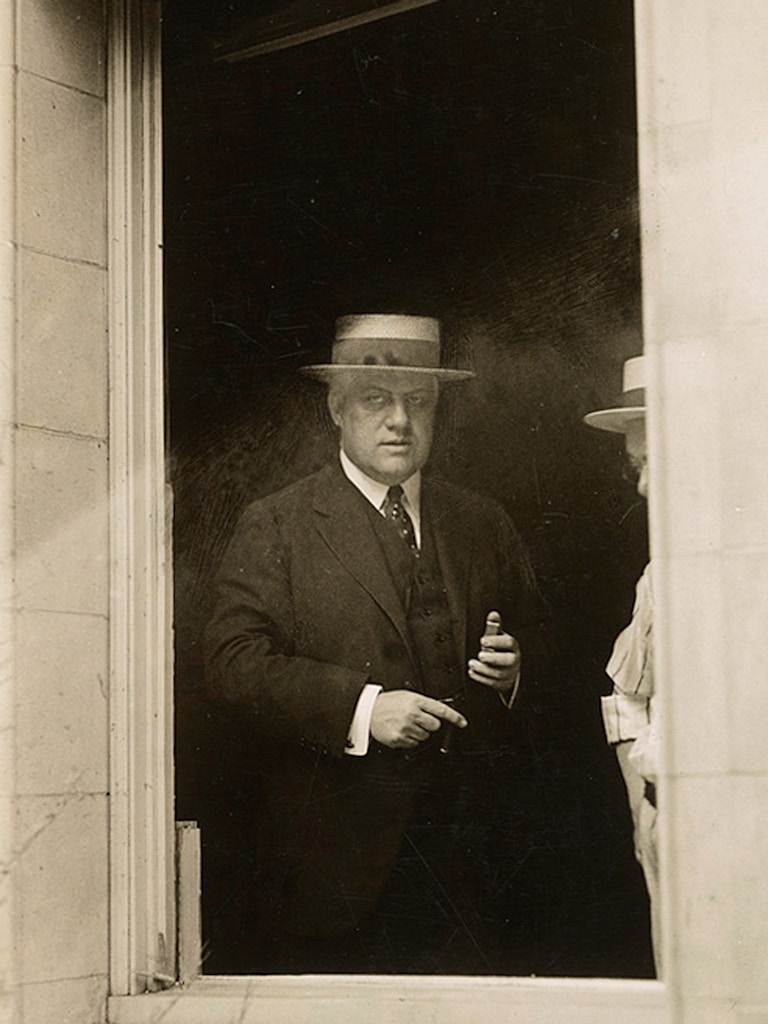
Attorney General A. Mitchell Palmer, seen through the window of his home at in Washington, D.C., after it was bombed on June 2, 1919.

The Palmer Raids, as they came to be known, after Attorney General A. Mitchell Palmer, ushered in an era that tested the nation’s commitment to the civil liberties enshrined in the Constitution. One hundred years later, the FBI continues to target political dissent with a broad mandate, little oversight, and next to no transparency. The FBI continues to routinely conflate dissent with terrorism, and remains particularly fixated on leftist ideologies. Like the old bureau under Palmer, today’s FBI also casts its net around a wide range of civil society and social justice groups as well as racial and religious minorities.

“What is known is that there is a persistent pattern of monitoring civil society activity,” the report concludes, calling for strict oversight and reform of the bureau. “The FBI continuously singles out peace, racial justice, environmental, and economic justice groups for scrutiny. This is consistent with a decades-long pattern of FBI First Amendment abuses and suggests deeply seated political bias.”

After reviewing the report, a spokesperson for the FBI wrote in a statement to The Intercept that every activity the FBI conducts “must uphold the Constitution and be carried out in accordance with federal laws.” The spokesperson added that the bureau’s investigative activities “may not be based solely on the exercise of rights guaranteed by the First Amendment” and that its methods “are subject to multiple layers of oversight.” On its website, the bureau calls the Palmer Raids “certainly not a bright spot for the young Bureau” but adds that they did allow it to “gain valuable experience in terrorism investigations and intelligence work and learn important lessons about the need to protect civil liberties and constitutional rights.”

In fact, FBI violations of civil liberties and constitutional rights continued to be exposed at different points in the bureau’s history — most notably in the aftermath of the civil rights movement and in the post-9/11 years. Yet the bureau’s propensity for the policing of political dissent has remained largely unchallenged, the Defending Rights & Dissent report argues. “In the 100 years since the Palmer Raids,” asks Chip Gibbons, the report’s author, “how much has changed?”

From the Palmer Raids to 9/11

The Palmer Raids were launched on November 7, 1919, on the heels of U.S. government panic about the spread of Bolshevism and anarchism in the country’s nascent labor movement, and following a series of bombings, including one targeting Palmer’s own house. In response, police officers carrying clubs and blackjacks but no arrest warrants stormed apartments and meeting rooms, and rounded up scores of mostly Eastern European and Italian immigrants they accused of being “leftists” and “subversives.” Over several months, 10,000 people were arrested in a dozen cities, with thousands held in detention and ordered deported. While most deportation orders were ultimately invalidated, more than 500 people were forcibly removed, according to the report.

The raids swept up hundreds of people with no connection to political movements and failed to yield anyone responsible for the bombings that had justified them. The abuse resulted in the first official efforts to put a check on the powers of the Bureau of Investigation, which had been established in 1908 over Congress’s opposition. At the time, legislators had feared the bureau would become a “secret police force” used to spy on Americans and infringe on civil liberties, but when Congress adjourned, President Theodore Roosevelt proceeded to set up the bureau anyway. The raids confirmed legislators’ fears.

“It was the first real awakening of a civil liberties consciousness in the country,” said Christopher Finan, author of a book on the Palmer Raids. “Because even though we had had the First Amendment for more than 100 years at that point, and we were philosophically committed to free speech, it hadn’t actually been protected. There really were no protections that could be thrown up to protect people when the Red Scare began.”

While groups like the American Civil Liberties Union, founded months after the raids began, have won important First Amendment battles, repeated legislative efforts to limit the powers of the FBI have been short-lived. Decades after the raids, the man who masterminded them — a 24-year-old J. Edgar Hoover — went on to lead COINTELPRO, perhaps the FBI’s most infamous political policing operation. The revelation that the FBI had engaged in covert efforts to infiltrate, discredit, and sabotage the anti-war and civil rights movements of the 1960s led to a Senate investigation, a moment of national reckoning, and reforms aimed at protecting First Amendment rights from government overreach.

“Unfortunately, after 9/11 those protections were removed and so the abuse that we had was not only predictable, but predicted,” said Mike German, a former FBI agent and outspoken critic of the agency. “It’s easy for a government that is focused on addressing national security threats to quickly begin to view any threat to that government’s hold of power as a security threat, rather than a political threat.”…

The rest here

Be seeing you

J. Edgar Hoover: A law unto himself - CBS News

Posted in Uncategorized | Tagged: , , , , , , | Leave a Comment »

Major Journal Warns Calling Breastfeeding ‘Natural’ – LewRockwell

Posted by M. C. on October 25, 2019

Mother Nature dares to contradict government medicine.

https://www.lewrockwell.com/2019/10/no_author/major-journal-warns-calling-breastfeeding-natural-will-discourage-vaccine-and-formula-use-orwell-spins-in-his-grave/

GreenMedInfo

A study published in the journal Pediatrics raises concern over the use of the term “natural” to describe breastfeeding, even though the weight of evidence (and common sense) indicates prioritizing breastfeeding over man-made formulas or vaccines is the best way to protect your child and the mother’s health. 

As Martucci and Barnhill (2016) misguidedly suggest in their article, [1] “Unintended Consequences of Invoking the “Natural” in Breastfeeding Promotion,” calling breastfeeding “natural” poses countless risks for public health officials and those who wish to promote their “synthetic” or “factory-made” formulas or vaccines. They want to ban the word “natural,” as calling breastfeeding the “natural” option will not “align with public health goals”. They should be concerned. “Natural” breastfeeding benefits highly outweigh “factory-made” formula feeding and has been linked to lower infant mortality, particularly in Sudden Infant Death Syndrome (SIDS). Vaccine manufacturers mistakenly suggest delaying breastfeeding [2] (and all its health benefits) due to breastmilk’s immune properties interfering with vaccine-induced antibody titer elevations (a proxy measure of efficacy used to justify the vaccine schedule but which is falsely equated with bona fide immunity).

Breastfeeding is one of the most highly recommended strategies by public health officials for good reason. It works around the world, and has since time immemorial (when vaccines were non-existent). [3] It is has vast scientific support. [4] It is natural and offers a wide array of health benefits. There are many overall health benefits for the infant and the mom when breastfeeding and more recent research highlights advantages of breastfeeding over formula feeding [5] for infections, cardiovascular diseases, obesity and dietary health, brain health, diabetes, and cancer. Many adverse health effects of vaccinations [6] have been researched and some of the most significant studies are highlighted in the breastfeeding vs vaccines debate.

Overall Health Benefits

“If an infant needs one vaccine that is 100% safe and effective — that would be breast milk” – Dr. Tetyana Obukanych PhD Immunologist

The overall health benefits of breastfeeding – the natural alternative to formula – are well summarized in an article by Brahm and Valdez (2017) entitled “The Benefits of Breastfeeding and Associated Risks of Replacement with Baby Formulas”. [7] Benefits asserted include reducing the risk of infectious and cardiovascular diseases, leukemia, celiac disease, inflammatory bowel disease (IBD), diabetes, attention deficit disorder, sudden infant deaths syndrome (lowered by 36%), and preventing 13% of infant mortality worldwide.

Lonnerdal (2016) [8] points out that the reduced incidence and duration of illnesses, (i.e. obesity, diabetes, and cardiovascular disease), nutrient status, and cognitive development are also benefits of breastfeeding during the first year of an infant’s life. Breast milk proteins, such as “lactoferrin, α-lactalbumin, milk fat globule membrane proteins, and osteopontin”, have bioactivities ranging from “infection protection to nutrient acquisition” (p. S4).

Infections…

Adverse effects of vaccines have been documented and early scheduling of vaccines to infants only exacerbates the problem. Sen and team (2001) studied vaccine frequency, severity and adverse reactions [36] in the UK following DPT/Hib (diphtheria and tetanus toxoids and pertussis/Haemophilus influenzae type B conjugate) immunization in very preterm infants. Of 27 babies vaccinated at 70 days or less, 9 (33.3%) developed major events compared with none when vaccinated over 70 days. Adverse events were noted in 17 of 45 (37.8%) babies: 9 (20%) had major events, i.e. apnea, bradycardia or desaturations, and 8 (17.8%) had minor events, i.e. increased oxygen requirements, temperature instability, poor handling and feed intolerance. Babies with major events were significantly younger (p<0.05), had a lower postmenstrual age (p<0.05) and weighed less (p<0.05) at the time of vaccination compared with babies without major events. The evidence presented makes a compelling case for prioritizing natural breastfeeding (with its overriding benefits) over vaccinations and man-made formulas.

For additional research on the health benefits of breastfeeding in reducing the risk of 80+ diseases use the GreenMedInfo research database on Breastfeeding Health Benefits.

References…

Be seeing you


Posted in Uncategorized | Tagged: , , , , , | Leave a Comment »