Could it be possible that we are on the verge of the next “Lehman Brothers moment”? Deutsche Bank is the most important bank in all of Europe, it has 49 trillion dollars in exposure to derivatives, and most of the largest “too big to fail banks” in the United States have very deep financial connections to the bank. In other words, the global financial system simply cannot afford for Deutsche Bank to fail, and right now it is literally melting down right in front of our eyes. For years I have been warning that this day would come, and even though it has been hit by scandal after scandal, somehow Deutsche Bank was able to survive until now. But after what we have witnessed in recent days, many now believe that the end is near for Deutsche Bank. On July 7th, they really shook up investors all over the globe when they laid off 18,000 employees and announced that they would be completely exiting their global equities trading business…
It takes a lot to rattle Wall Street.
But Deutsche Bank managed to. The beleaguered German giant announced on July 7 that it is laying off 18,000 employees—roughly one-fifth of its global workforce—and pursuing a vast restructuring plan that most notably includes shutting down its global equities trading business.
Though Deutsche’s Bloody Sunday seemed to come out of the blue, it’s actually the culmination of a years-long—some would say decades-long—descent into unprofitability and scandal for the bank, which in the early 1990s set out to make itself into a universal banking powerhouse to rival the behemoths of Wall Street.
These moves may delay Deutsche Bank’s inexorable march into oblivion, but not by much.
And as Deutsche Bank collapses, it could take a whole lot of others down with it at the same time…
Elon just admitted something which is getting very little coverage – and no explanation.
He announced that Tesla will no longer be selling the “affordable” $35,000 Model 3 he promised would be Tesla’s first mass-market electric car. Like so many of Elon’s promises, that one’s out the window, too.
The price of the least expensive Tesla just rose to $39,000. Well, technically $38,990 – to make it go down easier.
That’s still a $4k decrease in “affordability” – and a reality check.
Elon is admitting that electric cars aren’t mass-market cars. That after all the glitzy assurances, after all these years, in the end, they are what they have always been: Specialty cars for people with the disposable income to indulge other-than-economic considerations such as “technology” and – as Elon loves to tout – the driving characteristics of electric cars.
There’s nothing per se objectionable about specialty cars – whether electric or powered by a high-performance boxer six, like a Porsche.
But there is a problem.
There is a hard deck limit to the number of specialty cars that can be manufactured. It is a small number – because most people can’t afford to buy such cars. How many Porsches do you see vs. Corollas?
EVs are Porsches – economically speaking.
Both are cars for people with the ability to spend more than twice the cost of a well-equipped economy car.
Now imagine the government decreed everyone must drive a Porsche. This might not be such a bad thing – provided someone else pays for yours.
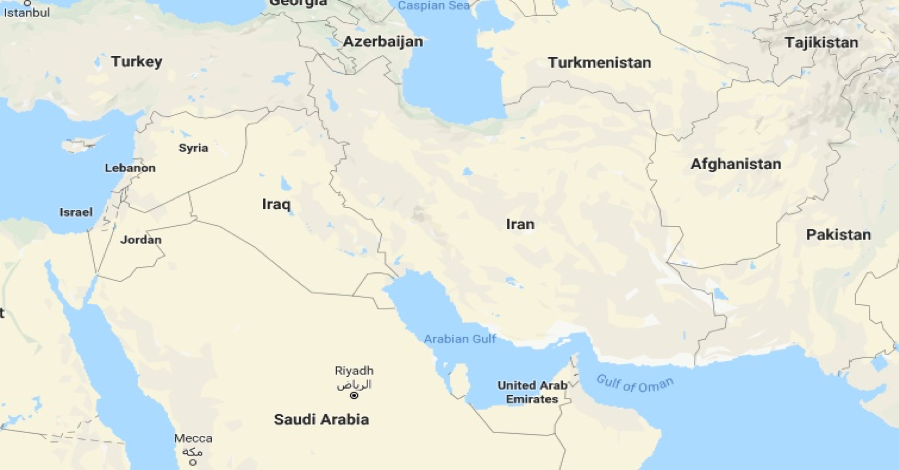
In recent weeks we have seen numerous probing attempts and provocations in and around the Strait of Hormuz — whether false flags or actual events — intended to raise the profile of the US’s unilateral withdrawal from the JCPOA, and renewed US sanctions versus Iran. Iran is pushing the issue with the United States, and is apparently offering a sacrificial pawn on the board (or perhaps knight!) by seizing two British oil tankers alleged to be operating illegally in the Strait of Hormuz.
While it is too soon to predict how the United States and its allies Israel and Saudi Arabia (both sworn enemies of Iran) will react, let’s explore the reasons why any US reactionary response will be largely symbolic, even if that involves a token strike versus Iran.
Global alliances have shifted
Turkey has defacto announced its withdrawal from NATO, by its purchase of S-400 missiles. That purchase and collaboration with Russia guarantees its departure from NATO, even if Turkey has not publicly announced such a withdrawal. Furthermore, while Turkey’s military bases host US aircraft and operations, Turkey says it will not allow its bases to be used in any attack on Iran, by the US.
Iraq, an ally of Iran, has likewise stated that it will not allow its territory to be used as a base for attacking Iran.
Next, Imran Khan’s Pakistan has moved away from its alliance with the US to court China. China is Pakistan’s largest trading partner, and China has guaranteed security to Pakistan for Kashmir. Thus, no bases in Pakistan will be provided to the United States for any attack on Iran.
China and Russia have warned Washington too that it must not attack Iran. Iran has guarantees from Russia, China, Pakistan, Turkey, and even Japan and India that its economic future is secure… despite US sanctions.
So, only Saudia remains as a host for US aggression versus Iran. But Saudia has much to lose by hosting US aggression, especially with Russia pushing OPEC+. And even the largely defunct Arab League opposes US aggression versus Iran, from any Saudi base.
Iran will fight back
Next, consider the military force that Iran has at its disposal. From advanced Grad rockets to the Kornet, expect an announcement soon that S-400’s and other advanced armaments will be provided to Iran to ensure its right to defend itself. That, in conjunction with an already formidable array of defensive weapons to secure Iran’s borders and sea lanes will guarantee a formidable defense.
The United States cannot afford another new war
While the Federal Reserve may print the USD at will, a new war – especially a major war versus Iran – will weaken the US economically, despite the gamed casino numbers we see daily from Wall Street…
The US is not capable of defeating Iran in a conventional war
This time, there is no “coalition of the willing” to posture and pretend that the US has many and varied allies engaged in some just cause to rid the world of evil, as it proclaimed in 1994 versus North Korea, and in 2003 versus Iraq. Apparently, the Marshall Islands, Micronesia, Palau and Solomon Islands have no real grievance versus Iran right now.
But the possibility exists that France, the UK and Germany will consider Iran enough of a threat around the Strait of Hormuz to impose additional sanctions on the country, and increase Naval military patrols to accompany tankers through the Strait. The increased patrols will increase tensions in the region, but should not result in war unless the US takes the bait of Iran sacrificing a knight to leave the West’s queen exposed, ie a greater war in the Middle East which may involve Iraq, Syria, Israel, Lebanon and Saudi Arabia.
Last time, just ten minutes prior to pulling the trigger (depending on accounts!) to consummate the Neocon’s dream for war with Iran, Trump had other ideas. Now, let’s review the reasons the United States cannot initiate a ground war versus Iran.
Most likely candidate here would be to stage US air strikes on Iran from Bagram air base. But at this time Afghanistan seeks closer ties with Iran on trade; for example, to trade with India via Iran’s Chabahar port.
And while the US could stage air strikes from Bagram, to launch a ground attack from this region would be a virtual impossibility. That is, due to mountainous terrain and firmly entrenched and well-armed IRGC mountain troops, neighboring.
Furthermore, it is exceedingly likely that Dostum/Ghani would forbid any attack by the US on Iran from Afghanistan, that would result in a major new war. And note that Dostum is pushing for the removal of US troops from Afghanistan, including its air bases…
What of Iran’s Motives?
The culture that invented the game of chess never makes a move without careful and calculating consideration. Iran has been forced to play black for decades now, and has done so with skill, alacrity, and will take the initiative whenever possible.
Whether Iran has sensed a particular point of weakness in the West at this time, or Iran has hidden agreements in place with significant allies to come to its defense in the event of an US attack, is of course unknown.
That Iran may be holding a surprise move in check with support from its allies must be of extreme concern to the US Hegemon. And eventually that concern must be all of ours, when the hegemon inevitably fails to intimidate and control the board with its white advantage, and its queen is taken.
Thanks to the Washington Post and The New York Times, which have taken valuable time away from their diligent efforts to prove Trump-Putin collusion, they have reminded us in this time of the Fiftieth anniversary of the Moon Landing that it was inherently sexist, the ultimate in “gender bias.”
If anything thinks LewRockwell.com has become The Onion, let me present the two Tweets from those august paragons of journalistic virtue.
From The Washington Post:
From The New York Times:
To those who might think the whole event was a special effects extravaganza hoax, please note that all visual effects technicians of the time who worked on 2001: A Space Odyssey were male—Doug Trumbull, Brian Johnson, Wally Veevers, front projection expert Tom Howard. So there.
Russia Today sums it up best in this video:
Apparently, the American elites don’t just suffer from Trump derangement syndrome. The New York Times and Washington Post clearly reflect sheer lunacy.
The consequences of the Gibraltar affair are only now becoming clear. The seizure of Grace I led directly to Friday’s capture by Iran’s Revolutionary Guards of a British tanker, the Stena Impero, in the Strait of Hormuz. Although it has not made an explicit link, Iran had previously vowed to retaliate for Britain’s Gibraltar “piracy”. Now it has its revenge.
As a result, Britain has been plunged into the middle of an international crisis it is ill-prepared to deal with. The timing could hardly be worse. An untested prime minister, presumably Boris Johnson, will enter Downing Street this week. Britain is on the brink of a disorderly exit from the EU, alienating its closest European partners. And its relationship with Trump’s America is uniquely strained.
Much of this angst could have been avoided. Britain opposed Trump’s decision to quit the 2015 nuclear deal with Iran, the trigger for today’s crisis. It has watched with alarm as the Trump-Bolton policy of “maximum pressure”, involving punitive sanctions and an oil embargo, has radicalised the most moderate Iranians.
Yet even as Britain backed EU attempts to rescue the nuclear deal, Theresa May and Jeremy Hunt, foreign secretary, tried to have it both ways – to keep Trump sweet. They publicly supported Washington’s complaints about Iran’s “destabilising” regional activities and missile programme, and berated Iran when it bypassed agreed nuclear curbs.
A new “inclusive language guide” compiled by Colorado State University asserts that the word “America” is “non-inclusive” and should be avoided.
“CSU lists both “American” and “America” as non-inclusive words “to avoid,” due to the fact that America encompasses more than just the U.S. By referring to the U.S. as America, the guide claims that one “erases other cultures and depicts the United States as the dominant American country.” The school suggests using “U.S. citizen” or “person from the U.S.” as substitutes,” writes Ethan Cai.
The Inclusive Language Guide (PDF) was compiled by Colorado State’s Inclusive Communications Task Force with the goal of “helping communicators practice inclusive language and helping everyone on our campus feel welcomed, respected, and valued.”
The guide explains why “America/American” is a “word/phrase to avoid”:
“The Americas encompass a lot more than the United States. There is South America, Central America, Mexico, Canada, and the Caribbean just to name a few of 42 countries in total. That’s why the word “americano” in Spanish can refer to anything on the American continent. Yet, when we talk about “Americans” in the United States, we’re usually just referring to people from the United States. This erases other cultures and depicts the United States as the dominant American country.”
Instead, people should say “U.S. citizen” or “person from the U.S.”
Other words to avoid include the following;
– Male and female/ladies and gentlemen/Mr./Mrs./Ms (these words are gendered yet we don’t know the person’s gender – there are now infinite genders).
– Straight (when used to refer to heterosexuals, this implies LGBT people are “crooked” or “not normal,” according to the guide).
– Normal person (“implies that ‘other’ people… are not whole or regular people”).
– Handicap parking (could offend disabled people).
– War, cake walk, eenie meenie miney moe, Eskimo, freshman, hip hip hooray!, hold down the fort, starving, and policeman (all of these words are “non-inclusive”).
“Even though these guidelines are suggested and not mandatory, they place students in the uncomfortable position of reciting politically correct talking points that they may not agree with,” said Nicole Neily, president of Speech First. “Words like ‘American,’ ‘male,’ and ‘female’ are used every day by billions of people around the world. When these students graduate, they’re in for a rude awakening!”
“The guide is not about political-correctness or policing grammar, but rather helping communicators practice inclusive language,” the university claims.
Wherein Bernie discovers the concept of anti-central planning competitive market wage rates. The Washington Post’s Matea Gold reports:
“For years, Bernie Sanders has traveled the country advocating for a $15 per hour minimum wage. His campaign organizers say they aren’t making that much, and they’re using his words to protest for higher wages.”
Bernie is apparently, lol, justifying the below $15 per hour rate that he is paying by stating he is meeting market competition.
From the Post:
The Sanders campaign late Thursday issued a statement lauding its union contract. “We know our campaign offers wages and benefits competitive with other campaigns, as is shown by the latest fundraising reports,” Shakir said. “Every member of the campaign, from the candidate on down, joined this movement in order to defeat Donald Trump and transform America. Bernie Sanders is the most pro-worker and pro-labor candidate running for president. We have tremendous staff who are working hard. Bernie and I both strongly believe in the sanctity of the collective bargaining process and we will not deviate from our commitment to it.”
In the year 2000, the CIA gave Iran (slightly and obviously flawed) blueprints for a key component of a nuclear weapon. In 2006 James Risen wrote about this “operation” in his book State of War. In 2015, the United States prosecuted a former CIA agent, Jeffrey Sterling, for supposedly having leaked the story to Risen. In the course of the prosecution, the CIA made public a partially redacted cable that showed that immediately after bestowing its gift on Iran, the CIA had begun efforts to do the same for Iraq. Now in 2019, Sterling is publishing his own book, Unwanted Spy: The Persecution of an American Whistleblower.
I can only make sense of one reason why the CIA hands out blueprints for nuclear bombs (and in the case of Iran planned to deliver actual parts as well). Both Risen and Sterling claim that the goal was to slow down Iran’s nuclear weapons program. Yet we now know that the CIA had no solid knowledge that Iran had any nuclear weapons program, or if it had one how advanced it was. We know that the CIA has been involved in promoting the false belief that Iran is a nuclear threat since the early 1990s. But even assuming that the CIA believed Iran to have a nuclear weapons program in 2000 (which the 2007 U.S. National Intelligence Estimate would later claim had been ended in 2003), we have not been offered any explanation of how providing flawed blueprints could have been imagined to slow such a program down. If the idea is supposed to be that Iran or Iraq would simply waste time building the wrong thing, we run up against two problems. First, they would likely waste vastly more time if working without plans, as compared to working with flawed ones. Second, the flaws in the plans given to Iran were obvious and apparent.
When the former-Russian assigned to deliver the blueprints to the Iranian government immediately spotted the flaws in them, the CIA told him not to worry. But they didn’t tell him that the flawed plans would somehow slow down an Iranian nuclear weapons program. Instead they told him that the flawed plans would somehow reveal to the CIA how far along Iran’s program was. But how that would happen has never been explained either. And it conflicts with something else they told him, namely that they already knew how far along Iran was and that Iran already had the nuclear knowledge that they were providing. My point is not that these assertions were true but that the slow-them-down rationale was not attempted.
One never wants to underestimate incompetence…
We have no possible way of knowing a complete list of countries the U.S. government has handed nuclear weapons plans to. Trump is now giving nuclear weapons secrets to Saudi Arabia in violation of the Nonproliferation Treaty, his oath of office, and common sense…
A ‘noose’ found last month at the University of Michigan Medical School turns out to have been a practice knot used in fishing after an employee came forward to ‘clear the air,’ according to MLive.
An investigation by UM’s Division of Public Safety and Security concluded the spool rope used for medical procedures was being used by a person on a break to practice tying a “Uni Knot,” which is a type of knot used for fishing. After the spool was returned to the storage area, the knot was still in place and discovered the following day by an employee. –MLive
The ‘noose’ was fashioned out of a rope typically used for traction following surgical procedures, according to DPSS Director of Strategic Communications Heather Young, who noted that the loose end of the rope was tied in the knot while still connected to the spool.
Not one to hedge his language amid an ongoing investigation, UM Medical School Dean Marschall Runge said in an employee email following the June 20 discovery of the ‘noose’: “Yesterday, in one of our hospitals, a noose — a symbol of hate and discrimination — was found at the work station of two of our employees,” adding “We have taken immediate action to have this investigated as both an act of discrimination and a criminal act of ethnic intimidation. This act of hate violates all of the values that we hold dear and will not be tolerated.”
‘It was the friends we made along the way…’
Without acknowledging that he participated in ‘sewing racial discord’ with false assumptions, Runge now says that while the incident has affected the entire community, it united people in their hatred of hate (and hate-shaped fishing knots?)…
In short, the whole noose incident managed to bring the community together. And in case you’re interested in learning the Uni Knot, see below:
Be seeing you
Citizen: “What are you protesting against” Johnny: “What have you got?” The Wild One
One contention in the world of politics and academia alike is that money can have a big affect on what people say and do. Specifically, the idea is that money buys votes, money buys influence, and that research grants similarly buy ideological bias in the academic community.
You’ve surely seen the kinds of allegations. Pro-abortion research is assumed to be biased because it’s funded by Planned Parenthood and anti-gun-control research is biased because it’s funded by the NRA. It’s assumed who funds climate science determines whether reports report impending doom or “denialism.”
And then there’s the fact large amounts of research on monetary policy is funded by central banks. Not surprisingly, many therefore argue: central bankers splashing out money on research would never fund research hostile to themselves or to the state. Consequently, many also assume most economists’ positive perception of the Fed must be supported by research money.1
Why Funding Doesn’t Determine the Value of an Argument
While who-funds-what may be important to determining if research dollars are being well spent, this ultimately doesn’t tell us anything about the actual quality of an argument or its related research. Yes, the researchers may be biased, but that doesn’t prove the research is no good.
To determine that, we have to look to the arguments themselves.
After all, even Mises, half a century ago, strongly ridiculed what he called “The Bias Doctrine”:
It does not in the least detract from the soundness and correctness of a theory if the psychological forces that prompted its author are disclosed. The motives that guided the thinker are immaterial to appreciating his achievement ( Theory and History , p. 27)
Indeed, Mises pointed out that “all that counts is whether a doctrine is sound or unsound” (p. 27) and that consequently, “it is immaterial what kinds of motives inspired its author” (p. 28). As often is the case with Mises, he takes apart a fallacious argument and replaces it with the correct logical conclusion. Even if we managed to establish the psychological and pecuniary biases supporting an economist’s erroneous research, it doesn’t really matter one way or the other unless we engage with the actual argument:
Granted that he was biased. But then we must realize that his alleged bias produced theorems which successfully withstood all objections. Reference to a thinker’s bias is no substitute for a refutation of his doctrines by tenable arguments. (p. 28)
Moreover, the very objection that some arguments must be mistaken because their proponent is funded by a particular interest group is itself unscientific. Instead of examining the merits of the case – or the historical likelihood that funding body ideology has impacted past research outcomes – you are examining often unobservable readings in the psychological make-up of the researcher doing the research. In her recent book Thinking In Bets, the former Poker champion Annie Duke outlines the merits of betting in minimizing our preconceived notions and motivated reasoning in favor or accuracy in outcomes:
acceptance or rejection of an idea must not ‘depend on the personal or social attributes of their protagonist’ … [D]on’t disparage or ignore an idea just because you don’t like who or where it came from. When we have a negative opinion about the person delivering the message, we close our minds to what they are saying and miss a lot of learning opportunities because of it. Likewise, when we have a positive opinion of the messenger, we tend to accept the message without much vetting. Both are bad. (pp. 160-161)
Sure, there might be selection issues where the kinds of people that go into politics or gravitate towards (leading) positions in central banks are systematically of a certain persuasion – but to conclude from this that funding generated their bias, and that consequently we can pay no mind to their argument is definitely premature. Instead, we ought to double down and investigate their arguments further – reference to bias of one kind or another is emphatically “no substitute for a refutation of his doctrines by tenable arguments”.
This is not to say that funding organizations never steered the research in an unscientific matter. They might have. But possibility does not prove guilt – and is never more than a reason for further investigation. Whoever invokes the Bought-And-Paid-For objection must, regardless of what they find, engage with the actual argument and the basis of their evidence.
Just like Mises laid out half-a-century ago, accusing a researcher’s funding body for ideological bias does not render his evidence void.