Saudi Arabia and Iran agreed to reopen their embassies on Thursday after their foreign ministers met in China
China has been playing mediator in the ME for a while. The only one not seeing this was the organization trying to get US into a war with China and Russia.
I’ll bet you thought predicting stuff like this was the CIA’s job.
It’s job from the beginning is to foment revolution. You know like killing presidents from…various countries.
CIA Director William Burns visited Saudi Arabia earlier this week to express frustration over Riyadh’s surprise normalization deal with Tehran that was brokered by Beijing, The Wall Street Journal reported Thursday.
According to the Journal, Burns told Crown Prince Mohammed bin Salman that the US “has felt blindsided” by Riyadh’s rapprochement with Iran as well as Syria, two nations under crippling US economic sanctions.
Following the deal with Iran, Saudi Arabia is poised to normalize with Syria. Riyadh is expected to invite Syrian President Bashar al-Assad to an Arab League summit it’s hosting in May. The Biden administration is against regional countries upgrading ties with Syria as it prefers to keep the country isolated as US policy is to prevent reconstruction.
A US official told Reuters that Burns also discussed intelligence cooperation with Riyadh. “The director reinforced our commitment to intelligence cooperation especially in areas of counterterrorism,” the official said.
But as a country, strict neutrality should be observed. Neutrality prevents foreign hatred of America and Americans. Neutrality keeps U.S. soldiers from dying in senseless foreign wars. Neutrality doesn’t drain the treasury. Neutrality ensures that the military is not misused. Neutrality guarantees a noninterventionist foreign policy.
My title is a “yes” or “no” question. But instead of coming out and answering “yes” or “no,” an increasing number of people—liberals and conservatives, Democrats and Republicans—are climbing on the fence and saying “yes, but” or “no, but.”
Let me say it as firmly, as loudly, and as resolutely as I can: Absolutely no, not under any circumstances should the United States go to war with China over Taiwan.
Am I an apologist for “Red” China? Certainly not. I would be among the first to point out that:
China indoctrinates children in its schools from an early age.
The Chinese government engages in religious persecution.
China is a communist county.
The Chinese government is dishonest and untrustworthy.
China is an authoritarian county.
The Chinese government spies on its citizens.
China is a totalitarian country.
The Chinese government violates the human rights of its citizens.
China is an oppressive country.
The Chinese government is a murderous regime.
China operates slave labor “re-education” camps.
In other words, China is like the USSR, our great “ally” in World War II.
In spite of how communist, evil, and treacherous China is, and regardless of how capitalist, good, and trustworthy Taiwan is, no dispute between China and Taiwan is any of our business.
Regardless of the history of China and Taiwan and the relations between the two countries during the twentieth century, nothing that happens in China or Taiwan is any of our business.
Irrespective of the policy of the United States regarding China and Taiwan since World War II, nothing that China does to Taiwan—including making Taiwan uninhabitable for a hundred years and killing every last Taiwanese man, woman, and child—is any of our business.
As individuals, we may not like what happens between the two countries, we may favor one country over the other, we may not want to buy goods made in one of the countries, we may hope that evil befalls one of the countries, and we may pray that God destroys one of the countries.
But as a country, strict neutrality should be observed. Neutrality prevents foreign hatred of America and Americans. Neutrality keeps U.S. soldiers from dying in senseless foreign wars. Neutrality doesn’t drain the treasury. Neutrality ensures that the military is not misused. Neutrality guarantees a noninterventionist foreign policy.
France is a major European NATO ally. China’s emergence as a diplomatic superpower has created a crack in the structure of the U.S.-led alliance.
France is not alone in its willingness to work with China. Where France’s independent position reveals a rift within the U.S.-led alliance, Brazil’s independent position reveals the emergence of other poles in the newly emergent multipolar world.
In March, Chinese President Xi Jinping visited Russian President Vladimir Putin in Moscow, where they not only “reaffirm[ed] the special nature of the Russia-China partnership,” but “signed a statement on deepening the strategic partnership and bilateral ties which are entering a new era.” As Xi was leaving the Kremlin, he told Putin that “Together, we should push forward these changes that have not happened for 100 years.” That goodbye was Xi’s not so coded call for the end of the American century.
In his February 7 State of the Union Address, U.S. President Joe Biden got carried away by his excitement and arrogantly and ineptly went off script and called out, “Name me a world leader who’d change places with Xi Jinping. Name me one. Name me one.”
But the deflating truth is that the world is lining up behind China and Russia’s vision of a multipolar world no longer exclusively led by the United States. From Africa and its unanimous attendance at the recent Russia-Africa in a Multipolar World conference, to the Middle East and its long list of countries lining up to join the Chinese and Russian led multipolar organizations BRICS and the SCO, to Latin America and most of Eurasia and Asia, including India, the weight of the world is going to Xi’s place to balance American hegemony and support a multipolar world.
Biden’s outburst was an insult and confrontation that was a personal microcosm of U.S. provocation and confrontation of China on a global level. And it has had a corrosive and dangerous effect. An angry China is not answering America’s phone calls. Biden had hoped to talk to Xi on the phone in mid-March, but Chinese officials are not responding to U.S. requests to arrange the call. Defense Secretary Lloyd Austin’s calls to set up talks with his Chinese counterpart have also not been answered.
China is emerging as the rock upon which the U.S.-led alliance breaks.
China’s growing economic, diplomatic, and political influence is beginning to be more powerfully felt on the world stage. The rapid growth of international organizations that support China and Russia’s multipolar world vision is just one piece of evidence. China’s emergence as an influential broker is another.
Beijing has become a power that can shape the world, leaving Washington out of the process. They shocked the world in March by brokering a region transforming agreement between archrivals Saudi Arabia and Iran. And they upset the U.S. in February by initiating a peace process for the war in Ukraine. Both initiatives left the U.S. out in the cold.
Microsoft, which has invested billions of dollars into ChatGPT creator OpenAI, announced last month that the system would be integrated into search engine Bing and internet browser Edge, allowing users to locate information or understand websites more easily.
Microsoft telling me how to “understand” (how and what to think) about websites-I feel so much safer.
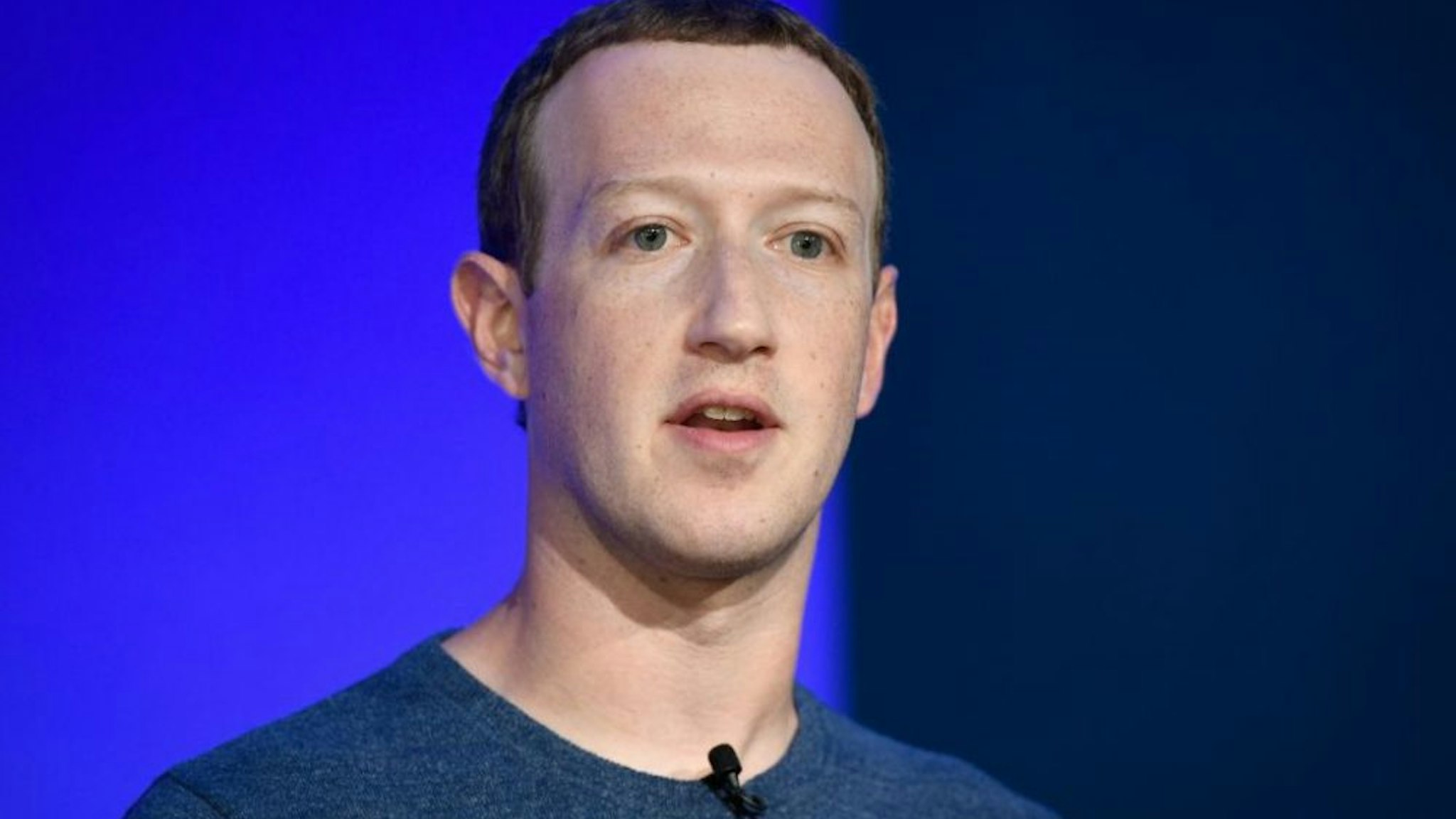
Meta CEO Mark Zuckerberg and other senior executives at the social media firm are spending “most” of their time on various initiatives related to artificial intelligence, according to the company’s chief technology officer.
Meta CTO Andrew Bosworth remarked in a Wednesday interview with Nikkei Asia that the company would soon respond to the release of ChatGPT, a mass-market AI system that can draft emails or write code in a matter of seconds, with innovations of their own. Google and Meta are the vanguards of AI research with respect to the number of studies published.
“We’ve been investing in artificial intelligence for over a decade, and have one of the leading research institutes in the world,” Bosworth told the outlet. He added that Meta employs “hundreds” of AI researchers and is confident they are “at the very forefront” of AI innovation.
Meta expects to commercialize elements of its generative AI capabilities by the end of this year. Companies that advertise on Instagram and Facebook, both owned by Meta, could soon ask an AI system to develop images for their campaigns and thereby save “a lot of time and money.”
The technology will also be used to develop portions of the Metaverse, a virtual reality that Meta is currently building, which inspired the company to change its name from Facebook. “Previously, if I wanted to create a 3D world, I needed to learn a lot of computer graphics and programming,” Bosworth said. “In the future, you might be able to just describe the world you want to create and have the large language model generate that world for you. And so it makes things like content creation much more accessible to more people.”
The development of AI capabilities at Meta comes at a tumultuous moment for the social media firm. Zuckerberg dismissed 27,000 employees in recent months as the company seeks to cut costs and improve profitability. Even amid the economic uncertainty which partially inspired the layoffs, investors have encouraged Zuckerberg to continue funding AI innovation.
Indeed, the problem with the “state-affiliated media” label hasn’t so much been that it exists, but that it will always be unevenly applied. The label gets pinned to outlets like RT and China Daily while left off of known US propaganda outlets like Radio Free Europe/Radio Liberty, Radio Free Asia, and Voice of America. This designation is also nowhere to be seen on other outlets which receive a far greater share of their funding from the state than NPR does, like the UK’s BBC, Australia’s ABC, Canada’s CBC, and the Saudi Press Agency.
American liberals are in an uproar over Twitter’s recent labeling of National Public Radio as “US state-affiliated media”, a designation typically reserved for state media from governments the US is trying to topple like Russia’s RT, China’s CGTN, and Iran’s Press TV.
“Noting the millions of listeners who support and rely upon NPR for ‘independent, fact-based journalism,’ NPR CEO John Lansing stated, ‘NPR stands for freedom of speech and holding the powerful accountable. It is unacceptable for Twitter to label us this way. A vigorous, vibrant free press is essential to the health of our democracy.'”
It is an interesting choice to spotlight NPR’s CEO John Lansing while trying to argue that NPR is not state-affiliated, given that Lansing spent his pre-NPR years as the CEO of the US Agency for Global Media (USAGM). USAGM is the US government narrative management umbrella which runs overt US state propaganda outlets like Radio Free Asia, Radio Free Europe/Radio Liberty, and Voice of America.
In a 1977 article titled “Worldwide Propaganda Network Built by the C.I.A.,” The New York Times explicitly names Radio Liberty, Radio Free Europe, and Radio Free Asia as part of the network constructed by the Central Intelligence Agency to circulate propaganda. As Fair.org’s Bryce Greene recently noted, USAGM received $810 million in US federal funding in 2022, which is more than twice the amount RTreceived from Russia for its global operations in 2021.
Lansing’s history is not an anomaly; NPR is regularly overseen by executives who came directly from senior positions in Washington’s official propaganda network. From 1998 to 2008 NPR’s president was a man named Kevin Klose, who previously ran Radio Free Europe/Radio Liberty and then returned to that job after his decade-long NPR stint. A man named Ken Stern became NPR’s executive vice president in 1999 and was appointed CEO in 2006; prior to that he was the senior advisor to the director of the USAGM’s International Broadcasting Bureau.
So it is a bit funny that John Lansing is now cited complaining about NPR being labeled “state-affiliated media” on Twitter, given that he has devoted his life to promulgating US state-affiliated media. NPR receives funding from the US government, consistently advances the information interests of the US government, and is routinely run by professional propagandists of the US government. You could spend hours of your life just reading through Fair.org’s “NPR” section to see the many, many ways that platform has exhibited wild biases to grease the wheels of the US empire. If NPR is not state-affiliated media, then nobody is.
In his efforts to argue that his outlet is not state-affiliated media, Bill Chappell also hilariously points out that White House Press Secretary Karine Jean-Pierre defended NPR as a wonderful exemplar of journalistic integrity:
When asked about Twitter’s decision during the White House’s daily briefing, press secretary Karine Jean-Pierre declined to address Twitter’s content rules specifically. But she also defended NPR’s journalism.
“There is no doubt of the independence of NPR journalists,” Jean-Pierre said. “If you’ve ever been on the receiving end of their questions, you know this.”
Yeah great argument Bill, “The White House says we’re good so we can’t possibly be US state-affiliated media.”
Defenders of NPR try to argue that the label is inaccurate because NPR only receives a small amount of its funding from the US government (between one percent and 15 percent depending on whose talking points they’re reciting), but this claim is undercut by NPR’s own claim that “Federal funding is essential to public radio’s service to the American public and its continuation is critical for both stations and program producers, including NPR [emphasis theirs].”
It’s probably also worth saying that if I was receiving between one and 15 percent of my funding from the government of Russia or China, I feel quite confident that Twitter would slap me with the “state-affiliated” label immediately, as it has so many others.
The Internet has transformed the way we access knowledge, and its neutral infrastructure is supposed to be free from government influence or corporate censorship. But the internet as we know it is under threat. Sony music has brought a legal attack against a critical part of the Internet’s infrastructure — the DNS resolver. In this video we’ll explain why Sony is attacking critical infrastructure of the internet, why this is terrifying for the future of free online expression and access to information, and what you can do to help.
Some empire managers are so brash about wanting to rule the world that they’ll occasionally voice their position so directly it sounds like an anti-imperialist said it.
We saw just such an instance last Wednesday during a conversation between empire propagandist Sean Hannity and warmongering senator Marco Rubio on Fox News. So frenzied was Rubio in his vitriol about the rise of China on the world stage that he accidentally wound up providing a very good argument against the hegemony of the US dollar.
Rubio began with a rant about how the US is in a “conflict” with China in response to a question from Hannity about whether Xi Jinping is preparing for war with America.
“The bottom line is we’re in a conflict, and I think we have to start talking about it that way,” Rubio said. “I was very young, obviously, at the end of the Cold War, but it’s been about 30 years since there was another superpower on the earth that was in conflict with the United States. We are back in that place. We need to stop pretending like that’s not the case now.”
Hannity repeated the soundbyte he’s been pushing for the last few weeks saying that China, Russia and Iran are a “new Axis of Evil,” then Rubio made a very revealing comment about a recent deal that was struck between China and Brazil.
“Just today, Brazil, the largest country in the Western Hemisphere, cut a trade deal with China,” said Rubio. “They’re going to, from now on, do trade in their own currencies, get right around the dollar. They’re creating a secondary economy in the world totally independent of the United States. We won’t have to talk about sanctions in five years, because there’ll be so many countries transacting in currencies other than the dollar that we won’t have the ability to sanction them.”