A massive international research collaboration that analyzed several dozen rigorous studies focusing on “physical interventions” against COVID-19 and influenza found that they provide little to no protection against infection or illness rates.
The study, published in the peer-reviewed Cochrane Database of Systematic Reviews, is the strongest science to date refuting the basis for mask mandates worldwide.
And of course, the CDC still recommends masking in areas with “high” rates of transmission (fewer than 4% of US counties, as Just the News notes), along with indoor masking in areas with “medium” rates of transmission (27%).
Masks are still required in educational institutions in Democratic strongholds such as New York, New Jersey, Massachusetts, Pennsylvania, Washington and California, according to the Daily Mail. Boston Public Schools denied its “temporary masking protocol” in early January was a “mandate,” following a public letter against the policy by student Enrique Abud Evereteze.
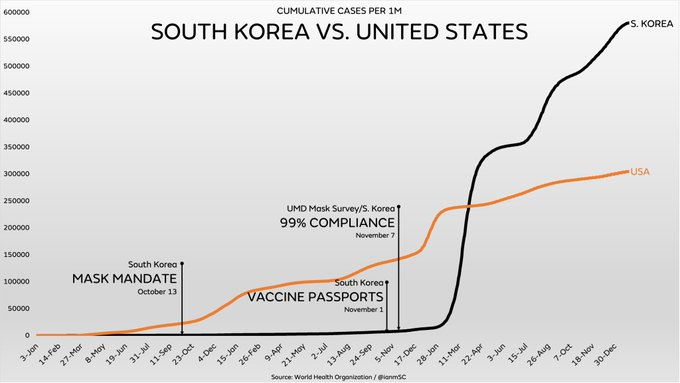
South Korea is still requiring masks on public transport and in medical facilities after dropping COVID mandates in most indoor settings, including gyms, Monday, Reuters reported. -Just the News
According to the Cochrane study, which included the work of researchers at institutions in the U.K., Canada, Australia, Italy and Saudi Arabia, a total of 78 studies were analyzed. Most recent additions to the meta-analysis were 11 new randomized controlled trials.
As unlisted study author Carl Heneghan – who directs the Centre for Evidence-Based Medicine at the University of Oxford noted on Twitter: “Wearing masks in the community probably makes little or no difference to the outcome of influenza‐like illness (ILI)/COVID‐19 like illness compared to not wearing masks.”
That is, the U.S. needed more buyers for its debt. Motivation for a fix grew even more after 1973, when the first oil shock further exacerbated the deficit-fueled price inflation Americans were enduring.
But by 1974, the enormous flood of dollars from the U.S. into Saudi Arabia, the top oil exporter, suggested a solution. Nixon secured an agreement in which the U.S. would buy oil from Saudi Arabia and provide the kingdom military aid and equipment as well. In return, the Saudis would use their dollars to purchase U.S. Treasurys and help finance US budget deficits.
On January 17, the Saudi minister of finance, Mohammed Al-Jadaan, announced that the Saudi state is open to selling oil in currencies other than the dollar. “There are no issues with discussing how we settle our trade arrangements, whether it is in the U.S. dollar, whether it is the euro, whether it is the Saudi riyal,” Al-Jadaan told Bloomberg TV.
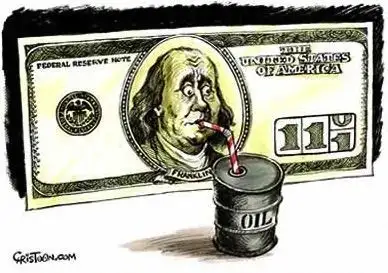
If the Saudi regime does indeed embrace substantial trade in currencies other than the dollar as part of its oil-export business, this would signal a shift away from the dollar as the dominant currency in global oil payments. Or measured another way, this would signal the end of the so-called petrodollar.
But how large of a shift is this? With the increasingly frequent Saudi comments about trading in nondollar currencies, we’ve also seen an increasing number of pundits announcing the “collapse” of the dollar or the imminent implosion of the dollar’s currently outsized global power.
Will a shift away from the dollar in the global oil trade really lead to a big relative decline in the dollar? Probably and eventually. But a number of other dominoes would need to fall first, most especially the domino we call “Eurodollars.”
On the other hand, it would be foolish to simply dismiss the potential end of the Saudi preference for the dollar with hand-waving. The end of the petrodollar would indeed weaken the dollar, even if this would not be a mortal blow in itself. Moreover, it is especially foolhardy to ignore the status of the petrodollar because that status also has geopolitical implications. Saudi comments on the dollar signal that the Saudis no longer consider its alliance with the United States to be as important as it has been since the 1970s. What’s not an immediate economic problem for the U.S. regime or the dollar may nonetheless be an immediate geopolitical problem.
In context, probably the best way to look at the potential end of the petrodollar is to see it as one piece of the dollar-based portion of the global economy. Since the 1950s, the dollar has experienced an immense amount of support in terms of global trade and investment and in terms of dollar reserves held by foreigners. This has greatly propped up demand for U.S. debt and for dollars, and this has had enormous disinflationary effects in the domestic U.S. economy. That is, newly created dollars are soaked up by foreigners who both want and need dollars to pay off dollar-denominated debt and to pad bank reserves. But if global dollar dominance truly is in decline, we could potentially expect both higher domestic price inflation and higher interest rates than what Americans have become accustomed to over the past thirty years. In other words, as the dollar declines, the U.S. regime will no longer be able to monetize debt and heap up immense new deficits without fear of high price inflation or falling Treasury prices. The end of the petrodollar is not a reason to panic right now, but it is the latest sign that the U.S. regime’s power via the dollar is being reined in.
What Is the Petrodollar?
The petrodollar is the result of US efforts to secure access to Middle Eastern oil while also lessening the slide of the dollar in the early 1970s.
By 1974, the U.S. dollar was in a precarious position. In 1971, thanks to profligate spending on both war and domestic welfare programs, the United States could no longer maintain a set global price for gold in line with the Bretton Woods system established in 1944. The value of the dollar in relation to gold fell as the supply of dollars increased as a byproduct of growing deficit spending. Foreign governments and investors began to lose faith in the dollar.
In response to these developments, Richard Nixon announced that the U.S. would abandon the Bretton Woods system. The dollar began to float against other currencies. Not surprisingly, this devaluation did not restore confidence in the dollar. Moreover, the U.S. had made no effort to rein in deficit spending.
The libertarian position on discrimination has nothing to do with racism, sexism, prejudice, bigotry, or hate; it has everything to do with property rights, freedom of contract, freedom of association, and, most importantly, freedom of conscience.
Libertarian philosopher and historian George H. Smith (1949–2022), in his collection of essays titled Freethought and Freedom, incisively remarked that “without freedom of conscience no other freedoms are possible.” It is my contention that freedom of conscience is under attack right now — in the third decade of the twenty-first century — more so than at any other time in history.
Freedom of conscience is not mentioned in the U.S. Constitution. The closest thing to it is found in the First Amendment, which reads: “Congress shall make no law respecting an establishment of religion, or prohibiting the free exercise thereof; or abridging the freedom of speech, or of the press; or the right of the people peaceably to assemble, and to petition the Government for a redress of grievances.” The “establishment” and “free exercise” clauses of the First Amendment are generally thought of as protecting the freedom of religion, which is sometimes identified with the freedom of conscience. Related to this is the prohibition of religious tests for federal office found in the third clause of the Constitution’s article VI.
But freedom of conscience cannot be limited to just religion. The Universal Declaration of Human Rights (UDHR), proclaimed by the United Nations General Assembly in 1948, “sets out, for the first time, fundamental human rights to be universally protected.” Articles 18 and 19 relate to freedom of conscience:
Everyone has the right to freedom of thought, conscience and religion; this right includes freedom to change his religion or belief, and freedom, either alone or in community with others and in public or private, to manifest his religion or belief in teaching, practice, worship and observance.
Everyone has the right to freedom of opinion and expression; this right includes freedom to hold opinions without interference and to seek, receive and impart information and ideas through any media and regardless of frontiers.
The International Covenant on Civil and Political Rights, adopted by the United Nations General Assembly in 1966, and effective in 1976, expanded these two articles and added a caveat to each one:
18.1. Everyone shall have the right to freedom of thought, conscience and religion. This right shall include freedom to have or to adopt a religion or belief of his choice, and freedom, either individually or in community with others and in public or private, to manifest his religion or belief in worship, observance, practice and teaching.
18.2. No one shall be subject to coercion which would impair his freedom to have or to adopt a religion or belief of his choice.
18.3. Freedom to manifest one’s religion or beliefs may be subject only to such limitations as are prescribed by law and are necessary to protect public safety, order, health, or morals or the fundamental rights and freedoms of others.
19.1. Everyone shall have the right to hold opinions without interference.
19.2. Everyone shall have the right to freedom of expression; this right shall include freedom to seek, receive and impart information and ideas of all kinds, regardless of frontiers, either orally, in writing or in print, in the form of art, or through any other media of his choice.
19.3. The exercise of the rights provided for in paragraph 2 of this article carries with it special duties and responsibilities. It may therefore be subject to certain restrictions, but these shall only be such as are provided by law and are necessary: (a) For respect of the rights or reputations of others; (b) For the protection of national security or of public order (ordre public), or of public health or morals.
We may thus define freedom of conscience as the freedom of an individual to hold a viewpoint, belief, or thought — religious or otherwise — without state interference, coercion, or molestation.
Religion
Freedom of religion is certainly a major part of freedom of conscience. Americans generally take religious freedom for granted because it is so ingrained in American culture. Such was not always the case, however, especially in colonial New England. The story of the banishment of Anne Hutchinson and Roger Williams from the Massachusetts Bay Colony is well known. Even for several years after the adoption of the Constitution, the new states of Connecticut, Massachusetts, and New Hampshire had established churches.
But in many countries of the world, even in the twenty-first century, freedom of religion is precarious.
Alan Schein Photography / The Image Bank / Getty Images
Not only did the glut of coronavirus-tied bailouts likely result in billions of dollars of fraud, but it happened because government agencies in many cases did not take even basic steps to prevent it, and in other cases have declined to try to claw back improper payments, the Government Accountability Office said Wednesday.
In a searing, comprehensive report, the nonpartisan auditing arm of Congress excoriated the administration of almost every pandemic-era spending program—and Congress itself—for doling out $4.6 trillion with the prospect of fraud seemingly an afterthought.
Three years after the pandemic began, rampant fraud turned out to be very much a reality.
Unemployment fraud. Coronavirus-era programs flooded cash into a program that already has one of the government’s highest rates of improper payments: unemployment checks. Non-coronavirus unemployment checks already had an improper payment rate of nearly 19% in fiscal year 2021 and more than 22% in 2022. Coronavirus programs flooded this with even easier access to even more cash, with $873 billion in checks to people who said they were laid off or had hours reduced because of coronavirus. In the best-case scenario–that coronavirus unemployment checks were no more fraudulent than the lower 2021 non-coronavirus value–“at least $163 billion in pandemic UI benefits could have been paid improperly,” the GAO said.
And that’s likely a vastly optimistic scenario, because the coronavirus unemployment program “allowed applicants to self-certify their eligibility and did not require them to provide any documentation of self-employment or prior income.” The Department of Labor, which administers the program, also encouraged states to waive a standard 21-day waiting period—the period in which anti-fraud scrutiny often occurs.
Even as it dramatically loosened controls on a program that already had an atrocious rate of improper payments, the Department of Labor did not have a dedicated fraud unit in place, and more than two years after the GAO first warned of the problem in October 2021, DOL said it was merely “in the process” of “proceeding with implementing” the recommendations—long after the pandemic has ended, according to the GAO.
PPP loans. The most prominent coronavirus bailouts—forgivable PPP and EIDL loans for businesses—were administered by the Small Business Administration, which did not even set up an anti-fraud entity until after the program was done giving out money, GAO said.
“SBA did not designate a dedicated antifraud entity until February 2022. This new entity—the Fraud Risk Management Board—is to oversee and coordinate SBA’s fraud risk prevention, detection, and response activities. Further, in March 2021, we found that SBA had not conducted fraud risk assessments for PPP and the COVID-19 EIDL program and recommended that it do so. When SBA developed its fraud risk assessments for the programs in October 2021, PPP had already stopped accepting new applications and the COVID-19 EIDL program would stop at the end of that year,” it wrote.
EIDL. PPP and EIDL together paid out nearly $1 trillion. Yet Congress explicitly blocked SBA from using tax returns to verify a business’s eligibility for EIDL loans, even though it is a highly relevant piece of information. “As a result, SBA relied on self-certification,” GAO said.
GAO reviewed a sample of loans processed without consulting tax returns and found that “about half of them” should not have been approved.
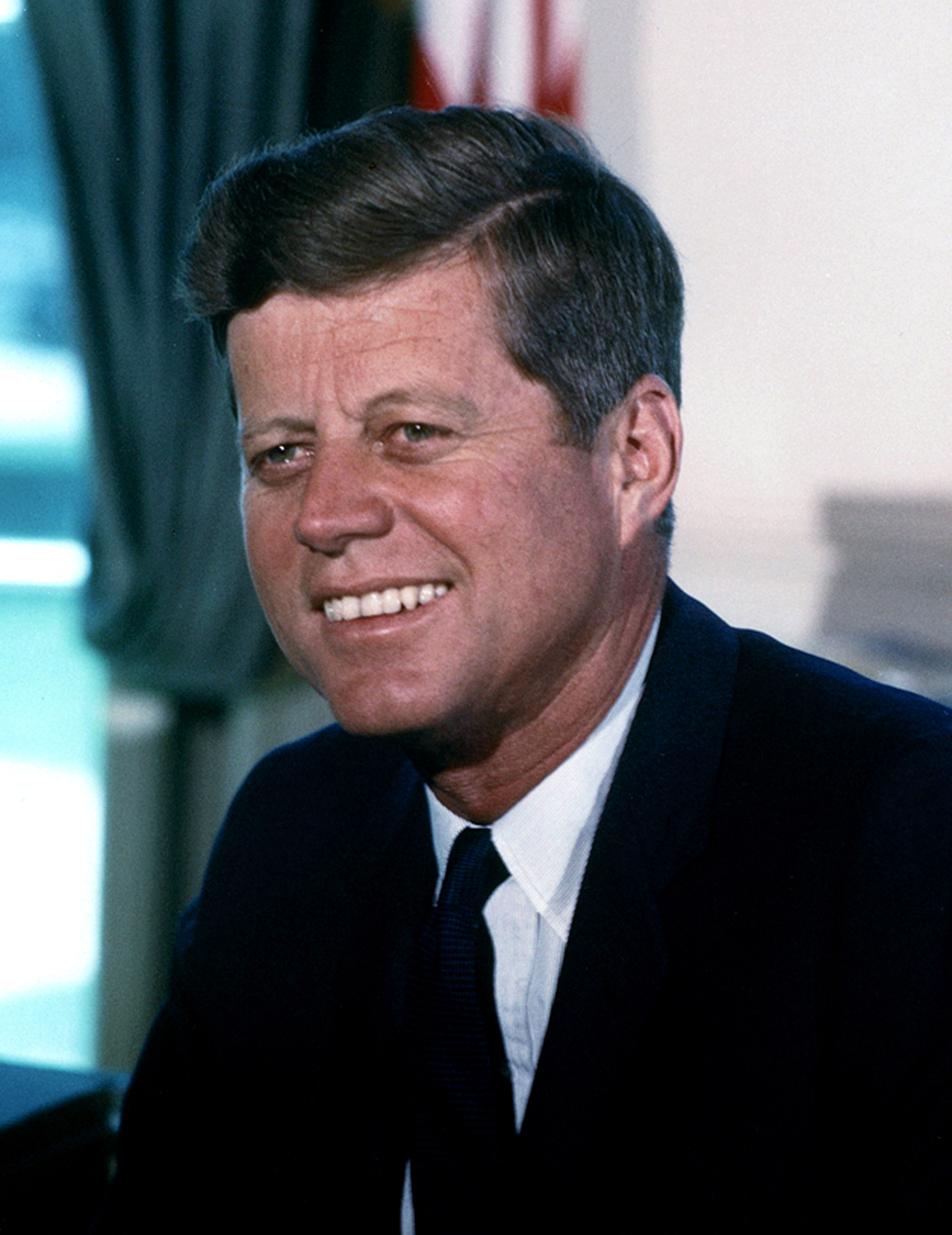
What would Kennedy have done with Ukraine if he had been president? He would never have allowed the Pentagon to use NATO to absorb former members of the Warsaw Pact. He would have also recognized that Russia’s reaction to U.S. nuclear missiles in Ukraine would have been the same as the U.S. reaction to Russian missiles in Ukraine.
President Kennedy had a unique ability that Pentagon generals did not have. He was able to analyze an international crisis by placing himself in the shoes of his adversary in an attempt to understand his adversary’s motives. Doing that enabled him to figure a way out of the crisis that did not involve war. The response of the generals and the Pentagon was always the same: invade, bomb, kill, and destroy.
Today’s generals are no different from their counterparts back in the early 1960s. They are unable to step into the shoes of Russian officials and try to figure out a resolution of the crisis in Ukraine. Instead, their answer is bombs, missiles, death, destruction and, now, tanks. They are simply not mentally equipped to do what Kennedy did.
Understanding how Kennedy resolved the Cuban Missile Crisis goes a long way toward understanding what motivated the Russians to invade Ukraine.
In 1962, Kennedy learned that the Soviet Union (i.e., Russia) was installing nuclear missiles in Cuba. With the full support of the Pentagon, Kennedy decided that he could not let that happen. There was no way that U.S. officials were going to permit the Russians to install nuclear missiles pointed at the United States from only 90 miles away.
And yet, the Soviets had every right in the world to install nuclear missiles in Cuba, so long as it was done with the consent of the Cuban regime. After all, even though the Pentagon and the CIA considered Cuba to be a de facto U.S. colony, Cuba was, in fact, an independent and sovereign country. If it wanted Soviet nuclear missiles in Cuba, it had the right to invite the Soviets to install them there.
Nonetheless, both Kennedy and the Pentagon decided that they would not permit Russia’s nuclear missiles to remain in Cuba. Why? Because they simply did not want nuclear missiles pointed at the U.S. from only 90 miles away. They considered such missiles to a grave threat to U.S. “national security.”
Reflecting how important this principle was to Kennedy, he was even willing to go to nuclear war against Russia to prevent those Russian missiles from being stationed in Cuba. In fact, what is not widely recognized is that Kennedy actually did initiate war against the Soviets. That was when he ordered a military blockade against Soviet ships carrying nuclear weapons to Cuba. Under international law, a blockade is an act of war. Fortunately, the Soviets did not respond with retaliatory war measures.
Yet, Kennedy’s blockade was met with severe disapproval of the generals. It was considered to be too weak. One member of the Joint Chiefs of Staff compared Kennedy’s blockade to British Prime Minister Neville Chamberlain’s appeasement of Hitler at Munich. With their one-track mind, the generals were pressuring Kennedy to bomb and invade Cuba. Their insistence on pressuring Kennedy to take an action that would almost certainly result in nuclear war reflected how strongly they felt about not having Russian missiles so close to America’s border.
Thus, if Kennedy were president today, he wouldn’t need to ask why the Russians felt the same way about having U.S. nuclear missiles stationed in Ukraine, which shares a border with Russia. He would understand that their sentiments would be no different from the sentiments of Kennedy and the Pentagon with respect to Russian nuclear missiles in Cuba.
But there was another factor that Kennedy considered when he stepped into the shoes of the Russians in an attempt to understand the crisis and arrive at a mutually agreeable peaceful resolution of it.
“The counterintelligence and economic espionage efforts emanating from the government of China,” it says, “are a grave threat to the economic well-being and democratic values of the United States. Confronting this threat is the FBI’s top counterintelligence priority.”
Perhaps far worse is the threat to the lives of scores of courageous Chinese agents who have volunteered to spy for the US within their own country. Over the past decade, more than a dozen agents recruited by the CIA have been killed or imprisoned.
It now turns out that it was a Chinese spying suspect within the FBI’s counterintelligence division who may have been largely responsible. This person is said to have gone undetected with his activities for upward of two decades, until his quiet arrest in 2020. In a Hawaiian jail, he has a little-known case wrapped in layers of secrecy as he awaits trail.
In the spring of 2001, Chinese intelligence was on a very big roll. On April 1, a Navy EP-3 electronic spy plane, operated by the National Security Agency and on patrol along the Chinese coast, was forced to make an emergency landing on China’s Hainan Island. After evacuating the crew, Chinese intelligence agents went to work extracting some of the agency’s most secret espionage and cryptologic equipment, along with piles of documents classified above top secret. An enormous windfall, the hardware, software, and documents gave Chinese intelligence critical insight into the NSA’s targets in their country, and the methods used to spy on them. And less than a week earlier, Chinese intelligence came upon another intelligence bonanza when two former CIA clandestine officers, one born in Shanghai and the other in Hong Kong, agreed to change sides.
At the time, four years after the handover from Britain to China, much of Hong Kong remained a world of neon and noise. But now a great many of the tourists haggling over Rolex watches, checking into the Peninsula, and packing Lan Kwai Fong and other nightlife districts had a decidedly Mandarin accent. “Five years ago, everyone looked down on you if you spoke Mandarin,” said a Beijing executive living in Hong Kong. “Now, they know we’re the big bosses with the money.”
Despite predictions that the former colony would turn into a gray vista of hunched workers and nameless noodle shops, travelers from mainland China had become the principal source of visitors to Hong Kong. They were even spending more per capita than their American and Japanese counterparts. And March 2001 was an especially busy time. As soon as the Hong Kong Arts Festival ended, the Hong Kong International Film Festival began.
Deep in the shadows, the city had also become a major crossroads for Eastern and Western spies. “Hong Kong is a place where foreign intelligence agencies conduct a lot of activity,” admitted Li Gang, the deputy director of Beijing’s Liaison Office in the city. As the arts crowd checked out of their rooms and the film fans checked in, two former American spies quietly slipped into another hotel for a discreet rendezvous with their Chinese counterparts. They were brothers who had both worked as clandestine CIA officers in China, and now they were about to switch sides.
Unforeseen by the warparty wizards, the pentagram and their puppet, NATO.
The point of trade sanctions is to make the intended victims (civilian men, women and children) suffer so much that they rise up against their government. Didn’t work, again.
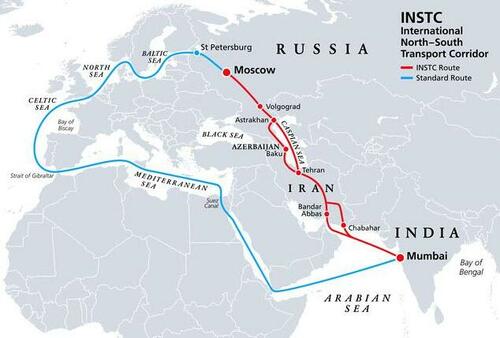
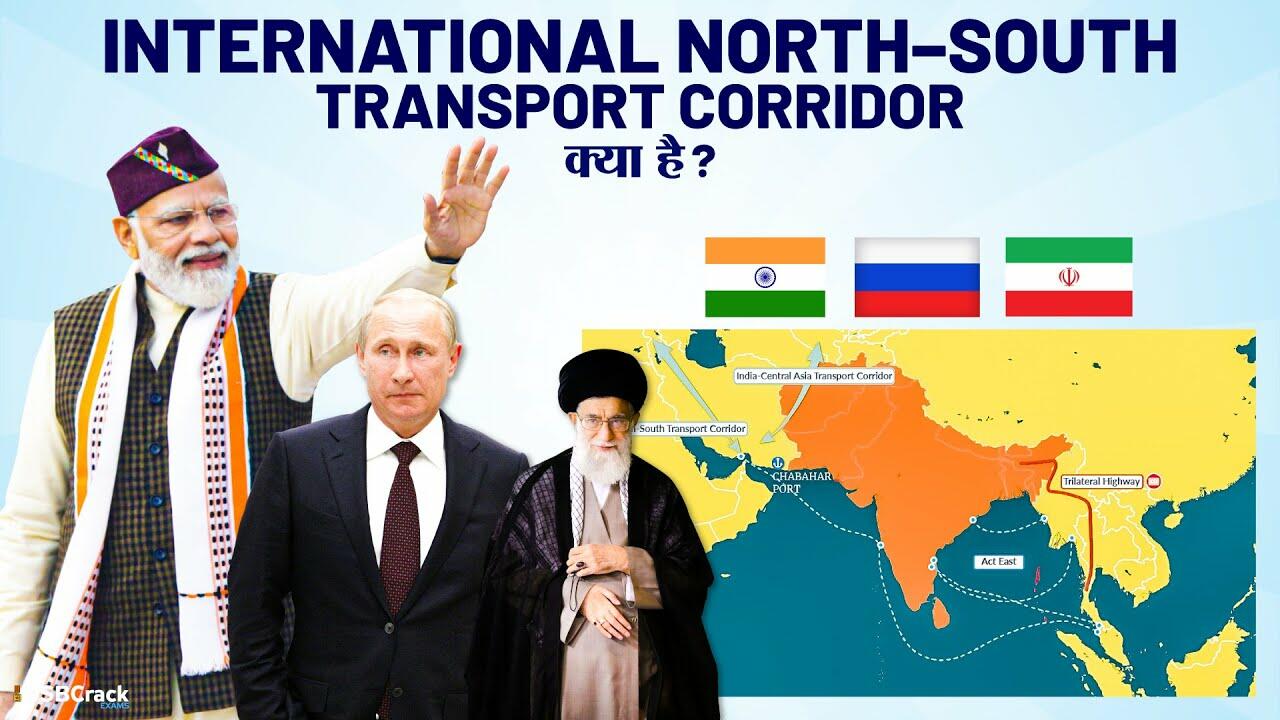
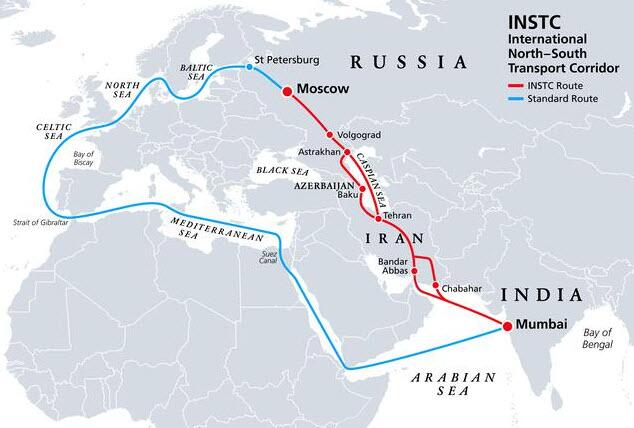
Russia, Iran, and India are speeding up efforts to complete a new transport corridor that would largely cut Europe, its sanctions, and any other threats out of the picture.
The International North-South Transport Corridor (NSTC) is a land-and sea-based 7,200-km long network comprising rail, road and water routes that are aimed at reducing costs and travel time for freight transport in a bid to boost trade between Russia, Iran, Central Asia, India.
For Russia, the “sanction-proof” corridor provides a major export channel to South Asia without needing to go through Europe. But Brussels and Washington, frustrated by their losing in Ukraine and inability to put much of a dent in the Russian economy, could lead them to take more desperate measures.
Lately, Estonia, which has a population smaller than Russia’s armed forces, has been making noise about causing problems in the Gulf of Finland, Estonian Minister of Defense Hanno Pevkur is talking about how Helsinki and Tallinn will integrate their coastal missile defense, which he says would allow the countries to close the Gulf of Finland to Russian warships if necessary. Estonia is also floating the possibility of trying to inspect Russian ships. From Asia Times:
It is unlikely Estonia can carry out any inspections given that it only has two patrol vessels (EML-Roland and EML-Risto) and no other warships except some mine layers. But if Estonia even tried, it would create another friction point that Russia could exploit if it chose.
There is also a strategic element. With Finland joining NATO and already a de facto member, the Gulf of Finland becomes significantly more hostile for Russia and there will be growing pressure on Russian political leaders to take action against a rising threat to Russian security.
While Ukraine is far away, the Russians see NATO’s “ganging up” on Russia as a key issue for Russian security and stability. This brings the Baltic region into sharper focus because Russians see NATO trying to surround them and undercut their economic and military advantages.
It’s hard to take Estonia’s bluster seriously but equally difficult to put anything past the neocons in Washington and their adherents in the Baltics. Regardless, Russia would prefer a trade route with India that saves time and money and avoids Europe.
While NATO’s war against Russia has sped up the cooperation between Moscow, Tehran, and New Delhi, India and Iran are coming under various types of pressure that could delay full implementation of the corridor. And Azerbaijan, a key nexus in the INSTC, is a wildcard as it grows increasingly confrontational with both Iran and Armenia.
First the recent developments on the INSTC:
India is helping to develop the Shahid Beheshti Terminal at Iran’s Chabahar Port in cooperation with the Iranian government.
Iran and Russia recently signed a contract for Russia to build a cargo vessel for Iran to be used at the Caspian port of Solyanka, which is being developed jointly by the two nations as part of efforts to strengthen the Caspian Sea transportation network.
RZD Logistics, a subsidiary of Russian railway monopoly RZD, has begun regular container train services from Moscow to Iran to serve growing trade with India by transloading.
Rezaul Hasan Laskar, the foreign affairs editor at Hindustan Times, says the strategic Chabahar Port in southeastern Iran has “become more important following its growing use” but that “it needs to be connected to Iran’s railway network.” Iran has accelerated that project, and with an investment boost from Russia, is speeding up the completion of the Astara-Rasht-Qazvin railway, another transport corridor that will connect existing railways of Russia, Azerbaijan and Iran to the INSTC.
In the meantime, most of the goods that Russia normally transported across the Baltic Sea to reach the North Sea port of Rotterdam now sail instead to India. Oilprice reports:
Russian crude oil loadings from Baltic ports are on track for a 50% hike from December to January, Reuters reports, citing its own data combined with trader insights.
Russian Urals and KEBCO crude oil loadings specifically from the ports of Primorsk and Ust-Luga will experience the increase, Reuters said, adding that the bulk of those loadings (some 70%) will head to India.
In December, Russia loaded 4.7 million tonnes of Urals and KEBCO from the Baltic ports, Reuters said, citing Refinitiv data.Russia now accounts for approximately 25% of India’s crude purchases, while some sources put it closer to 30%.
The increased trade with Russia is a primary driver bringing New Delhi and Tehran closer together – largely a result of Europe severing itself from Russia. According to Reuters, at the end of November Moscow sent India a list of more than 500 products it wants India exporting to Russia, “including parts for cars, aircraft and trains.” The report added:
Indian imports from Russia have grown nearly five times to $29 billion between Feb. 24 and Nov. 20 compared with $6 billion in the same period a year ago. Exports, meanwhile, have fallen to $1.9 billion from $2.4 billion, the source said. India is hoping to boost its exports to nearly $10 billion over coming months with Russia’s list of requests, according to the government source.
And with all the increased trade, New Delhi and Moscow are looking for more efficient supply lines.