With the delta variant of COVID up us, we are being hit with all the same mandates that we encountered when the pandemic first hit. Join FFF president Jacob G. Hornberger and Citadel professor Richard M. Ebeling as they examine this issue. Go to the podcast https://libertarianangle.libsyn.com/. Please subscribe to our email newsletter FFF Daily here http://eepurl.com/k4k2n.
But it does not matter whether or not he was a competent businessman, because the minute he took his oath of office, he became part of a bureaucracy and any expectations of fiscal or monetary responsibility were immediately lost. This is because it is impossible to run a government “like a business.” There’s no economic calculation and no way of measuring profit.
In 2016, we watched time and time again as polls stated that people liked Donald Trump because he is a businessman and came from outside the world of politics. Dozens of factors led to his election but there is no doubt that among voters this mindset of the potential for a savvy businessman in charge was at play. However, looking at it in hindsight, can we really say that a savvy businessman was ever in charge? Perhaps the most successful libertarian there has ever been, the great Dr. Ron Paul, wrote explaining that when it comes to spending the argument was always “Trump vs. Trump.” He’d speak seeking to cut taxes and then would ask for raises on spending and print money to close the gap. Dr. Paul goes as far as to say, “Following the President’s constantly changing policies can make you dizzy.” So why is it that this businessman would come into office and then act in direct opposition to the business-oriented nature he claimed he’d demonstrate? The easy answer would be that it turned out that he was never really a good businessman to begin with. There may or may not be merit to this argument. But it does not matter whether or not he was a competent businessman, because the minute he took his oath of office, he became part of a bureaucracy and any expectations of fiscal or monetary responsibility were immediately lost. This is because it is impossible to run a government “like a business.” There’s no economic calculation and no way of measuring profit.
What makes an entrepreneur so successful is his ability to allocate scarce resources to their most profitable ends. This is achieved through economic calculation. Under normal market conditions, prices allow a bright entrepreneur to take the necessary risks to direct resources where he understands they would be most profitable. Some are unsuccessful in their attempts but the ones that do this correctly are the people we as a society end up deeming as savvy businessmen and businesswomen.
The difference between such an individual and a bureaucrat is described by Ludwig von Mises in his book Bureaucracy: a bureaucrat is one who manages “affairs which cannot be checked by economic calculation.” A government official finds him-/herself in a completely different environment where prices do not adequately reflect market conditions, and as a result, even one who would’ve been the most successful of entrepreneurs is now stripped of his most useful tool and can no longer calculate successfully. This is one of the most pressing reasons that governments time and time again make such atrocious decisions. It is also why the minute a businessman/-woman takes an oath of office, he/she is no longer a bright entrepreneur but is immediately dropped to the level of bureaucrat. This is explained best by Mises, later in Bureaucracy:
It is vain to advocate a bureaucratic reform through the appointment of businessmen as heads of various departments. The quality of being an entrepreneur is not inherent in the personality of the entrepreneur; it is inherent in the position which he occupies in the framework of market society. A former entrepreneur who is given charge of a government bureau is in this capacity no longer a businessman but a bureaucrat. His objective can no longer be profit, but compliance with the rules and regulations. As head of a bureau he may have the power to alter some minor rules and some matters of internal procedure. But the setting of the bureau’s activities is determined by rules and regulations which are beyond his reach.
It is for this reason that I claim it never mattered whether Donald Trump is a savvy businessman or not. If he is not, then the point is moot; but even if he is, no bureaucrat has the tools to steer in the right direction. This, however, is most important not looking back at Donald Trump, but rather looking forward at future elections. In 2024 we are likely to see presidential candidates explaining their past experience, in 2022 we are likely to see candidates in the midterm elections leaning on the same kinds of credentials, and most certainly in your own local elections you will hear budding young bureaucrats claim their business experience will give them the ability to more successfully lead your town. This is not to say one must never support business-experienced candidates—plenty of them do understand a great many things and may be skilled in other ways. But it’s also helpful to remember that business experience is not an especially helpful tool that a candidate brings to the table. Author:
Connor Mortell graduated from Texas Christian University with a BBA in finance, minoring in Chinese language and culture. After graduation, he worked as a legislative aide in the Florida House of Representatives from 2019–21. Currently he is an MBA student at Florida State University. Additionally, he is a graduate of Mises University, where he passed the Mündliche Prüfung Viva Voce Exam on economics.
President Biden’s “Justice” Department has directed the FBI to investigate parents attending school board meetings to protest mandatory mask mandates and the teaching of Marxist “Critical Race Theory” for possible “domestic terrorism.” Is this about protecting school boards…or silencing political opposition? Also today, the debate over “natural immunity” is heating up.
As a result, the police and other government agents have been generally empowered to probe, poke, pinch, taser, search, seize, strip and generally manhandle anyone they see fit in almost any circumstance.
“Rights aren’t rights if someone can take them away. They’re privileges.”—George Carlin
You think you’ve got rights? Think again.
All of those freedoms we cherish—the ones enshrined in the Constitution, the ones that affirm our right to free speech and assembly, due process, privacy, bodily integrity, the right to not have police seize our property without a warrant, or search and detain us without probable cause—amount to nothing when the government and its agents are allowed to disregard those prohibitions on government overreach at will.
This is the grim reality of life in the American police state.
In fact, in the face of the government’s ongoing power grabs, our so-called rights have been reduced to mere technicalities, privileges that can be granted and taken away, all with the general blessing of the courts.
This is what one would call a slow death by a thousand cuts, only it’s the Constitution being inexorably bled to death by the very institution (the judicial branch of government) that is supposed to be protecting it (and us) from government abuse.
Court pundits, fixated on a handful of politically charged cases before the U.S. Supreme Court this term dealing with abortion, gun rights and COVID-19 mandates, have failed to recognize that the Supreme Court—and the courts in general—sold us out long ago.
With each passing day, it becomes increasingly clear that Americans can no longer rely on the courts to “take the government off the backs of the people,” in the words of Supreme Court Justice William O. Douglas. When presented with an opportunity to loosen the government’s noose that keeps getting cinched tighter and tighter around the necks of the American people, what does our current Supreme Court usually do?
It ducks. Prevaricates. Remains silent. Speaks to the narrowest possible concern.
More often than not, it gives the government and its corporate sponsors the benefit of the doubt, seemingly more concerned with establishing order and protecting government interests than with upholding the rights of the people enshrined in the U.S. Constitution.
Rarely do the concerns of the populace prevail.
Every so often, the justices toss a bone to those who fear they have abdicated their allegiance to the Constitution. Too often, however, the Supreme Court tends to march in lockstep with the police state.
On Oct. 3, the International Consortium of Investigative Journalists (ICIJ) and its affiliates began publishing stories about the Pandora Papers—a trove of 2.94 terabytes of data comprising some 11.9 million records, reportedly exposing the finances of the world’s wealthy elite.
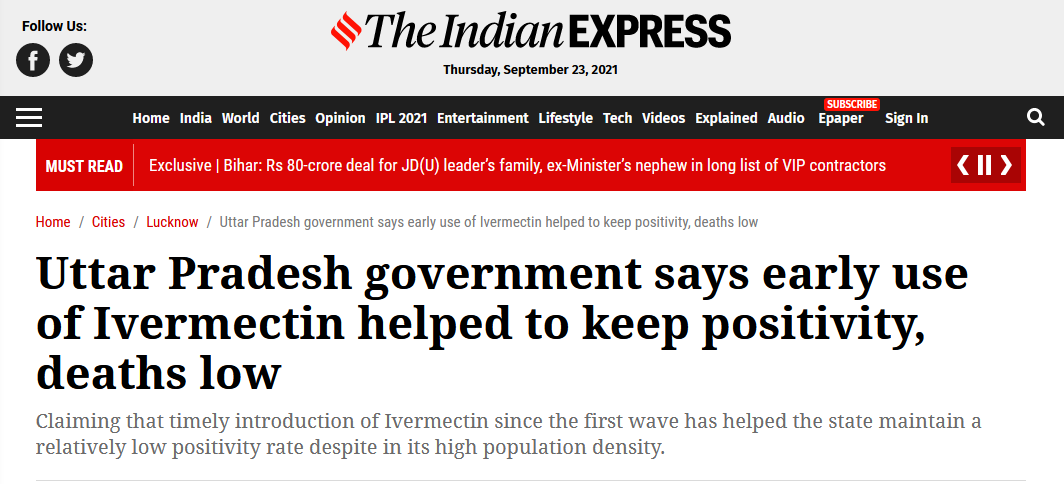
Merck’s new ‘not Ivermectin’ Covid-19 treatment, molnupiravir, costs $17.74 to produce – yet the company is charging the US government $712 for the treatment – a 40x markup, according to The Intercept, citing a report issued last week by the Harvard School of Public Health and King’s College Hospital in London.The pill, originally developed using US government funds as a possible treatment for Venezuelan equine encephalitis, cut the risk of hospitalization and death in half in a randomized trial of 775 adults with mild/moderate Covid who were considered at high risk for disease due to comorbidities such as obesity, diabetes and heart disease. The trial was stopped early so the company could apply for and emergency use authorization (EUA). The drug did not benefit patients who were already hospitalized with severe disease.
The reality, however, is quite something else. While a failure to raise the debt ceiling would no doubt cause short-term disruptions, the fact is the medium- and long-term effects would prove beneficial by reining in the regime’s chokehold on the American economy and financial system.
Ultimately, when a media pundit or Janet Yellen predicts the end of the world if debt doesn’t continue to skyrocket ever upward, they are simply calling for a continuation of the status quo.
The Biden administration’s rhetoric on the debt ceiling has become nothing short of apocalyptic. The Treasury Department has announced that a failure to increase the debt ceiling “would have catastrophic economic consequences” and would, as NBC news claims, constitute a “doomsday scenario” that would “spark a financial crisis and plunge the economy into recession.”
Apparently, the memo went out to the debt peddlers that they are not to hold back when sowing maximum fear over the thought that the U.S. might government might pause its incessant debt accumulation even for a few days.
The reality, however, is quite something else. While a failure to raise the debt ceiling would no doubt cause short-term disruptions, the fact is the medium- and long-term effects would prove beneficial by reining in the regime’s chokehold on the American economy and financial system.
This is explained in a recent column by Peter St. Onge in which he examines just how much of a problem default really is:
In 2021 the U.S. government plans to spend $6.8 trillion. Of which about half is borrowed—$3 trillion. So if they can’t raise the ceiling, they’d have to cut that $3 trillion.
Mainstream media, naturally, claims this is the end of the world. CBS estimates it would cost 6 million jobs and $15 trillion in lost wealth—comparable to the 2008 crisis, which was also caused by the federal government. CNN, more colorfully, claims cascading job losses and “a near-freeze in credit markets.” They conclude, falsely, that “No one would be spared.”
Considering the source, we can guess these predictions are overblown. So what would happen?
Well, $3 trillion is a lot of money—roughly 15% of America’s GDP. But we have to remember where that $3 trillion came from. The government, after all, doesn’t actually create anything, every dollar it spends came out of somebody else’s pocket. Whose pocket? Part of the $3 trillion was bid away from private borrowers like businesses, and the rest was siphoned from peoples’ savings by the Federal Reserve creating new money.
This means that, yes, GDP would decline sharply. But wealth would actually grow, perhaps substantially. The businesses would be able to buy things they need, while the savers keep their money that was doing useful things like paying their retirement.
So GDP drops, wealth soars.
Now, there will be near-term pain, simply because the GDP drop comes before the private borrowing ramps up, while those retirement savings are no longer being siphoned to pay for parties at strip clubs or, say, another trillion for farting cows.
So, yes, it will be a sharp drop in GDP. But so long as government stays out of the way, choosing the prudent 1920 response of doing nothing, the recovery will be very rapid. Why would they do nothing? After all, governments don’t like staying out of the way these days. Because a government that suddenly loses half it’s budget is going to find a lot of things not worth doing. Given a choice between defunding government workers’ pensions or defunding economy-crushing Green New Deals, governments will choose their own.
So that’s short-term: pain, but less than it seems. And that’s where the magic begins. Because ending deficits fundamentally reduces governments’ long-term ability to prey on the people’s wealth.
This is because debt and money printers are much less obvious than taxes, which are painful and make more enemies. So a default becomes a “back door” to move government back towards its traditional “parasite” role rather than the “predator” role it’s taken on since Nixon unleashed the money printers. Especially since COVID-19, when lockdowns were bought with fresh money and deficits. I wrote about this predatory evolution a few months ago, but the bottom line is government default is a tremendous investment in our future prosperity.
Ultimately, when a media pundit or Janet Yellen predicts the end of the world if debt doesn’t continue to skyrocket ever upward, they are simply calling for a continuation of the status quo.
And what does the status quo mean? It means a world in which the U.S. government continues to spent trillions of dollars it doesn’t have, made possible through monetizing massive amounts of debt and forcing taxpayers to devote ever more of their own wealth and income to paying off an ever-more-huge chunk of interest.
It also means more government spending, which—regardless of whether it’s funded by debt or by taxes—causes malinvestment and, through the redistribution of wealth, rewards the politically powerful at the expense of everyone else. In other words, its keeps Pentagon generals and Big Pharma executives living in luxury while the taxpayers are lectured about the need to “pay America’s bills.”
Rather, as Mark Thornton noted in 2011, the right thing to do is lower the debt ceiling. Thornton explains the many benefits, ranging from effective deregulation to freeing up capital for the private sector:
If Congress passed legislation that systematically reduced the debt ceiling over time, the economy could be rebuilt on a solid foundation. Entrepreneurs in the productive sectors would realize that an ever-increasing proportion of resources (land, labor, and capital) would be at their disposal, while companies that capitalized on the federal budget would have an ever-declining share of such resources.
Congress would have to cut the pay and benefits of its employees (FDR cut them by 25 percent in the depths of the Great Depression) as well as the number of such employees. Real wage rates would decline, allowing entrepreneurs to hire more employees to produce consumer-valued goods.
Congress would have to cut back on its far-flung regulatory operations, which are in fact one of the biggest drags on the economy due to the burden and uncertainty that Obama and Congress have created in terms of healthcare, financial-market, and environmental regulations. A recent study by the Phoenix Center found that even a small reduction of 5 percent, or $2.8 billion, in the federal regulatory budget would result in about $75 billion in increased private-sector GDP each year and the addition of 1.2 million jobs annually. Eliminating the job of even a single regulator grows the American economy by $6.2 million and creates nearly 100 private-sector jobs annually.
Under a reduced debt ceiling, the federal government would also have to sell off some of its resources. It has tens of thousands of buildings that are no longer in use and tens of thousands of buildings that are significantly underused—about 75,000 buildings in total. It also controls over 400 million acres of land, or over 20 percent of all land outside of Alaska, which is almost wholly owned by the government. There is also the Strategic Petroleum Reserve and many other assets that could be sold off to cover short-term budget shortfalls.
Of course, reducing the debt ceiling would force the government to stop borrowing so much money from credit markets. This would leave significantly more credit available for the private sector. The shortage of capital is one of the most often cited reasons for the failure of the economy to recover.
Lowering the debt ceiling would force federal-government budget cutting on a large scale, and this would free up resources (labor, land, and capital) and force a cutback in the federal government’s regulatory apparatus. This would put Americans back to work producing consumer-valued goods.
Unfortunately, the public has been fed a steady diet of rhetoric in which any reduction in government spending will bring economic Armageddon. But it’s all based on economic myths, and Thornton concludes:
Passing an increase in the debt ceiling merely perpetuates the myth that there is any ceiling or control or limit on the government’s ability to waste resources in the short run and its willingness to pass the burden of this squander onto future generations.



 by Tyler Durden