It is no secret that the student debt burden in America, now estimated at a cumulative $1.64 trillion, is one of the greatest scandals of a scandal-debauched age. According to Forbes, it is now the second-highest consumer debt category, higher than both credit card and auto loan debt, and behind only mortgage debt. It represents a crisis of national proportions.
Notwithstanding the rosy assumptions we sometimes come across, refinancing is merely a stopgap measure that only marginally relieves the pressure blighting the lives of graduates. Student loan forgiveness, a more dramatic attempt to deal with the problem, comes in several forms, the most popular of which are Public Service Loan Forgiveness and Teacher Loan Forgiveness. These desultory programs are clearly insufficient to address the magnitude of the predicament in which approximately 45 million graduates find themselves encumbered by oppressive university loans and shadowed by the specter of default. By the same token, such provisions come into effect only after 120 qualifying payments and bristling with qualifying conditions.
The Trump administration has proposed an alternative measure. According to Education Secretary Betsy DeVos, “The administration feels that incentivizing one type of work and one type of job over another is not called for. And we have a demand in our over 7 million jobs going unfilled today, and favoring one type of pursuit over another type of pursuit philosophically doesn’t line up with where we are.” The proposed solution is “a single income-driven repayment (IDR) plan,” involving “affordable monthly payments based on… income,” with the balance to be forgiven after 15 years of repayment. While a distinct improvement on current practice, this solution does not go far enough.
Here are the salient facts. Annual tuition fees and assorted costs at the most prestigious colleges and universities range from $70,326 to $75,003. Many students who have paid such prohibitive fees and ancillary expenses for the privilege of graduating into a competitive and remorseless world now find themselves with degrees that may be worth little in the marketplace, stranding them with debt that may never be repaid. How a degree in Gender Studies or Sociology or Critical Race Studies will enable them to make their way in the world and honor their obligations is obviously moot. Others have found paying jobs but are saddled throughout their earning years with crippling liabilities.
At the same time, many of these universities—and in particular the major players in the academic arena—are awash in funds, thanks to federal and state funding for both public and private (for profit) institutions, including the recent upsurge in Pell Grants, amounting to hundreds of billion dollars. Add to this largesse significant alumni donations. Additionally, universities like Harvard, Yale, Stanford, and Georgetown—among others—profit from hundreds of millions in foreign funding in the form of gifts and contracts flowing mainly from China, Russia, Saudi Arabia, and Qatar. These endowments remain “massively underreported.” The universities are floating on a sea of funds, both disclosed and undisclosed.
The disproportion between the plight of indebted students and the hefty emoluments enjoyed by the universities is staggering. Why, then, should these institutions earmark such financial surplus to overpay their professors, far too many of whom are incompetent scholars, “social justice” warriors, redundant feminists, and leftist hacks? Why should colleges devote their resources to hiring intrusive, noxious, and superfluous diversity officers who do inestimable harm to parietal relations, and to lining the pockets of raptorial administrators who eventually retire into obscene, pension-rich comfort? Meanwhile their graduate cohort labors under a crushing, hope-destroying load of unsustainable debt.
American education is a cultural disaster, a socialist racket, a bureaucratic nightmare, and a fiscal shakedown operation with a predatory lien on the future of its graduate population. Perhaps the only way to prevent the continuation of the vicious cycle is to penalize those universities that “sell” expensive and/or expendable degrees, a product that often harms the buyer, a promissory note without the promise. A way must be found to extricate students from the economic and intellectual travesty the university syndicate has inflicted upon them and that compensates students for the damage from which the universities have profited. Debt must be proportionately forgiven, not merely moderated and deferred. It seems reasonable for federal and selective state governments to arrive at a formula whereby a predetermined portion of student debt—30, 40, 50 per cent?—would be waived and the shortfall recouped from university budgets, endowments, and investments. Federal and state authorities would agree to forfeit a percentage of student debt, the deficit to be made up by a levy upon university surplusage.
This policy would have the added benefit of forcing universities to shed unnecessary fat. Salaries would need to be reduced, tenure rethought, diversity and equity personnel pruned away, and golden handshakes turned into bronze. Tuition fees and costs would also need to become prudential in order to avoid what would amount to a fiscal surcharge on future debt redemption. Moreover, in announcing the intent to undertake a program targeting massive debt relief, the president could tap into the millennial and student vote by docking universities for their wastefulness, avarice, and indifference to the future prospects of their graduates, and so affording students and graduates at least partial deliverance from long-term economic distress.
Obviously, an initiative of this nature would be procedurally daunting and financially complex. Some would consider it unworkable, and I am not so naïve as to believe such long-needed legislation would be readily passed. A counter-argument would entail scrapping federal funding of the collegiate system altogether, compelling universities to become competitive by lowering fees, cutting overhead, laying off drones, hiring real teachers and true scholars, and generally husbanding their resources. But this strategy strikes me as even more unlikely. Nonetheless, the proposal itself of partial debt reclamation by bleeding university reserves would be a welcome start to redressing an ongoing inequity, prompting a young, politically hostile franchise toward a reconsideration of its voting habits, and Making America Good Again.
Many volumes have been written about the Great Depression and its impact on the lives of millions of Americans. Historians, economists, and politicians have all combed the wreckage searching for the “black box” that will reveal the cause of this legendary tragedy. Sadly, all too many of them decide to abandon their search, finding it easier perhaps to circulate a host of false and harmful conclusions about the events that caused the Great Depression seven decades ago.
How bad was the Great Depression? Over the four years from 1929 to 1933, production at the nation’s factories, mines, and utilities fell by more than half. People’s real disposable incomes dropped 28 percent. Stock prices collapsed to one-tenth of their pre-crash height. The number of unemployed Americans rose from 1.6 million in 1929 to 12.8 million in 1933. One of every four workers was out of a job at the Depression’s nadir, and ugly rumors of revolt simmered for the first time since the Civil War.
Old myths never die; they just keep showing up in college economics and political science textbooks. Students today are frequently taught that unfettered free enterprise collapsed of its own weight in 1929, paving the way for a decade-long economic depression full of hardship and misery. President Herbert Hoover is presented as an advocate of “hands-off,” or laissez-faire, economic policy, while his successor, Franklin Roosevelt, is the economic savior whose policies brought us recovery. This popular account of the Depression belongs in a book of fairy tales and not in a serious discussion of economic history, as a review of the facts demonstrates.
The Great, Great, Great, Great Depression
To properly understand the events of the time, it is appropriate to view the Great Depression as not one, but four consecutive depressions rolled into one. Professor Hans Sennholz has labeled these four “phases” as follows: the business cycle; the disintegration of the world economy; the New Deal; and the Wagner Act.[1]
The first phase explains why the crash of 1929 happened in the first place; the other three show how government intervention kept the economy in a stupor for over a decade.
Phase I: The Business Cycle
The Great Depression was not the country’s first depression, though it proved to be the longest. The common thread woven through the several earlier debacles was disastrous manipulation of the money supply by government. For various reasons, government policies were adopted that ballooned the quantity of money and credit. A boom resulted, followed later by a painful day of reckoning. None of America’s depressions prior to 1929, however, lasted more than four years and most of them were over in two. The Great Depression lasted for a dozen years because the government compounded its monetary errors with a series of harmful interventions.
Most monetary economists, particularly those of the “Austrian school,” have observed the close relationship between money supply and economic activity. When government inflates the money and credit supply, interest rates at first fall. Businesses invest this “easy money” in new production projects and a boom takes place in capital goods. As the boom matures, business costs rise, interest rates readjust upward, and profits are squeezed. The easy-money effects thus wear off and the monetary authorities, fearing price inflation, slow the growth of or even contract the money supply. In either case, the manipulation is enough to knock out the shaky supports from underneath the economic house of cards.
One of the most thorough and meticulously documented accounts of the Fed’s inflationary actions prior to 1929 is America’s Great Depression by the late Murray Rothbard. Using a broad measure that includes currency, demand and time deposits, and other ingredients, Rothbard estimated that the Federal Reserve expanded the money supply by more than 60 percent from mid-1921 to mid-1929.[2] The flood of easy money drove interest rates down, pushed the stock market to dizzy heights, and gave birth to the “Roaring Twenties.”
By early 1929, the Federal Reserve was taking the punch away from the party. It choked off the money supply, raised interest rates, and for the next three years presided over a money supply that shrank by 30 percent. This deflation following the inflation wrenched the economy from tremendous boom to colossal bust.
The “smart” money—the Bernard Baruchs and the Joseph Kennedys who watched things like money supply—saw that the party was coming to an end before most other Americans did. Baruch actually began selling stocks and buying bonds and gold as early as 1928; Kennedy did likewise, commenting, “only a fool holds out for the top dollar.”[3]
When the masses of investors eventually sensed the change in Fed policy, the stampede was underway. The stock market, after nearly two months of moderate decline, plunged on “Black Thursday”—October 24, 1929—as the pessimistic view of large and knowledgeable investors spread.
The stock market crash was only a symptom—not the cause—of the Great Depression: the market rose and fell in near synchronization with what the Fed was doing.
Phase II: Disintegration of the World Economy
If this crash had been like previous ones, the subsequent hard times might have ended in a year or two. But unprecedented political bungling instead prolonged the misery for twelve long years.
Unemployment in 1930 averaged a mildly recessionary 8.9 percent, up from 3.2 percent in 1929. It shot up rapidly until peaking out at more than 25 percent in 1933. Until March 1933, these were the years of President Herbert Hoover—the man that anti-capitalists depict as a champion of noninterventionist, laissez-faire economics.
Did Hoover really subscribe to a “hands off the economy,” free-market philosophy? His opponent in the 1932 election, Franklin Roosevelt, didn’t think so. During the campaign, Roosevelt blasted Hoover for spending and taxing too much, boosting the national debt, choking off trade, and putting millions of people on the dole. He accused the president of “reckless and extravagant” spending, of thinking “that we ought to center control of everything in Washington as rapidly as possible,” and of presiding over “the greatest spending administration in peacetime in all of history.” Roosevelt’s running mate, John Nance Garner, charged that Hoover was “leading the country down the path of socialism.”[4] Contrary to the modern myth about Hoover, Roosevelt and Garner were absolutely right.
The crowning folly of the Hoover administration was the Smoot-Hawley Tariff, passed in June 1930. It came on top of the Fordney-McCumber Tariff of 1922, which had already put American agriculture in a tailspin during the preceding decade. The most protectionist legislation in U.S. history, Smoot-Hawley virtually closed the borders to foreign goods and ignited a vicious international trade war. Professor Barry Poulson notes that not only were 887 tariffs sharply increased, but the act broadened the list of dutiable commodities to 3,218 items as well.[5]
Officials in the administration and in Congress believed that raising trade barriers would force Americans to buy more goods made at home, which would solve the nagging unemployment problem. They ignored an important principle of international commerce: trade is ultimately a two-way street; if foreigners cannot sell their goods here, then they cannot earn the dollars they need to buy here.
Foreign companies and their workers were flattened by Smoot-Hawley’s steep tariff rates, and foreign governments soon retaliated with trade barriers of their own. With their ability to sell in the American market severely hampered, they curtailed their purchases of American goods. American agriculture was particularly hard hit. With a stroke of the presidential pen, farmers in this country lost nearly a third of their markets. Farm prices plummeted and tens of thousands of farmers went bankrupt. With the collapse of agriculture, rural banks failed in record numbers, dragging down hundreds of thousands of their customers.
Hoover dramatically increased government spending for subsidy and relief schemes. In the space of one year alone, from 1930 to 1931, the federal government’s share of GNP increased by about one-third.
Hoover’s agricultural bureaucracy doled out hundreds of millions of dollars to wheat and cotton farmers even as the new tariffs wiped out their markets. His Reconstruction Finance Corporation ladled out billions more in business subsidies. Commenting decades later on Hoover’s administration, Rexford Guy Tugwell, one of the architects of Franklin Roosevelt’s policies of the 1930s, explained, “We didn’t admit it at the time, but practically the whole New Deal was extrapolated from programs that Hoover started.”[6]
To compound the folly of high tariffs and huge subsidies, Congress then passed and Hoover signed the Revenue Act of 1932. It doubled the income tax for most Americans; the top bracket more than doubled, going from 24 percent to 63 percent. Exemptions were lowered; the earned income credit was abolished; corporate and estate taxes were raised; new gift, gasoline, and auto taxes were imposed; and postal rates were sharply hiked.
Can any serious scholar observe the Hoover administration’s massive economic intervention and, with a straight face, pronounce the inevitably deleterious effects as the fault of free markets?
Phase III: The New Deal
Franklin Delano Roosevelt won the 1932 presidential election in a landslide, collecting 472 electoral votes to just 59 for the incumbent Herbert Hoover. The platform of the Democratic Party whose ticket Roosevelt headed declared, “We believe that a party platform is a covenant with the people to be faithfully kept by the party entrusted with power.” It called for a 25 percent reduction in federal spending, a balanced federal budget, a sound gold currency “to be preserved at all hazards,” the removal of government from areas that belonged more appropriately to private enterprise, and an end to the “extravagance” of Hoover’s farm programs. This is what candidate Roosevelt promised, but it bears no resemblance to what President Roosevelt actually delivered.
In the first year of the New Deal, Roosevelt proposed spending $10 billion while revenues were only $3 billion. Between 1933 and 1936, government expenditures rose by more than 83 percent. Federal debt skyrocketed by 73 percent.
Roosevelt secured passage of the Agricultural Adjustment Act (AAA), which levied a new tax on agricultural processors and used the revenue to supervise the wholesale destruction of valuable crops and cattle. Federal agents oversaw the ugly spectacle of perfectly good fields of cotton, wheat, and corn being plowed under. Healthy cattle, sheep, and pigs by the millions were slaughtered and buried in mass graves.
Even if the AAA had helped farmers by curtailing supplies and raising prices, it could have done so only by hurting millions of others who had to pay those prices or make do with less to eat.
Perhaps the most radical aspect of the New Deal was the National Industrial Recovery Act (NIRA), passed in June 1933, which set up the National Recovery Administration (NRA). Under the NIRA, most manufacturing industries were suddenly forced into government-mandated cartels. Codes that regulated prices and terms of sale briefly transformed much of the American economy into a fascist-style arrangement, while the NRA was financed by new taxes on the very industries it controlled. Some economists have estimated that the NRA boosted the cost of doing business by an average of 40 percent—not something a depressed economy needed for recovery.
Like Hoover before him, Roosevelt signed into law steep income tax rate increases for the high brackets and introduced a 5 percent withholding tax on corporate dividends. In fact, tax hikes became a favorite policy of the president’s for the next ten years, culminating in a top income tax rate of 94 percent during the last year of World War II. His alphabet agency commissars spent the public’s tax money like it was so much bilge.
For example, Roosevelt’s public relief programs hired actors to give free shows and librarians to catalogue archives. The New Deal even paid researchers to study the history of the safety pin, hired 100 Washington workers to patrol the streets with balloons to frighten starlings away from public buildings, and put men on the public payroll to chase tumbleweeds on windy days.
Roosevelt created the Civil Works Administration in November 1933 and ended it in March 1934, though the unfinished projects were transferred to the Federal Emergency Relief Administration. Roosevelt had assured Congress in his State of the Union message that any new such program would be abolished within a year. “The federal government,” said the President, “must and shall quit this business of relief. I am not willing that the vitality of our people be further stopped by the giving of cash, of market baskets, of a few bits of weekly work cutting grass, raking leaves, or picking up papers in the public parks.”
But in 1935 the Works Progress Administration came along. It is known today as the very government program that gave rise to the new term, “boondoggle,” because it “produced” a lot more than the 77,000 bridges and 116,000 buildings to which its advocates loved to point as evidence of its efficacy.[7] The stupefying roster of wasteful spending generated by these jobs programs represented a diversion of valuable resources to politically motivated and economically counterproductive purposes.
The American economy was soon relieved of the burden of some of the New Deal’s excesses when the Supreme Court outlawed the NRA in 1935 and the AAA in 1936, earning Roosevelt’s eternal wrath and derision. Recognizing much of what Roosevelt did as unconstitutional, the “nine old men” of the Court also threw out other, more minor acts and programs which hindered recovery.
Freed from the worst of the New Deal, the economy showed some signs of life. Unemployment dropped to 18 percent in 1935, 14 percent in 1936, and even lower in 1937. But by 1938, it was back up to 20 percent as the economy slumped again. The stock market crashed nearly 50 percent between August 1937 and March 1938. The “economic stimulus” of Franklin Roosevelt’s New Deal had achieved a real “first”: a depression within a depression!
Phase IV: The Wagner Act
The stage was set for the 1937–38 collapse with the passage of the National Labor Relations Act in 1935—better known as the Wagner Act and organized labor’s “Magna Carta.” To quote Hans Sennholz again:
This law revolutionized American labor relations. It took labor disputes out of the courts of law and brought them under a newly created Federal agency, the National Labor Relations Board, which became prosecutor, judge, and jury, all in one. Labor union sympathizers on the Board further perverted this law, which already afforded legal immunities and privileges to labor unions. The U.S. thereby abandoned a great achievement of Western civilization, equality under the law.[8]
Armed with these sweeping new powers, labor unions went on a militant organizing frenzy. Threats, boycotts, strikes, seizures of plants, and widespread violence pushed productivity down sharply and unemployment up dramatically. Membership in the nation’s labor unions soared; by 1941 there were two and a half times as many Americans in unions as in 1935.
From the White House on the heels of the Wagner Act came a thunderous barrage of insults against business. Businessmen, Roosevelt fumed, were obstacles on the road to recovery. New strictures on the stock market were imposed. A tax on corporate retained earnings, called the “undistributed profits tax,” was levied. “These soak-the-rich efforts,” writes economist Robert Higgs, “left little doubt that the president and his administration intended to push through Congress everything they could to extract wealth from the high-income earners responsible for making the bulk of the nation’s decisions about private investment.”[9]
Higgs draws a close connection between the level of private investment and the course of the American economy in the 1930s. The relentless assaults of the Roosevelt administration—in both word and deed—against business, property, and free enterprise guaranteed that the capital needed to jumpstart the economy was either taxed away or forced into hiding. When Roosevelt took America to war in 1941, he eased up on his antibusiness agenda, but a great deal of the nation’s capital was diverted into the war effort instead of into plant expansion or consumer goods. Not until both Roosevelt and the war were gone did investors feel confident enough to “set in motion the postwar investment boom that powered the economy’s return to sustained prosperity.”[10]
Whither Free Enterprise?
On the eve of America’s entry into World War II and twelve years after the stock market crash of Black Thursday, ten million Americans were jobless. Roosevelt had pledged in 1932 to end the crisis, but it persisted two presidential terms and countless interventions later.
Along with the horror of World War II came a revival of trade with America’s allies. The war’s destruction of people and resources did not help the U.S. economy, but this renewed trade did. More important, the Truman administration that followed Roosevelt was decidedly less eager to berate and bludgeon private investors, and as a result, those investors came back into the economy to fuel a powerful postwar boom.
The genesis of the Great Depression lay in the inflationary monetary policies of the U.S. government in the 1920s. It was prolonged and exacerbated by a litany of political missteps: trade-crushing tariffs, incentive-sapping taxes, mind-numbing controls on production and competition, senseless destruction of crops and cattle, and coercive labor laws, to recount just a few. It was not the free market that produced twelve years of agony; rather, it was political bungling on a scale as grand as there ever was.
Notes
Hans F. Sennholz, “The Great Depression,” The Freeman, April 1975, p. 205.
Murray Rothbard, America’s Great Depression (Kansas City: Sheed and Ward, Inc., 1975), p. 89.
Lindley H. Clark, Jr., “After the Fall,” Wall Street Journal, October 26, 1979, p. 18.
“FDR’s Disputed Legacy,” Time, February 1, 1982, p. 23.
Barry W. Poulson, Economic History of the United States (New York: Macmillan Publishing Co., Inc., 1981), p. 508.
Paul Johnson, A History of the American People (New York: HarperCollins Publishers, 1997), p. 741.
Martin Morse Wooster, “Bring Back the WPA? It Also Had A Seamy Side,” Wall Street Journal, September 3, 1986, p. A26.
Sennholz, pp. 212–13.
Robert Higgs, “Regime Uncertainty: Why the Great Depression Lasted So Long and Why Prosperity Resumed After the War,” The Independent Review, Spring 1997, p. 573.
Media elites act as if they care about vulnerable lives. They act as if they only care about facts and fairness. But the record of history shows they cover up the voices that get in the way of their religious devotion to socialism. Just like Jesus was sacrificed by a leader named Caiaphas who proclaimed “it is better that one man die than the whole nation perish,” socialist revolutionaries and their would-be myth-makers in the press believe it is better that Emperor Haile Selassie die, and the truth of his impact with him, than the whole global project of socialism perish.
“What happened was a catastrophic revolution that really ate its own bright people. The very people who were behind the revolution were the ones who were its victims,” Prince Ermias Sahle Selassie has said on the 1974 Marxist revolution that overthrew his grandfather, Ethiopia’s Emperor Haile Selassie.
I had the rare opportunity to interview Prince Ermias Sahle Selassie, president of the Crown Council of Ethiopia, and the grandson of Ras Tafari, Emperor Haile Selassie. In my discussion, I heard a first-hand account of the mortal dangers of populations adopting a socialist revolution that we should carefully consider in our own country.
Emperor Haile Selassie was a pivotal figure for Ethiopia and the whole of Africa. He implemented several reforms such as a written constitution and land reform to accelerate agricultural development. He was world renown for his defense of his people from Italian fascist imperialism. In 1963, his creation of the Organization of African Unity sowed the seeds for solidarity and liberation of African nations from colonial rule.
In a time in which corporate media look to act as self-appointed gatekeepers of African history, it is telling that so few young Americans are informed of Emperor Haile Selassie’s out-sized role in defeating fascism and colonialism in Africa. The answer lies in the fact that Emperor Selassie was a staunch defender of Christianity, a symbol of patriarchy, and was murdered by socialists promising democracy.
As a devout Christian emperor, Emperor Haile Selassie was a symbol of fatherhood in Africa. Just like all radical groups driven by envy and a hatred for boundaries, the Marxists who tortured and murdered an elderly Emperor Selassie in 1974 were simply living up to their global creed: kill strong fathers first, loot the rest of the people next.
This was nothing new. The Soviets who backed the overthrow of anti-colonialist Emperor Haile Selassie were operating under the same twisted religious playbook they used to gain power in their own country. Financed by western corporatists that benefited from preventing market competition at home and abroad, the Bolsheviks used the disaster of World War I as the animus to murder Tsar Nicholas II’s family—not sparing a single young child—and take over Russia. Everything the revolutionaries complained about under the monarch—lack of food, stolen land, violent prisons, police abuse—they did tenfold in their never-ending transition to utopia.
In my interview with Prince Ermias Selassie, he recounts a similar formula for the revolutionaries in Ethiopia:
They closed all the churches, executions were very rampant, and it didn’t fare well for the Marxists. I mean, they never got the support of the people.
Today, Western corporatists and their press organs continue to sell a whitewashed view of African history that diminishes the voices of African heroes like Emperor Haile Selassie. Outlets like The New York Times live up to their legacy of covering up the crimes of Marxists like the ghastly 1930s Holdomor genocide in Ukraine, resulting in 12 million deaths. They amplify voices that celebrate the same anti-market, anti-freedom, anti-family sentiments that fueled the murder of Emperor Selassie.
The coprorate press does all this under the guise of social justice. Yet the only slavery The New York Times crowd will condemn are instances that took place 200 years ago. Meanwhile, they openly campaign for a candidate like Vice President Joe Biden, who led the butchering of another independent African country, Libya, and yawn at the unleashing of a modern slave trade in that country. Indeed, The New York Times used its pages to push the public for war in Libya. As they did in Syria. Millions of people of color have been displaced, dismembered, and killed as a result.
Wherever we go in history, the problem with the corporate press and their violent revolutionary foot soldiers is that they suffer the same delusion that Jesus confronted in his own time from self-proclaimed authorities:
Woe to you, scribes and Pharisees, you hypocrites! You build tombs for the prophets and decorate the monuments of the righteous. And you say, ‘If we had lived in the days of our fathers, we would not have been partners with them in shedding the blood of the prophets. So you testify against yourselves that you are the sons of those who murdered the prophets.
Media elites act as if they care about vulnerable lives. They act as if they only care about facts and fairness. But the record of history shows they cover up the voices that get in the way of their religious devotion to socialism. Just like Jesus was sacrificed by a leader named Caiaphas who proclaimed “it is better that one man die than the whole nation perish,” socialist revolutionaries and their would-be myth-makers in the press believe it is better that Emperor Haile Selassie die, and the truth of his impact with him, than the whole global project of socialism perish. They truly believe it is okay to sacrifice some, including millions in the poor and middle class, who stand in the way of their god—the all encompassing, all seeing, all knowing, all caring, cradle-to-grave state.
In a now deleted statement of beliefs page on blacklivesmatter.com, the corporate press-lauded organization declared:
We disrupt the Western-prescribed nuclear family structure requirement by supporting each other as extended families and ‘villages’ that collectively care for one another, especially our children, to the degree that mothers, parents, and children are comfortable.
To the young adults who have been drawn into America’s acute bout with revolutionary anger, I will leave them with Prince Ermias Selassie’s warning about Marxism:
I would say to them that it’s very interesting to read and understand concepts but when you live and experience it you realize how complex it is and it’s not such a black and white issue. Idealism, I think, leads to a lot of fanaticism; it’s your way or the highway. That has led to a lot of problems: a lot of blind hatred, a lot of blind murders. All about…being the sacrificial lamb to justify your right and that man is God and is in charge of his own destiny, which I don’t believe in.
The Marxists who killed Emperor Selassie failed. Ethiopia’s churches and markets are open again and healing is underway. The revolutionaries attempting to overthrow family and faith in America will fail too. The question is, will we learn from the lessons of the past and reject sacrificial revolution at its infancy or take the long, sad path of ignorant repetition?
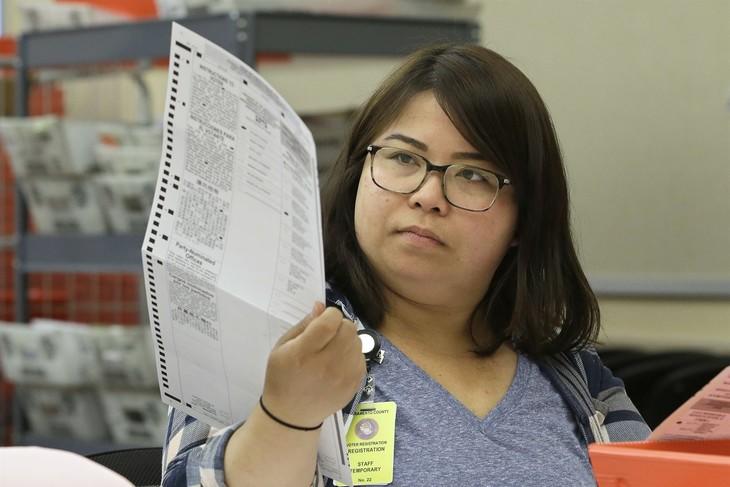
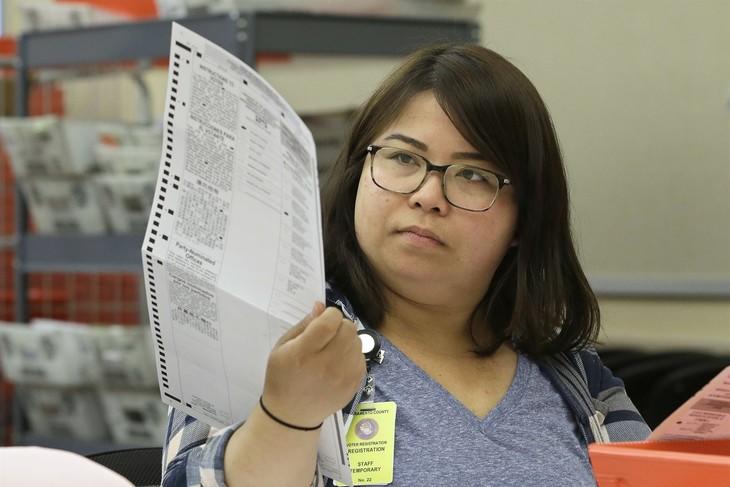
The coups de grace is that ballots will be received and counted “even if they don’t have a clear postmark, as long as there is not proof it was mailed after the polls closed.” That means unless you affirmatively saw Joe Blow physically submitting his ballot and got photographic proof of the actual ballot, there’s nothing that will stand in the way of that ballot being counted. Three days after the election. Without a clear postmark.
Last week, we were dumpster-diving for ballots, navigating the depths of a 15-yard box for the 100 stale beer and coffee ground-stained ballots dumped by some malevolent (or lazy) postal worker in Kentucky.This week, another 99 ballots and hundreds of pieces of first-class mail were found dumped by yet another postal worker, this one in New Jersey.
Both ballot-tossing layabouts are being prosecuted by the feds, but it’s unknown at this point if this is their first ballot-tossing caper or just their latest ballot-tossing caper.
It’s hard to judge what’s worse, some disgruntled postal worker tossing ballots or Pennsylvania accepting and counting all ballots – even ones that have no identifying information, the right postmark, and mailed after the election.
We’ll start with the story that made headlines recently when Pennsylvania authorities tossed out 372,000 ballot applications.
#Pennsylvania has rejected hundreds of thousands of mail-in #ballot applications this election year, with the vast majority of those rejections occurring because of #duplicate ballot requests from voters in the state. https://t.co/pm8UTtVHhb — chris (@Gato_chris1) October 17, 2020
Far from disenfranchising voters, we are assured by Pennsylvania officials that 90% of the applications were duplicates due to confused voters signing up at multiple places and with different groups, according to Just the News. Hmm.
Federal and state court actions this week have amplified the warning issued by the CEO of the polling firm Trafalgar Group, Robert Cahaly. As I reported at PJMedia, Cahaly predicted Trump could win the state but could very well have it stolen from him through election fraud.
I believe Pennsylvania to be the number one state that Trump could win and have stolen from him through voter fraud. Pennsylvania has had a lot of voter fraud over the years and giving people unsolicited absentee ballots is literally like giving voter fraud operations steroids. I think it’s the state he’s most likely to win and not get the votes from.
And when you find out about the allowable ballot chicanery you’ll understand why Cahaly is concerned.
On Monday, the U.S. Supreme Court considered an appeal by Republicans to stay a Pennsylvania state Supreme Court ruling allowing ballots to be received and counted up to three days after the election. Since the U.S. Supreme Court was deadlocked 4-4 because John Roberts joined the liberal justices, and because there’s no 9th justice, the court allowed the ruling by the state court to stand. The coups de grace is that ballots will be received and counted “even if they don’t have a clear postmark, as long as there is not proof it was mailed after the polls closed.” That means unless you affirmatively saw Joe Blow physically submitting his ballot and got photographic proof of the actual ballot, there’s nothing that will stand in the way of that ballot being counted. Three days after the election. Without a clear postmark. Holy balls.
Republicans said, hey, wait a minute. Federal statute sets the first Tuesday after the first Monday in November as Election Day. Dia. Which has the same number of syllables as uno. One. Day. Remember when Trump tossed out the idea that maybe Election Day could be moved, instead of all the states changing their election rules for coronavirus to include the mail-in ballots? Remember the outrage? Those critics have scattered to the corners.
But, there’s more! Remember the signature on the ballot that is checked against voter registrations to supposedly ensure voter integrity? Take a seat.
Another Pennsylvania state Supreme Court ruling on Friday held that the signatures on the registration and the ballot don’t have to match. In September, Secretary of State Kathy Boockvar issued guidance that election workers would do no signature matching. The GOP sued to stop her, but Friday’s ruling seems to have settled the issue unless it goes back to John Roberts and the liberal wing of SCOTUS again. All this chicanery to fight COVID-19.
The GOP and Trump campaign sued the largest county in Nevada on Friday to prevent the separation of the ballot from its envelope until GOP election observers can get a better look at the ballots. The issue stems from Clark County, where 70% of the state’s residents reside. The GOP says local officials were preventing poll watchers from observing the processing of votes by keeping them 25 feet away and therefore cannot “meaningfully observe” the process.
Voting by fax? This guy claims to have done it.
The future is great! Just slide in paper, dial number, press start and done! Super easy!
Usually, only people wearing the uniform of our country can vote like this, according to the National Conference of State Legislatures
Sending voted ballots electronically—via fax, email or web portal—is most often reserved for voters who fall under the federal Uniformed and Overseas Citizens Absentee Voting Act (UOCAVA).
Four states—Arizona, Colorado, Missouri, and North Dakota—allow the use of some sort of digital portal to vote. What could go wrong?
Finally for this week, this Washington State resident is upset that his favorite candidate for president is not on the ballot.
The pandemic has propelled government toward promiscuously picking economic winners and losers. As has been said, governments are not good at picking winners, but losers are good at picking governments.
In 1906, Werner Sombart, the German economist, explained America’s resistance to socialism in five words, “roast beef and apple pie,” his shorthand for affluence.
In 2020, however, semisocialism has come to a United States that is stunningly wealthier — real per-capita income six times larger than in 1906; today’s superiority of purchasable products, from antibiotics to smartphones — than 114 years ago.
This year is drenched with politics, yet the nation seems oblivious that coming decades of American governance have been irrevocably shaped by what Nicholas Eberstadt of the American Enterprise Institute calls “the largest single ‘state surge’ in American history,” a “tidal wave of public resources”: debt.
In June alone, the federal government’s $864 billion budget deficit was larger than the deficit in all of fiscal 2017. And fiscal 2018. In eight years, the Reagan administration almost tripled the national debt, to $2.9 trillion, but that sum is less than Congress has increased the debt in the past nine months. Because both parties have a powerful permanent incentive to disburse more current government services than current revenues will fund, the pre-pandemic deficit in fiscal 2019 was already almost $1 trillion — at full employment, with 2.3% gross domestic product growth.
In 1946, after financing four years of global warfare, the national debt was 106% of GDP.
After nine months of spending to counter COVID-19’s impact on the economy — spending soon to be increased by additional trillions — the debt is about 100% of GDP, heading (according to the Congressional Budget Office) to almost 200% by 2050. And the Federal Reserve has, Eberstadt says, “crossed a Rubicon.”
Wading waist-deep into political policies, the Fed is adopting, Eberstadt says, “the role of managing and even micromanaging the American economy through credit allocation, potentially lending vast sums not only to financial institutions but also directly to firms it judges suitable for government support. The Fed already dominates the markets for U.S.
Treasury debt and mortgage debt as a result of previous, lesser crises.
It is by no means inconceivable that the current crisis will propel it to a comparably dominant position in domestic commercial credit.” If socialism is government allocation of economic resources (and hence of opportunity), then … John Cochrane of Stanford’s Hoover Institution, who blogs as the Grumpy Economist, notes that in the 2008 financial crisis, the Federal Reserve launched “creditor bailouts, propping up asset prices to keep investors from losing money, buying unprecedented assets.”
The risk of moral hazard — incentives for reckless behavior — is obvious.
Today, counter-COVID-19 spending already is approximately five times larger than that triggered by the Great Recession of 2008. By 2020, Cochrane says, “Once again a huge vat of debt had built up; once again, nobody kept any cash around for bad times, once again, the government stepped in and offered an enormous put option, just as, arguably everyone expected.” The Fed has propped up the prices of corporate and municipal bonds, and bailed out airlines, “or rather airline bondholders.”
“This time, however,” Cochrane writes, “I don’t even hear the promise to clean up the moral hazard. We are, apparently, permanently in a financial system in which people should load up on debt and risky assets in good times, and the government will buy them up should prices ever waver. Private gain, public loss.” Central banks buying trillions of assets are thereby “allocating credit.” Which is the essence of socialism.
The Fed buying government and corporate debt creates something difficult to unwind — what Cochrane calls “an entirely governmentrun financial system”: an attribute of socialism. “Modern Monetary Theory,” which Democrats praise and hope soon to practice, and which Republicans have been practicing without acknowledging, says: A nation with fiat money (not convertible into something — e.g., gold — valuable, but accepted by the public as a store of value) need never run short of money. It can borrow and create money as long as interest rates are, and are apt to remain, low. A theory that validates wishful thinking will not lack devotees.
Near-zero interest rates — the no-longernew normal — create, Eberstadt says, “zombie companies” that “can only survive in a lowinterest [rate] environment.” The result is rent-seeking and economic sclerosis, because “America cannot succeed unless a lot of its firms fail — including its largest ones. Bankruptcy and reallocation of resources to more productive ends are the mother’s milk of dynamic growth.”
The pandemic has propelled government toward promiscuously picking economic winners and losers. As has been said, governments are not good at picking winners, but losers are good at picking governments.
George Will is a Washington Post columnist. His email address is georgewill@washpost.com.
Who benefits from global lockdowns that are destabilizing all facets of our society? The following four “great” undercurrents may provide a clue.
We have entered a “new normal” where Pyongyang, North Korea, affords more ambulatory freedom than Melbourne, Australia. While rioting and mass demonstrations by assorted radicals are given a free pass – even encouraged by leaders in the West – Facebook posts questioning lockdowns are deemed subversive.
In October 2019, a pandemic simulation exercise called Event 201 – a collaborative effort between Johns Hopkins Center for Health Security, World Economic Forum, and Bill and Melinda Gates Foundation – concluded that a hypothetical new coronavirus may end up killing at least 65 million people worldwide within 18 months of an outbreak.
When COVID-19 coincidentally emerged from Wuhan two months later, scientists were rushing to generate similar alarmist forecasts using a variety of questionable scientific models. Researchers from the Imperial College London, for instance, approximated death tolls of 500,000 (UK) and two million (USA) by October this year. To those following the metastasis of the global vaccine mania, the Imperial model was predictably “tidied up” with the help of Microsoft.
While scientific models are admittedly fallible, one would nonetheless be hard-pressed to justify the endless string of contradictions, discrepancies and wilful amnesia in the global pandemic narrative. In fact, one should question whether COVID-19 even deserves the tag of a “pandemic”. According to the United States’ Centre for Disease Control (CDC), the updated age-group survival rates for COVID-19 happen to be: Ages 0-19 (99.997%); 20-49 (99.98%); 50-69 (99.5%); and 70+ (94.6%). The mortality rates are only slightly higher than the human toll from seasonal flu and are, in fact, lower than many ailments for the same age cohorts.
If the CDC statistics don’t lie, what kind of “science” have we been subjected to? Was it the science of mass-mediated hysteria? There are other troubling questions yet unanswered. Whatever happened to the theory of bats or pangolins being the source of COVID-19? Who was Patient Zero? Why was there a concerted media agitprop against the prophylactic use of hydroxychloroquine that was backed by the Indian Council of Medical Research (ICMR) no less? And why did Prof Neil Ferguson, who had led Imperial’s contagion modelling, repeatedly breach lockdown measures to meet his paramour – right after his recommendations were used to justify draconian lockdowns worldwide which continue till today?
Most damning yet, why are Western media and scientific establishments dismissive of Russia’s Sputnik V vaccine? After all, Moscow’s credibility, both scientific and otherwise, is on the line here. In a real pandemic, nobody would care where an effective remedy comes from. The virus does not care about borders and geopolitics; so why should we politicize the origins of an antidote?
Perhaps what we are really dealing with here is a case of mass “coronapsychosis” as Belarussian President Alexander Lukashenko aptly called it. Who benefits from global lockdowns that are destabilizing all facets of our society? The following four “great” undercurrents may provide a clue.
The Great Deflection
As the author had warned for more than a decade, the world is staring at a confluence of risk overloads, socioeconomic meltdowns (1) and a Second Great Depression. For the ruling classes, COVID-19 is fortuitously deflecting public attention away from the disastrous consequences of decades of economic mismanagement and wealth fractionation. The consolidation of Big Tech with Big Media (2) has created an Orwellian world where collective hysteria is shifting loci from bogeymen like Russia to those who disagree with the pandemic narrative.
We have entered a “new normal” where Pyongyang, North Korea, affords more ambulatory freedom than Melbourne, Australia. While rioting and mass demonstrations by assorted radicals are given a free pass – even encouraged by leaders in the West – Facebook posts questioning lockdowns are deemed subversive. This is a world where Australian Blueshirts beat up women, manhandle a pregnant woman in her own home, and perform wolf pack policing on an elderly lady in a park. Yet, the premier of the Australian state of Victoria remains unfazed by the unflattering moniker of Kim Jong Dan.
The corona-totalitarianism is unsurprisingly most pronounced in the Anglosphere and its dependencies. After all, these nations are staring at socioeconomic bankruptcies of unprecedented proportions vis-à-vis their counterparts. Even their own governments are being systematically undermined from within. The US Department of Homeland Security, created in the aftermath of 9/11 to combat terrorism, is now providing $10 million in grants to organizations which supposedly combat “far-right extremism and white supremacy”. This will further radicalize leftist malcontents who are razing US cities and its economies in the name of social justice. There is, however, a curious rationale behind this inane policy as the following section illustrates.
The Great Wealth Transfer
While the circus continues, the bread is thinning out, except for the Top 0.001%. Instead of bankruptcy, as recent trends indicated, Silicon Valley and affiliated monopolies are notching up record profits along with record social media censorship. US billionaires raked in $434 billion in the first two months of the lockdown alone. The more the lockdowns, the more the wealth accrued to the techno-elite. As tens of millions of individuals and small businesses face bankruptcy by Christmas, the remote work revolution is gifting multibillion dollar jackpots to the likes of Jeff Bezos (Amazon) and Mark Zuckerberg (Facebook). Azure (Microsoft) and AWS (Amazon) cloud eco-systems, among others, have expanded by 50% since the beginning of the pandemic.
In the face of such runaway wealth fractionation, panoptic contact tracing tools from Big Tech are increasingly employed to pacify restive populations. And of course, to prevent a second, third or Nth wave of COVID-19 for our collective good!
In the meantime, Big Banks, Big Pharma, Big Tech and other monopolies are getting lavish central bank bailouts or “stimulus packages” to gobble up struggling smaller enterprises. COVID-19 is a gift that never stops giving to a select few. But how will the techno-oligarchy maintain a degree of social credibility and control in an impoverished and tumultuous world?
The Great Philanthropy
Oligarchic philanthropy will be a dominant feature of this VUCA decade (3). According to a recent Guardian report, philanthropic foundations have multiplied exponentially in the past two decades, controlling a war chest worth more than $1.5 trillion. That is sufficient to bankroll a horde of experts, NGOs, industry lobbies, media and fact-checkers worldwide. Large sums can also be distributed rapidly to undermine governments. The laws governing scientific empiricism are no longer static and immutable; they must dance in tandem with the funding. Those who scream fake news are usually its foremost peddlers. This is yet another “new normal” which had actually predated COVID-19 by decades.
The Bill and Melinda Gates Foundation (BMGF) is a prime example of how oligarchic philanthropy works. Since 2000, it has donated more than $45 billion to “charitable causes” and a chunk of this is designed to control the global media narrative. The Guardian, rather tellingly, credits the BMGF for helping eradicate polio despite contrary reports of wanton procedural abuses, child death tolls and poverty exploitation which routinely mar the foundation’s vaccination programs. Bill Gates even interprets vaccine philanthropy in terms of a 20-to-1 return on investments, as he effused to CNBC last year.
As for the BMGF’s alleged polio success, officials now fear that a dangerous new strain could soon “jump continents”. After spending $16 billion over 30 years to eradicate polio, international health bodies – which work closely with BMGF – have “accidentally” reintroduced the disease to Pakistan, Afghanistan, and Iran.
Poverty, hunger and desperation will spawn a tangible degree of public gratitude despite elite philanthropy’s entrenched bias towards elite institutions and causes. By the Guardian’s own admission, “British millionaires gave £1.04bn to the arts, and just £222m to alleviating poverty” in the 10-year period to 2017. Contrast this with the annual $10 billion earmarked by the philanthropic pool for “ideological persuasion” in the US alone. The rabble is worth their weight only for the potential havoc they can wreak.
There is enough money floating around to reduce our cities into bedlams of anarchy as seen in the United States today. (It will only get worse after the Nov 3 US presidential elections). The crumbs left over can be delegated to threadbare charities. One only needs to reflect on soup kitchens in the post-1929 Weimar Republic. The most popular ones were organized by the Nazi party and funded by wealthy patrons. The march towards a new order has a familiar historical meme. The new Brownshirts are those who terrorise citizens for not wearing masks, for not being locked down in their pens, and for simply supporting a political candidate of choice. Even children who do not follow the oligarchic narrative are not spared!
The Great Reset
A great pruning will inevitably occur in the mega-billionaire club as whatever remains of the global corona-economy is systematically cannibalized. The club will get smaller but wealthier and will attempt to sway our collective destiny. Control over education, healthcare, means of communications and basic social provisions is being increasingly ceded by governments to the global elite. Governments colluding in the “new normal” will sooner or later face the ire of distressed masses. Politicians and assorted “social justice warriors” will be scapegoated once they have outlived their usefulness.
In this cauldron, the century-old technocratic dream of replacing politicians, electoral processes and businesses with societies run by scientists and technical experts (4) may emerge – thanks to advances in panoptic technologies. It will be an age for the “rational science of production” and “scientific collectivism”. The latter is eerily redolent of the Soviet sharaska (prison labs) system.
The production and supply of goods will be coordinated by a central directorate (5), led not by elected representatives (whose roles, where they exist, will be nominal anyway) but by technocrat factotums. Perhaps this is what the World Economic Forum refers to as the Great Reset. In reality, though, this idea smacks of a global Gosplan minus the Doctor Sausages for the innumerable many.
(Some emerging economies like Malaysia and India casually refer to technocracy as an infusion of greater technical expertise into bureaucracy. This is a misinterpretation of technocracy’s longstanding means and goals).
One intractable problem remains: will the emerging global oligarchy tolerate the existence of various deep states worldwide? Initially, both groupings may cooperate to their mutual benefit but their respective raisons d’être are too contradictory to be reconciled. One thrives on an “open society” run by obedient hirelings who will administer a global Ministry of Truth, while the other depends on secrecy and a degree of national sovereignty to justify its existence. Surveillance technologies ushered in by the ongoing “coronapsychosis” may end up being the deciding factor in this struggle.
After all, if social media posts by the President of the United States and the White House can be blatantly censored today, think of the repercussions for billions of people worldwide tomorrow?
An abridged version of this article was published by RT on Oct 14
References
1. Maavak, M. (2012), Class Warfare, Anarchy and the Future Society: Is the Middle Class forging a Gramscian Counter-Hegemonic Bloc Worldwide? Journal of Futures Studies, December 2012, 17(2): 15-36.
2. Maavak, M. (2019). Bubble to Panopticon: Dark Undercurrents of the Big Data Torrent. Kybernetes, Vol. 49 No. 3, pp. 1046-1060. https://doi.org/10.1108/K-06-2019-0403
3. Maavak, M (2021). Maavak, M. (2021). Horizon 2020-2030: Will Emerging Risks Unravel our Global Systems? Accepted for publication. Salus Journal, Issue 1 2021.
4. Elsner, Jr., Henry (1967). The Technocrats: Prophets of Automation. Syracuse University.
5. Stabile, D.R. (1986). Veblen and the Political Economy of the Engineer: the radical thinker and engineering leaders came to technocratic ideas at the same time. American Journal of Economics and Sociology, Vol, 45, No. 1, 1986, pp. 43-44.
Dr Mathew Maavak is a regular commentator on risk-related geostrategic issues.
NPR is so dishonest that it presents its commercial advertisements as if they are charitable donations in the same tone of voice and words—“with support from”—that NPR uses for its support from foundations. Somehow NPR’s member supporters are too dense to comprehend that if NPR will attempt to pass off a commercial advertiser as a charitable donor, NPR cannot be trusted to objectively convey news.
The New York Post’s report that the FBI has laptops belonging to Hunter Biden that contain emails showing Hunter and Joe Biden’s use of the Vice Presidency for business deals that amount to influence peddling and money laundering was banned from Twitter, Facebook, and Google. The New York Times, Washington Post and other of the press prostitutes tried to discredit the story with the fake news that it was Russian disinformation to help Trump win the election. National Public Radio refused to mention the story other than to brand it a story that is not really a story, simply a waste of “listeners’ and readers’ time on stories that are just pure distractions.” [1] NPR, of course, was all into distractions that wasted readers’ and listeners’ time on Russiagate and Impeachgate and wasted President Trump’s entire term.
The problem with the press prostitutes’ attempted coverup of the Bidens’ crooked dealings is that the FBI has Hunter Biden’s laptops, and both the FBI and the Department of Justice agree with the statement of John Ratcliffe, Director of National Intelligence, that the emails are the real stuff and not a Russian operation to interfere in the November election. [2]
Even worse for the presstitutes and the Bidens, two former business partners have come forward to verify the emails as authentic. [3] [4]
The emails contain a list of “key domestic contacts” for the influence peddling scheme. The names on the list are Democrat VP candidate Kamala Harris, Senate Minority Leader Chuck Schumer, Senator Amy Klobuchar, Speaker of the House Dianne Feinstein, New York Governor Andrew Cuomo, NY City Mayor Bill de Blasio, and former Virginia governor Terry McCauliffe. [5]
Whether these high ranking Democrats had agreed or not, I cannot say, but obviously the Biden team thought them corruptible.
The evidence against the Bidens is extremely damaging and is pouring out from Biden associates. [6]
So there it is out in the open. A Democrat Party and presstitute scum that has spent four years telling lies about President Trump is revealed in all of its sordid corruption. The Democrat Party is a gang of crooks, and the American media is nothing but a propaganda ministry for the Democrat Party dedicated to covering up its crimes.
It is impossible to find an ounce of integrity in the Democrat Party other than Tulsi Gabbard, and she is the party’s shunned member. No integrity exists in the American TV, print, or NPR media other than Tucker Carlson and one or two others at Fox News.
NPR is the worst of the lot. NPR pretends to be a “member supported” radio station, but it is nothing but another commercial station. NPR is so dishonest that it presents its commercial advertisements as if they are charitable donations in the same tone of voice and words—“with support from”—that NPR uses for its support from foundations. Somehow NPR’s member supporters are too dense to comprehend that if NPR will attempt to pass off a commercial advertiser as a charitable donor, NPR cannot be trusted to objectively convey news.
If Americans elect Democrats next month, they will have turned their government over to a criminal gang and will have empowered the most corrupt media—a.k.a. Ministry of Propaganda—in the history of the world. The United States will never recover from such a devastating mistake.
A third example comes from the editors at Merriam-Webster(continually updated online). After US Supreme Court nominee Amy Coney Barrett used the phrase “sexual preference,” she was denounced for using “offensive” language by US senator Mazie Hirono of Hawaii. This was confusing to many observers, since the term has long been used as a nonpejorative term and has even been used in recent years by both Joe Biden and Ruth Bader Ginsburg.
Similarly, in recent decades, higher education faculty have been shown to be overwhelmingly in favor of the Democratic Party, both in affiliation and in donations. In addition to providing instruction at colleges and universities, these people are the ones who write textbooks, history books, and the scholarly publications that influence other faculty members, secondary school teachers, and current students.
It would be shocking if the net effect of this clear bias were not to push the public—at least those members of the public who view news media broadcasts, read textbooks, and attend college classes—in the direction of the ideology favored by the journalists and professors.
But the means for manufacturing an ideological bias don’t end there. In recent years we have increasingly been seeing other institutions—outside newsrooms and universities—that are taking an active role in shaping the public’s ideology. These include social media firms, and even online sources of information once considered relatively outside the reach of political controversies.
This is what is to be expected when a single ideological group controls educational institutions and major media outlets over a period of several decades. Under these conditions—and unless other institutions provide an effective alternative—the ideology that is dominant within schools and newsrooms will spread to become the ideology of the larger general public. Thus, we should expect to see more and more doctrinaire ideological activism in the larger society, in Silicon Valley and beyond.
Controlling the Message outside the Media and Academia
Another example comes from Wikipedia, where—in spite of the apparent veracity of the Post’s story on Hunter Biden—the claims against Hunter Biden are casually dismissed as “debunked.” No evidence has been presented to support this claim, and the Biden campaign has not denied the claims made in the Post’s story.
A third example comes from the editors at Merriam-Webster(continually updated online). After US Supreme Court nominee Amy Coney Barrett used the phrase “sexual preference,” she was denounced for using “offensive” language by US senator Mazie Hirono of Hawaii. This was confusing to many observers, since the term has long been used as a nonpejorative term and has even been used in recent years by both Joe Biden and Ruth Bader Ginsburg.
However, by a startling “coincidence,” editors at Merriam-Webster apparently modified the definition of the phrase “sexual preference,” adding the word “offensive” in reference to use of the term following the spat between Barrett and Hirono. Use of the Wayback Machine shows that two weeks earlier the word “offensive” had not been included in the definition.
These examples likely illustrate a growing role for left-wing ideologues outside official news media in shaping and manipulating public opinion for purposes of promoting one political faction over another.
None of this should surprise us. For decades, the public’s predominant source of information about the nation’s history and political institutions has been the establishment “mainstream” media, public schools, and America’s higher education system.
This has a sizable effect on the public’s views and ideology. Staffers at tech companies, dictionary editors, and managers at Google are all part of this public.
Moreover, the sorts of people who work at Silicon Valley companies, and who work as editors and website designers, tend to have degrees obtained from colleges and universities. These are the same colleges and universities that today’s journalists and pundits attended. They’re the same colleges and universities that public school teachers attended, and which today’s attorneys, corporate CEOs, and high-level managers attended.
Moreover, over time, the share of the public attending these colleges and universities has grown. Fifty years ago, only around 10 percent of Americans completed college. Today, the total is around one-third.
Also not surprising: more schooling apparently tends to translate into more left-wing political views. Data from a wide variety of sources has shown that Americans with more schooling tend to self-identify as “liberal” more often. According to the Pew Research Center, from 1994 to 2015, the percentage of college graduates who were “mostly liberal” or “consistently liberal” increased from 25 percent to 44 percent. At the same time, those who were “mostly conservative” or “consistently conservative” remained almost unmoved, from 30 percent to 29 percent. In other words, the number of college graduates with ”mixed” views has shifted overwhelmingly to the left. This trend is even stronger among Americans who have attended graduate school.
So if it seems to you that corporate employees, college grads, and the media-consuming public is moving to the left, you’re probably not imagining things.
Why It’s So Important to Build Institutions That Offer an Alternative
More astute observers of the current scene have long recognized that ”politics is downstream from culture.” In other words, if we want to change politics, we have to change the worldviews of political actors first. For example, if we want a world which reflects a Christian worldview, we need a large portion of the population to actually believe in that worldview. If we want a world where voters and legislators support private property rights, we need a world where a sizable portion of the population was raised and educated to believe private property is a good thing. There are no shortcuts around this.
Unfortunately, the activists who often get the most traction are those who take exactly the opposite position. They offer a ”solution” that involves nothing more than closing the barn door long after the horse has escaped. Yet this position is nonetheless often popular because it offers a quick fix. This position takes this basic form: ”If we can get the right people into political office for the next couple of elections, then everything will be fixed.” Never mind the fact that the ”wrong” people got into office precisely because the voting public had been educated in such a way that they find those politicians’ ideas and positions attractive.
Perhaps the most recent purveyor of this futile and shortsighted view is one-time Trump advisor Steve Bannon. Bannon embraced the idea that ”culture is downstream from politics,” insisting he could deliver a ”permanent majority” in political institutions in opposition to the Left-controlled zeitgeist. All that was necessary, we were told, was to vote for Bannon’s favorite politicians for a few years. Then the public would magically start adopting Bannon’s preferred conservative views. Bannon, however, never offered a strategy any more sophisticated than buying off voters with even bigger welfare programs and crushing government debt. Bannon apparently missed the fact that the votes he needed for this vision had to come from millions of Americans who have already imbibed decades’ worth of major media content and left-wing faculty lectures.
It’s easy to see how Bannon might have thought the message could resonate. After all, we live in a country where millions of self-described ”conservatives” willingly send their children to sixteen years of public schooling and then are mystified when little Johnny comes home and announces he’s a Marxist. Apparently these people are very slow learners.
But Bannon’s more insightful colleague Andrew Breitbart knew better. As noted in a profile of Breitbart for TIME magazine in 2010:
As [Breitbart] sees it, the left exercises its power not via mastery of the issues but through control of the entertainment industry, print and television journalism and government agencies that set social policy. “Politics,” he often says, “is downstream from culture. I want to change the cultural narrative.” Thus the Big sites devote their energy less to trying to influence the legislative process in Washington than to attacking the institutions and people Breitbart believes dictate the American conversation.
Although I often disagreed with Breitbart’s editorial and ideological positions, he was certainly right about how political institutions are changed.
But to accomplish this goal, it is necessary to create organizations and institutions that can offer an alternative to the ”entertainment industry, print and television journalism and government agencies that set social policy.” This requires research, writing, podcasts, and videos. It requires educational institutions (like the Mises Institute’s graduate school) that offer views that go against what is usually taught in universities. It requires revisionist historians and scholars who can write books that counter the views pushed in the endless stream of books and articles churned out by professional academics at state-supported institutions. It requires cultural institutions like churches that provide a compelling intellectual vision that can compete with what’s taught in the colleges.
Until that happens, expect institutions like social media, Wikipedia, the mainstream media, and even corporate America to keep moving left and doing it at an increasingly fast pace. And expect the people who control those institutions to be increasingly hostile to those who disagree with them. Author: