
Build your inner fortress
Be seeing you

Enemy of the State-Read the Book-Know the Man
This is not a Safe Space but Baby, I don't care.

"I am not a number, I am a Free Man" - No. 6
 Information Liberation Alex Jones’ Prison Planet Gary North Specific Answers Antiwar The Daily Bell Tenth Amendment Center Economics Policy Journal The American Thinker The New American Lew Rockwell
Posted by M. C. on October 1, 2020
Build your inner fortress
Be seeing you
Posted in Uncategorized | Tagged: Journal, Marcus Aurelius, stoicism | Leave a Comment »
Posted by M. C. on October 1, 2020

Law enforcement has the legal power ‘to remove anything (including underwear) that the relevant person is wearing’ if it’s determined that that person must be vaccinated. WESTERN AUSTRALIA, September 24, 2020 (LifeSiteNews) — The state of Western Australia has legislated to allow police officers or other “authorised officers” to restrain individuals and, if deemed necessary, […]
Australian state law empowers officials to forcibly remove clothing including underwear if necessary to administer vaccine — Rangitikei Environmental Health Watch
How do you say “Fauci” in Australian?
Posted in Uncategorized | 1 Comment »
Posted by M. C. on October 1, 2020
The key thing to remember in all this is that the U.S. has never been isolationist in its foreign relations. The thing that Kupchan calls America’s “default setting” is not real. Isolationism is the pejorative term that expansionists and interventionists have used over the last century to ridicule and dismiss opposition to unnecessary wars.
You can buy and sell most anywhere on the planet, you travel most anywhere, you read most everyone’s media. But…
If you are opposed to war you are isolationist.
https://www.theamericanconservative.com/articles/getting-rid-of-the-myth-of-isolationism/
No one claims to be an isolationist, but foreign policy analysts keep imagining and fearing a “resurgence” of isolationism around every corner. This fear was on display in a recent Atlanticarticle by Charles Kupchan, who tries to rehabilitate the label in order to oppose the substance of a policy of nonintervention and non-entanglement. Kupchan allows that a policy of avoiding entangling alliances and staying out of European wars was important for the growth and prosperity of the United States, but then rehearses the same old and misleading story about the terrible “isolationist” interwar years that we have heard countless times before. This misrepresents the history of that period and compromises our ability to rethink our foreign policy today.
Kupchan’s article is not just an exercise in beating a dead horse, since he fears that the same thing that happened between the world wars is happening again: “If the 19th century was isolationism’s finest hour, the interwar era was surely its darkest and most deluded. The conditions that led to this misguided run for cover are making a comeback.” Kupchan wants to borrow a little from the people he calls “isolationists” so that the U.S. will remain thoroughly ensnared in most of its global commitments.
At the same time that he warns that “U.S. statecraft has become divorced from popular will,” he seems to want to keep it this way by rejecting what he calls the “isolationist temptation.” If “a majority of the country favors either America First or global disengagement,” as he says, the goal seems to be to ignore what the majority wants in favor of making a few tweaks to the same old strategy of U.S. primacy. Those tweaks aren’t going to lessen popular support for a reduced U.S. role in the world, and they will likely make the public even more disillusioned with the remaining costs and demands of U.S. “leadership.”
The key thing to remember in all this is that the U.S. has never been isolationist in its foreign relations. The thing that Kupchan calls America’s “default setting” is not real. Isolationism is the pejorative term that expansionists and interventionists have used over the last century to ridicule and dismiss opposition to unnecessary wars. Isolationism as U.S. policy in the 1920s and 1930s is a myth, and the myth is deployed whenever there has been a serious challenge to the status quo in post-1945 U.S. foreign policy. Bear Braumoeller summed it up very well in his article, “The Myth of American Isolationism,” this way: “the characterization of America as isolationist in the interwar period is simply wrong.” We can’t learn from the past if we insist on distorting it. As William Appleman Williams put it in The Tragedy of American Diplomacy, “It not only deforms the history of the decade from 1919 to 1930, but it also twists the story of American entry into World War II and warps the record of the cold war.” Williams also remarked in a note that the use of the term isolationist “has thus crippled American thought about foreign policy for 50 years.” Today we can say that it has done so for a century.
Our government eschewed permanent alliances for most of its history, and it refrained from taking sides in the European Great Power conflicts of the nineteenth century, but it never sought to cut itself from the world and could not have done that even if it had wished to do so. The U.S. was a commercial republic from the start, and it cultivated economic and diplomatic ties with as many states as possible. You can call the steady expansion of the U.S. across North America and into the Pacific and Caribbean “isolationism,” but that just shows how misleading and inaccurate the label has always been.
Post-WWI America was a rising power and increasingly involved in the affairs of the world. Its economic and diplomatic engagement with the world increased during these years. If it wasn’t involved in the way that later internationalists would have liked, that didn’t make the U.S. isolationist. Braumoeller makes this point explicitly: “America was not isolationist in affairs relating to international security in Europe for the bulk of the period: in fact, it was perhaps more internationalist than it had ever been.” The U.S. was behaving as a great power, but one that strove to maintain its neutrality. That was neither deluded nor disastrous, and we need to stop pretending that it was if we are ever going to be able to make the needed changes to our foreign policy today.
Kupchan acknowledges that there has to be an “adjustment” after the last several decades of overreach, but he casts this as a way of preventing more significant retrenchment: “The paramount question is whether that adjustment takes the form of a judicious pullback or a more dangerous retreat.” No one objects to the desire for a responsible reduction in U.S. commitments, but one person’s “judicious pullback” will often be denounced as a “dangerous retreat” by others. Just consider how many times we have been warned about a U.S. “retreat” from the Middle East over the last 11 years. Even now, the U.S. is still taking part in multiple wars across the region, and the “retreat” we have been told has happened several times never seems to take place. Warning about the perils of an “isolationist comeback” hardly makes it more likely that these withdrawals will ever happen.
He recommends that “judicious retrenchment should entail shedding U.S. entanglements in the periphery, not in the strategic heartlands of Europe and Asia.” Certainly, any reduction in unnecessary U.S. commitments is welcome, but a thorough rethinking of U.S. foreign policy has to include every region. Kupchan is right to criticize slapdash, incompetent withdrawals, but one gets the impression that he thinks there shouldn’t be any withdrawals except from the Middle East. He cites “Russian and Chinese threats” as the main reasons not to pull back at all in Europe or Asia, but this seems like an uncritical endorsement of the status quo.
It is in East Asia where the U.S. might be fighting a war against a major, nuclear-armed power in the future, and it is also there where the U.S. has some of the wealthiest and most capable allies. If the U.S. can’t reduce its exposure to the risk of a major war where that risk is the greatest and its allies are strongest, when will it ever be able to do that? Reducing the U.S. military presence in East Asia will make it easier to manage U.S.-Chinese tensions, and it will give allies an additional incentive to assume more responsibility for their own security.
The U.S. has far more security commitments than it can afford and far more than can possibly be justified by our own security interests. That includes, but is not limited to, our overcommitment to the Middle East. Our foreign entanglements have been allowed to grow and spread to such an extent over the last seventy-five years that modest pruning won’t be good enough to put U.S. foreign policy on a sound footing that will have reliable public support. There needs to be a much more comprehensive review of all U.S. commitments to determine which ones are truly necessary for our security and which ones are not. Ruling out the bulk of those commitments as untouchable in advance is a mistake.
There is broad public support for constructive international engagement, but there is remarkably little backing for preserving U.S. hegemony in its current form. In order to have a more sustainable foreign policy, the U.S. needs to scale back its ambitions in most parts of the world, and it needs to shift more of the security burdens for different regions to the countries that have the most at stake. That should be done deliberately and carefully, but it does need to happen if we are to realign our foreign policy with protecting the vital interests of the United States.

Posted in Uncategorized | Tagged: Charles Kupchan, foreign relations, Isolationism | Leave a Comment »
Posted by M. C. on October 1, 2020
https://www.americanthinker.com/articles/2020/09/turning_the_clock_forward_.html
If America returned to 1950s family values with obvious improvements (constitutional civil rights and reasonable environmental regulations), would we be turning the clock back or forward? There is substantial evidence that this would turn the clock forward, given society’s backward trend over the last sixty years –family breakdown, retreat from religion, and educational and moral malaise. When Attorney General William Barr spoke at the Notre Dame Law School, he attributed this decline primarily to the progressive movement.
Amy Wax and Larry Alexander argued for a return to 1950s values (the bourgeois culture that reigned from the 1940s to the mid-1960s) to mend America’s torn social fabric and disparate class gap:
That culture laid out the script we all were supposed to follow: Get married before you have children and strive to stay married for their sake. Get the education you need for gainful employment, work hard, and avoid idleness. Go the extra mile for your employer or client. Be a patriot, ready to serve the country. Be neighborly, civic-minded, and charitable. Avoid coarse language in public. Be respectful of authority. Eschew substance abuse and crime.
Wax and Alexander do not offer a path back to the script. Congress has no will to act, and the President cannot legislate. However, a revitalized federal court system, starting with the Supreme Court (“SCOTUS”), can lead the way. President Trump has moved the Court in the direction that would allow it to reverse past activism. Putting a strict constructionist in Justice Ginsburg’s seat is the precursor to another four years of Trump that would move the federal courts in this direction for decades to come.
This essay suggests ten key areas of change for SCOTUS, each of which could help turn America around. These changes might not contain all that needs to be done to restore the republic, but they would move us far down the path. These categories allow a cohesive, united country to emerge to solve our problems in an innovative process not possible under the current administrative state.
Category I. Taxation. Read the rest of this entry »
Posted in Uncategorized | Tagged: family values, SCOTUS, Second Amendment, Taxation | Leave a Comment »
Posted by M. C. on October 1, 2020
Vaccines have a very sketchy record for being safe.
Especially those rushed to market, as the vaccine for the Swine Flu was back in the mid ‘70s. A not-small number of previously healthy people became seriously – and permanently – sick after getting needled.
Journalists – there were such creatures, once upon a time – actually reported this.
Today, they report about the cases! the cases! – because their air-time is bought and paid for by the Needlers, who need to maintain the fear in order to get the mandate.
https://www.ericpetersautos.com/2020/09/30/elon-does-something-libertarian/
Not because he has decided to stop relying on government to help him sell electric cars. But because he came out against government forcing people to submit to injections.
Musk isn’t old – or sick – and neither are his kids. Therefore, he reasons, there is no reason to inject himself or them with a vaccine against a sickness that doesn’t pose much if any serious risk to themselves – but which is itself much riskier than the virus it might protect them from getting.
Unless it is a novel vaccine, the pending WuFlu vaccine will at best be partially effective – reports have it that the threshold for FDA approval is 50 percent effective – which means 50 percent not effective – and guaranteed to come with a higher risk of serious side effects than the risk of healthy/not-elderly people getting seriously sick from the WuFlu.
Vaccines have a very sketchy record for being safe.
Especially those rushed to market, as the vaccine for the Swine Flu was back in the mid ‘70s. A not-small number of previously healthy people became seriously – and permanently – sick after getting needled.
Journalists – there were such creatures, once upon a time – actually reported this.
Today, they report about the cases! the cases! – because their air-time is bought and paid for by the Needlers, who need to maintain the fear in order to get the mandate.
Which Elon has decided he’ll say no to.
Good for him – and for us.
Needling the healthy and not-elderly is as unnecessary as forcing people who can swim to wear a life-preserver whenever they go near the water. Worse, actually – because the latter would be merely silly while the former (needling the healthy) is objectively dangerous. They are trying to force healthy people to assume a greater risk than the risk of the thing which the needling is supposedly meant to protect them from.
With indemnity!
You know you’re in trouble when the government can force you to submit to a medical procedure that you not only can’t refuse but which you can’t sue for redress in the event you’re permanently damaged by it. It is like being told you must buy a car with a potentially lethal defect and if it maims or kills you, you can’t sue the company that made it.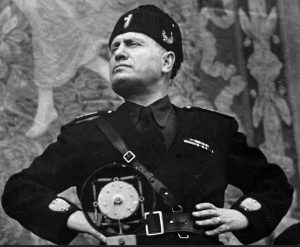
Elon also publicly excoriated the “lockdowns” as “fascistic” – which is absolutely correct though perhaps not in the sense he meant it.
Fascism isn’t defined by goose-stepping and Jew-baiting. These are incidentals. Mussolini – who coined the term and based it on the Roman fasces, or lictor’s bundles, which were the symbol of state authority – defined it as the partnering of the state and corporate power.
Does this sound familiar?
The “lockdowns” – ordered by the government – did not lock down corporations. Both were declared essential (by themselves) and given leave to operate, while individual proprietors and small businesses were not. The government, in other words, advantaged the corporations – the “big box” retailers and grocery stores, etc. – and itself at the disadvantage of the not-corporate, with the obvious intent being not public health but the health of corporate/state power. If health were the true reason, the “lockdowns” would have applied generally.
Elon gets this, apparently. At least, partially.
He sees the “de facto house arrest(ing”) as “unethical” but does not see the immorality of partnering with the government to enrich himself via mandates that advantage his corporate power. He does not get that if the government can force people to buy electric cars because of assertions about climatological health then surely – logically – it can force people to take a Needle for the sake of assertions about public health.
Elon’s heart may be in the right place. But it’d be better if his mind were.
He is, at least, on the right track. Perhaps it will occur to him that it would be much more ethical – and far more moral – to build electric cars that sold on the merits, without resort to mandates.
He’s a smart guy – and a very rich guy. He could do it – and by doing it, show the world how it could be done. Offer “ludicrous speed” to those who can afford to pay for the indulgence, as Porsche and Ferrari have always done (without needing subsidies). But offer reasonable cost to those who need it.
And then they just might buy it – without being forced. Without forcing others to subsidize it.
If he were to do that, he’d actually be a libertarian – instead of one who believes he is.
Be seeing you
Posted in Uncategorized | Tagged: Elon Musk, Libertarian, lockdowns, novel vaccine, Swine flu | Leave a Comment »
Posted by M. C. on October 1, 2020
We have come back to 1890. Instead of a Sears catalog in the outhouse we have a URL address on a tablet.
https://www.thestreet.com/mishtalk/economics/what-major-stores-went-bankrupt-in-2020

Mish
U.S. Retail Bankruptcies and Store Closures in 2020
Please consider An Overview of U.S. Retail Bankruptcies and Store Closures in the first half of 2020
In the first six months of 2020, 18 retailers filed for Chapter 11 bankruptcy, with an additional 11 filing in July through mid-August . These defaults were concentrated in apparel and footwear, home furnishings, food and department stores, with many prominent retailers filing during this time period, including Pier 1, J. Crew, Neiman Marcus, Stage Stores, J.C. Penney, Tuesday Morning, GNC, Lucky Brand, RTW Retailwinds (New York & Co.), Brooks Brothers, Ascena (Ann Taylor, LOFT, Lane Bryant, Justice, Catherines), Le Tote (Lord & Taylor), Tailored Brands (Men’s Wearhouse, Jos. A. Bank, Moores Clothing, K&G) and Stein Mart.
From January through mid-August, there have been more store closure announcements in 2020 than the record 9,500 stores that closed throughout 2019. The majority of store closures have taken place in malls, which have seen far less foot traffic due to sustained COVID-19 disruption.
2020 is on track to set the record for the highest number of retail bankruptcies and store closings in a single year. Based on the trends set through mid-August, our expectation is that more retailers will struggle to navigate the effects of the pandemic—particularly those that are highly levered and mall-based.
Bankruptcy Filings July and August 2020

Bankruptcy Filings Second Quarter 2020

Bankruptcy Filings First Quarter 2020

Not Just Bankruptcies
Retailers on the brink of bankruptcy are not the only ones looking to shed their brick-and-mortar locations. In fact, there are more than 15 retailers that have not filed for bankruptcy—including Macy’s, Bed Bath & Beyond and Gap—that have announced the closing of 50 or more stores, totaling a combined 4,200+ stores.
Lord & Taylor, Brooks Brothers, Pier 1, J. Crew, Neiman Marcus, J.C. Penney, Tuesday Morning, GNC, Ascena (Ann Taylor, LOFT, Lane Bryant, Tailored Brands (Men’s Wearhouse, Jos. A. Bank, Moores Clothing, K&G) and Stein Mart are among the prominent bankruptcies.
Anchor Stores
JCPenney, Neiman Marcus, Lord & Taylor, and Sears are (or were) examples of mall anchor stores.
Nordstrom and Macy’s are struggling.
Consider this July 1 headline: Nordstrom cuts 6,000 jobs, reduces workforce nationwide amid 40% decrease in sales.
Malls are not what they used to be and never will be again.
Mish
Be seeing you
Posted in Uncategorized | Tagged: Bankrupt, Retail Bankruptcies, Store Closures | Leave a Comment »
Posted by M. C. on October 1, 2020
This is what our society needs — the kind of rules whereby you would be OK even if your worst enemy were in charge. Despite the high stakes of bitterly fought football contests, most games end peaceably, and the winners and losers are civil.
https://www.lewrockwell.com/2020/10/walter-e-williams/supreme-court-and-rules-of-the-game/
The United States Constitution’s Article 2, Sec. 2, cl. 2, provides that the president of the United States “shall nominate, and by and with the Advice and Consent of the Senate, shall appoint Ambassadors, other public Ministers and Consuls, Judges of the Supreme Court, and all other Officers of the United States.” President Donald Trump has nominated Amy Coney Barrett as U.S. Supreme Court justice who will replace the late Ruth Bader Ginsberg. Barrett currently serves as United States Circuit judge of the 7th U.S. Circuit Court of Appeals. The 7th Circuit serves the Midwestern states of Illinois, Indiana and Wisconsin.
It is now the Senate’s job to decide whether to confirm Barrett’s appointment as an associate justice on the Supreme Court. In thinking about the Senate’s criteria for making their decision, we might ask what is the role of a U.S. Supreme Court justice? A reasonable answer is to recognize that our Constitution represents our rules of the game. It dictates what is and is not permissible behavior by government and its citizens. Therefore, a Supreme Court justice has one job and one job only; namely, that of a referee.
A referee’s job, whether he is a football referee, baseball umpire or a Supreme Court justice, is to know the rules of the game and to ensure that those rules are evenly applied without bias. Do we want a referee or justice to allow empathy to influence their decisions? Let us answer this question using this year’s Super Bowl as an example.
The San Francisco 49ers have played in seven Super Bowls in their franchise history, winning five times. On the other hand, coming into the 2020 game, the Kansas City Chiefs had not won a Super Bowl title in 50 years. In anyone’s book, this is a gross disparity. Should the referees have the empathy to understand what it is like to be a perennial loser, not winning a Super Bowl in five decades? What would you think of a referee whose play calls were guided by empathy or pity? Suppose a referee, in the name of compensatory justice, stringently applied pass interference or roughing the passer violations against the San Francisco 49ers and less stringently against the Chiefs. Would you support a referee who refused to make offensive pass interference calls because he thought it was a silly rule? You would probably remind him that it is the league that makes the rules (football law), not referees.
 Supreme Court justices should be umpires or referees, enforcing neutral rules. Here is a somewhat trivial example of a neutral rule from my youth; let us call it Mom’s Rule. On occasion, my sister and I would have lunch in my mother’s absence. Either my younger sister or I would have the job of dividing the last piece of cake or pie. Almost always an argument would ensue about the fairness of the cut. Those arguments ended when Mom came up with a rule: Whoever cuts the cake gives the other person the first choice of the piece to take. As if by magic or divine intervention, fairness emerged and arguments ended. No matter who did the cutting, there was an even division.
This is what our society needs — the kind of rules whereby you would be OK even if your worst enemy were in charge. Despite the high stakes of bitterly fought football contests, most games end peaceably, and the winners and losers are civil. It is indeed a miracle of sorts that players with conflicting interests can play a game, agree with the outcome and walk away as good sports. That “miracle” is that it is far easier to reach an understanding about the game’s rules than the game’s outcome. The same conflict-reducing principles should be a part of a civilized society.
Walter E. Williams is the John M. Olin distinguished professor of economics at George Mason University, and a nationally syndicated columnist. To find out more about Walter E. Williams and read features by other Creators Syndicate columnists and cartoonists, visit the Creators Syndicate web page.
Be seeing you
Posted in Uncategorized | Tagged: Amy Coney Barrett, Supreme Court | Leave a Comment »
Posted by M. C. on September 30, 2020
The superficial nature of presidential elections may not be a new phenomenon, but it is worth noting that this was not always the state of American politics. Once upon a time, party platforms offered substantive analysis of important issues and candidates were expected to have an operational understanding of serious questions. During the election of 1896, for example, the gold standard was such a prominent election issue that it was featured prominently in both campaign literature and candidate posters.
The big winner of last night’s presidential debate may have been H.L. Mencken, as his opinion of democracy seemed to be embraced by Americans all across the nation.
On one side you had President Trump staying true to his WWE persona, unlike his milder first performance four years ago with President-Assumed Hillary Clinton. On the other, you had Joe Biden, whose combination of short temper and low energy makes him resemble a disappointing Chinese firecracker. In the middle, you had Chris Wallace reduced to begging the participants to follow the rules of the whole affair.
Nothing of real substance was discussed, of course. We still do not know if Joe Biden stands with the mainstream of his party when it comes to stacking the courts and eliminating the senate filibuster (though we can be confident that his opinion on the subject would matter, even if elected). We do not know if President Trump recognizes the fragility of the debt-fueled economic recovery, though in the eyes of Chris Wallace this is “free market ideology.” We do not know if anyone watching these debates is even capable of having their mind changed, or whether the goal is simply to not discourage any would-be supporter from mailing in a ballot (or two).
We do however know two things: people are recognizing the failures of American democracy, and there really is nothing smart about Joe Biden.
The first point is important. First of all, the act of “recognizing” a problem does not mean that the problem is a new one.
While the media will predictably spin last night’s circus as the latest example of Donald Trump embarrassing the presidency, the truth is that presidential debates have long been farces. The 2012 debates were defined by an inaccurate fact check by Serious Journalist Candy Crowley and the phrase “binders full of women” taken out of context. Prior to that, SNL skits ended up doing more for framing candidates than any debate performance (perhaps the decline of SNL is the real tragedy in American politics).
The superficial nature of presidential elections may not be a new phenomenon, but it is worth noting that this was not always the state of American politics. Once upon a time, party platforms offered substantive analysis of important issues and candidates were expected to have an operational understanding of serious questions. During the election of 1896, for example, the gold standard was such a prominent election issue that it was featured prominently in both campaign literature and candidate posters.
Unfortunately, there tends to be an inverse relationship between democratization and serious political campaigns. In much the same way that products intended for mass consumption on the marketplace tend to be of lesser quality than those of specialty niche stores, a political system based on who can convince simply the majority of American adults to vote for them can resemble an intellectual race to the bottom.
This is not true with every election, however. For example, the single issue of school choice was found to have had a decisive impact in Florida’s 2018 gubernatorial election. Studies found that Republican Ron DeSantis won 18 percent of the female black vote, even while running against what would have been the first black governor of the state. The recognition that Andrew Gillum’s defense of traditional state schooling would have a direct impact on the quality of their children’s education was enough to transcend a lot of the typical tribalist instincts that tend to shape national politics.
For those interested in improving governance in America, this is a strong argument in favor of decentralizing democracy. (For those not interested in improving governance, there is another option.)
The second point may seem petty, but it’s also important—Joe Biden is an example of the sort of mediocre talent rewarded by the current political system. Prior to his 47-year career in elected office, he had a brief career as a lawyer with the ambitions of being elected senator and president. To achieve those ends, he falsified his resume to appear far more talented than he was.
His record in the Senate was significant, but he has spent most of his presidential campaign running against the positions he once had. Understandably so. His history of prior presidential runs did more for television comedians than his own legacy. His greatest asset was his relationship with Barack Obama, though much of the Democratic Party is far to the left of the former president. His instincts are so good that he picked for vice president someone who appears to be a true sociopath and is the elected Democrat who has made the most personal attacks on his record.
Of course, none of this matters to Biden true believers who seem to view the former vice president as a shortcut to reviving the nostalgia of the fictional West Wing. The alliance of former Bush and Obama administration officials wants voters to believe that Biden is a return to normalcy.
These are the very same people that mock red America for being gullible.
Be seeing you
Posted in Uncategorized | Tagged: decentralizing, Joe Biden | Leave a Comment »
Posted by M. C. on September 30, 2020
War boosting.
https://news.antiwar.com/2020/09/29/us-military-patch-depicts-drone-and-skull-over-china/
US Airmen conducting drills with MQ-9 reaper drones in California this month have been sporting patches that depict a drone and a skeleton over a red silhouette of China.

The new patches suggest that the Air Force’s drone operators are preparing for war with China. According to Air Force magazine, the drills started on September 3rd at Naval Air Station Point Mugu, California, and will end on September 29th.
The drills joined three MQ-9’s with the Navy’s Third Fleet, which deploys submarines, strike groups, and other vessels and aircraft in the eastern Pacific. US Air Force C-130s are also taking part in the drill, along with personnel from the US Marines Corps.
The reapers carried out airstrikes during a mock amphibious assault on San Clemente Island off of California’s coast.
“It’s a demonstration of our capability to rapidly move the MQ-9 anywhere in the world, to unfamiliar locations, and then get out and show the operational reach capabilities of the MQ-9,” US 29th Attack Squadron Commander Lt. Col. Brian Davis told Air Force.
The MQ-9 Reapers are a staple of US bombing campaigns in the Middle East and North Africa. Chinese state media suggested the Air Force could be preparing for an assault on Chinese-claimed islands in the South China Sea
Be seeing you
Posted in Uncategorized | Tagged: China, Drone and Skull, Military Patch, MQ-9 Reaper, Naval Air Station Point Mugu | Leave a Comment »

