NEW YORK, NY – According to sources, beloved North Korean tyrant and lover of doughnuts Kim Jong Un is now attending Columbia University, a prestigious Ivy League school, to learn new brainwashing techniques for his regime.
“I thought I knew all there was to know about communist indoctrination, but I was wrong,” said the ruthless dictator to reporters after sitting through a 2-hour lecture on why fidget spinners are a remnant of Western patriarchal oppression. “Your American college professors have this down to an art!”
Kim Jong Un then waddled over to the food court for all-you-can-eat frozen yogurt, whistling a merry tune as he went.
According to experts, Ivy League schools in America boast the world’s finest anti-Western propaganda and brainwashing techniques. The North Korean dictator expressed hope that his newfound knowledge would help him make his citizens more robotically obedient.
“We still have our troublemakers, but with these Ivy League techniques, I’ll have them eating out of my hand in no time!” he said.
The murderous leader of North Korea plans to go back to his home country and start his own Ivy League school: Kim Jong UNiversity.
Then, in the 2008 and 2012 presidential campaigns, Ron Paul was largely censored and marginalized. By this time they no longer hid it, and even had candidates sit at the far end of the stage during debates, and were denied equal speaking time. There was also the orchestrated mass media character assassination. You remember the ‘crazy uncle Ron’ comments.
Robert Kennedy Jr.’s presidential campaign has sparked quite a bit of interest and excitement. Shockingly at first glance, RFK Jr. has openly stated that his uncle John F. Kennedy (former president) was assassinated by the CIA and has inferred CIA involvement in his father’s death. Robert F. Kennedy was the U.S. District attorney, then a U.S. Senator, and was assassinated the night he won the California Democratic primary for president in 1968. I say shockingly at first glance, because RFK Jr. may be openly saying this as a bit of an insurance policy. Even the mind numb might question the mathematical probability of another lone gunman or plane crash. (JFK Jr.)
There may be another reason why RFK Jr. is likely safe. The system is rigged. Over a period of 20 years starting with the JFK assassination and ending with the attempted assassination of president Reagan, there were quite a few political assassinations and attempted assassinations. JFK, RFK, MLK, Malcom X, were all assassinated. George Wallace and Ronald Reagan survived attempted assassinations. This is quite a few political assassinations and attempted assassinations over a 20 or so year period.
What changed?
It may be that a softer less volatile approach was used. Simply stated, the system became increasingly rigged and the need to take out political opposition or anybody that rocked the boat was no longer necessary. This happened in the 1990s for certain. There was never a need to assassinate Patrick J. Buchanan, because after an orchestrated mass media campaign to assassinate his character, he was censored and marginalized increasingly through the nineties until total cancellation in the 2000 campaign. You remember, that was when Bush and Gore did that dog and pony show with the butterfly ballots, which gave us slot machine, I mean, computerized voting.
In the 1996 campaign where Buchanan almost ran away with he GOP nomination, many activists at the time felt that cheating occurred in the Arizona primary, where Buchanan went from first place to third in a flash on election night. The Dole campaign thought they lost and actually asked Buchanan’s campaign if they would take over the lease of their jet.
On January 17, 1961, outgoing President and former Supreme Allied Commander Dwight D. Eisenhower gave one of the most consequential speeches in American history. Eisenhower for eight years had been a popular president, whose appeal drew upon a reputation as a person of great personal fortitude, who’d guided the United States to victory in an existential fight for survival in World War II. Nonetheless, as he prepared to vacate the Oval Office for handsome young John F. Kennedy, he warned the country it was now at the mercy of a power even he could not overcome.
Until World War II, America had no permanent arms manufacturing industry. Now it did, and this new sector, Eisenhower said, was building up around itself a cultural, financial, and political support system accruing enormous power. This “conjunction of an immense military establishment and a large arms industry is new in the American experience,” he said, adding:
In the councils of government, we must guard against the acquisition of unwarranted influence, whether sought or unsought, by the military-industrial complex. The potential for the disastrous rise of misplaced power exists and will persist.
We must never let the weight of this combination endanger our liberties or democratic processes… Only an alert and knowledgeable citizenry can compel the proper meshing of the huge industrial and military machinery of defense with our peaceful methods and goals, so that security and liberty may prosper together.
This was the direst of warnings, but the address has tended in the popular press to be ignored. After sixty-plus years, most of America – including most of the American left, which traditionally focused the most on this issue – has lost its fear that our arms industry might conquer democracy from within.
Now, however, we’ve unfortunately found cause to reconsider Eisenhower’s warning.
While the civilian population only in recent years began haggling over “de-platforming” incidents involving figures like Alex Jones and Milo Yiannopoulos, government agencies had already long been advancing a new theory of international conflict, in which the informational landscape is more importantly understood as a battlefield than a forum for exchanging ideas. In this view, “spammy” ads, “junk” news, and the sharing of work from “disinformation agents” like Jones aren’t inevitable features of a free Internet, but sorties in a new form of conflict called “hybrid warfare.”
In 1996, just as the Internet was becoming part of daily life in America, the U.S. Army published “Field Manual 100-6,” which spoke of “an expanding information domain termed the Global Information Environment” that contains “information processes and systems that are beyond the direct influence of the military.” Military commanders needed to understand that “information dominance” in the “GIE” would henceforth be a crucial element for “operating effectively.”
You’ll often see it implied that “information operations” are only practiced by America’s enemies, because only America’s enemies are low enough, and deprived enough of real firepower, to require the use of such tactics, needing as they do to “overcome military limitations.” We rarely hear about America’s own lengthy history with “active measures” and “information operations,” but popular media gives us space to read about the desperate tactics of the Asiatic enemy, perennially described as something like an incurable trans-continental golf cheat.
Indeed, part of the new mania surrounding “hybrid warfare” is the idea that while the American human being is accustomed to living in clear states of “war” or “peace,” the Russian, Chinese, or Iranian citizen is born into a state of constant conflict, where war is always ongoing, whether declared or not. In the face of such adversaries, America’s “open” information landscape is little more than military weakness.
In March of 2017, in a hearing of the House Armed Services Committee on hybrid war, chairman Mac Thornberry opened the session with ominous remarks, suggesting that in the wider context of history, an America built on constitutional principles of decentralized power might have been badly designed:
Americans are used to thinking of a binary state of either war or peace. That is the way our organizations, doctrine, and approaches are geared. Other countries, including Russia, China, and Iran, use a wider array of centrally controlled, or at least centrally directed, instruments of national power and influence to achieve their objectives…
Whether it is contributing to foreign political parties, targeted assassinations of opponents, infiltrating non-uniformed personnel such as the little green men, traditional media and social media, influence operations, or cyber-connected activity, all of these tactics and more are used to advance their national interests and most often to damage American national interests…
The historical records suggest that hybrid warfare in one form or another may well be the norm for human conflict, rather than the exception.
Around that same time, i.e. shortly after the election of Donald Trump, it was becoming gospel among the future leaders of the “Censorship-Industrial Complex” that interference by “malign foreign threat actors” and the vicissitudes of Western domestic politics must be linked. Everything, from John Podesta’s emails to Trump’s Rust Belt primary victories to Brexit, were to be understood first and foremost as hybrid war events.
This is why the Trump-Russia scandal in the United States will likely be remembered as a crucial moment in 21st-century history, even though the investigation superficially ended a non-story, fake news in itself. What the Mueller investigation didn’t accomplish in ousting Trump from office, it did accomplish in birthing a vast new public-private bureaucracy devoted to stopping “mis-, dis-, and malinformation,” while smoothing public acquiescence to the emergence of a spate of new government agencies with “information warfare” missions.
The “Censorship-Industrial Complex” is just the Military-Industrial Complex reborn for the “hybrid warfare” age.
Much like the war industry, pleased to call itself the “defense” sector, the “anti-disinformation” complex markets itself as merely defensive, designed to fend off the hostile attacks of foreign cyber-adversaries who unlike us have “military limitations.” The CIC, however, is neither wholly about defense, nor even mostly focused on foreign “disinformation.” It’s become instead a relentless, unified messaging system aimed primarily at domestic populations, who are told that political discord at home aids the enemy’s undeclared hybrid assault on democracy.
They suggest we must rethink old conceptions about rights, and give ourselves over to new surveillance techniques like “toxicity monitoring,” replace the musty old free press with editors claiming a “nose for news” with an updated model that uses automated assignment tools like “newsworthy claim extraction,” and submit to frank thought-policing mechanisms like the “redirect method,” which sends ads at online browsers of dangerous content, pushing them toward “constructive alternative messages.”
Binding all this is a commitment to a new homogeneous politics, which the complex of public and private agencies listed below seeks to capture in something like a Unified Field Theory of neoliberal narrative, which can be perpetually tweaked and amplified online via algorithm and machine learning. This is what some of the organizations on this list mean when they talk about coming up with a “shared vocabulary” of information disorder, or “credibility,” or “media literacy.”
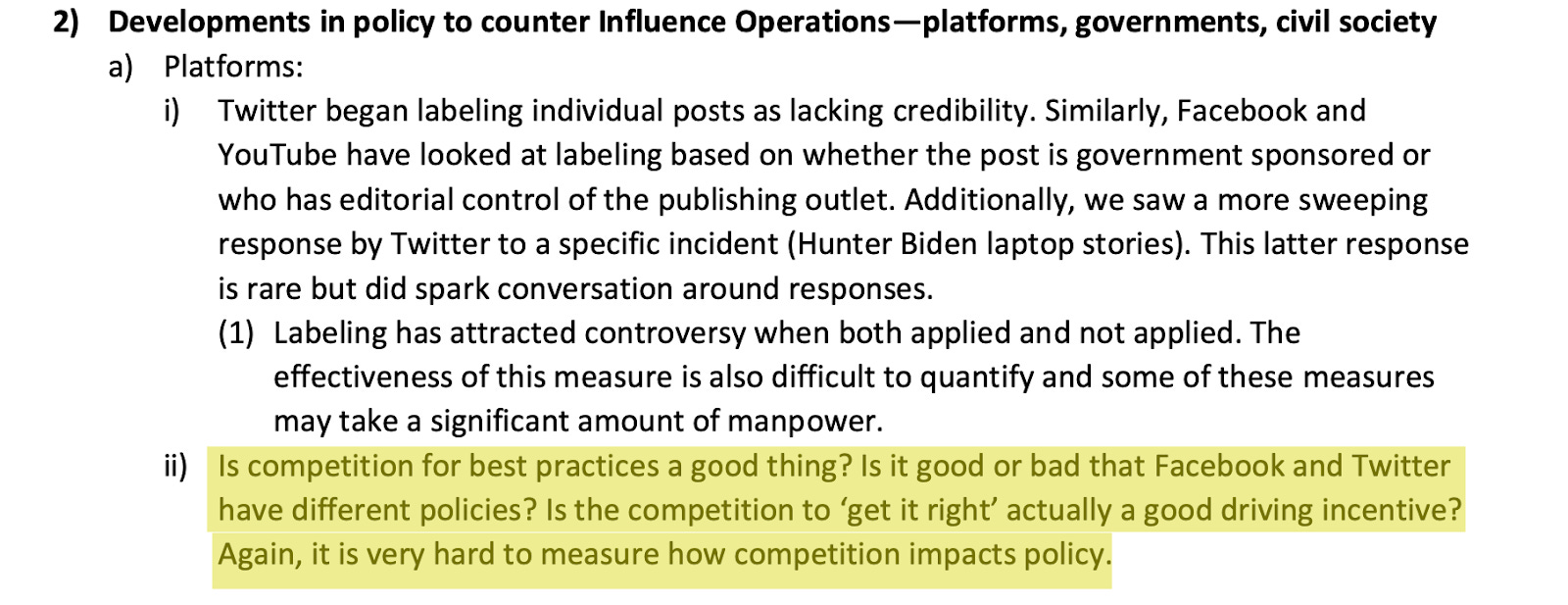
Anti-disinformation groups talk endlessly about building “resilience” to disinformation (which in practice means making sure the public hears approved narratives so often that anything else seems frightening or repellent), and audiences are trained to question not only the need for checks and balances, but competition. Competition is increasingly frowned upon not just in the “marketplace of ideas” (an idea itself more and more often described as outdated), but in the traditional capitalist sense. In the Twitter Files we repeatedly find documents like this unsigned “Sphere of Influence” review circulated by the Carnegie Endowment that wonders aloud if tech companies really need to be competing to “get it right”:
In place of competition, the groups we’ve been tracking favor the concept of the “shared endeavor” (one British group has even started a “Shared Endeavour” program), in which key “stakeholders” hash out their disagreements in private, but present a unified front.
Who are the leaders of these messaging campaigns? If you care to ask, the groups below are a good place to start.
“The Top 50 List” is intended as a resource for reporters and researchers beginning their journey toward learning the scale and ambition of the “Censorship-Industrial Complex.” Written like a magazine feature, it tries to answer a few basic questions about funding, organization type, history, and especially, methodology. Many anti-disinformation groups adhere to the same formulaic approach to research, often using the same “hate-mapping,” guilt-by-association-type analysis to identify wrong-thinkers and suppressive persons. There is even a tendency to use what one Twitter Files source described as the same “hairball” graphs.
Where they compete, often, is in the area of gibberish verbiage describing their respective analytical methods. My favorite came from the Public Good Projects, which in a display of predictive skills reminiscent of the “unsinkable Titanic” described itself as the “Buzzfeed of public health.”
Together, these groups are fast achieving what Eisenhower feared: the elimination of “balance” between the democratic need for liberalizing laws and institutions, and the vigilance required for military preparation. Democratic society requires the nourishment of free debate, disagreement, and intellectual tension, but the groups below seek instead that “shared vocabulary” to deploy on the hybrid battlefield. They propose to serve as the guardians of that “vocabulary,” which sounds very like the scenario Ike outlined in 1961, in which “public policy could itself become the captive of a scientific and technological elite.”
Without further ado, an introduction to the main players in this “CIC”:
1. Information Futures Lab (IFL) at Brown University (formerly, First Draft):
Type: A university institute, housed within the School of Public Health, to combat “misinformation” and “outdated communications practices.” The successor to First Draft, one of the earliest and more prominent “anti-disinformation” outfits.
You may have read about them when: You first heard the terms Mis-, dis-, and malinformation. The term was coined by FD Director Claire Wardle. IFL/FD are also the only academic/non-profit organization involved in the Trusted News Initiative, a large-scale legacy media consortium established to control debate around the pandemic response. Wardle was Twitter executives’ first pick for a signal group of anti-misinformation advisors it put together. She also participated in the Aspen Institute’s Hunter Biden laptop tabletop in August 2020 (before the laptop story broke). IFL’s co-founder Stefanie Friedhoff serves on the White House Covid-19 Response Team. First Draft staffers were also revealed in the #TwitterFiles to be frequent and trusted partners to a leading public face of the Censorship-Industrial Complex, Renee DiResta, now of Stanford University.
What we know about funding: First Draft was funded by a huge number of entities including Craig Newmark, Rockefeller, the National Science Foundation, Facebook, the Ford Foundation, Google, the Knight Foundation, the Wellcome Trust, Open Society Foundations, and more. Funding for the IFL includes the Rockefeller Foundation for a “building vaccine demand” initiative.
What they do/What they are selling: IFL/First Draft position themselves as the vanguard of disinformation studies, acting as key advisors to media, technology, and public health consortiums, bringing together a wide range of academic skill sets.
Characteristic/worldview quotes: High use of terms like coordinated inauthentic behavior, information pollution, the future Homeland Security catchwords mis-, dis-, and malinformation, and information disorder.
In the #TwitterFiles: First Draft is featured extensively in the files. They were the first proposed name when Twitter decided to assemble a small group of “trusted people to come together to talk about what they’re seeing,” were part of the Aspen Institute’s Burisma tabletop, and appeared in multiple emails with Pentagon officials.
Goofy graphage:
Closely connected to: Almost all the leading lights of the CIC, including the Stanford Internet Observatory, the Trusted News Initiative, Shorenstein Center, DFRLabs, the World Economic Forum, the Aspen Institute, Meedan, and Bellingcat.
In sum: With a strong ability to both know and direct emerging trends, and with a large array of elite networks in tow, the IFL will continue to serve as one of the key tastemakers in the “anti-disinformation” field.
In such terms, Scahill shows, men with no military experience talked tough after the debacle of 9/11. Malcolm Nance, a career Navy counterterrorist expert, described Cofer Black and his ilk as “civilian ideologues” who embraced “Tom Clancy Combat Concepts [of ] going hard, … popping people on the streets, … dagger and intrigue all the time” (58). These ideologues found like-minded men within the US military establishment. Special Ops legend Maj. Gen. William “Jerry” Boykin, for example, rejected the criterion of actionable intelligence and boasted “Give me action. I will give you intelligence” (99).
A very useful and informative site, Michigan War Studies Review, recently stopped publishing book reviews after 18 years. The site’s editor, James Holoka, posted several reviews written by yours truly, including this one in 2013 on Jeremy Scahill’s book, Dirty Wars.
The idea that “the world is a battlefield” grows ever stronger in America. As disastrous as America’s wars with Iraq and Afghanistan proved to be, together with the whole idea of a “global war on terror,” it will be far worse if America ends up fighting Russia or China in a “new cold/hot war.”
Investigative journalist Jeremy Scahill is best known for his exposé of the private military contractor Blackwater USA (later Blackwater Worldwide, still later Academi). [1] In his latest book, he considers the “dirty wars” that the United States has been fighting as part of its “global war on terror,” not only in Iraq and Afghanistan, but also in Somalia and Yemen. As national security correspondent for The Nation , Scahill has reported from the front lines and interviewed hundreds of participants. [2] In a detailed and episodic account spanning fifty-seven chapters, he traces the evolution of US anti-terrorism policies and actions, especially the rise of the Joint Special Operations Command after the 9/11 attacks, and their effect on the life and beliefs of Anwar al Awlaki, the American imam killed on 30 September 2011 in a drone strike authorized by President Barack Obama.
Scahill begins by recounting the targeted assassination of Awlaki’s sixteen-year-old son, Abdulrahman, also an American citizen, via drone attack on 14 October 2011. Neither father nor son had been formally charged with any crime. Only in May 2013 did the Obama administration admit to the killing of four American citizens, including the Awlakis, by drone strikes; Attorney General Eric Holder called the slaying of Anwar al Awlaki “lawful,” “considered,” and “just.” [3]
What are we to make of a government that assassinates its own citizens overseas without due legal process? That is the key question for Scahill. His answer is troubling, pointing to clear abuses of presidential authority and violations of constitutional protections.
Dirty Wars is most original in its detailed exposition of Anwar al Awlaki’s life and beliefs and his transformation from reasonable commentator on Islam, sought out after 9/11 by US media and military as a knowledgeable moderate, to radical exponent of jihad against America. Scahill argues that the US government’s overly aggressive approach to the Muslim world, including the use of “enhanced interrogation techniques” (code for torture), “extraordinary rendition” (i.e., kidnapping), and drone strikes that inflicted “collateral damage” (killed innocents), is perpetuating the very terror it claims to want to end.
The author sets himself to tell “the story of the expansion of covert US wars, the abuse of executive privilege and state secrets, the embrace of unaccountable elite military units that answer only to the White House … [and] the continuity of a mindset that ‘the world is a battlefield’ from Republican to Democratic administrations” (xxiii). A documentary film [4] furthering his thesis was released concurrently with the book. [5]
Not a confidence builder…And the acknowledged leader in Hypersonic Missiles has grown quite friendly of late with the acknowledged leader in Carrier Killer Missiles.
The United States Department of Defense (DOD) is seeking nearly $30 billion in its $680 billion Fiscal Year 2024 (FY24) budget request for missile defeat and defense programs across all branches of the military.
Artist’s concept of the DARPA and Lockheed Martin Hypersonic Air-Breathing Weapon Concept (HAWC). (Courtesy of Defense Advanced Research Projects Agency)
Right now, the DOD is in a race to develop its own hypersonic missiles and engineer effective defenses against the high-velocity, maneuverable missiles being developed by Russia and, particularly, by the Peoples Republic of China (PRC).
During questioning by Senate Armed Services Committee’s Strategic Forces Subcommittee Chair Sen. Angus King (I-Maine) in a May 9 budget hearing, four flag officers said some existing systems have “capabilities” against hypersonic weapons but did not know for sure until they are tested against the evolving missile systems.
King was not happy. “It seems to me that we are spending a lot more money to developing hypersonic missiles than we are developing capabilities to defend against them,” he said.
King asked Missile Defense Agency Director Vice Adm. Jon A. Hill if an aircraft carrier could be defended against a hypersonic missile attack.
“We have the capability to stop it in two places, in the boost-glide phase” and when the missile re-enters the atmosphere, Hill said, noting the Navy’s SM-6 missiles are “cruise missile killers” designed to track and kill fast-moving, maneuverable targets that can fly high and skim the surface. “It would be defeated by a destroyer defending a carrier.”
Noting Ukrainians claim they shot down a Russian hypersonic weapon last week with a Patriot anti-air missile provided by the U.S., Hill said the Patriot systems, Terminal High Altitude Area Defense missiles (THAAD), and Aegis ballistic defense system all have “capability” demonstrated in tests against hypersonics.
“THAAD operates on the edge of the atmosphere,” he said. “We haven’t tested it against hypersonic, but I’m willing to bet there are capacities that we can leverage there.”
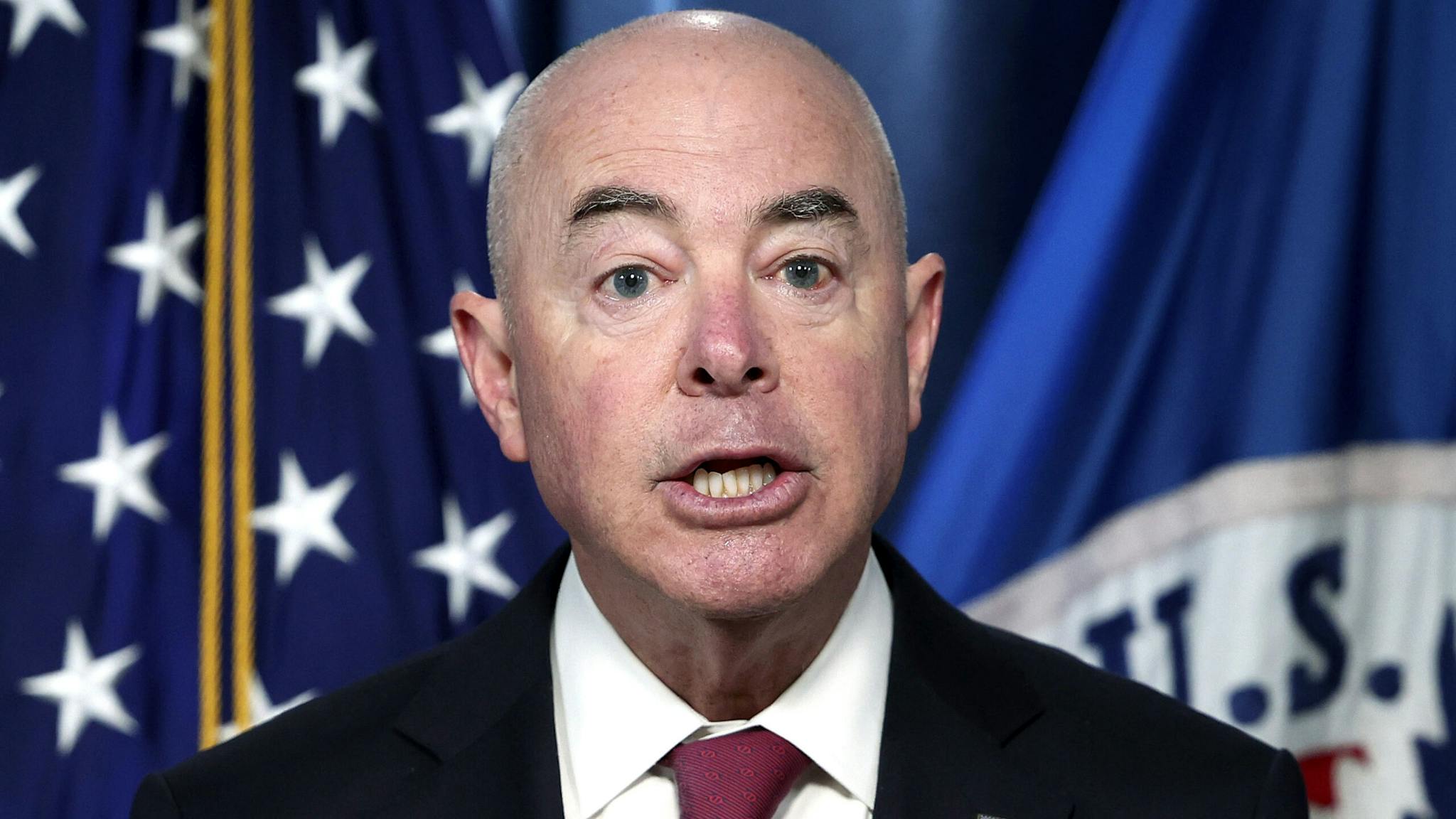
Department of Homeland Security Secretary Alejandro Mayorkas defended the Biden administration’s disastrous handling of the ongoing crisis on the U.S. southern border during a press conference this week.
Mayorkas, who has led the department for nearly the entire duration of Biden’s presidency, said on Thursday that it would take more time for the American public to see tangible results from the administration’s alleged attempts to fix the crisis…
It would even be expected that socialist regimes are opposed to the minority groups listed above. There is a very low cost for bureaucrats to prohibit the minority groups from continuing unhampered in their daily activities and a potentially high cost of inaction. If they do nothing, a problematic statistic might be found, and that would not be good for the bureaucrat. When the lives of people are owned by the state, people can be disposed of however the bureaucrat desires.
Socialists have managed to acquire the loyalty of a coalition of disparate groups by championing the principle of personal liberty. Especially in the United States, many women, disabled, gay people, transgender people, racial and ethnic minorities, and immigrants are among the proud supporters of the socialist cause, foolishly believing that capitalism or the free market is antithetical to their livelihood or lifestyles.
They could not be more wrong. Unfortunately, under socialism, people are not self-owners; they belong to the state.
The state owns everyone’s bodies under socialism. No example is more extreme than the gulags of the Soviet Union, where the state sent millions to forced-labor camps in which about 1.6 million died. The individual was merely a producer good in the state’s grand schemes. In current and former socialist countries, the minority groups that support socialism experienced this as well.
For example, in Dr. Paul Kengor’s book, Takedown, he retells the Bolsheviks’ history concerning the most cherished of modern women’s rights: abortion, or the right to choose. The Bolsheviks did legalize abortion once taking power (at that point, it helped wither away the family), but Joseph Stalin, under the fear of depopulation, outlawed abortion in 1936.
This ban continued until Stalin died and Nikita Khruschev’s more progressive administration revoked it in 1955. On the flip side, Fidel Castro’s socialist regime forced abortions as a means for cutting back on risky pregnancies. Additionally, through China’s one-child policy, many of the state’s abortions are compelled in what Kengor describes as “one of the most severe infringements on family life ever inflicted by a government on its people.”
Despite the right to choose being supported by feminists of socialist countries, it is among many of the rights that go by the wayside. Any instance of women being granted the right to choose merely means that the natural rate of abortion was aligned with the goals of the state, or the rates were tolerable.
Convenience, not principle, becomes the criterion for rights. Births become a statistic to the socialist tsar. Whenever births exceed what the directors believe to be the optimal level of births, abortion is allowed or even forced; if births are below what is desired, then abortion is prohibited. There is no room for the rational calculation of individuals in family planning. The socialist woman is not ultimately the owner of her body—the state is, and it exercises that power arbitrarily and totally.
Antifeminist abortion regulations bleed into “ableism” as well. Prior to China’s ending its one-child policy, prenatal screening was successfully used to detect children with Down syndrome so that they may be terminated. This may not immediately seem like socialist management. However, given that families would be less willing to bring a child into the world if it is disabled in some way, parents would maximize the one-child policy by opting to terminate the pregnancy in favor of a more “desirable” child. It is obvious that the socialist management of women’s bodies is to blame for the desire to terminate disabled children.
Given the prevalence of abortion, especially compulsory abortion, in socialist countries as well as the attitude against the disabled, mentally or physically disabled children become a burden on the state rather than on individual parents. To the bureaucrat, these children are merely a statistic. Ordering an abortion is nothing to them but numbers.
Moving away from the abortion issue, those with unorthodox sexual desires have not had a good time under socialist regimes either. Kengor notes, “the Bolsheviks were rooting out the slightest traces of so-called culture cancers such as prostitution and ‘homosexualism.’” Stalin even criminalized homosexuality in 1934. Castro’s Cuba locked up gays in the name of healthcare. As AIDS spread to the island, Castro imprisoned gays in sanitariums against their will, and Che Guevara personally executed and tortured gays as well.
Again, this is all about the public. You do not own your body under socialist regimes. If you own your body, you can spread diseases, and that is a threat to the “public” health regime. Gays were routinely subjected to this violation of human rights under socialism under unjust pretenses.
ATO’s post–Cold War history is that of an organization far past its “sell-by” date. Desperate for a mission after the end of the Warsaw Pact, NATO in the late 1990s decided that it would become the muscle behind the militarization of “human rights” under the Clinton Administration.
Gone was the “threat of global communism” which was used to justify NATO’s 40-year run, so NATO re-imagined itself as a band of armed Atlanticist superheroes. Wherever there was an “injustice” (as defined by Washington’s neocons), NATO was ready with guns and bombs.
The US military-industrial complex could not have been happier. All the Beltway think tanks they lavishly fund finally hit on a sure winner to keep the money pipeline flowing. It was always about money, not security.
The test run for NATO as human rights superheroes was Yugoslavia in 1999. To everybody but NATO and its neocon handlers in DC and many European capitals, it was a horrific, unjustified disaster. Seventy-eight days of bombing a country that did not threaten NATO left many hundreds of civilians dead, the infrastructure destroyed, and a legacy of uranium-tipped ammunition to poison the landscape for generations to come.
Just last week tennis legend Novak Djokovic recalled what it felt like to flee his grandfather’s home in the middle of the night as NATO bombs fell and destroyed it. What a horror!
Then NATO got behind the overthrow of the Gaddafi government in Libya. The corporate press regurgitated the neocon lies that bombing the country, killing its people, and overthrowing its government would solve all of Libya’s human rights problems. As could be predicted, NATO bombs did not solve Libya’s problems but made everything worse. Chaos, civil war, terrorism, slave markets, crushing poverty—no wonder Hillary Clinton, Obama, and the neocons don’t want to talk about Libya these days.
After a series of failures longer than we have space for here, DC-controlled NATO in 2014 decided to go all-in and target Russia itself for “regime change.”
Leading “threat intelligence” firms are creating fake online personas to gain access to every corner of the web.
U.S. intelligence agencies also have a record of coming up empty after infiltrating private, online spaces, raising the possibility that the security justifications for the current incursions are weaker than the agencies are claiming. The documents leaked by former National Security Agency contractor Edward Snowden revealed that FBI and CIA spies had created fake personas to hunt for potential terror plots discussed in online games, such as World of Warcraft and Second Life, as well as on platforms like Xbox Live. Those initiatives fizzled after the intelligence agencies found little to no evidence of terror communications.
That anonymous internet persona with an anime cartoon avatar in your Discord chat might actually be a contractor sent to spy on you.
Enter the world of “threat intelligence.”
It’s the term of art for a growing set of surveillance and security firms that create fake online personas to infiltrate and scrape data from private corners of the internet. The industry provides corporate and government clients with insight into conversations on private, invite-only Discord chats, WhatsApp groups, Reddit forums, and dark web message boards to help those powerful customers keep tabs on a variety of potential threats, from political hacktivists to the illegal markets that traffic in stolen passwords and intellectual property.
I spoke to representatives of ZeroFox, DarkOwl, Searchlight Cyber, Recorded Future, CyberInt, Flashpoint, and other threat intelligence firms at RSA Conference 2023, an annual convention for cyber security professionals from across the world that is held in San Francisco.
“We have personnel who already have established credentials in these environments so that we’re able to go in and look for things,” said A.J. Nash, the vice president of intelligence at ZeroFox, a leader in the threat intelligence industry that is based in Baltimore, Maryland.
Nash confirmed that the company is active in Discord, an audio and video group chat app popular among young video-game players.
“We can do the same thing with Discord,” Nash added. “It’s hard to infiltrate a small group because everybody knows everybody. But some of the groups that are larger, yeah, we have the ability to get into some opportunities.”
An executive at DarkOwl, a Denver-based threat intelligence firm that provides clients with a special database of information from its snooping, explained that the company creates fake identities and usernames to gain admission to many of the private platforms and chatrooms that it uses to collect information.
“What we do, we work with personas,” said Magnus Svärd, a director at DarkOwl. “We’ve done this at scale since 2018 so there’s some trust in the personas that we’ve built up, whether they’re on Discord, on Telegram, or wherever.”
Searchlight Cyber, a British firm that specializes in dark web message boards, similarly uses internet personas to gain access to private online forums and chat platforms.
“We actually get invited to those. We have human actors and get invited. We obviously don’t identify as Searchlight on them,” said Peter Ritter, a sales manager at the firm. “Then we see what’s going on there.”
CyberInt, an Israeli threat intelligence firm, advertises how its team of analysts uses fake personas to thwart hackers, retail fraud, hacktivists, and other cyber security threats.
In one video posted by CyberInt, an analyst for the firm discusses her approach to go into online communities and “detect threat actors when they are young or starting out at 14 or 15, that’s when I start observing and documenting their malicious activities.” At that age, they are “more careless and open,” the analyst said.
In another CyberInt marketing video, the firm walks a potential client through the process of using a fake online alias to contact a hacker over the messaging app Telegram and “get as much information as we can.”
Danny Miller, a director of marketing at CyberInt, confirmed to me that his firm has analysts infiltrating Discord servers, among other platforms.
Many of these firms maintain close ties to law enforcement and government agencies. Several are currently under contract with the Federal Bureau of Investigation or military intelligence.
The role of ZeroFox’s collaboration with the FBI, in particular, came to light in documents unearthed by the special House committee investigating the U.S. Capitol riot on Jan. 6, 2021. In a Jan. 3, 2021, email exchange between FBI officials preparing for the right-wing protests slated to occur, one official noted that the FBI team charged with monitoring groups due to assemble at the Capitol had just signed on with ZeroFox days earlier. The official said that the agency was still learning how to use the software to monitor social media posts from political extremists headed for Washington on Jan. 6, 2021.











 MCViewPoint