“Our politicians have never been dumber and more self-absorbed, the Left has never been more tyrannical, and the Right has never been less interested in the virtues of capitalism and free markets.”
“The market economy is the only system that permits each man to attain his goals in the way he thinks best.” —Ludwig von Mises
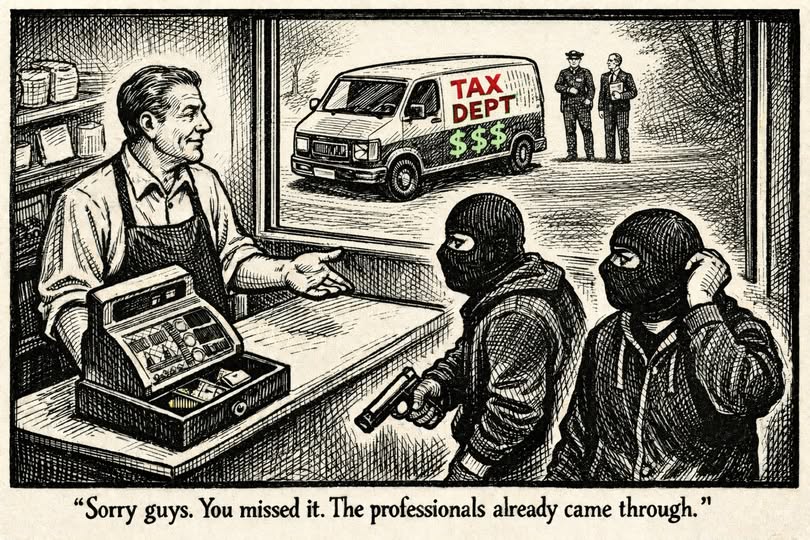
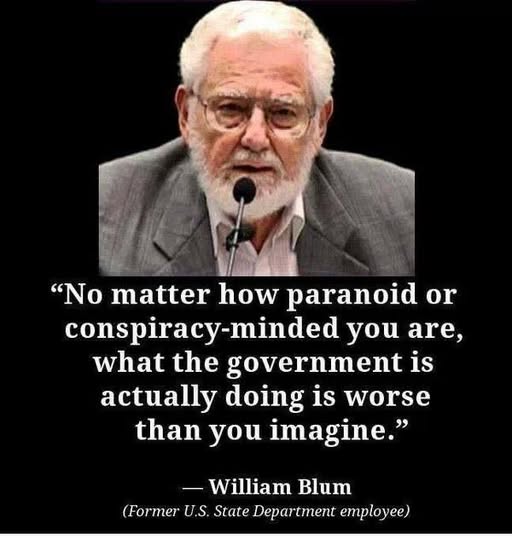
In American politics today, there is one thing everyone seems to agree on: our government isn’t working.
Our politicians have never been dumber and more self-absorbed, the Left has never been more tyrannical, and the Right has never been less interested in the virtues of capitalism and free markets.
So where does the hope lie for America? Not in politics, but in entrepreneurship.
Despite the political chaos of the last decade, entrepreneurs have achieved significant victories against the state and are providing real solutions for the rest of us.
Join the Mises Institute at the Omni Oklahoma City Hotel on Saturday, February 21, to discuss how markets succeed where politics fails, and how entrepreneurship continues to overcome the barriers imposed by a corrupt and broken system.
Suárez further clarified that self-defense does not depend only on external property ownership, noting that even Franciscan monks—who forgo material possessions—have a natural right to defend their bodies and the items they use. The idea of Suárez resonates deeply with the concept of “self-ownership” outlined by Murray Rothbard. In works such as The Ethics of Liberty, Rothbard argues that every individual is the absolute owner of their own body, which forms the ethical foundation of all property rights. In the same work, Rothbard conceives of property rights as necessarily encompassing the authority to defend them:
If every man has the absolute right to his justly-held property, it then follows that he has the right to keep that property—to defend it by violence against violent invasion…. To say that someone has the absolute right to a certain property but lacks the right to defend it against attack or invasion is also to say that he does not have total right to that property.
Self-defense and gun ownership are constantly being attacked in modern discourse and by the mainstream media, yet their legitimacy rests on principles far older than any constitution, preceding and transcending any political framework. The importance of self-defense lies in its role as a safeguard against both private and state aggression. Unlike modern states, which increasingly disarm their citizens and leave them defenseless, a private-law society would place no restrictions on the individual ownership of firearms or other weapons. In a genuinely free society, the preservation of liberty does not depend on armies or governments but on morally responsible individuals capable of self-reliance. Security must never be entrusted to the very institution that holds the monopoly on force; it must remain in the hands of the people themselves.
The School of Salamanca—a group of 16th-century theologians and jurists—developed a profound understanding of natural law, laying the groundwork for modern concepts of individual liberty and resistance to tyranny. Among them, Francisco de Vitoria and Francisco Suárez affirmed self-defense as an inalienable right, grounded in divine natural law and applicable to individuals and communities, including cases of resistance to oppressive authorities. It is fundamental to emphasize that the Salamanca scholastics did not create natural law, but rather understood and articulated it.
Natural law, being intrinsically linked to human nature, is not a historical invention or cultural construct, but rather a discovery of universal and timeless principles. According to these scholars, since human nature remains constant across time and cultures, natural law has always been valid and always will be. Although Hoppe, in A Theoryof Socialism and Capitalism, distances himself from how the natural rights tradition “has come to be” in its contemporary formulation, noting that his approach “owes nothing to this tradition as it stands,” he himself admits that it is possible to interpret his argumentation ethics as belonging to a “rightly conceived” natural rights tradition. Argumentation ethics may well represent the most rigorous and philosophically defensible justification for property rights, this approach arrives at the same conclusions as the Salamanca scholastics through a different, arguably more secure, path.
In their own words, as documented in The Catholic Second Amendment by David B. Kopel, Francisco de Vitoria—building on Thomas Aquinas’s framework of self-defense—differentiated between what a person “wills” and what they “intend.” For example, someone with gangrene may “will” the amputation of their arm to survive but does not “intend” the amputation itself as the primary goal. Similarly, in self-defense, a person may “will” the death of an attacker as an outcome of stopping the assault but does not “intend” it as the main objective. This right to self-defense extends to a child protecting themselves from a murderous father, a subject resisting a homicidal king (provided it does not destabilize the kingdom), and even opposing an evil pope. Francisco Suárez described self-defense as “the greatest of rights,” inherent to both individuals and communities, encompassing the right to resist tyrants.
Suárez further clarified that self-defense does not depend only on external property ownership, noting that even Franciscan monks—who forgo material possessions—have a natural right to defend their bodies and the items they use. The idea of Suárez resonates deeply with the concept of “self-ownership” outlined by Murray Rothbard. In works such as The Ethics of Liberty, Rothbard argues that every individual is the absolute owner of their own body, which forms the ethical foundation of all property rights. In the same work, Rothbard conceives of property rights as necessarily encompassing the authority to defend them:
If every man has the absolute right to his justly-held property, it then follows that he has the right to keep that property—to defend it by violence against violent invasion…. To say that someone has the absolute right to a certain property but lacks the right to defend it against attack or invasion is also to say that he does not have total right to that property.
Kinsella, in Legal Foundations of a Free Society, argues that our rights over our own bodies arise from the fact that we exercise direct and immediate control over them, following Hoppe’s reasoning. In contrast, property rights over external, previously-unowned resources emerge through original appropriation or through voluntary transfer. Because I have direct control over my body, I have a stronger and more objective claim to it than anyone else—who can, at most, exert only indirect influence. However, when a person has committed an act of aggression, he cannot consistently object to being punished, because through his act of aggression he demonstrates that he holds the view that the use of force is legitimate, and thus cannot object to force being used to punish him without falling in contradiction. Self-defense is therefore legitimate. The aggressor’s actions show he accepts force as valid, so he cannot object when force is used against him, the victim needs no further justification (of course, proportionality of retribution must be considered).
What does the goal of “saving the planet” or “protecting the environment” mean? The environmentalists ultimately mean that the planet needs to be saved from humans. Protect the environment from what or from whom? Protect the environment for what? Protect the environment for whom? The planet needs to be protected from you. Doubtless many will argue that the environmentalists just want to “save the planet” for humans, but—with anti-impact still the ideal—this still entails comprehensive central planning to the extent that human existence must severely retrench if it cannot be eliminated.
Environmentalists—at least the true believers that hold the anti-impact goal consistently—want you dead; they will settle, in the short term, for you to feel guilty for existing, producing and consuming, and willing to comply with any degree of central planning and freedom curtailment to “save the planet” from you.
After the failures of socialism—economically, historically, and ethically—the Left-liberal intellectuals, not wanting to abandon socialism, employed several new strategies. It has been suggested that these several manifestations can be subsumed under one general category—postmodernism. After a review of postmodern philosophy and philosophical influences, Stephen Hicks explains his central argument in Explaining Postmodernism: “Postmodernism is the academic far Left’s epistemological strategy for responding to the crisis caused by the failures of socialism in theory and in practice.” In other words, once socialism was discreditedtheoretically, economically (in several ways), historically, and ethically, those who were still ideologically committed to socialism despite its failures had to try to achieve socialism and central planning by appealing to other goals. One such strategy was the pursuit of egalitarianism (i.e. “equality”) between every disparate group, even between humans and the environment. Thus, the modern environmentalist movement—influenced by prior streams of thought—was born.
Describing further his analysis as to how the public failures of socialism plus postmodernism and modern environmentalism coalesced, Hicks writes,
The second variation was seen in the Left turn that rising concern with environmental issues took. As the Marxist movement splintered and mutated into new forms, Left intellectuals and activists began to look for new ways to attack capitalism. Environmental issues, alongside women’s and minorities’ issues, came to be seen as a new weapon in the arsenal against capitalism.
Traditional environmental philosophy had not been in principle in conflict with capitalism. It had held that a clean, sustainable, and beautiful environment was good because living in such an environment made human life healthier, wealthier, and more enjoyable. Human beings, acting to their advantage, change their environments to make them more productive, cleaner, and more attractive….
The new impetus in environmental thinking, however, brought Marxist concepts of exploitation and alienation to bear upon environmental issues. As the stronger party, humans necessarily exploit harmfully the weaker parties—the other species and the non-organic environment itself. Consequently, as capitalist society develops, the result of the exploitation is a biological form of alienation: humans alienate themselves from the environment by despoiling it and making it unviable, and non-human species are alienated by being driven to extinction.
On this analysis, the conflict between economic production and environmental health, then, is not merely in the short-run; it is fundamental and inescapable. The production of wealth itself is in mortal conflict with environmental health. And capitalism, since it is so good at producing wealth, must therefore be the environment’s number one enemy. Wealth, therefore, was no longer good. Living simply, avoiding producing and consuming as much as possible, was the new ideal.
The impetus of this new strategy, captured perfectly in Rudolf Bahro’s Red to Green, integrated with the new emphasis on equality over need. In Marxism, humankind’s technological mastery of nature was a presupposition of socialism. Marxism was a humanism in the sense of putting human values at the core of its value framework and assuming that the environment is there for human beings to use and enjoy for their own ends. But, egalitarian critics began to argue more forcefully, just as males’ putting their interest highest led them to subjugate women, and just as whites’ putting their interests highest led them to subjugate all other races, humans’ putting their interests highest had led to the subjugation of other species and the environment as a whole.
The proposed solution then was the radical moral equality of all species. We must recognize that not only productivity and wealth are evil, but also that all species from bacteria to wood lice to aardvarks to humans are equal in moral value. “Deep ecology,” as radical egalitarianism applied to environmental philosophy came to be called, thus rejected the humanistic elements of Marxism, and substituted Heidegger’s anti-humanist value framework.
(It ought to be noted that, prior to this, the moral grammar of modern environmentalism was prepared through Romanticism [late-18th to mid-19th century], especially Rousseau, with its “revolt against reason, as well as against the condition under which nature has compelled him to live,” its “grudge against reality,” its dislike of industrialization and bourgeois society, its emphasis on nature as morally superior to civilization, its suspicion of human mastery over nature, its emphasis on authenticity over progress, emotion, intuition, and moral sentiment over reason, and pastoral idealization of pre-industrial life).
How to Break Free from Tracking and Take Back Your Digital Freedom
Digital IDs: While convenient, government-issued Digital IDs must be scrutinized for their architecture. If they centralize too much data, they create a single point of failure and a powerful tool for monitoring citizens’ activities. Remember, if it’s digital it can and will be hacked.
Central Bank Digital Currencies (CBDCs): A CBDC could potentially program money, allowing a central authority to track, control, or even place expiration dates on your funds. The shift from anonymous cash to fully traceable digital currency is a massive concern for financial freedom.
This is guest post by NBTV community member Incognito Cat.
The internet promised us a borderless world of connection, but what it often delivers is surveillance. This isn’t a future threat, it’s the present reality. Governments and Big Tech are building a digital cage, luring us in with convenience while tightening the bars of control.
Every click, post, photo, search, and setting on our devices is designed to treat your personal life not as private, but as a resource to be harvested.
The good news is, you can leave the cage. Digital privacy isn’t about being paranoid; it’s about being sovereign. Control over your data is fundamental to a free life, and thanks to the growing number of easy-to-use, privacy-preserving tools like the ones in our Toolbox, there has never been a better time to choose that freedom.
Here is a practical, step-by-step framework for reclaiming your privacy and securing your digital existence.
Most people use the software that comes pre-installed on their computers and phones simply because it’s the default. Yet, these defaults are often the very mechanisms designed to maximize data collection.
The Action: Don’t just accept the software giants’ offerings. Seek out alternatives built with privacy as a foundational principle.
Browsers: Move from data-hungry browsers to options like Brave or Mullvad, which block trackers by default.
Search Engines: Ditch Google search for Brave Search or StartPage, which do not track your search history.
Email: Use end-to-end encrypted services like Proton Mail or Tuta Mail instead of standard free services.
Operating Systems: Investigate Linux distributions for desktops and more privacy-focused alternatives, like GrapheneOS, for mobile devices to minimize telemetry and data collection from the core operating system itself.
2. The Future of Security: Embracing Passkeys
For years, passwords have been the weakest link in digital security. They are susceptible to phishing, weak guessing, and data breaches. Passkeys, developed by the FIDO Alliance are the modern, phishing-resistant solution.
The Action: Where available, move to Passkeys immediately.
A Passkey is a digital credential stored securely on your device (like your phone or computer) and uses biometric verification (fingerprint, face scan) to log you in. They are based on cryptographic public-key technology, making them virtually immune to the common attacks that plague traditional passwords. They are more secure and significantly more convenient. Learn more about them here.
3. Foundational Defense: Passwords, Managers, and MFA
While more services are moving to support Passkeys, they are not yet universal. For every service that hasn’t made the switch, you need an impenetrable defense.
The Action: Establish an unshakeable security foundation:




 MCViewPoint