Recently leaked information obtained by The Intercept has validated the fact the Department of Homeland Security (DHS) is engaged in illegal activities designed to censor and deny the basic human right of free speech. DHS is engaged in an operation to influence social media to remove and censor content that runs contrary to its views. Facebook even created a direct portal to allow DHS to pull down truthful information, that would be information the DHS deems false. Censorship targeted information related to the Afghanistan withdrawal, election integrity, and information related to the apparent Covid 19 bioweapon, and Covid gene therapy shots, which also appear a biological weapon unleashed on humanity.
As The Intercept points out even Tom Ridge, former head of DHS, has stated that the United States government routinely lies whether it is about the Vietnam or Iraq wars, or the origination of Covid 19. DHS coordinated with Facebook, Twitter, and other social networking platforms. It is unclear of the level of interaction between DHS and other government agencies, and other private sector companies, although, based on the sudden engagement in politics and censorship by corporations, it is a safe bet that the DHS and other agencies are integrated with them.
Late on an October morning in a quiet neighborhood near Daytona Beach, Florida. FBI agent Steve Friend sits in his kitchen, fidgeting. He’s a wiry, energetic man, built like a marathoner, not muscled up but exuding fitness, not a sitter. This is not a person meant for desk work, much less staying home all day. But as a whistleblower whose name has been all over media after a complaint about statistical manipulation and other problems in the January 6th investigations, this will be his lot for a while.
By that morning, the first rush of news stories about Friend’s case already passed. CNN and MSNBC demonized him, Fox hailed him as a hero, but the furor was beginning to die down. What a whistleblower talks about in this inevitable moment will say a lot about his or her motivation. Looking out a window into the stillness of his suburban neighborhood, Friend shook his head.
“I love my job,” he said, sighing. “I was living my best life as an FBI agent. I was coming home every day, and my kids were my biggest fan club. Like, ‘Daddy, did you put the bad guy in jail?’ And I thought, ‘Man, this is it.’”
It’s not the tone of a disgruntled malcontent, but someone who made a reluctant journey to whistleblower status, beginning with a whirlwind series of events that brought him and his family out of the Midwest to north Florida less than two years ago. He worked a child pornography detail before being transferred to the assignment that would upend his life: investigating J6. The FBI not only took Friend off vital work chasing child predators to pursue questionable investigations of people maybe connected with the Capitol riots (often in some misdemeanor fashion), they used dubious bureaucratic methods he felt put him in an impossible spot.
Essentially, the FBI made Friend a supervisory agent in cases actually being run by the Washington field office, a trick replicated across the country that made domestic terrorism numbers appear to balloon overnight. Instead of one investigation run out of Washington, the Bureau now had hundreds of “terrorism” cases “opening” in every field office in the country. As a way to manipulate statistics, it was ingenious, but Friend could see it was also trouble.
As a member of a dying breed of agent raised to focus on making cases and securing convictions, Friend knew putting him nominally in charge of a case he wasn’t really running was a gift to any good defense attorney, should a J6 case ever get to trial.
“They’re gonna see my name as being the case agent, yet not a single document has my name as doing any work,” Friend says. “Now a defense lawyer can say, ‘Hey, the case agent for this case didn’t perform any work.’ Labeling the case this way would be a big hit to our prosecution.”
Friend ended up refusing the arrangement, which led to his suspension. He followed procedure, making protected disclosures to superiors and the FBI’s Office of Special Counsel (OSG). He then reported his suspension to Wisconsin Senator Ron Johnson and whistleblower-whisperer Chuck Grassley of Iowa. They sent a letter to Attorney General Merrick Garland, detailing Friend’s procedural objections, including that “agents are being required to perform investigative actions” they “would not otherwise pursue,” at the direction of the Washington Field Office (WFO).
When Friend first complained to his Assistant Special Agents in Charge (ASACs — the FBI is an acronym hell worse than the military), he told them, with regard to J6 suspects: “I’m not a Trump voter. I’m not sympathetic to those people.” The message didn’t get through, however, and leaks from the Bureau have almost universally painted him as an insubordinate MAGA conspiracist.
In fact, most of the press Friend attracted reduced his story to a referendum on the Capitol riots, as if his only complaint was being asked to investigate J6 at all. Big guns were brought out to sell the idea. Former FBI assistant director for counterintelligence-turned-talking-head Frank Figliuzzi blasted Friend on MSNBC as a “self-styled FBI whistleblower” (Figliuzzi, a lawyer, should know better: Friend made protected disclosures by the book and is legally a whistleblower), implying he simply didn’t follow “valid” orders, instead “running to Trump-loving Congressmen” to complain.
But Friend’s complaint is only partially about J6. His concerns began in his first days in Quantico, and continued across years of watching the Bureau collect intelligence or open cases for non-operational reasons. Whether they involve J6 or not, a consistent theme of his stories is the FBI using its authority to “disrupt” or intimidate targets as an end in itself, as opposed to collecting evidence with the aim of prosecuting.
One example involved a British doctor who’d been at J6. The suspect was not exactly Pablo Escobar. He did enter the Capitol, but surveillance showed he meekly stayed behind velvet ropes once inside, and under questioning was practically shaking with guilt over having taken a free Capitol tourist brochure as a souvenir. Though he seemed unlikely to be charged, he was booted from his medical practice after being interviewed, and Friend wondered if this even indirectly had been the point.
“I worried about the process being the punishment,” Friend says. “He lost his job. What does he get from us, if we don’t charge him? ‘Hey, you’re clear? The FBI found no wrongdoing, go pick up the pieces’?”
In the incident that led to Friend’s suspension, the FBI wanted to execute a SWAT raid on a subject who’d been communicating with the Bureau through an attorney and almost certainly would have come in voluntarily. Or, Friend thought, he could have been picked up in another, less dangerous way. The FBI however wanted a show.
“We’re gonna hit this house at six o’clock in the morning and throw flash-bangs and knock the door down and drive a Bearcat up on the front lawn,” recalls Friend, who had extensive SWAT experience and even worked the raid of Michigan militia members suspected of plotting to kidnap Governor Gretchen Whitmer.
It is only by the copious amounts of propaganda our civilization is being hammered with that this is not immediately obvious to everyone. In the future (assuming we don’t annihilate ourselves first), the propaganda will have cleared from the air enough for people to look back with clarity on 2022 and realize that they were lied to, yet again.
War criminal George W Bush and Ukrainian President Volodymyr Zelensky will be appearing at an event next week at the George W. Bush Presidential Center, in partnership with US government-funded narrative management operations Freedom House and National Endowment for Democracy. The goal of the presentation will reportedly be to address the completely fictional and imaginary concern that congressional Republicans won’t continue supporting US proxy war efforts in Ukraine.
Former US President George W. Bush will hold a public conversation with Ukrainian President Volodymyr Zelensky next week with the aim of underscoring the importance of the US continuing to support Ukraine’s war effort against Russia.
The event, which will take place in Dallas and be open to the public, comes amid questions about the willingness of the former president’s Republican Party to maintain support for Ukraine.
“Ukraine is the frontline in the struggle for freedom and democracy. It’s literally under attack as we speak, and it is vitally important that the United States provide the assistance, military and otherwise to help Ukraine defend itself,” David Kramer, the managing director for global policy at the George W. Bush Institute, told CNN. “President Bush believes in standing with Ukraine.”
The Struggle for Freedom event will take place on Wednesday, in partnership with the Freedom House and the National Endowment for Democracy, at the George W. Bush Presidential Center.
To be clear, there is absolutely no reality-based reason to believe Republicans will meaningfully shy away from full-scale support for arming and assisting the Ukrainian military. The proxy war has only an impotent minority of opposition in the party and every bill to fund it has passed with overwhelming bipartisan support. Some “MAGA” Republicans have claimed that funding for the war would stop if the GOP won the midterm elections, but they were lying; there was never the slightest chance of that happening.
The US government announced that it’s sending half a billion dollars worth of guided multiple launch rocket systems near Finland’s border with Russia. The escalation and out-of-control spending continues. The Pentagon argues that the move will “support the foreign policy and national security of the United States.” Also today, US HIMARS missiles are said to have hit a major dam in Ukraine and US progressives have found a new foreign policy home…with the neocons!
Historically, the natural tendency in the industrial market economy under a commodity money such as gold has been for general prices to persistently decline as ongoing capital accumulation and advances in industrial techniques led to a continual expansion in the supplies of goods. Thus, throughout the nineteenth century and up until the First World War, a mild deflationary trend prevailed in the industrialized nations as rapid growth in the supplies of goods outpaced the gradual growth in the money supply that occurred under the classical gold standard.
The Fed obviously doesn’t understand this. Congress is equally at a loss.
Most economists believe that a general decline in the prices of goods and services is bad news because it is associated with major economic slumps such as the Great Depression. In July 1932, the yearly growth rate of US industrial production stood at –31 percent whilst in September 1932 the yearly growth rate of the US Consumer Price Index (CPI) stood at –10.7 percent.
Many economic commentators claim that a general fall in prices is always harmful, since it postpones people’s buying of goods and services, which in turn, they believe, undermines investment in plant and machinery, setting an economic slump into motion. Moreover, as the slump further depresses the prices of goods, the pace of economic decline intensifies.
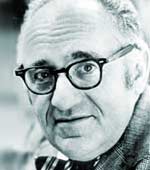
In contrast, Austrian economists such as Murray Rothbard have believed that in a free market the rising purchasing power of money—i.e., declining prices—is the mechanism that makes the great variety of goods produced accessible to many people. Rothbard wrote:
Improved standards of living come to the public from the fruits of capital investment. Increased productivity tends to lower prices (and costs) and thereby distribute the fruits of free enterprise to all the public, raising the standard of living of all consumers. Forcible propping up of the price level prevents this spread of higher living standards.
Historically, the natural tendency in the industrial market economy under a commodity money such as gold has been for general prices to persistently decline as ongoing capital accumulation and advances in industrial techniques led to a continual expansion in the supplies of goods. Thus, throughout the nineteenth century and up until the First World War, a mild deflationary trend prevailed in the industrialized nations as rapid growth in the supplies of goods outpaced the gradual growth in the money supply that occurred under the classical gold standard. For example, in the US from 1880 to 1896, the wholesale price level fell by about 30 percent, or by 1.75 percent per year, while real income rose by about 85 percent, or around 5 percent per year.
Countering Falling Prices with Money Pumping Weakens the Economy
Whenever a central bank pumps money into the economy to counter a general decline in the prices, this policy benefits those engaged in activities tied to loose monetary policy, but at the expense of wealth generators. Through loose monetary policy, some individuals become consumers without the prerequisite of contributing to the pool of real saving. Their consumption is made possible by diverting real savings from wealth producers.
If the pool of real savings still is growing, goods and services patronized by non–wealth producers appear to be profitable. However, once the central bank reverses its loose monetary stance, diversion of real savings from wealth producers to non–wealth producers is arrested, undermining the demand of non–wealth producers for goods, and exerting downward pressure on their prices.
While the pool of real savings expands, monetary pumping generates the illusion that loose monetary policy is the right remedy to counter a general decline in consumer prices. This is because the loose monetary stance, which renews the flow of real savings to non–wealth producers, props up their demand, arresting or even reversing general decline in prices.
Because the pool of real savings is still growing, the pace of economic growth stays positive. Hence the mistaken belief that a loose monetary stance that reverses a fall in prices is the key to reviving economic activity. The illusion that through monetary pumping it is possible to keep the economy going is shattered once the pool of real savings begins to decline.
Lending Out of “Thin Air” Encourages Unproductive Activities
When loaned money is fully backed by savings on the day of the loan’s maturity, it is returned to the original lender. For instance, Bob—the borrower of $5—will pay back on the maturity date the borrowed sum and interest to the bank. The bank in turn will pass to Joe the lender his $5 plus interest adjusted for bank fees. The money makes a full circle and goes back to the original lender. In contrast, when the lending originates out of “thin air” and the borrowed money is returned on the maturity date to the bank, this leads to a withdrawal of money from the economy, decreasing the money supply.
Because there was no saver/lender, this lending emerged out of “thin air.” When Bob repays the $5, the money leaves the economy, since there is no original lender to whom the loaned money should be returned. Observe that the $5 loan involves an exchange of nothing for something, providing a platform for unproductive activities that prior to the loan would not have emerged.
While banks continue to expand credit, various unproductive activities will prosper. At some point, however, a structure of production emerges that ties up more consumer goods than are released. (The consumption of final goods exceeds the production of these goods.) The positive flow of savings is arrested and a decline in the pool of real savings is set into motion.
Consequently, productive activities deteriorate, and bad loans accumulate. In response, banks curtail their lending out of “thin air,” triggering a decline in the money supply.
The U.S. government is still waging war on America’s military veterans.
Especially veterans who exercise their First Amendment right to speak out against government wrongdoing.
Consider: we raise our young people on a steady diet of militarism and war, sell them on the idea that defending freedom abroad by serving in the military is their patriotic duty, then when they return home, bruised and battle-scarred and committed to defending their freedoms at home, we often treat them like criminals merely for exercising those rights they risked their lives to defend.
As first reported by the Wall Street Journal, the government even has a name for its war on America’s veterans: Operation Vigilant Eagle.
This Department of Homeland Security (DHS) program tracks military veterans returning from Iraq and Afghanistan and characterizes them as extremists and potential domestic terrorist threats because they may be “disgruntled, disillusioned or suffering from the psychological effects of war.”
Coupled with the DHS’ dual reports on Rightwing and Leftwing “Extremism,” which broadly define extremists as individuals, military veterans and groups “that are mainly antigovernment, rejecting federal authority in favor of state or local authority, or rejecting government authority entirely,” these tactics bode ill for anyone seen as opposing the government.
Yet the government is not merely targeting individuals who are voicing their discontent so much as it is taking aim at individuals trained in military warfare.
Don’t be fooled by the fact that the DHS has gone extremely quiet about Operation Vigilant Eagle.
Where there’s smoke, there’s bound to be fire.
And the government’s efforts to target military veterans whose views may be perceived as “anti-government” make clear that something is afoot.
In recent years, military servicemen and women have found themselves increasingly targeted for surveillance, censorship, threatened with incarceration or involuntary commitment, labeled as extremists and/or mentally ill, and stripped of their Second Amendment rights.
In light of the government’s efforts to lay the groundwork to weaponize the public’s biomedical data and predict who might pose a threat to public safety based on mental health sensor data (a convenient means by which to penalize certain “unacceptable” social behaviors), encounters with the police could get even more deadly, especially if those involved have a mental illness or disability coupled with a military background.
Incredibly, as part of a proposal introduced under the Trump Administration, a new government agency HARPA (a healthcare counterpart to the Pentagon’s research and development arm DARPA) will take the lead in identifying and targeting “signs” of mental illness or violent inclinations among the populace by using artificial intelligence to collect data from Apple Watches, Fitbits, Amazon Echo and Google Home.
These tactics are not really new.
Many times throughout history in totalitarian regimes, such governments have declared dissidents mentally ill and unfit for society as a means of rendering them disempowering them.
The resulting trauma from war’s inevitable dehumanization is not yours alone. War-culture in this country leaves us with a residual collective trauma that weighs us all down and is only made worse by a national blindness to it.
I felt it then. I feel far more certain of it now. My dad, who died in 1983, was a member of what came to be known as the Greatest Generation, those who served in World War II. In fact, he volunteered the day after Pearl Harbor (though he was then old enough that he might not have been drafted) and ended up in the U.S. Army Air Corps — there was no separate Air Force in those days — with the First Air Commandos fighting the Japanese in Burma.
And here was the strange thing: though he had souvenirs of that war in his closet, including an old mess kit, a duffle bag filled with papers, his major’s hat, and various wartime badges, and as a boy I was fascinated, he would never really talk about his time at war. The only exceptions were those sudden outbursts of anger because my mother had shopped at a nearby grocery store whose owners, he claimed, had been war profiteers, or later because I had gone to a Japanese restaurant or bought a German car (a Volkswagen). Mind you, I thought I knew all there was to know about his war experience because he used to take me to the war movies of the 1950s where we both watched Americans ever triumphant, ever satisfied, ever glorious — and he never said a word about them, which seemed to validate everything I saw on screen.
Now, I suspect he had returned from that war with some version of post-traumatic stress disorder, some disturbance deep inside that came out in indirect but harsh ways in the tough years (for him) of the 1950s. But who talked about such things then? No one in my world, that’s for sure. And that was “the good war” (as Studs Terkel labeled it, quote marks included, in his famed oral history of World War II).
When it comes to America’s bad wars of the last century and this one, however, we know a good deal more about what they’ve done to this country’s “warriors,” as TomDispatch regular, religion scholar, and author of And Then Your Soul is Gone: Moral Injury and U.S. War-Culture Kelly Denton-Borhaug makes all too clear today. Yes, in these years, Americans were in a rush to “thank” those who fought our distant wars, while life here went on almost as if they weren’t happening. But now we know that the price paid for the disasters in Afghanistan, Iraq, and elsewhere was far, far too high (even if you ignore the costs borne by Afghans, Iraqis, and so many others). With that in mind, as Veterans Day comes around once more, take a moment with Denton-Borhaug to consider the price our vets have paid for the decision to fight the Global War on Terror across significant parts of this planet forever and a day. ~ Tom Engelhardt
The Intolerable Price You Pay
A Civilian Addresses American Veterans on Veterans Day
By Kelly Denton-Borhaug
[Denton-Borhaug will give a version of this talk virtually to Veterans for Peace Chapter 102 at a Reclaim Armistice Day meeting at the Milwaukee City Hall Rotunda this Veteran’s Day.]
Dear Veterans,
I’m a civilian who, like many Americans, has strong ties to the U.S. Armed Forces. I never considered enlisting, but my father, uncles, cousins, and nephews did. As a child I baked cookies to send with letters to my cousin Steven who was serving in Vietnam. My family tree includes soldiers on both sides of the Civil War. Some years before my father died, he shared with me his experience of being drafted during the Korean War and, while on leave, traveling to Hiroshima, Japan. There, just a few short years after an American atomic bomb had devastated that city as World War II ended, he was haunted by seeing the dark shadows of the dead cast onto concrete by the nuclear blast.
As Americans, all of us are, in some sense, linked to the violence of war. But most of us have very little understanding of what it means to be touched by war. Still, since the events of September 11, 2001, as a scholar of religion, I’ve been trying to understand what I’ve come to call “U.S. war-culture.” For it was in the months after those terrible attacks more than 20 years ago that I awoke to the depth of our culture of war and our society’s pervasive militarization. Eventually, I saw how important truths about our country were concealed when we made the violence of war into something sacred. And most important of all, while trying to come to grips with this dissonant reality, I started listening to you, the veterans of our recent wars, and simply couldn’t stop.
Dismantling the Lies About and Justifications for Our Wars
The only proper response to 9/11, our political leaders assured us then, was war and nothing but war — “a necessary sacrifice,” a phrase they endlessly repeated. In the years that followed, in speeches and public spectacles, one particular image surfaced again and again. The lives — and especially injuries and deaths — of American soldiers were incessantly linked to the injuries inflicted on Jesus of Nazareth, and to his death on the cross. President George W. Bush, for example, milked this imagery in 2008:
This weekend, families across America are coming together to celebrate Easter… During this special and holy time of year, millions of Americans pause to remember a sacrifice that transcended the grave and redeemed the world… On Easter we hold in our hearts those who will be spending this holiday far from home — our troops… I deeply appreciate the sacrifice that they and their families are making… On Easter, we especially remember those who have given their lives for the cause of freedom. These brave individuals have lived out the words of the Gospel, “Greater love has no man than this, that a man lay down his life for his friends.” [John 15:13 ]
The abusive exploitation of religion to bless violence covered the reality of war’s hideous destructiveness with a sacred sheen. And this justification for what quickly became known as the Global War on Terror troubled me, leaving me with many questions. I wondered: Is it true that we demonstrate what we most value in life by dyingfor it?
And we’ll either make that jump or we won’t. We’ll either renounce the religion of separation or we’ll remain its indoctrinated faithful. We’ll either wake up from the dream of separation or we’ll eventually sleepwalk off the cliff of climate collapse or nuclear armageddon. Every species eventually hits a juncture where it either adapts to changing circumstances or goes extinct, and this is ours.
The largest religion on earth is not Christianity or Islam: it’s the widespread, faith-based belief system which holds that humans are separate from each other and from the world.
Humanity is becoming less religious as awareness expands that religions are nothing but a collection of unhelpful and unevidenced belief systems. In the same way, and for the same reason, humanity may one day do the same with the belief systems about self and separateness to which nearly everyone on earth is presently a devout adherent.
Upon close inspection there is nothing which tells us that self and separateness are real in any meaningful way. The human organism is inextricably interwoven with its environment, from which it must continually draw sustenance or perish. Science tells us that when you zoom in on the smallest and most fundamental components of matter it becomes clear that life isn’t happening at all in the way our mental stories describe it, and that what we normally think of as “objects” and separate “things” are more like loose relationships of particles and energy which have no clearly definable boundaries between where they end and the rest of the world begins. Neurology can’t point to any part of the human brain where a separate self could be said to reside.
Even in our own actual experience, self and separation are nowhere to be found. We talk about “me” and “mine”, “them” and “theirs”, and all of our thoughts revolve around this little character called “I”, but if we set aside all underlying assumptions and really investigate for ourselves it turns out that those beliefs rest upon a lot of unexamined premises.
When anyone says “I” and “me” they are referring to the perceiving subject, in your case the one who is reading these words, hearing the sounds that are currently being heard, thinking the thoughts that are currently being thought, and feeling the feelings that are currently being felt. But if we really drill down and look for ourselves for any solid, tangible thing that could be called a self, we come up empty handed.
My body isn’t me because I am the subject who is perceiving it. My thoughts aren’t me because I am the subject who is perceiving them. The same is true of my sense impressions, my emotions, the subtle constellation of clenched bodily energies and personality essences that really feels like “me”, and even the sense of being itself. Everything that arises in awareness is being perceived by me, but they are not me. I am something else entirely. I — the real I — am something mysterious. Something which cannot be perceived or experienced, and as such can’t rightly be called a thing at all.
What I am — what you are — has no discernible boundaries to be found. It can’t be said to be separate or separable from anything in experience, but is at the same time far beyond and prior to them. It is boundless, timeless, inconceivable, imperceptible, and inseparable.
Once this is clearly recognized, so much of the anguish and discomfort of human life falls away, because the organism isn’t trying to be a “me” anymore. Isn’t role-playing as this separate character moving through spacetime who is responsible for what happens in that character’s life story. And from there a kind of graceful harmoniousness comes in over the way that organism moves in the world. The kind of graceful harmoniousness which, if it occurred in more humans, would end humanity’s self-destructive behaviors on this planet.
The media are lying to us, as evidenced by reality never matching with their stories.
The politicians are lying to us, as evidenced by their never delivering on their promises.
The capitalist class are lying to us, as evidenced by their getting richer while workers get poorer.
❖
I don’t want innovations which improve my shopping experience or make smartphones a tiny bit better, I want innovations which eliminate world hunger, innovations which make it so people have more free time, innovations which help humans live in harmony with our ecosystem.
If you’re a middle class westerner, technology is already at a point where they’re not going to be coming out with any new personal gadgets that make your life significantly better. But there’s a massive amount of room for innovation that can make life much better for people as a whole. In terms of societal transformation technology still has the ability to radically improve the quality of human life, while in terms of rugged individualism technology is just going to give the wealthiest humans more of the same kinds of toys that are already failing to make them happy.
The line of technological progress which is premised on individuals purchasing new inventions for themselves has long passed its point of diminishing returns, and now those returns are functionally nil. We don’t really need any more inventions for individual purchase and consumption. What we need are collective-oriented innovations which change the way humans live on this planet. And it won’t look like flying cars or fancier personal gadgets, it will look like advancements which change and improve our ability to get food, shelter and resources to everyone.
Democracy of the vote without democracy of information is not democracy. It doesn’t matter if people are able to vote as long as the media-owning class are able to manipulate how they vote. “One person, one vote” is meaningless if influence and control of information is highly concentrated in an elite few. And it is.
Mass media propaganda, internet censorship, Silicon Valley algorithm manipulation, government secrecy and the war on journalism are all anti-democratic in nature, because they restrict the information the citizenry are allowed to access to inform their vote. And none of those instruments of narrative control have any influence from, or accountability to, the rank-and-file public. This means that while everyone gets a vote, how those votes are applied is subjected to aggressive and ubiquitous manipulation by the ruling class.
The US empire’s unprecedented investment in soft power control systems has given rise to the most sophisticated propaganda system that has ever existed. Human thought is being manipulated at mass scale like never before. If you control how people think, you control how they vote.