

Be seeing you
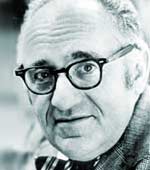
Enemy of the State-Read the Book-Know the Man
This is not a Safe Space but Baby, I don't care.

"I am not a number, I am a Free Man" - No. 6
 Information Liberation Alex Jones’ Prison Planet Gary North Specific Answers Antiwar The Daily Bell Tenth Amendment Center Economics Policy Journal The American Thinker The New American Lew Rockwell
Posted by M. C. on November 8, 2021
Be seeing you
Posted in Uncategorized | Tagged: Thomas Sowell | Leave a Comment »
Posted by M. C. on November 8, 2021
If Apple was ever pro privacy, those days are gone. That photo of Michelangelo’s David could put you on the list.
Be seeing you
Posted in Uncategorized | Tagged: Apple, iPhones, mass surveillance | Leave a Comment »
Posted by M. C. on November 8, 2021
Posted in Uncategorized | Tagged: BASS SOLO, Jaco Pastorius | Leave a Comment »
Posted by M. C. on November 8, 2021
Sub your favorite politicians for Bud and Lou.
https://www.lewrockwell.com/2021/11/no_author/abbott-and-costellos-whos-been-vaccinated/
Bud: ‘You can’t come in here!’
Lou: ‘Why not?’
Bud: ‘Well because you’re unvaccinated.’
Lou: ‘But I’m not sick.’
Bud: ‘It doesn’t matter.’
Lou: ‘Well, why does that guy get to go in?’
Bud: ‘Because he’s vaccinated.’
Lou: ‘But he’s sick!’
Bud: ‘It’s alright. Everyone in here is vaccinated.’
Lou: ‘Wait a minute. Are you saying everyone in there is vaccinated?’
Bud: ‘Yes.’
Lou: ‘So then why can’t I go in there if everyone is vaccinated?’
Bud: ‘Because you’ll make them sick.’
Lou: ‘How will I make them sick if I’m NOT sick and they’re vaccinated.’
Bud: ‘Because you’re unvaccinated.’
Lou: ‘But they’re vaccinated.’
Bud: ‘But they can still get sick.’
Lou: ‘So what the heck does the vaccine do?’
Bud: ‘It vaccinates.’
Lou: ‘So vaccinated people can’t spread covid?’
Bud: ‘Oh no. They can spread covid just as easily as an unvaccinated person.’
Lou: ‘I don’t even know what I’m saying anymore. Look. I’m not sick.
Bud: ‘Ok.’
Lou: ‘And the guy you let in IS sick.’
Bud: ‘That’s right.’
Lou: ‘And everybody in there can still get sick even though they’re vaccinated.’
Bud: ‘Certainly.’
Lou: ‘So why can’t I go in again?’
Bud: ‘Because you’re unvaccinated.’
Lou: ‘I’m not asking who’s vaccinated or not!’
Bud: ‘I’m just telling you how it is.’
Lou: ‘Nevermind. I’ll just put on my mask.’
Bud: ‘That’s fine.’
Lou: ‘Now I can go in?’
Bud: ‘Absolutely not?’
Lou: ‘But I have a mask!’
Bud: ‘Doesn’t matter.’
Thanks, John Frahm.
Be seeing you
Posted in Uncategorized | Tagged: Abbott and Costello, Who’s Been Vaccinated | Leave a Comment »
Posted by M. C. on November 8, 2021
The Executive Order does not mandate EDT shots, it mandates that employers create friction in the lives of their employees who do not receive the EDT shots. It does this by: (1) requiring that employees who refuse the EDT shots to wear masks starting December 4; and (2) after January 4, employees who refuse the EDT shots will be required to submit to weekly Covid tests and pay for them. This is just another example of a mass Milgram Experiment, with employers being told by authority figures to create wanton and unnecessary friction in the lives of their employees in order to change their employees’ behavior.
https://www.williambernardbutler.com/the-mandate-executive-order/
…is going nowhere. A court in Louisiana probably has it right–OSHA does not have jurisdiction over the seasonal flu and so does not have authority to compel employers to compel their employees to submit to Experimental Drug Therapy (EDT). The EO is DOA.
Smart employers nevertheless would do well to plan as though it will go forward. The Executive Order does not mandate EDT shots, it mandates that employers create friction in the lives of their employees who do not receive the EDT shots. It does this by: (1) requiring that employees who refuse the EDT shots to wear masks starting December 4; and (2) after January 4, employees who refuse the EDT shots will be required to submit to weekly Covid tests and pay for them. This is just another example of a mass Milgram Experiment, with employers being told by authority figures to create wanton and unnecessary friction in the lives of their employees in order to change their employees’ behavior. Knowing that the EO is first and foremost a cynical behavior modification tool and knowing that the data shows that masks don’t work and that PCR tests are completely worthless will make it easier for intelligent employers to artfully comply with the EO in way that improves their business rather than harms it.
The goal: employers should have as their goal that exactly zero of their employees receives the EDT shot as a result of the EO. The reason: no one has any liability if the EDT shot injures or kills your employees. Employers do not want to be left holding that bag. Government has sovereign immunity. Pharmaceutical companies have statutory immunity. Although the EO claims to exend immunity to employers, if it is ultimately determined that the EO illegimately extends OSHA jurisdiction, then the EO’s immunity from liability will be as ineffective as the EO. The result will be that employers who mistakenly compel their employees to receive an EDT shot will be exposed to the risk of lawsuits if their employees are injured or killed as a result of the EDT shot.
Employers have 60 days to plan and to execute their plan.
First, impacted employers should communicate to their employees that they intend to comply with the EO and at the same time communicate that they will also comply with any exemption requests based on “sincerely held beliefs.” Use this language. This is the Title VII standard. Subjective, sincere belief letters are better than the more objective “religious exemption” letters. No one wants to be put on a stand and cross-examined on whether they are objectively a good Christian who hates abortion. Example: have you ever used Tylenol? When you are explaining, you are losing. Do not encourage your employees to put themselves in a position of explaining or arguing how faithful they are and do not make their religion the issue. Make reality the issue, encourage them to back up their view of reality with facts, and suggest that they leave room for uncertainty. The issue is risk and who bears it, not fetal cell tissue. All jurors and all people understand risk.
Second, place a trusted executive in charge of determining whether there are doctors in the area who are willing to sign mask exemptions because masks create unnecessary risk and do not minimize the probabiity of contracting Covid or any other seasonal flu. Informally make sure that the employees who must be on site after December 4 are aware that they can also attach a doctor’s mask exemption note to their EDT shot exemption request.
This intentional and compassionate effort to protect employees from the no-safety-net EDT shot decision being foisted upon them will communicate to employees that their employer is sincerely concerned about their health and safety. They will see that their employer cares enough to take action to protect them. Their employer will not participate in any Milgram Experiment friction or abuse. These efforts, if done properly and discreetly, will build trust and boost morale.
Third and finally, if we get to January 4 and the EO actually goes into effect, have a plan to test employees that does not involve puncturing their nasal cavity once a week and ensures that they do not have to pay for any test. This is another Milgram friction/torture ploy. Don’t play along. Make it easy, painless, and pick up the tab that the EO attempted to put on the employee. Hopefully, between now and January 4, some creative entrepreneur will develop a saliva strip test with “Let’s Go Brandon” on it. Every time the employee submits to the spit test, he will remember who threatened his life and health and also that his employer did everything it could to help avoid unnecssary risk to his life and health.
This will build trust and loyalty. It will also turn a crisis and threat into a relationship-strengthening opportunity.
The effect of this strategy will to shift the burden of proof from the employer to OSHA. If an OSHA inspector inspects an employer and attempts to cite the employer for violation of the EO because of a factory filled with happy, maskless and jab-less employees, and if the employer has complete records showing that all of its employees have made sound, Title VII-compliant EDT shot exemption requests accompanied by mask exemptions authorized by a medical professional, then OSHA will then be in a position of explaining how an “emergency temporary standard” trumps federal law and professional health advice.
Be seeing you
Posted in Uncategorized | Tagged: EDT shot, Experimental Drug Therap, Milgram experiment | Leave a Comment »
Posted by M. C. on November 7, 2021
https://www.washingtonpost.com/opinions/2021/11/04/supreme-court-qualified-immunity-frasier-evans/

By Radley Balko
The Supreme Court, having created the problem of qualified immunity to shield police from being held liable for their misconduct, keeps refusing to fix it.
This week, the court declined to review an especially outrageous ruling by the U.S. Court of Appeals for the 10th Circuit involving a Denver man who was detained for recording a traffic stop, then had his computer confiscated and searched.Opinions to start the day, in your inbox. Sign up.
No one doubts the man, Levi Frasier, had the right to record the stop. To date, six federal appeals courts have ruled there is a constitutional right to record police officers in public, a sentiment shared by the overwhelming majority of constitutional scholars. No federal appeals court has ruled the other way. In fact, the law is so well established that the officers in Denver were trained that citizens have such a right, and to respect it.
Yet the 10th Circuit ruled that because that circuit had yet to rule on the matter, the right was not yet “clearly established.” In a truly remarkable sentence, the court added, “It is therefore ‘irrelevant’ whether each officer defendant actually believed — or even in some sense knew — that his conduct violated . . . the First Amendment.”
In my last column, I looked at the origins of qualified immunity, the court-created doctrine that makes it extremely difficult to sue police officers for abuse and other constitutional violations. As I previously pointed out, legal scholars generally point to 1967′s Pierson v. Ray as the court’s first major decision affording protection to law enforcement (and other government officials) from civil liability for constitutional violations, so long as the violations were in good faith.
But that decision required courts (or juries) to determine the state of mind of the officers accused, always a difficult thing to discern. So in 1982, the court revised the policy and created qualified immunity as we know it today. To successfully sue a police officer, a plaintiff must pass a two-prong test, showing that: (A) the police violated the plaintiff’s constitutional rights, and (B) a reasonable person should have known the officers’ actions were unconstitutional under “clearly established” law.
Be seeing you
Posted in Uncategorized | Tagged: 10th Circuit, Bill of Rights, Supreme Court | Leave a Comment »
Posted by M. C. on November 6, 2021
Be seeing you
Posted in Uncategorized | Tagged: Django Reinhardt, Pat Martino | Leave a Comment »
Posted by M. C. on November 6, 2021
Posted in Uncategorized | Tagged: Pat Martino | Leave a Comment »
Posted by M. C. on November 6, 2021
Even more important is the question of what to do with capital losses. Billionaires do not just make money by exploiting the poor, but are rich because they take on business opportunities that sometimes turn out to be losers. Similarly, stocks and other securities can decline in value. Would billionaires receive tax refund checks in those years? For example, what would happen if the stock market had a sharp selloff in December? Would billionaires receive massive tax write-offs on unrealized losses in their portfolio, leading the IRS to send tax refund checks to Jeff Bezos, Bill Gates, and Warren Buffett?
Keep in mind the original income tax law was sold on the premise it was only to tax the rich.
https://mises.org/wire/madness-taxing-unrealized-capital-gains
President Biden’s proposal to require roughly seven hundred US billionaires to pay taxes annually on unrealized capital gains has garnered wide support from Democrats as another step to make the rich pay for the uncontrolled spending by the federal government. House of Representatives speaker Nancy Pelosi says Democrats hope the plan will raise as much as $250 billion to help pay for expanding the social safety net and tackling climate change. The current tax system is already too complicated and adding another layer will not make the system any fairer or make rich people pay more in taxes. More importantly, the proposal is another scheme by the government that defies the reality and raises again questions of government overreach.
The proposal would reinvent how the government taxes investments not for everyone but just for the few hundred richest people. Under the current plan under discussion, capital gains on stocks and other traded assets would be taxed only for US taxpayers with over $1 billion in assets or $100 million in income for three consecutive years. What this amounts to is a different interpretation of the tax code for rich people. When an investor buys an asset, stock, real estate, or even a business, the asset hopefully becomes more valuable over time. Currently, the tax code requires the investor to pay a capital gains tax only when the investor sells the asset. However, under the new proposal the capital gain does not have to be realized in order to be taxed. Lawmakers are aiming to effectively increase the taxes rich people pay by rewriting the rules. Often investors hold on to their investments over many years while their assets increase in value, thus avoiding paying a capital gains tax until many years down the road, except for paying income taxes on the dividends and other cash distributions from the investment. In theory, a person could accrue capital gains indefinitely while never owing any taxes. In the proposal under consideration, the simple increase in the value in a portfolio will be taxed.
While the idea to get billionaires to pay more of their fair share in taxes seems to get lots of support from the public, lawmakers miss a key point in their excitement about having the rich pay more in taxes, the reality of the current tax system. The rhetoric of the super wealthy getting richer during the pandemic without having to pay taxes on the increases in wealth while regular taxpayers have to pay taxes on their income every year sounds very good to the tax-the-rich crowd. Surely, George Soros and other billionaires will comply and hand over their money without resisting. Actually George Soros applauds and supports this proposal while at the same time, according to the ProPublica report from June, Soros has not paid federal income tax for three years in a row. Similarly, Jeff Bezos and Elon Musk have not paid federal income taxes in some years.
The proposal defies reality as not all assets are as easy to value as publicly traded stocks. For example, a rare but valuable item like a precious painting or music album like the Wu-Tang Clan’s “Once Upon a Time in Shaolin” would be even more difficult to tax which raises the question on how do you assess the value of less liquid assets. Billionaires are the type of investor with the means to purchase less liquid investments like rare pieces of art. More importantly, as the wealth of people increases, they have a bigger incentive to hire high priced tax accountants and tax lawyers to fight the internal revenue service every step of the way. Ultimately, the government would have to be prepared to fight long and complicated legal battles with billionaires to establish what constitutes a capital gain.
Even more important is the question of what to do with capital losses. Billionaires do not just make money by exploiting the poor, but are rich because they take on business opportunities that sometimes turn out to be losers. Similarly, stocks and other securities can decline in value. Would billionaires receive tax refund checks in those years? For example, what would happen if the stock market had a sharp selloff in December? Would billionaires receive massive tax write-offs on unrealized losses in their portfolio, leading the IRS to send tax refund checks to Jeff Bezos, Bill Gates, and Warren Buffett? Ultimately, this will lead to the question when of valuations for unrealized gain taxes would be determined. Lawmakers forget that just because something increases in value does not mean the owner has the cash to pay taxes. The current rationale of taxing capital gains once the asset is sold avoids two fundamental problems with the proposal. First, the market alone should determine the fair market value of an asset, not the IRS according to some complicated formula defying reality. Secondly, even billionaires may not have the cash to pay taxes on unrealized gains. A tax on realized capital gains avoids those two problems: once an asset is sold, the true value is determined and the seller will have money from the sale to pay the tax bill.
While the current proposal will be supported by a large swath of the public, as the rhetoric is simply too appealing, taxpayers should be alarmed by this proposal. Once lawmakers have the power to tax unrealized gains, it will be just a matter of time before lawmakers running out of tax revenue will take aim at one of the largest sources of wealth hiding from the IRS, unrealized gains in real estate and mutual funds that the public holds. For example, CNBC reported that homeowners with mortgages saw their equity jump by 20 percent from a year earlier in the first quarter, which represents a collective cash gain of close to $2 trillion, or an average gain of $33,400 per borrower. Would it not be nice for the government to tax the increase in value in your house every year?
This proposal is dangerous and should be declared unconstitutional. As Ludwig von Mises explained, “‘Taxing the Rich’ Doesn’t Make Us Better Off,” and new taxes are always a danger to every productive citizen. Author:
Be seeing you
Posted in Uncategorized | Tagged: George Soros, IRS, Nancy Pelosi, Unrealized Capital Gains | Leave a Comment »
Posted by M. C. on November 6, 2021
Would Burundi Be Better Off If America Impoverished Itself?
The fact is that Americans consume more because Americans produce more. That’s right—more than 6 percent of the world’s potato chips, baseballs, skateboards, and countless other things. If we didn’t first produce, we wouldn’t have it to consume or to trade for what we really wanted. How can such an elementary point, such a basic principle of life and economics, be lost on anyone who doesn’t have to sign his name with an “X”?
https://fee.org/articles/the-poverty-of-the-united-nations/

wenty years ago, a United Nations report listed the United States as consuming 115,540 kilowatt-hours of energy per person per year. At the same time, each person in the tiny central African nation of Burundi was using up just 120 kilowatt-hours. My guess is that today, the average American is still consuming about a thousand times as much energy as the average Burundian. It’s also a safe bet that the “experts” at the United Nations want Americans to feel just as guilty about the disparity today as 20 years ago.
Is this something about which Americans should flog themselves in unremitting guilt? Does Burundi use less energy because America uses too much? Is world energy a fixed pie, with America greedily hogging more than its quota at the expense of the Burundis of the planet? Would Burundi be better off if America impoverished itself? Questions like these were answered definitively by free-market economists decades ago, but like a nagging mother-in-law, the questions just never go away.
You’ve heard this international class warfare stuff before, from many sources besides the United Nations. A few years ago, the mantra of the international statist community—repeated endlessly in the media—was this: “Americans are only 6 percent of the world’s population but they consume 40 percent of the world’s energy.” Greed was supposed to be the explanation for this disparity, and the solution offered was for America to spread its wealth in foreign-aid gifts to the less fortunate countries of the world.
Energy, of course, wasn’t (and still isn’t) the only thing of which America consumes more than its share of global population. We also eat more than 6 percent of the world’s potato chips and broccoli. We enjoy more than 6 percent of the world’s indoor plumbing, hearing aids, and baseballs. We operate more than 6 percent of the world’s cars, trucks, hang gliders, tricycles, and skateboards. We listen to more than 6 percent of all lectures and read more than 6 percent of the world’s books. And we probably put up with more than our share of nonsense too.
The fact is that Americans consume more because Americans produce more. That’s right—more than 6 percent of the world’s potato chips, baseballs, skateboards, and countless other things. If we didn’t first produce, we wouldn’t have it to consume or to trade for what we really wanted. How can such an elementary point, such a basic principle of life and economics, be lost on anyone who doesn’t have to sign his name with an “X”?
Unfortunately, the U.N. is at it again. Last September it issued a document called “The Human Development Report 1998.” The richest fifth of the world’s nations, declares the report, accounts for 86 percent of private consumption. Never mind the inherently dubious nature of adding up “private consumption” in almost 200 different countries.
The report is yet another lamentation about how the rich have it and the poor don’t: the richest fifth purchase nine times as much meat, have access to nearly 50 times as many telephones, and use more than 80 times the paper products and motorized vehicles than the poorest fifth. While two billion people worldwide supposedly go without schools and toilets, self-indulgent Americans are painting themselves with $8 billion in cosmetics and Europeans are feasting on $11 billion in ice cream. To reduce these horrid inequalities, the report recommends that “consumption levels among the poor” be increased to “basic” levels.
Think about that. The poor nations don’t consume much now, and the U.N. tells us that the answer is for them to consume more. How are the poor nations to get more? Change their ways? Produce more, perhaps? If the U.N. thinks that poor nations’ low productivity is at fault here, there’s little sign of it. As the New York Times revealed, “the report only skirts the issue of what role the poorest nations themselves play in this predicament.”
The sad fact is that in those poor countries like Burundi, indigenous political and cultural barriers to production constitute the overwhelming if not exclusive source of poverty. Routinely, the chronically destitute nations of the world are the ones that make war on private property, keep out foreign investment, impose viciously punitive taxes and regulations, spend inordinate sums on the military, squander resources on corruption and public works boondoggles, and in general, penalize or even kill anybody with enough spunk to start a business. These nations don’t consume much because, as a result of these barriers, they don’t produce much. It’s as simple as that. And it’s no coincidence that reports to the contrary come forth from a world body in which the ranks of the benighted are legion.
What poor nations need to do is to create the enlightened political and cultural conditions whereby capital investment and the resulting production are encouraged instead of suppressed. This is not new information. It’s the same formula by which America emerged from the status of 13 poor backwater colonies to the wealthiest nation on the globe. With a relatively free economy, America has shown the world how to go from Model T’s to space shuttles in less time than most peoples have taken to get from dirt paths to gravel roads. Other countries from England to Hong Kong can boast similar accomplishments as well, and for similar reasons.
It is no disgrace that Americans consume 40 percent of the world’s energy, or whatever the number may really be. Rather, it is a tribute to our ingenuity, creativity, and enterprise. We’ve put our God-given abilities to work within a system that even with all its government intervention is still infinitely more hospitable to production than Burundi’s. If we restricted our energy consumption to just 6 percent of the total world supply, our lives would be shorter, less healthy, and a lot more painful. There would be fewer of us, and not by choice. The rest of the world would be worse off too because poor people cannot materially do much to help other poor people through trade.
People who are interested in ending poverty and really solving economic problems would do well to read Adam Smith’s The Wealth of Nations and ignore any report that comes out of the United Nations.

Lawrence W. Reed is FEE’s President Emeritus, Humphreys Family Senior Fellow, and Ron Manners Global Ambassador for Liberty, having served for nearly 11 years as FEE’s president (2008-2019). He is author of the 2020 book, Was Jesus a Socialist? as well as Real Heroes: Incredible True Stories of Courage, Character, and Conviction and Excuse Me, Professor: Challenging the Myths of Progressivism. Follow on LinkedIn and Parler and Like his public figure page on Facebook. His website is www.lawrencewreed.com.
Be seeing you
Posted in Uncategorized | Tagged: Burundi, poverty, United Nations | Leave a Comment »

