MCViewPoint

Opinion from a Libertarian ViewPoint

Posts Tagged ‘CPI’

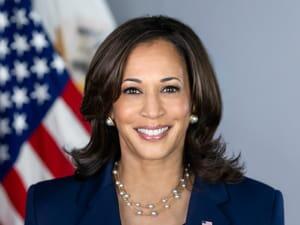
Why Kamala Harris Will Not Bring Prices Down… Her Plan Needs Inflation

Posted by M. C. on September 3, 2024

Inflation is the way in which the government tricks citizens into believing that administrations can provide for anything. It disguises the accumulated debt, quietly transfers wealth from the private sector to the government and condemns citizens to being dependent hostages of government subsidies.

Tyler Durden's Photo

by Tyler Durden

Authored by Daniel Lacalle,

https://www.zerohedge.com/political/why-kamala-harris-will-not-bring-prices-down-her-plan-needs-inflation

In a recent interview with CNN, Kamala Harris said that Bidenomics is working and that she is “proud of bringing inflation down.”

However, the Bureau of Labor Statistics published the latest CPI at 2.9%, despite annual inflation being 1.4% when she took office. Inflation is a disguised tax and accumulated inflation since January 2021, when the Biden-Harris administration started, has increased more than 20%.

Of course, Democrats blame inflation on the war, the pandemic, and the science-fantasy concept of “supply chain disruptions.” No one believed it, because most commodities have declined and supply tensions disappeared back to normality, but prices continued to rise.

As a result, Harris invented the concept of greedy grocery stores and evil corporations to blame for inflation and justify price controls. Is it not ironic? She blames grocery stores and corporations for inflation, but when price inflation drops, she proudly takes credit.

The reality is that the Kamala Harris plan, like all interventionist governments, creates and strives for inflation. Inflation is a hidden tax. Governments love it and perpetuate it by printing money through deficit spending and imposing regulations that harm trade, competition, and technological creative destruction. Big government is big inflation.

Inflation is the way in which the government tricks citizens into believing that administrations can provide for anything. It disguises the accumulated debt, quietly transfers wealth from the private sector to the government and condemns citizens to being dependent hostages of government subsidies. It is the only way in which they can continue to spend a constantly depreciated currency and present themselves as the solution. Furthermore, it is the perfect excuse to blame businesses and anyone else who sells in the currency that the government creates.

Kamala Harris will do nothing to cut inflation because she wants inflation to disguise the monster deficit and debt accumulation. In the latest figures, the deficit has soared to $1.5 trillion in the first ten months of the fiscal year. Public debt has soared to $35 trillion, and in the administration’s own forecasts, they will add a $16.3 trillion deficit from 2025 to 2034. It is worse. The previously mentioned figure does not include the $2 trillion in additional debt coming from Kamala’s economic plan.

See the rest here

Be seeing you

Posted in Uncategorized | Tagged: , , , | Leave a Comment »

Governments Start Calling For Price Controls – Rationing And CBDCs Come Next

Posted by M. C. on September 23, 2023

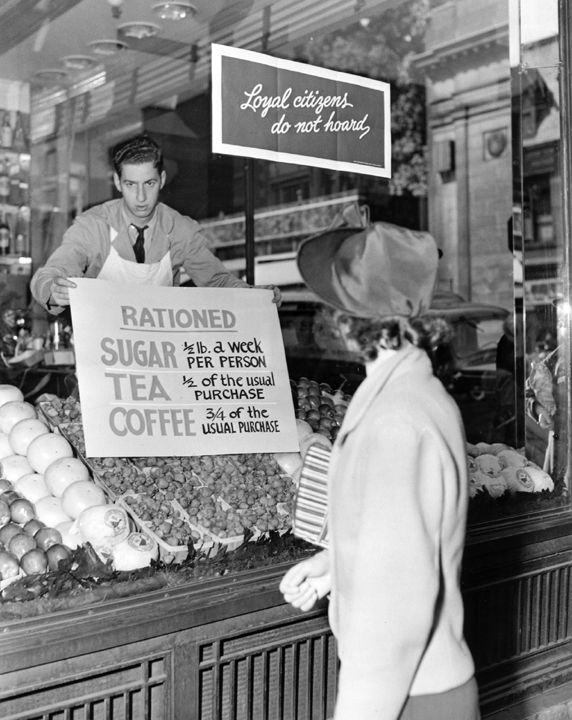
What Trudeau is doing is pretending to be stupid while engaging in a very clever strategy of scapegoating. It’s the government and the central bankers that are the foundational cause of inflation, but by blaming individual business sectors he sets the stage for government enforced price controls. When these fail and create a crisis in supply he will then introduce rationing, and once the government has conditioned the public to accept rationing the elites then control the entire population’s access to food and necessities.

Price controls results will result in nothing but disaster.

https://www.lewrockwell.com/2023/09/brandon-smith/governments-start-calling-for-price-controls-rationing-and-cbdcs-come-next/

By Brandon Smith

Last month in the middle of the surreal “Bidenomics” hype I published an article titled ‘Nothing Is Over: Inflation Is About To Come Back With A Vengeance.’  I outlined the misconceptions surrounding CPI and how it is not an accurate model for the effects of inflation.  I also noted that the index had been manipulated downwards by Joe Biden as he flooded the market with oil from the strategic reserves.  Because so many elements of the CPI are connected to energy, Biden had created an artificial drop in CPI using this strategy.

I argued that as the strategic reserves ran out and Biden lost his leverage, CPI would rise again and prices on a number of necessities would climb.  This is happening now, with the biggest jump in CPI in 14 months and gas prices clawing back towards all-time highs.

Inflation is not going away anytime soon, but the bigger issue at hand is who benefits most from inflation and rising prices? The answer might be obvious to some but many people are oblivious to the root cause of inflationary dysfunction and often see it as a consequence of random economic chaos rather than a product of clever engineering. The truth is, banking oligarchs and political authorities revel in the inflationary tidal wave because it is a perfect opportunity to institute far reaching socialist controls over resources.

In most cases central bankers are the primary culprits behind the creation of an inflationary event, and the word “creation” best applies because it is nearly impossible for overt inflation to occur without them. While money supply is not the only factor when dealing with inflation (sorry purists, but there are indeed other causes), it is the most important. More money chasing less resources triggers supply-side instability and prices go up. Central banks have a number of excuses as to why they “need” to conjure up more dollars or pesos or pounds or marks, but there is no doubt that they know what the ultimate end result will be.

It’s happened too many times for them not to know…

These inflation events trigger a predictable set of dominoes in society as well as in economy and finance. Price spikes, diminished savings, rising poverty, rising crime, and rising interest rates – This is then followed in most cases by failed rate hikes, more inflation, then more hikes, diminishing foreign investment in debt, foreign currency dumps (causing more inflation), plunging consumer spending and job losses.

This same pattern has been witnessed from 1920s Weimar Germany to 1970s America to 1990s Yugoslavia to 2000s Argentina and Venezuela and beyond. But what happens next? In each case the trend leads first to price controls on producers and distributors, which ultimately fail. Then comes government rationing and the complete takeover of necessities including the food supply.

See the rest here

Be seeing you

Posted in Uncategorized | Tagged: , , , , | Leave a Comment »

Inflation Hits 9.1 Percent after Months of Empty Talk at the Fed

Posted by M. C. on July 14, 2022

With this latest CPI inflation data, however, pressure will only mount on Powell to push through a full 1 percent rate hike. That, however, would make government debt much more expensive to service, tank the real estate industry, and lead to many household defaults on mortgages and auto payments. Unemployment would follow, and then what sliver of data would the Fed use to convince us that the economy is doing swell?

https://mises.org/wire/inflation-hits-91-percent-after-months-empty-talk-fed

Ryan McMaken

The US Bureau of Labor statistics released new Consumer Price Index inflation estimates this morning, and the official numbers for June 2022 show that price inflation has risen to 9.1 percent year over year. That’s the biggest number since November 1981, when the price growth measure hit 9.6 percent year over year. The month-over-month measure surged as well, with the CPI measure hitting 1.4 percent. That’s the highest month-over-month growth since March 1980, when the measure hit 1.5 percent. 

June marks the fifteenth month in a row during which CPI inflation has been more than double the Fed’s 2 percent target inflation rate. CPI inflation has been more than triple the 2 percent target for the past nine months, and year-over-year growth in CPI inflation has been near forty-year highs for the past eight months. 

See the rest here

Be seeing you

Posted in Uncategorized | Tagged: , , | Leave a Comment »

Don’t Be Fooled: The World’s Central Bankers Still Love Inflation

Posted by M. C. on June 4, 2022

  • lagarde

Ryan McMaken

The Bank of Canada on Wednesday increased its policy interest rate (known as the overnight target rate) from 1.0 percent to 1.5 percent. This was the second fifty–basis point increase since April and is the third target rate increase since March of this year. Canada’s target rate had been flat at 0.25 percent for twenty-three months following the bank’s slashing of the target rate beginning in March 2020.

As in the United States and in Europe, price inflation rates in Canada are at multidecade highs, and political pressure on the central bank to be seen as “doing something about inflation” is mounting.

The bank is following much the same playbook as the Federal Reserve when it comes to allowing the target rate to inch upward in response to price inflation. The bank’s official position is that it could resort to very aggressive rate increases in the future in order to hit the 2 percent inflation target.

As in the US, it’s important for central bankers to sound hawkish, even if their actual policy moves are extremely tame.

The World’s Central Banks Are Still Committed to Monetary Inflation

In spite of their lack of any real action, however, Canada’s central bankers are comparatively hawkish when we look at the world’s major central banks. At a still very low target rate of 1.5 percent, Canada’s central bank has set a higher rate than the central banks in the US, the UK, the eurozone, and Japan. Indeed, in the case of the European Central Bank and the Bank of Japan, rising inflation has still not led to an increase in the target rate above zero.

  • Federal Reserve: 1.0 percent
  • European Central Bank: –0.5 percent
  • Bank of England: 1.0 percent
  • Bank of Japan: –0.1 percent

Moreover, the ECB and the BOJ haven’t budged on their subzero target rates in many years. Japan’s rate has been negative since 2016, and the EU’s has been negative since 2014.

banks

The Bank of England recently increased its target rate to 1 percent, which is the highest rate for the BOE since 2009.

In the US, the Federal Reserve has increased the target rate to 1 percent, the highest rate since March 2020.

However, it’s clear that none of these central banks are prepared to depart from the policies of the past twelve years or so, during which ultralow interest rate policy and quantitative easing became perennial policy.

The Federal Reserve has talked tough on inflation but has so far only dared to hike the target rate to 1 percent while inflation is near a forty-year high.

The Bank of England apparently suffers from the same problem, as Andrew Sentence of the UK’s The Times pointed out this week:

There is a serious mismatch between inflation and the level of interest rates in Britain. The rate of consumer prices inflation measured by the CPI is now 9 per cent—four-and-a-half times the official target rate of 2 per cent. The Bank of England is forecasting that CPI inflation will reach double-digit levels by the end of the year…. The older measure—the Retail Prices Index (RPI), which is still widely used—is already showing a double-digit inflation rate (over 11 per cent).

See the rest here

Be seeing you

Posted in Uncategorized | Tagged: , , , , | Leave a Comment »

Do “Inflationary Expectations” Cause Inflation? Contra Krugman, the Answer Is No

Posted by M. C. on April 9, 2022

So what is the present status of inflation? The official version is that the yearly growth rate of the US Consumer Price Index (CPI) stood at 7.9 percent in February against 7.5 percent in January and 1.7 percent in February 2021. However, in terms of money supply, inflation stood at 7.9 percent in February 2021 against 4 percent in January 2019. Given such massive increases in money supply and given the long time lags from changes in money and changes in prices one should not be surprised that the yearly growth rate of the CPI displays a visible increase.

https://mises.org/wire/do-inflationary-expectations-cause-inflation-contra-krugman-answer-no

Frank Shostak

n the New York Times article “How High Inflation Will Come Down,” Paul Krugman suggests that the key for future inflation is inflation expectations. Krugman does not think that currently inflation expectations are comparable to the 1980s. According to him:

Forty years ago, as many economists will tell you, inflation was “entrenched” in the economy. That is, businesses, workers and consumers were making decisions based on the belief that high inflation would continue for many years to come. One way to see this entrenchment is to look at the wage contracts—typically for three years—that unions were negotiating with employers. Even then, most workers weren’t unionized, but these deals are a useful indicator of what was probably happening to wage- and price-setting more generally.

Furthermore:

So, what did those wage deals look like? In 1979, union settlements with large companies that didn’t include a cost-of-living adjustment specified an average wage increase of 10.2 percent in the first year and an annual average of 8.2 percent over the life of the contract. As late as 1981, the United Mine Workers negotiated a contract that would raise wages 11 percent annually over the next several years…. Why were workers demanding, and employers willing to grant, such big pay hikes? Because everyone expected high inflation to persist for a long time. In 1980 the Blue Chip Survey of professional forecasters predicted 8 percent annual inflation over the next decade. Consumers surveyed by the University of Michigan expected prices to rise by about 9 percent annually over the next five to 10 years. With everyone expecting inflation to continue, workers wanted raises that would keep up with rising prices, and employers were willing to grant those raises because they expected their competitors’ costs to be rising as fast as their own. What this did, in turn, was make inflation self-perpetuating: Everyone was raising prices in anticipation of everyone else raising prices. Ending this cycle required a huge shock—an economy so depressed both that inflation fell and that workers were compelled to accept major concessions.

This time around, Krugman holds, things are different:

Back then almost everyone expected persistent high inflation; now few people do.Bond markets expect inflation eventually to return to pre-pandemic levels. While consumers expect high inflation over the next year, their longer-term expectations remain “anchored” at fairly moderate levels. Professional forecasters expect inflation to moderate next year. This means that we almost surely aren’t experiencing the kind of self-perpetuating inflation that was so hard to end in the 1980s. A lot of recent inflation will subside when oil and food prices stop rising, when the prices of used cars, which rose 41 percent (!) over the past year during the shortage of new cars, come down, and so on. The big surge in rents also appears to be largely behind us, although the slowdown won’t show up in official numbers for a while. So it probably won ‘t be necessary to put the economy through an ’80s-style wringer to get inflation down.

Given all this, Krugman holds, history tells us that we are not moving to rampant inflation as we did in the 1970s:

See the rest here

Be seeing you

Posted in Uncategorized | Tagged: , , , | Leave a Comment »

Price Inflation Hit a New 40-Year High in February. No, It’s Not “Putin’s Fault.”

Posted by M. C. on March 12, 2022

In early 2020, the economic was weakening after more than a decade of remarkably slow economic growth and rising reliance on monetary expansion to prevent the implosion of Fed-created economic bubbles. But then covid happened, and the Fed blamed the disease for the economic collapse and inflation that followed. Now the war will provide yet another way for the Fed and its economists to claim they were doing a great job, and it would have all been a great success if not for the Russians.

https://mises.org/wire/price-inflation-hit-new-40-year-high-february-no-its-not-putins-fault

Ryan McMaken

According to new data released by the Bureau of Labor Statistics, price inflation in February rose to the highest level recorded in more than forty years. According to the Consumer Price Index for February, year-over-year price inflation rose to 7.9 percent. It hasn’t been that high since January 1982, when the growth rate was at 8.3 percent.

February’s increase was up from January’s year-over-year increase of 7.5 percent. And it was well up from February 2021’s year-over-year increase of 1.7 percent.

A clear inflationary trend began in April 2021 when CPI growth hit the highest rate since 2008. Since then, CPI inflation has accelerated with year-over-year growth nearly doubling over the past 11 months from 4.2 percent to 7.9 percent.

feb

For most of 2021, however, Federal reserve economists and their PhD-wielding allies in academia and the media insisted it was “transitory” and would soon dissipate. By late 2021, however, economists began to admit they were “surprised” and had no explanation for the inflation. (What one actually learns while obtaining a PhD in economics apparently has nothing to do with understanding money or prices.) Jerome Powell then declared that the Fed would prevent inflation from becoming “entrenched.”

Now, high level economists have changed their tune again with Janet Yellen admitting this week that “We’re likely to see another year in which 12-month inflation numbers remain very uncomfortably high.” Yellen had earlier predicted that CPI inflation would drop to around 3 percent, year over year, by the end of 2022.

Yellen was also careful to attempt political damage control by insinuating that price inflation is a result of uncertainty over the Russia-Ukraine war.

Never mind, of course, that the inflation surge began last year and that January’s CPI inflation rate was already near a 40-year high. The current crop of embargoes and bans on Russian oil imports implemented during March were not drivers of February’s continued inflation surge.

Few members of the public, however, will bother with these details, and this will benefit both the Fed and the administration. As far as the Fed is concerned, the important thing is to never, ever admit that price inflation is really being driven by more than a decade of galloping Fed-fueled monetary expansion (aka money printing). This was done largely at the behest of the White House and Congress to keep interest on the debt low and government spending high.

So, we can expect the administration to portray inflation as “Putin’s fault.” In a Friday speech to Democratic activists, Biden even claimed the high inflation rates are not due to “anything we did.” The tactic will no doubt work to convince many. But it’s unclear how many.

Workers Are Getting Poorer

See the rest here

Be seeing you

Posted in Uncategorized | Tagged: , , , , | Leave a Comment »

What a 40-Year Inflationary Peak Is Doing to Your Wages | The Libertarian Institute

Posted by M. C. on December 16, 2021

https://libertarianinstitute.org/articles/what-a-40-year-inflationary-peak-is-doing-to-your-wages/

by Ryan McMaken

According to new data released Friday by the Bureau of Labor Statistics, price inflation in November rose to the highest level recorded in nearly forty years. According to the Consumer Price Index (CPI) for November, year-over-year price inflation rose to 6.8 percent. It hasn’t been that high since June 1982, when the growth rate was at 7.2 percent.

November’s increase was up from October’s year-over-year increase of 6.2 percent. And it was well up from November 2020’s year-over-year increase of 1.13 percent.

infla

This surge in price inflation comes only a week after Fed chairman Jerome Powell backtracked on earlier comments dismissing the threat of price inflation and suggested previous attempts to define recent inflation as “transitory” weren’t quite accurate. Declaring last week that it was “a good time to retire the word,” Powell continued his pivot to addressing the danger of inflation “becoming entrenched.”

It’s unclear to what degree inflation might already be entrenched, but year-over-year growth in the CPI has been over 5 percent for the past six months—and on a clear upward trajectory.

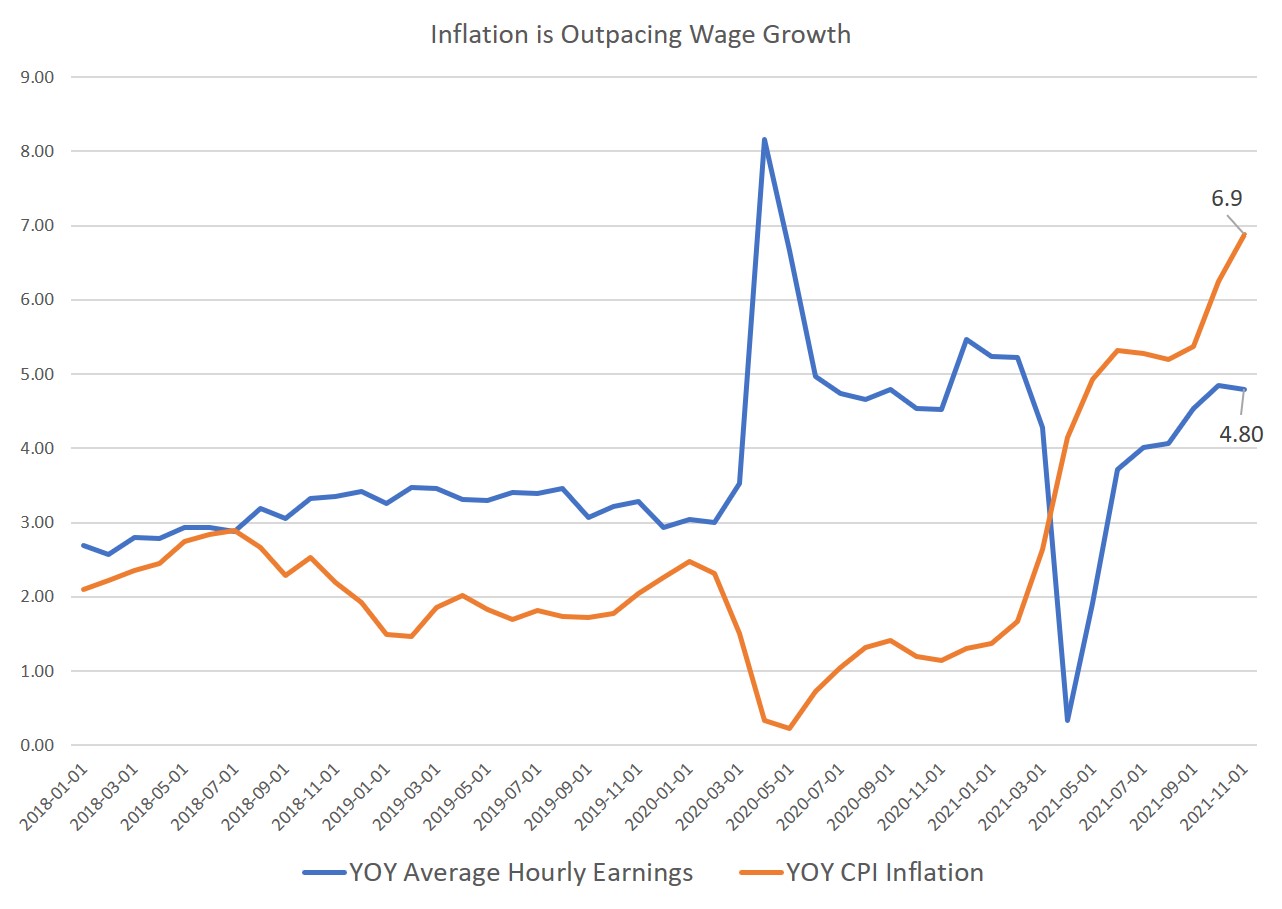
At the same time, inflation is taking a bite out of workers’ purchasing power. November’s numbers on average hourly earnings suggest that inflation is erasing the gains made in workers’ earnings. During November 2021, average hourly earnings increased 4.8 percent year over year. But with inflation at 6.9 percent, earnings clearly aren’t keeping up:

earnings
Source: BLS: Table B-3. Average hourly and weekly earnings of all employees on private nonfarm payrollsConsumer Price Index.

Looking at this gap, we find that real earnings growth has been negative for the past eight months, coming in at –2.1 percent year-over-year growth for November 2021. November was the eighth month in a row for negative growth in earnings.

earn
Source: BLS: Table B-3. Average hourly and weekly earnings of all employees on private nonfarm payrollsConsumer Price Index.

Moreover, according to the Conference Board, U.S. salaries are growing at a rate of approximately 3 percent this year.

Combined with November’s unemployment rate of 4.2 percent, November’s inflation growth puts the US misery index at 10.82. That’s the highest level since June of this year, and similar to the misery index levels experienced when the unemployment rate surged in the wake of the 2008 financial crisis.

misery

In addition to CPI inflation, asset-price inflation will likely continue to be troublesome for consumers as well. For example, according to the Federal Housing and Finance Agency, home price growth has surged in recent months, with year-over-year growth now coming in at 16.4 percent.

Don’t Expect Much from the Fed

See the rest here

Be seeing you

Posted in Uncategorized | Tagged: , , , | Leave a Comment »

And Just Like That, Inflation Is About To Disappear? | ZeroHedge

Posted by M. C. on December 12, 2021

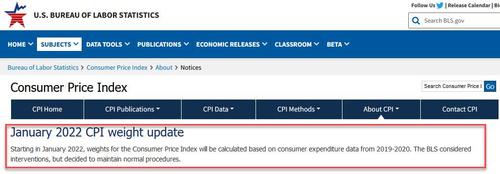
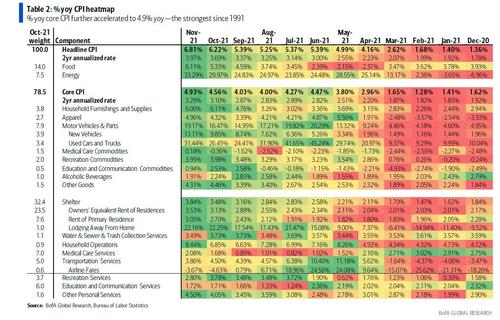
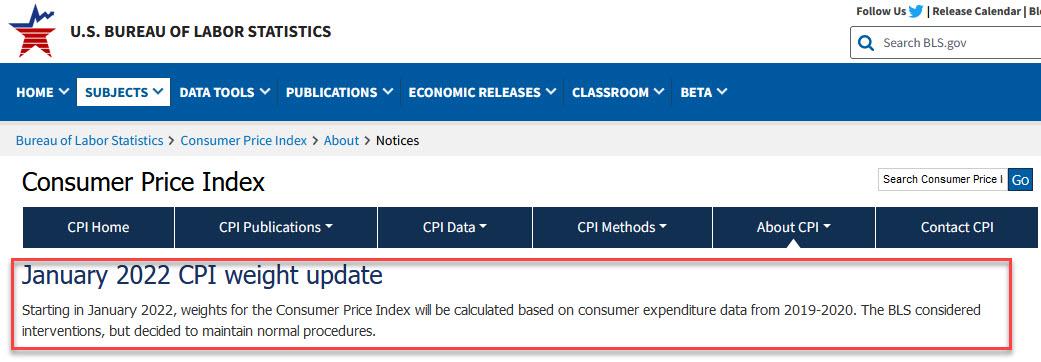
In any case, what we though this summer was just a joke appears to be coming true, because as the BLS has reported, starting next month it will adjust the weights for its Consumer Price Index basket, which will be calculated “based on consumer expenditure data from 2019-2020.” Alas, there is no further detail on this critical topic, although we will take any bet that post-revision reported inflation will drop because, well, “adjustments.”

https://www.zerohedge.com/markets/and-just-inflation-about-disappear

Tyler Durden's Photoby Tyler Durden

Earlier this year, when inflation was still “transitory” two Fed chairs, Powell and Bernanke, made comments which we joked only make sense if the definition of inflation is changed:

*POWELL:FOMC PREPARED TO ADJUST POLICY IF EXPECTATIONS GO BEYOND

by changing definition of PCE and CPI — zerohedge (@zerohedge) July 28, 2021

BERNANKE: COMMODITY PRICES WON’T ADD TO INFLATION GOING FORWARD

Why? Are we changing the definition of CPI again — zerohedge (@zerohedge) August 25, 2021

Sadly, our feeble attempts at humor were not unjustified, and as any economic history buff knows the US dramatically changed how it calculates consumer inflation back in the 1980s, an event extensively covered by AllianceBernstein former chief economist Joseph Carson on this website in the past (see “Consumer Price Inflation: Facts vs. Fiction“) with the most important difference being that while the CPI of the 1970s included house price inflation, the current measure does not. Instead, home price pressures have been swept in the purposefully nebulous Owner-Equivalent Rent which can be whatever politicians wants it to be (there have been other definitional changes, see here, here, here and here for more). Bottom line, however, is that if today’s CPI did include house prices in its measurement, the currently reported inflation numbers for house price inflation would push CPI (and core CPI) to double-digit gains.

Of course, it is politically inconvenient to report true inflation is – just see what happens in any banana republic where society is fed up with runaway inflation. It’s also why politicians on both sides of the aisle are always eager to tweak the definition of inflation ever so slightly (or not so slightly) so it appears to be less than it truly is. After all, for them masking reality is a matter of political survival.

In any case, what we though this summer was just a joke appears to be coming true, because as the BLS has reported, starting next month it will adjust the weights for its Consumer Price Index basket, which will be calculated “based on consumer expenditure data from 2019-2020.” Alas, there is no further detail on this critical topic, although we will take any bet that post-revision reported inflation will drop because, well, “adjustments.”

In the same press release, we also read that “the BLS considered interventions, but decided to maintain normal procedures”… whatever those are. Said otherwise, the BLS may not be “intervening” for now, but when the inflationary rubber hits the road next year with the midterms coming up fast and Dems ratings still in the dumps, we doubt that the BLS will have any qualms to “intervene.”

Incidentally, this “update” may explain the conviction behind Biden’s statement today: in a statement after the blistering hot CPI report came out…

… Joe Biden said that despite experiencing the most rapid inflation in almost 40 years in November, U.S. price increases are slowing, in particular for gasoline and cars.

“Today’s numbers reflect the pressures that economies around the world are facing as we emerge from a global pandemic — prices are rising… But developments in the weeks after these data were collected last month show that price and cost increase are slowing, although not as quickly as we’d like,” he said. Biden’s chief of staff Ronald Klain chimed in too:

We’ve made progress, but we’ve got to get prices down, and people have to feel the progress at their kitchen tables.https://t.co/YH102YVlQp — Ronald Klain (@WHCOS) December 10, 2021

Well, all that prices needs to slow “as quickly as we’d like” at least in government reports such as the CPI, is for the BLS to give them a gentle nudge lower.

Be seeing you

Posted in Uncategorized | Tagged: , , , , | Leave a Comment »

Price Inflation Hits a 31-Year High as Janet Yellen Insists It’s No Big Deal | Mises Wire

Posted by M. C. on November 11, 2021

Nonetheless, it is entirely possible that inflation rates could quickly turn downward again in coming months. That could occur if recession sets in with businesses and households unable to pay off their debts. If that happens, monetary deflation will set in and demand will decline, leading to a real drop in price inflation. Of course, that won’t exactly do wonders for real wages, either.

https://mises.org/wire/price-inflation-hits-31-year-high-janet-yellen-insists-its-no-big-deal

Ryan McMaken

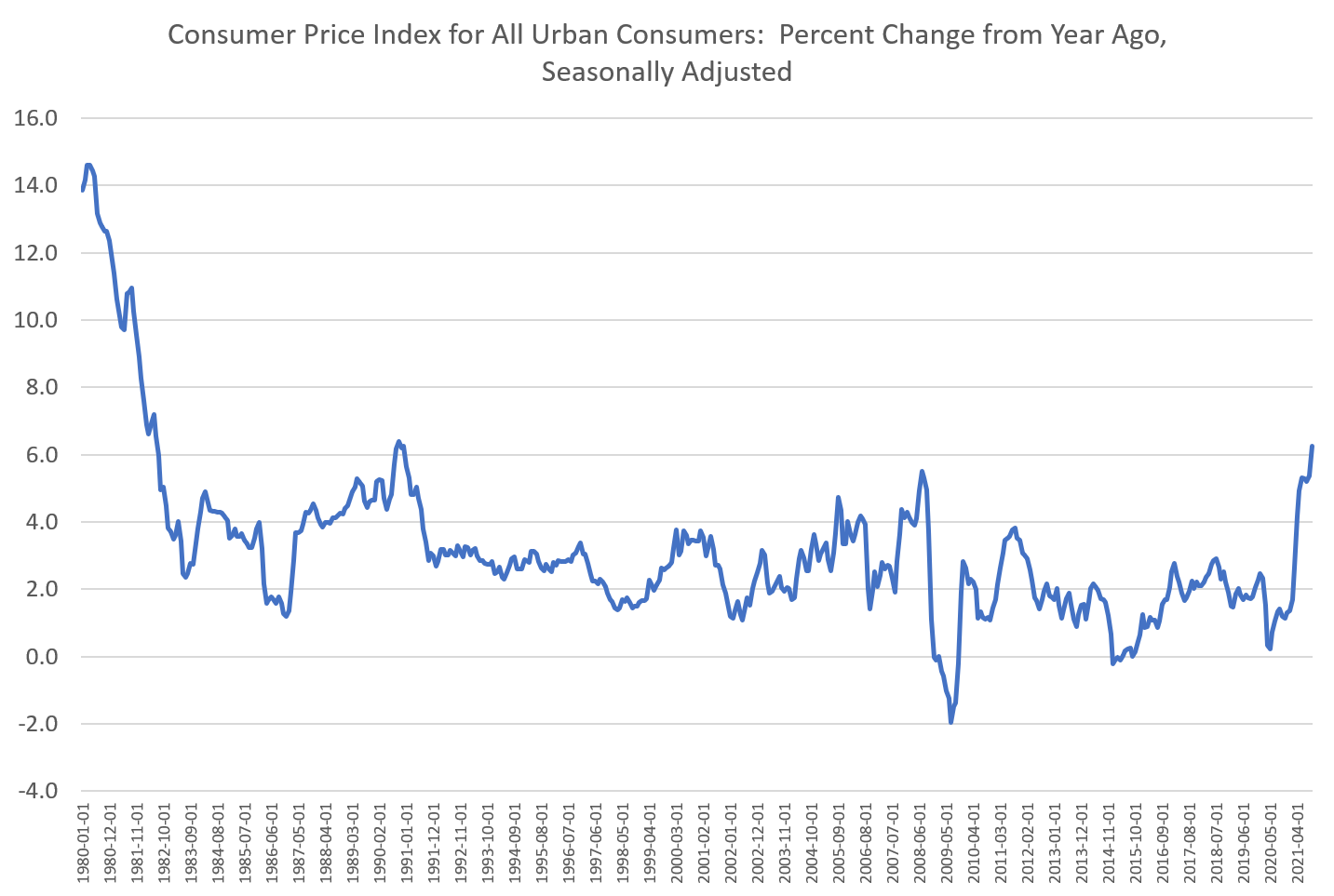
The Bureau of Labor Statistics reported Wednesday morning that prices rose 6.2% on a year-over-year basis in October. That’s the highest YOY rate since December 1990 when the CPI was also up 6.2 percent.

October’s rate was up from 5.3 percent in September, and remains part of a surge in the index since February 2021 when year-over-year growth was still muted at 1.6 percent.

cpi

Not surprisingly, producer prices surged in October as well. The producer price index for commodities in October was up 22.2 percent, year over year, reaching a 48-year high. We must go back to November 1974 to find a higher PPI increase—at 23.4 percent.

Asset price inflation has naturally continued unabated at well, with the result being rising housing costs. In addition to the CPI’s 31-year high, home prices in the second quarter surged near to a 42-year high. According to the Federal Housing Finance Agency’s home price index, home price growth reached 11.9 percent in the second quarter of this year. Since 1979, only the second quarter of 2005—also with 11.9 percent growth—showed home-price growth as high.  

This is troubling information indeed, given that average real weekly earnings have turned negative this year, with inflation-adjusted earnings down 0.5 percent from September to October.  It is increasingly clear that wages are not keeping up with rising prices for a great many Americans.

None of this means policymakers will diagnose the problem properly, however. We should expect the discussion around inflation in Washington to keep missing the point and denying any connection to the central bank or to monetary inflation. 

For example, rising prices are so obvious now that not even the administration can ignore them anymore. Today, the White House released a statement in which President Biden admitted: “… today’s report shows an increase over last month. Inflation hurts Americans pocketbooks”

Yet the administration continues to be very much in denial about the causes of price inflation. The Biden statement continues:

I have directed my National Economic Council to pursue means to try to further reduce these costs, and have asked the Federal Trade Commission to strike back at any market manipulation or price gouging in this sector.

As if “price gouging” were the cause of nationwide price inflation!

If it were “gouging,” we’d be seeing increases only in the areas where so-called gouging is taking place. Moreover, that would mean a decline in spending—and thus price deflation—in areas where the gouging isn’t taking place. The overall effect would be price stability.

Similarly, the administration has also tried to blame inflation on a lack of childcare.  In an incoherent series of non sequiturs, Secretary of Transportation Peter Buttigieg this week claimed that paid family leave is “part of [the administration’s] tool kit to fight inflation.” Buttigieg simultaneously claimed that paid family leave means more people can take time off from work, and yet this somehow will also translate into more people going back to work. While it’s true more workers could help temper—to some extent—upward pressure on prices, more paid family leave would contribute nothing to this “solution” to price inflation.  Rather, it’s apparent the memo went out at the administration that every policy must now be tied into some kind of plan to fight inflation—no matter how tenuous the connection.

Yet we should expect more of this sort of blind grasping at excuses for our economic malaise as time goes on. The same strategy was used by the Ford administration in the dark days of the mid1970s and the “Whip Inflation Now” campaign. The administration then claimed that the American public should fight inflation through strategies such as planting a vegetable garden at home.

Then, as now, the regime refused to admit that rising monetary inflation had anything to do with rising prices. Instead, we’re told it must be a lack of daycare services or “price gouging.”

A Second Strategy: Total Denial

But some in the administration are sticking to their narrative that there’s nothing at all to see here. Janet Yellen, for example, declared on Tuesday that “I’d expect price increases to level off, and we’ll go back to inflation that’s closer to the 2% that we consider normal.” She insists the Fed is very much in control of the situation and won’t allow 1970’s style inflation to occur. 

What Yellen fails to mention is that even if inflation rates of, say, four to six percent, last only a year, middle class workers won’t make up these losses later just because inflation falls again at some point to “to the 2% that we consider normal.” After all, this year’s declines in real average weekly wages means real hardship for many people, even if Janet Yellen will be just fine with her private driver shuttling her from her luxury home to opulent cocktail parties all the while.

But not everyone is as uninterested in the effects of inflation as Janet Yellen. As MSNBC reports:  

“For now, inflation is going to continue to run above very solid wage growth,” said Joseph LaVorgna, chief economist for the Americas at Natixis and former chief economist for the National Economic Council during the Trump administration. “This is why when you look at consumer confidence, it’s really taking a beating. Households do not like the inflation story, and rightly so.”

For at least one MSNBC columnist, though, people don’t know how good they have it. On Monday, James Surowiecki insisted everyone is better off and discussion of inflation amounts to little more than fear mongering. He writes:

See the rest here

Be seeing you

Posted in Uncategorized | Tagged: , , | Leave a Comment »

In a Free Economy, Prices Would be Going down, Not Up | Mises Wire

Posted by M. C. on November 9, 2021

Price indices cannot measure the consequences of monetary inflation because the downward pressure on prices that these innovations exert across the economy operates independently of the upward pressure on prices generated by credit expansion. In other words, the consequences of monetary expansion are far deeper than the rise in consumer prices suggests. When the CPI is low, we pay only a little more for consumer goods than we did the year before. But without monetary inflation, we would be paying significantly less.

https://mises.org/wire/free-economy-prices-would-be-going-down-not

Chris Calton

Whenever politicians and media outlets discuss inflation, they invariably use the Consumer Price Index (CPI) as their measure. The CPI is only one of several price indices on top of the various measures of the money supply that underlie aggregate price changes. Strictly speaking, the CPI does not measure inflation per se, but rather the consequences of monetary expansion on consumer products. In macroeconomics, the CPI is one of the key indicators of economic health, and it is this inflation measure that economists use to calculate real GDP. Naturally, the accuracy of the CPI as a measure of the consequences of credit expansion is critically important, yet the measure is controversial among investors. As Investopedia explains, the CPI is “a proxy for inflation,” and “from an investor’s perspective . . . is a critical measure that can be used to estimate the total return, on a nominal basis, required for an investor to meet their financial goals.”

But if the concern is the effect of monetary expansion, why are we using proxy variables to measure this phenomenon? Proxies are useful when we don’t have accurate data on the variable we want to measure, compelling us to find an imperfect substitute that (we assume) tends to follow from the variable we can’t measure. But we have very accurate measures of the money supply, going back more than a century. We know that other factors affect prices in the economy, so price indices cannot accurately capture the consequences of monetary expansion; they can, we are always told, “approximate” these consequences, but why approximate something we have precise measures of?

To put this into perspective, the average annual rate of change in the money supply (M1) since 1971 is 10.7 percent, while the annual rate of change in the CPI is only 3.9 percent. When we include other price indices, we see similar disparities, such as the dramatic differences between the Producer Price Index and CPI, which I’ve discussed elsewhere. The wide gap in these measures might strain our credulity about how usefully the CPI “approximates” the consequences of inflation, and it raises questions about how we can explain why an 11 percent annualized increase in the money supply over five decades only produced a 4 percent rise in consumer prices.

The Standard Logic of Price Indices

When explaining inflation measures to their students, the typical economics professor will emphasize that we measure a basket of goods—the average of the prices of several hundred items in a given category—in an attempt to capture the “underlying inflation” in the economy. As explained by the Cleveland Federal Reserve:

If a hurricane devastates the Florida orange crop, orange prices will be higher for some time. But that higher price will produce only a temporary increase in an aggregated price index and measured inflation. Such limited or temporary effects are sometimes referred to as “noise” in the price data because they can obscure the price changes that are expected to persist over medium-run horizons of several years—the underlying inflation rate.

The reasoning is superficially sound. Certain factors will affect the prices of specific items in the basket, but the only thing that affects the price of all the items in the basket is the money supply. This, at least, is the standard assumption. Given this assumption, the change in the CPI might lag somewhat behind changes in the money supply as prices take time to adjust, but the measures should track rather closely over long periods.

So why is the CPI so low?

Capital Accumulation and Aggregate Price Levels

Throughout history, we find many innovations in technology and business that lowered the price of entire baskets of goods. Transportation technologies provide the easiest example, from turnpikes, canals, railroads, and steam-powered vehicles in the nineteenth century to semitrucks and shipping containers in the twentieth century. For perspective, the cost of transporting goods from Buffalo to New York City in 1817 was 19.12 cents per ton-mile; by 1850, the cost had dropped to 1.68 cents per ton-mile.1 Because consumer goods (and the components used to make them) have to be transported from factory to warehouse to retailer, any reduction in transportation costs produces a compounding effect in prices across the entire economy.2

Other changes in technology and business organization have a similar economy-wide effect on price levels. Organizational innovations in shipping, such as packet lines and the hub-and-spoke distribution model, also lowered the costs of transporting goods. Communications technology, such as the telegraph and the internet, reduce transaction costs by making it easier to relay information and efficiently allocate resources.

Production innovations, by reducing the cost of manufacturing higher-order goods, similarly lower the price of goods across the economy. Ancient Romans knew how to produce steel, but the Bessemer method for mass producing steel allowed Andrew Carnegie to lower the price of steel so dramatically that steel products went from luxuries to banal household items (not to mention the use of steel in railroads, bridges, and machinery, which lowered the cost of producing and transporting even nonsteel goods). And as with transportation, organizational innovations in production methods, such as interchangeable parts and the assembly-line process, helped make mass production possible for all varieties of consumer goods.

Capital accumulation, of course, is necessary to extend the gains from these innovations across the economy. By delaying consumption and pouring savings into expanded lines of production, investors create a feedback loop that ensures continual gains from new technologies and organizational strategies. Delta may have conceived of the hub-and-spoke model of more cost-efficient transportation for air travel, for example, but it was the entrepreneurial endeavors of Frederick Smith and Sam Walton (founders of FedEx and Walmart, respectively) that adapted this idea to commodity transportation. It was only by slowly reinvesting the profits into their businesses (and compelling their competitors to do the same) that they were able to produce gradual but continuous economic gains.

Price indices cannot measure the consequences of monetary inflation because the downward pressure on prices that these innovations exert across the economy operates independently of the upward pressure on prices generated by credit expansion. In other words, the consequences of monetary expansion are far deeper than the rise in consumer prices suggests. When the CPI is low, we pay only a little more for consumer goods than we did the year before. But without monetary inflation, we would be paying significantly less.

This, in fact, is precisely what occurred through most of the nineteenth century, until the Federal Reserve charter mandated a monetary policy that would stabilize prices, which is a positive-sounding way of describing a policy of propping up prices that would otherwise fall as capital infrastructure expands and productivity increases. Roughly speaking, where we’ve seen a 4 percent annual increase in the CPI since 1971, we should have seen a 7 percent annual reduction in prices (without, it is worth noting, the corresponding reduction in wage rates that only accompanies deflation driven by monetary contraction).

Frédéric Bastiat taught us to consider not only that which is seen, but also that which is unseen when analyzing the consequence of policy. The CPI is merely the observable consequence of monetary expansion on prices, but it serves to mask the far greater unseen consequence: the foregone gains in living standards that should have come from the gradual reduction in prices that results from innovation and capital accumulation.

  • 1. George Rogers Taylor, The Transportation Revolution, 1815–1860 (New York: Harper Torchbooks, 1951), p. 137.
  • 2. When I describe this as a “compounding effect,” I mean that the roughly 2.76 percent annual reduction in transport costs applies to each component used in the manufacture of a single consumer good. The final product, therefore, enjoys the cumulative effect of reduced transportation costs throughout the production process.

Author:

Chris Calton

Chris Calton is an economic historian and a former Mises Research Fellow. He was the writer and host of the Historical Controversies podcast.

Be seeing you

Posted in Uncategorized | Tagged: , , | Leave a Comment »