MCViewPoint

Opinion from a Libertarian ViewPoint

Posts Tagged ‘Fed’

In Defense of Defaulting on the National Debt

Posted by M. C. on June 23, 2022

Apart from not paying perpetual interest on ever-increasing debt, another benefit of default, rarely mentioned but arguably one of the most important from the antiwar libertarian perspective, is that it would essentially end Washington’s ability to practice unbridled military Keynesianism. Slapping pointless wars and military buildups on the credit card has become Congress’s standard operating procedure. It is not a coincidence that our annual trillion-dollar deficits are approximately equal to the trillion dollars dumped into the the military-industrial complex black hole each year.

https://mises.org/wire/defense-defaulting-national-debt

Joseph Solis-Mullen

With the acknowledged national debt now a politically and economically unpayable $30 trillion (in reality, its unfunded liabilities are far greater), Americans should start to become acclimated to the realities of the United States’ eventual, inevitable default. While it may seem unfathomable, and the results too catastrophic to imagine, in fact the likely damage to everyday Americans would be minimal in the short term and unquestionably a net plus in the long term.

This is far from surprising and not a new problem. As Carmen M. Reinhart and Kenneth S. Rogoff detail in their comprehensive review of the subject, history shows that great powers defaulting on their debts was long the rule, not the exception, and that the long-term implications of various regimes’ repudiations of their external debts in particular were minimal or a net plus, depending on the circumstances.

As a way of starting, it is helpful to contextualize the current numbers we’re talking about, because, frankly, they would have been unfathomable previously. As the old math joke “What is the difference between a million and a billion? Basically, a billion” illustrates, the orders of magnitude under discussion are scarcely comprehensible. But the reality is that trillion dollars is $999 billion plus another billion.

The present debt level has only been manageable because of the artificially low interest rates provided by successively accommodating Federal Reserve chairs dating back to Alan Greenspan. With both fiscal and monetary policy having been run heedlessly off the rails for twenty years, the reckoning of a higher interest rate environment necessarily awaits. Short of cuts in annual spending drastic enough to produce large running surpluses (not likely), default is the only sensible option toward which to encourage policy makers.

For context, consider that when Ronald Reagan and the Democrats controlling Congress started running budget deficits that hadn’t been seen since the Second World War, the national debt was running in the hundreds of billions—eventually jumping into the low single-digit trillions.

In the 1990s, as the unipolar moment was beginning, successive administrations and Congress seemed to recognize the foolishness of their previous policies. Compelled by grassroots activism and insurgent Republican candidacies, George H.W. Bush and Bill Clinton both made deals to cut spending and raise taxes. By the time Clinton left office, the country was running a budget surplus and the national debt was projected to be paid off by the end of the decade.

Then came George W. Bush and his disastrous wars of choice. The size and scope of the government grew at the same time that historic tax cuts were enacted. The words of then vice president Dick Cheney should have spooked foreign buyers of US debt more than they did. He was of the opinion that “deficits don’t matter.”

Nor did they matter to Barack Obama, his successors, or their congressional partners—to the point that the mere $30 trillion in openly acknowledged debt amounts to over $80,000 per American.

Nor did the regular trillion-dollar deficits matter to the Fed, which with its accommodating and regularly mandate-violating policies has raised the stakes of the coming financial oppression orders of magnitude higher than they would have been had interest rates been determined formulaically or purely by market forces.

The good news, at least for ordinary Americans, is that we personally just don’t hold very much of the debt. Fully two-thirds is held between the Fed, various other US government entities, and foreign governments. A US government default wouldn’t be the first time the latter have taken a haircut (Alexander Hamilton and Richard Nixon both undertook such necessary actions), and our own government has spent the money so poorly that no coherent argument can be made that justifies paying them back. They would just continue in their profligate ways. As for Wall Street, they’ve lived on corporate welfare long enough to justify their taking a one-time bath.

Apart from not paying perpetual interest on ever-increasing debt, another benefit of default, rarely mentioned but arguably one of the most important from the antiwar libertarian perspective, is that it would essentially end Washington’s ability to practice unbridled military Keynesianism. Slapping pointless wars and military buildups on the credit card has become Congress’s standard operating procedure. It is not a coincidence that our annual trillion-dollar deficits are approximately equal to the trillion dollars dumped into the the military-industrial complex black hole each year.

With foreign investors temporarily alienated, the Fed would be faced with the choice of either absorbing the entire amount of “defense” spending with its own balance sheet (thus sparking a drastic inflationary bout that would visibly discredit the unconstitutional institution) or forcing Washington to give up the myth of global military indispensability.

Either case is preferable to the current course.

It is in the interests of the American people, our children, and our grandchildren, and would arguably do more for world peace than any other realistic scenario imaginable.

So, contact your representative today and tell them you support defaulting on the debt.

Author:

Joseph Solis-Mullen

A graduate of Spring Arbor University and the University of Illinois, Joseph Solis-Mullen is a political scientist and graduate student in the economics department at the University of Missouri. An independent researcher and journalist, his work can be found at the Ludwig Von Mises Institute, Eurasian Review, Libertarian Institute, Journal of the American Revolution, Antiwar.com, and the Journal of Libertarian Studies. You can contact him through his website http://www.jsmwritings.com or find him on Twitter @solis_mullen.

Be seeing you

Posted in Uncategorized | Tagged: , , , | Leave a Comment »

The Fed Can’t Replace The Market To Find The Best Interest Rate

Posted by M. C. on June 18, 2022

The failure of central planning is manifesting in our world again, this time from The Fed. There’s no “right way” to plan the economy, or to manipulate interest rates, or to counterfeit money. It’s all wrong and destructive! The only fix is to End The Fed and to use sound money once again.

Be seeing you

Posted in Uncategorized | Tagged: , , | Leave a Comment »

The Fed Is Winging It: A 75 Basis Point Hike “Seemed like the Right Thing”

Posted by M. C. on June 17, 2022

When asked to quantify how a 75-point hike is better than a 50-point one, Powell had no answer. And will it work? Powell could only say “we’ll know when we get there.”

https://mises.org/wire/fed-winging-it-75-basis-point-hike-seemed-right-thing

Ryan McMaken

The Federal Reserve’s Federal Open Market Committee (FOMC) today announced an increase of 75 basis points to the target federal funds rate, raising the rate to 1.75 percent from 1 percent. June’s meeting today was the third meeting this year at which the FOMC has raised rates. Coming into the March meeting this year, however, the FOMC had not raised the target rate since March 2020, even though price inflation began to accelerate during the second half of 2021.

fomc

Today’s 75 basis point increase is the largest increase since late 1994, when the FOMC raised the target rate from 4.75 percent to 5.5 percent.

Notably, however, this increase comes mere weeks after the Fed chair Jerome Powell slapped down the idea of a 75 basis point increase in June. As Reuters reported on May 4, Powell had insisted “a 75 basis point increase is not something that the committee is actively considering.”

That didn’t last long.

The fact that the Fed was forced to hike the target rate by more than it had suggested was even possible earlier in the year is a reminder that the Fed and its economists are simply in a reactionary mode when it comes to the US economy’s problem with mounting price inflation.

See the rest here

Be seeing you

Posted in Uncategorized | Tagged: , , | Leave a Comment »

Even When There Is Inflation, the Fed STILL Fights Falling Prices

Posted by M. C. on June 15, 2022

 Instead, the central scenario is surely that the Fed has flooded the system with so much money (only some of the excess removed during the period of hawkish turn and taking account of cumulative price rises) that the natural downward rhythm of prices will not show up in outward reality. Rather, the Fed will use the relief from symptoms of inflation in the consumer price data to double down on monetary inflation. This would show up at first in a new episode of asset inflation.

The more government helps…

https://mises.org/wire/even-when-there-inflation-fed-still-fights-falling-prices

Brendan Brown

Under any remotely sound money regime the aftermath of war and/or pandemic is highly likely to feature a sharp decline in the prices of goods and services on average. Even under unsound money regimes there are powerful forces operating towards lower prices once the war/pandemic recedes. Strong injections of monetary inflation, however, can overpower them.

The Fed and all the foreign central banks which follow its lead and/or doctrines are apparently of the intention that this time the decline in prices will not take place. Instead, they state the aim of their monetary policies, to be achieved within two years, as a decline of the inflation rate from present near-term highs to 2 percent.

In combatting the powerful “natural rhythm” of prices downwards in the aftermath of pandemic and war we should expect the Fed and foreign central banks to marshal a tremendous amount of monetary power. That will occur beyond an intermission where central banks are ostensibly trying to rein back the monetary inflation which has reached its peak virulence in 2021–22. 

Precise measurement of monetary inflation, including its stages, is impossible under the present monetary regime where the supply and demand conditions for monetary base—and the attributes of base money—have been deeply corrupted. In thinking about the next monetary inflation injections, history provides considerable insight.

The aftermaths of supply shocks are full of inflation danger, even though recession intervenes and mitigates this for some time. Monetary inflation has accompanied all the great supply shocks and sometimes preceded them as in the present case of pandemic and war. Here monetary inflation stretches all the way back to 2012/13.

In the aftermath of World War I and the Spanish flu pandemic (1918–19), US consumer prices fell by around 20 percent (from mid-1920 to end-1921). The fall in prices stemmed both from deliberate monetary deflation (starting in late 1919 as the Benjamin Strong–dominated Fed sought to reverse the monetary inflation in the half-year following the armistice) and the easing of supply restraints (with huge gluts developing for many primary commodities). 

After World War II there was an almost 5 percent decline in CPI from mid-1948 to the end of 1949, overlapping the recession of November1948 to October 1949. There was no sudden substantial monetary policy tightening during that time. But the around 30 percent rise of consumer prices during 1946–47 coupled with the constancy in outstanding supply of high-powered money stock meant this shrunk far in real terms. Accordingly, the overhang of excess money supply dwindled. 

Towards the end of the Korean War (1950–53) and into its aftermath consumer prices were relatively flat (mid-1952–55), having risen by almost 12 percent between mid-1950 and the end of 1951. That was despite the McChesney Martin Fed following an inflationary monetary policy as evident first in asset inflation and later in an eruption of consumer price inflation (the second half of the 1950s). In effect the “natural rhythm” downward of prices as wartime constraints eased and a sustained leap in productivity growth got under way meant that monetary inflation did not produce at first the symptom of consumer price inflation.

See the rest here

Be seeing you

Posted in Uncategorized | Tagged: , , , | Leave a Comment »

The Unborns’ Dying Wish: The Abortion of the Fed

Posted by M. C. on May 19, 2022

Yellen’s inability and unwillingness to articulate the Fed’s role in creating lowered purchasing power among the poor is maddening but not surprising. Porter’s comments beg the question: If inflation goes to zero, then does the need for abortions among the poor go away as well?”

https://mises.org/wire/unborns-dying-wish-abortion-fed

In a moment that would have made the progressive eugenicist Margaret Sanger proud, former Fed chair Janet Yellen extoled the virtues of high abortion rates among poor women, as they allow them to have higher labor force participation rates. Paraphrasing Sanger, who is the intellectual founder of the modern abortion industry, Yellen’s argument was plain: it is cruel for parents to bring children into a state of poverty; therefore, it is humane to incentivize abortion among the poor.

California representative and chair of the Progressive Caucus of the Democratic Party Katie Porter expressed a similar sentiment before a CNBC audience, remarking that “things like inflation can happen” as a justification for the Democrats’ now failed attempt to enshrine unfettered abortion access in federal law.

Yellen’s inability and unwillingness to articulate the Fed’s role in creating lowered purchasing power among the poor is maddening but not surprising. Porter’s comments beg the question: If inflation goes to zero, then does the need for abortions among the poor go away as well?”

While no reasonable person should hold their breath for an answer from either of these politicians, their comments unwittingly reveal an important causal link in human action. That is, in a modern, wealthy society, the households that are harmed by lost purchasing power from money supply expansion are less likely to bring children into the world, all things held equal. 

The qualification of “modern wealthy society” leans on Gary Becker and Robert Barro’s contention that real net costs in raising children reduce total fertility in families. While all human action is based on individual subjective valuations it’s safe to say that an ongoing loss of real income and wealth can be among the data points that people use to derive their preferences. As the interventions of the Fed alter the structure of prices, income, and wealth it is certainly plausible that these changes can impact fertility choices. With that said, one could simply think about the reality that the poor in the US are among those harmed by money supply expansion as articulated by Richard Cantillon. The increasing lack of purchasing power over time, creates the tendency for these households to have fewer children than they otherwise would have. This results because each childbirth represents a net loss in real wealth. The reasons for this outcome in a developed economy are quite simple. In most wealthy nations, child labor and panhandling are unnecessary because those nations have enriched themselves via the international division of labor. This has also had the welcome effect of eliminating a household’s perceived need to supply children to traffickers, which sadly remains a scourge of the developing world.

What Becker and Barro fail to account for is that wealthy and poor nations alike may also allow fiat central banking. What this omission fails to capture is the reality of a harmed class who lose purchasing power over time under inflationary regimes. It is just such households that Yellen and Porter have described as having a need for abortion access due to their financial distress.

The destruction of human life (or potential life, for some) resulting from central banking is implied by Jörg Guido Hülsmann’s attack on fiat currency. His observation is that such regimes are socially destructive and that they tend to increase the financial fragility of households. This fragility can be particularly crushing among the poorer classes, as fiat inflation is deemed to be a “juggernaut of social, economic, cultural, and spiritual destruction.” It turns out that part of this social destruction may very well include the negation of the society shared between mother, father, and yet-to-be-seen (or, as some might say, unseen) child. 

Even if one gives the pro-choice/proabortion faction the full benefit of the doubt by conceding that they don’t want ANY abortions to occur and would prefer that the only pregnancies were wanted pregnancies, thus eliminating the need for abortion, the logic that connects inflationism to abortionism still stands. It could be additionally reasoned that inflationism represents a boon to the contraception industry as a whole. While such a connection might seem trivial, recent observations from Saifedean Ammous noted how inflation is a means to lower the cost of reckless behavior in financial markets. I’m simply suggesting that inflationism might generate moral hazard in sexual behavior as well.

If Yellen and Porter’s shared goal is to continue to boost female labor force participation and engage women in what Josef Pieper called “proletarianization,” where “total work” is the norm, then the inflation-abortion connection is certainly an effective means to achieve it. Yellen further justified this reasoning to Senator Bob Menendez by contending that increased—and presumably federally funded—access to abortion generates better educational and economic outcomes for those children conceived later in a woman’s life. Such irony could only be lost on the most ardent abortionist. 

Setting aside the existing moral arguments for or against abortion, an understanding of the connection between money supply increases and the heightened likelihood of abortions among the poor may contribute to the Austro-libertarian discussion on the question of the morality of abortion. If it is indeed the case that an increased likelihood of abortion among the poor is one of the myriad social consequences of the Fed’s currency debasement, then the would-be-born could also rejoice at the central bank’s abortion.

Author:

Contact Jeffrey L. Degner

Jeffery L. Degner is an Assistant Professor of Economics at Cornerstone University and a former Mises Summer Research Fellow. He holds Bachelor’s degrees in Economics and History from Western Michigan University where he also earned an M.A. in Applied Economics. He is currently a Ph.D. candidate at the University of Angers under the direction of Dr. Jorg Guido Hülsmann.

Be seeing you

Posted in Uncategorized | Tagged: , , , | Leave a Comment »

Contrary to What Some Economists Claim, the Fed Can’t Give the Economy a “Neutral” Rate of Interest

Posted by M. C. on May 11, 2022

The idea of the neutral interest rate is unrealistic. The Fed attempts to establish an interest rate that corresponds to the conditions of the free market. Obviously, this is in contradiction to the free market, since in a free market there is no central bank setting the interest rate.

Given the impossible goal that the Fed tries to reach, we do not expect Fed policy makers to become wise and all knowing with regard to the correct level of interest rates. A better alternative is to leave the economy alone.

https://mises.org/wire/contrary-what-some-economists-claim-fed-cant-give-economy-neutral-rate-interest

Frank Shostak

On April 19, 2022, at the Economic Club in New York, the Chicago Federal Reserve Bank president Charles Evans said the Fed is likely to lift by year end its federal funds rate target range close to the neutral range of between 2.25 to 2.50 percent. Furthermore, on April 21, 2022, Fed chairman Jerome Powell corroborated this by stating that the Fed wants to raise its benchmark rate to the neutral level.

By popular thinking, the neutral rate is one that is consistent with stable prices and a balanced economy. Hence, in order to attain economic and price stability, Fed policy makers should navigate the federal funds rate toward the neutral rate range. The Swedish economist Knut Wicksell in the late nineteenth century articulated this framework of thinking, which has its origins in the eighteenth-century writings of the British economist Henry Thornton.

One can assume that the current framework of central bank operations throughout the world is based to a large degree on Wicksell’s writings, which means the key to comprehending the rationale of central banks actions is understanding the writings of Knut Wicksell.

The Neutral Interest Rate Framework

According to Wicksell the neutral rate is (Wicksell labels the neutral rate as the natural rate):

A certain rate of interest on loans which is neutral in respect to commodity prices, and tend neither to raise nor to lower them. This is necessarily the same as the rate of interest which would be determined by supply and demand if no use were made of money and all lending were effected in the form of real capital goods. It comes to much the same thing to describe it as the current value of the natural rate of interest on capital.

In this way of thinking, the neutral rate of interest is defined as the rate at which the demand for physical loan capital coincides with the supply of savings expressed in physical magnitudes.1 Wicksell makes a clear distinction between the interest rate that is determined in financial markets and the neutral interest rate that is set without money. While the interest rate in financial markets is determined by demand and supply for money, the neutral interest rate is set by real factors. Thus, he wrote

Now if money is loaned at this same rate of interest, it serves as nothing more than a cloak to cover a procedure which, from the purely formal point of view, could have been carried on equally well without it. The conditions of economic equilibrium are fulfilled in precisely the same manner.

According to the neutral rate framework, the main source of economic instability is because the money market interest rate is not in line with the neutral rate. In the Wicksell’s framework, money only affects the price level. The effect of money on the price level is however not direct, as it operates via the gap between the money market interest rate and the neutral rate. The mechanism works as following: if the market rate falls below the neutral rate, investment will exceed saving implying that aggregate demand will be greater than aggregate supply.

Assuming that the excess demand is financed by the expansion in bank loans this leads to the creation of new money, which in turn pushes the general level of prices up. Conversely, if the market rate rises above the neutral rate, savings will exceed investment, aggregate supply will exceed aggregate demand, bank loans and the stock of money will contract, and prices will fall (on this topic, see this Fed working paper). Whenever the market rate is in line with the neutral rate, the economy is in a state of equilibrium and there is neither upward nor downward pressures on the price level.

According to Wicksell:

If it were possible to ascertain and specify the current value of the natural rate, it would be seen that any deviation of the actual money rate from this natural rate is connected with rising or falling prices according as the deviation is downward or upward.

Wicksell held that since the supply of real capital is limited while the supply of money can be regarded as elastic, there is no reason to assume that the money market interest rate would normally agree with the neutral real rate.2 Furthermore, Wicksell maintained that to establish whether monetary policy is tight or loose, it is not enough to pay attention to the level of money market interest rates, but rather one needs to contrast money market interest rates with the neutral rate. Thus if the market interest rate is above the neutral rate then the policy stance is tight. Conversely, if the market rate is below the neutral rate then the policy stance is loose. Thus, according to Wicksell, whenever the money market rate is matched with the neutral rate the economy is in a state of equilibrium and there are neither upward nor downward pressure on the price level. 

Can Real Interest Rates Be Identified?

See the rest here

Be seeing you

Posted in Uncategorized | Tagged: , | Leave a Comment »

Price Inflation Hit a New 40-Year High in February. No, It’s Not “Putin’s Fault.”

Posted by M. C. on March 12, 2022

In early 2020, the economic was weakening after more than a decade of remarkably slow economic growth and rising reliance on monetary expansion to prevent the implosion of Fed-created economic bubbles. But then covid happened, and the Fed blamed the disease for the economic collapse and inflation that followed. Now the war will provide yet another way for the Fed and its economists to claim they were doing a great job, and it would have all been a great success if not for the Russians.

https://mises.org/wire/price-inflation-hit-new-40-year-high-february-no-its-not-putins-fault

Ryan McMaken

According to new data released by the Bureau of Labor Statistics, price inflation in February rose to the highest level recorded in more than forty years. According to the Consumer Price Index for February, year-over-year price inflation rose to 7.9 percent. It hasn’t been that high since January 1982, when the growth rate was at 8.3 percent.

February’s increase was up from January’s year-over-year increase of 7.5 percent. And it was well up from February 2021’s year-over-year increase of 1.7 percent.

A clear inflationary trend began in April 2021 when CPI growth hit the highest rate since 2008. Since then, CPI inflation has accelerated with year-over-year growth nearly doubling over the past 11 months from 4.2 percent to 7.9 percent.

feb

For most of 2021, however, Federal reserve economists and their PhD-wielding allies in academia and the media insisted it was “transitory” and would soon dissipate. By late 2021, however, economists began to admit they were “surprised” and had no explanation for the inflation. (What one actually learns while obtaining a PhD in economics apparently has nothing to do with understanding money or prices.) Jerome Powell then declared that the Fed would prevent inflation from becoming “entrenched.”

Now, high level economists have changed their tune again with Janet Yellen admitting this week that “We’re likely to see another year in which 12-month inflation numbers remain very uncomfortably high.” Yellen had earlier predicted that CPI inflation would drop to around 3 percent, year over year, by the end of 2022.

Yellen was also careful to attempt political damage control by insinuating that price inflation is a result of uncertainty over the Russia-Ukraine war.

Never mind, of course, that the inflation surge began last year and that January’s CPI inflation rate was already near a 40-year high. The current crop of embargoes and bans on Russian oil imports implemented during March were not drivers of February’s continued inflation surge.

Few members of the public, however, will bother with these details, and this will benefit both the Fed and the administration. As far as the Fed is concerned, the important thing is to never, ever admit that price inflation is really being driven by more than a decade of galloping Fed-fueled monetary expansion (aka money printing). This was done largely at the behest of the White House and Congress to keep interest on the debt low and government spending high.

So, we can expect the administration to portray inflation as “Putin’s fault.” In a Friday speech to Democratic activists, Biden even claimed the high inflation rates are not due to “anything we did.” The tactic will no doubt work to convince many. But it’s unclear how many.

Workers Are Getting Poorer

See the rest here

Be seeing you

Posted in Uncategorized | Tagged: , , , , | Leave a Comment »

Watch “Inflation Is Roaring! Biden, Congress & The Fed Don’t Know What To Do!” on YouTube

Posted by M. C. on February 12, 2022

Inflation is caused by the Fed counterfeiting dollars. No counterfeiter, No inflation. This “system” is unconstitutional and a recipe for severe economic disaster. Money must be sound and counterfeiting must never be legal for anyone. The sooner we adopt sound money, the better. To continue to delay is to continue to recklessly play with fire.

https://youtu.be/GPI8TZT-6LM

Be seeing you

Posted in Uncategorized | Tagged: , , , | Leave a Comment »

Rep. Emmer: “Financial privacy is the definition of freedom”

Posted by M. C. on February 10, 2022

This year Congressman Emmer proposed a bill to limit the Fed’s ability to issue its own digital currency. He says that a CBDC is an Orwellian surveillance tool, and that we should not be trying to emulate China. He has been an outspoken advocate for financial privacy, and so we chatted to him about cryptocurrencies, and whether the SEC and Fed are taking us down a dangerous path.

https://emmer.house.gov/2022/1/emmer-…

Be seeing you

Posted in Uncategorized | Tagged: , , , , , | 1 Comment »

Why Price Deflation Is Always Good News | Mises Wire

Posted by M. C. on January 30, 2022

A general decline in the prices of goods and services in response to an increase in the pool of wealth is always good news for individuals. Furthermore, a general decline in prices, which is associated with the bursting of various bubbles, is also good news. The less nonproductive bubble activities, the better things will be for wealth generators and hence for the overall pool of wealth.

https://mises.org/wire/why-price-deflation-always-good-news

Frank Shostak

Most commentators are currently preoccupied with large increases in the Consumer Price Index (CPI), which is labeled as inflation. The yearly growth rate of the CPI stood at 7.0 percent in December against 6.8 percent in November and 1.4 percent in December 2020.

shos1

Pundits have been blaming the strong increase in the momentum of the CPI on the supply disruptions because of covid-19, but the key behind this strong increase in the momentum of the CPI is reckless monetary pumping by the Fed. Observe that in January 2000 the Fed’s balance sheet stood at $0.6 trillion. By the end of 2021, it had climbed to $8.8 trillion.

shos

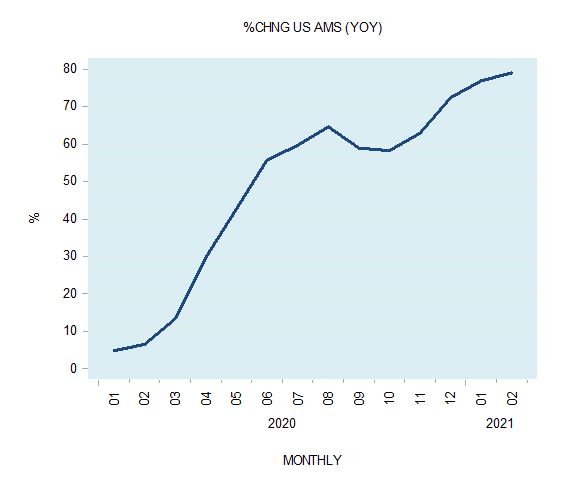
As a result of this pumping, the yearly growth rate of the Austrian money supply metric increased by a massive 79 percent in February 2021 from 4.8 percent in January 2020. (Note that some of the increases in money supply are the result of the monetization of large government outlays).

shos

On account of the sharp decline in the yearly growth rate of the Austrian money supply measure, from 79 percent in February 2021 to 15.4 percent in November 2021, the momentum of the CPI is likely to peak toward the end of 2022. Afterwards a strong decline in the momentum is likely to emerge.

shos

A possible decline in the yearly growth rate of prices coupled with a likely decline in economic activity could ignite expectations of a general decline in the prices of goods and services, i.e., deflation.

Most Commentators Fear Deflation

For most economic commentators, a general decline in prices is considered as bad news. According to these observers, a general decline in prices generates expectations for further declines in prices and slows down individuals’ propensity to spend. This in turn undermines the aggregate demand. A decline in the aggregate demand because of the decline in consumer expenditure leads to a decline in the aggregate supply and thus to a decline in economic growth.

All this sets in motion an economic slump. As the slump further depresses the prices of goods, the pace of economic decline intensifies.

The view that consumers postpone their buying of goods because prices are expected to decline is, however, questionable.

This would mean that people have abandoned any desire to live in the present. Without the maintenance of life in the present, no future life is conceivable.

According to Menger, the founder of the Austrian school of economics, “An imperfect satisfaction of needs leads to the stunting of our nature. Failure to satisfy them brings about our destruction. But to satisfy our needs is to live and prosper. Thus the attempt to provide for the satisfaction of our needs is synonymous with the attempt to provide for our lives and wellbeing. It is the most important of all human endeavors, since it is the prerequisite and foundation of all others.”

Is the Fall in Prices Bad News for the Economy?

What characterizes industrial market economy under a commodity money such as gold is that the prices of goods follow a declining trend.

According to Joseph Salerno

In fact, historically, the natural tendency in the industrial market economy under a commodity money such as gold has been for general prices to persistently decline as ongoing capital accumulation and advances in industrial techniques led to a continual expansion in the supplies of goods. Thus throughout the nineteenth century and up until the First World War, a mild deflationary trend prevailed in the industrialized nations as rapid growth in the supplies of goods outpaced the gradual growth in the money supply that occurred under the classical gold standard. For example, in the US from 1880 to 1896, the wholesale price level fell by about 30 percent, or by 1.75 percent per year, while real income rose by about 85 percent, or around 5 percent per year.

In a free market, the rising purchasing power of money, i.e., declining prices, is the mechanism that makes the great variety of goods produced accessible to many people.

See the rest here

Be seeing you

Posted in Uncategorized | Tagged: , , , , , | Leave a Comment »