
MCViewPoint

Opinion from a Libertarian ViewPoint

Posts Tagged ‘NATO’

Unasked Questions About US-Ukrainian Relations | The Nation

Posted by M. C. on October 4, 2019

How did the United States become so involved in Ukraine’s torturous and famously corrupt politics? The short answer is NATO expansion, as some of us who opposed that folly back in the 1990s warned would be the case, and not only in Ukraine.

https://www.thenation.com/article/unasked-questions-about-us-ukrainian-relations/

Is US national security being trumped by loathing for Trump?

The transcript of President Trump’s July 25 telephone conversation with Ukraine’s recently elected president, Volodymyr Zelensky, has ignited the usual anti-Trump bashing in American political-media circles, even more calls for impeachment, with little, if any, regard for the national security issues involved. Leave aside that Trump should not have been compelled to make the transcript public, which, if any, foreign leaders will now feel free to conduct personal telephone diplomacy with an American president directly or indirectly, of the kind that helped end the 1962 Cuban missile crisis, knowing that his or her comments might become known to domestic political opponents? Consider instead only the following undiscussed issues:

§ Even if former vice president Joseph Biden, who figured prominently in the Trump-Zelensky conversation, is not the Democratic nominee, Ukraine is now likely to be a contested, and poisonous, issue in the 2020 US presidential election. How did the United States become so involved in Ukraine’s torturous and famously corrupt politics? The short answer is NATO expansion, as some of us who opposed that folly back in the 1990s warned would be the case, and not only in Ukraine. The Washington-led attempt to fast-track Ukraine into NATO in 2013–14 resulted in the Maidan crisis, the overthrow of the country’s constitutionally elected president Viktor Yanukovych, and to the still ongoing proxy civil war in Donbass. All those fateful events infused the Trump-Zelensky talk, if only between the lines.

§ Russia shares centuries of substantial civilizational values, language, culture, geography, and intimate family relations with Ukraine. America does not. Why, then, is it routinely asserted in the US political-media establishment that Ukraine is a “vital US national interest” and not a vital zone of Russian national security, as by all geopolitical reckoning it would seem to be? The standard American establishment answer is: because of “Russian aggression against Ukraine.” But the “aggression” cited is Moscow’s 2014 annexation of Crimea and support for anti-Kiev fighters in the Donbass civil war, both of which came after, not before, the Maidan crisis, and indeed were a direct result of it. That is, in Moscow’s eyes, it was reacting, not unreasonably, to US-led “aggression.” In any event, as opponents of eastward expansion also warned in the 1990s, NATO has increased no one’s security, only diminished security throughout the region bordering Russia.

§ Which brings us back to the Trump-Zelensky telephone conversation. President Zelensky ran and won overwhelmingly as a peace-with-Moscow candidate, which is why the roughly $400 million in US military aid to Ukraine, authorized by Congress, figured anomalously in the conversation. Trump is being sharply criticized for withholding that aid or threatening to do so, including by Obama partisans. Forgotten, it seems, is that President Obama, despite considerable bipartisan pressure, steadfastly refused to authorize such military assistance to Kiev, presumably because it might escalate the Russian-Ukrainian conflict (and Russia, with its long border with Ukraine, had every escalatory advantage). Instead of baiting Trump on this issue, we should hope he encourages the new peace talks that Zelensky has undertaken in recent days with Moscow, which could end the killing in Donbass. (For this, Zelensky is being threatened by well-armed extreme Ukrainian nationalists, even quasi-fascists. Strong American support for his negotiations with Moscow may not deter them, but it might.)

§ Finally, but not surprisingly, the shadow of Russiagate is now morphing into Ukrainegate. Trump is also being sharply criticized for asking Zelensky to cooperate with Attorney General William Barr’s investigation into the origins of Russiagate, even though the role of Ukrainian-Americans and Ukraine itself in Russiagate allegations against Trump on behalf of Hillary Clinton in 2016 is now well-documented.

We need to know fully the origins of Russiagate, arguably the worst presidential scandal in American history, and if Ukrainian authorities can contribute to that understanding, they should be encouraged to do so. As I’ve argued repeatedly, fervent anti-Trumpers must decide whether they loathe him more than they care about American and international security. Imagine, for example, a Cuban missile–like crisis somewhere in the world today where Washington and Moscow are militarily eyeball-to-eyeball, directly or through proxies, from the Baltic and the Black Seas to Syria and Ukraine. Will Trump’s presidential legitimacy be sufficient for him to resolve such an existential crisis peacefully, as President John F. Kennedy did in 1962?

Be seeing you


Posted in Uncategorized | Tagged: , , , , | Leave a Comment »

The U.S. Dilemma in the Middle East Isn’t Really a Dilemma – LobeLog

Posted by M. C. on September 25, 2019

https://lobelog.com/the-u-s-dilemma-in-the-middle-east-isnt-really-a-dilemma/

by Lawrence Wilkerson

The Persian Gulf and its entryway, the Strait of Hormuz, have been a cockpit of U.S. strategic interest since President Jimmy Carter declared, in his January 1980 State of the Union address, that “An attempt by any outside force to gain control of the Persian Gulf region will be regarded as an assault on the vital interests of the United States of America…” Today, however, a different waterway is swiftly becoming the Persian Gulf’s equivalent, if not surpassing it.

The Red Sea’s Importance

It is the Red Sea and its entryway, the Bab el-Mandeb (“Gate of Tears”), though which more than half the world’s most important commerce—from fossil fuels to Chinese toys—flows. That waterway is the object of significant strategic cooperation and competition among the U.S., China, France, Japan, India, Turkey, and others, and its flanks are home to tumultuous conflicts or potential conflicts such as those in Sudan, Somalia, and the bugbear of them all, Yemen. Daily, refugee flows out of Yemen alone generate crime, dislocation, and death. But the flow of refugees out of Yemen is nearly matched by the flow of refugees from the Horn of Africa, who arrive seeking employment in the Gulf states and as refugees from conflicts in eastern Africa, such as in Somalia. According to the United Nations High Commissioner for Refugees, these flows have helped push the total number of refugees in the world from 65 million to 70 million.

Moreover, while Iran has been—according to the U.S. and its regional allies—the primary threat to Persian Gulf commerce in oil and gas, the multi-state presence in the Red Sea area presents a kaleidoscopic array of potential contenders. Nowhere perhaps is this array more instantly visible than in the tiny East African state of Djibouti, where as one U.S. Marine put it recently, “deploy one more trooper to Djibouti and it might sink.” And he didn’t mean just a U.S. “trooper,” because there are French, Chinese, Italian, and Japanese forces there as well. One can imagine how the government of Djibouti plays off these states against one another to get the best possible deals for itself.

In addition to the military forces semi-permanently stationed in Djibouti, the region is also home to an almost constant presence of several navies. These were once led by the multilateral and seemingly semi-permanent anti-piracy task force established as Operation Ocean Shield (U.S./NATO), which lasted from its creation in 2009 to its stand-down in 2016. More than two dozen nations, from NATO and elsewhere—including, prominently, India—participated. Today, absent the task force, piracy is picking up again.

Beyond anti-piracy, the U.S. Navy has several reasons for its continued presence in the Red Sea, ranging from general Freedom of Navigation Operations (FON) to anti-Iran patrols. The latter are aimed primarily at arms smuggling under the aegis of the alliance of convenience between Tehran and the rebel Houthis fighting—and winning—in Yemen.

The most recent major state to arrive in the Red Sea area with an interest beyond simply commerce is one of the most powerful of the NATO states—though a bit wayward in that regard of late—Recep Tayyip Erdogan’s Turkey. It seems in some respects and in some quarters that such a move on Turkey’s part might signal a “return of the Ottomans,” a disturbing development for most regional players who have a knowledge of history as well as an inkling of the struggle in the Islamic world—at least the Middle Eastern portion—among several state powers for the moniker of “the leader of Islam.”

As if this cocktail of state interests and powers were not sufficient, transnational criminal elements are finding the area highly conducive to their interests, whether the illicit traffic is in people, drugs, or arms. In the case of the arms trade, a new development is “toy pistols.” These are purchased as non-lethal arms—thus quite easily bought, shipped, and received—and then later reworked to be quite lethal weapons. The surmise by experts is that mostly individual civilians are purchasing such arms, individuals not very confident of their security in some of the area states, such as Ethiopia and Eritrea.

All Eyes on Yemen

At the moment, almost every state in the region (as well as the larger powers) is focused, to an extent at least, on the conflict in Yemen as the most destabilizing situation in the Red Sea area. They are correct…

But this isn’t a game or a bet. This is America’s real security. In the Middle East and the Red Sea area, it is past time to make a choice. The right and strategically sound choice is to end U.S. support for the Saudi war effort in Yemen, then use that pressure to forge politically and swiftly an end to that war—and, if need be, to write off the Saudis if that is what they choose in the aftermath.

Political and moral courage coupled with diplomatic skill are the requirements of the day.

Be seeing you

Blog Archives - JESUS, OUR BLESSED HOPE


Posted in Uncategorized | Tagged: , , , , , | Leave a Comment »

The Ron Paul Institute for Peace and Prosperity : America’s Benevolent Bombing of Serbia

Posted by M. C. on August 17, 2019

Kosovo – The area’s largest drug and human organ dealing outlet mall.

Never did find those mass graves but here is the bonus. Thanks to the never ending efforts of our Middle Eastern friends, Serbia too is now Christian-free!

http://ronpaulinstitute.org/archives/featured-articles/2019/august/17/america-s-benevolent-bombing-of-serbia/

Written by James Bovard

Twenty years ago, President Bill Clinton commenced bombing Serbia in the name of human rights, justice, and ethnic tolerance. Approximately 1,500 Serb civilians were killed by NATO bombing in one of the biggest sham morality plays of the modern era. As British professor Philip Hammond recently noted, the 78-day bombing campaign “was not a purely military operation: NATO also destroyed what it called ‘dual-use’ targets, such as factories, city bridges, and even the main television building in downtown Belgrade, in an attempt to terrorise the country into surrender.”

Clinton’s unprovoked attack on Serbia, intended to help ethnic Albanians seize control of Kosovo, set a precedent for “humanitarian” warring that was invoked by supporters of George W. Bush’s unprovoked attack on Iraq, Barack Oba-ma’s bombing of Libya, and Donald Trump’s bombing of Syria.

Clinton remains a hero in Kosovo, and there is an 11-foot statue of him standing in the capitol, Pristina, on Bill Clinton Boulevard. A commentator in the United Kingdom’s Guardian newspaper noted that the statue showed Clinton “with a left hand raised, a typical gesture of a leader greeting the masses. In his right hand he is holding documents engraved with the date when NATO started the bombardment of Serbia, 24 March 1999.” It would have been a more accurate representation if Clinton was shown standing on the corpses of the women, children, and others killed in the US bombing campaign.

Bombing Serbia was a family affair in the Clinton White House. Hillary Clinton revealed to an interviewer in the summer of 1999, “I urged him to bomb. You cannot let this go on at the end of a century that has seen the major holocaust of our time. What do we have NATO for if not to defend our way of life?” A biography of Hillary Clinton, written by Gail Sheehy and published in late 1999, stated that Mrs. Clinton had refused to talk to the president for eight months after the Monica Lewinsky scandal broke. She resumed talking to her husband only when she phoned him and urged him in the strongest terms to begin bombing Serbia; the president began bombing within 24 hours. Alexander Cockburn observed in the Los Angeles Times,

It’s scarcely surprising that Hillary would have urged President Clinton to drop cluster bombs on the Serbs to defend “our way of life.” The first lady is a social engineer. She believes in therapeutic policing and the duty of the state to impose such policing. War is more social engineering, “fixitry” via high explosive, social therapy via cruise missile…. As a tough therapeutic cop, she does not shy away from the most abrupt expression of the therapy: the death penalty.

I followed the war closely from the start, but selling articles to editors bashing the bombing was as easy as pitching paeans to Scientology. Instead of breaking into newsprint, my venting occurred instead in my journal:

April 7, 1999: Much of the media and most of the American public are evaluating Clinton’s Serbian policy based on the pictures of the bomb damage — rather than by asking whether there is any coherent purpose or justification for bombing. The ultimate triumph of photo opportunities…. What a travesty and national disgrace for this country.

April 17: My bottom line on the Kosovo conflict: I hate holy wars. And this is a holy war for American good deeds — or for America’s saintly self-image? Sen. John McCain said the war is necessary to “uphold American values.” Make me barf! Just another … Hitler-of-the-month attack.

May 13: This damn Serbian war … is a symbol of all that is wrong with the righteous approach to the world … and to problems within this nation.

The KLA

The Kosovo Liberation Army’s savage nature was well known before the Clinton administration formally christened them “freedom fighters” in 1999. The previous year, the State Department condemned “terrorist action by the so-called Kosovo Liberation Army.” The KLA was heavily involved in drug trafficking and had close to ties to Osama bin Laden. Arming the KLA helped Clinton portray himself as a crusader against injustice and shift public attention after his impeachment trial. Clinton was aided by many congressmen eager to portray US bombing as an engine of righteousness. Sen. Joe Lieberman whooped that the United States and the KLA “stand for the same values and principles. Fighting for the KLA is fighting for human rights and American values.”

In early June 1999, the Washington Post reported that “some presidential aides and friends are describing [bombing] Kosovo in Churchillian tones, as Clinton’s ‘finest hour.’” Clinton administration officials justified killing civilians because, it alleged the Serbs were committing genocide in Kosovo. After the bombing ended, no evidence of genocide was found, but Clinton and Britain’s Tony Blair continued boasting as if their war had stopped a new Hitler in his tracks.

In a speech to American troops in a Thanksgiving 1999 visit, Clinton declared that the Kosovar children “love the United States … because we gave them their freedom back.” Perhaps Clinton saw freedom as nothing more than being tyrannized by people of the same ethnicity. As the Serbs were driven out of Kosovo, Kosovar Albanians became increasingly oppressed by the KLA, which ignored its commitment to disarm. The Los Angeles Times reported on November 20, 1999,

As a postwar power struggle heats up in Kosovo Albanian politics, extremists are trying to silence moderate leaders with a terror campaign of kidnappings, beatings, bombings, and at least one killing. The intensified attacks against members of the moderate Democratic League of Kosovo, or LDK, have raised concerns that radical ethnic Albanians are turning against their own out of fear of losing power in a democratic Kosovo.

American and NATO forces stood by as the KLA resumed its ethnic cleansing,…

Be seeing you

Ajit Vadakayil: NATO BOMBING OF YUGOSLAVIA IN 1999, AND ...


Posted in Uncategorized | Tagged: , , , , | Leave a Comment »

Hiroshima Unlearned: Time To Tell the Truth About US Relations with Russia – Antiwar.com Original

Posted by M. C. on August 7, 2019

https://original.antiwar.com/alice_slater/2019/08/06/hiroshima-unlearned-time-to-tell-the-truth-about-us-relations-with-russia/

…With its careful verification and inspections, the INF Treaty eliminated a whole class of missiles that threatened peace and stability in Europe. Now the US is leaving the treaty on the grounds that Moscow is developing and deploying a missile with a range prohibited by the treaty. Russia denies the charges and accuses the US of violating the treaty. The US rejected repeated Russian requests to work out the differences in order to preserve the Treaty.

The US withdrawal should be seen in the context of the historical provocations visited upon the Soviet Union and now Russia by the United States and the nations under the US nuclear “umbrella” in NATO and the Pacific. The US has been driving the nuclear arms race with Russia from the dawn of the nuclear age:

  • In 1946 Truman rejected Stalin’s offer to turn the bomb over to the newly formed UN under international supervision, after which the Russians made their own bomb.
  • Reagan rejected Gorbachev’s offer to give up Star Wars as a condition for both countries to eliminate all their nuclear weapons when the wall came down and Gorbachev released all of Eastern Europe from Soviet occupation, miraculously, without a shot.
  • The US pushed NATO right up to Russia’s borders, despite promises when the wall fell that NATO would not expand it one inch eastward of a unified Germany.
  • Clinton bombed Kosovo, bypassing Russia’s veto in the UN Security Council and violating the UN treaty we signed never to commit a war of aggression against another nation unless under imminent threat of attack.
  • Clinton refused Putin’s offer to each cut our massive nuclear arsenals to 1000 bombs each and call all the others to the table to negotiate for their elimination, provided we stopped developing missile sites in Romania.
  • Bush walked out of the 1972 Anti-Ballistic Missile Treaty and put the new missile base in Romania with another to open shortly under Trump in Poland, right in Russia’s backyard.
  • Bush and Obama blocked any discussion in 2008 and 2014 on Russian and Chinese proposals for a space weapons ban in the consensus-bound Committee for Disarmament in Geneva.
  • Obama’s rejected Putin’s offer to negotiate a treaty to ban cyber war.
  • Trump now walked out of the INF Treaty.
  • From Clinton through Trump, the US never ratified the 1992 Comprehensive Test Ban Treaty as Russia has, and has performed more than 20 underground sub-critical tests on the Western Shoshone’s sanctified land at the Nevada test site. Since plutonium is blown up with chemicals that don’t cause a chain reaction, the US claims these tests don’t violate the treaty.
  • Obama, and now Trump, pledged over one trillion dollars for the next 30 years for two new nuclear bomb factories in Oak Ridge and Kansas City, as well as new submarines, missiles, airplanes, and warheads!

What has Russia had to say about these US affronts to international security and negotiated treaties? Putin at his State of the Nation address in March 2018 said:

I will speak about the newest systems of Russian strategic weapons that we are creating in response to the unilateral withdrawal of the United States of America from the Antiballistic Missile Treaty and the practical deployment of their missile defence systems both in the US and beyond their national borders.

I would like to make a short journey into the recent past. Back in 2000, the US announced its withdrawal from the Antiballistic Missile Treaty. Russia was categorically against this. We saw the Soviet-US ABM Treaty signed in 1972 as the cornerstone of the international security system. Under this treaty, the parties had the right to deploy ballistic missile defence systems only in one of its regions. Russia deployed these systems around Moscow, and the US around its Grand Forks land-based ICBM base. Together with the Strategic Arms Reduction Treaty, the ABM treaty not only created an atmosphere of trust but also prevented either party from recklessly using nuclear weapons, which would have endangered humankind, because the limited number of ballistic missile defence systems made the potential aggressor vulnerable to a response strike.

We did our best to dissuade the Americans from withdrawing from the treaty.

All in vain. The US pulled out of the treaty in 2002. Even after that we tried to develop constructive dialogue with the Americans. We proposed working together in this area to ease concerns and maintain the atmosphere of trust. At one point, I thought that a compromise was possible, but this was not to be. All our proposals, absolutely all of them, were rejected. And then we said that we would have to improve our modern strike systems to protect our security.

Despite promises made in the 1970 Non-Proliferation Treaty (NPT) that the five nuclear weapons states – US, UK, Russia, France, China – would eliminate their nuclear weapons while all the other nations of the world promised not to get them (except for India, Pakistan, and Israel, which also acquired nuclear weapons), there are still nearly 14,000 nuclear bombs on the planet. All but 1,000 of them are in the US and Russia, while the seven other countries, including North Korea, have about 1000 bombs between them. If the US and Russia can’t settle their differences and honor their promise in the NPT to eliminate their nuclear weapons, the whole world will continue to live under what President Kennedy described as a nuclear Sword of Damocles, threatened with unimaginable catastrophic humanitarian suffering and destruction…

Here are some actions you can take to ban the bomb:

  • Support the ICAN Cities Appeal to take a stand in favor of the ban treaty
  • Ask your member of Congress to sign the ICAN Parliamentary Pledge
  • Ask the US Presidential Candidates to pledge support for the Ban Treaty and cut Pentagon spending
  • Support the Don’t Bank on the Bomb Campaign for nuclear divestment
  • Support the Code Pink Divest From the War Machine Campaign
  • Distribute Warheads To Windmills, How to Pay for the Green New Deal, a new study addressing the need to prevent the two greatest dangers facing our planet: nuclear annihilation and climate destruction….

Be seeing you

A History of US-USSR Relations timeline | Timetoast timelines


Posted in Uncategorized | Tagged: , , , , | Leave a Comment »

Terrorist Attacks in Europe – LewRockwell

Posted by M. C. on August 1, 2019

https://www.lewrockwell.com/2019/08/thierry-meyssan/revelations-on-the-attacks-of-2004-and-2017-in-spain/

By

Voltairenet.org

The recent revelations about the attacks which took place in Barcelona and Cambrils in 2017 – like those concerning the previous attack in Madrid in 2004 – pose exactly the same legitimate questions as those formulated in other countries about other attacks. Why, everywhere, do the Islamist terrorists appear to be linked to NATO?

On 15 July 2019, under the signature of Carlos Enrique Bayo, the Spanish republican daily Público published the beginning of a four-part enquiry into the relations between the ring-leader of the 2017 attacks in Catalonia and the Spanish secret services [1].

In Spain, espionage and counter-espionage are handled by a single institution, the CNI (Centro Nacional de Inteligencia – National Intelligence Centre). Although, administratively speaking, it is subordinate to the Ministry of Defence, its director enjoys the formal rank of Minister.

The documents published by Público attest that, contrary to the official version, the Imam of Ripoll, the Moroccan Abdelbaki Es-Satty   had been radicalised for a long time ;
- that he had been recruited as an informer by the Intelligence services ;
- that the Intelligence services had falsified his legal case files in order to avoid him being expelled after he was found guilty of drug-trafficking ;
- that a « dead letter box » had been prepared for him so that he could communicate with his handling officer ;
- and that the telephones of his accomplices were tapped.

Above all, they attest that :
- the CNI followed the terrorists step by step ;
- knew the locations of the targets for the attack ;
- and were continuing their surveillance at least four days before the crimes were committed.

Why did the CNI not prevent the attacks ?
Why did it hide what it knew?
Why, in 2008, (that is to say before the recruitment of Abdelbaki Es-Satty as an informer), did it hide certain elements from the Guardia Civil in order to protect the enquiry into the Madrid attack of 11 March 2004 (known as « 11-M »)?

In fact, Es-Satty was already implicated in « Operation Jackal », which linked him to the attacks in Casablanca on 16 May 2003 [2] as well as another in Iraq against the Italian forces [3].

These revelations remind us of the events of 11-M, the most gigantic attack to hit Europe after 11 September 2001. 11-M killed close to 200, and left 2,000 people wounded. Although the perpetrators of this operation have been judged, we still do not know who ordered it.
- It so happens that most of the perpetrators were police informants ;
- NATO ran a secret exercise in Madrid on the eve of the attack, whose scenario was the same as that of the attack itself [4] – a scenario that the terrorists could not have known, even though they followed its plan ;
- A large CIA team left Spain in haste on the day after the attack [5].

The attack was first blamed on the Basque independentists of ETA, then later on Islamists.

We published an investigation by Mathieu Miquel on this subject, in which he demonstrated the solidity of the hypothesis of a NATO false-flag operation [6].

Involuntarily, this was confirmed by the decidedly Atlantist ex-Prime Minister Jose-Maria Aznar. At the beginning of the « Arab Spring », he revealed that the head of Al-Qaïda in Libya, Aldelhakim Belhaj, was implicated in the attack of 11-M, but that it had not been possible to arrest and try him [7]. However, with the help of NATO, Belhaj became the military governor of Tripoli. Then, according to the Spanish monarchist daily ABC, he « moved to Syria to “assist” the revolution ». In truth, however, he went to create the Free Syrian Army on behalf of France [8]. According to the Russian ambassador for the Security Council, Vitali Tchourkine, Belhaj and his men had been transported from Libya to Turkey by the UNO under cover of humanitarian aid for the refugees. Following a request addressed to Interpol by the Attorney General of Egypt, Hichem Baraket, Belhaj became the Emir of Daesh for the Maghreb in 2015 [9]. Today, he governs Eastern Libya with the military support of Turkey and Qatar and the political support of the UN.

Let’s remember that historians have established the responsibility of NATO during the Cold War for assassinations, attacks, and coups d’etat in the member states of the Alliance [10]. According to the interior literature of the Alliance, NATO secret services were placed under the joint responsibility of the British MI6 and the US CIA.

Let’s take another look at the attacks in Catalonia. According to the documents published by Público, the Imam of Ripoll, Abdelbaki Es-Satty, has long been radicalised, a fact which the CNI has always denied until now. He was a militant with Ansar al-Islam, a group which progressively infiltrated the Islamic State in Iraq, which in turn became Daesh.

Ansar el-Islam was led by the Kurd Mullah Krekar, who is currently under house arrest in Norway. According to the Turkish Kurd daily Özgür Gündem (today shut down by orders of President Erdogan), the CIA organised a secret meeting in Amman (Jordan) to plan the conquest of Iraq by Daesh [11]. The daily published the record of this meeting, which had been drawn up by the Turkish secret services and then stolen by the PKK. It appears that Mullah Krekar, still officially under arrest, had participated in the meeting. He had flown down from Norway in a special NATO plane, and then quietly went back to prison.

This affair created an uproar in Spain, where the Parliament of Catalonia created a committee of enquiry on the attacks, in which the Junts per Catalunya (Carles Puigdemont’s independentist party) hurled questions at Pedro Sánchez’s government in the Congress of Deputies.

The Catalonian independentists hinted that the Spanish government had deliberately allowed the attack against the Catalonian people to go ahead. This was no doubt a clever move politically, but in truth it is no more than slanderous conjecture.

The facts remain – and we are staying with the facts – that in these attacks in Spain, as in a great number of Islamist attacks in the West and the Arab world:
- generally speaking, certain elements of the State apparatus were very precisely informed in advance;
- the terrorists were linked to NATO.

Of course, all this may be no more than pure coincidence, but since 2001 the events have been reproduced every time, whatever the location and the identity of the protagonists.


Posted in Uncategorized | Tagged: , , , , | Leave a Comment »

UN Report: Afghan, NATO Forces Killing More Civilians Than Taliban – News From Antiwar.com

Posted by M. C. on July 31, 2019

I Am From The Government And Am Here To Help.

https://news.antiwar.com/2019/07/30/un-report-afghan-nato-forces-killing-more-civilians-than-taliban/

The United Nations has issued its latest report on the civilian casualties in Afghanistan, showing a major increase in civilians being killed in 2019. At least 3,812 civilians were killed or wounded in the first half of 2019.

Civilian casualties have been on the rise substantially over the course of the war, and this is just another troubling metric. The general increase may not even be as disturbing, however, as the fact that the Afghan government and US-led NATO forces are killing more civilians than the Taliban now.

The UN report showed the US and its allies killed 717 people, more than half of them in airstrikes. The Taliban killed 531. This showed a continued trend from the April report that covered the first quarter of the year.

Interestingly enough, the Pentagon issued a statement denying the report, saying that they work hard not to kill civilians, and their own data is more accurate than the UN report. The Pentagon, however, does not offer public reports on civilian deaths in Afghanistan.

Be seeing you

napalm


Posted in Uncategorized | Tagged: , , , , | Leave a Comment »

Why the United States Won’t Launch a Ground War Versus Iran

Posted by M. C. on July 22, 2019

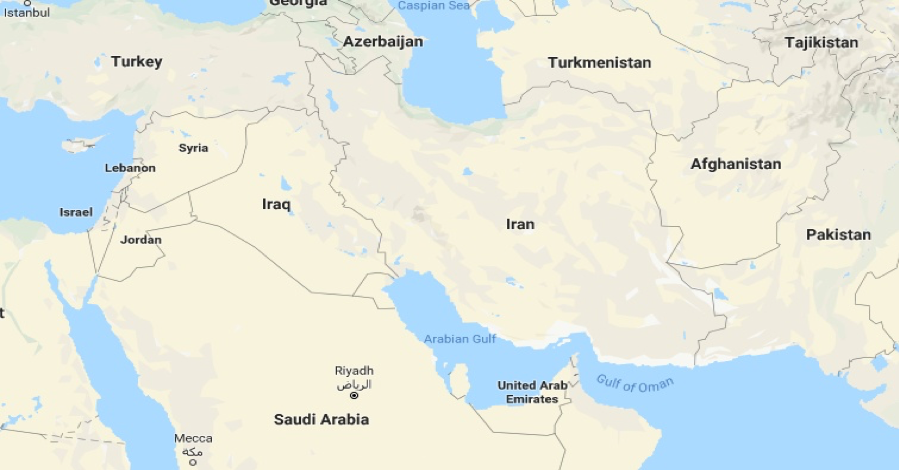
The US is not capable of defeating Iran in a conventional war

https://theduran.com/why-the-united-states-wont-launch-a-ground-war-versus-iran/

Submitted by Steve Brown…

In recent weeks we have seen numerous probing attempts and provocations in and around the Strait of Hormuz — whether false flags or actual events — intended to raise the profile of the US’s unilateral withdrawal from the JCPOA, and renewed US sanctions versus Iran.  Iran is pushing the issue with the United States, and is apparently offering a sacrificial pawn on the board (or perhaps knight!) by seizing two British oil tankers alleged to be operating illegally in the Strait of Hormuz.

While it is too soon to predict how the United States and its allies Israel and Saudi Arabia (both sworn enemies of Iran) will react, let’s explore the reasons why any US reactionary response will be largely symbolic, even if that involves a token strike versus Iran.

Global alliances have shifted

Turkey has defacto announced its withdrawal from NATO, by its purchase of S-400 missiles. That purchase and collaboration with Russia guarantees its departure from NATO, even if Turkey has not publicly announced such a withdrawal.  Furthermore, while Turkey’s military bases host US aircraft and operations, Turkey says it will not allow its bases to be used in any attack on Iran, by the US.

Iraq, an ally of Iran, has likewise stated that it will not allow its territory to be used as a base for attacking Iran.

Next, Imran Khan’s Pakistan has moved away from its alliance with the US to court China. China is Pakistan’s largest trading partner, and China has guaranteed security to Pakistan for Kashmir. Thus, no bases in Pakistan will be provided to the United States for any attack on Iran.

China and Russia have warned Washington too that it must not attack Iran. Iran has guarantees from Russia, China, Pakistan, Turkey, and even Japan and India that its economic future is secure… despite US sanctions.

So, only Saudia remains as a host for US aggression versus Iran.  But Saudia has much to lose by hosting US aggression, especially with Russia pushing OPEC+.  And even the largely defunct Arab League opposes US aggression versus Iran, from any Saudi base.

Iran will fight back

Next, consider the military force that Iran has at its disposal. From advanced Grad rockets to the Kornet, expect an announcement soon that S-400’s and other advanced armaments will be provided to Iran to ensure its right to defend itself. That, in conjunction with an already formidable array of defensive weapons to secure Iran’s borders and sea lanes will guarantee a formidable defense.

The United States cannot afford another new war

While the Federal Reserve may print the USD at will, a new war – especially a major war versus Iran – will weaken the US economically, despite the gamed casino numbers we see daily from Wall Street…

The US is not capable of defeating Iran in a conventional war

This time, there is no “coalition of the willing” to posture and pretend that the US has many and varied allies engaged in some just cause to rid the world of evil, as it proclaimed in 1994 versus North Korea, and in 2003 versus Iraq.  Apparently, the Marshall Islands, Micronesia, Palau and Solomon Islands have no real grievance versus Iran right now.

But the possibility exists that France, the UK and Germany will consider Iran enough of a threat around the Strait of Hormuz to impose additional sanctions on the country, and increase Naval military patrols to accompany tankers through the Strait. The increased patrols will increase tensions in the region, but should not result in war unless the US takes the bait of Iran sacrificing a knight to leave the West’s queen exposed, ie a greater war in the Middle East which may involve Iraq, Syria, Israel, Lebanon and Saudi Arabia.

Last time, just ten minutes prior to pulling the trigger (depending on accounts!) to consummate the Neocon’s dream for war with Iran, Trump had other ideas. Now,  let’s review the reasons the United States cannot initiate a ground war versus Iran.

Iran Strike Strategic map

PIN IT

Afghanistan

Most likely candidate here would be to stage US air strikes on Iran from Bagram air base. But at this time Afghanistan seeks closer ties with Iran on trade; for example, to trade with India via Iran’s Chabahar port.

And while the US could stage air strikes from Bagram, to launch a ground attack from this region would be a virtual impossibility. That is, due to mountainous terrain and firmly entrenched and well-armed IRGC mountain troops, neighboring.

Furthermore, it is exceedingly likely that Dostum/Ghani would forbid any attack by the US on Iran from Afghanistan, that would result in a major new war. And note that Dostum is pushing for the removal of US troops from Afghanistan, including its air bases…

What of Iran’s Motives?  

The culture that invented the game of chess never makes a move without careful and calculating consideration. Iran has been forced to play black for decades now, and has done so with skill, alacrity, and will take the initiative whenever possible.

Whether Iran has sensed a particular point of weakness in the West at this time, or Iran has hidden agreements in place with significant allies to come to its defense in the event of an US attack, is of course unknown.

That Iran may be holding a surprise move in check with support from its allies must be of extreme concern to the US Hegemon.  And eventually that concern must be all of ours, when the hegemon inevitably fails to intimidate and control the board with its white advantage, and its queen is taken.

Be seeing you

John Bolton's zeal for regime change extends to Latin ...


Posted in Uncategorized | Tagged: , , , | Leave a Comment »

Shifting Alliances: Is Turkey Now “Officially” an Ally of Russia? Acquires Russia’s S-400. Exit from NATO Imminent? – Global ResearchGlobal Research – Centre for Research on Globalization

Posted by M. C. on July 16, 2019

Where will the US, aimed at Russia nukes go?

https://www.globalresearch.ca/shifting-alliances-is-turkey-now-officially-an-ally-of-russia-acquires-russias-s-400-exit-from-nato-imminent/5683458

By Prof Michel Chossudovsky

Turkey is taking delivery of Russia’s S 400 missile defence system. What this signifies is that Turkey and Russia are now “officially” allies. The first shipment of the S-400 landed in Ankara on July 12, according to Turkey’s Ministry of Defense. (see image below)

Two more shipments are due, with the third delivery of “over 120 anti-aircraft missiles of various types… [scheduled] tentatively at the end of the summer, by sea.” 

Reports confirm that the “Turkish S-400 operators will travel to Russia for training in July and August. About 20 Turkish servicemen underwent training at a Russian training center in May and June, …” (CNN, July 12, 2019)

How will the US respond?

In all likelihood, Erdogan’s presidency will be the object of an attempted regime change, not to mention ongoing financial reprisals directed against the Turkish Lira as well as economic sanctions.

Be seeing you

Flipboard: Turkey Receives Russian Missile System, Risking ...


Posted in Uncategorized | Tagged: , , , | Leave a Comment »

Time to Pull US Nuclear Weapons Out of Turkey – Defense One

Posted by M. C. on May 21, 2019

The same Turkey that staged a false flag gas attack to get US to kill Kurds.

https://www.defenseone.com/ideas/2019/05/get-us-nuclear-weapons-out-turkey/157101/

Storing nuclear weapons close to trouble is a bad idea, and giving Ankara a shared finger on the nuclear trigger is rapidly losing its charm.

Amid the recent self-congratulatory celebrations of the North Atlantic Treaty Organization’s 70th anniversary, there was no mention one of its strangest policies: the nuclear sharing program that keeps American nuclear bombs in five NATO countries (Belgium, the Netherlands, Germany, Italy and Turkey) and trains host air forces to use them. Thus at Incirlik Air Base in Turkey, about 100 miles from the Syrian border, the United States stores some 20 to 80 B61 nuclear weapons for delivery by Turkish or American aircraft. There is not much comfort in knowing that these weapons are under direct American control in heavily guarded bunkers and are designed to be unusable without the proper codes. It is time to bring them home.

American-Turkish relations are not good and are likely to turn worse. Kurds populate parts of Turkey’s border with Syria and Iraq and have been our close ally in the struggle with the Islamic State, but are regarded by the Turks as secessionists and terrorists. The United States has promised not to abandon the Kurds as it has in the past, but that promise puts the United States’ hopes to stabilize the region on a collision path with Turkey…

The presence of American tactical nuclear systems like the B61 bombs would tie American forces to the fate of their hosts. The sharing of the weapons’ delivery would give these countries a direct role in the nuclear enterprise without requiring them to actually build weapons…

Be seeing you

Breaking : North Korea Threatens To Nuke Turkey ...


Posted in Uncategorized | Tagged: , , , , | Leave a Comment »

NATO’s German Problem: Who Needs Soldiers or Weapons? | The National Interest

Posted by M. C. on April 29, 2019

Who Needs Soldiers or Weapons?

Germans think they don’t. Why should they? US taxpayers have been shouldering the load up til now. The Germans have no reason to change their way of thinking.

Germans want to be friends with Russia. Russia supplies their natural gas.

Germany is too busy building and creating to get caught up in endless war.

#Gonna change my way of thinking, Make myself a different set of rules

Gonna change my way of thinking, Make myself a different set of rules

Gonna put my good foot forward, And stop being influenced by fools# Bob Dylan

https://nationalinterest.org/blog/skeptics/nato%E2%80%99s-german-problem-who-needs-soldiers-or-weapons-51872

by Doug Bandow

The foreign ministers of America’s European allies visited Washington to celebrate the North Atlantic Treaty Organization (NATO)’s seventieth anniversary. Members engaged in an orgy of self-congratulation over an alliance which remains better called “North America and The Others.” One of the meeting highlights was preparing to bring in the military behemoth of (North) Macedonia, following the inclusion of equally mighty Montenegro two years ago.

One discordant subject was Germany’s military outlays, or lack thereof. Berlin had promised to hike expenditures to two percent of GDP by 2024—subsequently downgraded to 1.5 percent—but new budget figures indicated that the real amount would be lower still. Germany’s government evidently lacks the political will to put Europe’s defense first.

Without a hint of shame, the German Foreign Office responded to criticism by tweeting: “Germany wholeheartedly supports @NATO. We will stand by our commitments. True solidarity is measured in terms of commitment, not Euros.” Unfortunately, a barrage of bullets and bombs would be more effective than mere statements of commitments against an aggressor.

Germany has been a “problem” for a century and a half. Originally Berlin was overly-militarized and insufficiently restrained. These failings were on dramatic display in World War II. No wonder General Hastings Ismay, the former Churchill aide tapped to serve as NATO’s first secretary general, allowed that one purpose of the alliance was to “keep the Germans down.”

Moreover, decades later when the Berlin Wall came crashing down, the venerable Margaret Thatcher was not alone in opposing German reunification. Some Europeans saw the specter of the Fourth Reich, and one wit explained that he loved Germany so much he wanted two of them.

However, the Federal Republic’s militaristic heritage has not stirred in the years since; even what passes for Germany’s new nationalistic, xenophobic right offers no politician who hints at being Adolf Hitler reincarnated. Certainly, neither avuncular Helmut Kohl, the first chancellor of a united Germany, nor Angela Merkel, who has dominated German politics for more than a decade, acted the part of dictator-wannabe.

Far from clamoring to create a military capable of turning the country into a Weltmacht, the German people seemed to forget the reason for establishing armed forces. According to a Pew Research Center poll, four of ten Germans don’t want to defend NATO allies from attack. For years among the Bundeswehr’s strongest advocates were social service agencies, which benefited from draftees choosing alternative service. Furthermore, in January the Bundeswehr dispatched mountain troops to Bavaria to… shovel snow from the roofs of homes after a big winter storm.

Berlin’s lack of interest in all things military wouldn’t much matter if the United States wasn’t expected to carry the resulting burden. However, Europeans are counting on America to contribute dollars, lots of them, not just professions of “commitment.” Of course, Germany is not the only free, or more accurately cheap, rider…

Alas, that was then. German outlays ran a dismal 1.27 percent last year and are supposed to hit 1.37 percent in 2020. But Berlin recently projected that number falling to 1.25 percent in 2023. Foreign Minister Heiko Maas insisted that Germany still would meet its commitments, but the prospect of hitting 1.5 percent, let alone 2.0 percent, in a few years, appears to be infinitesimal.

In Berlin’s defense, some German analysts pointed to the steady, though small, increase in military outlays since 2014. Through last year, real spending had increased by almost 12 percent. But that mainly reflected robust economic growth. As a percentage of GDP outlays barely increased, from 1.18 percent to 1.24 percent. Recent expenditure hikes look even less impressive when considering per capita spending. Last year Washington spent $1898 per person on the military. Germany contributed $589. That was up only $56 since 2014.

Overall outlays are important. However, noted Defense & Security Monitor, “the greater concern for core security partners such as France and Britain remains the operational shortcomings of the Bundeswehr.” The Atlantic Council’s Jorge Benitez said simply: “The readiness of the Germany military is abysmal.”…

America and Europe still could cooperate militarily on shared interests. Should an unexpected hegemonic threat arise, the United States could reengage. But after seventy years of NATO, the American people should declare their work in Europe done. It is time for the Europeans to take over responsibility for their security.

Be seeing you

Fools | Ha! Tea 'n' Danger


Posted in Uncategorized | Tagged: , , , | Leave a Comment »