MCViewPoint

Opinion from a Libertarian ViewPoint

Archive for the ‘Uncategorized’ Category

Republicans & Democrats Agree: Give Vast Snooping Powers to The U.S. Government

Posted by M. C. on November 25, 2019

https://www.shtfplan.com/headline-news/republicans-democrats-agree-give-vast-snooping-powers-to-the-u-s-government_11212019

Mac Slavo

Even in our polarized and right vs. left political paradigm, there is one thing both republicans and democrats can agree on: The federal government should have vast snooping powers and conduct mass surveillance on everyone. They simply disagree over who should be in charge of abusing those excessive powers.

The impeachment circus did one thing successfully. It took attention from the government’s mass surveillance programs that are constantly expanded. As Reason proposed: If Democrats really feared Donald Trump’s exercise of the powers of the presidency, why would they propose extending the surveillance powers of the controversial Patriot Act?

House Democrats have successfully slipped an unqualified renewal of the draconian PATRIOT Act into an emergency funding bill – voting near-unanimously for sweeping surveillance carte blanche that was the basis for the notorious NSA program.
Buried on the next-to-last page of the Continuing Appropriations Act, meant to keep the government’s lights on and dated yesterday, is the following language:

Section  102(b)(1)  of  the  USA  PATRIOT  Improvement  and  Reauthorization  Act  of  2005  (50  U.S.C.  101805  note)  is  amended  by  striking  “December  15,  2019”  and inserting “March 15, 2020”.

This relatively innocuous language pushes back the sunset provision of the Patriot Act by three months, leaving its vast powers in the hands of a president who Democratic presidential hopeful Joe Biden charges with “failure to uphold basic democratic principles,” who House Speaker Nancy Pelosi has accused of “alarming connections and conduct with Russia” and, joined by Senate Democratic Leader Charles Schumer, says is making an attempt to “shred the Constitution.” –Reason

If democrats honestly believed that Trump was all of the things he’s being accused of, why trust him with the Patriot Act?

The American Civil Liberties Union agrees, calling the Patriot Act “an overnight revision of the nation’s surveillance laws that vastly expanded the government’s authority to spy on its own citizens, while simultaneously reducing checks and balances on those powers like judicial oversight, public accountability, and the ability to challenge government searches in court.”

Attempts to roll back the spying powers of the government have all failed. This power is only expanding and it’s going to get harder for people to protect themselves against the government when they abuse this power. The last time (in 2018) libertarian-leaning Republicans and a handful of Democrats wanted to strip the government of some of its mass surveillance power, it failed.

“It became quickly apparent that leading Democrats intended to side with Trump and against those within their own party who favored imposing safeguards on the Trump administration’s ability to engage in domestic surveillance,” The Intercept‘s Glenn Greenwald wrote at the time. “The most bizarre aspect of this spectacle was that the Democrats who most aggressively defended Trump’s version of the surveillance bill—the Democrats most eager to preserve Trump’s spying powers as virtually limitless—were the very same Democratic House members who have become media stars this year by flamboyantly denouncing Trump as a treasonous, lawless despot in front of every television camera they could find.”

213 best The Prisoner/The Village/Portmeirion images on ...

Be seeing you


Posted in Uncategorized | Tagged: , , , , | Leave a Comment »

RAY McGOVERN: The Pitfalls of a Pit Bull Russophobe – Consortiumnews

Posted by M. C. on November 25, 2019

Casey openly told the president and other cabinet officials: “We’ll know our disinformation program is complete when everything the American public believes is false.”  Were Casey still alive, he would be very pleased and proud of Hill’s performance.

https://consortiumnews.com/2019/11/22/ray-mcgovern-the-pitfalls-of-a-pit-bull-russophobe/

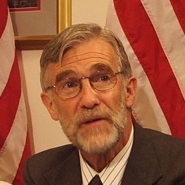
By Ray McGovern
Special to Consortium News

Fiona Hill’s “Russian-expert” testimony Thursday and her deposition on Oct. 14 to the impeachment inquiry showed that her antennae are acutely tuned to what Russian intelligence services may be up to but, sadly, also displayed a striking naiveté about the machinations of U.S. intelligence.

Hill’s education on Russia came at the knee of the late Professor Richard Pipes, her Harvard mentor and archdeacon of Russophobia. I do not dispute her sincerity in attributing all manner of evil to what President Ronald Reagan called the “Evil Empire.”  But, like so many other glib “Russia experts” with access to Establishment media, she seems three decades out of date.

I have been studying the U.S.S.R. and Russia for twice as long as Hill, was chief of CIA’s Soviet Foreign Policy Branch during the 1970s, and watched the “Evil Empire” fall apart.  She seems to have missed the falling apart part.

Selective Suspicion

Are the Russian intelligence services still very active? Of course. But there is no evidence — other than Hill’s bias — for her extraordinary claim that they were behind the infamous “Steele Dossier,” for example, or that they were the prime mover of Ukraine-gate in an attempt to shift the blame for Russian “meddling” in the 2016 U.S. election onto Ukraine. In recent weeks U.S. intelligence officials were spreading this same tale, lapped up  and faithfully reported Friday by The New York Times.

Hill has been conditioned to believe Russian President Vladimir Putin and especially his security services are capable of anything, and thus sees a Russian under every rock — as we used to say of smart know-nothings like former CIA Director William Casey and the malleable “Soviet experts” who bubbled up to the top during his reign (1981 – 1987).  Recall that at the very first meeting of Reagan’s cabinet, Casey openly told the president and other cabinet officials: “We’ll know our disinformation program is complete when everything the American public believes is false.”  Were Casey still alive, he would be very pleased and proud of Hill’s performance.

Beyond Dispute?

On Thursday Hill testified:

“The unfortunate truth is that Russia was the foreign power that systematically attacked our democratic institutions in 2016. This is the public conclusion of our intelligence agencies, confirmed in bipartisan Congressional reports. It is beyond dispute, even if some of the underlying details must remain classified.” [Emphasis added.]

Ah, yes.  “The public conclusion of our intelligence agencies”: the same ones who reported that the Communist Party of the Soviet Union would never surrender power peaceably; the same ones who told Secretary of State Colin Powell he could assure the UN Security Council that the WMD evidence given him by our intelligence agencies was “irrefutable and undeniable.”  Only Richard-Pipeline-type Russophobia can account for the blinders on someone as smart as Hill and prompt her to take as gospel “the public conclusions of our intelligence agencies.”

A modicum of intellectual curiosity and rudimentary due diligence would have prompted her to look into who was in charge of preparing the (misnomered) “Intelligence Community Assessment” published on Jan. 6, 2017, which provided the lusted-after fodder for the “mainstream” media and others wanting to blame Hillary Clinton’s defeat on the Russians.

Jim, Do a Job on the Russians

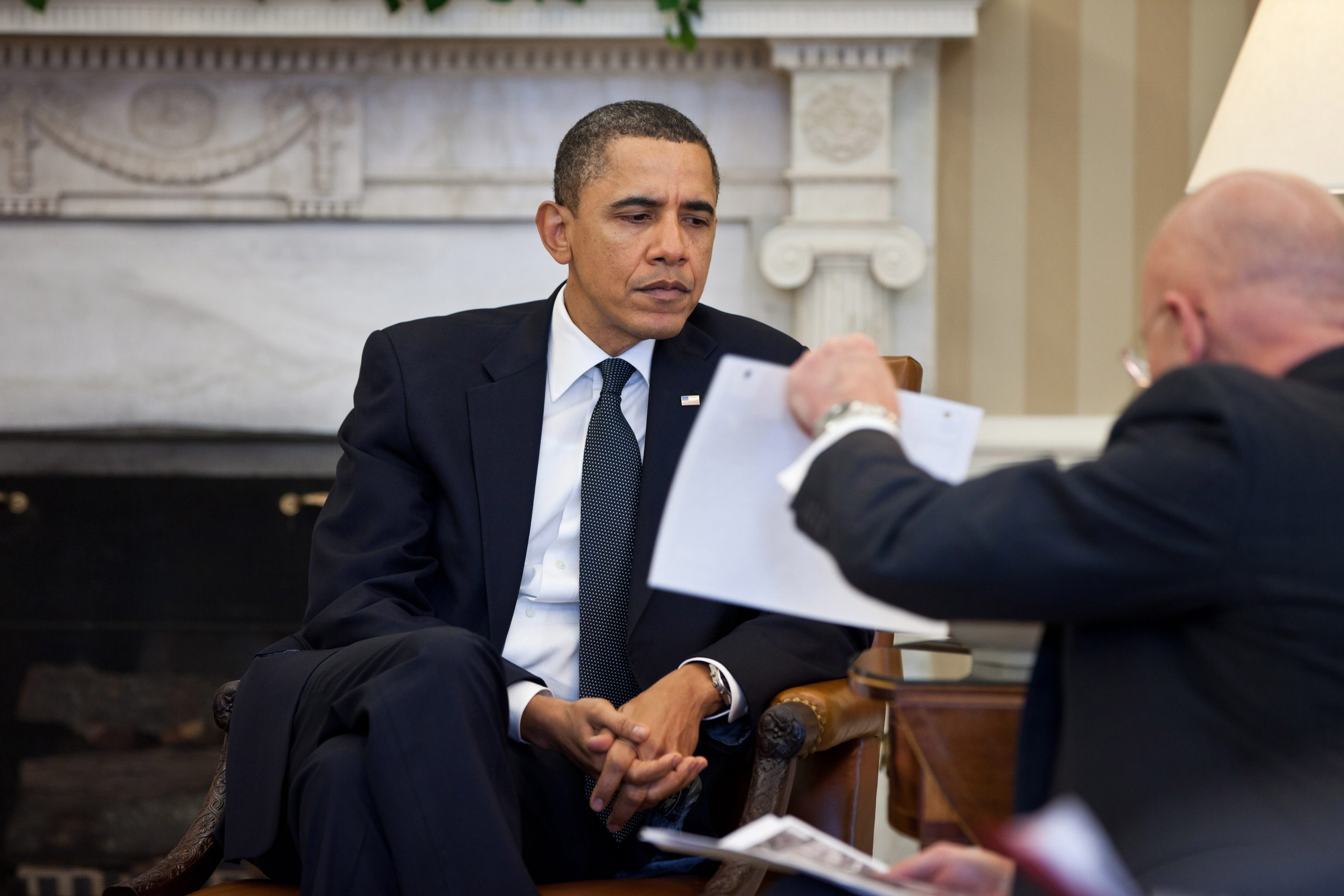
President Barack Obama gave the task to his National Intelligence Director James Clapper, whom he had allowed to stay in that job for three and a half years after he had to apologize to Congress for what he later admitted was a “clearly erroneous” response, under oath, to a question from Sen. Ron Wyden (D-OR) on NSA surveillance of U.S. citizens. And when Clapper published his memoir last year, Hill would have learned that, as Defense Secretary Donald Rumsfeld’s handpicked appointee to run satellite imagery analysis, Clapper places the blame for the consequential “failure” to find the (non-existent) WMD “where it belongs — squarely on the shoulders of the administration members who were pushing a narrative of a rogue WMD program in Iraq and on the intelligence officers, including me, who were so eager to help that we found what wasn’t really there.” [Emphasis added.]

But for Hill, Clapper was a kindred soul: Just eight weeks after she joined the National Security Council staff, Clapper, during an NBC interview on May 28, 2017, recalled “the historical practices of the Russians, who typically, are almost genetically driven to co-opt, penetrate, gain favor, whatever, which is a typical Russian technique.” Later he added, “It’s in their DNA.” Clapper has claimed that “what the Russians did had a profound impact on the outcome of the election.”

As for the “Intelligence Community Assessment,” the banner headline atop The New York Times on Jan. 7, 2017 set the tone for the next couple of years: “Putin Led Scheme to Aid Trump, Report Says.” During my career as a CIA analyst, as deputy national intelligence officer chairing National Intelligence Estimates (NIEs), and working on the Intelligence Production Review Board, I had not seen so shabby a piece of faux analysis as the ICA. The writers themselves seemed to be holding their noses.  They saw fit to embed in the ICA itself this derriere-covering note: “High confidence in a judgment does not imply that the assessment is a fact or a certainty; such judgments might be wrong.”

Not a Problem

With the help of the Establishment media, Clapper and CIA Director John Brennan,  were able to pretend that the ICA had been approved by “all 17 intelligence agencies” (as first claimed by Clinton, with Rep. Jim Himes, D-CT, repeating that canard Thursday, alas “without objection).”  Himes, too should do his homework.  The bogus “all 17 intelligence agencies” claim lasted only a few months before Clapper decided to fess up. With striking naiveté, Clapper asserted that ICA preparers were “handpicked analysts” from only the FBI, CIA and NSA. The criteria Clapper et al. used are not hard to divine. In government as in industry, when you can handpick the analysts, you can handpick the conclusions.

Maybe a Problem After All

“According to several current and former intelligence officers who must remain anonymous because of the sensitivity of the issue,” as the Times says when it prints made-up stuff, there were only two “handpicked analysts.”  Clapper picked Brennan; and Brennan picked Clapper.  That would help explain the grossly subpar quality of the ICA.

If U.S. Attorney John Durham is allowed to do his job probing the origins of Russiagate, and succeeds in getting access to the “handpicked analysts” — whether there were just two, or more — Hill’s faith in “our intelligence agencies,” may well be dented if not altogether shattered.

Be seeing you

?u=https3.bp.blogspot.com-AA5BfRPAvZcVfvOORWFnjIAAAAAAAARz8jPg5f97nkTMs1600Burl-Ives-Paul-Newman-Cat-on-a-Hot-Tin-Roof-1958.JPG&f=1

There ain’t nothin’ more powerful than the odor of mendacity…You can smell it. It smells like death.


Posted in Uncategorized | Tagged: , , , , , , | Leave a Comment »

The Evil Fiona Hill – LewRockwell

Posted by M. C. on November 25, 2019

https://www.lewrockwell.com/2019/11/david-stockman/the-criminal-fiona-hill/

By

David Stockman’s Contra Corner

It’s beginning to seem like an assault by the Zulu army of American politics – they just never stop coming.

We are referring to the Russophobic neocon Deep Staters who have trooped before Adam’s Schiff Show to pillory POTUS for daring to look into the Ukrainian stench that engulfs the Imperial City – a rank odor that is owing to their own arrogant meddling in the the internal affairs of that woebegone country.

This time it was Dr. Fiona Hill who sanctimoniously advised the House committee that there is nothing to see on the Ukraine front that involved any legitimate matter of state; it was just the Donald and his tinfoil hat chums jeopardizing the serious business of protecting the national security by injecting electioneering into relations with Ukraine.

She warned Republicans that legitimizing an unsubstantiated theory that Kyiv undertook a concerted campaign to interfere in the election – a claim the president pushed repeatedly for Ukraine to investigate – played into Russia’s hands.

“In the course of this investigation,” Dr. Hill testified before the House Intelligence Committee’s impeachment hearings, “I would ask that you please not promote politically driven falsehoods that so clearly advance Russian interests.”

Folks, we are getting just plain sick and tired of this drumbeat of lies, misdirection and smug condescension by Washington payrollers like Fiona Hill. No Ukrainian interference in the 2016 US election?

Exactly what hay wagon does she think we fell off from?

Or better still, ask Paul Manafort who will spend his golden years in the Big House owing to an August 2016 leak to the New York Times about an alleged “black book” which recorded payments he had received from his work as an advisor to the Ukrainian political party of former president Yanakovych. As we have seen, the latter had been removed from office by a Washington instigated coup in February 2014.

By its own admission, this story came from the Ukrainian government and the purpose was clear as a bell: Namely, to undermine the Trump presidential campaign and force Manafort out of his months-old role as campaign chairman – a role that had finally brought some professional management to the Donald’s helter-skelter campaign for the nation’s highest office.

In the event, this well-timed bombshell worked, and in short order Manafort resigned, leaving the disheveled Trump campaign in the lurch:

…… government investigators examining secret records have found Manafort’s name, as well as companies he sought business with, as they try to untangle a corrupt network they say was used to loot Ukrainian assets and influence elections during the administration of Mr. Manafort’s main client, former President Viktor F. Yanukovych.

Handwritten ledgers show $12.7 million in undisclosed cash payments designated for Mr. Manafort from Mr. Yanukovych’s pro-Russian political party from 2007 to 2012, according to Ukraine’s newly formed National Anti-Corruption Bureau. Investigators assert that the disbursements were part of an illegal off-the-books system whose recipients also included election officials.

In addition, criminal prosecutors are investigating a group of offshore shell companies….. Among the hundreds of murky transactions these companies engaged in was an $18 million deal to sell Ukrainian cable television assets to a partnership put together by Mr. Manafort and a Russian oligarch, Oleg Deripaska, a close ally of President Vladimir V. Putin.

Mr. Manafort’s involvement with moneyed interests in Russia and Ukraine had previously come to light. But as American relationships there become a rising issue in the presidential campaign – from Mr. Trump’s favorable statements about Mr. Putin and his annexation of Crimea to the suspected Russian hacking of Democrats’ emails – an examination of Mr. Manafort’s activities offers new details of how he mixed politics and business out of public view and benefited from powerful interests now under scrutiny by the new government in Kiev.

The bolded lines in the NYT story above tell you exactly where this was coming from. The National Anti-Corruption Bureau had been set up by an outfit called “AntAC”, which was jointly funded by George Soros and the Obama State Department. And there can be little doubt that the Donald’s accurate view at the time – that Crimea’s reunification with Mother Russia after a 60 year hiatus which had been ordered by the former Soviet Union’s Presidium – was unwelcome in Kiev and among the Washington puppeteers who had put it in power.

For want of doubt that the Poroshenko government was in the tank for Hillary Clinton, the liberal rag called Politico spilled the beans a few months later. In a January 11, 2017 story it revealed that the Ukrainian government had pulled out all the stops attempting to help Clinton, whose protégés at the State Department had been the masterminds of the coup which put them in office. Thus, Politico concluded,

Donald Trump wasn’t the only presidential candidate whose campaign was boosted by officials of a former Soviet bloc country...

That is, what is being desperately defended on Capitol Hill is not the rule of law, national security or fidelity to the Constitution of the United States., but a giant Neocon Lie that is needed to keep the Empire in business, and the world moving ever closer to an utterly unnecessary Cold War 2.0 between nation’s each pointing enough nuclear warheads at the other to destroy the planet.

NATO, with just 16 members in 1990, now includes 29 European states, with all of the expansion countries lying east of Germany. As this was unfolding, Russian leaders issued stern warnings about the consequences if America and the West sought to include in NATO either Ukraine or Georgia. Both are considered as fundamental to Russian security.

True, many in western Ukraine have pushed for greater ties to the West and wanted their elected president, Viktor Yanukovych, to respond favorably to Western financial blandishments. But Yanukovych, tilting toward Russia, eschewed NATO membership for Ukraine, renewed a long-term lease for the Russian Black Sea Fleet in Sevastopol, and gave official status to the Russian language. These actions eased tensions between Ukraine and Russia, but they inflamed Ukraine’s internal politics. And when Yanukovych abandoned negotiations aimed at an association and free-trade agreement with the European Union in favor of greater economic ties to Russia, pro-Western Ukrainians, including far-right provocateurs, staged street protests that ultimately brought down Yanukovych’s government. Victoria Nuland gleefully egged on the protesters. The deposed president fled to Russia.

Nuland then set about determining who would be Ukraine’s next prime minister, namely Arseniy Yatsenyuk. “Yats is our guy,” she declared to U.S. ambassador to Ukraine Geoffrey Pyatt. When Pyatt warned that many EU countries were uncomfortable with a Ukrainian coup, she shot back, “Fuck the EU.” She then got her man Yats into the prime minister position, demonstrating the influence that enables US meddling in foreign countries.

That’s when Putin rushed back to Moscow from the Winter Olympic Games at Sochi to protect the more Russian-oriented areas of Ukraine (the so-called Donbass in the country’s east and Crimea in the south) from being swallowed up in this new drama. He orchestrated a plebiscite in Crimea, which revealed strong sentiment for reunification with Russia (hardly the “sham referendum” described by Taylor) and sent significant military support to Donbass Ukrainians who didn’t want to be pulled westward.

The West and America have always been, and must remain, wary of Russia. Its position in the center of Eurasia – the global “heartland,” in the view of the famous British geographic scholar Halford Mackinder – renders it always a potential threat. Its vulnerability to invasion stirs in Russian leaders an inevitable hunger for protective lands. Its national temperament seems to include a natural tendency towards authoritarianism. Any sound American foreign policy must keep these things in mind.

But in the increasingly tense relationship between the Atlantic Alliance and Russia, the Alliance has been the more aggressive player – aggressive when it pushed for NATO’s eastward expansion despite promises to the contrary from the highest levels of the US government; aggressive when it turned that policy into an even more provocative plan for the encirclement of Russia; aggressive when it dangled the prospect of NATO membership for Ukraine and Georgia; aggressive when it sought to lure Ukraine out of the Russian orbit with economic incentives; aggressive when it helped foster the street coup against a duly elected Ukrainian government; and aggressive in its continued refusal to appreciate or acknowledge Russia’s legitimate geopolitical interests in its own neighborhood.

George Kent and William B. Taylor Jr., in their testimony last week, personified this aggressive outlook, designed to squeeze Russia into a geopolitical corner and trample upon its regional interests in the name of Western universalism. If that outlook continues and leads to ever greater tensions with Russia, it can’t end well.

Be seeing you


Posted in Uncategorized | Tagged: , , , , , , , | Leave a Comment »

Delusion on Campus – Taki’s Magazine – Taki’s Magazine

Posted by M. C. on November 24, 2019

If you were to believe the Obama administration’s hysteria over the “campus rape crisis,” you might imagine that young women would be fleeing college. Yet:

None of this crisis response occurs, of course. To the contrary, every year the stampede of girls trying to get into the most selective colleges grows more frenzied…. Girls now constitute a large majority of students on college campuses…. Yet, we are to believe that these ambitious mothers are deliberately packing off their daughters to a hellhole of sexual predation.

Mac Donald points out that in 2014 when colleges were first required to report the number of unfounded criminal charges involving their students:

The only unfounded crimes that Harvard reported were rapes—six of them. By contrast, none of the 492 property crimes reported to law enforcement in 2014 were found to be baseless. And those six unfounded rapes represented all of the rapes reported to the Harvard police in 2014—not one survived law-enforcement investigation….

Nonetheless, there is much evidence that the college experience itself often inflicts depression on freshmen. It’s almost a cliché that girls go off to a prestigious college, find the academics daunting, put on fifteen pounds eating cafeteria food, drink heavily to work up an excuse to lose their virginity, and then get heartbroken when the boy doesn’t call. (The late Tom Wolfe’s I Am Charlotte Simmons walks through each step.)

Yet, our vast research universities never seemed to get around to researching this seemingly common pattern. Fortunately, UCLA recently started a study of freshman depression.

http://takimag.com/article/delusion-on-campus/#axzz5SEURbZd9

September 26, 2018

In her new book The Diversity Delusion, Heather Mac Donald takes on identity politics far more forthrightly than Francis Fukuyama dared to in his new book Identity, which I reviewed last week.

Just compare their subtitles: Mac Donald chose How Race and Gender Pandering Corrupt the University and Undermine Our Culture, while Fukuyama went with The Demand for Dignity and the Politics of Resentment, even though “dignity” is hardly the first word suggested by identity politics. As I foresaw:

Nor do I expect the upcoming Supreme Court nomination hearing/teen sex comedy to be a high point in the history of American dignity.

Interestingly, both Fukuyama and Mac Donald studied literary theory at Yale under deconstructionist Paul de Man, a remarkable con man who successfully sailed with whatever tide was flowing, whether the Nazi occupation in his native Belgium or French high theory in America. But eventually both Fukuyama and Mac Donald realized French postmodernism is pernicious nonsense.

Nonetheless, I think Michel Foucault was onto something with his constant harping on how power infiltrates language. Granted, Foucault’s obsession with power was an offshoot of his gay sadomasochism, which led to him dying of AIDS in 1984. Still, his notion that elites would naturally try to socially construct how people think in order to preserve their privileges is hardly implausible.

Yet that ought to lead to the question: Who, precisely, are “the powerful” in 2018?

We are constantly lectured about how the increasingly distant past has apparently permanently marginalized various identity groups, so they must be handed ever more power in the present. But aren’t those who are being paid to do this lecturing part of the powerful?

Mac Donald shines her spotlight on institutional power in the universities, especially California colleges such as UCLA.

UCLA is interesting for this purpose because it had a not-unimpressive record of black achievement going back to its founding the 1920s.

Many today might assume that inclusion is a recent development of just the past few slightly more enlightened years. Personally, though, I worked in summer jobs in 1981–82 for a black UCLA vice-chancellor. Through him I met the mayor of Los Angeles, Tom Bradley (1973–93), who had been a UCLA student in the 1930s and was nearly elected governor of California in 1982. My boss’ office was in UCLA’s Bunche Hall, which was named after the African-American diplomat Ralph Bunche, valedictorian of his UCLA class in the 1920s, who won the 1950 Nobel Peace Prize for mediating an armistice to halt the first Israeli-Arab war. Bunche Hall is not far from UCLA’s Jackie Robinson Stadium, named after the UCLA four-sport letterman of 1939–41.

But none of this positive history seems to have helped UCLA in the present. When Heather spoke at UCLA in 2017, protesters screamed at her for ten minutes. But at least that wasn’t as bad as the next night at the Claremont Colleges, when she had to be rescued by the police from a goon squad from pricey Pomona College (tuition: $52,412).

Amusingly, Heather strikes back by quoting verbatim these affirmative-action students’ word salad:

We, few of the Black students here at Pomona College and the Claremont Colleges… Though this institution as well as many others including this entire country, have been founded upon the oppression and degradation of marginalized bodies, it has a liability to protect the students that it serves…. The notion of discourse, when it comes to discussions about experiences and identities, deters the ‘Columbusing’ of established realities and truths [coded as ‘intellectual inquiry’] that the institution promotes….

Indeed.

These anti-free-speech gangs aren’t lonely rebels; they are empowered by sizable campus bureaucracies. Indeed, many of these incidents can be seen as tryouts in which leftist students ritually denounce the “campus climate” to audition for jobs as diversicrats so that they won’t ever have to leave the campus. (A general rule: The more exquisite the physical climate, such as at the UC schools, the more activists and administrators obsess over whether microaggressions are menacing their “campus climate comfort.”)

For example, Berkeley budgets $20 million per year for 150 full-time staffers in its diversity nook, the Division of Equity and Inclusion. At UCLA, Jerry Kang, the Vice Chancellor of Equity, Diversity, and Inclusion and a leading advocate of the pseudoscience of implicit bias, was paid $444,234 in 2016.

Mac Donald notes the career arc of the new president of San Diego State, Adela de la Torre, who had previously built a power base at UC Davis consisting of 28 nonacademic departments such as:

The Lesbian, Gay, Bisexual, Transgender, Queer, Intersex, Asexual Resource Center; the Center for African Diaspora Student Success; the Center for Chicanx and Latinx Student Success; the Native American Academic Studies Student Success Center; the Middle Eastern/South Asian Student Affairs Office; the Women’s Resources and Research Center; the Undocumented Student Center; Retention Initiative; the Office of Educational Opportunity and Enrichment Services; and the Center for First-Generation Student Scholars.

Are colleges paying for this efflorescence of bureaucracy because students are obsessed with identity politics? Or are students obsessed with identity politics because colleges are funding all these diversicrats? Perhaps they are symbiotically related?

Or are the most strident student activists and the most smug salaried bureaucrats more or less the same small number of individuals, just at different stages in their careers?

I started wondering about this in early 2017 when a Berkeley Latinx/Chicanx Studies major and protest leader named Pablo Gomez, who demands to be known by the pronoun “they,” ran amok and was arrested for the murder of a local schoolteacher. They was driven around on his rampage by a colleague and/or rival in the campus protest business. (Law enforcement has treated the driver as another victim of them rather than as their accomplice.)

As I looked into the cutthroat competition in the student demonstration business at Berkeley, I could grasp the despair and rage of a stabby loser like they as superbly groomed tiger daughters increasingly take over the social justice jihadi racket.

The most immediately relevant part of The Diversity Delusion this week is Mac Donald’s insights into the growth of “Neo-Victorianism” on campus.

If you were to believe the Obama administration’s hysteria over the “campus rape crisis,” you might imagine that young women would be fleeing college. Yet:

None of this crisis response occurs, of course. To the contrary, every year the stampede of girls trying to get into the most selective colleges grows more frenzied…. Girls now constitute a large majority of students on college campuses…. Yet, we are to believe that these ambitious mothers are deliberately packing off their daughters to a hellhole of sexual predation.

Mac Donald points out that in 2014 when colleges were first required to report the number of unfounded criminal charges involving their students:

The only unfounded crimes that Harvard reported were rapes—six of them. By contrast, none of the 492 property crimes reported to law enforcement in 2014 were found to be baseless. And those six unfounded rapes represented all of the rapes reported to the Harvard police in 2014—not one survived law-enforcement investigation….

Nonetheless, there is much evidence that the college experience itself often inflicts depression on freshmen. It’s almost a cliché that girls go off to a prestigious college, find the academics daunting, put on fifteen pounds eating cafeteria food, drink heavily to work up an excuse to lose their virginity, and then get heartbroken when the boy doesn’t call. (The late Tom Wolfe’s I Am Charlotte Simmons walks through each step.)

Yet, our vast research universities never seemed to get around to researching this seemingly common pattern. Fortunately, UCLA recently started a study of freshman depression.

One possibility that we’re unlikely to hear about from prestigious universities is that our culture’s obsession with students automatically going away to college at 17 or 18 needs to be rethought. Here in Los Angeles, Armenians (who are more or less white people but without the naivete) prefer their daughters to stay at home to attend junior college, and then transfer to a UC college. They may have a point. Upper-middle-class parents don’t raise their children to grow up fast these days, so perhaps they should keep them at home a couple of years longer before they go off to a dorm.

Mac Donald suggests that colleges are slowly heading back to the doctrine of in loco parentis that they dumped during the 1960s sexual revolution. In a timely bit of The Diversity Delusion, she writes:

Sexual liberation is having a nervous breakdown on college campuses. Campus feminists are reimporting selective portions of a traditional sexual code that they have long scorned, in the name of ending the purported epidemic of campus rape. They are once again making males the guardians of female safety and are portraying females as fainting, helpless victims of the untrammeled male libido…. How long will it be before feminists demand the return of chaperones?

Even in the guise of feminist legalisms, she writes, Neo-Victorianism might not be such a bad thing:

Should college fornication become a rare event preceded by contract signing and notarization, maybe students would do some studying instead. At present, many students drink through the entire weekend without worrying about any academic repercussions.

Mac Donald ends The Diversity Delusion on a small note of hope: Despite the manifold failings of institutional academia in instructing the young, the Teaching Company’s Great Courses DVDs, such as Robert Greenberg’s lectures on classical music and Alan Kors’ on philosophy, can always provide a solid liberal-arts education to sober adults.

Be seeing you

New Survey Finds College Freshmen Party and Drink Less ...


Posted in Uncategorized | Tagged: , , , , | Leave a Comment »

Building the First Nation – LewRockwell

Posted by M. C. on November 24, 2019

A command-and-control economy where medical innovation and scientific reform are bugs to be blocked by bureaucracies simply has too much inertia built on the foundation of sacrificial wars and regulations to change its ways any time soon.

That’s why Joe Quirk and the Seasteading project are such a fascinating case to consider.

https://www.lewrockwell.com/2018/12/david-gornoski/building-the-first-nation-not-founded-on-bloodshed/

Why do the nations rage?

I don’t know. Maybe because they’re out of ammo culturally. As Joe Quirk, president of The Seasteading Institute calls them, “the 193 monopolies on government that control 7.6 billion people right now” could benefit from some peace-loving competition. More importantly, the existence of his planned seasteads, floating platform-based ocean communities, could benefit the ostensible customers of monopoly governments by modeling nonviolent, voluntary community making.

I interviewed Quirk because I am interested in the cause of liberty and nonviolence from an anthropological perspective. I am curious about why humans group together and assent to monopolies of violence called states. I want to know how humans came to morally condone and even consecrate the violence such entities employ against nonviolent people for disagreeing with majoritarian might-makes-right rules.

Watch the interview here:

In the news today we are hearing reports that an elderly pundit Dr. Jerome Corsi is likely facing prison time for getting tripped up in a perjury trap during psychologically abusing grillings by grand inquisitor Robert Mueller. Corsi’s actions, whatever the specifics, did not produce a victim. (Robert Mueller did when he helped mislead the nation into the Iraq War, as tens of thousands of wounded or killed soldiers prove.)

Regardless of what you think of his politics, Corsi is facing the prospect of being locked in a cage merely for the impotently cathartic game of DC blood sport. Seemingly near half the country seems to be foaming at the mouth at the sight of a political writer being caged in his last years just because he favored their rivals’ presidential pick. Who wants to live in a society where its law and liberty is decided by these violent bouts of scapegoat ping pong?

Centralized monopolies that demand the right to initiate violence against any nonviolent misfit are devolving into anarchic schisms of mad groupthink. Where do we get off this ride?

To exit the vehicle safely, we must know how we got in it and why it is breaking down and making us sick on its way out of commission.

The enigmatic Jewish prophet Habakkuk once wrote, “Woe to him who builds a city with bloodshed and establishes a town by injustice!”

He wrote it at a time in which evidence suggests the world was filled with societies founded and mediated by controlled acts of bloodshed. Today, we call it ritual human sacrifice and tribal war campaigns for glory. As sophisticated moderns, we are embarrassed to address the seeming fluke of sacrifice so ubiquitous to human history so we awkwardly shuffle it off to the corners of our museums. At best, the fashionable answer is that sacrifice was a quirk of religion or agriculture or proto-patriarchy or some other such cultural institution that soiled our primal nobility.

In reality, sacrifice was a safety valve ancient communities used to channel pent up resentment, fear, and conflict into misfit human vessels of destruction. These scapegoats were marked out from the masses by some arbitrary difference that made them unbearably peculiar to suspicious crowds looking to avert famine, disease, or other harbingers of social in-fighting and disorder. Eventually, the governing authorities streamlined the process of sacrifice to include foreign-captured slaves who first received orgies and feasts to make them tainted enough with the local spirit of the community in tension.

We think we educated ourselves out of human sacrifice but this is a convenient myth we tell ourselves to justify its continual residue in our daily lives. Every culture that sends state agents to lock up a woman selling unlicensed tamales or a political dissident or an addict or an Amish herbal salve seller is still very much enthralled by the one-for-all logic underlying our generative sacrificial origins.

Today, we hide our consent for coercion against misfits by telling ourselves it is for the protection of victims and children. As if, for example, another Amish farmer thrown into a violent prison cage would cause the nation to perish if he was left alone to sell his raw milk.

Beyond domestic sacrificial violence in the name of victims, it is difficult to find a single country in existence today that did not have its founding determined by self-justifying war. As another remnant of sacred ritual, war has been a socially binding agent for societies: a means of uniting restless neighbors in righteous self-sacrifice of life and wealth for the defeat of a less-than-human foreign foe. Yet recent years have shown that as the public is more frequently exposed to the images of constant intervention in countries like Iraq, Yemen, Libya, and Syria, whatever unifying high war has long held is rapidly dissipating.

Our increasing sensitivity to the plight of the other, be it the drug war-ravaged family or drone strike victims abroad, make the governance models built on the initiation of physical violence against nonviolent people increasingly ineffective. No wonder criminal justice reform and ending wars are now the few areas of overwhelming political unity. Yet political systems, always in a lag from cultural trajectories because of structural incentives to maintain the status quo, are dramatically slow to decisively satisfy such popular demands.

A command-and-control economy where medical innovation and scientific reform are bugs to be blocked by bureaucracies simply has too much inertia built on the foundation of sacrificial wars and regulations to change its ways any time soon.

That’s why Joe Quirk and the Seasteading project are such a fascinating case to consider. As sacrificial forms of governance continue to leave their citizens in disunity and internal resentment over who gets what spoils in a supposedly zero-sum economy, we have a real chance to see the first sovereign societies develop free from bloodshed.

An ocean-platform community voluntarily funded and organized, if successful, is a monumental event in human anthropology.

Just having a place where problem solvers and innovators can develop potential breakthroughs in science, medicine, and innovation, free from deeply captured regulatory apparatuses could be a tremendous leap forward for mankind. And if these societies can maintain a thriving, non-monopoly state-managed existence, the rest of the world’s governments will be on notice to wean off of sacrificial violence or perish through increased social unrest and decline.

Competition may be a sin to John D. Rockefeller. But when it comes to bloated bureaucracies buoyed by outdated ways of treating human beings, it looks like a big beautiful blue ocean to me.

Be seeing you


Posted in Uncategorized | Tagged: , , , , | Leave a Comment »

Best Government Money Can Buy

Posted by M. C. on November 24, 2019

Adelson’s power over policy makers is also evident in what the White House does not do. Israeli snipers have shot dead at least 143 unarmed Arab demonstrators in Gaza without so much as a word of condemnation coming out of Washington. Indeed, the Donald Trump Ambassador to Israel David Friedman has gone out of his way to defend the killings and also to support the expansion of the illegal Israeli settlements on the West Bank.

https://www.strategic-culture.org/news/2018/10/04/best-government-money-can-buy.html

Philip Giraldi

October 4, 2018

Very few Americans know who Sheldon Adelson is and fewer still appreciate that, as America’s leading political donor, when he speaks the Republican Party listens. By virtue of his largesse, he has been able to direct GOP policy in the Middle East in favor of Israel, which might well be regarded as his true home while the United States exists more as a faithful friend that can be produced at intervals whenever Israel finds itself in need of a bit of cash or political cover.

Adelson’s recent successes in translating his political donations into policy favorable to Israel have included shifting the US Embassy to Jerusalem, cutting aid to Palestinians, ending the Iranian nuclear monitoring agreement and closing the Palestine Liberation Organization’s diplomatic office in Washington. All those Trump Administration measures were reportedly worked out privately by Adelson speaking directly with the president.

Adelson’s activities in buying politicians reflect what he believes, he reportedly having said that “there’s no such thing as a Palestinian.” Nor does his world view include much concern for the country that has sheltered him and made him wealthy. He served in the US Army in World War 2 and has said that he regrets having done so, as he would rather have worn an Israeli army uniform. He also expressed his desire that his son might become an Israeli Army sniper.

Adelson benefits from his exceptional access to the White House to the detriment of actual American interests. A New York Times article “Sheldon Adelson Sees a Lot to Like in Trump’s Washington,” states that he “enjoys a direct line to the president” and meets the president monthly “in private in-person meetings and phone conversations.” He has been delighted with the openly expressed threats emanating from the Administration’s key foreign and national security policy spokesmen regarding Iran. He would like to see the United States go to war with the Iranians to destroy their government and bring about some kind of regime change, and, judging from recent developments, he just might get what he seeks, which could easily have catastrophic consequences for the entire region and beyond.

Adelson is somewhat unhinged on the issue of Iran and has even called for dropping a nuclear bomb on a desert region of the country as a negotiating tactic to show “we mean business” so Washington could then “impose its demands [on Iran] from a position of strength.” If Iran continued to resist, Adelson would to drop the next one on Tehran. If Tehran were to be nuked millions of Iranians would die, which doesn’t bother Adelson one bit. Such a development would, in Adelson’s opinion, be good for Israel, which is his primary concern.

Adelson’s power over policy makers is also evident in what the White House does not do. Israeli snipers have shot dead at least 143 unarmed Arab demonstrators in Gaza without so much as a word of condemnation coming out of Washington. Indeed, the Donald Trump Ambassador to Israel David Friedman has gone out of his way to defend the killings and also to support the expansion of the illegal Israeli settlements on the West Bank.

Adelson is also widely believed to have had a hand in personnel changes in the White House. He has used his money and influence to advance the careers of United Nations Ambassador Nikki Haley, National Security Advisor John Bolton, and Secretary of State Mike Pompeo while also arranging the removal of H.R. McMaster and Rex Tillerson for “being anti-Israeli” and not sufficiently willing to go to war with Iran. Defense Secretary James Mattis, the only actual adult remaining in the room when foreign policy is discussed, is believed to be the next target for removal.

How does Adelson do it? Money talks. He is worth an estimated $35 billion. His fortune came from casinos both in the US and in China, which some might consider to be promotion of vice. To buy and maintain the Republican support for right wing Zionist policies he has donated what is for him pocket change, $55 million so far this year in support of GOP candidates in the Midterm elections. In 2016, he gave large sums to the Trump campaign and to other Republicans, donating $35 million to the former and $55 million to two top Republican PACs — the Congressional Leadership Fund and the Senate Leadership Fund.

In America’s corrupt political culture, a monster like Sheldon Adelson can buy both a White House and Congress on behalf of a foreign government for a paltry $150 million or so. It is a reasonable investment for him given his views, as through him Israel is able to control a large slice of American foreign policy while also receiving billions of dollars each year from the US Treasury. And for those who think it would be different if the Democrats were in charge, think again. The Democrats have their own Adelson. His name is Haim Saban, an Israeli-American media magnate who has said he is a “one issue guy and my issue is Israel.” He is also the largest individual contributor to the Democratic Party.

Be seeing you

aipac

Posted in Uncategorized | Tagged: , , , , , | Leave a Comment »

Tomgram: William Astore, The Pentagon Has Won the War that Matters | TomDispatch

Posted by M. C. on November 24, 2019

http://www.tomdispatch.com/post/176487/tomgram%3A_william_astore%2C_the_pentagon_has_won_the_war_that_matters/#more

Posted by William Astore at 8:00am, October 25, 2018.

In June, Austin “Scott” Miller, the special-ops general chosen to be the 17th U.S. commander in Afghanistan, appeared before the Senate Armed Services Committee. Like so many of the generals who had preceded him, he suggested that he saw evidence of “progress” in the Afghan war, even if he refused to “guarantee you a timeline or an end date.” Smart move, general!

As it happens, just over a week ago, he got a dose, up close and personal, of what the Afghan version of “progress” really means. He was visiting key American allies in the southern province of Kandahar when the “insider” attack of all insider attacks occurred. In the sort of event that’s been going on since at least 2010, an ostensible ally, in this case a local member of the Afghan security forces who had evidently joined the Taliban, turned his gun on Kandahar’s chief of police (a crucial powerbroker in the region), the local intelligence chief, and the provincial governor, killing the first two and wounding the third. In the process, he ensured that, with local leadership literally down the tubes, elections in Kandahar would be postponed for at least a week. Three Americans, including a brigadier general, were also wounded in the attack.  (In 2014, an American major general was killed in just such an insider strike.)  In one of the rarest acts for an American commander in memory, General Miller reportedly drew his sidearm as the bullets began to fly, but was himself untouched. Still, it was a striking reminder that, 17 years after the U.S. invaded that country, the Taliban are again riding high and represent the only forces making “progress” or “turning corners” in that country.

In a conflict with no end in sight that is now not only the longest in American history but more than four times as long as World War II, the “finest fighting force that the world has ever known” hasn’t been able to discover a hint of victory anywhere. And that’s something that could be said as well of the rest of its war on terror across the Greater Middle East and ever-expanding regions of Africa. Today, TomDispatch regular retired Air Force Lieutenant Colonel William Astore suggests that no great military stays at war for 17 years unless it is, in some sense, victorious. As a result, in his latest post, he explores just where, in our increasingly upside-down American world, evidence of such triumph might be found. Tom

Why American Leaders Persist in Waging Losing Wars
Hint: They’re Winning in Other Ways
By William J. Astore

As America enters the 18th year of its war in Afghanistan and its 16th in Iraq, the war on terror continues in Yemen, Syria, and parts of Africa, including Libya, Niger, and Somalia. Meanwhile, the Trump administration threatens yet more war, this time with Iran. (And given these last years, just how do you imagine that’s likely to turn out?) Honestly, isn’t it time Americans gave a little more thought to why their leaders persist in waging losing wars across significant parts of the planet?  So consider the rest of this piece my attempt to do just that.

Let’s face it: profits and power should be classified as perennial reasons why U.S. leaders persist in waging such conflicts. War may be a racket, as General Smedley Butler claimed long ago, but who cares these days since business is booming? And let’s add to such profits a few other all-American motivations. Start with the fact that, in some curious sense, war is in the American bloodstream. As former New York Times war correspondent Chris Hedges once put it, “War is a force that gives us meaning.” Historically, we Americans are a violent people who have invested much in a self-image of toughness now being displayed across the “global battlespace.” (Hence all the talk in this country not about our soldiers but about our “warriors.”) As the bumper stickers I see regularly where I live say: “God, guns, & guts made America free.” To make the world freer, why not export all three?

The rest here

Be seeing you

?u=http2.bp.blogspot.com-vsL9x6b60BcTcjveUcibvIAAAAAAAAB7o1H7iFzRkTx0s1600000pulp_fiction_judy_miller_the_heretik.jpg&f=1


Posted in Uncategorized | Tagged: , , , , | Leave a Comment »

The Saudi-Canada Clash: A Values War – Aussie Nationalist Blog

Posted by M. C. on November 24, 2019

https://aussienationalistblog.com/2018/08/22/the-saudi-canada-clash-a-values-war/

By Patrick J. Buchanan, August 10, 2018:

Is it any of Canada’s business whether Saudi women have the right to drive?

Well, Foreign Minister Chrystia Freeland just made it her business.

Repeatedly denouncing Riyadh’s arrest of women’s rights advocate Samar Badawi, Freeland has driven the two countries close to a break in diplomatic relations.

“Reprehensible” said Riyadh of Freeland’s tweeted attack. Canada is “engaged in blatant interference in the Kingdom’s domestic affairs.”

The Saudis responded by expelling Canada’s ambassador and ordering 15,000 Saudi students to end their studies in Canada and barred imports of Canadian wheat. A $15 billion contract to provide armored vehicles to Saudi Arabia may be in jeopardy.

Crown Prince Mohammad bin Salman, who has been backsliding on his promises to modernize the kingdom, appears to have had enough of Western lectures on democratic values and morality.

A week after Pope Francis denounced the death penalty as always “impermissible,” Riyadh went ahead and crucified a convicted murderer in Mecca. In Saudi Arabia, homosexuality can get you a death sentence.

Neither President Donald Trump nor the State Department has taken sides, but The Washington Post has weighed in with an editorial: “Human Rights Are Everyone’s Business.”

“What Ms. Freeland and Canada correctly understand is that human rights … are universal values, not the property of kings and dictators to arbitrarily grant and remove on a whim. Saudi Arabia’s long-standing practice of denying basic rights to citizens, especially women — and its particularly cruel treatment of some dissidents — such as the public lashes meted out to (Ms. Badawi’s brother) — are matters of legitimate concern to all democracies and free societies.

“It is the traditional role of the United States to defend universal values everywhere they are trampled upon and to show bullying autocrats they cannot get away with hiding their dirty work behind closed doors.”

The Post called on the foreign ministers of all Group of Seven nations to retweet Freeland’s post saying, “Basic rights are everybody’s business.”

But these sweeping assertions raise not a few questions.

Who determines what are “basic rights” or “universal values”?

Saudi Arabia is an absolute monarchy that has never permitted women to drive and has always whipped criminals and had a death penalty.

When did these practices first begin to contradict “universal values”?

When did it become America’s “traditional role” to defend women’s right to drive automobiles in every country, when women had no right to vote in America until after World War I?

In the America of the 1950s, homosexuality and abortion were regarded as shameful offenses and serious crimes. Now abortion and homosexuality have been declared constitutional rights.

Are they basic human rights? To whom? Do 55 million abortions in the U.S. in 45 years not raise an issue of human rights?

Has it become the moral duty of the U.S. government to champion abortion and LGBT rights worldwide, when a goodly slice of America still regards them as marks of national decadence and decline?

And if the Saudis are reactionaries whom we should join Canada in condemning, why are we dreaming up an “Arab NATO” in which Saudi Arabia would be a treaty ally alongside whom we would fight Iran?

Iran, at least, holds quadrennial elections, and Iranian women seem less restricted and anti-regime demonstrations more tolerated than they are in Saudi Arabia.

Consider our own history.

From 1865 to 1965, segregation was the law in the American South. Did those denials of civil and political rights justify foreign intervention in the internal affairs of the United States?

How would President Eisenhower, who used troops to integrate Little Rock High, have responded to the British and French demanding that America end segregation now?

In a newly de-Christianized America, all religions are to be treated equally and none may be taught in any public school.

In nearly 50 nations, however, Muslims are the majority, and they believe there is but one God, Allah, and Muhammad is his prophet, and all other religions are false. Do Muslims have no right to insist upon the primacy of their faith in the nations they rule?

Is Western interference with this claim not a formula for endless conflict?

In America, free speech and freedom of the press are guaranteed. And these First Amendment rights protect libel, slander, filthy language, blasphemy, pornography, flag burning and published attacks on religious beliefs, our country itself, and the government of the United States.

If other nations reject such freedoms as suicidal stupidity, do we have some obligation to intervene in their internal affairs to promote them?

Recently, The Independent reported:

“Since last year, hundreds of thousands, perhaps millions, of innocent Uighurs and other ethnic minorities in the Xinjiang region in northwest China have been unjustly arrested and imprisoned in what the Chinese government calls ‘political re-education camps.’ Thousands have disappeared. There are credible reports of torture and death among the prisoners. … The international community has largely reacted with silence.”

Anyone up for sanctioning Xi Jinping’s China?

Or do Uighurs’ rights rank below those of Saudi feminists?


Posted in Uncategorized | Tagged: , , , , , , , | Leave a Comment »

THE WAR ON DRUGS IS FAR DEADLIER THAN MOST PEOPLE REALIZE | The Daily Bell

Posted by M. C. on November 24, 2019

http://www.thedailybell.com/news-analysis/the-war-on-drugs-is-far-deadlier-than-most-people-realize/

By Brian Saady

While accepting the Nobel Peace Prize in 2016, Colombian President Juan Manuel Santos said, “The manner in which this war against drugs is being waged is equally or perhaps even more harmful than all the wars the world is fighting today, combined.”

The death toll from the drug war is much less than the actual warfare throughout the world. However, his sentiment is quite appropriate because a significant percentage of the world’s violence could be prevented with a flick of a pen by ending the war on drugs.

Imagine if we could essentially eliminate the black market for drug trafficking in Chicago, which has the highest number of gang members and homicides. It’s estimated that up to 80% of the city’s murders are gang-related and one of the main causes of this violence is connected to controlling turf for drug sales.

Gang violence isn’t as rampant throughout the U.S., but the National Gang Center estimated that 13% of the murders in the U.S. are gang-related. That falls in line with a similar report by Narco News that concluded that 1,100 drug war-related murders occur each year in the U.S. Keep in mind, that figure is fairly conservative due to the lack of full transparency with crime statistics.

The U.S. represents the largest market in the world for illegal drugs. Currently, there’s a well-documented opioid crisis, but the U.S. also consumes more cocaine than all of Europe…and by a wide margin. All told, the U.S. illegal drug black market represents a $100 billion annual industry.

Although there is a serious black-market violence problem in the U.S., it pales in comparison to the countries that are source and transshipment points of illegal drugs. For example, there were over 29,000 murders in Mexico last year with roughly 33-50% being related to the drug war. That’s not factoring the 30,000 missing persons who are presumed to be dead.

See the rest here

Be seeing you

4ec7b-iu


Posted in Uncategorized | Tagged: , , , | Leave a Comment »

EconomicPolicyJournal.com: Three Big Problems with How Most Look at Inequality

Posted by M. C. on November 24, 2019

http://www.economicpolicyjournal.com/2018/10/three-big-problems-with-how-most-look.html

By Arkadiusz Sieroń

The issue of income and wealth inequality has gained public awareness recently, becoming an important economic problem in our time. Unfortunately, the quality of the public debate about this topic remains very poor. In this piece, I would like to point out three main shortcomings of the problem at hand.

Good and Bad Inequality

First, people do not differentiate between good and bad inequality. There is nothing inherently bad about inequality, since it’s, after all, only a formal characteristic of the relationship between certain values, like incomes of different people. What really matters is the reason of the inequality. Inequality that results from “rent seeking” and lobbying the government to implement beneficial regulations for the influential and already wealthy interest groups (you may think of banks “too big to fail”, farmers demanding subsidies or domestic industries supporting import tariffs) is obviously bad. Inequality caused by the quantitative easing programs, which increased prices of financial assets held by a relatively small number of wealthy individuals, is also not worthy of praise.
However, inequality resulting from economic progress does not deserve to be condemned, does it? During the Industrial Revolution, workers moved gradually from agriculture to manufacturing, which initially widened the inequality. But this is how the progress happens – it never occurs smoothly, as not all people take advantage of new market opportunities to increase their productivity at the same time. The current upswing in inequality also seems to be driven by technological progress, inter-sectoral reallocation of labour (from manufacturing to services), and globalization. The question whether we should oppose it equals to question whether we should be against progress itself. I hope it’s clear now that inequality may be either positive or negative, depending on its causes, and that the bad ones are not necessarily driven by the free-market capitalism, the favorite whipping boy for all the misery of the world. Instead, it’s crucial to understand that the rise in inequality observed recently in some western countries may result from many causes, including the global economic growth lifting people out of poverty all over the world.

Are People Sinophobic?

This leads us to the second weakness of the public debate about the inequality: many people adopt too narrow, Western-oriented perspective. Just look at the chart below.
Chart 1: Change in real income from 1988 to 2008 among percentiles of global income distribution
sieron1.png
As one can see, almost the entire bottom 75 percent has seen its real income rise between 1988 and 2008 – and some percentiles made really significant gains. Although it clearly shows that globalization benefited enormous number of people, intellectuals and the press are focusing on the working class in the West, whose real income relatively stagnated. It’s an unpleasant fact for these people, for sure. However, the funny thing is that they are between the 75th and the 90th percentile of the global income distribution, which mean that they belong to a global upper-middle class. From the global perspective, the current buzz about rising inequality is not a sign of concern about the poor at all – it is a worry about the income of an elite disturbed by the increased supply of low-skilled workers from developing countries. Surely, one can criticize the rise in inequality due to globalization – but it implies an assumption that the relative economic situation of the working class in developed countries is more important that the absolute increase in real incomes of Chinese or Indians. It turns out that the authors of Oxfam’s reports and other people who supposedly take care of human misery actually suffer from sinophobia.

Inequality or Poverty?

This is connected to the third cardinal sin of the contemporary debate about the income inequality, perhaps the most important one. People often confuse inequality with poverty, although these terms mean something different. The former occurs when people have different incomes, while the latter is when people do not receive enough money. Many people criticize the inequality, but what is really disturbing is not the fact that some have lower income than others, but rather that some has very little.
Fortunately, this is where capitalism enters the scene. Let’s see the chart below, which paints the spectacular reduction in the global extreme poverty over the last few decades.
Chart 2: The percentage share of the world population living in extreme poverty, from 1820 to 2015.
sieron2.png
As one can see, in 1820 almost all people in the world struggled for less than $1.90 per day. One hundred and fifty years later, still 60 percent of the global population lived in extreme poverty. Since then, the ratio declined to 9.6 percent. It means that billions of people have been taken out of extreme poverty. This progress is mind-blowing, especially for people who blame capitalism and ‘neoliberalism’ for the rise in inequality, although it is hardly surprising for economists who know that free markets enable economies to grow. Indeed, poverty was the default state of the humanity. What enabled for its reduction was simply to let poor people get richer by protecting property rights, liberalizing markets, and freeing trade.
This is how capitalism works: it generates wealth through free exchanges and accumulation of capital which increases the labour productivity. Therefore, the call for the greater economic equality for its own sake not only diverts us from the issue of poverty, which is the real problem, but it may be even counterproductive and hamper the economic growth — the only genuine means of eradicating poverty.
Arkadiusz Sieroń (sieron.arkadiusz@gmail.com) is a Ph.D. candidate at University of Wrocław, Poland. He is a 2018 Research Fellow at the Mises Institute, and winner of the 2018 Lawrence W. Fertig Prize.
The above originally appeared at Mises.org.

Posted in Uncategorized | Tagged: , , , | Leave a Comment »