Next time you read about a politically connected big wig buying a failing newspaper, ask yourself, “Does Warren Buffett really need that failing newspaper in his portfolio to make money?” “Does Jeff Bezos really care about a more truthful media?” The media does not exist to tell the truth, it exists to get you to pay attention and to get you to believe a narrative. The narrative now is “Give up.”
I want to take a moment to thank you the readers at LRC, the writers at LRC, as well as Lew Rockwell, and all who contribute to the running of this site for being such a wonderful part of this year. I give to that effort and encourage you to as well. I do that because the existence of LRC means so much to me. These past two years may have looked very different for me without it. It is a website and community that must be nurtured long into the future, especially because we have some bad dudes in the world with some bad plans for our future. More importantly, it is a place where lions gather and where sleeping lions are woken up. Such gathering places and news outlets are so vital at a time like this.
This past year has been a challenge that a select few have risen to.
The readers of these pages, in their correspondences and conversations with me, have shown themselves to be true lions that I am grateful to associate with.
I want to thank you if that describes you. And if you are anything like me, no matter how fierce of a lion you are being, you know that you can do better. I take this time of year to reflect on this and to make commitments to improve myself. If you are not already doing so, I would like to encourage the same of you as we enter into a new year.
2020 and 2021 have seen our country and the globe largely led by the most atrocious voices imaginable. I look forward to 2022 being a time that the lions increasingly move into positions of influence — in their own lives, in their own homes, in their own communities, and beyond. So much of my latest work has focussed on that.
As I prepare for the year ahead, these past two weeks, I have been asking three questions about everything in my life that I can think of:
Yet, if we base our thinking on the natural urge of the individual to better his circumstances and widen his horizon, operating always under the natural law of parsimony (the most gain for the least effort), we are compelled to the conclusion that effort which does not add to the abundance of the marketplace is useless effort.
Wherever two boys swap tops for marbles, that is the marketplace. The simple barter, in terms of human happiness, is no different from a trade transaction involving banking operations, insurance, ships, railroads, wholesale and retail establishments; for in any case the effect and purpose of trade is to make up a lack of satisfactions. The boy with a pocketful of marbles is handicapped in the enjoyment of life by his lack of tops, while the other is similarly discomfited by his need for marbles; both have a better time of it after the swap.
In like manner, the Detroit worker who has helped to pile up a heap of automobiles in the warehouse is none the better off for his efforts until the product has been shipped to Brazil in exchange for his morning cup of coffee. Trade is nothing but the release of what one has in abundance to obtain some other thing one wants. It is as pertinent for the buyer to say “thank you” as for the seller.
The marketplace is not necessarily a specific site, although every trade must take place somewhere. It is more exactly a system of channeling goods or services from one worker to another, from fabricator to consumer, from where a superfluity exists to where there is a need. It is a method devised by man in his pursuit of happiness to diffuse satisfactions, and operating only by the human instinct of value. Its function is not only to transfer ownership from one person to another, but also to direct the current of human exertion; for the price indicator on the chart of the marketplace registers the desires of people, and the intensity of these desires, so that other people (looking to their own profit) may know how best to employ themselves.
Living without trade may be possible, but it would hardly be living; at best it would be mere existence. Until the marketplace appears, men are reduced to getting by with what they can find in nature in the way of food and raiment; nothing more. But the will to live is not merely a craving for existence; it is rather an urge to reach out in all directions for a fuller enjoyment of life, and it is by trade that this inner drive achieves some measure of fulfillment. The greater the volume and fluidity of marketplace transactions the higher the wage level of Society; and, insofar as things and services make for happiness, the higher the wage level the greater the fund of happiness.
The importance of the marketplace to the enjoyment of life is illustrated by a custom recorded by Franz Oppenheimer in The State. In ancient times, on days designated as holy, the marketplace and its approaches were held inviolable even by professional robbers; in fact, stepping out of character, these robbers acted as policemen for the trade routes, seeing to it that merchants and caravans were not molested. Why? Because they had accumulated a superfluity of loot of one kind, more than they could consume, and the easiest way of transmuting it into other satisfactions was through trade. Too much of anything is too much.
The marketplace serves not only to diffuse the abundances that human specialization makes possible, but it is also a distributor of the munificences of nature. For, in her inscrutable way, nature has spread the raw materials by which humans live over the face of the globe; unless some way were devised for distributing these raw materials, they would serve no human purpose. Thus, through the conduit of trade the fish of the sea reach the miner’s table and fuel from the inland mine or well reaches the boiler of the fishing boat; tropical fruits are made available to northerners, whose iron mines, translated into tools, make production easier in the tropics. It is by trade that the far-flung warehouses of nature are made accessible to all the peoples of the world and life on this planet becomes that much more enjoyable.
We think of trade as the barter of tangible things simply because that is obvious. But a correlative of the exchange of things is the exchange of ideas, of the knowledge and cultural accumulations of the parties to the transaction. In fact, embodied in the goods is the intelligence of the producers; the excellent woolens imported from England carry evidence of thought that has been given to the art of weaving, and Japanese silks arouse curiosity as to the ideas that went into their fabrication. We acquire knowledge of people through the goods we get from them. Aside from that correlative of trade, there is the fact that trading involves human contacts; and when humans meet, either physically or by means of communication, ideas are exchanged. “Visiting” is the oil that lubricates every marketplace operation.
Alas, expedient speedball fixes to systemic problems only create new instabilities while fueling the instabilities of the problems left unsolved. Sleepwalking in a fantasy-dream of free money forever, free energy forever and endlessly expanding asset bubbles of “wealth” will take us to the edge of the clioff and then into the abyss.
What would be truly optimistic would be to surrender our dependence on asset bubbles and malinvested debt to prop up an unstable delusion of effortless “wealth.”
The most sacred liturgy of American culture is to always be positive and optimistic. The greatest taboo is breaking this sacred duty to say something upbeat and optimistic; it is acceptable (barely) to make awkwardly negative observations, but only if you immediately follow up the negative comments with a treacly, double-serving of sugary optimism: for example, inflation is transitory, the economy is growing strongly, wages are rising, etc.
And so we sleepwalk into 2022, ill-prepared to deal with reality which most annoyingly continues responding to systemic dynamics no matter how much sugary optimism is spread around.
The endless servings of sugary optimism serve several purposes:
1. They create an appealing illusion that systemic problems can be solved without materially changing the status quo or demanding any sacrifices.
2. They mask the inconvenient reality that the status quo is incapable of solving systemic problems because doing so would demand sacrifices of those skimming the vast majority of the benefits of the status quo, i.e. the wealthy and powerful.
3. They mask the eqnormous sacrifices being imposed on the bottom 90% to keep the status quo unchanged, i.e. benefiting the few at the expense of the many.
4. The demand to always be sugar-high optimistic is a handy tool to bludgeon critics who point out the systemic failure of the status quo as alarmists, doom-and-gloomers, etc.
In other words, you’re only allowed to point out a critical systemic flaw if you also parrot a completely unrealistic, impractical “solution” that fits the sugar-high optimism requirement: fusion: unlimited energy for everyone forever! Modern Monetary Theory: free money for everyone forever! And so on, in an endless gush of detached-from-reality “solutions” that all magically solve all problems without changing anything in the power structure of who benefits from the existing arrangement or demanding any reduction in our waste is growthLandfill Economy.
We no longer solve the hard problems because they require changing a system that benefits the wealthy and powerful to the exclusion of everyone else. Only the debt-serfs and tax-donkeys suffer, but since they’re passive and powerless, who cares?
The sugary optimism also masks the destructive nature of the easy fixes that are so beloved by the political class: debt, inflation and narrative control. All are politically and economically painless at first, and but the systemic consequences eventually erode the entire status quo, which collapses in a putrid heap of lies, artifice, fakery, profiteering, delusion and deception.
Making everyone feel warm and fuzzy by borrowing and distributing “free money” works wonders more or less like a sugar-cocaine speedball. The cost of the new debt is spread over years in the future, and a Federal Reserve beholden to those reaping the profits from debt (banks, financiers, the wealthy) is always ready to lower interest rates to ease the pain of servicing debt as a means of enabling ever-greater borrowing going forward.
What could be better? Borrow and spend now, pay in installments stretching far into the future. Alas, the advance of time is inexorable, and the future soon becomes the present. And despite the declining rate of interest, all that rapidly expanding debt is now sucking the income well dry, leaving insufficient income to borrow more or spend more.
Oops. Don’t you hate it when the system works so well and then it suddenly implodes due to its self-reinforcing, self-destructive structural incoherence? A system dependent on debt for “growth” is self-liquidating, meaning that the debt eats the system alive by siphoning off income while malinvestment, waste and speculative gambling destroys the “capital” funded by the debt.
Inflation is equally beloved by the political class for the same reasons: it’s painless at the start and everyone loves the illusion that assets are rising without anyone actually creating any additional value or productivity–it’s all magic. Just print a few trillion dollars and pump the “free money” into stock buybacks and speculative bets, and voila, everyone who already owns assets gets richer without doing anything but being a genius.
All the fun stuff eventually generates real-world inflation and inflates assets into insane bubbles that eventually pop at the least opportune time, right when everyone watching their wealth swell like clockwork starts beleiving not just in their own genius but in the perpetual-motion machine of Fed-printing and rapidly expanding debt.
Those expecting assets to bubble higher forever and real-world costs to deflate have it backward: it’s the assets which have inflated that will deflate back to starting levels of valuation and it’s real-world inflation that will gather momentum and shred the economy and political structure.
Those depending on earned income will see the purchasing power of their earnings drop precipitously while those who were counting on their vastly enlarged unearned “wealth” in asset bubbles to fund their lifestyle and lavish retirement will experience 80% declines in the “wealth” they presumed was permanent.
It will be a great shock to the political class, but controlling the narrative to protect your interests won’t actually stop the systemic momentum careening over the cliff. Demanding that everyone disavow problems doesn’t actually solve the problems.
Alas, expedient speedball fixes to systemic problems only create new instabilities while fueling the instabilities of the problems left unsolved. Sleepwalking in a fantasy-dream of free money forever, free energy forever and endlessly expanding asset bubbles of “wealth” will take us to the edge of the clioff and then into the abyss.
What would be truly optimistic would be to surrender our dependence on asset bubbles and malinvested debt to prop up an unstable delusion of effortless “wealth” and an unsustainable waste is growthLandfill Economy.
Further, the al-Qaeda-led insurgency was sparked as a result of the efforts of U.S. planners, who worked with their British, Saudi and Lebanese allies to unleash these groups in Syria. They did so in the hope of triggering a sectarian civil war that would topple the Syrian government, destroy Syria’s delicate religious co-existence, and open the way for U.S. military intervention in the country. Tragically, hundreds of thousands of Syrians have died, and millions become refugees or displaced during the more than 10-year conflict their actions sparked.
In the mainstream view, al-Qaeda did not play a role in the Syria conflict until Islamic State of Iraq (ISI) leader Abu Bakr al-Baghdadi dispatched his deputy, Abu Muhammad al-Jolani, to Syria in August 2011 to establish a wing of the group there, called Jabhat al-Nusra, or the Nusra Front. Additionally, al-Qaeda allegedly did not carry out any military operations until December 2011 and did not announce its establishment until January 2012.
However, there is evidence that al-Qaeda affiliated militants were involved in the Syrian conflict much earlier. Saudi intelligence chief Prince Bandar bin Sultan, former Syrian Vice President Abd al-Halim Khaddam, and Lebanese Prime Minister Saad Hariri all played key roles in dispatching al-Qaeda affiliated militants to Syria in the early stages of the conflict. They did so at the direction of U.S. and UK planners, who hoped to spark a sectarian civil war that would lead to regime change in Damascus.
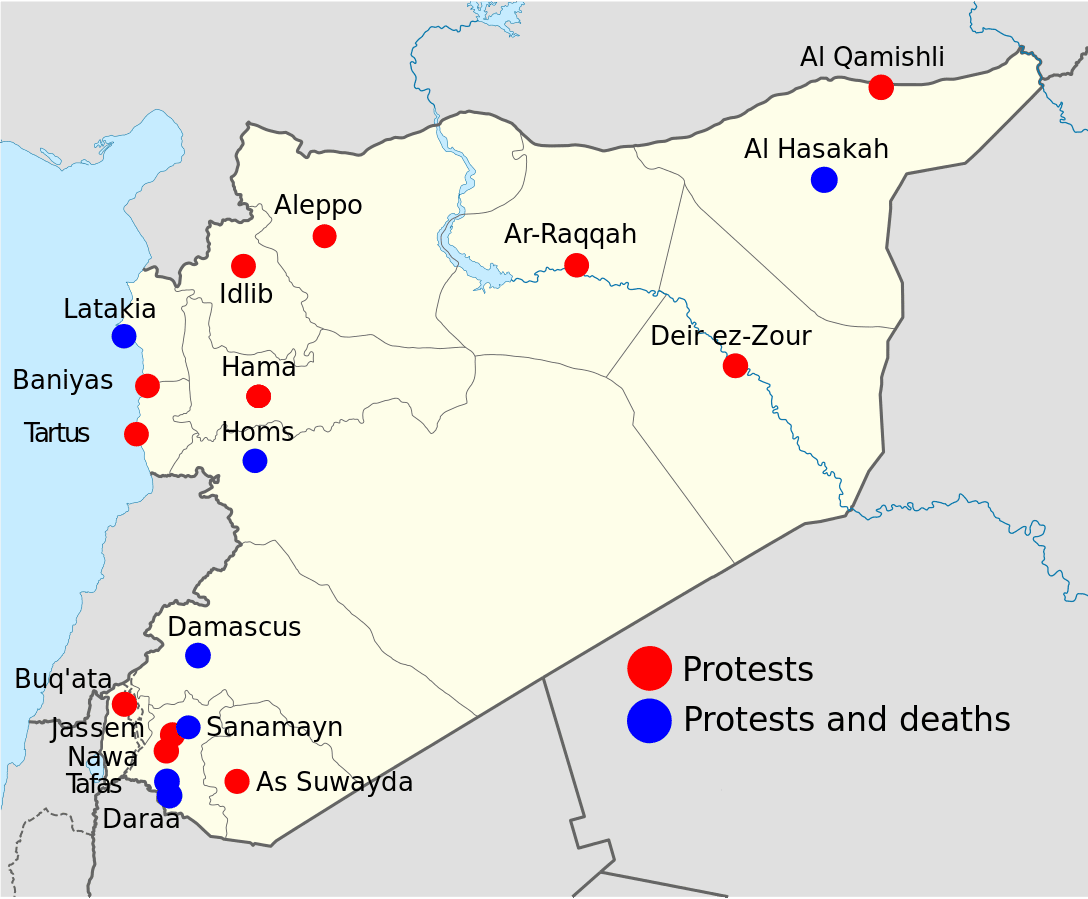
Militants from the Islamic State of Iraq (ISI) were dispatched to Syria from neighboring Iraq starting in late 2010. Starting in March 2011, they began attacking Syrian security forces, police, and soldiers under the cover of anti-government protests. Militants from Fatah al-Islam were dispatched from Lebanon to Syria for the same purpose as early as April 2011. Militants from the Libyan Islamic Fighting Group (LIFG) began fighting in Syria in October 2011, after successfully toppling the Libyan government under the cover of NATO airpower. Additionally, there is evidence that the first protestors killed in Deraa on March 18, 2011 were killed by Salafist militants as part of a false flag attack, rather than by Syrian government security forces, as is commonly assumed.
In this essay, I review U.S. and UK efforts to partner with al-Qaeda affiliated groups to topple the Syrian government, and the role played by such militants in the first weeks and months of the 2011 Syrian conflict.
Regime Change Coming Your Way
U.S. planners have long sought to topple the government of Syrian president Bashar al-Assad. U.S. General Wesley Clark famously revealed that the 2003 U.S. invasion of Iraq was part of a larger plan developed by U.S. Secretary of Defense Donald Rumsfeld’s office “to take out seven countries in five years,” including Iran, Libya, and Syria.
In December 2005, the Wall Street Journalreported that within U.S. government circles, the “Pressure for regime change in Damascus is rising,” and that according to prominent neoconservative and architect of the U.S. invasion of Iraq, Richard Perle, “Assad has never been weaker, and we should take advantage of that.” Perle, a member of the U.S. Defense Policy Board, made his comments in the context of a U.S.-sponsored effort to blame the Syrian government for the assassination of Lebanese Prime Minister Rafiq Hariri.
In March 2006, former Syrian vice president Abd al-Halim Khaddam partnered with Syrian Muslim Brotherhood leader Ali al-Bayanouni to form a new opposition group in exile, the National Salvation Front (NSF). In October 2006, several NSF members met with Michael Doran of the U.S. National Security Council, who was a close associate of prominent neoconservative and Bush administration official Elliott Abrams to discuss the possibility of regime change in Syria. Representatives of the NSF were also given a meeting with Saudi King Abdullah bin Abdul Aziz the same month.
The Wall Street Journalreported that Elliott Abrams warmed to the idea of partnering with the Brotherhood after Iranian-backed Lebanese Hezbollah fought Israel to a standstill in the summer of 2006, which caused Washington to become “increasingly concerned about Syria’s military alliance with Iran, and the threat it posed to U.S. interests in the region.”
Hezbollah’s surprisingly strong performance during the 2006 war, coupled with the rise of Iranian influence in U.S.-occupied Iraq, prompted what journalist Seymour Hersh described as a “redirection” in U.S. policy in the Middle East. This massive shift in policy was led by then Vice President Dick Cheney, Abrams, and Saudi national security advisor and former ambassador to the U.S., Prince Bandar bin Sultan.
The redirection involved working with Washington’s Sunni regional client states “to counteract Shiite ascendance in the region.” As part of this effort, the “Saudi government, with Washington’s approval, would provide funds and logistical aid to weaken the government of President Bashir [sic] Assad, of Syria.” Hersh notes further, “There is evidence that the Administration’s redirection strategy has already benefitted the Brotherhood,” and that according to a former high-ranking CIA officer, Abd al-Halim Khaddam and the NSF were receiving both financial and diplomatic support from the Americans and Saudis. Hersh notes further that Vice President Dick Cheney had been advised by Lebanese politician, Walid Jumblatt, that “if the United States does try to move against Syria, members of the Syrian Muslim Brotherhood would be ‘the ones to talk to.’”
Salafis Throwing Bombs
Hersh details further that the U.S. effort to topple the Syrian government would involve not only the Muslim Brotherhood, but also Salafist militant groups controlled by Saudi intelligence. According to a U.S. government consultant, “Bandar and other Saudis have assured the White House that ‘they will keep a very close eye on the religious fundamentalists. Their message to us was ‘We’ve created this movement, and we can control it.’ It’s not that we don’t want the Salafis to throw bombs; it’s who they throw them at—Hezbollah, Moqtada al-Sadr, Iran, and at the Syrians, if they continue to work with Hezbollah and Iran.”
In December 2006, the Charge d’Affaires of the U.S. embassy in Damascus, William Roebuck, had already acknowledged the possibility of exploiting Salafist militants to promote regime change in Syria. Roebuck wrote that, “We believe Bashar’s weaknesses are in how he chooses to react to looming issues, both perceived and real,” including “the potential threat to the regime from the increasing presence of transiting Islamist extremists. This cable summarizes our assessment of these vulnerabilities and suggests that there may be actions, statements, and signals that the USG can send that will improve the likelihood of such opportunities arising. These proposals will need to be fleshed out and converted into real actions and we need to be ready to move quickly to take advantage of such opportunities. [emphasis mine].”
We Have a Liberal Attitude
One reservoir of al-Qaeda-affiliated militants to be leveraged by U.S. planners was in the northern Lebanese city of Tripoli. Seymour Hersh notes that according to a 2005 International Crisis Group (ICG) report, pro-Saudi Lebanese politician, Saad Hariri (son of the assassinated Prime Minister Rafiq Hariri) had helped release four Salafist militants from prison who had previously trained in al-Qaeda camps in Afghanistan and were arrested in Lebanon while trying to establish an Islamic state in the north of the country. Hariri also used his influence in parliament to obtain amnesty for another 29 Salafist militants, including seven suspected of bombing foreign embassies in Beirut a year prior. Hersh notes as well that according to a senior official in the Lebanese government, “We have a liberal attitude that allows Al Qaeda types to have a presence here.”
Charles Harb of the American University of Beirut similarly observed in May 2007 that Saad Hariri was giving “political cover” to “radical Sunni movements.” Harb explains that to attract Sunni voters in the 2005 national parliamentary elections, Hariri had “pardoned jailed Sunni militants involved in violence in December 2000.” Harb also warned that “Courting radical Sunni sentiment is a dangerous game. Fear of Shia influence in Arab affairs has prompted many Sunni leaders to warn of a ‘Shia crescent’ stretching from Iran, through Iraq, to south Lebanon.” Harb also noted the involvement of Saudi intelligence in cultivating these groups. He explained that “Several reports have highlighted efforts by Saudi officials to strengthen Sunni groups, including radical ones, to face the Shia renaissance across the region. But building up radical Sunni groups to face the Shia challenge can easily backfire.”
Harb was writing in response to the eruption of violence in the Nahr al-Bared Palestinian refugee camp on May 19, 2007. The camp, located in northern Lebanon, had been occupied by militants from the al-Qaeda-affiliated group, Fatah al-Islam. Fighting had erupted between the militants and members of the Lebanese security forces, allegedly after an attempted bank robbery. The fighting left the camp almost entirely flattened and its Palestinian refugee population homeless.
Two months before the outbreak of violence in Nahr al-Bared, the New York Times had interviewed Fatah al-Islam’s leader, Shakir al-Abssi, a former associate of notorious al-Qaeda in Iraq leader Abu Musab al-Zarqawi. The NYT reports that, “Despite being on terrorism watch lists around the world, he has set himself up in a Palestinian refugee camp where, because of Lebanese politics, he is largely shielded from the government.” Major General Achraf Rifi, general director of Lebanon’s Internal Security Forces told the NYT that to enter the camp and detain al-Abssi, “We would need an agreement from other Arab countries.” In other words, al-Abssi was being shielded by Saad Hariri and Saudi intelligence.
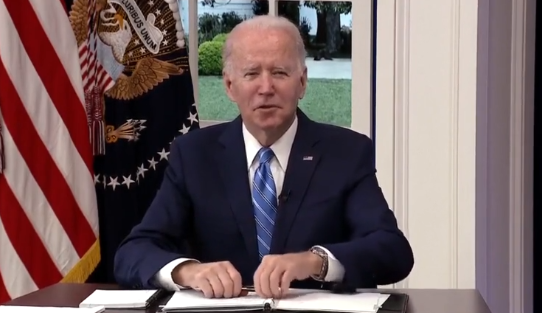
On October 22, 2020, then-candidate Joe Biden vowed to “shut down the virus, not the country.“14 months later, now-President Biden just admitted that there’s no ‘federal solution’ to the pandemic, and that it’s up to individual states to do what he promised.
“Look, there is no federal solution,” he said during a call with state governors. “This gets solved at state level … and that ultimately gets down to where the rubber meets the road, and that’s where the patient is in need of help — or preventing the need for help.””My message to the governors is simple: if you need something, say something. We’re going to have your back in any way we can,” Biden added.Watch:
BIDEN, TODAY: “There is no federal solution” to COVID. BIDEN, 2020: “I’m going to shut down the virus.” pic.twitter.com/3d1RaHRcyX
NOW – Biden departs to Delaware beach house after telling governors there is “no federal solution” on COVID and it should be “solved at the state level.”pic.twitter.com/Ux9RtPmb8m
Biden’s admission comes days after a Vanity Fair reportwhich revealed that the Biden admin rejected an October proposal to provide rapid at-home tests to Americans before the holidays, allowing them to screen themselves at will and thereby help reduce transmission.
The plan, in effect, was a blueprint for how to avoid what is happening at this very moment—endless lines of desperate Americans clamoring for tests in order to safeguard holiday gatherings, just as COVID-19 is exploding again. Yesterday, President Biden told David Muir of ABC News, “I wish I had thought about ordering” 500 million at-home tests “two months ago.” But the proposal shared at the meeting in October, disclosed here for the first time, included a “Bold Plan for Impact” and a provision for “Every American Household to Receive Free Rapid Tests for the Holidays/New Year.” -VF
In short, Biden isn’t even trying to ‘shut down’ the virus. Adding insult to injury, White House Press Secretary scoffed at the idea of nationwide home teststhree weeks ago.”Should we just send one to every American?”
Jen Psaki somewhat mockingly asks reporter at the White House Daily Press Briefing if the US should be sending out rapid #COVID19 tests to every household. In the UK you can order 1 pack (containing 7 tests) everyday. https://t.co/ErnSsiLxxlpic.twitter.com/L7ruKWdy5n
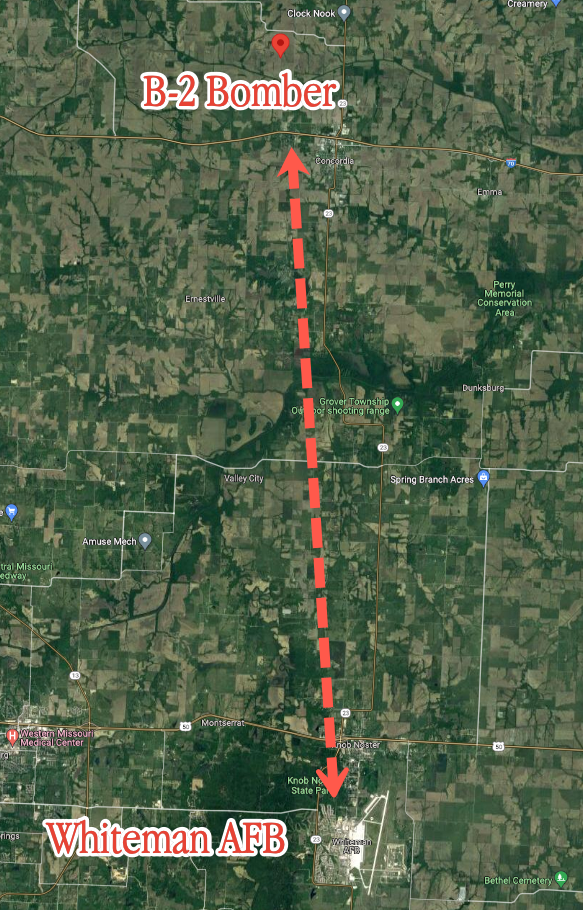
A Redditor has revealed a Google maps image that shows a Northrop Grumman B-2 Spirit stealth bomber mid-flight over farm fields in the US Midwest. The image was recently published on Reddit and had more than 111 thousand upvotes.
Thousands of Redditors commented on the image. Some said the $2 billion price tag per bomber is outrages considering it can’t hide from Google Earth. The three-decade-old bomber maintains an impressive lethal record. We were able to pinpoint where the bomber was caught on satellite footage near Whiteman Air Force Base (current home of the B-2 fleet). Here’s what some Redditors had to say about the B-2 in action.
“More like a photo bomber,” said user RandyGareth.ZebrasFuckedMyWife said, “Not so stealthy now, are ya?” “That stealth tech is overrated. I can totally see it,” another user said.
Netizens and air observers should be on the lookout for the B-21 Raider, a new long-range stealth bomber that is expected to debut in early 2022 and replace the B-2. If you want to review the B-2 on Google Earth, enter coordinates 39 01 18.5N 93 35 40.5W.
Exclusive! Senator Rand Paul joins the Liberty Report to discuss the massive errors – driven by arrogance – committed by White House coronavirus advisor Anthony Fauci. Dr. Fauci’s insistence on ignoring natural immunity and his refusal to consider therapeutics have cost thousands and thousands of lives! And here’s a bombshell you’ll only here in today’s Liberty Report: Sen. Paul’s shocking explanation of why the coming mid-term elections will be Fauci’s worst nightmare!
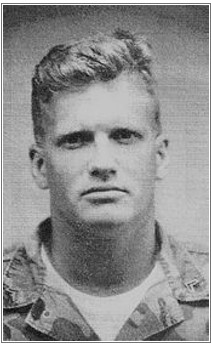
I despise COVID fist bumps as a substitute for handshakes and hugs. I always try to turn them into something normal. But, I actually saw a good one on Christmas Eve. For well over a year, network TV has been doing the politically correct thing. Talk show hosts sit far apart from guests or communicate via in-studio TV monitors. There is nothing approaching physical contact. Drew Carey on the Price is Right has been forced to comply with the nonsense even though his personal beliefs don’t line up with it. When he burst into prominence as a young comedian on the Johnny Carson Show, it was clear that the tough buzz-cut former Marine sergeant on stage didn’t possess the trendy personal politics that are expected of the Hollywood elite. He is a self-proclaimed libertarian and was a proud Ron Paul supporter and donor during Doctor Paul’s presidential campaign. He opposed Bush’s Iraq War and understands economics and price signals saying, “I believe the answers to all the problems we face as a society won’t come from Washington. They will come from us. So the way we decide to live our lives and our decisions about what we buy or don’t buy are much more important than who we vote for.”
I occasionally watch the Price is Right and I have been saddened that Drew Carey was forced for months to say “Wear a mask” in his closing statement in addition to the Bob Barker legacy, “Get your pets spayed or neutered.” A while back, Carey ditched “Wear a mask” and went back to just the traditional Barker “spayed or neutered” closing. It felt like some progress, but there was still no touching, hugging, or hand-shaking allowed between the stage crew (Drew and the models) and the contestants. The studio was rearranged to accommodate a much smaller crowd seated in little family / friend pods spaced apart from each other. Drew was required to dutifully point out a mark on stage where the squealing contestants were required to stop and plant their feet away from Drew. Previously, the Price is Right was known for massive physical displays of affection when contestants rushed on stage with contestants hugging Drew, lifting Drew off his feet, carrying him around, jumping on his back, kissing him, and of course shaking hands. Models would join in on the hugging and physical displays of affection especially when contestants won big prizes. But, that was the old days.
But, then something amazing happened on the Christmas Eve episode. A contestant was able to make it to the top tier of a very hard pricing game called “Pay the Rent,” thereby winning a whopping $100,000. Confetti fell from the ceiling and the audience, the crew, and the contestant went wild. During the whole COVID era, Drew has kept himself in check and has avoided all contact with contestants. But, this was the right moment. Drew and the contestant approached each other and did a glorious fist bump, one of the few I have approved of. I know that Drew has been looking for opportunities to shed the nonsense that has been imposed on him and this was a good start even though he will likely endure scoldings from network executives. Drew has enough prominence to be able to fight the monsters somewhat with a dose of reality. I was surprised that this prohibited touching wasn’t edited out since it was at the end of the segment. It is too bad that we have to be happy with small things like this. The ratchet effect of tyranny conditions us to accept a little bit of reclaimed freedom as significant. Oh well, it wasn’t much, but I thank you Drew Carey for being one of the few principled people in mainstream media that has dared to have a brain and speak some truth during your career and take some actions to advance individuals over Leviathan even at personal risk to your own career. Merry Christmas and a Happy Glorious New Year to you Drew and to all LRC readers!
David Hathaway [send him mail] is a rancher and homeschooling father of nine children. He is currently a candidate for Sheriff in Santa Cruz County, Arizona. He maintains the website charityendureth.com and HathawayForSheriff.com.
Whites can’t learn from qualified blacks on campus? Preposterous. Blacks can’t learn from competent whites at university? Equally silly. I, a white man, have learned more from Thomas Sowell and Walter E. Williams on the subject of racial and sexual discrimination than from any other two scholars. I am pleased and proud that several of my black students are making their way into academic professions. I hold a brown belt in karate. My teachers were the students or Asians. My best instructor is Iranian. I’m Jewish.
Diversity, Equity, Inclusion (DEI) amounts to the complaint that there are too many white males on the faculty and the demand that this be radically changed, forthwith. It would appear, at least to the grievants, that females, “people of color” (“colored people” is no longer allowed to be said at university, despite the continued existence of the National Association of Colored People), and members of the LGBT community cannot really learn from straight white male professors. Students with these characteristics, it turns out, need role models in the professoriate from their own demographics if they are to prosper in higher education. Numerous academic job notifications now routinely require adherence to DEI sensibilities.
I don’t want to criticize the students responsible for these complaints. They are young kids, and, presumably, don’t yet know any better. If anyone is to blame for this new campus initiative, it is their teachers (many of whom are woke white males).
The main charge in one particularcase is that the student body is less than 40% white male, while professors of the same ilk constitute about 75% of the faculty. Out of a board of trustees of roughly three dozen, almost two dozen are white men. The conclusion would appear to be that there should be something akin to proportional representation. The present situation is rejected as “shocking,” “bizarre.” As a result, students, all of them, are subjected to a “white centric” education where “whiteness” predominates.
There is more wrong here than you can shake a stick at. First of all, there is no such thing as white math, or black logic, or Asian economics, or male physics, or female chemistry, or homosexual astronomy, or heterosexual philosophy. This may or may not apply to grievance studies (black studies, gay studies, feminist studies), but if it doesn’t, then these are not worthy subjects to be studied at an institution of advanced learning. There are not many truths each for a separate category of human beings. There is only one. Get used to it.
Second, proportionality. Many people expect that absent racial, sexual, and other types of discrimination, all groups would be equally represented in all aspects of the labor market. But as the insightful work of ThomasSowell has demonstrated, this is simply not the case. The National Basketball Association comprises about 75% blacks, who make up only some 13% of the overall population. Players in the National Football League are roughly 70% black. Is this due to the fact that the NFL and the NBA discriminate against whites and Asians? Of course not. These sports leagues will sign up anyone, even people with chartreuse-colored skin and covered with pink and blue polka dots, provided, only, that they are world-class athletes with the requisite skills. Should we, in any case, kick out of the NFL and the NBA as many splendid black athletes as needed so as to attain proportional racial representation? That would solve one “problem,” but then many college teams would likely be able to beat these professionals unless, of course, we employed the same procedure for them. And so on down the line.




 by Tyler Durden