
Do you want your town to run by faceless bureaucrats in Switzerland?
https://rumble.com/v26fibc-why-world-government-has-always-been-a-pipe-dream.html
Enemy of the State-Read the Book-Know the Man
This is not a Safe Space but Baby, I don't care.

"I am not a number, I am a Free Man" - No. 6
 Information Liberation Alex Jones’ Prison Planet Gary North Specific Answers Antiwar The Daily Bell Tenth Amendment Center Economics Policy Journal The American Thinker The New American Lew Rockwell
Posted by M. C. on January 22, 2023
Do you want your town to run by faceless bureaucrats in Switzerland?
https://rumble.com/v26fibc-why-world-government-has-always-been-a-pipe-dream.html
Posted in Uncategorized | Leave a Comment »
Posted by M. C. on January 22, 2023


There is that final moment of holding hands. It is sudden, shocking, yet inexorable. And your heart thenceforth will continue to daily break into a million pieces…for the rest of your life.
Launched 3 months ago
There is a secret world they don’t want you to know about. This is it.
Be seeing you
Posted in Uncategorized | Tagged: holding hands, Russia ballet | Leave a Comment »
Posted by M. C. on January 21, 2023
She’s one more neocommunist failure who ran her country aground.
“Stay local,” she said, a concerned Karen look on her face. “Do not congregate. Don’t talk to your neighbors. Please keep to your bubbles.”

by SCOTT MCKAY
https://spectator.org/bye-jacinda/
New Zealand Prime Minister Jacinda Ardern announces her resignation (Bloomberg Markets and Finance/YouTube)

On Thursday, Dan Flynn reported the news in his daily must-read Spectator A.M. morning newsletter…
Jacinda Ardern, the control-freak prime minister of New Zealand who transformed one of the freest countries on the planet to an Orwellian one during the COVID crisis, announced on Wednesday her resignation effective sometime in the next few weeks. Her absence from the World Economic Forum to go around now makes sense.
Ardern has been a darling of the global socialist set for five-plus years since getting herself elected PM in New Zealand, which was predictable. She was a young, pretty, emotive leftist dripping with unrealistic idealism, and they latched onto her as though she was a white female Barack Obama from Down Under.
Which is why she graced the covers of Vogue and Time without ever really doing anything other than spouting progressive pieties and emoting charismatically for the cameras.
An insignificant, if breathtakingly beautiful nation like New Zealand was the perfect venue for the kind of heroine worship the international press loaded onto her; after all, New Zealand more or less runs itself, so it would be impossible for her to do damage sufficient to break the spell, right?
Wrong.
Ardern quit because the voters in New Zealand were increasingly enthusiastic about the prospect of firing her and her party is on the electoral ropes. And why?
If you think people here in America ran out of patience with the rough-and-tumble of Donald Trump’s time in office, it was nothing compared to the five years Ardern has run New Zealand.
There was a volcanic eruption on White Island, in the Bay of Plenty off the coast of the country’s north island in December of 2019, which killed 22 tourists and guides caught in the volcano’s crater when it blasted out a cloud of steam. Ardern’s government filed charges against 10 organizations and three people in the wake of those deaths, wiping out a popular tourism engine for the town of Whakatane probably forever. There’s a Netflix documentary about the eruption that is fairly hair-raising, but it obscures something that is a basic truth — anyone with a brain knows that walking into the crater of an active volcano is an incredibly dangerous thing to do and that’s what makes it so thrilling.
It’s a perfect case of “assumption of risk,” which is a long-standing tenet within the common law, but the emotive leftist Kiwi PM wasn’t having any of that. It’s more than three years later, and setting foot on the island still isn’t permitted.
Perhaps that reaction was defensible. But then there was Ardern’s reaction to the March 2019 atrocities in Christchurch, when a xenophobic loon shot up a couple of mosques in that town, killing 51 people and injuring another 40. Ardern showed up to comfort the victims, quickly donning a headscarf — not that doing so was over the top or anything — and called it a “spontaneous” gesture of respect for Islam.
And then immediately after, she pushed through an “assault weapons” ban, and then launched a campaign against online “hate speech.”
You might be starting to get the picture here. If it’s beginning to sound like Gretchen Whitmer on steroids, we’re just getting rolling.
I forgot to mention when Ardern really began tugging at the heartstrings of the global socialist media. That came in 2018, when she showed off her then-3-month-old baby at the United Nations. It turned out that she wasn’t married to the father of said child; something which was passed off as a perfectly normal circumstance for the leader of a country to be in. Ardern said that a marriage to her “partner” Clarke Gayford, a TV news anchor, was in the offing, but kept putting it off.
In fact, she closed her remarks at Wednesday’s resignation by telling Gayford, “Let’s finally get married!” How touching.
In fact, Ardern said she had to put off the wedding because of COVID. Everybody in New Zealand had to put their lives on hold because of COVID.
Let me rephrase that: Everybody in New Zealand had to put their lives on hold because of Jacinda Ardern’s insane overreaction to COVID.
She shut down the country’s borders in early 2020 when New Zealand had a grand total of 25 deaths among a population of five million. Those borders didn’t reopen until August of last year. She also instituted sweeping mask and vaccine mandates, locking the country down to such an onerous extent that the global media held her out as a model for international virus policy.
“Stay local,” she said, a concerned Karen look on her face. “Do not congregate. Don’t talk to your neighbors. Please keep to your bubbles.”
Be seeing you
Posted in Uncategorized | Tagged: global socialist, Jacinda Ardern, New Zealand | Leave a Comment »
Posted by M. C. on January 21, 2023
https://libertarianinstitute.org/articles/tgif-thinking-save-lives/
The Cambridge economist Joan Robinson (1903-1983) wisely said, “The purpose of studying economics is not to acquire a set of readymade answers to economic questions, but to learn how to avoid being deceived by economists.”
Excellent point, though I would both broaden and narrow her category of suspects. I would include most politicians, bureaucrats, pundits, and social-science and humanities professors in the suspect group. And I would exclude the economists — spoiler alert: primarily those of the Austrian school, although others stand out — who paint a much more realistic picture of the world than the others do.
For the record, Robinson was sympathetic to John Maynard Keynes and, later in life, communist China’s Mao Zedong, and North Korea’s Kim Il Sung. Obviously, her study of economics did not teach her how to avoid being deceived by all who represented themselves as economists. (I heard once that Che Guevera became head of Cuba’s national bank in 1959 because when Fidel Castro asked his cadre, “Who here is a good economist?” Guevara, thinking he heard, “Who here is a good communist?” raised his hand. But that’s apparently apocryphal.)
At any rate, mankind would have been spared a good deal of misery had people learned at an early age to engage in the economic way of thinking. If I were to sum it up in a short phrase, I would say: in a world in which the law of identity, causality, and scarcity rule, you can’t do just one thing. Human action has consequences. This apparently is also the first law of ecology, but oddly, environmentalists (as opposed to humanists) seem ignorant of it.
The point is that all human action has rippling consequences across society and across time. The economist who called his textbook The Economic Way of Thinking, the late Paul Heyne, wrote, “All social phenomena emerge from the choices of individuals in response to expected benefits and costs to themselves.” (Happily, Peter J. Boettke and David L. Prychitko keep updating the book. It’s in its 10th edition.)
Heyne’s maxim applies to the choices of politicians and bureaucrats also. So before proposing or endorsing a government policy, one ought to wonder about the social phenomena that are likely to emerge from it. Economics is an indispensable tool in this respect.
Henry Hazlitt’s classic, Economics in One Less, is a great way to get started. Hazlitt wrote, “The art of economics consists in looking not merely at the immediate but at the longer effects of any act or policy; it consists in tracing the consequences of that policy not merely for one group but for all groups.” Hazlitt’s book elaborated an important message of his intellectual ancestor, Frédéric Bastiat, the 19th-century French laissez-faire liberal, in the classic essay “That Which Is Seen and That Which Is Unseen.”
Individuals who adopt this way of thinking are better equipped to judge the promises of politicians, etc. who support taxes, minimum-wage laws, rent control, general wage-and-price controls, and the rest of the program of political authority over contractual freedom and other peaceful conduct. Even well-intended regulations will have unintended bad secondary consequences. Good intentions are never enough.
Any good introduction to the economic way of thinking will introduce readers to concepts like opportunity cost, the unseen, sunk costs, the margin, and tradeoffs. Most people seem to intuit some of these in their own lives. But they fail to do so when it comes to society as a whole. They are encouraged by politicians and pundits to think that common sense in private life does not apply to the big picture.
Opportunity cost refers to the fact when you choose a course of action, you necessarily foreclose another course of action. The true cost, then, is the (subjectively judged) next-best choice forgone. If you buy something for two dollars, your cost isn’t really two dollars. It’s what you regard as the next best use of those two dollars — the future not chosen. You might decide afterward that you made a mistake: “I could’ve had a V-8!” Good economists do not regard people as omniscient robots.
Opportunity cost is another way of looking at trade-offs. If you do or choose A you can’t do or choose B. Thus you trade B for A. Trade-offs are inescapable. Thomas Sowell, for whom the word genius is woefully inadequate, dramatically drew attention to this feature of life when he wrote, “There are no solutions. There are only trade-offs.” Today’s problems, he adds, may well be the result of yesterday’s solutions. We’d do well to bear this in mind, especially in deciding what the government should be doing (if anything).
Be seeing you
Posted in Uncategorized | Tagged: Economic Way of Thinking, Economics In One Lesson, Joan Robinson, John Maynard Keynes, Opportunity Cost | Leave a Comment »
Posted by M. C. on January 21, 2023
How long have we heard Republicans calling for a “balanced-budget amendment”? Decades! But it’s all been idle, hypocritical chatter.
How do we know that? Because Republicans now have the opportunity to require a balanced budget. Yes, right now! They don’t need a constitutional amendment to achieve a balanced budget. All they have to do is insist on enforcement of the debt ceiling. No more new debt.
https://www.fff.org/2023/01/20/the-republican-debt-circus-charade/
It seems like just yesterday that the debt-ceiling circus returned to Washington. Actually, it was October 2021, a little over two years ago. That circus was just like all the ones that preceded it. The mainstream press and other acolytes of the welfare-warfare state issued all sorts of dire predictions if the debt ceiling wasn’t raised. As soon as the debt-ceiling was raised, no one advocated cutting government spending to prepare for the next time that the debt ceiling was reached. Everyone knew that as soon as the new debt ceiling was reached, they could do the same thing again.
In other words, for the past two years, it has been business as usual — federal government expenditures exceeding tax revenues by around $1 trillion per year. And everyone knew that within a couple of years, the debt ceiling would be reached again.
Thus, just like clockwork, it’s déjà vu all over again. In fact, the mainstream press doesn’t even have to write new editorials or op-eds. All they have to do is trot out the ones from 2021 (and before) and use them. No one would be the wiser. Why write new ones when the old ones will work just as well?
But perhaps the most noteworthy thing to notice about the debt-ceiling circus is Republicans. Whenever there is a Republican president, Republicans stay silent about or, even worse, supportive of out-of-control spending and debt. President Trump, for example, added around $8 trillion to the national debt. You could call him the King of Debt. The Republican members of Congress were as quiet as church mice or, even worse, wildly supportive of their big-spender and big-debt leader.
Now that the debt ceiling has been reached under Democrat president Joe Biden, the Republicans have suddenly discovered their inner secret self of fiscal responsibility. They are demanding that Biden agree to undefined reductions in federal spending as a condition for agreeing to lift the debt ceiling. For his part, Biden says he’s not budging. He’s determined to continue the out-of-control federal spending and debt spree, no matter what.
Let me tell you how this ends. The Republicans will cave. Republicans always cave. This time will be no different. Oh, sure, they might finally get Biden and the Democrats to agree to some minor reduction in spending — no doubt spread over the next 10 years, but for all practical purposes it will do nothing to prevent the federal government from continuing to hurl America into national bankruptcy.
Be seeing you
Posted in Uncategorized | Tagged: balanced-budget amendment, Charade, Debt-Circus, Republican | Leave a Comment »
Posted by M. C. on January 21, 2023
Ben & Jerry’s co-founder: Joe Biden stood up for press freedom as a candidate — but backtracked in the White House
By BEN COHEN
Barack Obama refused to indict Assange because of the “New York Times problem”: If Obama were to indict Assange for publishing truthful information, he’d have to indict the New York Times as well. But Biden has now affirmed Trump’s contention that publishing the truth is a crime.
Has woke Ben woken up?
https://www.salon.com/2023/01/18/the-messenger-joe-bidens-disturbing-hypocrisy-on-julian-assange/
It is time for President Biden to live up to his rhetoric on press freedom.
As a candidate in 2020, Biden released a powerful statement on the importance of press freedom, writing:
Reporters Without Borders tells us that at least 360 people worldwide are currently imprisoned for their work in journalism. We all stand in solidarity with these journalists for, as Thomas Jefferson wrote in 1786, “Our liberty depends on the freedom of the press, and that cannot be limited without being lost.”
Biden left out the fact that one of those imprisoned people is WikiLeaks publisher Julian Assange, and that he is languishing in solitary confinement in a maximum-security prison in London because the U.S. government wants to make an example of him.
Assange was indicted by the Trump administration in an aggressive, precedent-shattering move that was widely condemned by journalists and human rights groups. President Biden and Attorney General Merrick Garland have had almost two years to do the right thing and drop this dangerous prosecution.
They have failed to deliver.
Instead, the Biden administration continues to lecture the world about press freedom and disinformation. Biden and his allies rightly chastise authoritarian regimes for censoring the press, cracking down on dissent and even criminalizing publishing the truth. Reporters Without Borders condemns violations of press freedom in places like Iran, China and Myanmar. But they also note that press freedom violations are not unique to such regimes. They condemn the persecution of Nobel Peace Prize winner Maria Ressa in the Philippines, and they lead a coalition of 16 journalism advocacy groups calling on the British government to free Assange.
These reports underscore the importance of a free and independent press that can expose wrongdoing, inform the public of uncomfortable realities and push back on government propaganda. In other words, a free press protects our access to the truth when the government deceives us.
Be seeing you
Posted in Uncategorized | Tagged: Hypocrisy, Joe Biden, Julian Assange | Leave a Comment »
Posted by M. C. on January 20, 2023
Any good introduction to the economic way of thinking will introduce readers to concepts like opportunity cost, the unseen, sunk costs, the margin, and tradeoffs. Most people seem to intuit some of these in their own lives. But they fail to do so when it comes to society as a whole. They are encouraged by politicians and pundits to think that common sense in private life does not apply to the big picture.
https://libertarianinstitute.org/articles/tgif-thinking-save-lives/
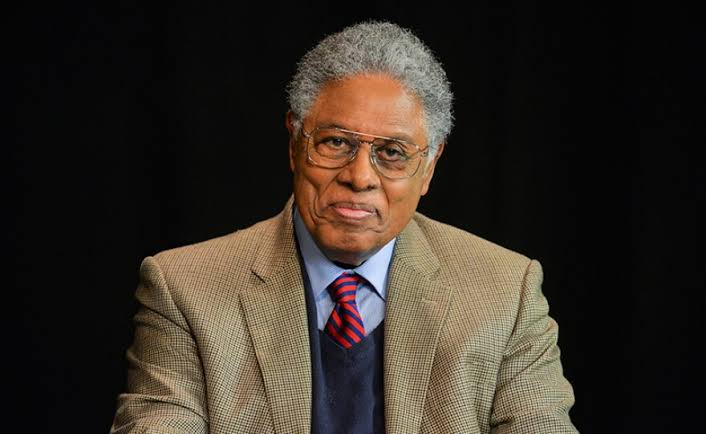
The Cambridge economist Joan Robinson (1903-1983) wisely said, “The purpose of studying economics is not to acquire a set of readymade answers to economic questions, but to learn how to avoid being deceived by economists.”
Excellent point, though I would both broaden and narrow her category of suspects. I would include most politicians, bureaucrats, pundits, and social-science and humanities professors in the suspect group. And I would exclude the economists — spoiler alert: primarily those of the Austrian school, although others stand out — who paint a much more realistic picture of the world than the others do.
For the record, Robinson was sympathetic to John Maynard Keynes and, later in life, communist China’s Mao Zedong, and North Korea’s Kim Il Sung. Obviously, her study of economics did not teach her how to avoid being deceived by all who represented themselves as economists. (I heard once that Che Guevera became head of Cuba’s national bank in 1959 because when Fidel Castro asked his cadre, “Who here is a good economist?” Guevara, thinking he heard, “Who here is a good communist?” raised his hand. But that’s apparently apocryphal.)
At any rate, mankind would have been spared a good deal of misery had people learned at an early age to engage in the economic way of thinking. If I were to sum it up in a short phrase, I would say: in a world in which the law of identity, causality, and scarcity rule, you can’t do just one thing. Human action has consequences. This apparently is also the first law of ecology, but oddly, environmentalists (as opposed to humanists) seem ignorant of it.
The point is that all human action has rippling consequences across society and across time. The economist who called his textbook The Economic Way of Thinking, the late Paul Heyne, wrote, “All social phenomena emerge from the choices of individuals in response to expected benefits and costs to themselves.” (Happily, Peter J. Boettke and David L. Prychitko keep updating the book. It’s in its 10th edition.)
Heyne’s maxim applies to the choices of politicians and bureaucrats also. So before proposing or endorsing a government policy, one ought to wonder about the social phenomena that are likely to emerge from it. Economics is an indispensable tool in this respect.
Henry Hazlitt’s classic, Economics in One Less, is a great way to get started. Hazlitt wrote, “The art of economics consists in looking not merely at the immediate but at the longer effects of any act or policy; it consists in tracing the consequences of that policy not merely for one group but for all groups.” Hazlitt’s book elaborated an important message of his intellectual ancestor, Frédéric Bastiat, the 19th-century French laissez-faire liberal, in the classic essay “That Which Is Seen and That Which Is Unseen.”
Individuals who adopt this way of thinking are better equipped to judge the promises of politicians, etc. who support taxes, minimum-wage laws, rent control, general wage-and-price controls, and the rest of the program of political authority over contractual freedom and other peaceful conduct. Even well-intended regulations will have unintended bad secondary consequences. Good intentions are never enough.
Be seeing you
Posted in Uncategorized | Tagged: economic collapse, Opportunity Cost, sunk costs, the margin, the unseen, tradeoffs | Leave a Comment »
Posted by M. C. on January 20, 2023
Be seeing you
Posted in Uncategorized | Tagged: Biden Administration, Flights, Masks | Leave a Comment »
Posted by M. C. on January 20, 2023
There is also asset forfeiture, which enables the DEA and state law-enforcement personnel to steal cash from people, especially blacks,
There are also the no-knock raids on people, especially blacks, in the middle of the night.
The universal solution to failed government programs-More $$$
https://www.fff.org/2023/01/18/will-a-crackdown-finally-win-the-war-on-drugs/
Among the federal government’s biggest failures is the war on drugs. Despite decades of warfare, the federal government is still a long way from declaring victory. In fact, it’s quite the opposite. Today, the federal government is still fiercely waging the drug war, trying as hard as it can to win.
Throughout the decades, drug warriors have lamented that federal officials just haven’t really been serious about winning the drug war. If only they would really “crack down,” the drug war would finally be won.
But what the drug warriors fail to acknowledge is that over the decades of drug warfare, federal officials have cracked down. For example, there have been the mandatory-minimum sentences, where they sent drug users, possessors, and distributors, especially blacks, to jail for inordinately long periods of time. The idea was that if enough people got locked away for much of their lives, people would be dissuaded from violating drug laws. Then the drug war would be over.
There is also asset forfeiture, which enables the DEA and state law-enforcement personnel to steal cash from people, especially blacks, who are traveling down the highway. They don’t even need to charge them with a drug offense. They just take their money from them. The idea is that if someone, especially a black, is carrying a large sum of money, it has to be from drug dealing. So, asset forfeiture was supposed to discourage people from selling drugs. Then, the drug war would be over.
Be seeing you
Posted in Uncategorized | Tagged: Asset Forfeiture, Crackdown, DEA, no-knock raids, War on Drugs | Leave a Comment »
Posted by M. C. on January 20, 2023
def: Help, Your money and Your children’s lives

In a new article titled “U.S. Warms to Helping Ukraine Target Crimea,” the New York Times reports that the Biden administration now believes Kyiv may need to launch an offensive on the territory that Moscow has considered a part of the Russian Federation since 2014, “even if such a move increases the risk of escalation.”
Citing unnamed US officials, The New York Times says “the Biden administration does not think that Ukraine can take Crimea militarily,” but that “Russia needs to believe that Crimea is at risk, in part to strengthen Ukraine’s position in any future negotiations.”
It’s hard to imagine a full-scale assault on geostrategically crucial territory long considered a part of the Russian homeland not causing a major escalation. And as Antiwar’s Dave DeCamp notes, smaller attacks on Crimea have indeed seen significant escalations from Moscow, contrary to claims laid out in the NYT article:
The New York Times report quoted Dara Massicot, a researcher from the RAND Corporation, who claimed that “Crimea has already been hit many times without a massive escalation from the Kremlin.” But Massicot’s claim is false as Russia began launching missile strikes on vital Ukrainian infrastructure in response to the October truck bombing of the Crimean Bridge.
Before the bridge bombing, Russia didn’t launch large-scale attacks on infrastructure in Ukraine, but now such bombardments have become routine, and millions of Ukrainians are struggling to power and heat their homes.
NYT: US Considering Helping Ukraine Strike Crimea The Biden administration is considering supporting such attacks even if it risks major escalation by Dave DeCamp @DecampDave #Crimea #Ukraine #Russia #NATO #UkraineRussianWar #RussiaUkraineWar #UkraineNews news.antiwar.com/2023/01/18/nyt…

It’s been widely accepted among foreign policy analysts that Crimea is among the reddest of all of Russia’s red lines in this standoff. Back in October, Responsible Statecraft’s Anatol Lieven discussed the difference in Russia’s perspective between Crimea and every other territory that Ukraine lays claim to in an assessment of the possibility of this conflict leading to nuclear war:
If Ukraine wins more victories and recovers the territories that Russia has occupied since February, Putin will in my view probably be forced to resign, but Russia would likely not use nuclear weapons. If however Ukraine goes on to try to reconquer Crimea, which the overwhelming majority of Russians regard as simply Russian territory, the chances of an escalation to nuclear war become extremely high.
Decamp writes that “The lessening concern about Putin resorting to nukes appears to be based only on the fact that he hasn’t used any up to this point.” But this is as logical as believing that it is safe and wise to jump even harder on the sleeping bear you’ve been jumping on just because the bear hasn’t woken up yet.
The assumption that because a disaster has not happened in the past it will not happen in the future is a type of fallacious reasoning known as normalcy bias.
Be seeing you
Posted in Uncategorized | Tagged: Crimea, Ukraine | Leave a Comment »

