Bloomberg opinion published a piece Wednesday calling for President Biden to increase gas prices, intentionally and forever, in order to hasten a transition to alternate forms of energy. The op-ed, written by columnist Eduardo Porter, called for a “$5-a-gallon floor on gasoline prices.”
Porter described the policy as “one bold move” that would put a “real dent” in “the emission of heat-trapping carbon dioxide that is causing such havoc with the weather,” although he admitted it was unlikely the president would make it.
“As any economist will tell him, the most efficient way to reduce fossil fuel consumption is to raise its price relative to alternatives, encouraging people and businesses to switch to cleaner sources and use less energy altogether,” Porter wrote.
No amount of financial wizardry, pathetic virtue signaling about Climate Change, malinvestment into inefficient and unsustainable ‘renewables,’ or military threats would ultimately change the outcome of this story.
The birth of a new Europe is one where the currency risk is now all on the importer of commodities, not the exporter of commodities. I’ve been saying for years that Europe always thought that its huge share of Russian energy exports would give it monopsony power over Russia. That, they thought, without Europe as a buyer, Russia would be at their mercy.
“Energy makes energy anyhow So spend yourself and get rich right now” — Marillion “Rich”
Tom Luongo
This day has been a long time coming. From the moment, more than a decade ago, when it was finally admitted that Europe was destined to be an energy importer, we were going to see the climax of the showdown between the West and Russia.
Europe as energy importer always meant that time was on Russia’s side. All it had to do was draw the conflict out long enough, survive long enough, to force Europe into submission. Russia has the energy Europe needs, no one else can supply it, therefore the final decision will be to accept this fate.
No amount of financial wizardry, pathetic virtue signaling about Climate Change, malinvestment into inefficient and unsustainable ‘renewables,’ or military threats would ultimately change the outcome of this story.
Output off the North Slope has fallen off and Groningen’s gas fields are drying up faster than Hillary’s va-jay-jay with each twist of John Durham’s investigation into RussiaGate.
Every gambit to secure energy from Ukraine (Donbass coal, gas fields in the Sea of Azov) and the Middle East (Syria, EastMed Pipeline, Iran) have also failed.
This is the basic problem the EU faces in its quest for political hegemony. How does it get around this basic fact without fomenting 1) a political crisis at home and 2) a war with Russia and the rest of the Global South who support her, it cannot win?
Force Majeure
Since the start of the war in Ukraine, a conflict created by EU complicity in NATO’s long-standing war on Russia, the EU has tried to play the victim of US/UK aggressiveness while happily going along with it for their own purposes.
That purpose is to advance their agenda of erecting a total surveillance state under the guise of a radical response to Climate Change. Their problem is they have no viable replacement for Russian energy, be it oil, coal or gas, that is capable of sustaining them in the interim.
All of their refusals were met with Russian intransigence. After gleefully going along with the theft of Russian foreign exchange reserves, as well as forcing the abandonment of Russian state assets like seizing Gazprom’s subsidiary in Germany, Europe still tried to say Russia had no legal right change the terms of payment for Russian energy.
It was hilarious to watch as EU sycophants tried to argue Russia had no legal right to claim to force majeure after the EU prohibited Gazprom from spending the euros they would be paid for its gas.
The Russian government responded with a demand for payment for all exports to legally-defined ‘unfriendly countries’ in either gold or Russian rubles. And the howls were heard all around the world.
Even though acts of war, including sanctions, are a typical clause in all Gazprom supply contracts:
While a few quotes do not define a person, they’re worth paying attention to. I get the impression that these people want to expand the Federal Reserve’s power and believe the threat of inflation pales in comparison to climate change and racial inequities. So, in a world where investing largely revolves around guessing how a group of seven people will choose to arbitrarily tinker with our country’s financial system, I’m betting these folks will stay looser for longer.
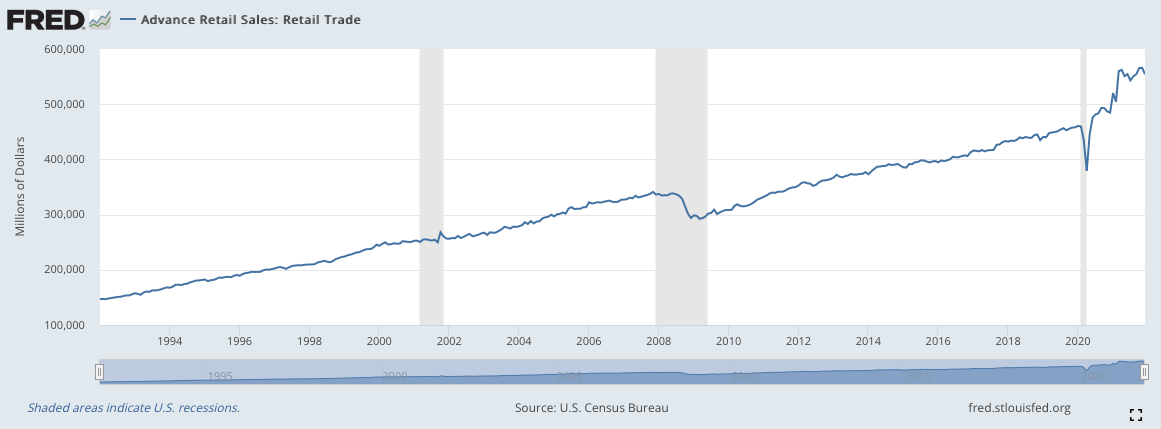
On Wednesday, the Federal Open Market Committee (FOMC) held true to its monetary-tightening timeline despite last week’s 10 percent drawdown in most major indices, effectively saying, “10 percent is not enough.” With retail sales numbers that will surely return to trend without more stimulus (see chart), a gridlocked Senate, and the prospect of higher interest rates surely to discount equity valuations, why aren’t more people selling?
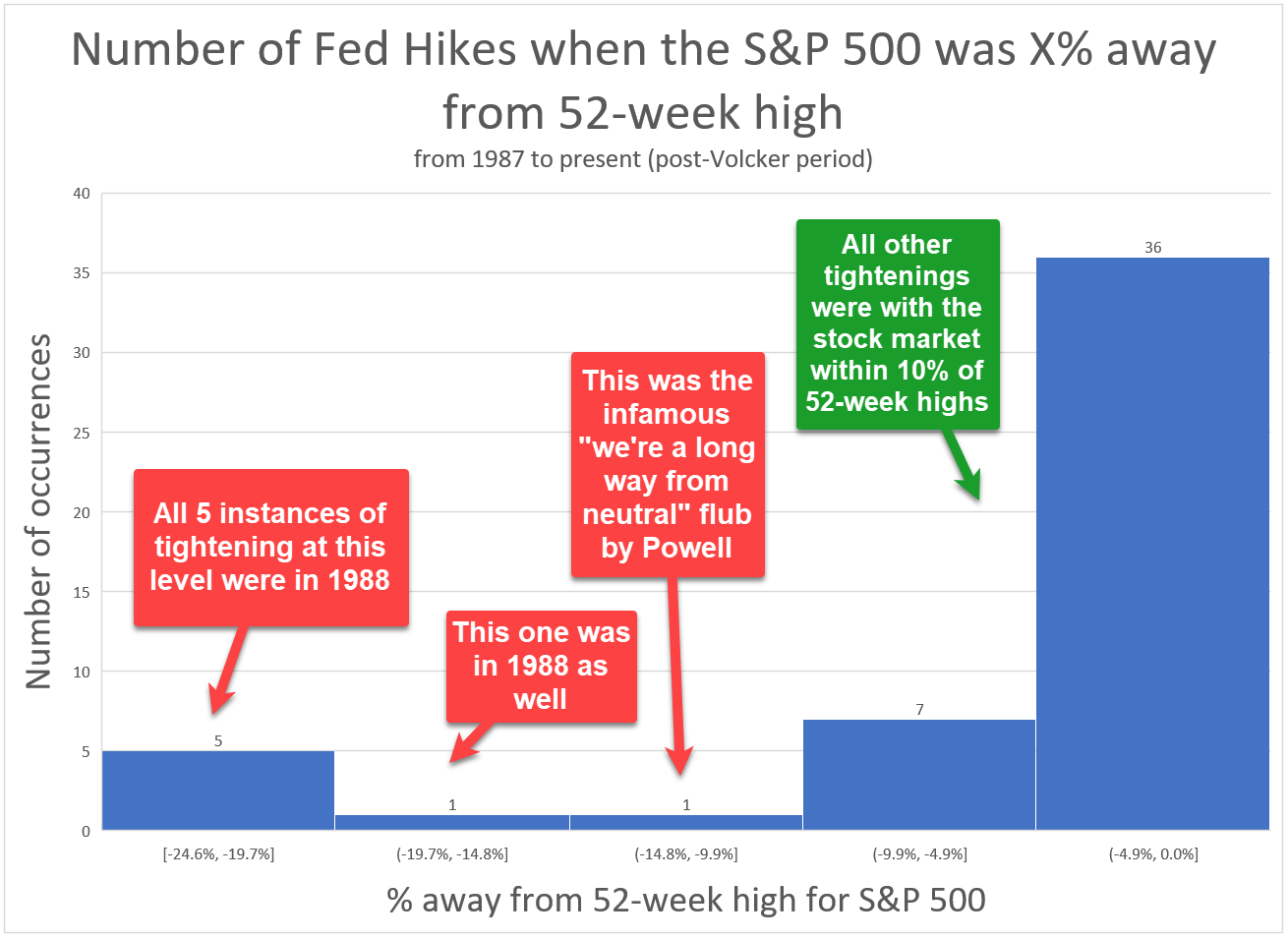
Don’t get me wrong, the Fed will cave eventually, but they just sent a clear message that they need to see more selling. Will they ever make it to “lift off”? This handy chart, courtesy of the Macro Tourist newsletter, can shed some light:
As you can see, there has been just one rate hike post-1988 during which the S&P 500 was more than 10 percent off its fifty-two-week high. This rate hike was enacted by Jerome Powell and set off the infamous Taper Tantrum episode. So, we have two months before he is faced with this decision again. Suppose the market remains relatively flat or even increases between now and March. Given yesterday’s tolerance and historical precedence, I’d bet on lift off proceeding, which would hurt valuations. Alternatively, if the market continues to decline before the March meeting, historical precedence and Powell’s taper trauma tell us there will likely not be a rate hike in March, which is where things will get interesting. Long story short, markets are going down before they go up. I ask again, Why isn’t everyone selling?
Since the end of 2019, the United Nations’ gauge of food prices has risen by about a third, with the causes of the surge — bad weather, higher shipping costs, worker shortages, an energy crunch, and increasing fertilizer costs — meaning high prices could persist this year.
A winter storm will impact 100 million people in the United States. That was last week. This week is more of the same but with incredible cold added. In an elevated valley of northeast West Virginia on Saturday morning, 125 miles west of Washington, the temperature at a weather station in Canaan Valley plunged to -31F (-35C) — the coldest reading on record in that part of the state.
Unprecedented blizzards battered parts of Pakistan recently, including the hilltop town of Murree, where deep drifts and felled trees blocked roads, trapping thousands of vehicles and killing at least 23 people. One Pakistani woman, trapped in her car for hours by the record snowfall, described how she “saw death” in front of her as she waited for help.
Samina said she left her home at 16:00 local time to travel to Murree but soon found herself among those trapped in the snow: “I could see death in front of me,” she said. “It was like there were snow peaks built around our car… I can’t explain in words what I was going through. We were praying God may help us, and we shouldn’t perish in a snowstorm.”
Conditions conspired to dump 1.5m (5ft) of snow within just a few hours. “It was unprecedented,” said Tariq Ullah, an official in the nearby town of Nathiagali. “There were strong winds, uprooted trees, avalanches. People around were terrified.” Samina was finally rescued at 10:00 the following day. Ten children were confirmed to have perished in the storm, and at least 13 others were not so lucky.
Over the weekend in India, heavy, record-breaking snow across the higher reaches of Himachal has brought life to a standstill, blocking more than 730 roads, including four national highways; shutting down more than 700 electricity transformers, mainly in Shimla, Lahaul-Spiti, and Chamba, which has caused widespread power outages; and halting over 100 water supply systems.
Japan is being clobbered by snow. Otoineppu Village, Hokkaido, for example, registered a whopping 31cm (a foot+) of snow during three hours last Wednesday. Blizzards are continuing across northern and eastern Japan, and local weather officials warn of road closures and near-zero visibility. As much as 70cm (2.3ft) of snow is forecast along with parts of the Sea of Japan for the next two days, including Tohoku, and up to 50cm (1.64ft) in Hokkaido and Niigata as of this writing.
Canadian refineries have been struggling in the freezing weather. With temperatures ranging in the minus 50 C (minus 58F) degree range. Freezing lows were affecting the refinery’s ability “to crack the molecules to make gasoline or diesel.” The extreme cold was also slowing operations at a refinery in Anacortes, Washington, and two storage terminals in Oregon–which ship throughout the area. On top of that, the Trans-Mountain pipeline from Alberta to Burnaby is also not yet 100 percent back in action after November’s storm.
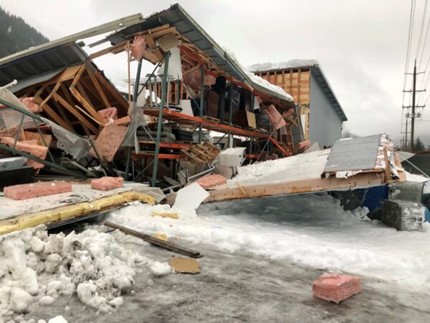
The City and Borough of Yakutat declared a ‘local disaster emergency ‘ this week, citing the imminent threat of roof collapse caused by high snow loads across the Southeast Alaska city. In response, The National Guard deployed service members and vehicles via military airlift.As reported by alaskapublic.org, Borough Manager Jon Erickson said Yakutat has seen 6 feet of snow over the past few weeks, causing intermittent power outages, damage to buildings, and school closures.
Are you getting the picture yet? No? This winter is only the opening act and will give many a taste of what our government and the press have been lying about. As we shall all see this winter is that the real threat is not warming but dramatic cooling coupled with intense snow and continued ice buildup at the poles and in Greenland.
What kind of people would lie about such a thing and spit Nature in the face? Bill Gates is such a person and he wonders why so many people think badly of him.
Crews at Wolf Creek Ski Area in Pagosa Springs undertook some serious shoveling this week after one of their snowcats was completely covered by the recent record-breaking snowfall.
RECORD COLD HITS MT WASHINGTON
Brian Fitzgerald, Mt. Washington Observatory’s director of science and education, said that Tuesday saw a record low temperature atop the mountain: -31F was registered, busting the old coldest January 11 on record — the -29F set in 2020.
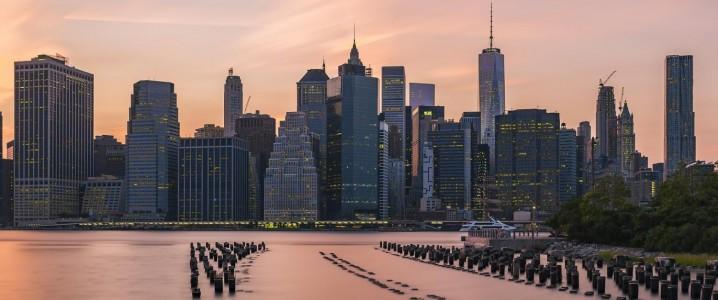
The New York City Council voted on Wednesday to ban the use of natural gas in new buildings in a bid to reduce the city’s carbon footprint.
“The bill to ban the use of gas in new buildings will (help) us to transition to a greener future and (reach) carbon neutrality by the year 2050,” said City Council Speaker Corey Johnson, noting:“We are in a climate crisis and must take all necessary steps to fight climate change and protect our city.”
Once it does, new buildings after 2027 will be heated by fossil fuel alternatives, most likely electricity, the report notes.The idea of moving away from gas is not new. In California, the city of Berkeley became the first to enact a ban on new natural gas hookups in new buildings back in 2019. New York was among the cities that have been considering the measure for a while now, along with Denver, Seattle, and San Francisco.For the proponents of gas bans, the benefits are clear and come down to lower carbon emissions. For the opponents, there are too many disadvantages, from the cost of switching a house from gas to electricity to the effect of more all-electric households on the grid.
“The intermittent nature of renewable sources like solar and wind necessitates another form of energy when the sun isn’t shining, and the wind isn’t blowing,” wrote the chief executive of the American Public Gas Association in an article commenting on the bans for Utility Dive.
State authorities seem to be against the measure in most of these places, but New York appears to be an exception. In New York City, heating, cooling, and electricity supply for buildings account for as much as 70 percent of carbon emissions, and supporters of the gas ban see it as a necessary step to reduce this amount.Yet opponents don’t see it this way.
“Eliminating the direct use of natural gas in homes and businesses would simply shift the use of natural gas from inside the home to powering an already overburdened electric grid through natural gas-fired power plants—if we’re lucky—and in some cases, coal-powered plants,” Dave Shryver from the American Public Gas Association said back in June this year.
Until now, the most populated U.S. city that has banned gas in new buildings is San Jose in California with about 1 million residents.However, as Reuters reports, New York’s move to all-electric buildings could mean a higher price tag for consumers using electricity for heat than those relying on gas. This winter, the average household in the U.S. Northeast is expected to pay $1,538 to heat their home with electricity, compared with gas at about $865.
While reading McWhorter’s new book, I was surprised to discover many similarities between woke racism and apocalyptic environmentalism, which in Apocalypse Never I describe as a religion. Each offers an original sin as the cause of present-day evils (e.g., slavery, the industrial revolution). Each has guilty devils (e.g., white people, “climate deniers,” etc.) sacred victims (e.g., black people, poor islanders, etc.) and what McWhorter calls “The Elect,” or people self-appointed to crusade against evil (e.g., BLM activists, Greta Thunberg, etc.). And each have a set of taboos (e.g., saying “All lives matter,” criticizing renewables, etc.) and purifying rituals (e.g., kneeling/apologizing, buying carbon offsets, etc).
Over the last year, a growing number of progressives and liberals have pointed to police killings of unarmed black men, rising carbon emissions and extreme weather events, and the killing of trans people as proof that the United States has failed to take action on racism, climate change, and transphobia. Others have pointed to the war on drugs, the criminalization of homelessness, and mass incarceration as evidence that little has changed in the U.S. over the last 30 years.
And yet, on each of those issues, the U.S. has made significant progress.
Police killings of African Americans in our 58 largest cities declined from 217 per year in the 1970s to 157 per year in the 2010s. Between 2011 and 2020, carbon emissions declined 14 percent in the U.S., more than in any other nation, while just 300 people died from natural disasters, a more than 90 percent decline over the past century. Public acceptance of trans people is higher than ever. The total US prison and jail population peaked in 2008 and has declined significantly ever since. Just 4 percent of state prisoners, who are 87 percent of the total prison population, are in for nonviolent drug possession; just 14 percent are in for any nonviolent drug offense. And many large cities including Los Angeles, San Francisco, and Seattle have effectively decriminalized public camping by homeless people.
Progressives respond that these gains obscure broad inequalities, and are under threat. Black Americans are killed at between two to three times the rate of white Americans, according to a Washington Post analysis of police killings between 2015 and 2020. Carbon emissions are once again rising as the U.S. emerges from the covid pandemic, and scientists believe global warming is contributing to extreme weather events. In 2020, Human Rights Campaign found that at least 44 transgender and non-gender conforming people were killed, which is the most since it started tracking fatalities in 2013, and already that number has reached 45 this year. Drug prohibition remains in effect, homeless people are still being arrested, and the U.S. continues to have one of the highest rates of incarceration in the world.
But those numbers, too, obscure important realities. There are no racial differences in police killings when accounting for whether or not the suspect was armed or a threat (“justified” vs “unjustified” shooting). While carbon emissions will rise in 2021 there is every reason to believe they will continue to decline in the future, so long as natural gas continues to replace coal, and nuclear plants continue operating. While climate change may be contributing to extreme weather events, neither the Intergovernmental Panel on Climate Change nor another other scientific body predicts it will outpace rising resilience to cause an increase in deaths from natural disasters. Researchers do not know if trans people are being killed disproportionately in comparison to cis-gender people, if trans homicides are rising, or if trans people are being killed for being trans, rather than for some other reason. Twenty-six states have decriminalized marijuana, and California and Oregon have decriminalized and legalized, respectively, the possession of all drugs. Progressive District Attorneys in San Francisco, Los Angeles and other major cities have scaled back prosecutions against people for breaking many laws related to homelessness including public camping, public drug use, and theft.
And yet many Americans would be surprised to learn any of the above information; some would reject it outright as false. Consider that, despite the decline in police killings of African Americans, the share of the public which said police violence is a serious or extremely serious problem rose from 32 to 45 percent between 2015 and 2020. Despite the decline in carbon emissions, 47 percent of the public agreed with the statement, “Carbon emissions have risen in the United States over the last 10 years,” and just 16 percent disagreed. Meanwhile, 46 percent of Americans agree with the statement, “Deaths from natural disasters will increase in the future due to climate change” and just 16 percent disagreed, despite the absence of any scientific scenario supporting such fears. And despite the lack of good evidence, mainstream news media widely reported that the killing of trans people is on the rise.
The gulf between reality and perception is alarming for reasons that go beyond the importance of having an informed electorate for a healthy liberal democracy. Distrust of the police appears to have contributed to the nearly 30% rise in homicides after the 2020 Black Lives Matter protests last year, both by embolding criminals and causing a pull-back of police. A growing body of research finds that news media coverage of climate change is contributing to rising levels of anxiety and depression among children. And there is good reason to fear that misinformation about the killing of trans and non-gender conforming individuals contributes to anxiety and depression among trans and gender dysphoric youth.
Social Media, NGOs, and the Death of God
Why is that? Why does there exist such a massive divide between perception and reality on so many important issues?
Part of the reason appears to stem from the rise of social media and corresponding changes to news media over the last decade. Social media fuels rising and unwarranted certainty, dogmatism, and intolerance of viewpoint diversity and disconfirmatory information. Social media platforms including Facebook, Twitter, and Instagram reward users for sharing information popular with peers, particularly extreme views, and punish users for expressing unpopular, more moderate, and less emotional opinions. This cycle is self-reinforcing. Audiences seek out views that reinforce their own. Experts seek conclusions, and journalists write stories, which affirm the predispositions of their audiences. It may be for these reasons that much of the news media have failed to inform their audiences that there are no racial differences in police killings, that emissions are declining, and that claims of rising trans killings are unscientific.
Another reason may be due to the influence of well-funded advocacy organizations to shape public perceptions, particularly in combination with social media. Organizations including the American Civil Liberties Union, Human Rights Campaign, and Drug Policy Alliance have misled journalists, policymakers, and the public, about police killings, drug policy, and trans killings, often by simply leaving out crucial contextual information. The same has been true for climate activists, including those operating as experts and journalists, who withhold information about declining deaths from natural disasters, the cost of disasters relative to GDP growth, and declining U.S. emissions.
But neither of these explanations fully captures the religious quality of so much of the progressive discourse on issues relating to race, climate, trans, crime, drugs, homelessness, and the related issue of mental illness. A growing number of liberal, heterodoxical, and conservative thinkers alike use the word “woke” to describe the religiosity of so many progressive causes today. In his new book, Woke Racism, Columbia University linguist John McWhorter argues that Wokeism should, literally, be considered a religion.
As evidence for his argument McWhorter points to commonly held myths, like the debunked claim that the American War of Independence was fought to maintain slavery, or that racial disparities in educational performance are due to racist teachers. He points to Woke religious fervor in seeking to censor, fire, and otherwise punish heretics for holding taboo views. And McWhorter suggests that, because Wokeism meets specific psychological and spiritual needs for meaning, belonging, and status, pointing out its supernatural elements is likely to have little impact among the Woke.
But just because an ideology is dogmatic and self-righteous does not necessarily make it a religion, and so it is fair to ask whether Wokeism is anything more than a new belief system. There is no obviously mythological or supernatural element to Woke ideology, and its adherents rarely, if ever, justify their statements with reference to a god, or higher power. But a deeper look at Wokeism does, indeed, reveal a whole series of mythological and supernatural beliefs, including the idea that white people today are responsible for the racist actions of white people in the past; that climate change risks making humans extinct; and that a person can change their sex by simply identifying as the opposite sex.
Why should they be the ones who decide what kind of power should or should not be used? That’s a question that nobody asks. People simply assume that that’s the way it should be and largely do as they’re told. They never stop and consider that governments have set progress back immeasurably over history. The main products of government are wars, pogroms, confiscations, taxes, regulations, and the like.
International Man: Western countries are leading the charge in restructuring their economies around the issue of climate change. They’re committed to a comprehensive agenda to “decarbonize” their economies by 2050.
What’s your take on this?
Doug Casey: To sum it up in one word, it’s insane. In two words, it’s criminally insane.
Before the Industrial Revolution, the overwhelmingly major fuel source was wood. After that, we went to coal, which was a big improvement in density of energy and economics. Then, we went to oil, another huge improvement in energy density and economics.
These things happened not because of any government mandates but simply because they made both economic and technological sense. If the market had been left alone, the world would undoubtedly be running on nuclear. Nuclear is unquestionably the safest, cheapest, and cleanest type of mass power generation. This isn’t the time to go into the numerous reasons that’s true. But if nuclear had been left unregulated, we’d already be using small, self-contained, fifth-generation thorium reactors, generating power almost too cheap to meter. The world would already be running on truly clean green electricity.
Instead, time, capital, and brainpower have been massively diverted to so-called “ecological” power sources—mainly wind and solar—strictly for ideological reasons. The powers that be want to transition the whole world to phony green energy, like it or not.
I’m all for green energy in principle. There’s no question that solar and wind are worthwhile and effective for select applications—generally small, isolated, special locations where conventional fuel is inconvenient or too costly. The efficiency of solar has been tremendously improved over the last few decades, as has wind efficiency. But neither make any sense for mass base-load power in industrial economies.
With further technological advances, they may become more economic someday. Perhaps people will eventually put large collectors in high Earth orbit and microwave the power down to the surface. There are all kinds of sci-fi possibilities. But right now, “green” is just a nice word for “stupid,” “ideological,” or “government-sponsored.”
Doing things the green way takes power away from the markets, which is where people vote with their dollars. It instead places power in the hands of ideologues and bureaucrats.
In brief, wind and solar are being promoted at the very time, nuclear and fossil fuels are being damned. It’s the opposite of what should be happening and a very bad trend from every point of view.
Put me down as liking the birds and the bunnies as much as anyone else, but I’m anti-green. Anyway, ecofreaks don’t really care about the birds and the bunnies so much. That’s just a veneer. They actually just hate people and really want them to disappear. At a minimum, they want to control them. And the great global warming/anti-fossil-fuel hysteria is a great way to do it.
International Man: As a part of this agenda, the US, the EU, and OECD countries plan to phase out oil, gas, and other fuels, replacing them with zero or low carbon sources of energy.
What kind of disruptions could we see as the transition is made to energy sources that may not be as reliable?
And herein lies the real danger. By exploiting the politicization of expertise, the medical profession is now in danger of undermining the authority of science and knowledge. You do not need a doctorate in sociology to understand why conspiracy theories that are rooted in the mistrust of the so-called experts are growing as they are.
By going beyond their expertise to add political support to a one-sided and misanthropic debate about climate change, the medical profession is in danger of itself becoming a threat to public health.
Did Eisenhower foresee the Medical-Congressional-Complex?
Norman Lewis is a writer, speaker and consultant on innovation and technology, was most recently a Director at PriceWaterhouseCoopers, where he set up and led their crowdsourced innovation service. Follow him on Twitter @Norm_Lewis
Would you go to a geologist for a cancer diagnosis? Of course not. So why should we listen to 200 medical journal editors pontificating about the climate emergency? Their intervention in the debate is unwelcome and unnecessary.
When 200 medical journal editors publish an apocalyptic and misleading joint editorial about the dangers of temperature rises, which the Wall Street Journal’s editorial team correctly noted“could have been ghost written by Greta Thunberg,” it reveals that the politicization of expertise we have seen during the Covid pandemic is now limitless.
The intervention by the medical journal editors in the climate debate and its impact on public health ought to be welcomed. We certainly need a broader discussion. But when such an intervention is more about politics than medical science, in the words of the stricken Apollo 13 crew, “Houston, we have a problem.”
The main problem with these journals joining the climate lobby is that they are not doing so to provoke or advance the science of climate change. They have shown themselves to be far from open to debate during the Covid crisis in their field. Many are guilty of having suppressed critical discussions in their pages during the pandemic, from the origins of the original virus, through the effectiveness or not of masks and of social distancing, to the cost of lockdowns.
They have been the gatekeepers, the medical experts who have maintained a monopoly on what they have chosen to be the truth – truths that we were simply expected to defer to.
Now, encouraged by their new elevated status – a status which is very much the outcome of the failure of politicians to exercise judgement over experts during the pandemic – they feel it their duty to go beyond their expertise to stoke fear ahead of the UN climate change conference COP26 in November.
As the WSJ points out, there are many dubious claims in the joint editorial, including the suggestion that no temperature rises are “safe” and that higher temperatures are linked to dire health outcomes. To back this up, the joint editorial cites a recent British Medical Journal meta-analysis of studies that examine links between extreme weather and health. They fail to discuss that most of these findings haven’t been replicated, and many conflict. At best, it provides correlations which, as even schoolchildren know, does not prove causation. As the WSJ wryly comments, “obesity has increased at the same time temperatures have. That doesn’t mean heat is making people fatter.”
In reality, extreme cold kills more people each year (1.3million) than extreme heat (356 000), according to a study published in The Lancet last month. Deaths from cold weather have decreased as population rates have increased, mainly because more of the world’s population has had more access to heating.
They need more, which means what they need is more development and access to cheaper energy.
As the WSJ points out, “about 10% of the world’s population currently doesn’t even have electricity, and a third still cook with stoves that use wood, coal, crop waste or dung, which “kill millions each year.” If the medical journal editors were genuinely concerned about health outcomes, they would be demanding the greater use of nuclear energy, which would give poorer countries access to the cheap and clean energy they need to combat poverty, which kills more people than anything else.
But there is no mention of nuclear energy. Why not? Because this would be a powerful counterpoint to climate alarmism which sees the limitation of consumption and the lowering of development aspirations as the only solution to what they all agree is a man-made climate catastrophe.
This simply highlights that this medical profession intervention has little to do with fighting for better public health. One can only assume that their motivation has more to do with virtue signalling and opportunism. By joining the climate lobby, they are attempting to insert themselves into a debate in which they have no right to claim any authority in.
And herein lies the real danger. By exploiting the politicization of expertise, the medical profession is now in danger of undermining the authority of science and knowledge. You do not need a doctorate in sociology to understand why conspiracy theories that are rooted in the mistrust of the so-called experts are growing as they are.
By going beyond their expertise to add political support to a one-sided and misanthropic debate about climate change, the medical profession is in danger of itself becoming a threat to public health.






 MCViewPoint

