
Must video proof be provided?
Be seeing you

Enemy of the State-Read the Book-Know the Man
This is not a Safe Space but Baby, I don't care.

"I am not a number, I am a Free Man" - No. 6
 Information Liberation Alex Jones’ Prison Planet Gary North Specific Answers Antiwar The Daily Bell Tenth Amendment Center Economics Policy Journal The American Thinker The New American Lew Rockwell
Posted by M. C. on October 21, 2021
Must video proof be provided?
Be seeing you
Posted in Uncategorized | Tagged: Pennsylvania, Tom Wolf | Leave a Comment »
Posted by M. C. on July 29, 2021
The report comes amid a stalemate over increasing funding for highway construction in Pennsylvania, and as states increasingly experiment with a vehicle-miles-traveled fee to replace long-stagnant gas tax collections.
This means tracking YOUr mileage, tracking YOU, where YOU go and HOW FAST YOU were going. Google maps knows the speed limit on the road you are on, so does the government. Your car likely already has a GPS transmitter. The government could make you install a Progressive Insurance style driving monitor.
Insurance companies and the state likely already have a data buying plan worked out.
https://erietimes-pa-app.newsmemory.com/?publink=01adb4f36_1345e4d
Marc Levy ASSOCIATED PRESS HARRISBURG – A transportation funding commission is preparing to recommend how to raise billions more dollars in Pennsylvania for a 21st-century highway system, a report that will land at a politically touchy time and is expected to kick off a debate that could last years.
The report, expected this week from the Transportation Revenue Options Commission, was ordered by Gov. Tom Wolf in March to find ways to replace Pennsylvania’s gas tax.
It is expected to contain a blend of shorter-term and longer-term recommendations, including corridor tolling, goods delivery fees and higher vehicle fees and taxes, but the primary revenue-raiser will be a vehicle-miles-traveled fee that likely would take years to roll out.
The report comes amid a stalemate over increasing funding for highway construction in Pennsylvania, and as states increasingly experiment with a vehicle-miles-traveled fee to replace long-stagnant gas tax collections.
Federal statistics show vehicles are traveling more miles, but those vehicles are increasingly fuel-efficient, and more motorists are increasingly driving all-electric vehicles.
States are up against a deadline of sorts, with Ford and General Motors making major investments in electric vehicles and planning to substantially shift their fleets to all-electric vehicles by 2030 or 2035.
House Appropriations Committee Chairman Stan Saylor, R-York, said it is a difficult time to raise taxes and fees, as the economy rebounds from the pandemic, and he predicted no action by the Republican-controlled Legislature on the plan before 2023, at the earliest.
‘I don’t think it will be received well at at all right now,’ Saylor said.
He also questioned whether it will be necessary for a vehicle-miles-traveled fee to be imposed nationally, rather than state-by-state, and whether a federal infrastructure measure being discussed in Congress may lift some of Pennsylvania’s funding burden.
However, Rep. Mike Carroll, D-Luzerne, the ranking Democrat on the House Transportation Committee, said it is better to be at the front of the line of states in making the change, rather than at the end.
It will take many months of education to get lawmakers to the point where they can embrace parts of the commission’s report, Carroll said.
‘A lot of it is aspirational, but it’s the conversation that needs to be had,’ Carroll said.
The report can expect strong support from labor unions and the highway construction industry.
But the report faces thorny politics in the Legislature.
Gene Barr, president and CEO of the Pennsylvania Chamber of Business and Industry, said business-to-business taxes or fees being contemplated in the commission’s report could hurt the state’s economy and start-up businesses.
One of those is a proposal being contemplated for a surcharge – say, $1 or $2 – on each parcel delivery.
‘My telephone lines blew up’ from unhappy constituents when that idea made the news, Saylor said.
The parcel-delivery surcharge – under consideration in Denver and New York City – reflects a shift to a delivery-based economy, powered by trucks that are putting more stress on highways and local roads, said Bob Latham, executive director of the Associated Pennsylvania Constructors, a trade association of firms involved in all aspects of highway construction.
Meanwhile, Senate Republicans are attempting to halt a plan by Wolf’s Department of Transportation to toll up to nine major bridges.
PennDOT said the money is needed to fund badly needed upgrades at a time when the state’s current highway and bridge budget for construction and maintenance is about $6.9 billion per year, less than half of the $15billion that is needed to keep Pennsylvania’s highways and bridges in good condition and ease major traffic bottlenecks.
Senate Transportation Committee Chairman Wayne Langerholc, R-Cambria, suggested that backing off the tolling plan – and adopting his suggestion to borrow the money – might engender some good will from his caucus.
And while he called transportation ‘woefully underfunded,’ he also said there is an appetite in the Legislature for reform – not necessarily for higher taxes – and that PennDOT will need to take a hard look at its own administrative costs while lawmakers consider overhauling the state’s highway maintenance funding formula.
‘Their big hope is to use this mileage-based user fee to offset the gas tax, but that’s just not the simple answer,’ Langerholc said. ‘There needs to be a holistic solution to this, everything across all levels needs to be looked at.’
Be seeing you
Posted in Uncategorized | Tagged: miles-traveled fee, PennDOT, Progressive Insurance, Tom Wolf | Leave a Comment »
Posted by M. C. on February 5, 2021
Two items of which we should take note as we are unlikely to see them again soon:
A left wing publication advocating state’s rights
A hint at who generates much of the nation’s pollution.
https://erietimes-pa-app.newsmemory.com/?publink=1443fb9e3
On the last day of the Donald Trump’s presidency, his Environmental Protection Agency announced that it would create drinking water limits for PFOS and PFOA, two of the toxic PFAS chemicals that have been linked to high cholesterol, immunodeficiencies, ulcerative colitis, reproductive issues and some cancers.
We hope this means that sometime during the Biden years we’ll finally see legal drinking water limits for these harmful substances.
At another time in our nation’s history, this news might have caused quite a stir. But on Jan. 19, 2021, it was mostly overlooked. Much of the nation was reeling from a Jan. 6 insurrection at the Capitol building, preparing to inaugurate President Joe Biden, hoping to finally move past voter fraud lawsuits, and following rollout of a game-changing COVID-19 vaccine.
That the focus was elsewhere on Jan. 19 is emblematic of efforts to address PFAS contamination over the last 12 months, particularly here in Pennsylvania, where it seems like the commonwealth accomplished little worth celebrating in 2020.
And while this news out of Washington seems promising, the last thing Pennsylvania ought to do now is sit back and say ‘Biden’s got this’. We don’t know what the EPA will come up with and these processes have a way of getting dragged out considerably or curtailed altogether.
Instead, we challenge Governor Tom Wolf, his PFAS Action Team and his Department of Environmental Protection to make it clear that it’s PA — and not the EPA — that’s taking the wheel, putting 2020 in the rearview, and driving the conversation on an issue that’s vitally important to tens of thousands of Pennsylvanians.
These so-called ‘forever chemicals’ were once used widely in non-stick pans, stain-resistant clothing, food packaging, and, importantly, in firefighting foams and in a number of industrial processes. The DEP’s list of PFAS-impacted areas includes the water supplies near Letterkenny Army Depot, Franklin County; Fort Indiantown Gap, Lebanon County; and Tobyhanna Army Depot, Monroe County.
But perhaps the commonwealth’s largest concentration of contaminated groundwater is along the border of Bucks and Montgomery counties, where PFOA and PFOS were detected in the drinking water of what ultimately turned out to be more than 70,000 residents near the former Naval Air Station Joint Reserve Base Willow Grove, the former Naval Air Warfare Center in Warminster and the Horsham Air National Guard Station.
In late 2018, Governor Tom Wolf signed an executive order creating a PFAS Action Team which, among other goals, is working to establish a Maximum Contaminant Level for PFAS.
Although the U.S. Environmental Protection Agency had previously set a ‘health advisory level’ of 70 parts per trillion for both PFOA and PFOS, the substances are still considered unregulated. The advisory is only a guidance and one that’s been criticized as not stringent enough.
The establishment of a drinking water standard would help protect residents and provide leverage to those whose water supplies exceed the limit and are seeking compensation or remediation.
According to the PFAS Action Team, a statewide sampling program is a ‘key component for the development of enforceable regulatory drinking water standards for PFAS.’
Yet that component stalled in 2020. At the outset, the team’s plan was to gather data from at least 360 public water systems located near potential PFAS hotspots. Collection began in June 2019 and the team said it planned to release test results to the public every three months until sampling wrapped up, probably in June 2020. But the team hasn’t published any results since December 2019, and that Dec. 5, 2019 press release is still the most recent item listed in the ‘What’s New’ section of the ‘
PFAS in Pennsylvania ‘ page of the DEP’s website.
‘The COVID-19 pandemic did set back sampling of sites temporarily but we are again collecting and analyzing samples,’ DEP community relations coordinator Virginia Cain said this week in an email.
Cain also noted that the DEP has contracted with Drexel University to study the toxicological impacts on human health.
‘The data will be used to move forward with proposing a Maximum Contaminant Level rulemaking,’ Cain said. ‘DEP is also finalizing cleanup standards for soil contaminated with PFAS chemicals.’
Here’s hoping that Pennsylvania finally gives impacted residents something to raise a glass to by the end of 2021.
Be seeing you
Posted in Uncategorized | Tagged: forever chemicals, high cholesterol, immunodeficiencies, Joe Biden, PFAS, reproductive issues, Tom Wolf, ulcerative colitis | Leave a Comment »
Posted by M. C. on December 12, 2020
Note the common complaint about the lack of notice and lack of planning. This situation has been predicted for a decade. Remember Gates Event 201 from last October?
Yet people are putting their lives in the hands of a government that did absolutely nothing to prepare for this. Maybe that WAS the plan.
Comrade Wolf is doing what government does best. If it didn’t work the first time, lets do it again.
https://erietimes-pa-app.newsmemory.com/?publink=3ef2fea3f
Chris Sirianni, owner of The Brewerie at Union Station, said he was feeling frustrated, disappointed and heartbroken for his staff.
About 45 full-time and part-time employees were on Sirianni’s payroll Thursday at the popular downtown Erie restaurant at 123 W. 14th St.
Sirianni estimates he will likely lay off about 35 employees on Friday in response to the latest temporary state COVID19 mitigation guidelines outlined Thursday by Gov. Tom Wolf.
In an effort to curb the surging spread of COVID19, Wolf announced that indoor dining at restaurants, taverns, breweries, wineries, distilleries, social clubs and private catered events is prohibited for the next three weeks.
Wolf also announced the following COVID-19 mitigation measures, which are scheduled to begin on Saturday and continue until Jan. 4 at 8 a.m.: Indoor gatherings and events of more than 10 persons are prohibited.
Outdoor gatherings and events of more than 50 persons are prohibited.

Matthew Gurcza, of Erie, works out on an elliptical machine Friday at the Glenwood YMCA in Erie. Pennsylvania gyms will be closed beginning Saturday due to the latest temporary state COVID-19 mitigation guidelines outlined Thursday by Gov. Tom Wolf. [JACK HANRAHAN/ERIE TIMES-NEWS]

The Brewerie at Union Station owner Chris Sirianni estimates he will likely lay off about 35 employees on Friday in response to the latest temporary state COVID-19 mitigation guidelines outlined Thursday by Gov. Tom Wolf. [GREG WOHLFORD FILE PHOTO/ ERIE TIMES-NEWS]
Businesses serving the public may only operate at up to 50 percent of the maximum capacity, except as limited by existing orders to a smaller capacity limit.
Indoor operations at gyms and fitness facilities are prohibited.
All in-person businesses in the entertainment industry serving the public within a building or indoor defined area, including theaters, concert venues, museums, movie theaters, arcades, casinos, bowling alleys, private clubs, and all other similar entertainment, recreational or social facilities, are prohibited from operation.
In-person extracurricular school activities are suspended, but these activities may be held virtually.
All K-12 sports and club, travel, recreational and intramural sports are paused.
“The big thing is the state knew this was coming and there was no plan for any relief from the state,” said Sirianni, who is president of the northwest chapter of the Pennsylvania Restaurant and Lodging Association.
“The state is sitting on $1.3 billion in CARES money, and there’s no current plan for that money to filter down to businesses that are restricted or closed,” Sirianni said. “We had local representatives asking the governor to keep any extent of indoor dining available through the holidays knowing that major retailers will still be allowed to do business as usual.”
Restaurants and taverns will be allowed to offer takeout food service and takeout alcohol sales, outdoor dining, plus online sales and delivery.
Those restaurants include the ones located at the Millcreek Mall, including its food court, said Joe Bell, a spokesman for mall owners Cafaro Corp.
“We will be removing the seating, so that everything is takeout,” Bell said.
The new mitigation efforts will have less of an effect on the mall’s retail stores, which will have to limit their number of customers to 50% of maximum capacity, Bell said.
“The crowds have been self-regulating,” Bell said. “We’re not even close to the point where the 50% occupancy levels come into play.”
Wolf’s mitigation orders mean that the YMCA of Erie County planned to close its fitness centers Friday evening at all four locations: Glenwood, Downtown, Eastside and County.
The Y’s childcare services will remain open, and the Y will continue its meal service and other programs it hosts remotely, said Tammy Roche, the Y’s vice president of financial development, membership and marketing.
“We certainly will comply with the governor’s mitigation efforts,” Roche said. “Though we don’t want to see the Y close. Right now we need the wellness, to move our bodies, to reduce stress and feed our spirits.”
Nearly 400 people work at the four local Y branches, Roche said. Most of them work in childcare and will continue their jobs, but others who work in the fitness centers could be laid off.
Customers will have the option to freeze their memberships, cancel them or donate their fees over the next week weeks.
Fearing and expecting rising COVID-19 numbers this winter, Dave Litz Jr., owner of the Sloppy Duck Saloon at 726 W. Bayfront Parkway in Erie, closed his restaurant in early October. He hopes to reopen in April or May.
“I feel real bad for the restaurant industry,” Litz said. “They’re (restaurant owners and staff) are taking it hard. Operating with limited seating is tough and now these guidelines are eliminating that.”
Litz said his staff totaled 37 employees before the onset of the pandemic in March. He operated his restaurant with 14 employees this past summer.
“In early October, we anticipated the COVID numbers would get worse and decided to close the Sloppy Duck,” Litz said. “We usually do a lot of Christmas events. We’re looking for better times this spring and we’re hoping to see a different world. We decided to hunker down and ride it out and, hopefully, open this spring in better times.”
Sirianni said that while he believes the restaurant industry has demonstrated resiliency during the past 10 months of the pandemic, December is a time when restaurants and taverns “make their bottom line to get them through what is traditionally a very rough January.”
“We’re fine with mitigation measures,” Sirianni said. “Public health is what we’re about. The problem is the way the state has delivered these restrictions. From day one, the state has given the industry only a 24-hour notice before each shutdown. Businesses can’t operate like that.”
The COVID-19 mitigation measures announced Thursday also will put a three-week halt to open and league bowling at numerous Erie-area bowling lanes.
“Financially, we’ll be able to weather the three weeks,” said Tom Lytle, owner of Westway Lanes, 8674 West Ridge Road, in Girard Township. “You kind of save money all winter to get through the summer, which is a dead period. Still, it’s going to hurt.”
League bowling runs from September through April and represents a substantial portion of income for area alleys.
“It’s going to be lost revenue. What’s tough in the bowling industry is that league bowling numbers are on the decline. It’s getting harder and harder to make money, and that’s where we pay the bills.”
Lytle estimates he has about 400 league bowlers at Westway Lanes.
“This will affect us more than the COVID shutdown in March.”
David Kacprowicz, who has owned Erie’s Eastland Bowl, 3729 McClelland Ave., since 2012, said the threeweek shutdown will mean a loss of revenue from pro shop and bowling ball sales, open bowling, league bowling and walk-in customers.
“I don’t like it, but I understand it,” Kacprowicz said. “I’m not discouraged by it. I’m taking a positive approach that we’ll be able to open up again in January.”
Kacprowicz just wants everyone to comply with mask mandates and social distancing.
“COVID cases are out of control,” he said. “I wish everybody would abide by the simple request of wearing a mask and social distancing.”
Kacprowicz said he expects the seven employees on his payroll to file for unemployment compensation.
Mark Wattle, owner of Greengarden Lanes, 158W. 38th St., in Erie, knows that feeling.
“I have to lay off 21 employees at Christmas. How can it get worse than that?” Wattle said. “I wish the best to all the small businesses and I hope they get back on their feet when this is over.” Staff writer David Bruce contributed to this story. Contact Ron Leonardi at rleonardi@timesnews. com. Follow him on Twitter @ETNLeonardi.
Be seeing you
Posted in Uncategorized | Tagged: Cafaro Corp, COVID19 mitigation, Tom Wolf | 1 Comment »
Posted by M. C. on November 23, 2020
Coulrophobia
Appearing for one, yes one night only.
They make Trump and Biden look like geniuses right before your eyes.
You thought it couldn’t be done! But you never met PA’s world famous Covid Clowns.
This authority extends to all local enforcement agencies in Pennsylvania. Local law enforcement received guidance on enforcement of the various COVID-19 orders in place from the Pennsylvania State Police through the PA Chiefs of Police Association.
Not exactly 911 material.


Pennsylvania bars and restaurants will not be permitted to sell alcohol after 5 p.m. Wednesday for one-night only in an effort to prevent large gatherings Thanksgiving Eve and slow the spread of coronavirus (COVID-19).
It was one of several measures Secretary of Health Dr. Rachel Levine announced Monday afternoon.
A stay-at-home advisory has also been issued and goes into effect Monday. Dr. Levine said this is not a shutdown order.
The state is also discouraging household gatherings among people who do not live together.
The state also said it is also stepping up enforcement of its public health orders. Anyone who does not comply with an order may be fined between $25 and $300.
Pennsylvania State Police, local law enforcement, personnel from the departments of Agriculture and State, and PA Liquor Control Board stores who interact with visitors will enforce the orders.
The size of all indoor and outdoor events and gatherings is also being further reduced.
School superintendents will need to affirm their districts are abiding by the rules in place. Any who cannot comply must move to full remote instruction.
Telework is mandatory unless impossible.
Requiring Strict Safety Measures in Our Schools
Summary: The Wolf Administration is requiring Pre-K to 12 public schools in counties that have been in the substantial transmission level for at least two consecutive weeks to commit to safety measures to ensure the safety and well-being of students and educators. If they choose not to, they must move to fully remote learning without all extra-curricular activities. As of Friday, Nov. 20, there are 59 counties in the substantial transmission level for at least two consecutive weeks.
Requirements for Pre-K to 12 public schools in substantial counties for at least two consecutive weeks:
“All of us have a responsibility to slow the spread of this virus so our children can stay or return to the classroom,” Gov. Wolf said.
Keeping Businesses, Customers and Employees Safe
Summary: The administration is revising and reissuing its orders to protect businesses, customers, and employees. This order will consolidate previous orders and includes reiterating cleaning and social distancing requirements, mandatory telework requirements unless impossible, and other safety measures.
Furthermore, to help with enforcement of existing masking orders in businesses, the administration is introducing liability protection for all businesses that maintain in person operations and are open to the public. Businesses will receive immunity from civil liability only as related to the Secretary’s masking order given that individuals and entities are engaged in essential emergency services activities and disaster services activities when enforcing the order.
Strengthening Gathering Limitations
Summary: As Pennsylvania sees an increase in cases, the commonwealth is strengthening gathering restrictions. All large events and gatherings are now reduced until further notice. In addition, the retail food services industry, including bars, restaurants, and private catered events must end alcohol sales for on-site consumption at 5 p.m. on Nov. 25, 2020 only.
Maximum Occupancy Calculator for indoor events:
| Maximum Occupancy | Allowable Indoor Rate |
| 0-2,000 people | 10% of Maximum Occupancy |
| 2,001 – 10,000 people | 5% of Maximum Occupancy |
| Over 10,000 people | No events over 500 people |
Maximum Occupancy Calculator for outdoor events:
| Maximum Occupancy | Allowable Outdoor Rate |
| 0-2,000 people | 15% of Maximum Occupancy |
| 2,001 – 10,000 people | 10% of Maximum Occupancy |
| Over 10,000 people | 5% of Maximum Occupancy – up to 2,500 people |
Empowering local government
Ramping Up Enforcement
Summary: Orders already in place and those announced today are all enforceable, and law enforcement and state agencies will be stepping up enforcement efforts, issuing citations and fines, and possibly regulatory actions for repeat offenders.
Given that this is a critical time for mitigation efforts and orders to be followed, the Wolf Administration is stepping up enforcement on the following orders:
Because a component of enforcement is investigating complaints, the Department of Health, with assistance from other agencies, is bolstering its ability to receive and respond to complaints from customers and employees. The department will continue to investigate complaints provided via its webform and plans to use additional staff from other state agencies under the governor’s jurisdiction to process complaints.
Following a complaint about a business, the Department of Health will send a warning letter informing the business of the potential consequences, including fines and closure if the business is not compliant with the mitigation orders. If a business continues to receive complaints, it risks referral to the Pennsylvania State Police or regulatory agencies, further fines and possible closure.
“As Pennsylvanians, we have a responsibility to one another, to do what we can to protect each other and preserve the life we all love in this commonwealth,” Gov. Wolf said. “For those who refuse to do their part to protect their neighbors and communities and refuse to accept that their actions have consequences that cause pain and suffering for others, we will be stepping up enforcement of all of the public health orders Dr. Levine and I have put in place.
“We are in a very dangerous situation, and we need to work together to stop the spread of COVID-19 right now because if we give in to the virus, we will lose many more Pennsylvanians. And that is unacceptable.”
Be seeing you
Posted in Uncategorized | Tagged: Pennsylvania Bars, Rachel Levine, Tom Wolf | Leave a Comment »
Posted by M. C. on November 19, 2020
Erie County PA County Executive Kathy Dahlkemper
“I get concerned if I hear of any business or group that wants to have a holiday party,” Dahlkemper said Wednesday at her news conference. “That should not be happening this year. I would love to see some (additional) restrictions on gatherings.”
“And stop gathering with people you don’t live with…
“Love” What is your definition of “Love”?
Why am I suddenly getting visions of Lavrentiy Beria and Ariel Castro?
https://erietimes-pa-app.newsmemory.com/?publink=04109c5c4
Executive also announced library branches to close
David Bruce
Erie Times-News USA TODAY NETWORK
Erie County Executive Kathy Dahlkemper was pleased to see Pennsylvania announce stricter travel and face maskwearing requirements on Tuesday, but said additional measures are needed to reduce the spread of COVID-19.
Specifically, Dahlkemper would like to see lower limits on the number of people permitted to gather.
In early October, Gov. Tom Wolf expanded Pennsylvania’s maximum limits on gatherings from 25 people indoors and 250 people outdoors to a percentage of a facility’s maximum capacity. Dahlkemper wants to see those numbers reduced.
“I get concerned if I hear of any business or group that wants to have a holiday party,” Dahlkemper said Wednesday at her news conference. “That should not be happening this year. I would love to see some (additional) restrictions on gatherings.”
Limiting crowd sizes, especially indoors, is important because the recent surge in COVID-19 cases in Erie County, and across the nation, is due primarily to the virus’ spread among people getting together without wearing masks, Dahlkemper said.
The county executive implored county residents to follow a few basic rules to reduce the surge and prevent local hospitals from filling with COVID-19 patients.
“Keep 6 feet away from anyone who does not live in your home,” Dahlkemper said.

Erie County Executive Kathy Dahlkemper said she would like to see reduced limits on the size of gatherings as a way to halt the rapid spread of COVID-19. [GREG WOHLFORD/ERIE TIMESNEWS]
“And wear your mask. And wash your hands frequently. And stay home if you are sick.
“And stop gathering with people you don’t live with, particularly in large groups,” Dahlkemper added.
Dahlkemper reported 134 new COVID-19 cases Wednesday in Erie County. It is the seventh straight day that at least 100 daily cases have been reported.
Erie County has 3,764 total cases of COVID19 since the pandemic started. Of those cases, 2,493 people have recovered and 65 have died, including two new deaths reported Wednesday.
There were 1,206 active cases in the county on Wednesday, the highest number reported since the pandemic started.
A total of 55 county residents with COVID19 were hospitalized Wednesday morning, including 10 in intensive care units and five who needed ventilators, the Pennsylvania Department of Health reported.
Saint Vincent Hospital reported 32 patients with COVID-19 on Wednesday, while UPMC Hamot reported 24, and LECOM Health’s Millcreek Community and Corry Memorial hospitals reported seven patients and one patient, respectively.
The hospital-reported numbers often differ from the state health department’s total because they include out-of-county patients, and don’t include county residents who are being treated outside the county.
Dahlkemper also announced that all branches of the Erie County Public Library will close their doors to the public starting Saturday. People can still borrow books and other materials virtually or use the libraries’ curbside service.
“We don’t believe we have any cases spread through our libraries but, again, we are trying to do our part,” Dahlkemper said. “The library is not essential at this point.”
A total of 38,861 negative COVID-19 tests have been reported in the county.
Statewide, 6,339 new cases were reported Thursday, once again the state’s highest singleday total.
The new cases increased Pennsylvania’s total number of cases to 281,852.
There were 110 new deaths across the state, the highest number reported since May.
Contact David Bruce at dbruce@timesnews. com. Follow him on Twitter @ETNBruce.
Be seeing you
Posted in Uncategorized | Tagged: Ariel Castro, Erie County PA, Kathy Dahlkemper, Lavrentiy Beria, restrictions, Tom Wolf | Leave a Comment »
Posted by M. C. on August 7, 2020

“We should avoid any congregate settings and that means anything that brings people together…”
The one true God said where two or more of you gather I will be with you.
The false god says where two or more of you gather I will smite you.
The opposite of the true God is…
Lavrentiy Beria says “Tommy, love the glasses dude”.

https://erietimes-pa-app.newsmemory.com/?publink=0346b986c
PIAA ‘disappointed’ in governor’s recommendation, will meet Friday for further discussion
Gov. Tom Wolf announced on Thursday a recommendation to discontinue pre-K-12 school and recreational youth sports until at least the end of the year.
Wolf held a news conference Thursday morning and ended it abruptly after taking a question about whether he would allow spectators at high school sporting events this fall.
“We should avoid any congregate settings and that means anything that brings people together is going to help that virus get us. We should do everything we can to defeat the virus,” said Wolf when asked about no spectators at Pennsylvania Interscholastic Athletic Association events. “The guidance from us, the recommendation is that we don’t do any sports until Jan 1.”
Wolf walked away from the podium after finishing his answer to end the news conference. His office put out the recommendation in the middle of the afternoon.
The PIAA held an emergency meeting on Thursday afternoon in response to Wolf’s recommendation and guidance. The PIAA held a phone call with Wolf to try to change his mind, according to a report by the Pittsburgh Tribune Review.
“We are tremendously disappointed in this decision,” the PIAA said in a statement after its meeting. “Our member schools have worked diligently to develop health and safety plans to allow students the safe return to interscholastic athletics.”
The PIAA statement also said it will meet again on Friday afternoon to discuss the situation and will have another statement after the meeting.
The statement from Wolf’s office states that it is a “strong recommendation and not an order or mandate.” It goes on to say, “As with deciding whether students should return to in-person classes, remote learning or a blend of the two this fall, school administrators and locally elected school boards should make decisions on sports.”
As far as youth sports go, the recommendation applies to individual and team school and non-school recreational youth sports, competitions, intramural play and scrimmages. The recommendation does not apply to collegiate and professional sports. Gatherings are still limited to 25 people indoors and 250 outdoors.
The PIAA and District 10 voted recently to move ahead with fall sports on the high school level. Surrounding states have either gone to a delay in the start of the season or have moved contact sports to the spring.
The question about fans was posed after a large pushback from parents and fans over word that spectators would not be allowed at fall high school sporting events. On June 10, Wolf’s office put out guidance that read, “During the Yellow and Green phases of reopening, sports-related activities at the PK-12 level are limited to student athletes, coaches, officials, and staff only.”
The PIAA is set to meet again on Aug. 26 with the regular season for contact sports starting on Aug. 28 with football. Other contact sports begin Sept. 4. Heat acclimatization practices start Monday for football with all fall sports practices starting Aug. 17. Contact Tom Reisenweber at treisenweber@timesnews. com. Follow him on Twitter @ETNreisenweber.

At Biletnikoff Field in Erie on Aug. 12, 2019, Erie High School defensive lineman Dahan Lomax, 18, left, and Kendrick Person, 17, complete a blocking drill. On Thursday, Gov. Tom Wolf said high school sports across Pennsylvania should be put on hold.
Be seeing you
Posted in Uncategorized | Tagged: Biletnikoff Field, PIAA, Tom Wolf, youth sports | Leave a Comment »
Posted by M. C. on June 22, 2020
WE HAVE BEEN HAD
Along the way, however, the state has repeatedly struggled to explain how data is being collected and used. Instead, officials have had to play defense to dispel confusion and baseless conspiracy theories after a number or metric has unexpectedly changed.
As early as March, county coroners raised concerns about the health department’s process, and the lack of a uniform death reporting system led to discrepancies between state and county counts.
At daily news conferences throughout much of April, Health Secretary Rachel Levine, M.D., discussed the department’s efforts to “reconcile” death data — to merge and vet numbers being collected from multiple systems. That effort is still ongoing, leading to delays between the date deaths occur and the date they are reported publicly.
Even the state’s process of defining COVID-19 deaths became a major point of confusion. – It shouldn’t be that difficult.
So where were you all this time Erie Times-News? Laying palm leaves wherever Wolf and Levine trod.
I had mentioned my own concerns along similar lines via letters to the editor and emails to “reporters”.
Nothing.
The state has turned this into a (worse) horrendous disaster. All the “data” that has put Erie county on unemployment, forced local businesses to close or spend thousands to remain partially open is a mess. This is just what is being admitted. Tip of the iceberg?
Whenever I hear “we go by the data” I think bad “data” is something to blame (besides people) when the “state” causes something to go belly up.
Of course fake data has it’s advantage$. Pains were taken to note “intentional manipulation” was not a factor. Does thee protesteth too much?
It is apparent from the article the state knew they fostered a disaster. Yet, threaten to act against their power grab and you are threatened with violence.
Expand this to a national and international level. Governments world wide almost certainly have bungled this and taken advantage.
Has COVID Cash has been a factor in jacking up the numbers? If not in Erie certainly in all the larger cities and internationally. The WHO is funded to a great extent by government and private institutions. Crying “the sky is falling” with the appropriate doom and gloom numbers is a sure way to keep the cash flowing. Same for cash strapped EU countries.
The good thing is the annual pandemic, that kills 20-60K in the US and hundreds of thousands world wide and that no one pays much attention to, influenza, has seemingly disappeared. I wonder where it went!
State government and its institutions need to be taken to court and to jail before they hurt more people.
https://erietimes-pa-app.newsmemory.com/?publink=00ed62901
Opaque, shifting policies, numbers undercut efforts, understanding
Spotlight PA is an independent, nonpartisan newsroom powered by The Philadelphia Inquirer in partnership with the Pittsburgh Post-Gazette and PennLive/Patriot-News. Sign up for our free weekly newsletter.
HARRISBURG — Data is difficult.
At its best, it’s a tool for sound policy. Data can cut through noise to help spot trends, like new clusters of the coronavirus. It can prove which communities face the most risk and where supplies are most needed.
At its worst, though, data brings trouble. Without context, it can seem to tell a story that might not be true. A county’s case count on its own is misleading without information about tests. A death toll might be declining, but it won’t account for reporting delays.
While there is no evidence of intentional manipulation, the state’s coronavirus data blunders have created openings for confusion and baseless conspiracy theories.
Since March, data about the coronavirus has played a profound role in Pennsylvania, underpinning sweeping decisions to close schools, restrict businesses and separate loved ones. Now, in the early days of the state’s reopening, accurate data is critical to detecting a resurgence.
But over the past three months, the state health department has repeatedly failed to safeguard the public’s trust in its data. While there is no evidence of intentional manipulation, the state’s blunders have created openings for confusion.
A Spotlight PA review of the state’s COVID-19 data practices found:
• From the start, Pennsylvania officials failed to acknowledge the full limitations of COVID-19 data. The state has not always clearly explained to the public what numbers mean, what they don’t and when and why they might change.
• On several occasions, the health department has published data without careful vetting. When mistakes have been made, the state has quietly edited information without clearly documenting and communicating the changes.
• The state has been opaque about its methods and sources used to compile the data, obscuring the public’s ability to scrutinize the numbers.
Taken together, these shortcomings make it difficult for researchers, policymakers, and the public to get an accurate sense of what’s happening.
“The whole picture isn’t being painted,” said Raeven Faye Chandler, director of the Pennsylvania Population Network, a research center housed at Penn State, “and it’s possible that we could derive results that are more optimistic than they actually are.”
In a statement, the state health department defended its handling of COVID-19 data, saying it has faced immense challenges and has tried to be transparent.
“Funding for public health in Pennsylvania is among the lowest in the country, and some of the work being done … is work that up until this response, had not been possible,” the department said. “We are providing data on a daily and weekly basis that previously took months and sometimes more than a year to compile.”
The statement added that “when there are items that may confuse the public, we are doing our best to explain what happened.”
Chandler, whose work focuses on social demographic and health research, uses the state’s numbers to build a data-driven analysis of COVID-19’s effect on high-risk populations. She said she understands the challenges the health department is up against, “given the unprecedented nature” of the pandemic.
But the problem, she said, is there has been “no discussion presented to provide clarity” when the state’s methods with data have changed.
“With the lack of information, it’s hard for researchers to understand what’s happening and what the risks are and how that may vary across populations,” Chandler said.
Be clear and transparent
Since the start of the pandemic, Pennsylvania officials have said decisions would be driven by data. They have asked the public to trust the process, saying policies would be fact-based and fair.
Along the way, however, the state has repeatedly struggled to explain how data is being collected and used. Instead, officials have had to play defense to dispel confusion and baseless conspiracy theories after a number or metric has unexpectedly changed.
In April, Gov. Tom Wolf announced a reopening benchmark with clear numbers, easy for the public to track. If a county had fewer than 50 new cases per 100,000 people over the past 14 days, Wolf said, it would be a sign that it’s safe to start reopening.
“We’re going to be applying the metrics that I mentioned — the number of cases per 100,000 people — to make sure that we’re doing this in a data-driven, evidence-based way,” Wolf said at the time.
Local officials and the public latched on to the metric, only to see the state reopen counties that failed to meet it. Wolf later explained the benchmark had always been one of many, and had shifted as the state’s understanding of COVID-19 evolved.
State officials have likewise struggled to explain how they are collecting death data.
As early as March, county coroners raised concerns about the health department’s process, and the lack of a uniform death reporting system led to discrepancies between state and county counts.
At daily news conferences throughout much of April, Health Secretary Rachel Levine, M.D., discussed the department’s efforts to “reconcile” death data — to merge and vet numbers being collected from multiple systems. That effort is still ongoing, leading to delays between the date deaths occur and the date they are reported publicly.
Even the state’s process of defining COVID-19 deaths became a major point of confusion.
Questions about whether the health department’s count included deaths probably caused by the coronavirus have circled for months. The peak of confusion was in April, when the department announced the addition of probable deaths to the count, then, two days later, said they removed more than 200 of them.
“There wasn’t any clarity, aside from minimal asterisks,” Chandler said.
Currently, the state’s death count does include some probable deaths, according to a department spokesperson. But a member of the public wouldn’t know that. The state releases a daily breakdown of confirmed and probable cases, but does not do the same for deaths.
The state has also faltered in the collection of data about race.
For much of the crisis, it has been mandatory for Pennsylvania health-care providers to report the race and ethnicity of people with COVID-19, but the state still lacks the data for more than half of its almost 80,000 cases.
“It’s a really big deal,” Chandler said. “We need this data to be able to understand how COVID-19 may be disproportionately impacting individuals, particularly those who may be more vulnerable.”
Even when data about race and ethnicity is included, the state doesn’t disclose how it was obtained.
That’s a crucial missing piece of the puzzle, said Bob Gradeck, manager of the Western Pennsylvania Regional Data Center at the University of Pittsburgh’s Center for Social and Urban Research.
As the state tries to understand issues with equity, Gradeck said, “it’s important to understand the context” — where numbers about race and ethnicity come from and whether the collection process has been consistent across the state.
Vet data before it goes public
On June 8, the health department debuted a new data dashboard. At its launch, the dashboard’s number of tests appeared impossibly high. The trendline showed a jump overnight from about 12,000 tests administered one day to 26,100 the next.
But the data was wrong.
After Spotlight PA inquired, Nate Wardle, a spokesperson for the department, acknowledged the error, saying the second day’s number should in fact be 9,410. Hours passed before it was corrected. The situation is just one of many.
In mid-May, when the health department published a long-awaited list of nursing homes with outbreaks of COVID-19, the numbers were immediately contested. Without disclosure or acknowledgement, the department began quietly correcting issues. Days later, they admitted to some problems.
Complexities and shifts “should be expected,” said Gradeck, of the Western Pennsylvania Regional Data Center. “It’s not surprising that the numbers change.”
But if you’re clear about the data’s limitations from the start, he said, you avoid “setting yourself up for a gotcha moment.”
And with data constantly revised, it’s important to provide historical numbers, said Coral Sheldon-Hess, a professor of computer information technology and data analytics at the Community College of Allegheny County.
People analyzing Pennsylvania’s COVID-19 data need to know when to “correct any past numbers, to help make predictions better going forward,” Sheldon-Hess said.
But that hasn’t happened in every case.
Since March, the health department has kept an archive page of coronavirus data, publishing daily tallies. But the archive doesn’t disclose when numbers were later corrected, nor does it explain why the department changed its methodology.
What’s more, the health department said June 8 that with the launch of the new data dashboard, it would no longer be posting updates to the archive page. That wouldn’t be necessary, Wardle said, given that the dashboard contained a “graphical depiction” of when COVID-19 cases and deaths occurred.
A day later, after hearing that the dashboard was difficult for some people to use, the department resumed posting to the archive page.
Make data easy to scrutinize
In 2016, the Wolf administration pledged to make government data available and usable to the public.
“One of our most valuable and underutilized resources in state government is data,” Wolf said at the time.
The initiative centered around OpenDataPA, an online portal for data that’s both free for anyone to use and structured in a way that’s easy for computers to process. Think: Excel spreadsheets or CSV files, not PDF files or tables posted on web pages.
The format of data is important, because it sets the stage for what the public can do with it.
“If I have three hours to work on a dataset and I spend two hours just getting that data, my time to explore and understand the data is limited,” said Jacob Kaplan, a postdoc fellow at the University of Pennsylvania, who’s been studying the spread of the coronavirus in prisons.
In the OpenDataPA portal, the catalog has a listing for data about the coronavirus. But the page doesn’t actually contain data.
Instead, it just links to the health department’s COVID19 website, where data is structured in a way that makes it cumbersome to work with and difficult to analyze.
If Pennsylvania made its source data easily accessible, it could have helped quash concerns in May, when the state said its total count of COVID-19 tests included negative antibody tests, then backtracked on the statement a day later.
The situation raised red flags among epidemiologists, as antibody tests show past infections, not current ones, and, if included, would distort the state’s capacity to detect infections in real time.
But as it stands, Pennsylvania is touting total testing numbers impossible for the public to vet. County-level data shows only the number of people receiving COVID19 tests, without disclosing how many times those people are tested.
Those numbers — exactly how many people are being tested more than once — are “reported internally,” Wardle, the spokesperson, said.
Be seeing you
Posted in Uncategorized | Tagged: COVID-19 data, health department, PA, Rachel Levine, Tom Wolf, Virus data | Leave a Comment »
Posted by M. C. on May 19, 2020
Governor Tommy must have received his medical training the same place as Cuomo.
Masks? Some are just more equal...
Levine admitted last week that he removed his mother from a nursing home during the pandemic.
“My mother requested, and my sister and I as her children complied to move her to another location during the Covid-19 outbreak,” Levine explained. “My mother is 95 years old. She is very intelligent and more than competent to make her own decisions.”
Wolf hired the wrong Levine.
by Hannah Bleau
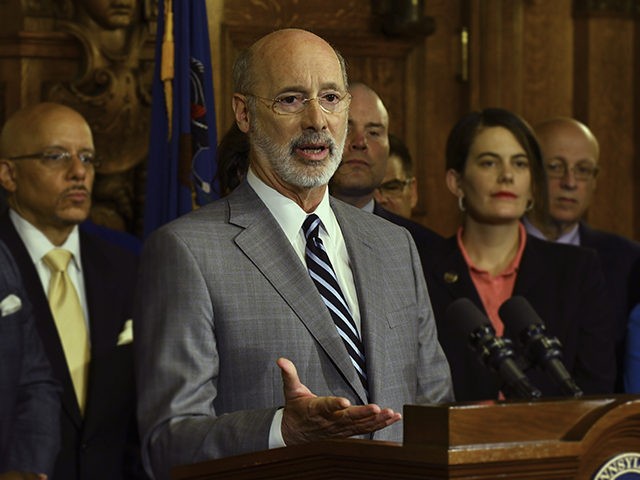
Pennsylvania Gov. Tom Wolf (D) on Monday signaled that he is open to a federal investigation into his administration’s handling of the coronavirus outbreak in nursing homes, as they comprise the majority of coronavirus deaths in the state…
Be seeing you
Posted in Uncategorized | Tagged: covid-19, nursing homes, Rachel Levine, Tom Wolf | Leave a Comment »
 MCViewPoint