MCViewPoint

Opinion from a Libertarian ViewPoint

Archive for the ‘Uncategorized’ Category

Doug Casey on the Real Reason Why the Mainstream Media is Dialing Up the Fear

Posted by M. C. on September 9, 2021

International Man: How can the average person find the truth about a given issue?

Doug Casey: First of all, you have to actively cultivate habits of critical thinking. Ask yourself about everything you read or hear from any source: Does this make sense? What’s the hidden agenda?  What is being omitted? What’s being shaded, twisted, and spun?

This is an essential skill. Subject everything to a process of critical thinking. Question everything—especially authority.

https://internationalman.com/articles/doug-casey-on-the-real-reason-why-the-mainstream-media-is-dialing-up-the-fear/

by Doug Casey

mainstream media

International Man: The mainstream media can dial up the fear in society much like you can with the thermostat in your house. And right now, they seem to be cranking up the fear to hysterical levels.

Governments are able to enact radical policies when people are fearful.

What is your take on the situation and the media’s role in it?

Doug Casey: The great American journalist H.L. Menken once said, “The whole aim of practical politics is to keep the populace alarmed (and hence clamorous to be led to safety) by menacing it with an endless series of hobgoblins, all of them imaginary.”

He was right.

Fear is one of the most powerful and primal emotions, and government has always used fear to unite the people behind it. Government—which produces nothing—only exists because of fear. Fear of foreigners is allayed by its army. Fear of domestic chaos is allayed by its police.

The media is an ideal way to transmit fear. The media has transformed itself into the government’s lapdog. It has the same talking points and communicates “the narrative” in the same way. Government and media have always worked hand in glove, of course, but today more than ever. There are no longer thousands of independent newspapers scattered across the country, just a few conglomerates that control all significant print and electronic media.

One thing that hasn’t changed as far as the media is concerned is the old saying “if it bleeds, it leads.” Fear, danger, and violence make stories interesting and exciting. They make events urgent—and most important, they make people want to buy newspapers and visit their websites.

I don’t trust neither the government—which has its own interests and enforces them with coercion—or the media which, if it knows what’s good for it, either touts the party line or acts like a “loyal opposition” to give readers the impression they actually have real choices.

It’s a dishonest and disgusting charade.

International Man: CNN, FOX News, MSNBC, The NY Times, The Washington Post, and others are notorious for sensationalizing stories, dramatizing situations, and propagandizing certain issues.

How does the mainstream media today contrast with the mainstream media in previous decades?

Doug Casey: They’re very similar in essence because the newspaper business wants to sell newspapers, and TV and radio want the public to hear ads. The magazine business wants to sell magazines. The more you sell, the more advertising dollars you generate. That results in a tendency to generate outrageous copy. It’s why you must be a skeptical, critical thinker and demand proof for everything.

During the 19th and early 20th centuries, we had the yellow press. Hearst and Pulitzer were famous for pumping up public enthusiasm for wars. Everybody wanted to hear news from the front. There’s absolutely nothing better—nothing even close—than a war for generating readers, listeners, and viewers.

The mainstream media hasn’t changed much from that point of view. Newspapers and the media have always competed with each other based on outrageous headlines. If they’re wrong, you forget them and drive on. If they’re right, they never let the booboisie forget it.

People like stuff that’s interesting. That hasn’t changed much, although today it is more advertising rather than subscription-driven. That is especially the case with the ongoing COVID-19 hysteria. Big pharma has big advertising dollars, and you don’t want to make your major advertisers unhappy.

There are, however, other meaningful differences between the media of today and that of years past. First, the people who became reporters in the past weren’t college-educated. They were basically street kids who liked to write; they were much closer to the ground level. They actually had to put boots on the ground to get the story.

Today’s reporters have all gone to college, as opposed to the school of hard knocks, to learn journalism. They get most of their information from their computer, as opposed to firsthand research, the way reporters used to do it. They now just Google something and accept what somebody else says as fact.

Another big difference is that Washington DC has grown exponentially more important over the last 100 years; there’s vastly more reporting about the government in DC than there ever has been in the past.

Reporters once reported about things that they knew, their local scene. Today, unless he’s posted in DC, a reporter is nearly irrelevant; all they know is what other people say on the internet. In general, the quality of reporting has gone down tremendously over the years.

International Man: Does real journalism exist today? Where can it be found?

Doug Casey: The so-called “paper of record” in the US is the New York Times. I used to read the NY Times, but not anymore; it’s totally woke. It shouldn’t be trusted. I don’t even trust their science section anymore.

Everything has been very politicized. They try to relate everything to global warming, COVID, or what the government should do to solve some real or—usually—imagined problem. Everything is written through that filter. They even try to tie science issues into Critical Race Theory and gender.

I like to see what people are reading, so I read book reviews. But in the New York Times, the New York Review of Books, and the London Review of Books—I still subscribe to them out of inertia—it seems the majority of books today are written and/or reviewed by people of color (POCs), people with sexual aberrations, or women. And they all seem to grind Left-wing axes.

The Left—the statists and collectivists—has completely captured the mass media, especially the upmarket mass media, like The Atlantic, The New Yorker, and the publications I just mentioned. They’re just vehicles the elite use to talk to each other about being elite.

If you want to subscribe to anything today, I recommend that you consider subscribing to blogs, of which there are thousands on the internet. Look for blogs you think are reliable, and subscribe to select newsletters. Since it’s your subscription dollars—not the advertisers’ favor—that they have to earn, they generally try to be more intellectually honest, although, at least in the financial realm, many have become nothing but overpriced tout sheets. Be discriminating.

However, there are still some magazines out there I think are good—like Reason Magazine and The Spectator—but it’s slim pickings.

International Man: Large tech companies like Facebook, Twitter, and Google are the new information gatekeepers.

Are these companies becoming the new mainstream media in that sense? What are the implications?

Doug Casey: Frankly, these Big Tech companies have had their day in the sun. They’re too big to be managed efficiently. They’re arrogant and corrupt. And, I suspect that even though everyone uses them, most people no longer like or trust them.

There will be either a change in technology or a change in the public mood that will turn them into dinosaurs. I’m not interested in owning their ultra-expensive stock, and not just because I despise them and their editorial takes; they’re stooges for the State.

The fact is the government still can’t directly censor things. It’s too hard because the First Amendment, at least in name, still exists. But as I said earlier, these media companies work hand in glove with the State. Big Government prefers to work with Big Tech companies like Facebook, Google, Microsoft, and the rest. There’s no law against Big Tech censoring somebody—nor should there be—because they’re a private business. You certainly don’t want to give the government even more power.

This type of “private” censorship is a clever way to get around the Constitution. The fact is that these companies have become unofficial arms of the government—that’s part of what the “Deep State” is all about. The good news is that this will eventually cause them to cut their own throats. They’ll be superseded by changes in technology and the public mood. Many people—including myself—already deny them support in any way possible.

People who seriously rely on them for their news are basically useless misinformed idiots. Thinking people go elsewhere for news.

International Man: How can the average person find the truth about a given issue?

Doug Casey: First of all, you have to actively cultivate habits of critical thinking. Ask yourself about everything you read or hear from any source: Does this make sense? What’s the hidden agenda?  What is being omitted? What’s being shaded, twisted, and spun?

This is an essential skill. Subject everything to a process of critical thinking. Question everything—especially authority.

Number two is to trust your own eyes, ears, and senses. By that, I don’t mean what you see on television or what you read in Google. Things that you see with your own boots on the ground. Actually, talk to people one-to-one to find out what the man on the street is thinking, not what some reporter says he’s thinking. Or perhaps I should say feeling since few of the public think.

Try to be your own personal reporter. Put your own boots on the ground and investigate the real world first hand. Don’t just accept what some reporter tells you.

Editor’s Note: The 2020s will likely to be an increasingly volatile decade. More governments are putting their money printing on overdrive. Negative interests are becoming the rule instead of the exception to it.

One thing is for sure, there will be a great deal of change taking place in the years ahead.

That’s precisely why legendary speculator Doug Casey and his team released an urgent new report titled Doug Casey’s Top 7 Predictions.

Be seeing you

Posted in Uncategorized | Tagged: , , , | Leave a Comment »

How The National Review Sold Its Soul to Google – by Emerald Robinson – Emerald Robinson’s The Right Way

Posted by M. C. on September 9, 2021

So to sum up Jonah’s defense: “first, it’s absurd to think that any money changed hands, but yes money did change hands, but nobody could possible think that such money influenced what we wrote!” The problem for Jonah Goldberg was that, actually, I did have an insider at his magazine who confirmed that National Review editors declined to publish anti-Google articles. I sent Jonah a note telling him that “the problem for you is that I do have evidence.” I added that my source would be happy to come forward and publicly identify himself if Goldberg or anyone else at the National Review wanted to continue denying the story.

https://emeralddb3.substack.com/p/how-the-national-review-sold-its

Emerald Robinson

There were rumors in the summer of 2018 that an audiotape was circulating that would send shockwaves through the think tanks of Washington and the conservative intellectual movement in particular. A top Google executive had been recorded telling his fellow employees that Google generously donated to conservative think tanks and magazines to dampen criticism of their anti-conservative bias. In essence, Google was buying off Conservatism Inc. and the GOP establishment to stay silent while Google monitored, harassed, and excluded Trump supporters. If true, the tape sounded like a smoking gun: incontrovertible evidence of the corruption and double-dealing of Conservatism Inc. that would permanently discredit it with Republican voters.

I was told that the tape had been offered as an exclusive to the Wall Street Journal. Months went by, and nothing happened. (There were rumors during that time that Big Tech lobbyists were trying very hard to get the Wall Street Journal to kill the story.) Then I began to get a series of messages from various anonymous sources that the organizations that were guilty of taking Google money to stay silent included: the American Enterprise Institute (AEI), the Competitive Enterprise Institute (CEI), the Cato Institute, CPAC, the Weekly Standard and the National Review. (A weak article appeared on September 27th by John McKinnon in the Wall Street Journal but it hardly mentioned the tape or its implications.) This was, needless to say, a huge story: was it possible that the entire conservative intellectual movement was being bought off by Big Tech companies?

Finally, I was approached by an insider at one of the think tanks who confirmed the main details. You could say I broke the story (since the Wall Street Journal piece had really buried it) on Twitter on October 30th, by saying:

BREAKING: Source tells me that NeverTrumper mags took cash from top Internet company to suppress stories of bias against conservatives & Trump supporters. Audio recording of top tech executive explaining strategy has leaked to major newspaper.

My hope was that it would shake the Wall Street Journal out of its lethargy: either publish the contents of the tape or let someone else use it. It would also sow panic among the guilty — who would want to get out ahead of the story in order to spin it. So it was not surprising that one of the first people to attack my story was Jonah Goldberg, one of the chief editors of the National Review. (It’s important to note that my tweet had not named his magazine as one of the guilty parties.) Goldberg was dismissive of my reporting on Twitter: “LOL. Love the idea you have sources.”

Jonah Goldberg had, once again, given himself up at the first sign of shooting.

On December 10th, Wired magazine ran a big piece describing the leaked Google audio tape and its significance:

The recording also offers candid insight into Google’s efforts to stop or water down two then-pending pieces of legislation, most notably a bill aimed at inhibiting sex trafficking that also removed some protections shielding internet companies from liability for the content on their platforms. “We’ve worked really hard behind the scenes for the last nine months to try to modify that bill, to slow it down,” said [Google Director of U.S. Policy] Kovacevich.

On December 13th, Allum Bokhari at Breitbart also ran a piece which did not mince words about what Google’s money had paid for:

Audio recordings obtained by Wired reveal that Google cooperates with and funds a range of establishment conservatives in D.C. that help it fend off scrutiny and oversight from politicians. The organizations named in Wired’s report are the American Enterprise Institute (AEI), the Competitive Enterprise Institute (CEI), and the Cato Institute. […]

One of the Google-funded think tanks had its pro-Google op-ed published by National Review. Now the story had legs. It was running on multiple outlets, and it was taking off. It also looked like none of the guilty organizations were going to acknowledge the story or issue a public statement about it. They were so high and mighty and corrupt that they were going to stay silent to weather the storm of bad publicity. So on December 14th, I ran another tweet to bait the line:

It looks like conservative mag National Review was taking Google cash too. To suppress conservative speech on social media. Was this something that @NRO donors & contributors knew was taking place? Let’s ask @JonahNRO @DavidAFrench & others today.

Do I even need to tell you who swallowed the hook and started screaming? On December 18th, Goldberg did another piece attacking me and the Google story. This article was called “Emerald Robinson’s Stupid Lies” and it opened with the usual “kill the messenger” non-denials:

One of the problems with the political moment we’re in is that there are powerful incentives for people to be stupid and dishonest. The ingredients of this imperfect storm include: a populist climate where nearly all institutions are distrusted, appeals to feelings of persecution will be richly rewarded, political principle for many people is measured by blind loyalty to (or hatred for) a particular personality, stirring controversy is valued regardless of whether there is sufficient evidence to support an allegation or clickbaity innuendo, and conspiracy is counted as courage. All of this leads to a kind of socially constructed garbage heap that will either attract flies, vermin, and other scavengers, or turn people into them.

This was the story of Milo before his self-immolation. This is the story of Infowars and Gateway Pundit. And it is the story of the failed-actress-turned-faux journalist Emerald Robinson.

Now, there are only two possibilities here: Either Robinson is an idiot or she thinks her fans are.

The sum total of her “evidence” that NR took Google cash to suppress conservative views comes from a Breitbart story about a Wired story. Here’s the gist: Google gave money to CEI, where Iain Murray works. Iain wrote a piece for us in which he disagreed with a New York Times writer who thinks the government should break up big tech firms, including Google. And . . . that’s it.

You see, dear reader, it’s not that the editors of the magazine got caught taking dirty money to hurt their fellow conservatives, it’s the crazy people who report this stuff! This opening amounted to almost a blanket denial that the National Review had actually taken any Google money at all. Realizing at some point that this was, in fact, not true, Goldberg slipped into the second to last paragraph the following confession:

I learned that Google gave some money to the National Review Institute for the Buckley Prize dinner only because I asked about it this week (something Robinson could have learned were she an actual reporter of some kind, rather than a MAGA infomercial hostess). But that just proves my point: No one is telling anyone what to write or not write. This is a joke.

So to sum up Jonah’s defense: “first, it’s absurd to think that any money changed hands, but yes money did change hands, but nobody could possible think that such money influenced what we wrote!” The problem for Jonah Goldberg was that, actually, I did have an insider at his magazine who confirmed that National Review editors declined to publish anti-Google articles. I sent Jonah a note telling him that “the problem for you is that I do have evidence.” I added that my source would be happy to come forward and publicly identify himself if Goldberg or anyone else at the National Review wanted to continue denying the story.

Guess how many people from the National Review contacted me to do so? Zero. Zilch. Nada.

So I had basically caught the editors of the National Review in bald-faced lies about taking money from Big Tech companies like Google to remain silent while those same Big Tech companies censored and de-platformed other conservatives. This was, of course, an unconscionable betrayal for The Flagship Conservative Magazine to commit against its own readers — but they did it anyway. Meanwhile, I was hearing from sources close to the National Review Board that the loss of donors and subscribers was so serious that drastic action would need to be taken. (The magazine had lost about half of its subscriber base in less than two years.) The board was also adamant that Jonah Goldberg and David French were the main culprits behind the astonishing collapse of the magazine’s influence, and that they needed to go. Everybody wanted them off the masthead in order to survive.

A month later, Hayes and Goldberg announced the launch of their nameless magazine with no investors by sending out tweets on their personal accounts that people could get “more info” by emailing them at HayesGoldberg2019@gmail.com. A few weeks later, they were soliciting strangers to give them $1,500 a year to get a newsletter.

In February 2019, Axios ran a story about “a new conservative media company” (that didn’t even have a name!) with the news that Jonah Goldberg would be “leaving the National Review in the coming months” to join forces with the recently fired Stephen Hayes. Axios added that Goldberg and Hayes were “seeking investors.” It also contained the curious reminder that he would remain at some offshoot called the National Review Institute. In other words, the National Review was happy to pay Goldberg from its sister organization for the privilege of not publishing him anymore at the National Review!

You just can’t quantify that kind of popularity.

Goldberg was very touchy about the idea that he had been removed from the magazine. He wanted people to know that it was his idea to leave the National Review to fax out a newsletter from his basement (with no name and no money) along with Stephen Hayes. The Drag Queen Story Hour enthusiast David French even tweeted: “There’s news. There’s fake news. Then there’s the absolute premium-grade BS I’m reading on MAGA Twitter and elsewhere claiming that Jonah Goldberg was pushed out of National Review. Completely, totally false.”

What made this so funny was that David French was himself removed from the magazine a few months later! Where did he go? Well, he went to work for Jonah Goldberg and Stephen Hayes and their little newsletter of course. The three of them were now free to plummet into new depths of unpopularity together. The most intellectually bankrupt and vitriolic of the Never Trumpers had finally been thrown into the dustbin of history.

Did the editors of the National Review learn anything from this debacle? Of course not. The feckless Rich Lowry recently handed the magazine over to the world’s only living Evan McMullin voter Ramesh Ponnuru — who was absolutely nobody’s choice to steer the magazine back to popularity. (If anything, Ramesh Ponnuru represents an even greater slide into snide effeminacy than Lowry, and few thought that was possible.) Defeat seems to be the brand for these boys. In any culture war, Rich Lowry and the gang have always been the first to stand athwart history, crying: “We surrender first!” They’ve been so weak and defeatist during the Trump years that a year’s subscription to the magazine could be marketed as an estrogen supplement.

Meanwhile the funding of the magazine now relies even more heavily on Big Tech money: the back page of the June 1, 2021 issue was a full-page Facebook ad. Inside the same issue, in case you missed the point, there was a two-page ad from Google. The National Review didn’t bother trying to win back its old subscribers by becoming more conservative. Instead, it flipped them a giant middle finger. This final insult might lead us to think the unthinkable about the soy boys who sank Buckley’s flagship. The same feeble metrosexuals who attacked the Covington Catholic boys, and printed pro-Jeffrey Epstein articles, and tried to discredit Carter Page, and pushed the Russia Hoax might not actually be conservatives after all. Their role does not seem to be halting the Left. Their role seems to be: pretending to be conservative in order to persuade actual conservatives to lose gracefully to the Left.

Conservatives must finally recognize something that’s very depressing and very important: the conservative intellectual movement in America didn’t just fail. It aided and abetted the Left for money. The Left bought off the Right’s leading conservative intellectuals. And its think tanks. And its “flagship” magazines. This is not hyperbole or conjecture. I’ve got the receipts. Until conservatives understand the depth and breadth of that betrayal, they won’t have any chance of rebuilding that movement out of the ashes any time soon.

Be seeing you

Posted in Uncategorized | Tagged: , , | Leave a Comment »

Seeking 9/11 Truth After Twenty Years, by Ron Unz – The Unz Review

Posted by M. C. on September 9, 2021

Once we have concluded that the culprits were part of a highly sophisticated organization, we can then focus on the Who and the Why, which surely would be of greater importance than the particular details of the How. Yet currently all the endless debate over the How tends to crowd out the Who and the Why, and I wonder whether this unfortunate situation might even be intentional.

https://www.unz.com/runz/seeking-9-11-truth-after-twenty-years/

Ron Unz

The twentieth anniversary of the 9/11 Attacks is almost upon us, and although their immediacy has been somewhat reduced by the events of the last eighteen months, we must recognize that they have drastically shaped the world history of the last two decades, greatly changing the daily lives and liberties of most ordinary Americans.

The widespread doubts about the reality of the official story provided by our government and almost universally promoted by our media has severely diminished popular faith in the credibility of those two crucial institutions, with consequences that are still very apparent in today’s highest profile issues.

Over the years, diligent researchers and courageous journalists have largely demolished the original narrative of those events, and have made a strong, perhaps even overwhelming case that the Israeli Mossad together with its American collaborators played the central role. My own reconstruction, substantially relying upon such accumulated evidence, came to such conclusions, and I am therefore republishing it below, drawn from my previous articles which had appeared in late 2018 and early 2020, with the later material making heavy use of Ronen Bergman’s authoritative 2018 history of the Mossad, which ran more than 750 pages.

Immediately following my own analysis is a link to a particularly noteworthy article along the same lines by French writer Laurent Guyénot, which we had originally released simultaneously with my own, then followed by more than a dozen other significant articles of the previous decade, all published or republished on this website. In coming days, some of these may also be separately featured as part of the twenty-year commemoration.

The 9/11 Attacks – What Happened?

Although somewhat related, political assassinations and terrorist attacks are distinct topics, and Bergman’s comprehensive volume explicitly focuses on the former, so we cannot fault him for providing only slight coverage of the latter. But the historical pattern of Israeli activity, especially with regard to false-flag attacks, is really quite remarkable, as I noted in a 2018 article:

One of history’s largest terrorist attacks prior to 9/11 was the 1946 bombing of the King David Hotel in Jerusalem by Zionist militants dressed as Arabs, which killed 91 people and largely destroyed the structure. In the famous Lavon Affair of 1954, Israeli agents launched a wave of terrorist attacks against Western targets in Egypt, intending to have those blamed on anti-Western Arab groups. There are strong claims that in 1950 Israeli Mossad agents began a series of false-flag terrorist bombings against Jewish targets in Baghdad, successfully using those violent methods to help persuade Iraq’s thousand-year-old Jewish community to emigrate to the Jewish state. In 1967, Israel launched a deliberate air and sea attack against the U.S.S. Liberty, intending to leave no survivors, killing or wounding over 200 American servicemen before word of the attack reached our Sixth Fleet and the Israelis withdrew.

The enormous extent of pro-Israel influence in world political and media circles meant that none of these brutal attacks ever drew serious retaliation, and in nearly all cases, they were quickly thrown down the memory hole, so that today probably no more than one in a hundred Americans is even aware of them. Furthermore, most of these incidents came to light due to chance circumstances, so we may easily suspect that many other attacks of a similar nature have never become part of the historical record.

Of these famous incidents, Bergman only includes mention of the King David Hotel bombing. But much later in his narrative, he describes the huge wave of false-flag terrorist attacks unleashed in 1981 by Israeli Defense Minister Ariel Sharon, who recruited a former high-ranking Mossad official to manage the project.

Under Israeli direction, large car bombs began exploding in the Palestinian neighborhoods of Beirut and other Lebanese cities, killing or injuring enormous numbers of civilians. A single attack in October inflicted nearly 400 casualties, and by December, there were eighteen bombings per month, with their effectiveness greatly enhanced by the use of innovative new Israeli drone technology. Official responsibility for all the attacks was claimed by a previously unknown Lebanese organization, but the intent was to provoke the PLO into military retaliation against Israel, thereby justifying Sharon’s planned invasion of the neighboring country.

Since the PLO stubbornly refused to take the bait, plans were put into motion for the huge bombing of an entire Beirut sports stadium using tons of explosives during a January 1st political ceremony, with the death and destruction expected to be “of unprecedented proportions, even in terms of Lebanon.” But Sharon’s political enemies learned of the plot and emphasized that many foreign diplomats including the Soviet ambassador were expected to be present and probably would be killed, so after a bitter debate, Prime Minister Begin ordered the attack aborted. A future Mossad chief mentions the major headaches they then faced in removing the large quantity of explosives that they had already planted within the structure.

See the rest here

Posted in Uncategorized | Tagged: , , , | Leave a Comment »

Why the Fed Is So Desperate to Hide Price Inflation

Posted by M. C. on September 9, 2021

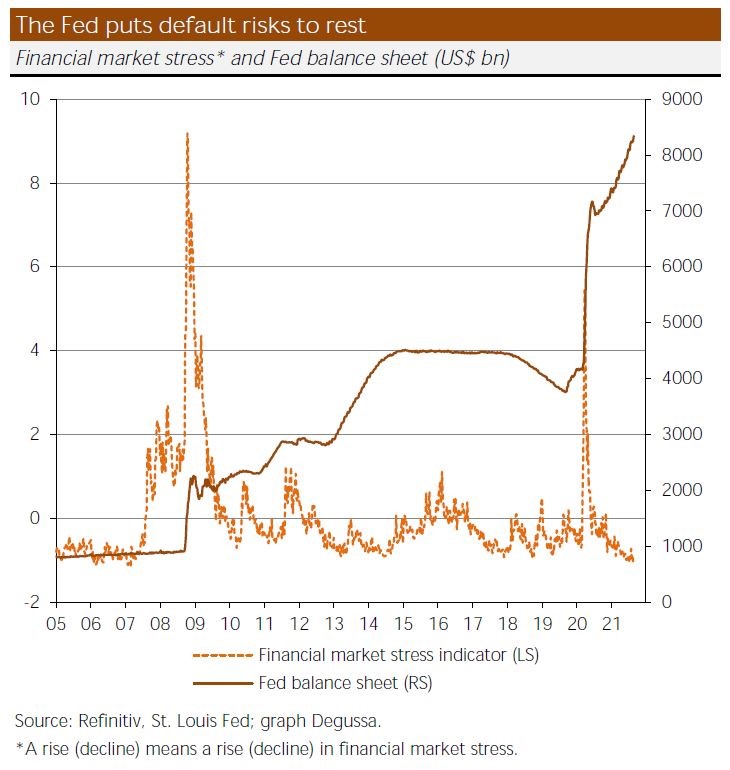
Otherwise, as noted earlier, rising interest rates would collapse the debt pyramid and result in a collapse in output and employment. It is, therefore, no wonder that the Fed is doing whatever it can to hide the inflationary consequences of its policy from the public:

Thorsten Polleit

Speaking at the Jackson Hole meeting on August 27, 2021, Federal Reserve (Fed) chairman Jerome J. Powell indicated that he supported “tapering” toward the end of this year and hastened to add that interest rate hikes are still a long way off. The term “tapering” means that the central bank reduces its monthly purchases of bonds and slows down the monthly increase in the quantity of money accordingly. In other words, even with tapering, the Fed will still churn out newly printed US dollar balances, but to a lesser extent than before; that is, it will still cause monetary inflation, but less than before. 

Financial markets were not alarmed by the Fed’s announcement that it might take its foot off the accelerator pedal a little: ten-year US Treasury yields are still trading at a relatively low level of 1.3 percent, the S&P 500 stock index hovers around record highs. Could it be that investors do not believe in the Fed’s suggestion that tapering will begin soon? Or is tapering of much lower importance for financial market asset prices and economic activity going forward than we think? Well, I believe the second question nails it. To understand this, we need to point out that the Fed has put a “safety net” under financial markets.

As a result of the politically dictated lockdown crisis in early 2020, investors feared a collapse of the economic and financial system. Credit markets, in particular, went wild. Borrowing costs skyrocketed as risk premiums rose drastically. Market liquidity dried up, putting great pressure on borrowers in need of funding. It wasn’t long before the Fed said it would underwrite the credit market, that it would open the monetary spigots and issue all the money needed to fund government agencies, banks, hedge funds, and businesses. The Fed’s announcement did what it was supposed to do: credit markets calmed down. Credit started flowing again; system failure was prevented.

tp

In fact, the Fed’s creation of a safety net is nothing new. It is perhaps better known as the “Greenspan put.” During the 1987 stock market crash, then Fed chairman Alan Greenspan lowered interest rates drastically to help stock prices recover—and thus set a precedent that the Fed would come to rescue in financial crises. (The term “put” describes an option which gives its holder the right, but not the obligation, to sell the underlying asset at a predetermined price within a specified time frame. However, the term “safety net” might be more appropriate than “put” in this context, as investors don’t have to pay for the Fed’s support and fear an expiry date.)

The truth is that the US dollar fiat money system now depends more than ever on the Fed to provide commercial banks with sufficient base money. Given the excessively high level of debt in the system, the Fed must also do its best to keep market interest rates artificially low. To achieve this, the Fed can lower its short-term funding rate, which determines banks’ funding costs and thus bank loan interest rates (although the latter connection might be loose). Or it can buy bonds: by influencing bond prices, the central bank influences bond yields, and given its monopoly status, the Fed can print up the dollars it needs at any point in time.

Or the Fed can make it clear to investors that it is ready to fight any form of crisis, that it will bail out the system “no matter the cost,” so to speak. Suppose such a promise is considered credible from the financial market community’s point of view. In that case, interest rates and risk premiums will miraculously remain low without any bond purchases on the part of the Fed. And it is by no means an exaggeration to say that putting a safety net under the system has become perhaps the most powerful policy tool in the Fed’s bag of tricks. Largely hidden from the public eye, it allows the Fed to keep the fiat money system afloat.

The critical factor in all this is the interest rate. As the Austrian monetary business cycle theory explains, artificially lowering the interest rate sets a boom in motion, which turns to bust if the interest rate rises. And the longer the central bank succeeds in pushing down the interest rate, the longer it can sustain the boom. This explains why the Fed is so keen to dispel the notion of hiking interest rates any time soon. Tapering would not necessarily result in an immediate upward pressure on interest rates—if investors willingly buy the bonds the Fed is no longer willing to buy, and/or if the bond supply declines.

But is it likely that investors will remain on the buy side? On the one hand, they have a good reason to keep buying bonds: they can be sure that in times of crisis, they will have the opportunity to sell them to the Fed at an attractive price; and that any bond price decline will be short lived, as the Fed will correct it quickly. On the other hand, however, investors demand a positive real interest rate on their investment. Smart money will rush to the exit if nominal interest rates are persistently too low and expected inflation persistently too high. The ensuing sell-off in the bond market would force the Fed to intervene to prevent interest rates from rising.

Otherwise, as noted earlier, rising interest rates would collapse the debt pyramid and result in a collapse in output and employment. It is, therefore, no wonder that the Fed is doing whatever it can to hide the inflationary consequences of its policy from the public: the steep rise in consumer goods price inflation is being dismissed as only “temporary”; asset price inflation is said to be outside the policy mandate, and the impression is given that increases in stock, housing, and real estate prices do not represent inflation. Meanwhile, the increase in the money supply—which is the root cause of goods price inflation—is barely mentioned.

However, once people begin to lose confidence in the Fed’s willingness and ability to keep goods price inflation low, the “safety net trickery” reaches a crossroads. If the Fed then decides to keep interest rates artificially low, it will have to monetize growing amounts of debt and issue ever-larger amounts of money, which, in turn, will drive up goods price inflation and intensify the bond sell-off: a downward spiral begins, leading to a possibly severe devaluation of the currency. If the Fed prioritizes lowering inflation, it must raise interest rates and reign in money supply growth. This will most likely trigger a rather painful recession-depression, potentially the biggest of its kind in history.

Against this backdrop, it is difficult to see how we could escape the debasement of the US dollar and the recession. It is likely that high, perhaps very high, inflation will come first, followed by a deep slump. For inflation is typically seen as the lesser of two evils: rulers and the ruled would rather new money be issued to prevent a crisis over allowing businesses to fail and unemployment to surge dramatically—at least in an environment where people still consider inflation to be relatively low. There is a limit to the central bank’s machinations, though. It is reached when people start distrusting the central bank’s currency and dumping it because they expect goods price inflation to spin out of control.

But until this limit is reached, the central bank still has quite some leeway to continue its inflationary policy and increase the damage: debasing the purchasing power of money, increasing overconsumption and malinvestment, and making big government even bigger, effectively creating a socialist tyranny if not stopped at some point. So, better stop it. If we wish to do so, Ludwig von Mises (1881–1973) tells us how: “The belief that a sound monetary system can once again be attained without making substantial changes in economic policy is a serious error. What is needed first and foremost is to renounce all inflationist fallacies. This renunciation cannot last, however, if it is not firmly grounded on a full and complete divorce of ideology from all imperialist, militarist, protectionist, statist, and socialist ideas.”1

  • 1. Ludwig von Mises, “Stabilization of the Monetary Unit–from the Viewpoint of Theory (1923),” in The Cause of the Economic Crisis. And Other Essays before and after the Great Depression, edited by Percy L. Greaves Jr. (Auburn, AL: Ludwig von Mises Institute, 2006), p. 44, appendix.

Author:

Thorsten Polleit

Dr. Thorsten Polleit is Chief Economist of Degussa and Honorary Professor at the University of Bayreuth. He also acts as an investment advisor.

Be seeing you

Posted in Uncategorized | Tagged: , , , , , , | Leave a Comment »

Not a promotion, a wakeup call. Three Felonies A Day

Posted by M. C. on September 8, 2021

https://www.amazon.com/Three-Felonies-Day-Target-Innocent/dp/1594035229

Three Felonies A Day: How the Feds Target the Innocent Paperback – June 7, 2011

by Harvey Silverglate

The average professional in this country wakes up in the morning, goes to work, comes home, eats dinner, and then goes to sleep, unaware that he or she has likely committed several federal crimes that day. Why? The answer lies in the very nature of modern federal criminal laws, which have exploded in number but also become impossibly broad and vague. In Three Felonies a Day, Harvey A. Silverglate reveals how federal criminal laws have become dangerously disconnected from the English common law tradition and how prosecutors can pin arguable federal crimes on any one of us, for even the most seemingly innocuous behavior. The volume of federal crimes in recent decades has increased well beyond the statute books and into the morass of the Code of Federal Regulations, handing federal prosecutors an additional trove of vague and exceedingly complex and technical prohibitions to stick on their hapless targets. The dangers spelled out in Three Felonies a Day do not apply solely to “white collar criminals,” state and local politicians, and professionals. No social class or profession is safe from this troubling form of social control by the executive branch, and nothing less than the integrity of our constitutional democracy hangs in the balance.

Be seeing you

Posted in Uncategorized | Tagged: , , | 1 Comment »

Watch “”It Happens To Everyone! Be Careful With This Device!” Edward Snowden” on YouTube

Posted by M. C. on September 8, 2021

Edward Snowden’s Ultimate Warning! The Biggest Spy Trap In The World! “You Are Being Spied 24/7”

https://youtu.be/zekWsnLHH3w

Be seeing you

Posted in Uncategorized | Tagged: , | Leave a Comment »

Watch “The Failure of Centralized Power Is Leading To “A Great Unraveling”” on YouTube

Posted by M. C. on September 8, 2021

All crises are local. For eighteen months it has mattered whether you live in Florida or New York; whether you live in Sweden or Australia. The idea that a single nucleus of centralized power can “manage” the world is unraveling before our very eyes. Don’t miss today’s Liberty Report! Read Jeff Deist’s speech, referenced in this show, here: http://ronpaulinstitute.org/archives/…

Be seeing you

Posted in Uncategorized | Tagged: , | Leave a Comment »

The Terrible Economic Ignorance behind Covid Tradeoffs: My Speech to the Ron Paul Institute | Mises Wire

Posted by M. C. on September 8, 2021

Dr. Hans-Hermann Hoppe has a famous dictum: markets produce goods, which are the things we want and willingly buy or consume. Government produces bads, which is to say things we don’t want at all. Things like wars and inflation. They do this with our own money, reducing what we have to spend on actual goods and thus reducing production of those goods.

https://mises.org/wire/terrible-economic-ignorance-behind-covid-tradeoffs-my-speech-ron-paul-institute

Jeff Deist

Some of you may know the name Alex Berenson, the former New York Times journalist who comes from a left-liberal background. He has been absolutely fearless and tireless on Twitter over the past eighteen months, documenting the overreach and folly of covid policy—and the mixed reality behind official assurances on everything from social distancing to masks to vaccine efficacy. He became a one-man army against the prevailing covid narratives. 

Mr. Berenson is famous for creating a viral (no pun intended) phrase which swept across Twitter last year: virus gonna virus.

Which means: whether one is in Sweden or Australia, whether in New York or Florida, whether you have mask mandates or lockdowns or close schools or require vaccine passports—or do NONE of these things—virus gonna virus. Covid hospitalizations and deaths will be concentrated among the obese and elderly. In almost any community, two-thirds or more of deaths are over age seventy, but even among the elderly more than 90 percent of those infected survive covid. And among all covid deaths, only about 7 percent are “covid only” without other serious contributing factors. 

What we won’t ever know, unfortunately—because we don’t have a control group, at least in the West—is what would have happened in a society which simply did nothing in response to the virus. What if a country simply had encouraged citizens to build up their natural immunity through a healthy diet, exercise, vitamins, and natural sunlight? What if it had taken precautions for elderly and immune-compromised populations, while allowing younger and healthier people to live normally? Would such a country have reached a degree of natural immunity faster, with overall better outcomes for the physical and mental health of its citizens? And with far less economic damage?

All of this is the unseen. And no, it wasn’t “worth it” to shut down the world.

Back to Mr. Berenson. Last week Twitter decided it had enough, and permanently suspended his account. This is no small thing for independent journalists—and God knows we need them—who reach a lot of people via Twitter and rely on it to make a living.

Search for his Twitter profile and you’ll find something spooky. His name is still there, but with a quietly menacing “Account Suspended” warning. All other traces of his existence are erased: his header photo is gone, his profile photo is blank, and the descriptive bio is missing. Just blank. It’s eerie, and reminds me of that famous old photo of Stalin by the Moscow Canal. He’s standing next to Nikolai Yezhov (I had to look him up), who fell out of favor with Stalin and was executed—then erased from the photo by Soviet censors.

Alex Berenson has been similarly unpersoned, removed, erased. But even if he ends up a casualty of this war1—and whether you agree with him or not—people like him have managed to challenge the official narrative in ways unimaginable even twenty years ago. The financial journalist John Tamny made an interesting point last week: complain about social media all you want, but Facebook and Twitter have been great sources of information during this covid mess. And after thinking about it I had to agree. Most of the alternative information about covid I’ve consumed via social media. But of course Mr. Berenson no longer has this luxury.

The Covid Economy and Tradeoffs

Speaking of narratives, we have especially lacked clear and sober thinking about the injuries to the US economy created by covid policies. We profoundly fail to understand the economics behind covid, because we so desperately want to kid ourselves that the economy will be “normal” soon.

Governments are good at two things, namely bossing us around and spending money. They do both in spades whenever a supposed crisis arises, and both Congress and the Fed went into hyperdrive beginning in March 2020. The Fed pumped more than $9 trillion to its primary dealers, estimates are that more than 20 percent of all US dollars ever issued were issued in 2020 alone. On the fiscal side, more than forty federal agencies have spent $3.2 trillion in covid stimulus spending. So that is $12 trillion of inflationary pressure introduced to our economy.

What the economy wants and needs during crises is of course deflation. When uncertainty rises, and it certainly did for millions of Americans worried about their jobs in 2020, people naturally and inevitably hold larger cash balances. They spend less. Meanwhile they were staying home, driving less, dining out less, traveling less, working less. All of this is naturally deflationary, so of course Congress and the Fed embarked on an effort to fight this tooth and nail with intentional inflation. So now we’re in a wrestling match between two opposing forces, one natural and one artificial.

Dr. Hans-Hermann Hoppe has a famous dictum: markets produce goods, which are the things we want and willingly buy or consume. Government produces bads, which is to say things we don’t want at all. Things like wars and inflation. They do this with our own money, reducing what we have to spend on actual goods and thus reducing production of those goods.

The past sixteen months we’ve had lots of government bads, to the point where we might call them “worsts,” which are even worse than bads. The covid and Afghanistan debacles come to mind. 

It may be facile and self-serving to compare the federal state’s inability to manage Afghanistan with its inability to manage a virus, but the comparison is just too perfect to resist. So I won’t resist.

Among the bads government produces is misinformation. One analogy between covid and Afghanistan is the phenomenon known as the fog of war: the uncertainty in situational awareness experienced by participants in military operations.

Paraphrasing Carl von Clausewitz: war is the realm of uncertainty; the factors on which action in war is based are wrapped in a fog of uncertainty. Fog and friction cloud the commander’s judgment—even where the commander wholly shares our interests, which is hardly a given with covid. When we declared war on a virus, clarity went out the window. And so we’ve lived with sixteen months of fog, of covid misinformation. This happens in tandem with the media, which parrot official pronouncements from sources like the deeply compromised Fauci and stir up alarmism at every turn.

And we’re still living with it. Consider we still don’t have definitive answers to these simple questions:

Do masks really work?
Do kids really need masks? As an aside, our great friend Richard Rider reports that San Diego County—population 3.3 million—shut down its public schools for a year with one student death!
Is there asymptomatic spread?
Does the virus live on surfaces?
How long does immunity last after having covid?
How many vaccines will someone need to be “fully” vaccinated? How many boosters? Annual?
Aren’t delta and other variants simply the predictable evolution of any virus?
How do we define a “case” or infection if someone shows no symptoms and feels fine?
Can covid really be eradicated like polio? If so, why haven’t we eradicated flu by now?

And so on. We never get clear answers, but only fog.

But perhaps the most shocking thing about sixteen months is our childlike inability to consider tradeoffs! I’m not only talking about the tremendous economic consequence of shutting down businesses, and the horrific financial damage it has done and will do to millions of Americans. I’m not only talking about the depression, isolation from friends and loved ones, alcoholism, untreated illness, suicide, weight gain and obesity, stunted child development, and all the rest.

I’m talking about understanding the basic economic tradeoffs of covid policy: supply chain, food, energy, housing, unemployment. This is bread and butter economics.

I can’t stress this enough: millions of Americans have no conception of economics, and simply don’t believe tradeoffs exist. They think, are encouraged by the political class to think, that government can simply print money in the form of stimulus bills and pay people enhanced unemployment benefits to stay home. That the CDC [Centers for Disease Control and Prevention], of all cockamamie federal agencies, can simply impose a rent moratorium and effectively vitiate millions of local contracts—it will just work itself out somehow. That Congress can simply issue forgivable PPP [Paycheck Protection Program] loans to closed or hobbled businesses so they can magically make payroll. That the Federal Reserve can simply buy up assets from commercial banks, lend them limitless funds, and command lower interest rates to stimulate housing and consumerism.

Millions of Americans, through sheer ignorance of economics, literally think these actions are costless and wholly beneficial—without downside.

And now we wonder why the economy can’t just flip a switch and get back to normal. But that’s not how an incredibly complex global supply chain, with just-in-time delivery, works. And that’s why thousands of Ford F-150s are sitting unsold, and unsellable, in huge parking lots—there is a global semiconductor chips shortage. Many of them come from a single company in Taiwan. By the way, semiconductor chips are used in everything from iPhones to Xbox consoles to Surface laptops to refrigerators.

There was a remarkable op-ed at CNBC recently about the supply chain interruptions. It gets the cause of inflation wrong, blaming it on the pandemic rather than central banks, but it paints a vivid picture of the serious problems facing a radically overstressed global manufacturing sector. Delays in delivery are said to be the longest in decades. And inflation plus delays is bad news, because it’s so hard for buyers and sellers at all stages of production to know what to charge and what to pay for either capital goods or consumption goods. How many construction projects, for example were blindsided by the five-time rise in lumber prices last year? Ports are clogged awaiting trucks—not enough drivers—so containers sit for weeks rather than days. Empty containers have become scarce. Rail schedules are affected by the ports like dominos, and freight prices are spiking. Will West Coast longshoremen strike in 2022 when their contract is up? Will new emissions regulations which slow ships kill more capacity? Will key Chinese factories shut down again due to delta?

None of it is pretty and may last into 2023. So buy your Christmas presents now!

We are starting to see the unseen, but economists, whose job it is to show us the tradeoffs, have been largely AWOL over the past year and a half. Consider this recent post by a famous libertarian free market economist:

US GDP is now higher, in fact a fair bit higher, than when the pandemic began.
US labor force participation is about 1.5% lower than when the pandemic began.
Was there really slack to the tune of a few million people in Jan of 2020?
Has inflation really changed enough to make the GDP numbers misleading?
Has total factor productivity improved that much in that time, under those stresses? (i.e. more output from less input, labor & capital).

Or is this all a sign that the structure of the economy is more stratified than we think—that there are millions of people in more-or-less filler jobs who can be cast out and the economy just keeps on running along? Yes, there are all sorts of reports of labor shortages, and all manner of supply chain hiccups which seem to often be associated with off shoring, but general activity is still high. (Or is it? Are the numbers reporting “vapor GDP?”—or are the inflation adjustments really out of whack so real GDP is not what we think it is?)

This is clever masquerading as smart, and it’s the sort of thing which makes people dislike economists. It’s homo economicus nonsense. This kind of navel-gazing—wondering aloud, as though we could shut down the world for a year, send everybody home, suspend rent payments, and not suffer tradeoffs—makes me think economics as a profession is not doing the world any good. People desperately need productive activity for their basic health and happiness, even if that activity doesn’t much add to the national economy.

A friend who runs a large chain of retail stores across several states sent me this in response.

It’s amazing how [BLANKED]-up this person is. An economy is a way to get stuff. Is there much stuff, or less stuff, than when this all began? More cars or less? More computers and personal digital devices or less? More food or less? More oil or less? Greater business to business supply chain or less?

But because this [BLANK] thinks the economy is a symbolic architecture, not a real thing for getting real stuff, he’s absolutely flummoxed by a simple question. Go outside, moron. Step away from the keyboard and the spreadsheet.

I thought he was spot on. Economics is the study of choice in the face of scarcity, of how we get the goods and services we want in an environment of tradeoffs and uncertainty. Nothing could be more disastrous to that environment than vague, open-ended government lockdown measures. We don’t need to move numbers around until they please us as some kind of substitute gnostic knowledge. We shut down the world over a virus, restarting it will be difficult, and the economic damage will be enormous and long lasting. Economists should be showing us the unseen damage, not cheering the juiced-up data.

My point here is to suggest the economics of our present situation are worse than advertised, and that economics is about that holds us together. What we think of as America is mostly an economic arrangement, not a social or cultural one—and certainly not a political arrangement. America is hardly a country anymore, and I take no pleasure in saying that. What happens when the economics unravel?

The Great Unraveling

But there is a happy upside to all of this. A silver lining, perhaps.

Over eighteen months we’ve learned that all crises are local. For eighteen months it has mattered very much whether you live in Florida or New York, whether you live in Sweden or Australia. And the physical analog world reasserted itself with a vengeance: no matter where you are, no matter how rich you may be, you must exist in corporeal reality. You need housing, food, clean water, energy, and medical care in the most physical sense. You need last-mile delivery, no matter what is happening in the broader world. Your local situation suddenly mattered quite a bit in 2020. It was the year localism reasserted itself.

Whether your local reality was dysfunctional or did not matter quite a bit in the terrible covid year. And people are waking up to the simple reality of this dysfunction. We know the federal government can’t manage covid. It can’t manage Afghanistan. It can’t manage debt, or the dollar or spending, or entitlements. It can’t even run federal elections, for God’s sake much, less provide security, or justice, or social cohesion.

So how can it manage a country of 330 million people? How can it manage fifty states?

Whether we want to call it the Great Awakening or the Great Realignment, something profound is happening. Imagine if the twenty-first century reverses the dominant trend of the nineteenth and twentieth, namely the centralization of political power in national and even supranational governments? What if we are about to embark on an experiment in localism and regionalism, simply due to the sheer inability of modern national governments to manage day-to-day reality?

A kind of centrifugal force is at work. Here in the US, people are self-segregating—both ideologically and geographically—in what we should think of as a kind of soft secession. A recent survey by United Van Lines confirms what we already knew: people are fleeing California, New York, New Jersey, and Illinois for Texas, Idaho, Florida, and Tennessee. This is simple flight from the dysfunction of big cities and unworkable progressive policies, laid bare by the analog lessons of covid.

We should cheer this. If just 10 percent of Americans hold reasonable views on politics, economics, and culture they would constitute 33 million people—we could coalesce as a significant political force! And this nation within a nation would be larger and more economically powerful than many European countries.

Furthermore, we are witnessing a tremendous shift in political power away from cities toward exurbs and rural areas. There really is nothing like it in US history. America started in colonies and villages, before moving westward to farms and ranches. When factories began to replace farms as major employers, Americans moved to the old Rust Belt cities like Chicago and Pittsburgh and Detroit. When tech and finance began to overshadow manufacturing, Americans moved to Manhattan and Seattle and Silicon Valley for the best jobs. But that revolution in finance and tech means capital is more mobile than ever, and covid accelerated our ability to work from home. All of this could have huge beneficial effects for smaller cities and rural areas, which in turn could have profound effects for the congressional map and electoral college. If the angry school board meetings over masks are any indication, politics already has become more localized.

Covid policies ruined cities, at least for awhile, and the Great Unraveling will reduce the political and economic power of those cities. 

So a once-in-a-generation opportunity is before us. The federal government is far and away the biggest, most powerful institution in America, but as previous speakers mentioned, faith in institutions is crumbling. And it should crumble. Washington, DC, has been the centerpiece around which we organize society for a hundred years now, and that’s a profoundly evil reality. So we should cheer when Americans lose faith in it due to Trump or covid or Afghanistan or public opinion polls which show a deeply divided and skeptical country. There is a growing sense that DC is over, it’s done, and it’s time to turn our backs on it. We are losing our state religion.

Contra our political elites, covid and the disastrous reaction by governments may end up reducing their power and standing in society.

This article is excerpted from a talk delivered at the Ron Paul Institute conference on September 4, 2021

  • 1. Don’t let this happen! Read Mr. Berenson here. 

Author:

Contact Jeff Deist

Jeff Deist is president of the Mises Institute. He previously worked as chief of staff to Congressman Ron Paul, and as an attorney for private equity clients. Contact: email; Twitter.

Be seeing you

Posted in Uncategorized | Tagged: , , , , | Leave a Comment »

A Hoppean Perspective on Transgenderism: How To Stop Positivist Degeneration – LewRockwell

Posted by M. C. on September 8, 2021

The “LGBT” movements have thus followed the path of lobbying in politics. Influence parties to pass laws with erga omnes enforceability. Leading to the consequence of the degenerate expansion of positive law.

Allowing those who perceive themselves as discriminated against to separate themselves from society, to physically remove themselves from it in order to voluntarily join a different jurisdiction as well as create a community of owners who base their principles on shared values could represent a solution to the invasiveness of the hyper-regulation imposed by the leviathan superstate [17]

https://www.lewrockwell.com/2021/09/no_author/hoppean-perspective-on-transgenderism-how-to-stop-positivist-degeneration/

By Daria Lapenta

The figure of Hans-Hermann Hoppe has the peculiarity of leaving no room for misleading interpretations. He has the advantage of not allowing distortion and false interpretations by the left “libertarians”. Anyone who can define himself as a lover of the natural order, or – as some have suggested – ordonaturalist, knows that it is impossible for the so-called left “libertarians” to distort Hoppe’s thinking, as is frequently done with Murray N. Rothbard and Ludwig Von Mises. For this reason, a slice of those who find themselves within the so-called “liberty movement” constantly try to isolate and marginalize Hoppean thinking as extraneous to the libertarian community. An attempt to redefine reality to break up the libertarian movement from its traditional values.

The German economist and philosopher Hans-Herman Hoppe, in outlining perspectives and action plans to achieve the goals of libertarianism, leaves no room for misunderstandings. Hoppe poses with surgical clarity an interpretation of how much moral decline is alien to the libertarian roots.

“In the U.S.; less than a century of full-blown democracy has resulted in steadily increasing moral degeneration, family and social disintegration, and cultural decay in the form of continually rising rates of divorce, illegitimacy, abortion, and crime.”, wrote Hoppe in the famous essay Democracy: the god that failed [1].

Hoppe, in the same essay, continues by stating “Likewise, in a covenant founded for the purpose of protecting family and kin, there can be no tolerance toward those habitually promoting lifestyles incompatible with this goal. They-the advocates of alternative, non-family and kin-centered lifestyles such as, for instance, individual hedonism, parasitism, nature-environment worship, homosexuality, or communism-will have to be physically removed from society, too, if one is to maintain a libertarian order.” [2]. The words of the German economist seem to leave no room for alternative interpretations.

This article does not want to be just a consideration on how the left pushes governments to impose themselves on the individual through the degeneration of legal positivism, but also offers insights on how the natural order can give clear and precise answers, free of contradictions and of absurd inferences on issues that appear as new.

The goal of this brief analysis is to try to offer some ideas for a narration of the reality of the transgender phenomenon from a Hoppean point of view and culturally close to the history and roots of the old continent.

To carry out this analysis, it is necessary to make a picture of the current reality that surrounds us today.

See the rest here

Daria Lapenta is an Italian journalist and studies international economics at La Sapienza University of Rome.

Be seeing you

Posted in Uncategorized | Tagged: , | Leave a Comment »

Affirmative action for male students is new ‘dirty little secret’: US colleges ‘worried’ | Daily Mail Online

Posted by M. C. on September 8, 2021

https://www.dailymail.co.uk/news/article-9966167/Affirmative-action-male-students-new-dirty-little-secret-colleges-worried.html

By Rachel Sharp For Dailymail.com and Lauren Lewis For Mailonline

Affirmative action for male students is new ‘dirty little secret’: US colleges ‘worried’ as men abandon courses in record numbers – but are afraid to speak out amid glare of gender politics

  • Data from National Student Clearinghouse reveals female students accounted for 59.5% of all college enrollments in spring 2021, compared to 40.5% men
  • The gap is widening, with 400,000 fewer male students enrolling in 2021 than 2020, versus 200,000 fewer female students
  • Some admissions experts are voicing concerns about the long-term impact
  • Colleges and schools afraid to ask for male student funding over gender politics 
  • Jennifer Delahunty, a college enrollment consultant, said efforts to redress the balance has become ‘higher education’s dirty little secret’ 

See the rest here

Be seeing you

Posted in Uncategorized | Tagged: , , | Leave a Comment »