MCViewPoint

Opinion from a Libertarian ViewPoint

Posts Tagged ‘spying’

Our TVs Have Been Spying on Us. It’s About to Get Worse.

Posted by M. C. on May 22, 2026

What you watch is no longer private, and the price of admission is your personal data

I don’t use wifi with my TV, streaming is via laptop connected to the TV. If nothing else I know where the camera is on the laptop and know where to put the tape.

NBTV Media

Loss of control is the canary in the coal mine of ownership. At the end of March, that canary’s song wavered as Walmart announced its new Vizio televisions will require customers to sign in to Walmart accounts to access smart TV features.

ACR allows TV makers and other surveillance businesses to more accurately track watching habits at a far greater scale. Instead of making assessments based on the channel to which an owner’s set is tuned, ACR takes snapshots of audio or video as often as every 10 milliseconds from any media source connected to your TV, and compares them against a broader video database. Because the technology is built into devices and ‘consent’ to be tracked is often buried in the terms of service required to use smart features, manufacturers and their ACR partners are able to track what nearly every smart TV viewer is watching.

https://substack.com/inbox/post/198308331

Guest post by Grace Hermann, FULU.org

With the rise of streaming, it’s obvious you don’t own the shows you watch on Netflix or Hulu. You lose access to content the minute your bill is overdue. Which makes sense.

When it comes to the TV on which you watch that show, however, it sure feels like you own it. After all, you bought the device and installed it in your living room or bedroom. No one tells you which streaming service to use or which Blu-ray player to hook up. You own it, so you control how it is used.

Loss of control is the canary in the coal mine of ownership. At the end of March, that canary’s song wavered as Walmart announced its new Vizio televisions will require customers to sign in to Walmart accounts to access smart TV features.

This move, one of the most aggressive in undermining owners’ control of their televisions to date, is the latest in an industry with a long history of surveillance.

The history of watching us watch TV

Since the invention of the television, companies have wanted to know what Americans were watching. The A.C. Nielsen Company, now known as Nielsen IQ, first created television ratings in 1950. In exchange for allowing the company to install meters that monitored when a TV was in use and to which channel it was tuned, Nielsen would pay a group of demographically representative families to track what they watched. Monitoring viewing habits paid off as the resulting data served a wealthy market: the advertising industry.

As technology has progressed, so have the ways that Nielsen and others track what people watch. The development of automatic content recognition (ACR)—which companies now owned by Roku, Vizio, and Nielsen began to patent as early as 2008—added TV manufacturers to the mix.

ACR allows TV makers and other surveillance businesses to more accurately track watching habits at a far greater scale. Instead of making assessments based on the channel to which an owner’s set is tuned, ACR takes snapshots of audio or video as often as every 10 milliseconds from any media source connected to your TV, and compares them against a broader video database. Because the technology is built into devices and ‘consent’ to be tracked is often buried in the terms of service required to use smart features, manufacturers and their ACR partners are able to track what nearly every smart TV viewer is watching.

Your TV Is Spying On You

After a 2017 Federal Trade Commission complaint against Vizio for collecting data without consent, more TV makers have moved to allow consumers to opt out of ACR tracking. But many don’t make it easy. Manufacturers often obscure the software’s invasive nature by naming ACR technology to imply improved user experiences and hiding the opt-out option 4-10 clicks into the settings menu.

Even if a user has previously opted out, data-sharing permissions are also often re-enabled during software updates. Those wishing to take more complete measures, such as permanently deleting ACR software, risk bricking their device.

As a result, companies gather up to 100 billion data points each day, which they use to build advertising profiles about individual viewers that can include information such as suspected race, political leanings, religious beliefs, age, and geographic location.

TV makers are in the surveillance business, and business is a-booming

See the rest here

Be seeing you

Posted in Uncategorized | Tagged: , , | Leave a Comment »

Texas Sues GM for Spying on Drivers

Posted by M. C. on November 7, 2024

I doubt this activity is limited to GM.

Yet another reason why I no longer like cars.

Texas Attorney General, Ken Paxton, has filed a lawsuit against General Motors for illegally collecting driving data on customers for the past decade without the driver’s consent AND selling that data to insurance companies. According to the lawsuit, this practices has resulted in consumers’ monthly insurance premiums increasing and some customer having their coverage dropped.

https://youtu.be/kwWvYBRBlYc

Be seeing you

Posted in Uncategorized | Tagged: , , | Leave a Comment »

Trump Was Right — They Were Spying On Him!

Posted by M. C. on February 16, 2024

CIA, John Brennan, the 5 eyes, Obama

The Ron Paul Liberty Report

Be seeing you

Posted in Uncategorized | Tagged: , , , , | Leave a Comment »

Coup! Obama’s Spooks Outsourced Spying On Trump To FOREIGN Services!

Posted by M. C. on February 15, 2024

The Ron Paul Liberty Report

Be seeing you

Posted in Uncategorized | Tagged: , , , | Leave a Comment »

How the US and its ‘friends’ keep stealing each other’s secrets

Posted by M. C. on January 2, 2024

Western spooks targeting Russian industry have long indulged in a spying orgy among themselves

Rachel Marsden

By Rachel Marsden, a columnist, political strategist, and host of independently produced talk-shows in French and English.

These days, no one with even two brain cells who attends the Paris Airshow, or the Milipol internal security summit, leaves their computer or phone in their hotel room. Just like back in the days of France’s Concorde supersonic jet, Canadian and American intelligence services warned their executives to treat the plane as though it was bugged to pick up any conversations. 

Not to be forgotten is America’s “best ally,” Israel, cited by the US government in targeting American business people for research and development intelligence as far back as 1992 – and more recently through its military-grade Pegasus spyware and its larger cyber-surveillance industry, whose separation from the state is highly questionable at best and nonexistent at worst. 

https://www.rt.com/news/589823-us-keep-stealing-secrets/

How the US and its ‘friends’ keep stealing each other’s secrets

©  Getty Images / breakermaximus

“There is an active hunt not only for promising research, the data and parameters of our weapons, but also for our specialists who are especially valuable,” Russian Industry and Trade Minister Denis Manturov recently said, referring to Western spies and their efforts to seek information about Russian defense production by targeting industry experts.  

Well, approaching “soft target” experts for info is certainly a better bet for spies than trying to chat up a soldier whose BS-detector is more finely tuned to espionage. And Western spooks know this better than anyone else since they’ve been busy practicing – among themselves. 

Ultimately, all spying is about getting an economic advantage – whether in conflict or war, where the outcome determines the prominence of any future economic foothold, or more directly through theft of economically valuable secrets or the subversion of trade or competition. The current focus on the military conflict between Russia and the Western military alliance via Ukraine obscures the fact that for all the public proclamations of unity and solidarity by Western leaders, they’d all screw each other over economically if given even the slightest chance.

The Ukraine conflict has really underscored the American view of Germany as an economic rival, which once translated into Washington’s systemic criticism of Germany’s Nord Stream economic lifeline of Russian gas (before it was mysteriously blown up). Now, it’s seen in the form of Uncle Sam’s enticing of German companies to US shores with green tax breaks and plentiful energy as limited and pricey replacement American liquified natural gas sold to Europe has sparked German deindustrialization. It was a longtime dream come true for the US, having considered Germany a key competitor on the global stage since the early ’90s.

See the rest here

Be seeing you

Posted in Uncategorized | Tagged: , , , , | Leave a Comment »

Apple, Google Team Up To Create ‘Alerts’ For Spying And Location Tracking

Posted by M. C. on May 5, 2023

“AirTag was designed to help people locate their personal belongings, not to track people or another person’s property, and we condemn in the strongest possible terms any malicious use of our products. Unwanted tracking has long been a societal problem, and we took this concern seriously in the design of AirTag,” it said.

Tyler Durden's Photo

BY TYLER DURDEN

Authored by Jack Phillips via The Epoch Times (emphasis ours),

Apple and Google on Tuesday proposed creating alerts amid reports of stalking via Apple’s AirTag and similar tools, according to a release issued Tuesday.

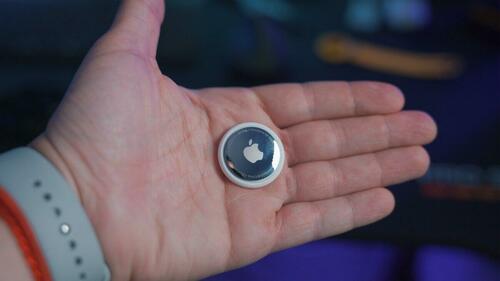
Apple’s AirTag. (Stock photo/Onur Binary/Unsplash)

The new proposed industry standard will allow the Big Tech companies to “allow Bluetooth location-tracking devices to be compatible with unauthorized tracking detection and alerts across iOS and Android platform,” the joint release said, adding that “best practices and instructions” will be included for such devices.

“Today, Apple and Google jointly submitted a proposed industry specification to help combat the misuse of Bluetooth location-tracking devices for unwanted tracking,” the release said.

Samsung, Tile, Chipolo, eufy Security, and Pebblebee have expressed support for the draft specification, which offers best practices and instructions for manufacturers, should they choose to build these capabilities into their products,” it added.

Dave Burke, Google’s vice president of engineering for Android, claimed Tuesday that stopping unwanted Bluetooth device-based tracking will be adopted across the tech sector. According to a proposal, tech firms are aiming to perform “unwanted tracking detection” on such devices that “can both detect and alert individuals that a location tracker separated from the owner’s device is traveling with them,” and it would also “provide means to find and disable the tracker.”

Bluetooth trackers have created tremendous user benefits, but they also bring the potential of unwanted tracking, which requires industrywide action to solve,” Burke said in the release.

“Android has an unwavering commitment to protecting users, and will continue to develop strong safeguards and collaborate with the industry to help combat the misuse of Bluetooth tracking devices.”

Erica Olsen, senior director of the Safety Net Project at the National Network to End Domestic Violence, told news outlets that AirTags and similar products are being used by domestic abusers. “It’s imperative for advocates and technology companies to work together on solutions to minimize the opportunities for misuse,” Olsen said of Bluetooth trackers.

Detail of the Bluetooth button of an audio system in Mexico City on Dec. 6, 2018. (Omar Torres/AFP via Getty Images)

An AirTag is a quarter-sized tracking device that sends out a Bluetooth signal to tell the owner of its location. It and other Bluetooth location-tracking devices and tools allow people to find lost luggage, keys, and other items, but there have been increasing reports of people misusing them to stalk, spy on, or track the whereabouts of people.

See the rest here

Be seeing you

Posted in Uncategorized | Tagged: , , , , , | Leave a Comment »

Your Credit Card is Spying on You!

Posted by M. C. on September 29, 2022

Each time we opt to pay with plastic, our data is shared by our banks, the card network, the store, the point of sale system, the retailer’s bank, our financial apps. And then all those entities share it with thousands more.

Do you think about that when the person in front of you at the wine shop uses card to pay for a full shopping cart? Don’t be fooled by PayPal style privacy claims.

Cash is king and that is why there is a war on cash.

Be seeing you

Posted in Uncategorized | Tagged: , , , | Leave a Comment »

Stop your Smart TV from spying on you!

Posted by M. C. on July 17, 2022

Posted in Uncategorized | Tagged: , | Leave a Comment »

When Spying on the World Used To Be a Problem: The Good Old Days

Posted by M. C. on July 1, 2022

By Jon Rappoport

Jon Rappoport’s blog

The NSA is saying: We do spy, but we don’t read content of emails and phone calls. We just keep ‘records’ of the communications.

The lies lying liars tell.

At one time, circa 2013, spying on everybody was considered outrageous. Now it’s “necessary.”

I’m reprinting my article from 2013 below. But first, a quick bit of history concerning two little known Israeli companies, Narus and Verint. They have helped the NSA spy on the planet.

Narus, in 2010, was folded into Boeing, one of the largest defense contractors in the world. Then, in 2014, Boeing sold Narus to Symantec. In 2016, Symantec sold half of itself to the notorious Carlyle Group. So Narus, a little engine that could, has been keeping very high-priced company.

Verint has managed to retain its independence, after buying out the majority stake of Comverse Technology, its former owner, in 2013.

Okay, here we go—from this point on, everything was written in 2013:

2013. Boom. Explosive revelations. The NSA is using telecom giants to spy on anybody and everybody, in a program called PRISM.

But the information is not new.

Three books have been written about the super-secret NSA, and James Bamford has written them all.

In 2008, Amy Goodman of Democracy Now interviewed Bamford as his latest book, The Shadow Factory, was being released.

Bamford explained that, in the 1990s, everything changed for NSA. Previously, they’d been able to intercept electronic communications by using big dishes to capture what was coming down to Earth from telecom satellites.

But with the shift to fiber-optic cables, NSA was shut out. So they devised new methods.

For example, they set up a secret spy room at an AT&T office in San Francisco. NSA installed new equipment that enabled them to tap into the fiber-optic cables and suck up all traffic.

How Bamford describes this, in 2008, tells you exactly where the PRISM program came from:

“NSA began making these agreements with AT&T and other companies, and that in order to get access to the actual cables, they had to build these secret rooms in these buildings.

See the rest here

Be seeing you

Posted in Uncategorized | Tagged: , , , , , | Leave a Comment »

SPYING ON CANADIANS: Trudeau’s ‘disinformation’ campaign more worrisome than F-bomb

Posted by M. C. on May 7, 2022

The Sun’s political columnist Brian Lilley says Justin Trudeau always tries to shut down stories from the media and the opposition he doesn’t agree with.

But…The spy flight happened.

Be seeing you

Posted in Uncategorized | Tagged: , , , | Leave a Comment »