It is my view that the risk of America getting dragged into this war is low but not negligible. There are those who openly call for the US to attack Russia, like NBC chief foreign correspondent Richard Engle, who tweeted that the West should attack the main Russian column advancing on Kyiv, while others use barely concealed euphemisms such as “no-fly zone,” which is code for “shoot down Russian planes and attack Russian air defenses within Russia.” Either of these risks a nuclear escalation.
The Russian regime’s invasion of Ukraine has shocked and horrified the world, in no small part because it is the first war of this scale in Europe since the end of the Second World War and also because it is the first large-scale war to be fought with contemporary and high-tech armaments. The situation is changing rapidly, but the amount of devastation, death, and suffering this war has inflicted is already immense and will only grow larger as the war continues.
It goes without saying that the people who make up the Russian regime are agents with free will who bear moral responsibility for instigating this unjust and evil war. However, we live in a fallen world, where people do many evil things. Morality requires that our actions comport not with how we wish the world were but with how it actually is. For years, realist thinkers such as John Mearsheimer have been sounding the alarm that Western efforts to expand the North Atlantic Treaty Organization (NATO) to the borders of Russia will cause an immense amount of trouble.
Background to the War
In brief, in 2008, NATO announced that it welcomed Ukraine and Georgia eventually joining NATO. Vladimir Putin hit the roof and declared that Russia (in this article meaning the Russian regime) would find such a move unacceptable. However, the West did not really pay attention. As a result of this action, Russia invaded Georgia in 2008 to secure two breakaway provinces (because NATO will not accept any members with territorial disputes). Later, in 2014, as a result of a pro-Western coup in Ukraine, Putin swiftly moved to take over Crimea (to secure the home of the Russian Black Sea Fleet based at Sevastopol and prevent NATO naval vessels from securing a port so close to Russia) and supported two breakaway provinces in eastern Ukraine, thus ensuring that Ukraine would also be mired in territorial disputes and be unable to join NATO.
The Western reaction to these events has largely been driven by moral condemnation and proclamations that as a sovereign state, Ukraine has the right to decide its future for itself. Unfortunately, when it comes to international relations, might makes right. In the words of Thucydides’s Melian Dialogue, “The strong do what they will, and the weak suffer what they must.” To acknowledge this fact about reality is not to condone it, but recognizing it to be true allows one to better prepare to reduce the amount of conflict and suffering that takes place. The failure to acknowledge this has contributed a great deal to the current crisis.
To understand more of the background to this conflict, it would be wise to consult John Mearsheimer’s 2014 essay “Why the Ukraine Crisis Is the West’s Fault” and his related 2015 speech on the same subject. The key takeaway is that Russia considers the alignment of Ukraine to be an issue of extreme importance. In contrast, the Western states have very little to no national interest in Ukraine. Thus, Russia is willing to go to much more effort and pain to secure these goals than the West is. That is why no Western states have declared war on Russia and come to the military assistance of Ukraine. Russia has nuclear weapons, and the costs of war would far outweigh any potential benefits.
I must admit that until recently, I was not expecting Russia to undertake this drastic of a move; however, once the troop buildup began and diplomatic efforts seemed to make clear that Western states did not seem to even comprehend Russia’s security demands, let alone be willing to compromise to find a solution, I began to fear that war was more likely.
What Does This Invasion Mean?
It is still too early to know what Russia’s specific end goal is. It may be to annex large amounts of Ukrainian territory and turn the rest into a rump buffer state. It may be something less extreme than that. And circumstances on the ground will, of course, affect the outcome as well.
Jeff Deist is president of the Mises Institute. He previously worked as chief of staff to Congressman Ron Paul, and as an attorney for private equity clients. Contact: email; Twitter.
April, 2004: In the attack on Fallujah, which ended after 3 weeks in defeat of the “coalition”:
“Forces bombed the power plant at the beginning of the assault; The town was placed under siege; the ban on bringing in food, medicine, and other basic items was broken only when Iraqis en masse challenged the roadblocks. After initial instances in which people were prevented from leaving, U.S. forces began allowing everyone to leave except for what they called ‘military age males,’ men usually between 15 and 60. Keeping noncombatants from leaving a place under bombardment is a violation of the laws of war.
“The main hospital in Fallujah is across the Euphrates from the bulk of the town. Right at the beginning, the Americans shut down the main bridge, cutting off the hospital from the town. This hospital closing (not the only such that I documented in Iraq) also violates the Geneva Convention.
“In addition to the artillery and the warplanes dropping 500, 1000, and 2000-pound bombs, and the murderous AC-130 Spectre gunships that can demolish a whole city block in less than a minute, the Marines had snipers criss-crossing the whole town. For weeks, Fallujah was a series of sometimes mutually inaccessible pockets, divided by the no-man’s-lands of sniper fire paths. Snipers fired indiscriminately, usually at whatever moved. Of 20 people I saw come into the clinic only five were ‘military-age males.’ I saw old women, old men, a child of 10 shot through the head
“One thing that snipers were very discriminating about every single ambulance I saw had bullet holes in it. Two I inspected bore clear evidence of specific, deliberate sniping. Friends of mine who went out to gather in wounded people were shot at. When we first reported this fact, we came in for near-universal execration. Many just refused to believe it. Some asked me how I knew that it wasn’t the mujahedin. Interesting question. Had, say, Brownsville, Texas, been encircled by the Vietnamese and bombarded and Brownsville ambulances been shot up, the question of whether the residents were shooting at their own ambulances, I somehow guess, would not have come up. Later, our reports were confirmed by the Iraqi Ministry of Health and even by the U.S. military.
“The best estimates are that roughly 900-1000 people were killed directly, blown up, burnt, or shot. Of them, my guess, based on news reports and personal observation, is that 2/3 to 3/4 were noncombatants.“
“A hospital has been razed to the ground in one of the heaviest U.S. air raids in the Iraqi city of Fallujah. Witnesses said only the facade remained of the small Nazzal Emergency Hospital in the center of the city. A nearby medical supplies storeroom and dozens of houses were damaged as US forces continued preparing the ground for an expected major assault.“
“In a series of actions over the weekend, the United States military and Iraqi government destroyed a civilian hospital in a massive air raid, captured the main hospital, and prohibited the use of ambulances in the besieged city of Fallujah.“
“NEAR Fallujah, Iraq Nov. 12, 2004 — Hundreds of men trying to flee the assault on Fallujah have been turned back by U.S. troops following orders ‘We assume they’ll go home and just wait out the storm or find a place that’s safe,’ one 1st Cavalry Division officer, who declined to be named, said Thursday. Army Col. Michael Formica, who leads forces isolating Fallujah, admits the rule sounds ‘callous.’ But he insists it’s key to the mission’s success.
“Tell them ‘Stay in your houses, stay away from windows and stay off the roof and you’ll live through Fallujah,’ [Army Col. Michael] Formica, of the 1st Cavalry Division’s 2nd Brigade, told his battalion commanders in a radio conference call Wednesday night.
“Troops have cut off all roads and bridges leading out of the city. Relatively few residents have sought to get through On Wednesday and Thursday, American troops sunk boats being used to ferry people across the river. “
— “GIs Force Men Fleeing Fallujah to Return,” Associated Press, Nov. 16, 2004
“Insurgent attacks across Iraq stretched American forces to their limits yesterday when rebels appeared to be in control of at least two cities, and the operation in Fallujah entered its most dangerous phase. Some of the toughest street fighting encountered so far erupted during the day as rebels reemerged in areas already secured by U.S. Marines in the north of the city. Gunmen resumed positions on the roofs of mosques which had earlier been cleared
“‘I’m supposed to shoot into the houses before our troops go in,’ said Marine Cpl. Will Porter “
— “U.S. troops stretched to limit as insurgents fight back,” Robin Gedye, Nov. 13, 2004
“Her shins, shattered by bullets from U.S. soldiers when they fired through the front door of her house, are both covered by casts. Small plastic drainage backs filled with red fluid sit upon her abdomen, where she took shrapnel from another bullet.
“Fatima Harouz, 12 years old, lives in Latifiya, a city just south of Baghdad. Just three days ago soldiers attacked her home. Her mother, standing with us says, ‘They attacked our home and there weren’t even any resistance fighters in our area.’ Her brother was shot and killed, and his wife was wounded as their home was ransacked by soldiers. ‘Before they left, they killed all of our chickens,’ added Fatima’s mother, her eyes a mixture of fear, shock and rage.“
— Slash and Burn, Dahr Jamail, November 17, 2004
“Journalists with the troops speak of a city that is gradually being devastated. Scarcely a single house does not bear some form of weapons scar and many have been rendered uninhabitable.
“Tactics handed down from years of urban warfare in Israel mean that troops sometimes search rows of buildings by punching holes through walls with high velocity bullets rather than moving from house to house through doors, thus reducing the risk of booby traps and increasing the element of surprise.“
— “The Telegraph: U.S. troops stretched to limit as insurgents fight back,” Robin Gedye, Nov. 13, 2004
“The 33-year-old Associated Press photographer [Bilal Hussein] stayed behind to capture insider images during the siege of [Fallujah] In the hours and days that followed, heavy bombing raids and thunderous artillery shelling turned Hussein’s northern Jolan neighborhood into a zone of rubble and death. The walls of his house were pockmarked by coalition fire.
“‘Destruction was everywhere. I saw people lying dead in the streets, wounded were bleeding and there was no one to come and help them. U.S. soldiers began to open fire on the houses, so I decided that it was very dangerous to stay in my house,’ he said. Hussein moved from house to house — dodging gunfire — and reached the river. ‘I decided to swim but I changed my mind after seeing U.S. helicopters firing on and killing people who tried to cross the river.’
“He watched horrified as a family of five was shot dead as they tried to cross. ’I kept walking along the river for two hours and I could still see some U.S. snipers ready to shoot anyone who might swim.’“
— “AP Photographer Flees Fallujah,” Katarina Kratovac, Nov. 14, 2004
“No outside aid has reached civilians in the city since the offensive began last Monday, and yesterday U.S. forces kept an Iraqi Red Crescent aid convoy of seven trucks and ambulances waiting at the main hospital near a bridge on the edge of the city. Reports from within Fallujah yesterday said bodies lay in the streets, homes and mosques were destroyed, and power and telephone lines were down.
“However, [Marine] Col. [Mike] Shupp said the Red Crescent did not need to deliver aid to civilians in Fallujah and questioned whether there were any. He said: “There is no need to bring supplies in because we have supplies of our own for the people.
“[U.S.-chosen Iraqi Prime Minister] Mr. [Iyad] Allawi also said he doubted reports of civilians in the city. This contradicted accounts from residents inside the city
“‘Our situation is very hard,’ said one resident [Abu Mustafa] contacted by telephone in the central Hay al Dubat neighborhood. ‘We don’t have food or water. My seven children all have severe diarrhea.’
“‘One of my sons was wounded by shrapnel last night and he’s bleeding, but I can’t do anything to help him.’
“It is thought about half of Fallujah’s 300,000 people fled the fighting in the city. In April, 2,000 U.S. Marines fought for three weeks and failed to take Fallujah. This time, six times that number were sent Major General Richard Natonski of the U.S. Marine Corps: ‘We had the green light this time and we went all the way.’ [M]ore than 20 different types of planes were used in bombing swarms as U.S. soldiers began clearing weapons and fighters from every one of Fallujah’s 50,000 buildings, bands of insurgents were still roaming freely in some neighborhoods.“
— “Bodies litter streets in rubble of Fallujah,” Calum MacDonald, Nov. 15, 2004
“[T]he command in Baghdad thought there were at least 2,000 insurgents, and perhaps as many as 5,000. But the coalition forces have failed to find large clusters and now think that there might have been less than 1,000, military sources said yesterday. The senior defense official said some generals now think there might have been 600 or fewer.“
“Fallujah has been under relentless aerial and artillery bombardment and without electricity since Monday. Reports have said residents are running low on food. An officer here said it was likely that those who stay in their homes would live through the assault, but agreed the city was a risky and frightening place to live.
“U.S. military says it does all it can to prevent bombing buildings with civilians inside them.“
— “GIs Force Men Fleeing Fallujah to Return,” Associated Press, Nov. 16, 2004
“You read about precision strikes, and it’s true that America’s GPS-guided bombs are very accurate when they’re not malfunctioning, the 80 or 85 percent of the time that they work, their targeting radius is 10 meters, i.e., they hit within 10 meters of the target. Even the smallest of them, however, the 500-pound bomb, has a blast radius of 400 meters.“
“Once the battle ends, military officials say all surviving military-age men can expect to be tested for explosive residue, catalogued, checked against insurgent databases and interrogated about ties with the guerrillas. U.S. and Iraqi troops are in the midst of searching homes, and plan to check every house in the city for weapons.“
— “GIs Force Men Fleeing Fallujah to Return,” Associated Press, Nov. 16, 2004
“[A]ll the excuses Mr. Bush gave for attacking the people of Iraq were either wrong or lies. We’ll only mention in passing that the domestic price for ‘our’ sarkar attacking Iraq, a country with no WMD, no al-Qaeda links, and no connections to 9/11 so far has been $87 billion, a good chunk of our civil liberties — and 1,239 or so American soldier’s lives, not to mention a minimum of approximately 8,000 more wounded and/or maimed.“
— L. Reichard White, “The Only Way to Make Your Vote Count,” Oct. 31, 2004
So, are Putin and the Russians as good at invading countries and murdering men, women and children as these guys?
>HERE for updates, additions, comments, and corrections.
AND, “Like,” “Tweet,” and otherwise, pass this along!
L. Reichard White [send him mail] taught physics, designed and built a house, ran for Nevada State Senate, served two terms on the Libertarian National Committee, managed a theater company, etc. For the next few decades, he supported his writing habit by beating casinos at their own games. His hobby, though, is explaining things he wishes someone had explained to him. You can find a few of his other explanations listed here.
Oliver Stone’s interview with Abby Martin is fascinating. He discusses the JFK assassination, the media blackout on his latest documentary JFK: Revisited, JFK the peacemaker, at 37:30 how today’s Left is cool with the CIA, at 40:00 Ukraine-Russia. the deep state and the intelligence agencies, and how an unexpected twist of fate can be a cause for hope.
Ginny Garner is a writer, editor, researcher, and music lover. She took the red pill many years ago and has been an avid reader of Lew’s website for the last 22-23 years. Write her at ginnygarner@protonmail.com .
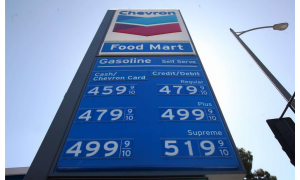
It was only about a year ago that America didn’t need oil from Russia. It was only about a year ago that America was on the verge of being a net exporter of oil – perhaps to places like Russia.
In that case, America could have turned off the spigot – without Americans having to pay three times as much for a gallon of gas as they just may, soon, than they were paying when Orange Man Bad.
If you think gas (and food) are expensive now, give it a week.
That’s all it may take for the thing styled the “media” to whip up enough hysteria about the Danger of Putin to cause something far worse and even more idiotic than the pouring out of Russian Vodka into the sink.
That thing being the turning off of the Russian spigot.
America currently imports something on the order of 600,000 barrels of Russian oil every day – an amount about 200,000 barrels shy of the number of barrels America would not have to import from Russia, had the Biden Thing not cancelled the Keystone Pipeline, among other things.
The deficit of those 200,000-something barrels per day – along with the other things of-a-piece done by the Biden Thing to reduce the supply of oil available to Americans – has helped to almost double the price of a gallon of gas over the course of a little more than one year since Orange Man Bad. And while he may, indeed, have been very bad – as by declaring (and continuing) an “emergency” when there wasn’t one and by turgidly Warp Speeding dangerous drugs not merely into existence but facilitated the forcing of them into the bodies of tens of millions of Americans – he was very good on the energy front.
It was only about a year ago that America didn’t need oil from Russia. It was only about a year ago that America was on the verge of being a net exporter of oil – perhaps to places like Russia.
In that case, America could have turned off the spigot – without Americans having to pay three times as much for a gallon of gas as they just may, soon, than they were paying when Orange Man Bad.
Americans ought to consider what that will mean – and whether it’s a cost they’re wanting (are able) to bear.
At $6 per gallon, it will cost the average American just shy of $100 to fill up the 15 gallon tank of the average compact-sized economy car; something in the Toyota Corolla class of car.
Assuming a once-a-week fill-up, the average American will be paying about $400 per month to get to work, in order to pay for that. Assuming it stays at just $6 per gallon – an unsafe assumption, if the Biden Thing stops importing Russian oil to punish the Russians by punishing Americans – the average American will be spending close to $5,000 annually on gas. For the same gas that he spent $30 to buy a tankful of when Orange Man Bad – or $120 per month ($1,440 per year).
His work is not likely going to give him a raise to compensate him for the difference.
Nor for the difference in what it costs him to eat.
Americans may not understand where their food comes from – nor how it is produced – much as they do not understand why the Russians are unsettled about this business of having a Western military alliance ensconced right up against the border of their country. But here’s the spoiler.
It requires oil.
A great deal of it, to create the fertilizer upon which crops depend. Upon which livestock depends, to grow into hamburger and pork chops. Without oil – or rather, without affordable oil – it not only gets more expensive to grow the crops, it gets harder to grow them. Modern industrial agriculture “guzzles” a great deal more gas – in the form of oil – than any V8-powered SUV.
Than all of them, combined.
Without the oil, you get the double whammy. Less food that costs more. And more to get that food to you. Trucks using oil, you see.
As well as for you to get to it.
Think about that a little bit.
How about $10 for a pound of ground round? How about no ground round, at all? It is a delicious irony – for those who appreciate it – that as the American regime fulminates against the Russian regime, America looks more and more like the Soviet regime.
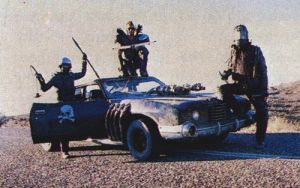
Well, American supermarkets begin to look more and more like Soviet-era supermarkets, full of empty shelves and high prices. A kopek for your thoughts, comrade? American roads, too.
Or rather, soon will.
Lots of open roads – for the Party nomenklatura, people like the Biden Thing. They don’t have to worry about the cost of filling up, because they don’t have to pay it. The nomenklatura – whether then or there or here and now – never has to worry about such things. What they do worry about is a comfortable, well-fed population of citizens who don’t need them and for that reason can ignore them.
This is harder to do when your stomach – and your tank – are empty.
If the feds have an eyewitness who works for them — even though his presence at the scene was unconstitutional — and whose testimony contradicts the prosecutors’ narrative, the feds have a moral and legal obligation to reveal all this to defense counsel.
The New York Times has reported that the FBI had an undercover informant amid the protestors that entered the U.S. Capitol on Jan. 6 who had related to them his knowledge of the demonstrators’ plans beforehand and his observations of events in the building in real time. The informant was a genuine member of the Proud Boys, the group the feds have charged with conspiracy to overthrow the government.
According to the Times, the informant told the FBI in advance that there was no plan by his colleagues to disrupt the government. He also reported violence and destruction in the Capitol to his FBI handler as it was happening, and the FBI did nothing timely to stop it.
The presence of the informant as a de facto federal agent at the scene before, during and after the commission of what the government considers to be serious felonies raises serious constitutional questions about the FBI’s behavior.
The feds have not revealed the existence or identity of this informant; rather, the Times’ reporters found out about him and found another person to corroborate what they learned that he did.
Can the government insert a person into a group under criminal investigation — or “flip” a person who is already in the group — and use him for surveillance without a search warrant? And, when they do this, must prosecutors tell defense attorneys about their informant, particularly if his knowledge and observations are inconsistent with the government’s version of events?
(LifeSiteNews) – Ukraine’s President Volodymyr Zelenskyy has stated that Canadian Prime Minister Justin Trudeau was one of the reasons he got into politics.
After leaving his career as a comedian and entertainer and becoming Ukraine’s president in April 2019, Zelenskyy hailed Trudeau as “one of those leaders who inspired” him “to join politics,” when he became Ukraine’s president in 2019.
While Zelenskyy has shot to stardom from relative obscurity from the perspective of the West since the Russo-Ukrainian conflict became international news last week, his admiration for Trudeau comes as less of a surprise when looking into his background.
Like Trudeau, Zelenskyy is an acolyte of Klaus Schwab’s World Economic Forum, the globalist organization behind the now-infamous “Great Reset” agenda, which tells the world that by the year 2030, “You’ll own nothing and you’ll be happy.”
The ubiquitous support for Zelenskyy by the elite, including support from “defund the police” and Black Lives Matterleftistmega-donor George Soros, Trudeau, American President Joe Biden, and all sides of mainstream media, has led many to question the true motivation behind the West’s condemnation of Russia and a concern that a push for yet another foreign war involving the West is underfoot.
On Tuesday, for example, Ukrainian journalist Daria Kaleniuk made an emotional demand to British Prime Minister Boris Johnson, asking him to instruct NATO to enter the war in Ukraine. After the event was praised in Western media, reports surfaced showing that Kaleniuk is not just a journalist, but a member of the WEF and runs initiatives backed by Soros throughout Eastern Europe.
While many are skeptical of Russian President Vladimir Putin and his former ties to the KGB, scrutiny of the other side of the conflict seems absent in mainstream outlets which has worried many considering the radical nature of the WEF and their Great Reset goals.
Russia’s military offensive against Ukraine is an act of aggression that will make already worrisome tensions between Nato and Moscow even more dangerous. The west’s new cold war with Russia has turned hot. Vladimir Putin bears primary responsibility for this latest development, but Nato’s arrogant, tone‐deaf policy toward Russia over the past quarter‐century deserves a large share as well. Analysts committed to a US foreign policy of realism and restraint have warned for more than a quarter‐century that continuing to expand the most powerful military alliance in history toward another major power would not end well. The war in Ukraine provides definitive confirmation that it did not.
Thinking through the Ukraine crisis — the causes
“It would be extraordinarily difficult to expand Nato eastward without that action’s being viewed by Russia as unfriendly. Even the most modest schemes would bring the alliance to the borders of the old Soviet Union. Some of the more ambitious versions would have the alliance virtually surround the Russian Federation itself.” I wrote those words in 1994, in my book Beyond Nato: Staying Out of Europe’s Wars, at a time when expansion proposals merely constituted occasional speculation in foreign policy seminars in New York and Washington. I added that expansion “would constitute a needless provocation of Russia”.
What was not publicly known at the time was that Bill Clinton’s administration had already made the fateful decision the previous year to push for including some former Warsaw Pact countries in Nato. The administration would soon propose inviting Poland, the Czech Republic and Hungary to become members, and the US Senate approved adding those countries to the North Atlantic Treaty in 1998. It would be the first of several waves of membership expansion.
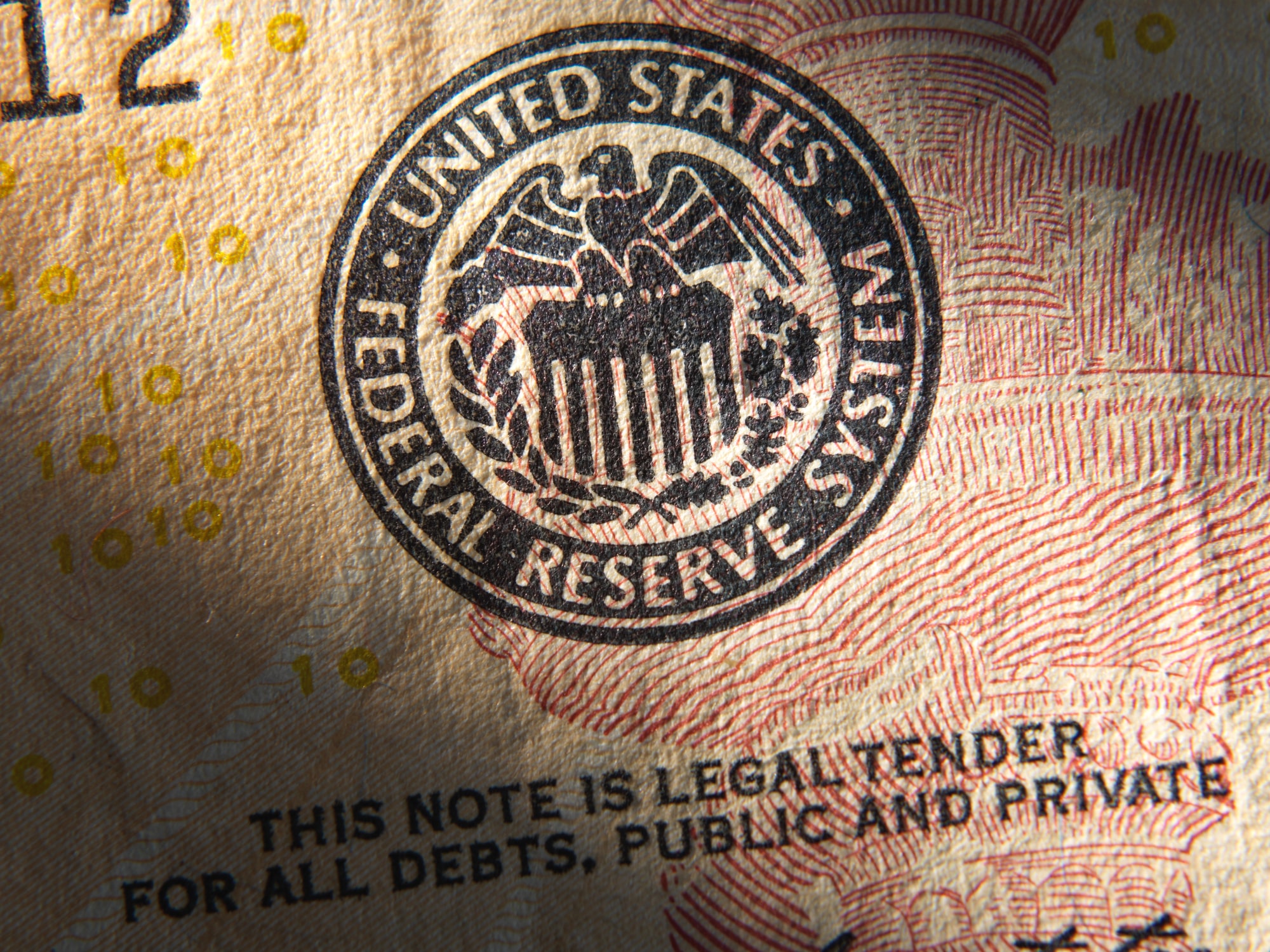
The ramp-up of money-printing by the Federal Reserve Bank since the COVID pandemic began has meant, like clockwork, an increase in CPI price inflation exceeding a seven percent annual rate. Though price inflation as measured by the CPI was temporarily delayed by the crosswinds of the shutdown-induced recession, the Fed inflation of the currency had already enriched the financial sector and created a wider income divide between the top one percent and the rest of the people. And this has not gone unnoticed by the political left, even if they remain ignorant of the real economic causes.
Economist and financier Richard Cantillon explained the impact of inflation upon the poor in his posthumous Essai nearly four centuries ago, in what has become called the “Cantillon Effect.” Cantillon posited that “the abundance of money makes everything more expensive” and that the persons who create the money benefit from its first use, while those who are further down the circulation river are robbed of the value of the money they do possess:
If the increase of hard money comes from gold and silver mines within the state, the owner of these mines, the entrepreneurs, the smelters, refiners, and all the other workers will increase their expenses in proportion to their profits.
Today, the miners and smelters are the financial sector, followed by the real estate sector, which Cantillon noted was a refuge from the ravages of inflation, observing that “an abundance of money naturally increases consumption and contributes above everything else to a higher valuation of the land.”
What that means from a practical point-of-view is that the poorer a man is, the more inflation hurts him. Inflation always takes from the creditor and gives to the debtor by devaluing dollar-denominated assets.
But how, you many ask, can a poor man be a creditor and a rich man be a debtor? One first needs credit in order to qualify for debt, and the poorer a man is, the less he is able to become a debtor. The working poor are always forced by the social construct to be a creditor:
Inflation always takes from the wage-earner and gives to the employer, to whom he has credited his labor while he awaits payday.
Inflation always takes from the renter and gives to the landlord, to whom he has advanced his rent and security deposit. But inflation protects the landowner by increasing the valuation of his land and comparatively diminishing the payments for his mortgage.
Inflation always takes from the wage-earner who deposits his wages and gives to the banker, whose very business is one of managing debt.
Inflation takes from the pensioner on a fixed income and gives to the financial sector.
Collectively, this is a huge transfer of wealth: an inflation tax on every single worker, collected from several weeks wages, a couple of months rent, all the bank deposits of the poor—levied also upon the value of fixed-income retirees—is transferred to those “miners and refiners” in the financial industry. Inflation is a direct redistribution of wealth from the working poor to the financial sector, which explains the extraordinary enrichment of the financial sector in the US since the end of the gold standard and rise of the age of inflation in the 1970s.
The rich man’s assets may include some cash and non-inflation-indexed bonds, but the overwhelming majority of the rich people’s assets are denominated in real estate, stocks and other assets that are relatively safe from inflation. And most of them benefit from inflation indirectly by being further up the inflation pipeline.
The middle class may have a home where the value of the mortgage payment is decreased by inflation (though this is never more than 29% of his income by industry rule) and may see a proportionate increase in the valuation of his home. But the other 71%-plus of his income is robbed regularly from inflation, so the middle class too becomes poorer overall.
The poor man is especially attacked by inflation. The poor man pays the inflation tax on 100% of his assets (which, however small they may be, are inevitably cash-denominated), 100% of his income, and everything he expects to receive as income, including the labor of his own hands.
Even before the CPI recorded price inflation, the increase in income disparity was already widened. Establishment politicians and their crony house economists will reliably deploy deflation as their tired, old bogey-man, inevitably bringing up irrelevant references to the Great Depression as a counter to this point. But deflation actually makes necessary goods more affordable to poor people during tough economic times at the expense of depreciation of the assets of the rich. The currency inflation created by the Fed actually cheated the poor out of this meager and needed benefit.
Inflation is the most regressive tax, and the most cruel. This is why there is so often starvation in nations with hyper-inflation; inflation preys on the most vulnerable in society, and the greater the inflation, the greater the harm inflicted upon the poor. It’s clearly long past time—for the sake of the poor—to abolish the Fed and restore a stable, commodity-based currency.
“There’s a problem with bank accounts, something happened… the transactions are being stopped, for whatever reason.”–Ukrainian activist Walter Lekh, in a Twitter Spaces conversation discussing avenues of donation in support of Ukraine.
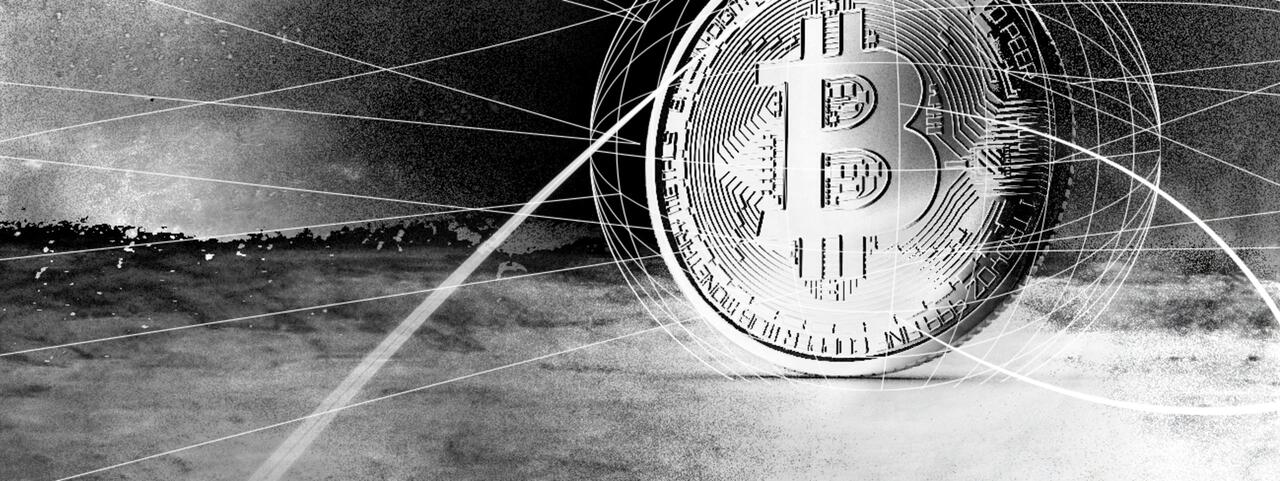
Developments in Eastern Europe have taken center stage for much of the world in the past few days. Aggressive and consistent flows of reporting from the ground in Ukraine as the country sees Russian troops invade are dominating social feeds and headlines.Coming out of these updates of conflict and bloodshed have been reports of non-governmental organizations (NGOs) that have been working directly with the Ukrainian government since 2015 now taking donations in bitcoin.Before this article goes any further, I would like to expressly advise that nobody donate any bitcoin funds until significant effort has been dedicated to verifying addresses as best as can be done. This article is not meant to be a political admission of support, nor a call to action. There are significant efforts being undertaken by multiple parties engaging in deception and confusion of information and traffic at this time. Also, for those who are partaking in any live streams of footage and/or social media postings of this conflict: Do not click on links provided by parties that you do not know or trust.This is an extremely volatile situation, and these areas have become a battleground for intelligence organizations, with hacker groups such as Anonymous joining in efforts. Taking part online in these areas may actively insert you into the digital crossfire.SourceOne such NGO is “SaveLife,” an organization that is claiming to be distributing funds on a 50/50 basis between supporting veterans and casualties of war, and equipping Ukrainian elements with necessary equipment such as body armor.SaveLife recently had its Patreon account frozen– echoing similar events around the Canadian Freedom Convoy, as well as many other tangentially-related scenarios that have occurred over the past two years with regards to centralized organizations actively working to limit freedoms of information as well as money transmission.This NGO, also known as Come Back Alive, was taking BTC donations leading up to the launch of this most recent escalation of aggression in Eastern Europe.At the time of writing, the address for SaveLife has received a total of over 346 BTC (about a $15 million dollar value), up massively in the last few days…







 MCViewPoint