MCViewPoint

Opinion from a Libertarian ViewPoint

Posts Tagged ‘Edward Snowden’

Living in a World Bereft of Privacy – Consortiumnews

Posted by M. C. on December 8, 2019

This low-level and laughably amateur attempt at extortion is risible. Unfortunately, the threat from our governments spying on us all is not.

Even back then we knew that computers could be captured by adversaries and turned against you – keystroke loggers, remote recording via microphones, cameras switched on to watch you, and many other horrors.

Living in a World Bereft of Privacy

By Annie Machon
in Brussels
Special to Consortium News

A few days ago I first received a menacing email from someone calling herself Susana Peritz. She told me “she” had hacked my email, planted malware on my computer, and had then filmed me getting my jollies while watching “interesting” porn online. Her email had caught my attention because it mentioned in the subject line a very old password, attached to a very old email address I had not used for over a decade. The malware must have been planted on a defunct computer.

Putting aside the fact that I am far more concerned about GCHQ or the NSA hacking my computer (as should we all be), this did rather amuse me.

Apparently, I must pay this “Susana” $1000 via Bitcoin or, shock, have my alleged pleasures shared with my acquaintances. And just last night I received another courteous request for cash from someone calling themselves Jillie Abdulrazak, but the price has now been inflated to $3000.

Why am I not concerned? Well, I can safely say – hand on heart – that I have never watched online porn. But this got me thinking about how or why I could have been singled out for this mark of a blackmailer’s esteem, and that brings me on to some rather dark thoughts.

It is perfectly possible that a rare, unguarded moment of long-distance online love might have been captured (but by whom?). That would probably be over a decade ago and would certainly have been using the old email account which was attached to the particular password at the time.

However, even those memories have been denied me – I distinctly remember that I have been too paranoid for too long and have always covered the built-in computer camera lens. Anything that could possibly have been recorded could only be audio – a saucy phone call at most. There can be no video of my younger self, alas.

I have had good reason to be paranoid. In the late 1990s I supported my former partner and fellow MI5 intelligence officer, David Shalyer, in his whistleblower exploits to expose the crimes and incompetence of the UK spy agencies at the time. This resulted in us literally going on the run across Europe, living in hiding for a year in la France profonde, and another two years in exile in Paris before he voluntarily returned to the UK in 2000 to face the music and inevitably, under the terms of the UK’ draconian 1989 Official Secrets Act, being sent to prison for exposing the crimes of British spies.

From those years, knowing what we knew about the spies’ capabilities even then, the sense of being always potentially watched has never rubbed off.

The Bigger Picture
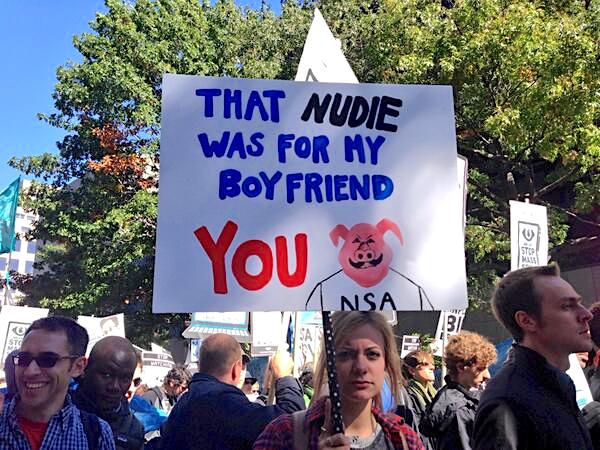
So, knowing absolutely that I have never watched any online porn and that I always keep my computer camera lens covered, “Susana” and “Jillie” can go whistle. You have tried to shake down the wrong paranoid ex-MI5 whistleblower, darlings. And my tech people are now hunting you.

Any possible audio could, I suppose, be spliced in some way to some dodgy video to make this the stuff of a blackmailer’s dreams. That, surely, will be easy to “forensicate” – and indeed I have other friends who can do this, at world class level.

Alternatively, the former love at the time could have recorded the audio for his own nefarious personal usage for some nebulous time in the future. And if that future is now, after he had shown himself a long time ago to be chronically dishonest, why do this in 2018 when we have been separated for years?

He may have possibly continued to used the old email account himself to watch vile material – he certainly had the password back then and perhaps he uses it to distance himself from his own porn habit (fapware, as the geeks call it)? If that is the case, he is even less honorable than I had considered him to be.

Or perhaps this is some type of dark LoveInt operation by the spooks, in some failed attempt to frighten or embarrass me?

But there is, of course, a bigger, more political picture.

Ever since I worked as an intelligence officer for MI5, before going on the run with Shayler during the whistleblowing years in the late 1990s, I have been painfully aware of the tech capabilities of the spies. Even back then we knew that computers could be captured by adversaries and turned against you – keystroke loggers, remote recording via microphones, cameras switched on to watch you, and many other horrors.

The whistleblowing of Edward Snowden back in 2013 has confirmed all this and more on an industrial, global scale – we are all potentially at risk of this particular invasion of our personal privacy. I have kept my computer and mobile camera lenses covered for all these years precisely because of this threat.

One specific Snowden disclosure, which has received little mainstream media traction, was a programme called OPTIC NERVE. This was a GCHQ program (funded by American money) that allowed the spooks to intercept in real time video conferencing calls. It turned out, horror, that 10 percent of them were of a salacious nature, and the spooks were shocked!

I have spoken about privacy and surveillance at conferences around the world and have many, many times had to debate the supposition that “if you are doing nothing wrong, you have nothing to hide.”

However, most people would like to keep their intimate relationships private. In this era of work travel and long distance relationships, more of us might well have intimate conversations and even video play via the internet. In an adult, consensual and mutually pleasurable context, we are doing nothing wrong and we have nothing to hide, but we surely don’t want the spooks to be watching us or listening in, any more than we would want the criminals capturing images and trying to shake us down for money.

This low-level and laughably amateur attempt at extortion is risible. Unfortunately, the threat from our governments spying on us all is not.

Annie Machon is a former intelligence officer in the UK’s domestic MI5 Security Service.

Be seeing you

"The Prisoner: Be Seeing You" iPhone Cases & Covers by ...


Posted in Uncategorized | Tagged: , , , , , , | Leave a Comment »

Google Admits That ‘Others’ Can Access The Camera On Samsung & Android Smartphones – Collective Evolution

Posted by M. C. on November 29, 2019

You hear about this now because Edward Snowdon paid the price.

  • Tape the front facing camera on your device while you’re not using it.
  • You may want to put some sticky tac over the microphone when you’re not using it as well.
  • Turn off your phone when not in use.
  • Simply use your phone less, and when not on it, put it in a different room.
  • You may want to be extra cautious when changing, or plotting to overthrow your government.
  • You can actually buy nifty little sliding covers to block your camera for your phone and computer.

https://www.collective-evolution.com/2019/11/23/google-admits-that-people-could-access-the-camera-on-samsung-android-smartphones/

In Brief

  • The Facts:Hackers have successfully been able to access the front facing cameras on Google and Samsung phones without permission from the user and regardless of whether or not the phone was unlocked. They were able to take pictures and record video.
  • Reflect On:Why should you care? This is an outright invasion of our right to privacy. If we continue to willingly give up all our rights, soon we won’t have any left.

As handy as they are, our smartphones are literally portable tracking devices. Equipped with GPS technology, people can easily be located and for most android users a record of where they’ve been each day since they’ve had their fancy phones is stored online. If that’s not creepy enough, the microphones on our phones are also able to record our conversations because they are listening even when we don’t think they are. Finally, you know those handy front-facing cameras often used to capture the perfect selfie? Recently, researchers have revealed how this camera can be used to spy on users, who would have thought?

The security research team from Checkmarx has uncovered a major vulnerability that is affecting Google and Samsung smartphones and has a potential to impact the hundreds of millions of android users across the globe. Apparently it’s now fixed, but the researchers discovered a way for a hack attacker to take control of the front facing camera and remotely take photos, record video, listen in on your conversations and more. All happening silently in the background without your awareness.

And, although it’s important to note that the following is merely speculation, if hackers have the ability to do this, then you better believe that the NSA and other high level government agencies are able to do the same thing.  This isn’t something new, Edward Snowden, NSA whistleblower, and many others like him have talked about and have explained how our phones are actually used to spy on us.

What Did The Checkmarx Security Research Team Find?

Their research began on the Google camera app on the Pixel 2XL and Pixel3 smartphones, they found a few vulnerabilities which were initiated by allowing an attacker to remotely bypass user permissions. Apparently facial recognition, fingerprint and password security, are not as secure as we’ve been led to believe.

“Our team found a way of manipulating specific actions and intents,” Erez Yalon, director of security research at Checkmarx said, “making it possible for any application, without specific permissions, to control the Google Camera app. This same technique also applied to Samsung’s Camera app.”

Davey Winder, from Forbes.com explains how an attacker is able to exploit the Google Camera app vulnerabilities,


Checkmarx created a proof of concept (PoC) exploit by developing a malicious application, a weather app of the type that is perennially popular in the Google Play Store. This app didn’t require any special permissions other than basic storage access. By just requesting this single, commonplace permission, the app would be unlikely to set off user alarm bells. We are, after all, conditioned to question unnecessary and extensive permission requests rather than a single, common one. This app, however, was far from harmless. It came in two parts, the client app running on the smartphone and a command and control server that it connects to in order to do the bidding of the attacker. Once the app is installed and started, it would create a persistent connection to that command and control server and then sit and wait for instructions. Closing the app did not close that server connection. What instructions could be sent by the attacker, resulting in what actions?

I hope you are sitting down as it’s a lengthy and worrying list.

  • Take a photo using the smartphone camera and upload it to the command server.
  • Record video using the smartphone camera and upload it to the command server.
  • Wait for a voice call to start, by monitoring the smartphone proximity sensor to determine when the phone is held to the ear and record the audio from both sides of the conversation.
  • During those monitored calls, the attacker could also record video of the user at the same time as capturing audio.
  • Capture GPS tags from all photos taken and use these to locate the owner on a global map.
  • Access and copy stored photo and video information, as well as the images captured during an attack.
  • Operate stealthily by silencing the smartphone while taking photos and recording videos, so no camera shutter sounds to alert the user.
  • The photo and video recording activity could be initiated regardless of whether the smartphone was unlocked.”

Of course when Google was confronted about this alarming issue they seemed glad to hear about it so that they could fix the problem, telling Winder after he reached out,…

But, to each there own. Some steps you can take to protect your privacy,

  • Tape the front facing camera on your device while you’re not using it.
  • You may want to put some sticky tac over the microphone when you’re not using it as well.
  • Turn off your phone when not in use.
  • Simply use your phone less, and when not on it, put it in a different room.
  • You may want to be extra cautious when changing, or plotting to overthrow your government.
  • You can actually buy nifty little sliding covers to block your camera for your phone and computer.
  • Personally, I’ve been toying with the idea of going back to a good ol’ basic flip phone… not just for the security and privacy measures, but to avoid wasting so much time.

Be seeing you

google-evil-1200x900

Posted in Uncategorized | Tagged: , , , , | Leave a Comment »

State Secrets and the National Security State | Mises Wire

Posted by M. C. on November 17, 2019

I’ve got a better idea: Let’s just dismantle America’s decades-long, nightmarish Cold War-era experiment with the totalitarian structure known as a national-security state and restore a limited-government republic to our land.

Jacob Hornberger is has thrown his hat in the Libertarian presidential candidate ring.

https://mises.org/wire/state-secrets-and-national-security-state

Inadvertently released federal documents reveal that U.S. officials have apparently secured a secret indictment against Julian Assange, the head of WikiLeaks who released secret information about the internal workings of the U.S. national-security establishment. In any nation whose government is founded on the concept of a national-security state, that is a cardinal sin, one akin to treason and meriting severe punishment.

Mind you, Assange isn’t being charged with lying or releasing false or fraudulent information about the U.S. national-security state. Everyone concedes that the WikiLeaks information was authentic. His “crime” was in disclosing to people the wrongdoing of the national-security establishment. No one is supposed to do that, even if the information is true and correct.

It’s the same with Edward Snowden, the American contractor with the CIA and the NSA who is now relegated to living in Russia. If Snowden returns home, he faces federal criminal prosecution, conviction, and incarceration for disclosing secrets of the U.S. national-security establishment. Again, his “crime” is disclosing the truth about the internal workings of the national-security establishment, not disseminating false information.

Such secrecy and the severe punishment for people who disclose the secrets to the public were among the things that came with the conversion of the federal government to a national-security state.

Recall that when the U.S. government was called into existence by the Constitution, it was a type of governmental structure known as a limited-government republic. Under that type of governmental structure, the federal government’s powers were extremely limited. The only powers that federal officials could lawfully exercise were those few that were enumerated in the Constitution itself.

Under the republic form of government, there was no enormous permanent military establishment, no CIA, and no NSA, which are the three components of America’s national-security state. That last thing Americans wanted was that type of government. In fact, if Americans had been told that the Constitution was going to bring into existence a national-security state, they never would have approved the deal and would have continued operating under the Articles of Confederation, a type of governmental system where the federal government’s powers were so few that it didn’t even have the power to tax.

Under the republic, governmental operations were transparent. There was no such thing as “state secrets” or “national security.” Except for the periodic backroom deals in which politicians would make deals, things generally were open and above-board for people to see and make judgments on.

That all changed when the federal government was converted from a limited-government republic to a national-security state after World War II. Suddenly, the federal government was vested with omnipotent powers, so long as they were being exercised by the Pentagon, the CIA, or the NSA in the name of “national security.”

Interestingly enough, the conversion of the federal government to a national-security state was not done through constitutional amendment. Nonetheless, the federal judiciary has long upheld or simply deferred to the exercise of omnipotent powers by the national-security establishment.

An implicit part of the conversion was that the Pentagon, the CIA, and the NSA would be free to exercise their omnipotent powers in secret. Secrecy has always been a core element in any government that is structured as a national-security state, especially when it involves dark, immoral, and nefarious powers that are being exercised for the sake of “national security.”

One action that oftentimes requires the utmost in secrecy involves assassination, which is really nothing more than legalized murder. Not surprisingly, many national-security officials want to keep their role in state-sponsored murder secret. Another example is coups initiated in foreign countries. U.S. officials bend over backwards to hide their role in such regime-change operations. And then there are the surveillance schemes whereby citizens are foreigners are spied up and monitored. Kidnapping, indefinite detention, and torture are still more examples.

Of course, these are the types of things that we ordinarily identify with totalitarian regimes. The reason for that is that a national-security state governmental system is inherent to totalitarian regimes. For example, the Nazi government, which was a national-security state too, had an enormous permanent military establishment and a Gestapo, which wielded the powers of assassination, indefinite detention, torture, and secret surveillance. And not surprisingly, to disclose the secrets of German’s national-security state involved severe punishment.

But it’s not just Nazi Germany. There are many other examples of totalitarian regimes that are based on the concept of national security and structured as a national-security state. Chile under Pinochet. The Soviet Union. Communist China. North Korea. Vietnam. Egypt. Pakistan. Iraq. Afghanistan. Saudi Arabia. Turkey, Myanmar. And the United States. The list goes on and on.

And every one of those totalitarian regimes has a state-secrets doctrine, the same doctrine that the Pentagon, CIA, and NSA have.

A newspaper in Vietnam, which of course is ruled by a communist regime, reported that a Vietnamese citizen named Phan Van Anh Vu was sentenced to 9 years in prison for “deliberately disclosing state secrets.”

A website for the Committee to Protect Journalists reported that the Chinese communist regime charged a Chinese journalist named Yang Xiuqiong with “illegally providing state secrets overseas.” The Chinese Reds have also charged a prominent environmental activist named Liu Shu with “revealing state secrets related to China’s counterespionage work.”

The military dictatorship in Myanmar convicted two Reuters reporters for violating the country’s law that prohibits the gathering of secret documents to help an enemy.

RT reports that the Russian military will “launch obligatory courses on the protection of state secrets starting next year.

US News reports that the regime in Turkey is seeking the extradition from Germany of Turkish journalist Can Dunbar, who was convicted of revealing state secrets.

Defenders of Assange and Snowden and other revealers of secrets of the U.S. national security state point to the principles of freedom of speech and freedom of the press to justify their disclosures.

I’ve got a better idea: Let’s just dismantle America’s decades-long, nightmarish Cold War-era experiment with the totalitarian structure known as a national-security state and restore a limited-government republic to our land.

Originally published by the Future of Freedom Foundation.

Jacob G. Hornberger is founder and president of The Future of Freedom Foundation.

Be seeing you

The Realist Report: (Israeli trained) Police State in America

Posted in Uncategorized | Tagged: , , , , , , , | Leave a Comment »

Edward Snowden on the Joe Rogan Podcast – Says US Government Could Have Prevented 9/11

Posted by M. C. on October 25, 2019

https://www.wakingtimes.com/2019/10/23/edward-snowden-on-the-joe-rogan-podcast-says-us-government-could-have-prevented-9-11/

Vic Bishop

ince 2013 the real government whistleblower, Edward Snowden, has been in political asylum in Russia, where he continues to write books and tell his story of how as an employee of the NSA he discovered that the government was breaking the law in constructing a massive surveillance state. Today, the surveillance is such a ubiquitous par of our lives, that people have come to see it as a normal part of everyday life, and hardly any politician bothers to work against it. It’s here to stay, sadly.

Recently, Snowden published a book entitled Permanent Record, which was immediately attacked by the US government, prompting them to sue Snowden for all of the profits related to the book. The government does not want you to hear his message. Ironically, though, Permanent Record became an instant bestseller, and Snowden’s popularity has only increased in recent years.

In a newly released podcast by Joe Rogan, Snowden calls in from Russia, talking about his understanding of how corruption from within has led the permanent establishment of the massive and highly profitable surveillance state which has filled the coffers of defense contractors and corrupt politicians. Snowden discusses the fact that all three branches of the U.S government are corrupt and that for admirable government employees who witness government agencies breaking the law have no available channels to blow the whistle and get the truth out to the American people.

Interestingly, in the podcast Snowden also talks about his experience on 9/11 when he was working for a small business out of a house on Fort Meade near the DC metro area. He describes how the base, which is home to a vast portion of the U.S. Military’s intelligence apparatus, was immediately dispatched and the base cleared as soon as the events of the day began to unfold.

Snowden points out how strange this was, considering that all of the personnel on the base would have been more than willing to take the risk of being attacked in order to fulfill the duty they has all signed up for, that of protecting the American people. Snowden’s point here is that the intelligence agencies were essentially taken off-line at the most critical moment in the entire history of their existence.

So, why did the directors of these agencies send all of these resources home on 9/11?

Snowden continues…

“It says so much about the bureaucratic character of how the government works. The people who rise to the top of these governments. It’s about risk management for them. It’s about never being criticized for something…


Everybody wants to believe in conspiracy theories because it helps life make sense. It helps us believe that somebody is in control… that somebody is calling the shots, that these things all happen for a reason. There are real conspiracies… but when you look back at the 9/11 report and when you look back at the history of what actually happened, what we can prove. Not on what we can speculate on, but what are at least are the commonly agreed facts… it’s very clear to me, as someone who worked in the intelligence community… that these attacks could have been prevented.” ~Edward Snowden

He goes on to explain that the government’s excuse for not preventing the attacks was essentially due to the fact that the various intelligence agencies were unable to effectively share information, coordinate investigations, and work together. Snowden is implying that 9/11 was essentially allowed to happen so that the mass surveillance state, which is insanely profitable to certain people, could be created. And it has since been created.

Considering that the Patriot Act soon followed 9/11, and in the nearly two decades since, the massive warfare and surveillance state continues to balloon and spread its reach into American citizen’s lives and around the globe, Snowden’s assessment seems rather accurate.

The full interview is almost 3 hours long, and is posted in full here:

Read more articles by Vic Bishop.

Be seeing


Posted in Uncategorized | Tagged: , , , , | Leave a Comment »

Without encryption, we will lose all privacy. This is our new battleground

Posted by M. C. on October 16, 2019

The US, UK and Australia are taking on Facebook in a bid to undermine the only method that protects our personal information

Edward Snowden is a US surveillance whistleblower

In every country of the world, the security of computers keeps the lights on, the shelves stocked, the dams closed, and transportation running. For more than half a decade, the vulnerability of our computers and computer networks has been ranked the number one risk in the US Intelligence Community’s Worldwide Threat Assessment – that’s higher than terrorism, higher than war. Your bank balance, the local hospital’s equipment, and the 2020 US presidential election, among many, many other things, all depend on computer safety.

And yet, in the midst of the greatest computer security crisis in history, the US government, along with the governments of the UK and Australia, is attempting to undermine the only method that currently exists for reliably protecting the world’s information: encryption. Should they succeed in their quest to undermine encryption, our public infrastructure and private lives will be rendered permanently unsafe.

In the simplest terms, encryption is a method of protecting information, the primary way to keep digital communications safe. Every email you write, every keyword you type into a search box – every embarrassing thing you do online – is transmitted across an increasingly hostile internet. Earlier this month the US, alongside the UK and Australia, called on Facebook to create a “backdoor”, or fatal flaw, into its encrypted messaging apps, which would allow anyone with the key to that backdoor unlimited access to private communications. So far, Facebook has resisted this.

If internet traffic is unencrypted, any government, company, or criminal that happens to notice it can – and, in fact, does – steal a copy of it, secretly recording your information for ever. If, however, you encrypt this traffic, your information cannot be read: only those who have a special decryption key can unlock it.

I know a little about this, because for a time I operated part of the US National Security Agency’s global system of mass surveillance. In June 2013 I worked with journalists to reveal that system to a scandalised world. Without encryption I could not have written the story of how it all happened – my book Permanent Record – and got the manuscript safely across borders that I myself can’t cross. More importantly, encryption helps everyone from reporters, dissidents, activists, NGO workers and whistleblowers, to doctors, lawyers and politicians, to do their work – not just in the world’s most dangerous and repressive countries, but in every single country.

When I came forward in 2013, the US government wasn’t just passively surveilling internet traffic as it crossed the network, but had also found ways to co-opt and, at times, infiltrate the internal networks of major American tech companies. At the time, only a small fraction of web traffic was encrypted: six years later, Facebook, Google and Apple have made encryption-by-default a central part of their products, with the result that today close to 80% of web traffic is encrypted. Even the former director of US national intelligence, James Clapper, credits the revelation of mass surveillance with significantly advancing the commercial adoption of encryption. The internet is more secure as a result. Too secure, in the opinion of some governments.

Donald Trump’s attorney general, William Barr, who authorised one of the earliest mass surveillance programmes without reviewing whether it was legal, is now signalling an intention to halt – or even roll back – the progress of the last six years. WhatsApp, the messaging service owned by Facebook, already uses end-to-end encryption (E2EE): in March the company announced its intention to incorporate E2EE into its other messaging apps – Facebook Messenger and Instagram – as well. Now Barr is launching a public campaign to prevent Facebook from climbing this next rung on the ladder of digital security. This began with an open letter co-signed by Barr, UK home secretary Priti Patel, Australia’s minister for home affairs and the US secretary of homeland security, demanding Facebook abandon its encryption proposals.

If Barr’s campaign is successful, the communications of billions will remain frozen in a state of permanent insecurity: users will be vulnerable by design. And those communications will be vulnerable not only to investigators in the US, UK and Australia, but also to the intelligence agencies of China, Russia and Saudi Arabia – not to mention hackers around the world.

End-to-end encrypted communication systems are designed so that messages can be read only by the sender and their intended recipients, even if the encrypted – meaning locked – messages themselves are stored by an untrusted third party, for example, a social media company such as Facebook.

The central improvement E2EE provides over older security systems is in ensuring the keys that unlock any given message are only ever stored on the specific devices at the end-points of a communication – for example the phones of the sender or receiver of the message – rather than the middlemen who own the various internet platforms enabling it. Since E2EE keys aren’t held by these intermediary service providers, they can no longer be stolen in the event of the massive corporate data breaches that are so common today, providing an essential security benefit. In short, E2EE enables companies such as Facebook, Google or Apple to protect their users from their scrutiny: by ensuring they no longer hold the keys to our most private conversations, these corporations become less of an all-seeing eye than a blindfolded courier.

It is striking that when a company as potentially dangerous as Facebook appears to be at least publicly willing to implement technology that makes users safer by limiting its own power, it is the US government that cries foul. This is because the government would suddenly become less able to treat Facebook as a convenient trove of private lives.

To justify its opposition to encryption, the US government has, as is traditional, invoked the spectre of the web’s darkest forces. Without total access to the complete history of every person’s activity on Facebook, the government claims it would be unable to investigate terrorists, drug dealers money launderers and the perpetrators of child abuse – bad actors who, in reality, prefer not to plan their crimes on public platforms, especially not on US-based ones that employ some of the most sophisticated automatic filters and reporting methods available.

The true explanation for why the US, UK and Australian governments want to do away with end-to-end encryption is less about public safety than it is about power: E2EE gives control to individuals and the devices they use to send, receive and encrypt communications, not to the companies and carriers that route them. This, then, would require government surveillance to become more targeted and methodical, rather than indiscriminate and universal.

What this shift jeopardises is strictly nations’ ability to spy on populations at mass scale, at least in a manner that requires little more than paperwork. By limiting the amount of personal records and intensely private communications held by companies, governments are returning to classic methods of investigation that are both effective and rights-respecting, in lieu of total surveillance. In this outcome we remain not only safe, but free.

Edward Snowden is former CIA officer and whistleblower, and author of Permanent Record. He is president of the board of directors of the Freedom of the Press Foundation

Be seeing you

granny

Did Granny hear a CLICK?

Posted in Uncategorized | Tagged: , , , , , | 3 Comments »

The Rutherford Institute :: John Lennon vs. the Deep State: One Man Against the ‘Monster’ | By John W. Whitehead |

Posted by M. C. on October 9, 2019

https://www.rutherford.org/publications_resources/john_whiteheads_commentary/john_lennon_vs._the_deep_state_one_man_against_the_monster

By John W. Whitehead

“You gotta remember, establishment, it’s just a name for evil. The monster doesn’t care whether it kills all the students or whether there’s a revolution. It’s not thinking logically, it’s out of control.”—John Lennon (1969)

John Lennon, born 79 years ago on October 9, 1940, was a musical genius and pop cultural icon.

He was also a vocal peace protester and anti-war activist and a high-profile example of the lengths to which the Deep State will go to persecute those who dare to challenge its authority.

Long before Julian Assange, Edward Snowden and Chelsea Manning were being castigated for blowing the whistle on the government’s war crimes and the National Security Agency’s abuse of its surveillance powers, it was Lennon who was being singled out for daring to speak truth to power about the government’s warmongering, his phone calls monitored and data files illegally collected on his activities and associations.

For a while, at least, Lennon became enemy number one in the eyes of the U.S. government.

Years after Lennon’s assassination it would be revealed that the FBI had collected 281 pages of files on him, including song lyrics. J. Edgar Hoover, head of the FBI at the time, directed the agency to spy on the musician. There were also various written orders calling on government agents to frame Lennon for a drug bust. “The FBI’s files on Lennon … read like the writings of a paranoid goody-two-shoes,” observed reporter Jonathan Curiel.

As the New York Times notes, “Critics of today’s domestic surveillance object largely on privacy grounds. They have focused far less on how easily government surveillance can become an instrument for the people in power to try to hold on to power. ‘The U.S. vs. John Lennon’ … is the story not only of one man being harassed, but of a democracy being undermined.”

Indeed, all of the many complaints we have about government today—surveillance, militarism, corruption, harassment, SWAT team raids, political persecution, spying, overcriminalization, etc.—were present in Lennon’s day and formed the basis of his call for social justice, peace and a populist revolution.

For all of these reasons, the U.S. government was obsessed with Lennon, who had learned early on that rock music could serve a political end by proclaiming a radical message. More importantly, Lennon saw that his music could mobilize the public and help to bring about change. Lennon believed in the power of the people. Unfortunately, as Lennon recognized: “The trouble with government as it is, is that it doesn’t represent the people. It controls them.”

However, as Martin Lewis writing for Time notes: “John Lennon was not God. But he earned the love and admiration of his generation by creating a huge body of work that inspired and led. The appreciation for him deepened because he then instinctively decided to use his celebrity as a bully pulpit for causes greater than his own enrichment or self-aggrandizement.”

For instance, in December 1971 at a concert in Ann Arbor, Mich., Lennon took to the stage and in his usual confrontational style belted out “John Sinclair,” a song he had written about a man sentenced to 10 years in prison for possessing two marijuana cigarettes. Within days of Lennon’s call for action, the Michigan Supreme Court ordered Sinclair released.

What Lennon did not know at the time was that government officials had been keeping strict tabs on the ex-Beatle they referred to as “Mr. Lennon.” Incredibly, FBI agents were in the audience at the Ann Arbor concert, “taking notes on everything from the attendance (15,000) to the artistic merits of his new song.”

The U.S. government, steeped in paranoia, was spying on Lennon…

Among those most closely watched by the FBI was Martin Luther King Jr., a man labeled by the FBI as “the most dangerous and effective Negro leader in the country.” With wiretaps and electronic bugs planted in his home and office, King was kept under constant surveillance by the FBI with the aim of “neutralizing” him. He even received letters written by FBI agents suggesting that he either commit suicide or the details of his private life would be revealed to the public. The FBI kept up its pursuit of King until he was felled by a hollow-point bullet to the head in 1968…

So what’s the answer?

Lennon had a multitude of suggestions.

“If everyone demanded peace instead of another television set, then there’d be peace.”

“War is over if you want it.”

“Produce your own dream…. It’s quite possible to do anything, but not to put it on the leaders…. You have to do it yourself. That’s what the great masters and mistresses have been saying ever since time began. They can point the way, leave signposts and little instructions in various books that are now called holy and worshipped for the cover of the book and not for what it says, but the instructions are all there for all to see, have always been and always will be. There’s nothing new under the sun. All the roads lead to Rome. And people cannot provide it for you. I can’t wake you up. You can wake you up. I can’t cure you. You can cure you.”

“Peace is not something you wish for; It’s something you make, Something you do, Something you are, And something you give away.”

“If you want peace, you won’t get it with violence.”

And my favorite advice of all: “Say you want a revolution / We better get on right away / Well you get on your feet / And out on the street / Singing power to the people.”

Be seeing you

hoover

Yes son, you too can grow up to be lying scum and hate black people.


Posted in Uncategorized | Tagged: , , , , , , | Leave a Comment »

The Ukrainegate ‘Whisteblower’ Isn’t a Real Whistleblower – Rolling Stone

Posted by M. C. on October 8, 2019

Americans who’ve blown the whistle over serious offenses by the federal government either spend the rest of their lives overseas, like Edward Snowden, end up in jail, like Chelsea Manning, get arrested and ruined financially, like former NSA official Thomas Drake, have their homes raided by FBI like disabled NSA vet William Binney, or get charged with espionage like ex-CIA exposer-of-torture John Kiriakou. It’s an insult to all of these people, and the suffering they’ve weathered, to frame the ballcarrier in the Beltway’s latest partisan power contest as a whistleblower.

https://www.rollingstone.com/politics/political-commentary/whistleblower-ukraine-trump-impeach-cia-spying-895529/

Start with the initial headline, in the story the Washington Post “broke” on September 18th:

TRUMP’S COMMUNICATIONS WITH FOREIGN LEADER ARE PART OF WHISTLEBLOWER COMPLAINT THAT SPURRED STANDOFF BETWEEN SPY CHIEF AND CONGRESS, FORMER OFFICIALS SAY

The unnamed person at the center of this story sure didn’t sound like a whistleblower. Our intelligence community wouldn’t wipe its ass with a real whistleblower.

Americans who’ve blown the whistle over serious offenses by the federal government either spend the rest of their lives overseas, like Edward Snowden, end up in jail, like Chelsea Manning, get arrested and ruined financially, like former NSA official Thomas Drake, have their homes raided by FBI like disabled NSA vet William Binney, or get charged with espionage like ex-CIA exposer-of-torture John Kiriakou. It’s an insult to all of these people, and the suffering they’ve weathered, to frame the ballcarrier in the Beltway’s latest partisan power contest as a whistleblower.

Drake, who was the first to expose the NSA’s secret surveillance program, seems to have fared better than most. He ended up working in an Apple Store, where he ran into Eric Holder, who was shopping for an iPhone.

I’ve met a lot of whistleblowers, in both the public and private sector. Many end up broke, living in hotels, defamed, (often) divorced, and lucky if they have any kind of job. One I knew got turned down for a waitressing job because her previous employer wouldn’t vouch for her. She had little kids.

The common thread in whistleblower stories is loneliness. Typically the employer has direct control over their ability to pursue another job in their profession. Many end up reviled as traitors, thieves, and liars. They often discover after going public that their loved ones have a limited appetite for sharing the ignominy. In virtually all cases, they end up having to start over, both personally and professionally.

With that in mind, let’s look at what we know about the first “whistleblower” in Ukrainegate:

  • He or she is a “CIA officer detailed to the White House”;
  • The account is at best partially based upon the CIA officer’s own experience, made up substantially by information from “more than a half dozen U.S. officials” and the “private accounts” of “my colleagues”;
  • “He or she” was instantly celebrated as a whistleblower by news networks and major newspapers.

That last detail caught the eye of Kiriakou, a former CIA Counterterrorism official who blew the whistle on the agency’s torture program.

“It took me and my lawyers a full year to get [the media] to stop calling me ‘CIA Leaker John Kirakou,” he says. “That’s how long it took for me to be called a whistleblower.”

Kirakou’s crime was talking to ABC News and the New York Times about the CIA’s torture program. For talking to American journalists about the CIA, our federal government charged Kiriakou with espionage. That absurd count was ultimately dropped, but he still did 23 months at FCI Loretto in Western Pennsylvania.

When Kiriakou first saw the “whistleblower complaint,” his immediate reaction was to wonder what kind of “CIA officer” the person in question was. “If you spend a career in the CIA, you see all kinds of subterfuge and lies and crime,” he says. “This person went through a whole career and this is the thing he objects to?”

It’s fair to wonder if this is a one-person effort. Even former CIA official Robert Baer, no friend of Trump, said as much in an early confab on CNN with Brooke Baldwin:…

That might prove to be true, but if we’re talking about the treatment of whistleblowers, Trump has a long way to go before he approaches the brutal record of the CIA, the NSA, the FBI, as well as the cheerleading Washington political establishment. Forgetting this is likely just the first in what will prove to be many deceptions about a hardcore insider political battle whose subtext is a lot more shadowy and ambiguous than news audiences are being led to believe.

Be seeing you

Boy Blowing Whistle And Calling Time Out Stock Footage ...

Posted in Uncategorized | Tagged: , , , , , , | Leave a Comment »

Edward Snowden On Trump, Privacy, and Threats to Democracy: One Hour Interview on MSNBC – Antiwar.com Blog

Posted by M. C. on September 25, 2019

https://www.antiwar.com/blog/2019/09/23/edward-snowden-on-trump-privacy-and-threats-to-democracy-one-hour-interview-on-msnbc/

Posted in Uncategorized | Tagged: , , , | Leave a Comment »

The Very Book The Government Does Not Want You To Read Just Went #1 In The World – Collective Evolution

Posted by M. C. on September 20, 2019

https://www.collective-evolution.com/2019/09/18/the-very-book-the-government-does-not-want-you-to-read-just-went-1-in-the-world/

In Brief

  • The Facts:Edward Snowden recently released a book titled “Permanent Record.” The US government is now suing the publisher of the book for not giving the CIA and the NSA a chance to erase classified details from the book.
  • Reflect On:What is the government really protecting? Are they protecting the well being of the citizenry or are they protecting immoral, unethical, political, corporate and elitist interests?

George Orwell’s 1984 is a classic book depicting a populace ruled by a political regime that persecutes individualism and independent critical thinking as “thoughtcrimes” that must be enforced by the “thought police.” This party seeks power above all, and, through the propagandist Ministry of Truth, presents the people with their version of truth and casts away all other information and opinion. Sound familiar?


This is exactly what’s happening today right in front of our eyes. The “ministry of truth” comes in the form, at least on social media, as FakeNews watchdogs. These are entities that are flagging information that threatens corporate and political interests and labels it as “fake news” when a lot of it, is in fact, the complete opposite. Since when does an authoritative entity like the government have to step in and decide for the people what is real and what is not? Are people not capable of examining sources and determining this for themselves? These fake news watchdogs have some interesting sponsors. One of these sponsors, for example, is NewsGuard. They are funded by Clinton donors and big pharma, with ties to the CFR. You can read more about that entity here.

Companies and government agencies who are threatened by information also seem to be employing an “army of bloggers, surrogates, trolls, and bots on Twitter, Facebook, and by email” (Robert F. Kennedy Jr.) to try and sway discussion and brainwash people. We here at Collective Evolution have been experiencing them as well.

The world knows why the hunt for Julian Assange was ongoing for so long, it’s because he leaked secrets and exposed those who keep them. He exposed the lies, corruption and deceit that represents the backbone of the Western military alliance and the American empire. He exposed, in the words of John F. Hylan, former Mayor of New York City, the “real menace of Republic”, the “invisible government, which like a giant octopus sprawls its slimy legs over our cities, states and nation.” He exposes the ones “who virtually run the United States government for their own selfish purposes.” (source)(source)

He exposed immoral and unethical actions that have no basis and justification, he is a hero.

The same thing goes for National Security Agency (NSA) whistleblower Edward Snowden, who leaked classified documents regarding the scope of the US governments surveillance programs, which is and was huge. He is and was not the first, William Binney did the same, along with Thomas Drake and many others.

advertisement – learn more

Keep in mind that this is a global mass surveillance program. Snowden recently released a book about it, and more.

The Takeaway

At the end of the day, the US government suing the publisher of Snowden’s book is only bringing more attention to the truth of mass censorship and that this global elite is losing power. The more the global elite respond the way they are, with this like the mass censorship of information, alternative independent media outlets being shut down, and jailing people like Julian Assange, the more they hurt their own interests… which is inspiring for humanity as we awaken

Be seeing you

Assange

Posted in Uncategorized | Tagged: , , , , , , , | Leave a Comment »

Edward Snowden Responds After Trump DOJ Sues Whistleblower Over New Memoir the US Government “Does Not Want You to Read”

Posted by M. C. on September 19, 2019

https://www.activistpost.com/2019/09/edward-snowden-responds-after-trump-doj-sues-whistleblower-over-new-memoir-the-us-government-does-not-want-you-to-read.html

By Julia Conley

Citing what First Amendment advocates have called an “unconstitutional” system of controlling what federal employees can and cannot say about their work, President Donald Trump’s Justice Department on Tuesday filed a lawsuit against NSA whistleblower Edward Snowden over the publication of his new memoir.

The day the book Permanent Record was released, the DOJ filed its lawsuit claiming Snowden had published without submitting the book for “pre-publication review.”

The DOJ is not seeking to block publication of the book but is instead arguing that Snowden should not profit from the story of his 2013 decision to leak files about the NSA’s phone and email spying program since he didn’t have permission from the government to share the information.

The government wants all proceeds from the book and is asking MacMillan Publishers to keep any revenue from being transferred to Snowden.

Government approval is required of federal employees before they write or speak publicly about their work—a requirement that the ACLU says has kept millions of Americans from being able to speak openly about the government.

Snowden tweeted about the lawsuit shortly after it was reported, including a link to his book’s page on Amazon and the words, “This is the book the government does not want you to read.”

“Mr. Snowden wrote this book to continue a global conversation about mass surveillance and free societies that his actions helped inspire,” said Ben Wizner, director of the ACLU’s Speech, Privacy, and Technology Project and a lawyer for Snowden. “He hopes that today’s lawsuit by the United States government will bring the book to the attention of more readers throughout the world.

“This book contains no government secrets that have not been previously published by respected news organizations,” added Wizner. “Had Mr. Snowden believed that the government would review his book in good faith, he would have submitted it for review. But the government continues to insist that facts that are known and discussed throughout the world are still somehow classified.”

The Movement for a People’s Party decried the Justice Department for continuing its “war on whistleblowers” targeting Snowden and others who in recent years have publicized government secrets, including war crimes.

The ACLU and the Knight First Amendment Institute are currently challenging the pre-publication review in court, arguing it violates the First and Fifth Amendments.

“The prepublication process in its current form is broken and unconstitutional, and it needs to go,” Brett Max Kaufman, staff attorney with the ACLU’s Center for Democracy, said in April when the groups filed suit. “It’s one thing to censor the nuclear codes, but it’s another to censor the same information high schoolers are pulling from Wikipedia. Prepublication review gives the government far too much power to suppress speech that the public has a right to hear.”

Jameel Jaffer, executive director of the Knight First Amendment Institute, called the agreement that demands federal workers’ silence a “far-reaching censorship system” that “simply can’t be squared with the Constitution.”

“The government has a legitimate interest in protecting bona fide national-security secrets,” said Jaffer, “but this system sweeps too broadly, fails to limit the discretion of government censors, and suppresses political speech that is vital to informing public debate.”

Be seeing you

?u=http3.bp.blogspot.com-wtTO_3E8owUUb8nrVXrTBIAAAAAAAAWJIrSPHNLg-_4As640DigitalprivacyInternetSurveillanceandThePRISM-EnemiesoftheInternet.jpg&f=1


Posted in Uncategorized | Tagged: , , , , , | Leave a Comment »