MCViewPoint

Opinion from a Libertarian ViewPoint

Posts Tagged ‘FBI’

The FBI’s Long History of Treating Political Dissent as Terrorism

Posted by M. C. on October 25, 2019

Like the old bureau under Palmer, today’s FBI also casts its net around a wide range of civil society and social justice groups as well as racial and religious minorities.

“What is known is that there is a persistent pattern of monitoring civil society activity,”

https://theintercept.com/2019/10/22/terrorism-fbi-political-dissent/

While terrorism in the U.S. is relatively rare, over the last decade most politically motivated violence has come at the hands of far-right extremists. Despite that reality, the FBI has devoted disproportionate resources to the surveillance of nonviolent civil society groups and protest movements, particularly on the left, using its mandate to protect national security to target scores of individuals posing no threat but opposing government policies and practices.

Since 2010, the FBI has surveilled black activists and Muslim Americans, Palestinian solidarity and peace activists, Abolish ICE protesters, Occupy Wall Street, environmentalists, Cuba and Iran normalization proponents, and protesters at the Republican National Convention. And that is just the surveillance we know of — as the civil liberties group Defending Rights & Dissent documents in a report published today. The report is a detailed catalog of known FBI First Amendment abuses and political surveillance since 2010, when the Department of Justice’s Office of Inspector General published the last official review of Bush-era abuses. The incidents the report references, many of which were previously covered by The Intercept, were largely exposed through public records requests by journalists, activists, and civil rights advocates. The FBI relentlessly fought those disclosures, and the documents we have were often so heavily redacted they only revealed the existence of initiatives like a “Race Paper” or an “Iron Fist” operation, both targeting racial justice activists, while giving away little detail about their content.

But the targeting of political dissent is nothing new for the FBI. In fact, one of the bureau’s first campaigns, which began a hundred years ago next month, was an abusive crackdown of politically active immigrants it viewed as disloyal potential terrorists.

On the second anniversary of Russia’s Bolshevik Revolution, law enforcement agents at the direction of the U.S. Department of Justice’s Bureau of Investigation — the FBI’s precursor — raided the Russian People’s House in New York City, where immigrants gathered to take classes, and beat and arrested everyone they found there. In the months following, local and federal police across major U.S. cities rounded up thousands of men and women, mostly foreign-born, who they accused of being subversives and Communists. The raids followed politically motivated investigations into immigrant associations, labor organizing groups, and leftist and anarchist circles.
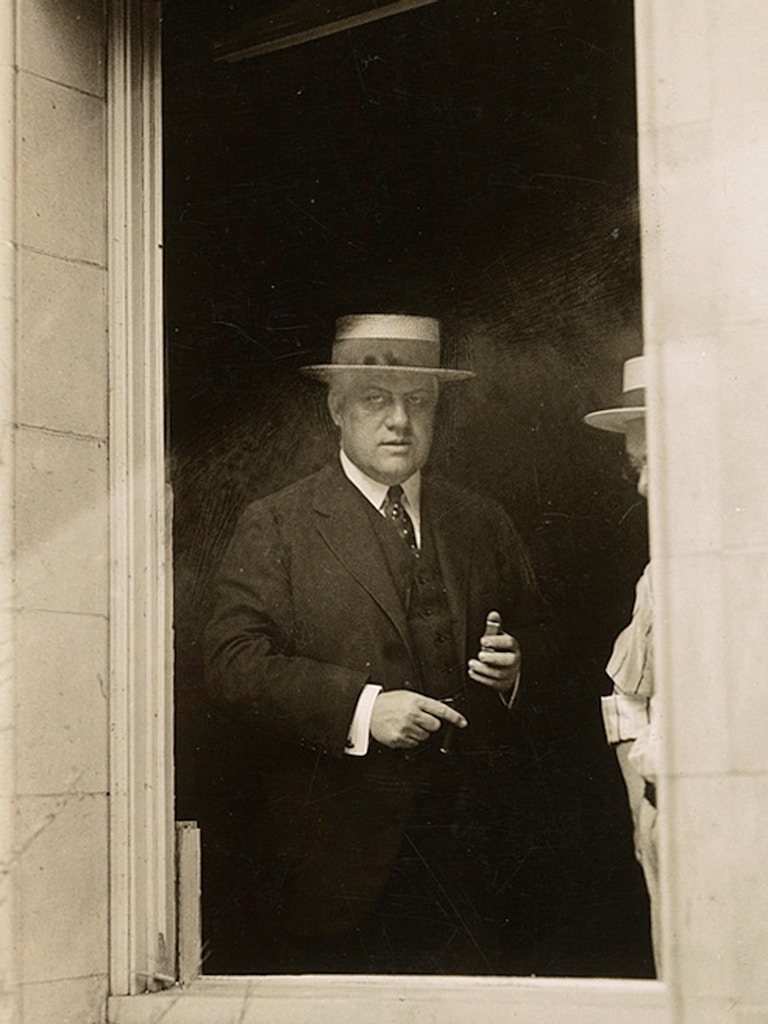
07211v-loc-edit-1571670580

Attorney General A. Mitchell Palmer, seen through the window of his home at in Washington, D.C., after it was bombed on June 2, 1919.

The Palmer Raids, as they came to be known, after Attorney General A. Mitchell Palmer, ushered in an era that tested the nation’s commitment to the civil liberties enshrined in the Constitution. One hundred years later, the FBI continues to target political dissent with a broad mandate, little oversight, and next to no transparency. The FBI continues to routinely conflate dissent with terrorism, and remains particularly fixated on leftist ideologies. Like the old bureau under Palmer, today’s FBI also casts its net around a wide range of civil society and social justice groups as well as racial and religious minorities.

“What is known is that there is a persistent pattern of monitoring civil society activity,” the report concludes, calling for strict oversight and reform of the bureau. “The FBI continuously singles out peace, racial justice, environmental, and economic justice groups for scrutiny. This is consistent with a decades-long pattern of FBI First Amendment abuses and suggests deeply seated political bias.”

After reviewing the report, a spokesperson for the FBI wrote in a statement to The Intercept that every activity the FBI conducts “must uphold the Constitution and be carried out in accordance with federal laws.” The spokesperson added that the bureau’s investigative activities “may not be based solely on the exercise of rights guaranteed by the First Amendment” and that its methods “are subject to multiple layers of oversight.” On its website, the bureau calls the Palmer Raids “certainly not a bright spot for the young Bureau” but adds that they did allow it to “gain valuable experience in terrorism investigations and intelligence work and learn important lessons about the need to protect civil liberties and constitutional rights.”

In fact, FBI violations of civil liberties and constitutional rights continued to be exposed at different points in the bureau’s history — most notably in the aftermath of the civil rights movement and in the post-9/11 years. Yet the bureau’s propensity for the policing of political dissent has remained largely unchallenged, the Defending Rights & Dissent report argues. “In the 100 years since the Palmer Raids,” asks Chip Gibbons, the report’s author, “how much has changed?”

From the Palmer Raids to 9/11

The Palmer Raids were launched on November 7, 1919, on the heels of U.S. government panic about the spread of Bolshevism and anarchism in the country’s nascent labor movement, and following a series of bombings, including one targeting Palmer’s own house. In response, police officers carrying clubs and blackjacks but no arrest warrants stormed apartments and meeting rooms, and rounded up scores of mostly Eastern European and Italian immigrants they accused of being “leftists” and “subversives.” Over several months, 10,000 people were arrested in a dozen cities, with thousands held in detention and ordered deported. While most deportation orders were ultimately invalidated, more than 500 people were forcibly removed, according to the report.

The raids swept up hundreds of people with no connection to political movements and failed to yield anyone responsible for the bombings that had justified them. The abuse resulted in the first official efforts to put a check on the powers of the Bureau of Investigation, which had been established in 1908 over Congress’s opposition. At the time, legislators had feared the bureau would become a “secret police force” used to spy on Americans and infringe on civil liberties, but when Congress adjourned, President Theodore Roosevelt proceeded to set up the bureau anyway. The raids confirmed legislators’ fears.

“It was the first real awakening of a civil liberties consciousness in the country,” said Christopher Finan, author of a book on the Palmer Raids. “Because even though we had had the First Amendment for more than 100 years at that point, and we were philosophically committed to free speech, it hadn’t actually been protected. There really were no protections that could be thrown up to protect people when the Red Scare began.”

While groups like the American Civil Liberties Union, founded months after the raids began, have won important First Amendment battles, repeated legislative efforts to limit the powers of the FBI have been short-lived. Decades after the raids, the man who masterminded them — a 24-year-old J. Edgar Hoover — went on to lead COINTELPRO, perhaps the FBI’s most infamous political policing operation. The revelation that the FBI had engaged in covert efforts to infiltrate, discredit, and sabotage the anti-war and civil rights movements of the 1960s led to a Senate investigation, a moment of national reckoning, and reforms aimed at protecting First Amendment rights from government overreach.

“Unfortunately, after 9/11 those protections were removed and so the abuse that we had was not only predictable, but predicted,” said Mike German, a former FBI agent and outspoken critic of the agency. “It’s easy for a government that is focused on addressing national security threats to quickly begin to view any threat to that government’s hold of power as a security threat, rather than a political threat.”…

The rest here

Be seeing you

J. Edgar Hoover: A law unto himself - CBS News

Posted in Uncategorized | Tagged: , , , , , , | Leave a Comment »

The FBI’s Long History of Treating Political Dissent as Terrorism

Posted by M. C. on October 23, 2019

“What is known is that there is a persistent pattern of monitoring civil society activity,” the report concludes, calling for strict oversight and reform of the bureau. “The FBI continuously singles out peace, racial justice, environmental, and economic justice groups for scrutiny. This is consistent with a decades-long pattern of FBI First Amendment abuses and suggests deeply seated political bias.”

https://theintercept.com/2019/10/22/terrorism-fbi-political-dissent/

While terrorism in the U.S. is relatively rare, over the last decade most politically motivated violence has come at the hands of far-right extremists. Despite that reality, the FBI has devoted disproportionate resources to the surveillance of nonviolent civil society groups and protest movements, particularly on the left, using its mandate to protect national security to target scores of individuals posing no threat but opposing government policies and practices.

Since 2010, the FBI has surveilled black activists and Muslim Americans, Palestinian solidarity and peace activists, Abolish ICE protesters, Occupy Wall Street, environmentalists, Cuba and Iran normalization proponents, and protesters at the Republican National Convention. And that is just the surveillance we know of — as the civil liberties group Defending Rights & Dissent documents in a report published today. The report is a detailed catalog of known FBI First Amendment abuses and political surveillance since 2010, when the Department of Justice’s Office of Inspector General published the last official review of Bush-era abuses. The incidents the report references, many of which were previously covered by The Intercept, were largely exposed through public records requests by journalists, activists, and civil rights advocates. The FBI relentlessly fought those disclosures, and the documents we have were often so heavily redacted they only revealed the existence of initiatives like a “Race Paper” or an “Iron Fist” operation, both targeting racial justice activists, while giving away little detail about their content.

But the targeting of political dissent is nothing new for the FBI. In fact, one of the bureau’s first campaigns, which began a hundred years ago next month, was an abusive crackdown of politically active immigrants it viewed as disloyal potential terrorists.

On the second anniversary of Russia’s Bolshevik Revolution, law enforcement agents at the direction of the U.S. Department of Justice’s Bureau of Investigation — the FBI’s precursor — raided the Russian People’s House in New York City, where immigrants gathered to take classes, and beat and arrested everyone they found there. In the months following, local and federal police across major U.S. cities rounded up thousands of men and women, mostly foreign-born, who they accused of being subversives and Communists. The raids followed politically motivated investigations into immigrant associations, labor organizing groups, and leftist and anarchist circles.

The Palmer Raids, as they came to be known, after Attorney General A. Mitchell Palmer, ushered in an era that tested the nation’s commitment to the civil liberties enshrined in the Constitution. One hundred years later, the FBI continues to target political dissent with a broad mandate, little oversight, and next to no transparency. The FBI continues to routinely conflate dissent with terrorism, and remains particularly fixated on leftist ideologies. Like the old bureau under Palmer, today’s FBI also casts its net around a wide range of civil society and social justice groups as well as racial and religious minorities.

“What is known is that there is a persistent pattern of monitoring civil society activity,” the report concludes, calling for strict oversight and reform of the bureau. “The FBI continuously singles out peace, racial justice, environmental, and economic justice groups for scrutiny. This is consistent with a decades-long pattern of FBI First Amendment abuses and suggests deeply seated political bias.”

After reviewing the report, a spokesperson for the FBI wrote in a statement to The Intercept that every activity the FBI conducts “must uphold the Constitution and be carried out in accordance with federal laws.” The spokesperson added that the bureau’s investigative activities “may not be based solely on the exercise of rights guaranteed by the First Amendment” and that its methods “are subject to multiple layers of oversight.” On its website, the bureau calls the Palmer Raids “certainly not a bright spot for the young Bureau” but adds that they did allow it to “gain valuable experience in terrorism investigations and intelligence work and learn important lessons about the need to protect civil liberties and constitutional rights.”

In fact, FBI violations of civil liberties and constitutional rights continued to be exposed at different points in the bureau’s history — most notably in the aftermath of the civil rights movement and in the post-9/11 years…

Across the country, activists have taken note. “I think a lot of us have just become used to being surveilled by the government,” said Mustafa Jumale, policy manager with the Black Alliance for Just Immigration based in Minneapolis, where the FBI has targeted Muslims and African immigrants. “The FBI has been harassing Somalis since I was in college. As a student, they used to just come to our student association, pull people out of class, all these things.”

Jumale added that some fellow activists, and particularly those who are not citizens, have scaled back their engagement in response to the surveillance, working “behind the scenes” but avoiding protests and public statements. But others noted that surveillance won’t succeed to intimidate a social justice movement that feels as urgent as ever.

“Activists today are knowledgeable and informed about COINTELRPO and previous iterations of surveillance of activists, and people are pretty hip to it. They understand the government may be watching them,” said Myaisha Hayes, an organizer with the racial justice group Media Justice whose grandfather spent 45 years in prison over his involvement with the Black Panther Party and Black Liberation Army. “When people are oppressed and they’re fighting for greater justice and liberation, there are very few things that are going to stop them.”

Be seeing you

Cointelpro | You Learn Something New Everyday | Pinterest ...


Posted in Uncategorized | Tagged: , , , , , , | Leave a Comment »

The Fatal Loop of Recursivity – Kunstler

Posted by M. C. on October 21, 2019

https://kunstler.com/clusterfuck-nation/the-fatal-loop-of-recursivity/

James Howard Kunstler

Here’s one big reason that America is driving itself batshit crazy: the explosion of computerized records, emails, inter-office memos, Twitter trails, Facebook memorabilia, iPhone videos, YouTubes, recorded conversations, and the vast alternative universe of storage capacity for all this stuff makes it seem possible to constantly go back and reconstruct reality. All it has really done is amplified the potential for political mischief to suicide level.

It’s a major unanticipated consequence of the digital “revolution.” It has gotten us stuck looking backward at events, obsessively replaying them, while working overtime to spin them favorably for one team or the other, at the expense of actually living in real time and dealing with reality as it unspools with us. If life were a ballgame, we’d only be watching jumbotron replays while failing to pay attention to the action on the field.

Before all this, history was left largely to historians, who curated it from a range of views for carefully considered introduction to the stream of human culture, and who managed this process at a pace that allowed a polity to get on with its business at hand in the here-and-now — instead of incessantly and recursively reviewing events that have already happened 24/7. The more electronic media has evolved, the more it lends itself to manipulation, propaganda, and falsification of whatever happened five minutes, or five hours, or five weeks ago.

This is exactly why and how the losing team in the 2016 election has worked so hard to change that bit of history. The stupendous failure of the Mueller Investigation only revealed what can happen when extraordinary bad faith, dishonesty, and incompetence are brought to this project of reinventing “truth” — of who did what and why — while it provoked a counter-industry of detecting its gross falsifications.

This dynamic has long been systematically studied and applied by institutions like the so-called “intelligence community,” and has gotten so out-of-hand that its main mission these days appears to be the maximum gaslighting of the nation — for the purpose of its own desperate self-defense. The “Whistleblower” episode is the latest turn in dishonestly manipulated records, but the most interesting feature of it is that the release of the actual transcript of the Trump-Zelensky phone call did not affect the “narrative” precooked between the CIA and Adam Schiff’s House Intel Committee. They just blundered on with the story and when major parts of the replay didn’t add up, they retreated to secret sessions in the basement of the US capitol.

Perhaps you can see why unleashing the CIA, NSA, and the FBI on political enemies by Mr. Obama and his cohorts has become such a disaster. When that scheme blew up, the intel community went to the mattresses, as the saying goes in Mafia legend and lore. The “company” found itself at existential risk. Of course, the CIA has long been accused of following an agenda of its own simply because it had the means to do it. It had the manpower, the money, and the equipment to run whatever operations it felt like running, and a history of going its own way out of sheer institutional arrogance, of knowing better than the crackers and clowns elected by the hoi-polloi. The secrecy inherent in its charter was a green light for limitless mischief and some of the agency’s directors showed open contempt for the occupants of the White House. Think: Allen Dulles and William Casey. And lately, Mr. Brennan.

The recently-spawned NSA has mainly added the capacity to turn everything that happens into replay material, since it is suspected of recording every phone call, every email, every financial transaction, every closed-circuit screen capture, and anything else its computers can snare for storage in its Utah Data Storage Center. Now you know why the actions of Edward Snowden were so significant. He did what he did because he was moral enough to know the face of malevolence when he saw it. That he survives in exile is a miracle.

As for the FBI, only an exceptional species of ineptitude explains the trouble they got themselves into with the RussiaGate fiasco. The unbelievable election loss of Mrs. Clinton screwed the pooch for them, and the desperate acts that followed only made things worse. The incompetence and mendacity on display was only matched by Mr. Mueller and his lawyers, who were supposed to be the FBI’s cleanup crew and only left a bigger mess — all of it cataloged in digital records.

Now, persons throughout all these agencies are waiting for the hammer to fall. If they are prosecuted, the process will entail yet another monumental excursion into the replaying of those digital records. It could go on for years. So, the final act in the collapse of the USA will be the government choking itself to death on replayed narratives from its own server farms. In the meantime, events are actually tending in a direction that will eventually deprive the nation of the means to continue most of its accustomed activities including credible elections, food distribution, a reliable electric grid, and perhaps even self-defense.

Be seeing you

How to Manage Email - Email Management Best Practices, Tips


Posted in Uncategorized | Tagged: , , , , , , | Leave a Comment »

Remember the FBI’s promise it wasn’t abusing the NSA’s data on US citizens? Well, guess what… • The Register

Posted by M. C. on October 17, 2019

The FBI said it had no way to measure it the number of searches it ran.

But that, it turns out, was a bold-faced lie. Because we now know that the FBI carried out 6,800 queries of the database in a single day in December 2017 using social security numbers. In other words, the FBI was using the NSA’s database at least 80 times more frequently than the NSA itself.

https://www.theregister.co.uk/2019/10/08/fbi_spying_abuse/

By Kieren McCarthy in San Francisco

Turns out the Feds make the CIA and NSA actually look good

The FBI routinely misused a database, gathered by the NSA with the specific purpose of searching for foreign intelligence threats, by searching it for everything from vetting to spying on relatives.

In doing so, it not only violated the law and the US constitution but knowingly lied to the faces of congressmen who were asking the intelligence services about this exact issue at government hearings, hearings that were intended to find if there needed to be additional safeguards added to the program.

That is the upshot of newly declassified rulings of the secret FISC court that decides issues of spying and surveillance within the United States.

On Tuesday, in a year-old ruling [PDF] that remains heavily redacted, everything that both privacy advocates and a number of congressmen – particularly Senator Ron Wyden (D-OR) – feared was true of the program turned out to be so, but worse.

Even though the program in question – Section 702 – is specifically designed only to be used for US government agencies to be allowed to search for evidence of foreign intelligence threats, the FBI gave itself carte blanche to search the same database for US citizens by stringing together a series of ridiculous legal justifications about data being captured “incidentally” and subsequent queries of that data not requiring a warrant because it had already been gathered.

Despite that situation, the FBI repeatedly assured lawmakers and the courts that it was using its powers in a very limited way. Senator Wyden was not convinced and used his position to ask questions about the program, the answers to which raised ever greater concerns.

For example, while the NSA was able to outline the process by which its staff was allowed to make searches on the database, including who was authorized to dig further, and it was able to give a precise figure for how many searches there had been, the FBI claimed it was literally not able to do so.

Free for all

Any FBI agent was allowed to search the database, it revealed under questioning, any FBI agent was allowed to de-anonymize the data and the FBI claimed it did not have a system to measure the number of search requests its agents carried out.

In a year-long standoff between Senator Wyden and the Director of National Intelligence, the government told Congress it was not able to get a number for the number of US citizens whose details had been brought up in searches – something that likely broke the Fourth Amendment.

Today’s release of the FISC secret opinion reveals that giving the FBI virtually unrestricted access to the database led to exactly the sort of behavior that people were concerned about: vast number of searches, including many that were not remotely justified…

The FBI said it had no way to measure it the number of searches it ran.

But that, it turns out, was a bold-faced lie. Because we now know that the FBI carried out 6,800 queries of the database in a single day in December 2017 using social security numbers. In other words, the FBI was using the NSA’s database at least 80 times more frequently than the NSA itself…

Or, in other words, the FBI was breaking the law and the constitution. And it did so tens of thousands of times between 2017 and 2018 – while at the same time promising Congress that everything was fine and it was only using the database for rare instances connected to national security.

To say Senator Wyden is unhappy about this turn of events would be an understatement. “Last year, when Congress reauthorized Section 702 of FISA, it accepted the FBI’s outright refusal to account for all its warrantless backdoor searches of Americans,” he said today in a statement.

“Today’s release demonstrates how baseless the FBI’s position was and highlights Congress’ constitutional obligation to act independently and strengthen the checks and balances on government surveillance.

“The information released today also reveals serious abuses in the FBI’s backdoor searches, underscoring the need for the government to seek a warrant before searching through mountains of private data on Americans. Finally, I am concerned that the government has redacted information in these releases that the public deserves to know.”

In short, little had changed in the security services’ approach since Edward Snowden revealed the scale and depth of spying operations carried out against US citizens and foreigners. Given the slightest opportunity to spy on citizens, the FBI will take it, lie about it and when finally caught, promise to do better next time. ®

Be seeing you

Funny J Edgar Memes of 2017 on SIZZLE | Church


Posted in Uncategorized | Tagged: , , , , | 1 Comment »

FBI misused surveillance data, spied on its own, FISA ruling finds | Ars Technica

Posted by M. C. on October 10, 2019

I don’t even work for the FIB and I can see a pattern.

https://arstechnica.com/tech-policy/2019/10/unsealed-fisa-ruling-slaps-fbi-for-misuse-of-surveillance-data/

In an October 2018 ruling unsealed and posted on October 8, 2019 by the Office of the Director of Intelligence, the United States Foreign Intelligence Surveillance Court (FISC) found that the employees of the Federal Bureau of Investigation had inappropriately used data collected under Section 702 of the Foreign Intelligence Surveillance Act (FISA). The FBI was found to have misused surveillance data to look into American residents, including other FBI employees and their family members, making large-scale queries that did not distinguish between US persons and foreign intelligence targets.

The revelation drew immediate outcry from privacy advocates and renewed calls for the termination of FISA and USA FREEDOM Act that authorized bulk intelligence collection. President Donald Trump signed a bill extending Section 702 collection authorizations for six years in 2018; the Office of the Director of National Intelligence announced earlier this year that the administration would seek the extension of authority for collection of call data granted under the USA FREEDOM Act….

Among those instances of “non-compliance” were:

  • Between March 24 and 27, 2017, the FBI ran queries against intelligence data “using identifiers for over 70,000 communications facilities ‘associated with’ persons with access to FBI facilities and systems,” the court noted, “notwithstanding advice from the FBI Office of General Counsel (OGC) that they should not be conducted without the approval of the OGC and the National Security Division of the Department of Justice.”
  • On December 1, 2017, a redacted FBI division “conducted over 6,800 queries using the Social Security Numbers of individuals” against raw, unredacted FISA data. A week later, the same unit conducted 1,600 queries using another set of identifiers for US persons. The person who conducted the queries “advised he did not intend to run them against raw FISA information, but nonetheless reviewed raw FISA information returned by them.”
  • In February of 2018, the FBI searched raw FISA data for information, with about 30 queries regarding “potential [redacted] sources,” and conducted about 45 other queries on people “under consideration as potential sources of information.”
  • In an undated event, reported to the Department of Justice’s National Security Division in April of 2018, the FBI ran queries against raw FISA metadata using identifiers for “approximately 57,000 individuals” where it was not clear that the information would return foreign intelligence information.
  • Queries against individual US persons were run against the FISA data on a number of occasions, including people about to be served a FISA order—and “a small number of cases in which FBI personnel apparently conducted queries for improper personal reasons—for example, a contract linguist who ran queries on himself, other FBI employees, and relatives.”

The court found a huge lack of oversight over the FBI’s querying of FISA metadata and ordered the FBI to revise its search procedures…

Be seeing you

Tag Archives: Rod Serling


Posted in Uncategorized | Tagged: , , , | Leave a Comment »

The Rutherford Institute :: John Lennon vs. the Deep State: One Man Against the ‘Monster’ | By John W. Whitehead |

Posted by M. C. on October 9, 2019

https://www.rutherford.org/publications_resources/john_whiteheads_commentary/john_lennon_vs._the_deep_state_one_man_against_the_monster

By John W. Whitehead

“You gotta remember, establishment, it’s just a name for evil. The monster doesn’t care whether it kills all the students or whether there’s a revolution. It’s not thinking logically, it’s out of control.”—John Lennon (1969)

John Lennon, born 79 years ago on October 9, 1940, was a musical genius and pop cultural icon.

He was also a vocal peace protester and anti-war activist and a high-profile example of the lengths to which the Deep State will go to persecute those who dare to challenge its authority.

Long before Julian Assange, Edward Snowden and Chelsea Manning were being castigated for blowing the whistle on the government’s war crimes and the National Security Agency’s abuse of its surveillance powers, it was Lennon who was being singled out for daring to speak truth to power about the government’s warmongering, his phone calls monitored and data files illegally collected on his activities and associations.

For a while, at least, Lennon became enemy number one in the eyes of the U.S. government.

Years after Lennon’s assassination it would be revealed that the FBI had collected 281 pages of files on him, including song lyrics. J. Edgar Hoover, head of the FBI at the time, directed the agency to spy on the musician. There were also various written orders calling on government agents to frame Lennon for a drug bust. “The FBI’s files on Lennon … read like the writings of a paranoid goody-two-shoes,” observed reporter Jonathan Curiel.

As the New York Times notes, “Critics of today’s domestic surveillance object largely on privacy grounds. They have focused far less on how easily government surveillance can become an instrument for the people in power to try to hold on to power. ‘The U.S. vs. John Lennon’ … is the story not only of one man being harassed, but of a democracy being undermined.”

Indeed, all of the many complaints we have about government today—surveillance, militarism, corruption, harassment, SWAT team raids, political persecution, spying, overcriminalization, etc.—were present in Lennon’s day and formed the basis of his call for social justice, peace and a populist revolution.

For all of these reasons, the U.S. government was obsessed with Lennon, who had learned early on that rock music could serve a political end by proclaiming a radical message. More importantly, Lennon saw that his music could mobilize the public and help to bring about change. Lennon believed in the power of the people. Unfortunately, as Lennon recognized: “The trouble with government as it is, is that it doesn’t represent the people. It controls them.”

However, as Martin Lewis writing for Time notes: “John Lennon was not God. But he earned the love and admiration of his generation by creating a huge body of work that inspired and led. The appreciation for him deepened because he then instinctively decided to use his celebrity as a bully pulpit for causes greater than his own enrichment or self-aggrandizement.”

For instance, in December 1971 at a concert in Ann Arbor, Mich., Lennon took to the stage and in his usual confrontational style belted out “John Sinclair,” a song he had written about a man sentenced to 10 years in prison for possessing two marijuana cigarettes. Within days of Lennon’s call for action, the Michigan Supreme Court ordered Sinclair released.

What Lennon did not know at the time was that government officials had been keeping strict tabs on the ex-Beatle they referred to as “Mr. Lennon.” Incredibly, FBI agents were in the audience at the Ann Arbor concert, “taking notes on everything from the attendance (15,000) to the artistic merits of his new song.”

The U.S. government, steeped in paranoia, was spying on Lennon…

Among those most closely watched by the FBI was Martin Luther King Jr., a man labeled by the FBI as “the most dangerous and effective Negro leader in the country.” With wiretaps and electronic bugs planted in his home and office, King was kept under constant surveillance by the FBI with the aim of “neutralizing” him. He even received letters written by FBI agents suggesting that he either commit suicide or the details of his private life would be revealed to the public. The FBI kept up its pursuit of King until he was felled by a hollow-point bullet to the head in 1968…

So what’s the answer?

Lennon had a multitude of suggestions.

“If everyone demanded peace instead of another television set, then there’d be peace.”

“War is over if you want it.”

“Produce your own dream…. It’s quite possible to do anything, but not to put it on the leaders…. You have to do it yourself. That’s what the great masters and mistresses have been saying ever since time began. They can point the way, leave signposts and little instructions in various books that are now called holy and worshipped for the cover of the book and not for what it says, but the instructions are all there for all to see, have always been and always will be. There’s nothing new under the sun. All the roads lead to Rome. And people cannot provide it for you. I can’t wake you up. You can wake you up. I can’t cure you. You can cure you.”

“Peace is not something you wish for; It’s something you make, Something you do, Something you are, And something you give away.”

“If you want peace, you won’t get it with violence.”

And my favorite advice of all: “Say you want a revolution / We better get on right away / Well you get on your feet / And out on the street / Singing power to the people.”

Be seeing you

hoover

Yes son, you too can grow up to be lying scum and hate black people.


Posted in Uncategorized | Tagged: , , , , , , | Leave a Comment »

Facial Recognition for Your Car – LewRockwell

Posted by M. C. on October 5, 2019

https://www.lewrockwell.com/2019/10/eric-peters/facial-recognition-for-your-car/

By

eric

If you’ve ever wondered why so many new cars have Angry Samurai Face, maybe it’s because they’re annoyed about being watched all the time.

There is something called the Digital Recognition Network – which operates kind of like the fingerprint database the FBI maintains to keep track of criminals. The difference here is it’s our cars that are being kept track of.

Also that we’re not criminals.

This is a distinction of no particular relevance in the “Homeland” (doesn’t the eructation of that word make your right arm want to voluntarily snap outward and upward like a baton?) where the possibility that you might be guilty of something is sufficient to presume you are guilty.

The burden of innocence resting squarely – and perpetually – on our shoulders.

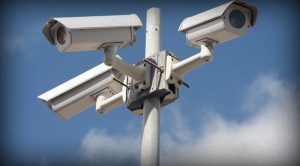
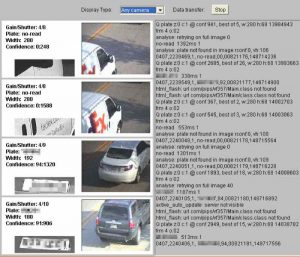
The DRN uses data gathered en masse, continuously and sans warrant or probable cause (two antiquarian ideas that just get in the way of things) by haltingly creepy devices called Automated Plate Readers  – APLRs – which are cameras connected to government computers.

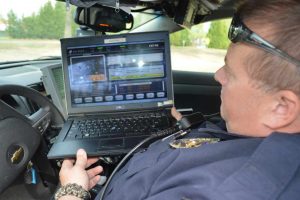
These APLRs are mounted by the side of the road – or fitted to the cars used by armed government workers to harass and collect.

They scan the license plate number of every passing vehicle – very much like a bar code reader at the supermarket – and cross-reference each number with DMV/government data about the vehicle wearing that particular ear tag, ostensibly to make sure its “papers” (e.g., registration, smog/safety certification, insurance) are in order.

Also those of its owner – more on that follows below.

It’s like seine fishing; the trawler drags a huge net behind it that catches practically every fish and turtle and whatever else happens to be in the area; it’s far more efficient from the point of view of the harassers and collectors because it’s much less work and far more profitable.

DNR boasts about “data gathered from over 8 billion nationwide sightings.” They mean scannings – but “sightings” sounds less creepy and is therefore used to keep the cattle complacent.

Vigilant Solutions, which is one of the companies that provides the APRs , states on its web page that it “can offer over 5 billion nationwide detections” – they also mean scannings – and that another 150 million “detections” are added each month.

It’s also an elaboration of the principle established by acceptance in law (but contrary to the law, i.e., the Constitution and its Bill of Former Rights/Now Conditional Privileges) that it’s somehow not an abuse of the Fourth Amendment’s explicit definition – and prohibition as unreasonable – of searches conducted absent probable cause . . . if the search only takes a couple of minutes and is cursory and serves what the Nine Archons styled a “compelling state interest”  . . . though there is no mention of this qualification in the actual law (i.e., the Fourth Amendment).

If the government can lawfully stop and search cars and demand “papers” at “checkpoints” without probable cause or warrant, then why not search them electronically?

But most people have no idea they’ve just been searched – and catalogued – making it even creepier.

If the system detects something not in order then Mobile Hit Hunter comes online. It sends out a “Hut! Hut! Hut! alert to any “active law enforcement” lurking within a three-mile range of the “hit.”

Some will say all to the good. That “scofflaws” will be easier to find and punish. Yes, and the rest of us as well. And leaving aside the unchecked premise about whether laws being scoffed are legitimate laws.

These ALPRs are extremely bright-eyed and bushy-tailed. Like the Terminator, they never get tired or hungry and can’t be bargained with. And they are being set up all over the country.

But it’s not just whether your “papers” are in order that these ALPRs are checking – and mulcting for.

They are also keeping track your comings and goings – even though you haven’t scoffed a single law.

Of all our comings and goings.

This is the creepiest part.

At random roadside checkpoints, you’re forced to stop and allow an armed government worker to look you and your vehicle over; compelled to hand over your papers. But that’s usually the end of it.

The APLRs and the data grid they feed do more than merely scan each passing car. They record each passing car. “Time and date stamped and accurate to within a few feet,” boasts the DNR press release.

The  government and whoever else has access to the data mine knows that you passed by that particular location at exactly 3:17 p.m. last Thursday.

When you pass the next ALPR, the government will know that also.

It will soon be – may already be – feasible to pull up data not only about where every driver has been but also where he is, in real time.

Right now.

Obviously, this technology could – and very likely already is – being used for a great deal more than sussing out registration renegades and safety inspection scofflaws.

Being able to track every American driver’s movements all the time opens up all kinds of possibilities for “revenue enhancement” – and enforcement – as well as new opportunities to control the populace by controlling its mobility.

ALPRs could for instance be used to automatically “brick” the cars of political undesirables before the driver even gets a chance to back out of a parking lot. Keep in mind the fact that many cars made since the early 2000s can be shut off and locked remotely – and every electric car has this “feature” – made possible via its “connectivity.”

With 5G almost here, the digital Death Star is practically “fully armed and operational.” But since most people can’t see it up in the sky – because it’s being erected all around them – they have no idea it even exists.

Be seeing you

week 6 – SOCIAL MEDIA & SOCIETY

Posted in Uncategorized | Tagged: , , , , | Leave a Comment »

You Ask a Lot of Questions for a President – Taki’s Magazine – Taki’s Magazine

Posted by M. C. on October 4, 2019

Yes, the FBI was SO frantic about the DNC’s servers … that it didn’t bother examining them itself. I repeat: The FBI never touched the DNC’s servers.

https://www.takimag.com/article/22461/

This column will explain the impeachment farce in two minutes. By the end, you will thank the media for demanding the release of Trump’s phone calls with the leaders of Ukraine and Australia.

What the phone transcripts demonstrate is that — unlike the typical Republican — Trump is not a let-bygones-be-bygones sort. He intends to find out who turned the FBI into a Hillary super PAC, using the powers of the nation’s “premiere law enforcement agency” (according to them) to take out a presidential candidate, and then a president.

The whole picture becomes clear when you have the timeline.

Instead of the FBI just admitting that it launched the Russia probe to help elect Hillary, the agency has given us a scrolling series of excuses for this partisan attack.

The FBI’s first claim was that it was merely investigating the hack of the Democratic National Committee’s email servers. As part of that effort, it was, naturally, obligated to spy on the Trump campaign.

Then we found out that the John le Carre theory of Hillary’s defeat was based exclusively on the word of a single cybersecurity firm. Yes, the FBI was SO frantic about the DNC’s servers … that it didn’t bother examining them itself. I repeat: The FBI never touched the DNC’s servers.

And who did? CrowdStrike. Who was CrowdStrike? A Ukrainian-backed cybersecurity firm.

That’s why Trump asked the Ukrainian president about CrowdStrike — the company behind the first of the FBI’s many excuses for spying on Trump.

On Jan. 10, 2017 — before Trump was even inaugurated — FBI Director James Comey breathed new life into the Russian collusion story by leaking news about the infamous Russian “dossier.”

Hurray! The media were ecstatic. For the next 10 months, we got breathless reports about how this very important, totally credible, deeply concerning dossier might force Trump out of the White House!

E.g.:

— “I remember pretty distinctly that you supported President Trump’s criticism of this dossier … Do you want to dial back that criticism now?” — CNN’s Kate Bolduan to former Rep. Pete Hoekstra, April 19, 2017

— “If the dossier is now about to be publicly defended and explained and backed up, I mean, that’s conceivably the whole ball game.” — MSNBC’s Rachel Maddow, Aug. 23, 2017

After carrying on about the dossier for nearly all of 2017, on Oct. 24 of that year, we finally found out who had paid for it: the Hillary Clinton campaign. (And you wonder why they don’t want to give us the whistleblower’s name.)

This rather important datum was coughed up not by the media, but only in response to a court order. Good work, “watchdog media”! Nothing gets past you guys.

Suddenly the dossier wasn’t important at all. Where did Republicans get that idea?

At this point, the FBI had to scramble to come up with an all-new explanation for why the bureau had put more than 100 agents — according to NBC News’ Ken Dilanian — on an investigation of a presidential candidate. (Luckily, the bureau had lots of time, having already vanquished international terrorism.)

Within a matter of days, on Oct. 30, the media was bristling with the news that the real reason the FBI put G-Men on the Trump campaign was: George Papadopoulos.

(Don’t stop reading! The sun is about come out and all will be clear.) Read the rest of this entry »

Posted in Uncategorized | Tagged: , , , , , | Leave a Comment »

Clint Eastwood Takes Aim at the FBI and the Media in ‘Richard Jewell’ Trailer (Video)

Posted by M. C. on October 3, 2019

I quit getting Leonard Maltin’s movie review book in 1992. I didn’t see the point anymore. That pretty much tells you what I think of today’s filmdom.

This film may be worth watching.

The comments are interesting for a change- The FIB director in 1996 was Louis Freeh. Same old stuff, different name.

I would like to see a film about Kenneth Trentdue. He was mis-arrested by the FIB as an OK City bombing conspirator. Trentadue hanged himself in jail…just like Jeffery Epstein.

https://www.thewrap.com/clint-eastwood-richard-jewell-trailer-jon-hamm-fbi-media/

Fact-based drama explores the case of the security guard who found a bomb at the 1996 Atlanta Olympics — and then was falsely accused of planting it

Clint Eastwood points a stern finger at FBI investigators and the media in the first trailer for his new fact-based drama “Richard Jewell,” which explores the security guard who reported finding an explosive device at the 1996 Atlanta Olympics — and then was falsely accused of planting it himself.

Paul Walter Hauser (“I, Tonya”) stars as Jewell, joined by Kathy Bates as his mother, Sam Rockwell as his attorney, Jon Hamm as the lead FBI investigator and Olivia Wilde as Atlanta Journal-Constitution reporter Kathy Scruggs.

“They want to fry you,” Rockwell’s attorney tells Jewell as the trailer suggests that FBI agents and the media pushed a false narrative of his culpability.

“Jewell fits the profile of the lone bomber, a frustrated white man who is a police wannabe who seeks to become a hero,” Wilde’s reporter says at one point, while Hamm and another investigator press Jewell to make incriminating statements on tape “to clear your name.”

The film follows the true story of Jewell, whose fame as the hero who reported an explosive device at Atlanta’s Centennial Park was followed just days later by headlines identifying him as the FBI’s No. 1 suspect…

Be seeing you

Richard Jewell, 44, Hero of Atlanta Attack, Dies ...

Posted in Uncategorized | Tagged: , , , | Leave a Comment »

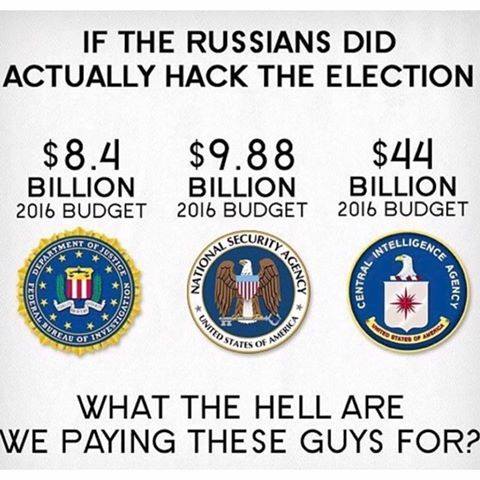
A Better Question Might Be Who Are They Paying And For What.

Posted by M. C. on October 1, 2019

If Russia hacked


Posted in Uncategorized | Tagged: , , , , | Leave a Comment »